HOKKAIDO UNIVERSITY
Scientists predict that continued global warming under current trends could lead to an elevation of the sea level by as much as five meters by the year 3000 CE.
One of the many effects of global warming is sea-level rise due to the melting and retreat of the Earth’s ice sheets and glaciers as well as other sources. As the sea level rises, large areas of densely populated coastal land could ultimately become uninhabitable without extensive coastal modification. It is therefore vital to understand the impact of different pathways of future climate change on changes in sea level caused by ice sheets and glaciers.
A team of researchers from Hokkaido University, The University of Tokyo and the Japan Agency for Marine-Earth Science and Technology (JAMSTEC) explored the long-term perspective for the Antarctic ice sheet beyond the 21st century under global-warming conditions, assuming late 21st-century climatic conditions remain constant. Their models and conclusions were published in the Journal of Glaciology.
The Ice Sheet Model Intercomparison Project for the Coupled Model Intercomparison Project Phase 6 (ISMIP6) was a major international effort that used the latest generation of models to estimate the impact of global warming on the ice sheets of Antarctica and Greenland. The objective was to provide input for the recently published Sixth Assessment Report (AR6) of the Intergovernmental Panel on Climate Change (IPCC). The contribution of the Antarctic ice sheet to sea-level rise by 2100 was assessed to be in the range between −7.8 and 30.0 centimetres under unabated warming and between 0 and 3 centimetres under reduced emissions of greenhouse gases.
The team used the ice-sheet model SICOPOLIS (SImulation COde for POLythermal Ice Sheets) to extend the whole ISMIP6 ensemble of fourteen experiments for the unabated warming pathway and three for the reduced emissions pathway. Until the year 2100, the set-up was the same as in the original ISMIP6 experiments. For the time beyond 2100, it was assumed that the late 21st-century climatic conditions remain constant—no further climate trend was applied. The team analysed the results of the simulations with respect to the total mass change of the ice sheet, regional changes in West Antarctica, East Antarctica and the Antarctic Peninsula, and also the different contributors to mass change.
The simulations of mass loss of the Antarctic ice sheet show that, by the year 3000, the unabated warming pathway produces a sea-level equivalent (SLE) of as much as 1.5 to 5.4 metres, while for the reduced emissions pathway the SLE would be only 0.13 to 0.32 metres. The main reason for the decay under the unabated warming pathway is the collapse of the West Antarctic ice sheet, made possible by the fact that the West Antarctic ice sheet is grounded on a bed that is mostly well below sea level.
“This study demonstrates clearly that the impact of 21st-century climate change on the Antarctic ice sheet extends well beyond the 21st century itself, and the most severe consequences — multi-meter contribution to sea-level rise — will likely only be seen later,” says Dr. Christopher Chambers of Hokkaido University’s Institute of Low Temperature Science and lead author of the paper. “Future work will include basing simulations on more realistic future climate scenarios, as well as using other ice-sheet models to model the outcomes.”
JOURNAL
Journal of Glaciology
DOI
METHOD OF RESEARCH
Computational simulation/modeling
SUBJECT OF RESEARCH
Not applicable
ARTICLE TITLE
Mass loss of the Antarctic ice sheet until the year 3000 under a sustained late-21st-century climate
ARTICLE PUBLICATION DATE
22-Dec-2021
But was it feminist glaciology? More models do not make up an “experiment”.
They also “demonstrate”.
Demonstrate…..”clearly show the existence or truth of (something) by giving proof or evidence.”
We show, we demonstrate. Absolute garbage!!
I was really worried for a moment the report states that “Models” indicate a 1.5 – 5.4 Meters of SLR is projected … then it stated by 3000 … which is 978 years from now … dodged a hot shot there.
If we can’t figure out a way to gradually protect coastal cities from tidal inundation that Models predict will occur over the course of 978 years, we definitely deserve what nature throws at us.
I just want to live long enough to see if the models finally get one right.
Oh wait… nobody lives forever.
”If we can’t figure out a way to gradually protect coastal cities from tidal inundation that Models predict will occur over the course of 978 years, we definitely deserve what nature throws at us.”
The Romans could have done it in a couple of days with picks and shovels.
”We” on the other hand will take 977 of those years to get the committee for the feasibility study going.
First we need to locate all our infra structure that has been built to last the next 977 years. Future constructs should simply take possible sea level changes into account. This isn’t a problem at all…
It’s From YouReekAlot! naturally.
Even when the female models are really HOT.
Science publications should not be publishing speculation under the guise of science.
heck, you mean the word “could” doesn’t make it science?
Especially when the speculation is in complete conflict in the real world data that show Antarctica has been COOLING for the last three decades.
Well, not just that, here’s the Antarctic, as of right NOW. Everything you see that is blue is below 0 degrees C and almost all of it is well below 0 C.

So I would ask the dopes who came up with this is drivel to please explain, firstly, how any frozen fresh water on land and constantly below 0 degrees Centigrade, and constantly snowed on and compacting, is going to suddenly melt?
eerm? … like … DUH!
This is why we’re in an ice-age. The parts that were melt-able, in that way, already melted, prior to about 4,000 years ago. Glacial retreat up a valley could not be more meh in terms of the scale and volume of ice lost compared to the ice that even the mid-Holocene’s warmth could not melt.
Which period was a lot hotter than now.
Sea levels fluctuated about 3 to 4 meters over the course of a few thousand years. And guess what? It was the NATURAL VARIABILITY RANGE of earth’s climate.
lol!
They can’t even blame that much on CO2 as it was and still is a lagging indicator.
But let’s pretend it’s the end of the world anyway for click-bait ad-selling purposes, and public-coin misappropriation (theft) purposes.
And also pretend CO2 did it, for UN mass control-freak purposes.
And to scare the kiddies into a suicidal outlook.
“That’s called ‘love’ now too.” – The Ministry of Love
The other possibilit6y is that the ice grows from Antarctica and covers the whole world. Either way its industry’s fault and it’s a disaster. Karl Marx says so!
More like expectoration
Ice in the Antarctic is increasing.
https://www.woodfortrees.org/plot/nsidc-seaice-s/from/to/trend
As of right now on Antarctica, receiving sunshine 24 hours a day during summer, the only place on the continent that is above freezing is at low elevation on the leeward side of the peninsula where adiabatic compression/heating is occurring.
https://earth.nullschool.net/#current/wind/surface/level/overlay=temp/orthographic=-79.03,-89.08,789/loc=177.929,-74.854
Claiming that the Antarctic ice cap is going to melt by 3000 AD goes beyond pseudoscience, it’s simply delusional. Sadly, in the world of academia, they thrive on such unaccountable rubbish.
BINGO!
Antarctica and Greenland are below freezing nearly everywhere nearly all of the time. Any ice loss or gain is a function of how much it snows and how much ice calves into the sea as icebergs. Temperature has nothing to do with it.
There is surface melt from the summer sun but it’s much like the icicles that form on your roof when the air temperature is below freezing.
If you look up ice melt on Greenland you will find a large number of articles about how water flows into moulins down to the base of the ice cap where it increases the flow rate of the ice cap into the sea.
The glacial ice is already lubricated by water in the same way that ice skates work. More water isn’t going to do anything to increase flow
The implication is that this is new phenomenon due to CO2 warming. Sunshine that melts the surface ice has ALWAYS melted the surface ice.
Regarding Greenland: If you look up “Greenland Cross Section” you will find that it is bowl shaped. The theory that under ice rivers produced by flow into the moulins requires that those under ice rivers flow uphill.
There is little evidence that the meltwater makes it much past the zone of transition between brittle and plastic behavior of the ice. Under the influence of plastic flow, cracks tend to be sealed unless the water is warm enough to melt the ice faster than it closes.
When I was supervising an ice-closure survey in a tunnel at Camp Tuto (Greenland) in 1966, one could hear a meltwater stream about 100′ above the tunnel. When the tunnel was originally driven into the snout of the glacier, they started to drive a ventilation shaft towards the surface about 1500′ in. When they got close enough to the surface to see blue light coming through the ice, they could hear a loud meltwater stream and decided that it was a good idea to stop excavating.
Actually, icebergs calving into the sea prove that the Antarctic ice cap is getting THICKER, not thinner. Basic hydraulic engineering principals prove that. Ice isn’t a solid, it is a semi solid, or a liquid with very high viscosity that flows downhill due to gravity just like liquid water. Ice will only move downhill faster if the driving head, derived from the ice upstream, is getting higher not lower.
Nice one! Very good and simple explanation
To be fair, that’s sea ice, which is not what we’re talking about.
Those on-land glaciers probably move faster until they calve off the excess ice and get back to normal. It is really difficult to determine whether the glacial speed (an oxymoron) is due to meltwater “lubrication” or ice buildup from the Little Ice Age, and this paper has not helped with that determination.
Floating Ice does not increase sea level when it melts, and although the normal consensus is that the land based glaciers will speed their progress to the sea without the floating ice is to hold it back, we are just assuming this behavior based on very few years of evidence….it could also be a surge-then-slowdown scenario.
Those on-land glaciers probably move faster until they calve off the excess ice and get back to normal.
_______________________________________________________________
What do you mean “Get Back To Normal”? The current rate of snow fall, calving of icebergs, and quantity of sunshine is normal. The implication of the screeching headlines that the so-called mainstream media produces on a daily basis is that it isn’t normal and is in fact a new phenomenon caused by CO2 driven climate change.
In other words, please stop buying into the propaganda.
I bet most people- when they see a photo of calving glaciers- just assume it means the glaciers are going to be gone soon. This stupidity of course is encouraged by fear mongers.
It is a matter of record and old photos that a majority of the mountain glaciers are smaller now than they were at the end of the little ice age. That’s fact…not propaganda. Some also have uncovered trees and artifacts from earlier warm periods. By “Get BackTo Normal” I mean something less than today’s rate of melting, maybe even accumulation…I will try to be clearer in future.
“…I will try to be clearer in future.”
(-: Thanks for the reply. Yes, the alpine glaciers are shrinking, and they have been shrinking for a very long time. As a kid I visited the Grinnell glacier and the Athabasca glacier in 1960. The rangers told us that the glaciers had been receding for a long time and pointed to the terminal moraine miles down the valley from the glacial snout.
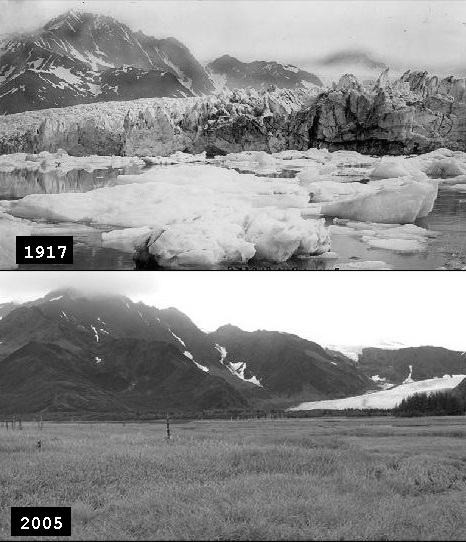
The Climate Bolsheviks would have us believe that the photo from 2005 indicates a looming catastrophic disaster.
Questions:
– who paid good money for study based on flawed models?
– how can any “scientific study” be credible when all the projection models are wrong?
– how can any scientist project out another 1,000 years when we can’t do simple stuff like solve fresh water supplies?
… 100% waste of time
Or accurately predict the weather? Models are flawed and can be manipulated via the input from the “researcher”. “Garbage in, garbage out”. Trust science? Not very likely after all the crap the esteemed Fauxi and cohorts have spewed in the recent past.
Just sayin’.
total garbage
It’s amusing that you are not allowed to pick out flaws of scientists who are not good at predicting weather, or hindcasting climate, unless you have a better explanation.
A mirror would be useful in answering this common question
who paid good money for study based on flawed models?
Government
No, taxpayers.
“…could…”
And that really sums the whole thing up quite neatly.
When they say “continued global warming under current trends “, or more accurately continued global warming under the current narrative, I’m guessing they’re ignoring the vulcanism and the magma chamber etc under Western Antarctica.
“the latest generation of models” are worse than previous generations.
Zerstörung durch Fortschritte der Technologie
…”, or could not,”…
Three words that I can only presume the word count limit prevented them from keeping…
Haha, that’s funny.
And Stonehenge was built by dinosaurs!
‘Keystone’ species…
Stonehenge COULD have been built by dinosaurs.
FIFY.
“… dinosaurs could have been responsible for…”
No, no! Stonehenge was my 7th grade art project. I had to practically bend my parents over backwards to get the money out of them for the pylons and the top jambs, and then paying for a lawn & garden shop to go in and make it look like the grass had been growing there for centuries – that wasn’t cheap, either! (If you believe that story, then I’ve already been skating on the canals the Martians built.)
“Could” “As much as” “the year 3000”. The horror. The horror.
Also, what in the name of science would cause them to think “current trend” will last another 900 years?
Once again we have a professional writer doing her level best to make scientists look stupid and incompetent.
Having said the above, the scientists in question have not exactly covered themselves in glory. Strong circumpolar atmospheric and oceanic currents pretty much insulate Antarctica from the rest of the world’s climate. What would cause that to change should be a major part of the story.
Always follow the money, Coach. Always….
by the year 3000 we will be well into the next glaciation
We are already 400 years into the current cycle of glaciation but not much to show for it yet. Even 1000 years from now glaciation will be barely noticeable. But by the year 7,000 it will be serious stuff. Most current coastal infrastructure will be inland.
“explored the long-term perspective for the Antarctic ice sheet beyond the 21st century under global-warming conditions, assuming late 21st-century climatic conditions remain constant.”
Given that the entire premise for this “study” is climate change, assuming that current climate remains constant for the next millennium seems rather absurd.
How much longer do we have to listen to this fantasy?
Professors that are not as smart as Barry Obama, who bought a seaside house? Next.
Dr Obama confirmed the experimental result of a similar purchase by Dr Al Gore
That’s how science works…
Clever! However, technically, Prof. Gore’s purchase was not very similar. My recollection is that his almost-$9M Montecito mansion has an “ocean view,” but it is a significant elevation uphill from the actual water.
https://www.zillow.com/homedetails/1504-E-Mountain-Dr-Santa-Barbara-CA-93108/15880573_zpid/
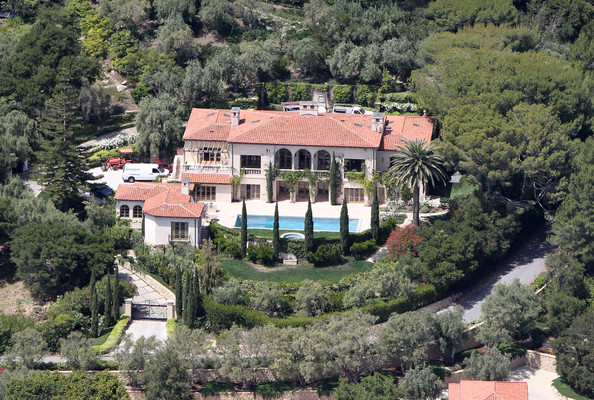
Prof. Obama home’s however… well, here’s a photo:
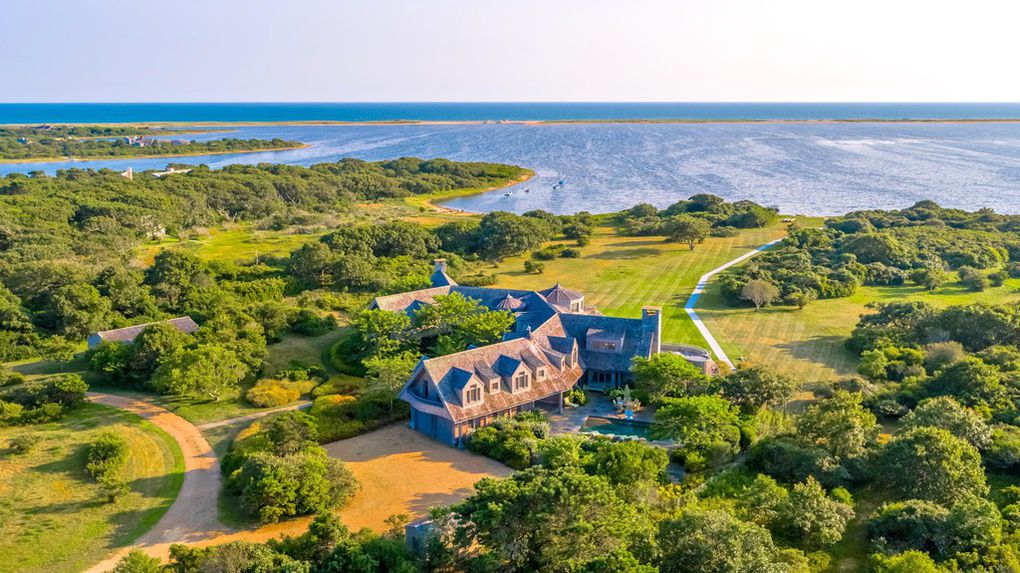
Very nice digs.
Also, Dave, AlGore does not have a doctorate degree, in reality he flunked out of Seminary School. How do you do that?
Be an atheist or agnostic?
Didn’t Barry buy the oceanfront house in Hawaii that was used in Magnum P. I. ? That one is at sea level.
However, technically, Prof. Gore’s purchase was not very similar. My recollection is that his almost- 10 x a pleb’s home carbon footprint Montecito mansion has an “ocean view,” but it is a significant elevation uphill, so when Antarctic is the only habitable continent, he will just need to turn up the water chiller in his 10 000 gallon pool.
To paraphrase Mel Brooks, “It’s good to be president.”
The linked image shows the view from Kevin Rudd’s house. He Is Australia’s climate fanatic and now deeply ensconced in the UN’s effort to control the world.
https://s.yimg.com/ny/api/res/1.2/0mXqnGO0.V_Yn90HqYmIlg–/YXBwaWQ9aGlnaGxhbmRlcjt3PTk2MDtoPTUwNQ–/https://media-mbst-pub-ue1.s3.amazonaws.com/creatr-uploaded-images/2020-07/ae898d40-bcc9-11ea-bdce-b3ea45724657
Is his house in a place called “Hypocrite Heights”?
Don’t forget the UN building in New York
regarding Martha’s Vineyard, all aside from the sea possibly rising- is the reality that the vineyard and all of Cape Cod is nothing more than a terminal moraine and they are not going to last long geologically speaking- they’re nothing more than sand piles that the sea will chew up – even if the sea was slowly going down
At least George H.W. Bush’s coastal house in Maine is up on a cliff that will last many thousands of years even if the sea continues to rise at current rates.
If this prediction is true it matters not a jot.
Either we will have advanced our technology to deal with the issue in 1,000 years time.
Or we have had rather more problems than rising sea levels.
This is like King Harold worrying about a lack of RADAR defenses against the Luftwaffe while ignoring William the Conqueror.
If this prediction is true it matters not a jot.
I’m not so sure. 1000 years is a REALLY SHORT TIME to move that far! We might not make it!
And, during that 1,000 years time, I’m sure our progeny’s progeny’s … would have figured out that’s it’s time to move to higher ground.
Great comment. Pity you were not part of the peer review process!
This is based on a model with the assumption that the climate will remain the same for the next 800 years.. There are video games more viable than this.
First off, with the inverse log effectiveness of CO2 as a greenhouse gas, and with the limited supply of fossil fuels, there is no possible way to “continue the trend” for much longer. And that is assuming all the recent warming is a result of CO2 (dubious at best).
Au contraire! You forget about the Moore’s Law Applied to CO2. It states that, in order to meet model results, the effect of CO2 must increase exponentially with linear increase in presence. Such that it can cause an acceleration, rather than a logarithmic reduction, in warming.
It’s Science.
Just for fun, I googled “craziest video games” and looked at the first list that popped up. Only about half of them were less realistic than this.
The study “used the latest generation of models to estimate the impact of global warming on the ice sheet”.
Did the study, study whether the latest generation of models was better than the older generation of models? Did the study, study whether any generation of models ever made any valid predictions?
That seems like a key point. Because if no generation of the models ever made any valid predictions, why would I think a prediction about nine hundred years in the future is any good?
The authors might want to reexamine their statement that: “This study demonstrates clearly that the impact of 21st-century climate change on the Antarctic ice sheet extends well beyond the 21st century itself”.
The study doesn’t clearly demonstrate anything if the models aren’t any good. Is there any evidence the models are any good? I didn’t think so.
The models are only good at getting funding for further studies using models.
But these are best ever models
Which doesn’t say much!
The beauty of “the latest generation of models” is that they are too new to have been proven wrong yet.
When you know it’s models and the word “could” is used, you know to file the study in the rubbish bin.
The round file.
That’s the one – under my desk.
into your wood stove
Dont worry.
The graph show 25 cm max in 2100!
“A team of researchers from Hokkaido University, The University of Tokyo and the Japan Agency for Marine-Earth Science and Technology (JAMSTEC) explored the long-term perspective for the Antarctic ice sheet beyond the 21st century under global-warming conditions, assuming late 21st-century climatic conditions remain constant.”
That’s OK then, for a moment there I thought they might be projecting some implausible scenario.
we haven’t had a constant climatic trend in the last 200 years so any assumption that we could for the next 900 years is pure fantasy
In reality, it is the alarmists that deny that climate changes. They are projecting when they accuse skeptics of being deniers.
You’re exactly right. It’s the art of confession through projection that the gives meat to the Leftist rants.
If I lose 5 stone, have a facelift, get all my teeth and both dodgy knees fixed and land a $100M lottery jackpot, I might, might, end up in bed with Jennifer Aniston.
Don’t laugh at the back. In the la-la world of ‘modelling’ it seems anything is ‘possible’.
Dont worry about the weight, facelift, teeth & knees:
If you land a $100M lottery jackpot, you can end up in bed with me !!!
Nowadays all you need to do is assert that you ARE Jennifer Aniston.
Job done. Simple.
Zoe Phin recently did an analysis of sea-ice extent. Sea ice is increasing in area in the southern hemisphere. https://phzoe.com/2021/11/28/global-sea-ice-area/
Computer simulations are NOT scientific experiments, contrary to the publication’s assertion. And Antarctica has not ‘tipped’ before. O’Leary’s paper to the contrary is provable academic misconduct, explained in essay ‘By Land or By Sea’ in ebook Blowing Smoke.
Correct! They are complex hypotheses that are quantified with iterative computer models that contain numerous subjective assumptions called parameterizations, and are almost impossible to verify. Despite being tuned to historical records, they do a poor job of replicating history.
They aren’t even hypotheses – they are merely suppositions.
“conjecture” aptly describes climate modeling.
I think that they meet the requirement of being formal hypotheses. A conjecture is more along the lines of “I think it may snow tomorrow.”
But playing at computer stuff is really fun and you get exactly the results you want, with the least work and the biggest reward.
Actually, having some experience myself with System Dynamics computer modeling, I was surprised how often my intuition was wrong about a system with numerous linear feedback loops. It may be an indication of a programming error, or incorrect assumptions about a feedback loop. However, I concluded that the human mind just isn’t capable of intuitively analyzing very complex non-linear systems.
The beauty of the way climate modeling is practiced is that rather than looking for problems in the code, or feedback flow chart, they just adjust tunable parameters to get the result that their inadequate intuition tells them they should be getting. /sarc
🙂 … yes, climate modeling must be very satisfying in that way. Uncertainty can be extremely frustrating.
Merry Christmas …
When the sun becomes a red giant, all the ice will melt.
Politicians need more now power to stop this future event.
Yes. If climate change is not abated the whole planet will be consumed in an inferno in 4.5 billion years! Time to panic!
and why wouldn’t it?
The ice isn’t floating and it is melting, glaciers are fragmenting.
a simple calculation shows this is quite possible.
and this is surely an indication of trouble…
Antarctica’s Thwaites Glacier ice shelf could collapse in 5 years | Science News
Simpletons have been proclaiming “indications of trouble” from what they read in the media for centuries. Some things will never change, but the climate is guaranteed to [back to a glacial period].
I “could” win the lottery.
Antarctic continental ice is growing. Sea ice is rebounding from it’s recent dip. What are you even talking about?
He/she/it is trying to reassure him/her/itself that their beliefs are justified. The problem is, 5 years is such a short time that they may still be around and someone here may remember the claim and ask why it didn’t happen.
I will happily wait for any real proof that your prediction is correct.
Griff mate, you really are silly
Look up Thwaites and volcanic activity and learn something new
Of course, many of us here have known about the volcanic activity for years but climate seancers still conveniently forget to mention
Yeah, but in the late 1950s, I was sitting on my dad’s living room couch, looking at black & white photos in the National Geographic, of penguins panting in the heat of Antarctic summer. The temperature was SO WARM that the snow on the ground had melted, uncovering gravel on the shoreline. I believe that was part of the IGY program that National Geographic was covering at the time. So, y’see, Arctic and Antarctic meltbacks and refill happen constantly. It ain’t something new.
And Ice floats because it’s full of teensy-weensy air bubbles. If that weren’t the case, the ice in your soda will sink right to the bottom of your glass and you’ll still have warm tea instead of iced tea.
Actually, ice increases in volume even in the absence of entrained air bubbles. Air just makes it even more buoyant.
It’s a lot more fun to play with that way, isn’t it? I seldom see truly clear ice anywhere, even at McD’s, so if it floats, fine by me. The only truly clear ice I’ve ever seen was on a slow river in mid-winter and it looked so thin that no one in their right mind would risk a step on it.
Scientists have known for years that subglacial volcanoes and other geothermal “hotspots” are contributing to the melting of the Thwaites Glacier.
Nice try griff
Tony Heller: “Alarming Trend In Climate Propaganda”
Because absolutely nothing else is going to change over the next 1000 years, griff?
LOL … exactly. That was the 1st thought I had when I read the subject line. What kind of moron would believe that the present weather conditions would remain unchanged for the next millennium? Doesn’t Griffy believe in “climate change”?
On the other hand by the year 3000 the next glaciation could be in full flow and sea levels could drop by 10s of meters, if not 100s.
I am certain that Milutin would agree with you.
or Earth COULD be taken over by aliens from another galaxy
Slow news week. This article will feed the beast known as the leftwing media which is looking for catastrophic stories so they can increase their readership and ratings.
Ah.. the days of the yellow journals have returned, both in print and video. At least we now have something funny to watch and/or read since the demise of the classic Sunday funnies.
and in case y’all missed Mickey Mann’s item in the Bah-stin Globe
“Global destruction isn’t funny, but when it comes to the climate crisis, it might have to be”
https://www.bostonglobe.com/2021/12/21/opinion/global-destruction-isnt-funny-when-it-comes-climate-crisis-it-might-have-be/?p1=BGSearch_Overlay_Results
He says, “Science isn’t finished until it’s successfully communicated. ‘Don’t Look Up’ succeeds not because it’s funny and entertaining, but because it’s serious sociopolitical commentary posing as comedy.”
Any scientist who thinks science is ever finished is *&^%$ moron.
Meanwhile, in the real world:
1. Most of Antarctica averages more than forty degrees below zero. So a couple of degrees of warming can’t possibly “melt” it.
2. The inverted lapse rate over most of Antarctica means that GHGs don’t warm it, anyhow, they chill it. (Though they do have a warming effect over the Southern Ocean.)
3. Supply constraints ensure that mankind will not be able to continue to burn fossil fuels at the current high rate through the rest of the millennium. If our descendants don’t shift mainly to other energy sources (probably nuclear) within a century or two, they will freeze in the dark.
4. Natural negative carbon feedbacks are already removing about 2.5 ppmv of CO2 from the atmosphere each year, and that rate is increasing. So when mankind transitions from fossil fuels to nuclear power for most energy, and CO2 emissions decline, the atmospheric CO2 level will plateau and then begin to fall, and soon the scary climate threat of the day will once again be global cooling, not warming.
Antarctica gains ice mass by snowfall accumulation, and loses it by several processes, including iceberg calving (twenty years ago it calved an iceberg they called B-22, which was 85 km long by 65 km wide!), sublimation, and melting where the ice is in contact with the ocean. In Antarctica, the sum of those last three processes is approximately equal to the snowfall accumulation, with the result that the ice mass trend is very flat. It is so close to zero that scientists are unsure whether Antarctica is gaining or losing ice.
The latest and most comprehensive NASA study is Zwally, et al (2021). It reports an Antarctic ice mass trend of −12 ±64 Gt/yr, which is a fancy way of saying “approximately zero.”
The melting is mostly “basal melting” of the the undersides of floating ice shelves. Ice shelves are made up of ice which has flowed downhill from the ice sheet & glaciers, and is now floating on the ocean.
When that floating ice is still attached to the land it’s called ice shelves, and when it breaks off and floats away it’s called icebergs. W/r/t its effect on sea-level, it doesn’t matter which it is: floating ice is floating ice. The displacement and the effect on sea-level are unaffected by whether the ice is attached to the land or detached and floating away, and also unaffected by whether it melts.
No. The uncertainty is so high that an honest person would say “We don’t know.”
Clyde wrote, “The uncertainty is so high that an honest person would say ‘We don’t know.'”
Well, I did say, “It is so close to zero that scientists are unsure whether Antarctica is gaining or losing ice.”
Is “scientists are unsure” close enough to “we don’t know?”
−12 ±64 Gt/yr = a contribution of less than one inch of sea-level change per century.
Do you think it is wrong to call that “approximately zero?”
“we don’t know” is ±∞ Gt/yr. But here we have ±64 Gt/yr. Is it perfect? Nope. Is it better than “we don’t know”? Yes…infinitely better…literally.
Let’s reframe the issue. Assume that there is a ramp with a slope between -76 and +52 degrees (−12 ±64). The probability that the ramp has a slope of exactly zero is very low. If it were zero, a marble placed on it would not roll. Therefore, we can say that if a marble were placed on the ramp it will probably roll. However, what direction? We would have to honestly say that we “don’t know.” There is a slight probability favoring the negative direction; however, we really don’t know!
Skkkkkkknnnxxxx! Oops. Fell asleep there. What?