From NOT A LOT OF PEOPLE KNOW THAT
By Paul Homewood
If this is the standard of research into the reliability of wind power, then heaven help us all:

Nobody is seriously saying that the wind will stop blowing completely around the UK, as they imply. This is just a red herring.
The real issue is that there are long periods, days and even weeks, when wind power is generating at extremely low levels.
It can also be extremely variable on an hour to hour basis, as the summary of the last 48 hours shows below:

https://www.bmreports.com/bmrs/?q=eds/main
Using the data from GB National Grid Status, so far this year, wind power has been producing at less than 2 GW for 22% of the time. 2 GW works out at about a capacity factor of 10%, which I am sure most normal people would regard as pretty worthless.
It has even been running at below 1 GW for 9% of the year. Average output is over 5 GW.
It is true that low winds tend to be more common in summer, when demand is low. But they can still occur in winter. Between 27th Feb and 4th March, wind power never reached 2.5 GW for 112 hours straight. During this period it was below 2 GW for 99 hours, and averaged just 1.1 GW overall.

http://gridwatch.templar.co.uk/
It does not matter how much wind capacity you have. Nought percent of anything is still nothing.
Laughable that these clowns think unreliables are the answer to a non-question
As characteristics of wind are broadly similar.
So why put them in the North Sea with double the infrastructure costs. And why cannot I have the roaring forties in my backyard. If the world was flat and moved in one direction … but then it us that are called flat earthers. Wonder what is the entry qualification for the Oxford University Climate Change Institute. Probable a social science degree like PPE like CCC propagandist Ed Miliband.
double the infrastructure costs, and shorter lifetime expectancy.
Will we have the winter of the century in Europe? I think it will start in January.
As incompetent as that summary may be, – it actually points to an inescapable conclusion.
Let’s start with a basic summary. Given a variable source of power, how much backup capacity you have to have? The simple answer, assuming you don’t want to live with blackouts or brownouts, is the complement of the minimum deliverable capacity from the variable source. The fact in that summary (as opposed to the conclusion), is that the minimum deliverable capacity during the year is zero. Therefore, the necessary backup capacity is 100% of the mean variable capacity.
Curiously, they emphasize that the minimum is rare, but that’s not the relevant conclusion. The minimum is zero therefore required backup capacity is 100%. That makes an expensive source of energy.
In other words, run the back up 100%, and get rid of the renewables. The renewables are superfluous.
But what about CO2 Emissions? China, India, Japan are building new coal fired power stations at a rate that will swamp any CO2 reductions made by the rest of the world. The Earth will be warmer anyway. Adapt!
The polar vortex in the lower stratosphere (which directs the jet stream in winter) has clearly taken aim at Europe.
The jet stream over Europe confuses me… why is it so discontinuous
Jetstream is now above the north pole because the polar vortex in the lower stratosphere is breaking apart.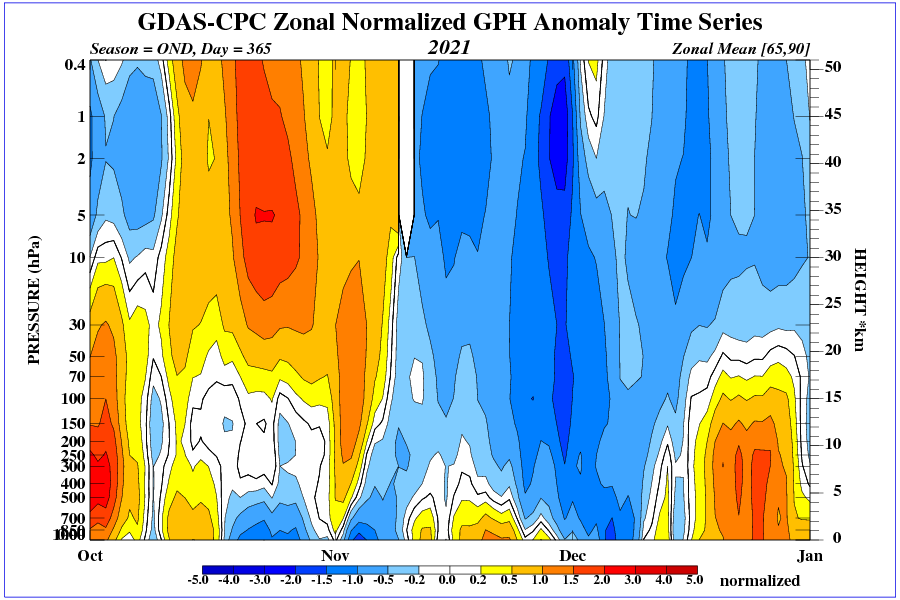
Strong planetary waves disrupt the polar vortex in the upper stratosphere.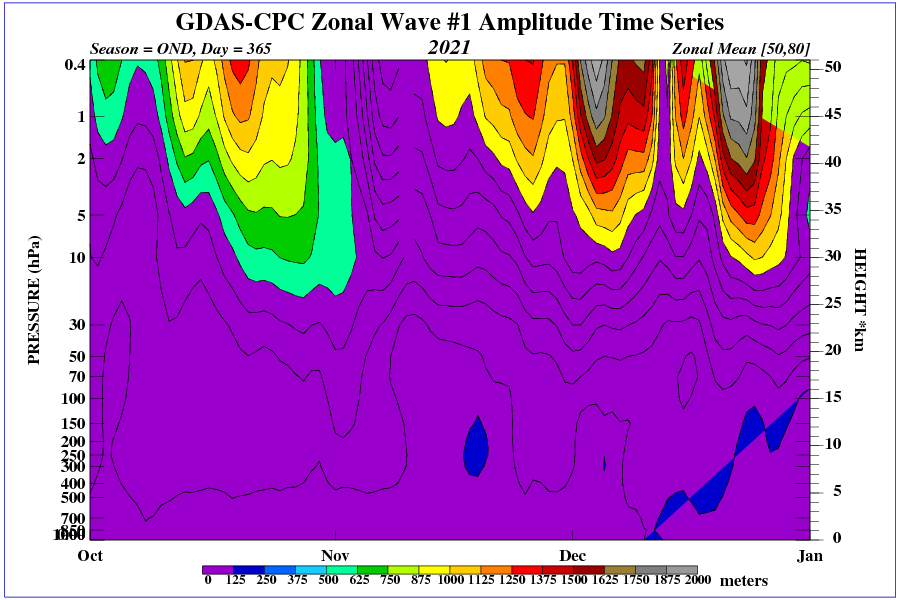
When we try to talk to people about the AGW scam or the renewables scam, a common reaction is to scoff and claim it would mean many thousands of scientist conspirators – for which a valid answer is, “it doesn’t take thousands, just the few controlling the data!”
But there IS a question about the so-called ‘scientists’ regarding their ongoing manipulations of the narrative. What kind of person could pride themselves in their work if they have to make up a statistic of ‘hours where there is no wind across the nation’ to try to get published?
Surely even a true believer from the church of AGW would be self-reflective enough to know that’s a bullshit stat to use? So it HAS TO BE deliberate.
The things that matter are the ability to meet load requirements WHEN the load is applied and neither solar nor wind can promise that. In Australia we have lots of solar but the sun goes down right about the time everyone gets home and start switching stuff on. So we push batteries in the homes, nice little ticking bombs in your garage that are supposed to be money earners when you personally don’t need the power – except the feed-in tariffs are dropping, year-by-year.
Our virtue-signalling pollies do crazy shit like, rather than spend a few $million to modernise a coal plant or convert it to gas (which we export at criminally low rates while charging Aussies a fortune for it)they do a big publicity thing by blowing the plant up, making sure it can never again provide us with cheap and constant electricity.
This was in South Australia, a state that seems to be striving to provide the highest cost power in the world to the residents. We spent more than $100 million on a battery for the state – which in ideal conditions would keep the state running for a few minutes – and then brought in diesel generators to act as backups!
The world is insane and I think next time around I’ll be saying, “Anywhere but Earth please!”
Why do we say gas is a backup to wind
Should it not be the other way around
At best a supplement to gas
A supplement has to be controlled by on/off ability.
The wind may be predictable but there is almost no way to decrease the output of gas based on the expected wind.
If I missed the sarcasm font please let me know, I’m married.
We don’t need wind to backup gas as long as we keep up fracking and drilling
Complaining about minimum output from wind is missing half the story. The really interesting part is at the other end of the scale – when weather dependent renewables are actually producing near rated capacity.
Lets say that you want sufficient installed capacity for 80% of peak demand at an average capacity factor of around 40%. The rest of demand you will manage through short term storage and voluntary load curtailment. Then at those times when either load is well below maximum – Spring, Autumn or 4:00 am on most mornings or your capacity factor is above average then you will have:
This plays havoc with budgets due to lack of production (less MWh’s to spread capital costs over) and lack of value of each MWh produced.
To me these are the true limiting factor of weather dependent renewables – the lack of relationship with the underlying load and the lack of diversity in production levels
Hmm, I get it but this is how a liberal might see it:
Build Back Better gubment spend $trillions to overbuild wind and solar – it will drive electricity prices to zero – free energy to everyone! Whats not to like?
Don’t these NIMBYs understand they have to change the climate or they’re doomed too?
High Voltage: Serbian lithium business looms as another community relations headache for Rio Tinto (msn.com)
Clearly this critical decision-making has to be taken out of the hands of these ignorant trogs and Luddites and into the expert hands of the IPCC where it rightly belongs. You know it makes sense climate changers.
You mean ‘strawman’.
The utilities just need better storage-
Analysis – Weak winds worsened Europe’s power crunch; utilities need better storage (msn.com)
“If we had high winds or just reasonable winds over that period, we wouldn’t have seen these price spikes,”
They actually pay people for this stuff!!
I spent sorry wasted quite a bit of time trying to explain to a proponent of windmills that if we get a blocking high/low over the UK and nearby Europe just building more windmills won’t make a blind bit of difference to how much power they make as none of them would be turning. They just could not get it into their mind that such a thing could happen even when shown the graphs from Gridwatch for a couple of weeks ago and back in August. I suppose it does confirm the old saying “there are none so blind as those who won’t see”.
James Bull
NB : This is a “just putting data on the record, with a timestamp” post.
The “No Wind Friday” post a week ago was a copy of a NALOPKT post from the 17th of December, which started with :
The graph below shows selected electricity generation data for the “island of Great Britain” grid for the month of December (up to yesterday, the 24th).
The “blocking high/low over the UK and nearby Europe” conditions mentioned by “James Bull” (and others) only lasted until the 21st, not for “at least” a full week !
[ Editorial note : Add “sarcasm” tag here if required … ]
Follow-up.
While the timings for the German, Californian and (South ?) Australian grids to collapse are still TBD, the GB grid may well “muddle through” the upcoming winter (and even the two after that, 2022/3 and 2023/4).
The real problems are only likely to become (very) visible to the (Great British) public from approximately April 2024 …