Guest Post by Willis Eschenbach
President Obama continues his Global War on Cheap Energy™, this time under the guise of avoiding “spikes” in gasoline (petrol) prices. He wants to pass gas without regrets and move post-haste to electricity and biofuels, although both are more expensive than gasoline and diesel for road and rail transport. According to the Associated Press, in a speech at the Argonne National Laboratories Obama said:
The only way to break this cycle of spiking gas prices — the only way to break that cycle for good — is to shift our cars entirely, our cars and trucks, off oil.
Let me start by saying that I’m greatly encouraged to hear that Obama has solved the problem of price variation in capitalist societies. It’s simple. Are you like me, bothered by gas prices going up and down, tired of seeing peaks and valleys in the cost of gasoline, fed up with price spikes because of e.g. unregulated speculation in commodities? The answer is obvious.
Stop using gas.
 Figure 1. Unrefined Corn Ethanol.
SOURCE: Oxfam, Burning down the house: Corn as fuel, not food
We can extend that to other areas, of course. Food prices spiking? Turn your food into gasoline, where there are no longer any price spikes. I see a future industry here …
I must protest, however, that his claim that shifting cars and trucks to electricity and biofuels will break the cycle of spiking gas prices is all too true … and that’s very bad news.
It’s bad news because the way he plans to get past spiking gas prices is to go to high, constant alternative fuel prices, higher than even the spikes of today. And just as he promised … no spikes. The high prices, just like the outrageous thirty-cent per kilowatt-hours electricity prices in California resulting from this same kind of backwards thinking, get locked in by long-term contracts.
No more price spikes. What’s not to like?
Unfortunately, the brilliant Obama plan is the same trademarked plan the Government always seems to have, to wit:
THROW MONEY AT THE PROBLEM™
In this case, it’s two BILLION dollars. With a B. If your family had started a business when Christ was born and made a million dollars profit per year, a huge sum of money, imagine what that could buy, you’d have been millionaires … well, after two thousand long years of running your business, stacking up a million bucks every year, year after slow year, centuries pass, finally a millennium. You’re still running the business, more years go by, dark ages and renaissance and finally, ten centuries after the first endless millennium, right about now you’d be hitting two billion in total profits.
Now imagine what that could buy. It is a huge sum of money.
They say the first time history repeats, it’s as a tragedy. The next time, it’s a comedy. I suppose this is the first repeat. When this circus originally debuted, unfortunately, Obama was only fifteen years old, and from reports, the head of the choom gang. Not that that is a black mark to a reprobate like myself, we’ve all been young, but it increases the chances that he might have missed the urgency and the drama of the moment when Jimmy Carter delivered a televised speech announcing his new official Energy Policy and the formation of the Department of Energy on April 18, 1977. The entire talk is here. It’s long, I will only discuss certain points. I’ll indicate where I’ve skipped over text with the ellipsis (three periods, or three full stops for our UK cousins). I’ll start from his opening.
Tonight I want to have an unpleasant talk with you about a problem unprecedented in our history. With the exception of preventing war, this is the greatest challenge our country will face during our lifetimes. The energy crisis has not yet overwhelmed us, but it will if we do not act quickly.
It is a problem we will not solve in the next few years, and it is likely to get progressively worse through the rest of this century.
We must not be selfish or timid if we hope to have a decent world for our children and grandchildren.
OK, that’s it. Time out. I’ve heard this nonsense enough. I hereby declare Willis’s Rule of Degenerations, which states:
Whenever some rich guy says he’s doing something for “the grandchildren”, you can make money betting that the poor, who too often are people of color, will get shafted.
and also Willis’s Rule of the Worst Danger, which states
Whatever a rich guy says is the worst danger we face this century, the challenge of our generation, unprecedented in our history … almost certainly isn’t.
I’m sorry, but those claims just can’t continue, it’s cruel to the grandchildren to keep exhibiting them like trained monkeys that way. But I digress … Carter goes on to say:
We simply must balance our demand for energy with our rapidly shrinking resources. By acting now, we can control our future instead of letting the future control us.
Two days from now, I will present my energy proposals to the Congress. Its members will be my partners and they have already given me a great deal of valuable advice. Many of these proposals will be unpopular. Some will cause you to put up with inconveniences and to make sacrifices.
The most important thing about these proposals is that the alternative may be a national catastrophe. Further delay can affect our strength and our power as a nation.
Note the false urgency, the false claims of the huge importance of the issue. This is characteristic of the alarmist style. The banner is “WE MUST DECIDE NOW!” … but no, actually, we didn’t have to decide anything about energy. And we didn’t decide much of anything about energy, despite Carter’s urgings.
He goes on:
Our decision about energy will test the character of the American people and the ability of the President and the Congress to govern. This difficult effort will be the “moral equivalent of war” — except that we will be uniting our efforts to build and not destroy.
Since I’m on a roll, let me propose Willis’s Rule of Moral Equivalency, which states:
Whatever a rich guy says is morally equivalent to war … almost certainly isn’t.
But again I digress … here’s President Carter continuing his roll:
I know that some of you may doubt that we face real energy shortages. The 1973 gasoline lines are gone, and our homes are warm again. But our energy problem is worse tonight than it was in 1973 or a few weeks ago in the dead of winter. It is worse because more waste has occurred, and more time has passed by without our planning for the future. And it will get worse every day until we act.
The reference to 1973 is to Nixon’s short-lived attempts at gasoline price controls. Predictably, these led to shortages and huge lines at the pumps. And all of this, of course, is more false urgency. Here’s the reasoning he adduces to support it (as always, emphasis mine)
The oil and natural gas we rely on for 75 percent of our energy are running out. In spite of increased effort, domestic production has been dropping steadily at about six percent a year. Imports have doubled in the last five years. Our nation’s independence of economic and political action is becoming increasingly constrained. Unless profound changes are made to lower oil consumption, we now believe that early in the 1980s the world will be demanding more oil than it can produce.
Is this sounding familiar to anyone? I fear it’s the usual doom merchant’s snake oil … the sky is falling. Well, modern doom merchants have gotten smarter, at least. They now say “the sky will fall in two decades”, trusting correctly that people will have forgotten their failed doomcast by then … see Paul Ehrlich as the modern holotype.
The world now uses about 60 million barrels of oil a day and demand increases each year about five percent. This means that just to stay even we need the production of a new Texas every year, an Alaskan North Slope every nine months, or a new Saudi Arabia every three years. Obviously, this cannot continue.
And yet … here we are , and it has continued right up to 2013, thirty years past when Carter said we’d run out. And with the advent of fracking providing huge untapped resources of both natural gas and tight oil, and with the Canadian tar sands online, and with the recent Japanese extraction of methane from undersea hydrates, and the discoveries in Brazil and elsewhere, and with stated reserves no smaller than they were when Carter spoke, I see every reason to think that fossil fuel use can continue for at least a half century at a minimum, and potentially much more. Folks, if you are worried about running out of fossil fuel, you can relax. The world is awash in fossil energy. There is no urgency regarding running out, that is 100% hype, both in Carter’s time and today. He goes on:
We must look back in history to understand our energy problem. Twice in the last several hundred years there has been a transition in the way people use energy.
The first was about 200 years ago, away from wood — which had provided about 90 percent of all fuel — to coal, which was more efficient. This change became the basis of the Industrial Revolution.
The second change took place in this century, with the growing use of oil and natural gas. They were more convenient and cheaper than coal, and the supply seemed to be almost without limit. They made possible the age of automobile and airplane travel. Nearly everyone who is alive today grew up during this age and we have never known anything different.
Because we are now running out of gas and oil, we must prepare quickly for a third change, to strict conservation and to the use of coal and permanent renewable energy sources, like solar power.
(In passing I note the repeat of the “must prepare quickly” meme to reinforce the false sense of urgency.)
My main comment on this, however, is that the first two transitions proceeded seamlessly, without the slightest bit of government interference, or as it is known in some quarters, “government assistance”. I continue to make the assumption that the same is true about the future transition from fossil fuels to X, that it can happen without the Government’s involvement … but there’s a small problem. We don’t know what X is yet. I trust that the market (with appropriate regulation as all markets need) will sort it out quite nicely. I discuss these options below.
He continues:
The world has not prepared for the future. During the 1950s, people used twice as much oil as during the 1940s. During the 1960s, we used twice as much as during the 1950s. And in each of those decades, more oil was consumed than in all of mankind’s previous history.
World consumption of oil is still going up. If it were possible to keep it rising during the 1970s and 1980s by 5 percent a year as it has in the past, we could use up all the proven reserves of oil in the entire world by the end of the next decade.
… All of us have heard about the large oil fields on Alaska’s North Slope. In a few years when the North Slope is producing fully, its total output will be just about equal to two years’ increase in our nation’s energy demand.
Each new inventory of world oil reserves has been more disturbing than the last. World oil production can probably keep going up for another six or eight years. But some time in the 1980s it can’t go up much more. Demand will overtake production. We have no choice about that.
Again we see the techniques of the alarmists in action. It’s all about must act now, can’t wait, need to move, values are in conflict, world oil production will peak in the 1980s, stakes are huge, decisions are urgent, all the usual catch-phrases of post-normal “science”. At least Carter had the excuse that it was kinda new stuff back then … but in 2013 that kind of alarmism is well past its use-by date.
Then Carter paints the bleak future if nothing is done. Do remember when evaluating his forecast that in fact nothing was done, nothing substantial was accomplished by his Energy Plan.
And despite that, world oil production didn’t peak in the 1980s as he forecast. Global energy use has continued to rise at about the same rate, and world oil production is still rising as we speak … but that is reality, here’s Carter’s bleakly incorrect vision of the future without his energy plan …
… Now we have a choice. But if we wait, we will live in fear of embargoes. We could endanger our freedom as a sovereign nation to act in foreign affairs. Within ten years we would not be able to import enough oil — from any country, at any acceptable price.
If we wait, and do not act, then our factories will not be able to keep our people on the job with reduced supplies of fuel. Too few of our utilities will have switched to coal, our most abundant energy source.
We will not be ready to keep our transportation system running with smaller, more efficient cars and a better network of buses, trains and public transportation.
We will feel mounting pressure to plunder the environment. We will have a crash program to build more nuclear plants, strip-mine and burn more coal, and drill more offshore wells than we will need if we begin to conserve now. Inflation will soar, production will go down, people will lose their jobs. Intense competition will build up among nations and among the different regions within our own country.
If we fail to act soon, we will face an economic, social and political crisis that will threaten our free institutions.
But we still have another choice. We can begin to prepare right now. We can decide to act while there is time. That is the concept of the energy policy we will present on Wednesday. Our national energy plan is based on ten fundamental principles.
Job loss, intense competition between nations and regions destabilizing the planet, multiple socioeconomipolitical crises, can’t run public transportation … ACT NOW OR BE DOOMED!!!
Meanwhile, let me take a deep breath, step away from the urgency, and pause to keep all of this in context. In James Hansen’s Policies Shaft The Poor, I showed that per-capita income and per-capita energy use are inextricably linked. Let me repeat that graph here, it’s an important one:
 Figure 2. Energy use per person (tons of oil equivalent, TOE) versus average income, by country. Colors show geographical regions. Size of the circle indicates population. The US is the large yellow circle at the top right. Canada is the overlapping yellow circle. China is the large red circle, India the large light blue circle. Here’s a link to the live Gapminder graph so you can experiment with it yourself.
As you can see, energy use and income are two sides of the same coin.
And finally, with that as prologue, here’s the Carter energy plan (emphasis as always is mine). Or more specifically, what he calls the “principles”. And despite Carter’s alarmism, and his general pro-government-assistance/intervention stance, he raises some interesting issues and has a few good principles. Mixed in with horrible principles, of course. Here goes (all emphasis in Carter’s words is mine):
The first principle is that we can have an effective and comprehensive energy policy only if the government takes responsibility for it and if the people understand the seriousness of the challenge and are willing to make sacrifices.
Damn, what is it with these guys? Their guiding thought seems to be that the Federal Government should take responsibility for every single non-problem, and that the people should take it in the shorts … same old same old.
The second principle is that healthy economic growth must continue. Only by saving energy can we maintain our standard of living and keep our people at work. An effective conservation program will create hundreds of thousands of new jobs.
Finally, some things we can agree on. Healthy economic growth is the key to any nation raising its standard of living, which in turn means less avoidable deaths.
And saving energy is good … the only problem is that people do that all the time, because energy costs money. And most folks want to save money. So as a principle, conservation is good. As a point of entry for Federal regulation into people’s lives … not good. Saving energy is already happening, what reason is there for government intervention?
Next, poor folks already “save” all the energy they possibly can because energy costs money. Preaching energy savings to them is just cruel.
He also floats the concept now known as “green jobs” … and it had about the same effect then as now. Because while the Federal Government can hire people to do something, the idea that regulations actually create jobs is always suspect. I’ve seen very few true examples of that. The particular regulations may be necessary, because humans are pigs, we need regulations … but creating jobs? Doubtful. This illusion that regulations create jobs is widespread in government, see my post Browner, Colbert, the EPA, and Broken Windows
In Carter’s case, nothing happened, same as with Obama’s green jobs plans.
The third principle is that we must protect the environment. Our energy problems have the same cause as our environmental problems — wasteful use of resources. Conservation helps us solve both at once.
I agree with that principle entirely. Indeed, we must protect and avoid un-necessary damage to the environment. And conservation is an integral part of that, it is the cheapest way wherever it is possible.
The fourth principle is that we must reduce our vulnerability to potentially devastating embargoes. We can protect ourselves from uncertain supplies by reducing our demand for oil, making the most of our abundant resources such as coal, and developing a strategic petroleum reserve.
Note that this was from that simpler time before the demonization of fossil fuels. I agree that we should reduce our dependence on overseas oil. That’s why I support the Keystone Pipeline, as well as expanded drilling both on and offshore. Nobody was surprised when, after discovering massive offshore fields, Brazil immediately began to develop them. We should do the same. We should drill offshore wherever the oil is.
And I say that as a fisherman and a man who is passionate about the eternal sea and has spent his life on and around and under the ocean. I say that because the world needs more cheap oil, people around the globe are dying for the lack of cheap oil, and meanwhile, rich 1%ers like Bill McKibben and President Obama and Hollywood celebrities and lots of un-indicted climate alarmists are doing their very best to make oil as expensive as possible … I warn you folks who support high energy prices through restricting drilling or by any other way, history will not judge you lightly. But I digress … back to Carter’s principles.
The fifth principle is that we must be fair. Our solutions must ask equal sacrifices from every region, every class of people, every interest group. Industry will have to do its part to conserve, just as the consumers will. The energy producers deserve fair treatment, but we will not let the oil companies profiteer.
Oh, please. When in history has that ever been even remotely true? Sacrifices always fall disproportionately on the poor and people of color. Look, as a principle I like it, just like I’m up for mom and apple pie. I do think it’s good to call for fairness. But in reality, expensive oil is so far from fair as to be laughable. Plus the obligatory demonization of the oil companies is ritualistic and unpleasant. They’re not the problem, they’re just businessmen like every other.
The sixth principle, and the cornerstone of our policy, is to reduce the demand through conservation. Our emphasis on conservation is a clear difference between this plan and others which merely encouraged crash production efforts. Conservation is the quickest, cheapest, most practical source of energy. Conservation is the only way we can buy a barrel of oil for a few dollars. It costs about $13 to waste it.
Again, I like the principle, and have preached it for years. If it is available, conservation is always cheaper than purchase. Two problems. First, I just don’t think that it is the government’s job to enforce it. The government can advocate for it, but it most always jumps right to enforcement.
Second, Carter just said that the burden would fall equally. But poor people don’t waste energy. They already consume as little as they can, and far too many of them sit shivering in the dark as a consequence as we debate this very question. So for the poor, this is just another rich man’s good idea gone nowhere.
(In passing, let me note that the $13/barrel that Carter refers to, adjusted for inflation, is about $50/barrel.)
The seventh principle is that prices should generally reflect the true replacement costs of energy. We are only cheating ourselves if we make energy artificially cheap and use more than we can really afford.
In general I’m in favor of that, if I understand his meaning. It argues for less government subsidy and price support by any means. He is absolutely correct that we cheat ourselves when we make solar and ethanol and wind artificially cheap.
The eighth principle is that government policies must be predictable and certain. Both consumers and producers need policies they can count on so they can plan ahead. This is one reason I am working with the Congress to create a new Department of Energy, to replace more than 50 different agencies that now have some control over energy.
I must admit that for a peanut farmer, Jimmy had a keen grasp of salesmanship. The government was dabbling in energy in a whole host of ways. That makes sense, energy impacts a lot of things, and decisions are made on the basis of the local situation and the local impact. The system worked well for oh, about two hundred years at that point … so Jimmy declares that it is bad and wrong, it’s a huge problem.
And to solve the problem that only he has noticed, some lack of un-needed uniformity in government rules, he declares that we need a Department of Energy. Declare a problem, declare your solution. All we need is more bureaucracy, problem solved.
Really? How about some clear principles in place of a whole wasteful new government Department? In fact, it strikes me that I need to propose a new rule for this, Willis’s Rule of Government Departments, which states that
If your Government names a new Department after something, you can kiss it goodbye.
I submit the US Departments of Energy and Education as prima facie evidence … but again I digress, it’s hard not to get sidetractored in the midst of Carter’s Ten Principles. Here’s number nine:
The ninth principle is that we must conserve the fuels that are scarcest and make the most of those that are more plentiful. We can’t continue to use oil and gas for 75 percent of our consumption when they make up seven percent of our domestic reserves. We need to shift to plentiful coal while taking care to protect the environment, and to apply stricter safety standards to nuclear energy.
Again, this was before the globe developed carbophobia and an unreasoning (but understandable) fear of nuclear energy. Carter’s prescription is far too logical for the current Administration. The new standard seems to be tax and cap and restrict the fuels that are the cheapest and subsidize those that are most expensive.
The tenth principle is that we must start now to develop the new, unconventional sources of energy we will rely on in the next century.
Dang, and he was doing so good on number nine there … no, Mister President, we didn’t need to “start now” at the time, nor did we need to do a damn thing to prepare for the 21st century except continue to explore for oil in new and imaginative ways. As we had always done.
Not only that, but the preparations were overwhelmingly wasted. Based on this speech, Carter spent millions and millions of dollars on solar and wind and allied unconventional energy sources … and we’re now in the next century he warned us about. Look around you.

Figure 3. Total world energy consumption by source. In the upper right circle showing renewables, the large dark red area is biomass for heat (home heating, cooking, etc.), 11.4% of total energy. Light blue is hydropower, 3.3% of the total. Each of the other unconventional sources are only half a percent or less of the total.
Do you see any sign of the money Carter spent? People are STILL subsidizing the sun and the wind, the Government is subsidizing rich people to buy $50,000 electric cars, and after thirty-five years of studies and millions of dollars in subsidies, wind and sun and biomass for electricity and biodiesel all added together still total less than 1% of global energy production. And despite that pathetic record of wasted subsidies, the proponents like Obama claim success is just around the corner … the same corner it’s always been just around …
So that’s Jimmy Carter’s Ten Principles of Screwing Up Your Energy Supply. Near the closing he says:
… And we have been proud of our vision of the future. We have always wanted to give our children and grandchildren a world richer in possibilities than we’ve had. They are the ones we must provide for now. They are the ones who will suffer most if we don’t act.
I’ve given you some of the principles of the plan.
I am sure each of you will find something you don’t like about the specifics of our proposal. It will demand that we make sacrifices and changes in our lives. To some degree, the sacrifices will be painful — but so is any meaningful sacrifice. It will lead to some higher costs, and to some greater inconveniences for everyone.
But the sacrifices will be gradual, realistic and necessary. Above all, they will be fair. No one will gain an unfair advantage through this plan. No one will be asked to bear an unfair burden. We will monitor the accuracy of data from the oil and natural gas companies, so that we will know their true production, supplies, reserves, and profits.
The citizens who insist on driving large, unnecessarily powerful cars must expect to pay more for that luxury.
Here we go again, heading towards the grand finale. Drag the poor grandchildren back out on stage where they sweat and fidget under the bright lights, tell people they can expect to suffer, the plan is for energy to become more expensive, and chastise them, tell them that they will have to “pay more” for their “luxuries” … always the paternalistic preaching, the inevitable claim of high moral ground, and always to the same end. More government involvement and more importantly, higher energy costs.
Now, you may recall that I got into Carter’s speech by saying that this is the second time that we’ve heard this exact same horse-puckey, these same lame excuses for jacking up the cost of energy. Once again, Obama and Chu and James Hansen and the rest are peddling the same New! Expensive! Renewable! snake oil as cure-all patent medicine, nothing it won’t fix, makes the lame to see and the blind to talk …
And there is no more urgency now than there was in Carter’s time. Despite all of his claims of how the energy world was going to end, we continued with business as usual and the fossil fuel didn’t end. Same thing today.
And Carter touting the fact that his plans will result in raised prices, so we should bend over and get ready to make sacrifices? He, like Obama, thinks cheap gas is a luxury to be weaned off of. It is not. Cheap energy is the savior of the poor. It is the only way nations can become more developed. Making energy more expensive should be listed by the UN as a crime against humanity, and looking at the various mortality rates among the poor, I’m dead serious.
In that regard, note that the avowed goal of the recent Secretary of Energy, Steven Chu, was to get US gas prices up to European levels (~ $8 to $10 per gallon).
As I showed in Figure 2, for most of the world, you can’t increase national income without increasing energy use. They are the flip sides of the same coin.
I also said that increasing energy prices harm and impoverish and kill the poor. I’m sure some people took that last one as hyperbole, about killing people … so let me show you a very, very ugly graph:
 Figure 4. Child mortality rates versus income. Circle size shows crude birth rate. Nobody has figured out how to have low child mortality with low income (empty lower left half of the graph). Live Link
The equation is simple.
Expensive energy = Less energy use = less income = more children dying.
And that is why I find the insistence that we have to rush to replace fossil fuels to be a lethal conceit of a small group of rich people, the 1%ers who will never feel the pinch. Carter tried it thirty-five years ago. We are still paying the price in the form of a useless “Department of Energy”, headed until recently by an idiot savant Nobel Laureate, Steven Chu. The Government is still trying to sell the same stale alarmist line, the bizarre, death-dealing claim that we need to increase the cost of energy. When Chu made that claim I wanted to scream “You idiot! The Department of Energy was supposed to argue and lobby and work for CHEAP ENERGY to lift the masses out of poverty, not strive to make it more expensive!!”
I say again. If you argue for any form of increase in the price of energy, whether through more renewables, subsidies for “unconventional” energy, renewable “standards”, required percentages of unconventional energy, cap-and-trade schemes, carbon taxes, or anything else that raises energy prices, you are harming and impoverishing and killing the poor today.
Now, I don’t think CO2 is a problem, for a host of reasons I’ve discussed elsewhere in numberless posts.
But if you think it will be a problem for the poor fifty years from now, and if you truly care about the poor, then you owe it to the less fortunate of our planet to figure out a plan for allaying your CO2 fears that doesn’t involve hurting, impoverishing, and killing poor people right now.
w.
PS—I did love the logic. According to the Associated Press:
The initiative, proposing to spend $200 million a year on research, would be paid for with revenue from federal oil and gas leases on offshore drilling and would not add to the deficit.
Good to know … I guess he just forgot to mention what he is going to divert the funds from …
PPS—Can the government play a beneficial role in the process ? I’d say cash prizes are the way to go. Get a panel of experts to identify the bottlenecks in various potential energy processes—artificial photosynthesis, algae-based biofuels, battery storage, whatever. Then offer prizes for any one who can show a cost-effective path past the bottlenecks. If you gave me two billion in prizes to distribute, I’ll guarantee you that we would see some forward progress. Forgets about using the funds for grants, that just leads to more paperwork. We’re interested in results, right? Then let’s pay for results.
That’s what I’d do with two billion, and it is a way that I think the Government could actually be of use rather than a hindrance. I’m not of the “government is bad” or the “regulation is bad” school. I’m an advocate of directed, appropriate government. Plus I don’t want to repeat history a la Carter. We just need to think up new ways to encourage entrepreneurial activity. I’m greatly in favor of the government spending money on basic scientific research … but only for results, for practical answers to the important bottleneck problems. And two billion dollars, in say a hundred prizes of twenty million dollars each could buy a reasonable of those answers. Put a time limit on them, if not solved in ten years shift the prize to some newly identified problem. Or announce half the prizes now, fifty of them, and reserve half for the next fifty really tough problems that show up. Seriously, wouldn’t each twenty million dollar prize for solving an agreed-upon bottleneck guarantee advancing the development of whatever type of energy was involved? And since we only pay for success, where’s the downside?
So please, don’t misconstrue this as a complaint about government—it’s just about bad government. Offering prizes in my book would be good government.
TheBuckWheat –
You are more right than you probably realize in describing fascism as another level of socialism. The Fascist Party in Italy was founded by one doctrinaire Marxist named Benito Mussolini. The Nazi Party (National SOCIALIST German Woekers Party) was founded by another doctrinaire Marxist named Anton Drexler, six months before Hitler joined it. Drexler’s contribution to the nail stew of totalitarian ideology was to equate the Jews with the Marxian bourgeois class enemy.
The Obama Administration’s policy towards energy is indeed fascistic, proposing curtailment oif individual freedoms and enrichment of a select few fat cats like Al Gore – the Fascist corporate state a la mode.
“RossP says:
March 17, 2013 at 2:51 pm”
It’s worce than that. There is a coal field nearby and yet the woodchips need to be shipped ~3000 across the atlantic, then transported to the power plant for use. Rediculous isn’t the word I’d use.
In response to Gary Hladik
Gary Hladik says:
March 17, 2013 at 6:55 pm
William: Howdy. I will formally respond with a separate thread to address these issues which are a separate topic.
http://wattsupwiththat.com/2010/09/11/animal-vegetable-or-e-o-wilson/
“I grew up on a ranch where we had both animals (cattle, pigs, chickens) and field crops (hay, alfalfa). I can assure you that anyone who thinks animals reduce available food on the farm is what in my youth we would call a “city slicker”. Farmers around the planet keep animals for meat and milk. What, are farmers all stupid around the planet and only E. O. Wilson and his fellow vegetactivists are smart? Farmers would not keep animals if it were not a net gain.”
The above comments are not correct. I will formally summarize the data and respond with a separate thread to defend the following.
There are two separate issues that need to be discussed:
1) The amount of land required and the energy input to grow feed for either people or to feed animals which are then fed to people. What is the net environmental difference?
2) Most of the Western “health” issues are due to diet. We eat at least 10 times more meat than is optimum for health. The majority of Western “health” issues (most common cancers, arteriosclerotic vascular disease, diabetes, arthritis, osteoporosis, dementia, and so on.) can be solved by changing from an animal based diet to a plant based diet. There are hundreds of studies to support this assertion. The change in health due a change from an animal based diet to a plant based diet is astonishing. (For example there are 500,000 bypass surgeries performed per year in the US. In regions of the world that consume a plant based diet there is almost no arteriosclerosis disease and there is 10 times less breast and prostate cancer. The massive over consumption of protein results causes the human body to become acidic (the human body is different than a carnivore) which results in bone loss. The higher the consumption of dairy products, for example, the higher the incidence of osteoporosis diseases. Humans are the only mammal that consumes milk from another mammal. The cow’s milk proteins are small (enabling a calf to gain 150 lbs in a year) and directly enter the human blood stream. The human body’s response when foreign proteins enter the blood stream is to attack the foreign protein which results in autoimmune diseases such as arthritis, type 1 diabetes, and so on. )
There is no understanding of the magnitude of the problem. We are raising and killing a 100 billion animals per year. There are massive feedlots and slaughter houses throughout the Western world. This is not small scale farming. I research this subject and formally respond.
The director of the China Study (The China Study is the largest dietary study in the world, involving 64,000 Chinese for a twenty year period) Colin Campbell, grew up on a dairy farm (the point is research changed Campbell’s fundamental views on nutrition). The data from the China Study and hundred of other studies indicates that the majority of the Western disease are caused by diet. (The US is currently spending $2.7 trillion dollars per year on “health” care. Campbell estimates 70% to 80% of the health care expenditures can be eliminated by a change in diet.) I highly recommend reading the book “The China Study” and watching the film “Forks over Knives”.
http://en.wikipedia.org/wiki/The_China_Study_(book)
http://en.wikipedia.org/wiki/Atherosclerosis
http://en.wikipedia.org/wiki/Autoimmune_disease
I am sorry to say this but Obama is the worst, most stupid president America has ever had. His ”advisors” try to knit fog in an attempt to justify the policies, sorry random unconnected non-scientific thoughts.
I do hope that America comes to it’s senses at the next election.
Reply to Garymount
The reaon why Mr Obama has so much power was explained to me 50 years ago in a Toronto high school history class. The USA got rid of an overbearing hereditary monarch and saddled itself with an overbearing elected monarch. I wasn’t until after the Civil War that this error was discovered and by then it was too late.
High schools in the US still blame George III because the teachers do not know that by 1775 the UK parliament was supreme and it was actually the prime minister and his cabinet who were responsible for provoking the Revolutionary War, not the king.
But it’s too late to correct the myths, because King George III is now like Count Dracula, the star of the show.
“Again we see the techniques of the alarmists in action. It’s all about must act now, can’t wait, need to move, values are in conflict, world oil production will peak in the 1980s, stakes are huge, decisions are urgent, all the usual catch-phrases of post-normal “science”.
The late Keith Waterhouse, a celebrated newspaper columnist and playwright (Billy Liar) had a golden rule when it came to alarmist polemics: “Don’t just do something; stand there!”
For people you yap on about how bad fossil fuels are – just point them to this. Then request that they kindly remove their home connection from the grid.
Re: “unregulated speculation in commodities”
Many people don’t realize that most current speculative bubbles are created by the Fed and/or other central banks. To be sure there is a psychological component, such bubbles existed before the Fed and the Fed is supposed to smooth the bubbles, not create them. But in fact they do, the 2008 commodity bubble was entirely the fault of the Fed trying to goose credit in response to rapid deleveraging. However speculators predictably used cheap credit to speculate, especially in commodities, either assuming that inflation would kick in or using greater fool theory with inflationary psychology. When the commodity bubble peaked in the summer of 2008 it crashed faster than it went up.
Currently the Fed is busy printing money (electronically) to loan to the politicians . In return the Fed gets t-bills from the politicians which they pretend are assets on their balance sheet. In fact nobody is ever going to buy those T-bills which only have a high price due to the Fed’s intervention and anticipated future intervention. To forestall the inevitable crash of the t-bill market and rise in government borrowing costs, the Fed will engage in even more reckless bubble creation. So we can count on more commodity speculation in the future.
It is a complete mistake to assume the government should somehow regulate speculation in commodities or anything else when that speculation is created by government (or quasi government in the case of the Fed).
A couple of points, Willis.
I wish Americans would stop using the term ‘gas’ instead of ‘petrol’ (rock oil), as on first reading I was totally confused as the point of the post.
Also, regards 1st century millionaires, I think you are ignoring inflation. A 1st century millionaire was very rich indeed. And they did have them, of course – Mary and Martha Boethus of Jerusalem were said to have been millionaires back in the mid 1st century.
.
Regards going to electric transport – has there been any discussion on where all the new power stations will be built, and what will fuel them? In my estimation, electrical production will need to double or triple, to power all those electric vehicles.
And if those power stations use fossil fuels, then how will this stabilise fossil fuel prices? It might make some sense, if we were going to switch to Thorium power.
.
“[t]he proponents like Obama claim success is just around the corner … the same corner it’s always been just around …”
If success is always ‘just around the corner’, then you are, by definition, going round in circles.
Re title of this pece: I am fed u with Obama being blamed (or praised) for everything, AS if the USA were a single man dictatorship. What about party policies, bureaucracy and underlying ideology, and just as important, electoral advantage? Current world political battles are a part of policy explanations, and I find this piece not overly convincing. However, finding a substitute for petrol can’t be too bad an idea, if we remember what a valuable chemical crude oil is, and how readily it is transported compared to natural gas.
One thing is certain, treh USA and its friends no longer ‘rule’ the world and energy security will be an important political instrument. BUT, who will buy from ‘us’ if we do not buy from ‘them’??
It’s dangerous to have such an ignorant ideologue running a country. A couple of us engineers in the maintenance office where I worked would have come up with far better solutions.
Sonja, the government can have a role funding research for petrol substitutes and things like that. But instead the Obama government has decreed that existing battery-powered cars need to be promoted and subsidized. Their new fleet mileage requirements will mandate a large number of electric cars to meet those numbers.
The problem is pretty simple: the electric cars cost far more than conventional cars and there is no way to get that money back in fuel savings, not even close. Since price is determined by inputs and the (mostly) fossil energy behind those inputs, it means that electric cars waste the resources that Obama is claiming to be conserving. Bottom line: electric cars are not green, they are dirtier than conventionally fueled cars.
William Astley says:
March 18, 2013 at 3:13 am
Near as I can tell, your claims are:
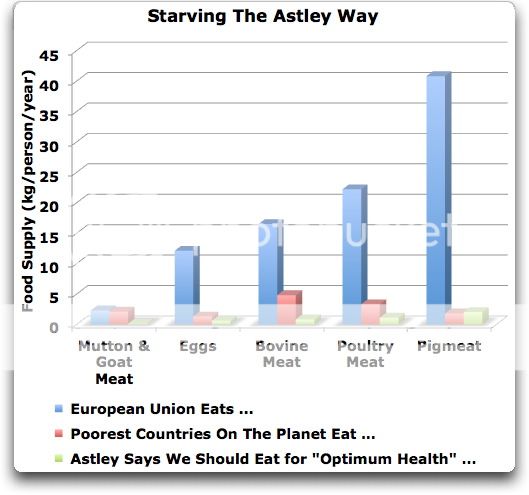
1. The amount of land and energy input necessary to feed a goat on tree leaves and plant stems and old tin can labels and then eat the goat is GREATER than the amount of land and energy input necessary to feed a human on tree leaves and plant stems and old tin can labels.
2. Instead of having chickens eat maggots and then we eat the chicken drumsticks, we’d be better off eating the maggots ourselves.
3. In contrast to the evil “Western” diet, he “Eastern” diet does not cause any health problems, you can tell by the pictures of the folks there, they look like they are all in excellent health.
4. Farmers all over the world should forego utilizing eggs, milk, cheese, leather gloves and shoes and belts, rennet, horn, hair, sheepskin coats, goose down, and all other animal products.
5. Farmers of the world are really stupid. THey keep animals, and any city boy knows they’d be better off eating the tree leaves and the maggots themselves.
Oh, yeah, I forgot one claim …
6. William Astley knows exactly how much meat everyone should eat, and he wants you to stop eating it, by god, because … well … Bill’s worried about your health. So he’s stepped up to the plate to tell you just what you’re doing wrong.
I gotta say, when you single-issue fanatics put your heads down and charge, you don’t pay much attention to reality, do you?
So let’s look at a bit of reality, shall we?
William, I wish you success on your quest to get people to eat maggots and plant stems directly without passing them through animals first. And I wish you the best of luck convincing people that the “Astley Least Developed Countries Diet” is the way to go.
I do think, however, that if you really want to get your ideas across and get some traction, you should find some dumb people to talk to. Here, this is a science site, and single-issue fanatics don’t do well here … here, we actually think about claims like yours, and unfortunately, yours melt in the heat of the public inquiry.
So please, take it somewhere else. In particular it doesn’t belong on a thread about energy policy.
w.
Sonja Boehmer-Christiansen says:
March 18, 2013 at 6:17 am
Sonja, always good to hear from you. But sadly, that comment just proves you are a European and don’t understand American politics. For example, Obama extra-judicially executes Americans and other nationalities with drones based on HIS WORD ALONE … sounds like one man calling the shots to me, both figuratively and literally.
In the US, particularly (and sadly) during the last half century or so, the President has immense power. Obama, for example, has dedicated himself to fixing the climate problem through Executive Orders. And no, he doesn’t need to consider “party policies, bureaucracy and underlying ideology, and just as important, electoral advantage”, not one damn bit. He just issues his Executive Order. In this case, Obama himself decided to waste two billion dollars to “fix” things … should I blame the Democratic Party instead of him? Is Obama deciding to piss two billion dollars down a rathole somehow the fault of the bureaucracy as you claim? I say no, the age of personal responsibility isn’t dead … although I’m sure Obama would agree with you and be very happy to blame it all on the bureaucracy, he’s practiced at that, see the Gunwalker and other scandals for proof. Here’s a recent report:
“Executive actions” in practice means the single man dictatorship that you find so hard to believe, he just waves his hand and says “Waste two billion dollars on renewables”, and people scurry to do it.
Say what? Do you really think this post is about “finding a substitute for oil”? It is about HIGH ENERGY PRICES KILLING THE POOR, and your comment is … well … odd. Yes, there’s lots of good things about crude oil … so what does that have to do with high energy prices?
As for natural gas being “easier to transport”, yes and no. I’d rather send natural gas through a pipeline than tar sands oil, for example … but what do oil substitutes have to do with Obama and Chu doing their best to raise energy prices?
First, lots of people will buy from us if we don’t buy from them, and vice versa. It’s called a “trade imbalance” and it happens all of the time, see China as an egregious example … so I’m totally unclear what you’re trying to say.
Second, the US and its friends, that is to say the Western Powers, don’t rule the world like during the time of the great Empires … and? What does that have to do with energy prices in the US hurting the poor?
You say that “energy security will be an important political instrument” … policy wonks like yourself often say things that I don’t understand, I don’t know the language. Energy security is a “political instrument” that does what, exactly?
And more to the point, what does energy security have to do with the poor starving because energy is expensive? Not saying that there is no answer, just saying I don’t see the connection.
My best to you,
w.
In reply to:
Willis Eschenbach says:
March 18, 2013 at 9:16 am
William:
Sorry the issue of land use: animal based diet vs plant based diet is a different topic. You have the last word.
I believe we are in agreement concerning the use of land to grow biofuels.
The US is converting 40% of our corn crop to ethanol. If one includes the total energy input to cut and grind the corn, transport the corn, and triple distill the ethanol, there is no significant reduction in atmospheric CO2 to convert corn to ethanol as opposed to burning fossil fuel.
There are however unintentionally consequences to the converting food to biofuel.
As there is a limited amount of agricultural land to grow food for people or to feed to domestic animals, the US and EU biofuel mandate requires virgin forests to be cut down and will result in food shortages in third world countries during the transition, until agricultural land increases.
EPA’s RFS accounting shows corn ethanol today is worse than gasoline
http://plevin.berkeley.edu/docs/Plevin-Comments-on-final-RFS2-v7.pdf
http://www.senseandsustainability.net/2012/01/26/scrapping-corn-ethanol-subsidies-for-a-smarter-biofuels-policy/
From its first appearance in 1978 to this past December 31st, the policy provided over $20 billion in subsidies to American ethanol producers, costing the U.S. taxpayer almost $6 billion in 2011 alone. Enacted in the spirit of “energy independence,” ethanol subsidies became a redoubt for the agricultural lobby and a lighting rod for criticism from environmentalists and sustainability advocates
To add to the environmental cost of U.S. corn ethanol is the potential of its expanded production to raise global food prices, potentially increasing the likelihood of social unrest and instability worldwide. Some 40 percent of the American corn crop is now distilled into fuel, and The Economist has estimated that if that amount of corn were used as food instead, global food supplies of corn would grow by 14 percent. Both the U.S. Government Accountability Office and the U.N. Food and Agriculture Organization have noted the positive link between U.S. corn ethanol production and rising corn prices. Because of America’s position as the leading corn producer and the status of Chicago-traded corn prices as a benchmark for global ones, the U.S. can have an outsize impact on worldwide food prices. Indeed, corn prices have more than tripled in the last ten years, in no small part due to the ethanol boom.
http://www.time.com/time/magazine/article/0,9171,1725975,00.html
The Clean Energy Scam
The U.S. quintupled its production of ethanol–ethyl alcohol, a fuel distilled from plant matter–in the past decade, and Washington has just mandated another fivefold increase in renewable fuels over the next decade. Europe has similarly aggressive biofuel mandates and subsidies, and Brazil’s filling stations
In the 50 years I’ve been watching this dance, I have yet to see a President or Congress suggest that we start a Manhattan Project-style program to solve the problems of fission and fusion energy production. It’s always been “10 or 20 years and it’ll be solved” (coincidentally the amount of time most researchers will retire from their fields). Find a General Groves and Robert Oppenheimer and demand results.
Willis:
While it is true that these energy policies will kill poor people, I don’t see that happening anytime soon, in the US. I makes perfect sense if you strategy is to maximize voters dependent on federal assistance for food. In fact the latest twist is to troll for more dependent voters, even if you have to import them, that will turn out in volume, on election day, to protect their food supply:
http://www.foxnews.com/politics/2013/03/18/dems-preserve-us-mexico-food-stamp-partnership-while-usda-prepares-for-meat/?utm_source=feedburner&utm_medium=feed&utm_campaign=Feed%3A+foxnews%2Fpolitics+%28Internal+-+Politics+-+Text%29&utm_content=My+Yahoo
And this the logical result of paying more for energy, more for food, and more taxes:
http://freebeacon.com/failure-factories/
William Astley says (March 18, 2013 at 3:13 am): “Most of the Western “health” issues are due to diet…”
I’m no expert in the field, but I find it hard to reconcile a supposedly toxic diet with steadily rising life expectancy and improving quality of life for the elderly.
“””””…..TimO says:
March 18, 2013 at 10:54 am
In the 50 years I’ve been watching this dance, I have yet to see a President or Congress suggest that we start a Manhattan Project-style program to solve the problems of fission and fusion energy production. It’s always been “10 or 20 years and it’ll be solved” (coincidentally the amount of time most researchers will retire from their fields). Find a General Groves and Robert Oppenheimer and demand results……”””””
TimO, you could substitute PV solar or any one of a number of other “energy technologies” for your “fission and fusion” choice; and draw the same questions.
What gives you the idea, that there actually IS a solution to be found ?
Take fusion for example, the energy of the stars.
Physicists are quite confident, that they know, from current physical theory, just what conditions are necessary in order to create a sustained thermo-nuclear fusion reaction to release energy due to mass conversion to “other” energy. They are able to use this to describe the life cycle of stars quite well.
Fundamental to the process, is the need to drive light atoms together at such a high velocity that they coalesce, and form a new heavier atom. Squishing Hydrogen atoms together to get Helium for example. They know the required collision energy and hence necessary Temperature, for a thermally driven mechanism, and in addition, they need to confine those hydrogen atoms in a high density state at those elevated Temperatures , so that many such collisions occur in a small space, for long enough, so that a continuous sutained self perpetuating reaction takes place.
Now no physical material can make a bottle that could contain that dense material at that Temperature even for an instant, let alone indefinitely to make a working reaction.
So the only known way to contain such material conditions, is by the use of the known forces of nature.
Last time I checked, there were precisely four forces in nature. Gravitation, electromagnetism, the strong nuclear force, and the weak nuclear force.
I’m not an expert on such physics, but I believe it is true, that the strong and the weak nuclear forces, are short range forces, and essentially are limited to being observed inside atomic nuclei.
The strong force evidently holds the nucleus together, and the weak force evidently moderates beta decay.
So that means that the only forces that can be observed in the macro world, are gravitation, and electro-magnetism. Both of those forces have infinite range, and are not confined to a small space like the atomic nucleus.
Now gravitation is by far the weakest of the four known forces; yet it binds the stars together so that the conditions for thermo-nuclear fusion can exist, and be maintained to power the stars.
Because gravity is so weak, the amount of material and the size of a gravitational thermonuclear reactor is astronomical; star sized in fact.
So nyet, on building here on earth, a gravity confined thermo-nuclear reactor.
So now that leaves us with electro-magnetism, as the only remaining long range force, that we might use to confine the active ingredients, of a TN reactor.
Well so like charges repel, and unlike charges attract, and like magnetic poles repel, and unlike magnetic poles attract.
So obviously all one has to do, is to put together a bunch of magnets, or charged conductors, in such a way, as to push some ionised hydrogen atoms or whatever together at high density, and heat them with a blow torch to a hundred million degrees, and there you have it.
At this point I have to break the bad news to you; that little problem of putting some magnets or charged conductors to push everything together and squish it.
Now you have to [google] EARNSHAW’S THEOREM..
Which basically says, there is no stable point anywhere in a static electric or magnetic field.
No combination of magnets or electric charges, can create an electric or magnetic field which has a stable point at which another charge of magnetic pole, could be held in stable equilibrium.
Now gravity, so far as I know is only of the attractive kind, there is no pushing and shoving in a gravity field, only attraction pulling everybody together. The attraction is not very strong, but given enough mass, and eventually it starts to get noticed.
Earnshaw’s theorem does not apply to gravitation; only to EM fields.
Now there is that little word “static” in Earnshaw’s theorem. In principle, if you can observe what is going on; who is moving out of place, and react quickly enough and apply a little shove here and there, you might keep all your ducks in line for long enough to get a reaction.
That is what Tokomaks are all about. Trying to use dynamic fields to create a stable condition, that static fields cannot.
Good luck on that; when a fuse blows, the whole thing blows up, like an unstable aircraft, when the fly by wire computer fails.
So wish all you want; controlled thermo-nuclear fusion is the energy of the future; and always will be.
Gary Hladik says:
March 18, 2013 at 11:46 am
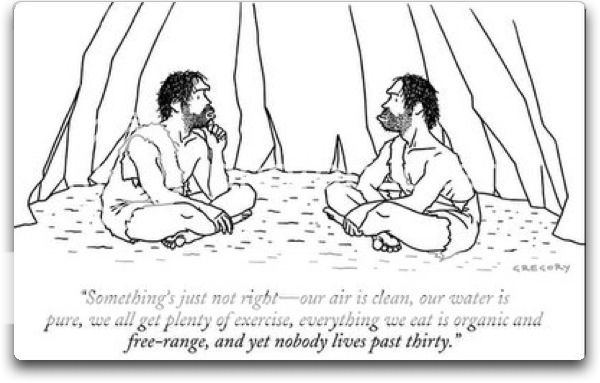
You’re not the only one that finds it hard to reconcile the Astley diet with reality …
Only in the fantasy world of Obama can you divert an existing income stream AWAY from the general fund to instead provide corporate welfare and state it will not increase the debt.
Re William Astley’s maggot diet, I just came across this article in the Telegraph: 10 reasons why we should eat insects.
http://www.telegraph.co.uk/culture/tvandradio/9937633/10-reasons-why-we-should-eat-insects.html
Apparently, the reasons include 1) Insects could be the solution to world hunger, 7) Many other countries are already eating insects. Cambodians eat tarantulas, in Thailand they deep fry crickets. The UK are way behind.
Comments include the following gems: “The UK are way behind? Way behind what? The Cambodians probably think we’re in front.”
“Eat insects? We won’t even eat horses in the UK!”
Sounds like a liberal/environmentalist dream. Imagine there’s some kind of problem in the developed nations, then look to the poorest areas of the world as the example of how we should live our lives.