From the National Science Foundation: Threading the Climate Needle: The Agulhas Current System

Increased Agulhas “leakage” significant player in global climate variability

The Agulhas Current which runs along the east coast of Africa may not be as well known as its counterpart in the Atlantic, the Gulf Stream. But now researchers are taking a closer look at this current and its “leakage” from the Indian Ocean into the Atlantic Ocean–and what that may mean for climate change
In results of a study published in this week’s issue of the journal Nature, a team of scientists led by University of Miami Rosenstiel School of Marine & Atmospheric Science Oceanographer Lisa Beal, suggests that Agulhas leakage could be a significant player in global climate variability.
The Agulhas Current transports warm and salty waters from the tropical Indian Ocean to the southern tip of Africa. There most of the water loops around to remain in the Indian Ocean (the Agulhas Retroflection), while some water leaks into the fresher Atlantic Ocean via giant Agulhas rings.
Once in the Atlantic, the salty Agulhas leakage waters eventually flow into the Northern Hemisphere and act to strengthen the Atlantic overturning circulation by enhancing deep-water formation.
Atlantic overturning circulation is technically known as Atlantic meridional overturning circulation (AMOC); it carries warm shallow water into northern latitudes and returns cold deep water southward across the equator.
Recent research points to an increase in Agulhas leakage over the last few decades, caused primarily by human-induced climate change.
The finding is profound, oceanographers say, because it suggests that increased Agulhas leakage could trigger a strengthening in Atlantic overturning circulation–at a time when warming and accelerated meltwater input in the North Atlantic has been predicted to weaken it.
“This could mean that current IPCC model predictions for the next century are wrong, and there will be no cooling in the North Atlantic to partially offset the effects of global climate change over North America and Europe,” said Beal.
“Instead, increasing Agulhas leakage could stabilize the oceanic heat transport carried by the Atlantic overturning circulation.”
There are also paleoceanographic data to suggest that dramatic peaks in Agulhas leakage over the past 500,000 years may have triggered the end of glacial cycles.
These data are further evidence that the Agulhas system and its leakage play an important role in the planet’s climate, Beal and others say.
“This study shows that local changes in atmospheric and oceanic conditions in the Southern Hemisphere can affect the strength of the ocean circulation in unexpected ways,” said Eric Itsweire, director of the National Science Foundation (NSF)’s physical oceanography program, which funded the research.
“Under a warming climate,” said Itsweire, “the Agulhas Current system near the tip of South Africa could bring more warm salty water from the Indian to the Atlantic Ocean and counteract opposing effects from the Arctic Ocean.”
The study establishes the need for additional research in the region that focuses on Agulhas rings, as well as on the leakage, believes Beal.
Climate modeling experiments are critical, she said, and need to be supported by paleoceanographic data and sustained observations to firmly establish the role of the Agulhas system in a warming climate.
“Our goal now is to get more of the scientific community involved in research on the Agulhas system and its global effects,” said Beal. “The emphasis has been too long in the North Atlantic.”
The Agulhas Current Time-Series Experiment, or ACT, was launched in April 2010 to measure the variability of the Agulhas Current using a combination of current meter moorings and satellite data.
Beal, who serves as chief scientist, spent one month aboard the research vessel Knorr in the southwest Indian Ocean deploying oceanographic instruments.
The data gathered in situ, when combined with along-track satellite information, will help increase our understanding of how the Agulhas system is changing in a warming climate, Beal said.
The scientific team included Beal, Wilhelmus P.M. de Ruijter of Utrecht University in the Netherlands, Arne Biastoch of Leibniz- Institut für Meereswissenschaften (IFM-GEOMAR) in Germany, and Rainer Zahn of the Universitat Autònoma de Barcelona in Spain.
It also included members of the Scientific Committee for Oceanic Research (SCOR) Working Group 136 on the Climatic Importance of the Agulhas System, sponsored by SCOR, the International Association for the Physical Sciences of the Oceans, and the World Climate Research Program.
For information on the program, please visit the ACT website.
-NSF-
TomRude says: April 28, 2011 at 10:40 am
TomRude says: April 28, 2011 at 10:42 am
Just the Facts (or Wikipedia…) Learning over parrotting.
In fact Just the Facts, you quote too much of Wiki for not being one Canadian wiki writer… LOL
Try arguing the facts, instead of trying to dismiss the sources…
Furthermore, try to embrace the complexity, rather than making simplistic and inaccurate statements like, “the poles thermal deficit directs atmospheric circulation.”
http://www.bbc.co.uk/programmes/b010mv4w
Mentioned on this BBC show, apparently this is all caused by climate change.
“Recent research points to an increase in Agulhas leakage over the last few decades, caused primarily by human-induced climate change.”
They lack Canute’s wisdom:
“Let all men know how empty and worthless is the power of kings, for there is none worthy of the name, but He whom heaven, earth, and sea obey by eternal laws.”
As if us puny humans could change the course of ocean currents.
Shame on you for your hubris.
“…caused primarily by human-induced climate change,” should be printed in a special type, so we can automatically delete such genuflection, if we have nothing to do with funding the writers-of-the-paper, and just want the science.
Unfortunately the very people these scientists are genuflecting to are creating an economic morass, using Global Warming as a cornerstone of their quagmire-creation. Eventually, via hyper-inflation or else a stagflation-beyond-our-imagination, the economy will be in such a state that grant-money to study nuances in the Agulhas Current will be the last thing anyone is worried about.
It’s a pity, as the “Agulhas Leakage” is very interesting, and well worth study.
I feel sorry for many of these academics. They don’t have a clue, outside their particular area of expertise, and are blissfully unaware they are being used, and are also disposable-after-use, like Kleenex. If they had a clue, they would refuse to genuflect.
I think all the colleges in Poland were closed between May, 1939 and April, 1945. I wonder, as colleges let out for the summer in 1939, if Polish professors were blissfully ignorant, and genuflecting to higher authorities, and planning their 1939-1940 curriculums, unaware there are times when higher education basically shuts down, (unless it pertains to armaments.)
I did not finish this comment – pressed the wrong key!
April 28, 2011 at 12:59 pm
M White
MW gave the link to Material World broadcast on Radio4 at 16:30 today UK time.
First item from the Catlin Arctic survey this time looking at Algae that grows in ice. Amazingly no mention of MMCC
Then the star turn Lisa Beal:
1 Used a model to hindcast the past 50 years to show that the current was changing as a result of………..
2 Admitted to tremendous uncertainty in the volumes of water “leaking”
3 “This area is not studied much because it is so remote from Western Research centres”
4 Said there was paleo evidence (but not what it was) that showed an abrupt change in the current every 100,000 years at the change from glacial to inter-glacial – but now of course it’s all our fault
5 Said that all the models could be wrong – except the one used to make the hindcast!
6 Neither Beal nor the idiot presenter could join up the dots
Cheers
Paul
Just the Facts, for once I dismiss the tri cellular model that your wiki carp endorses. Buzz off.
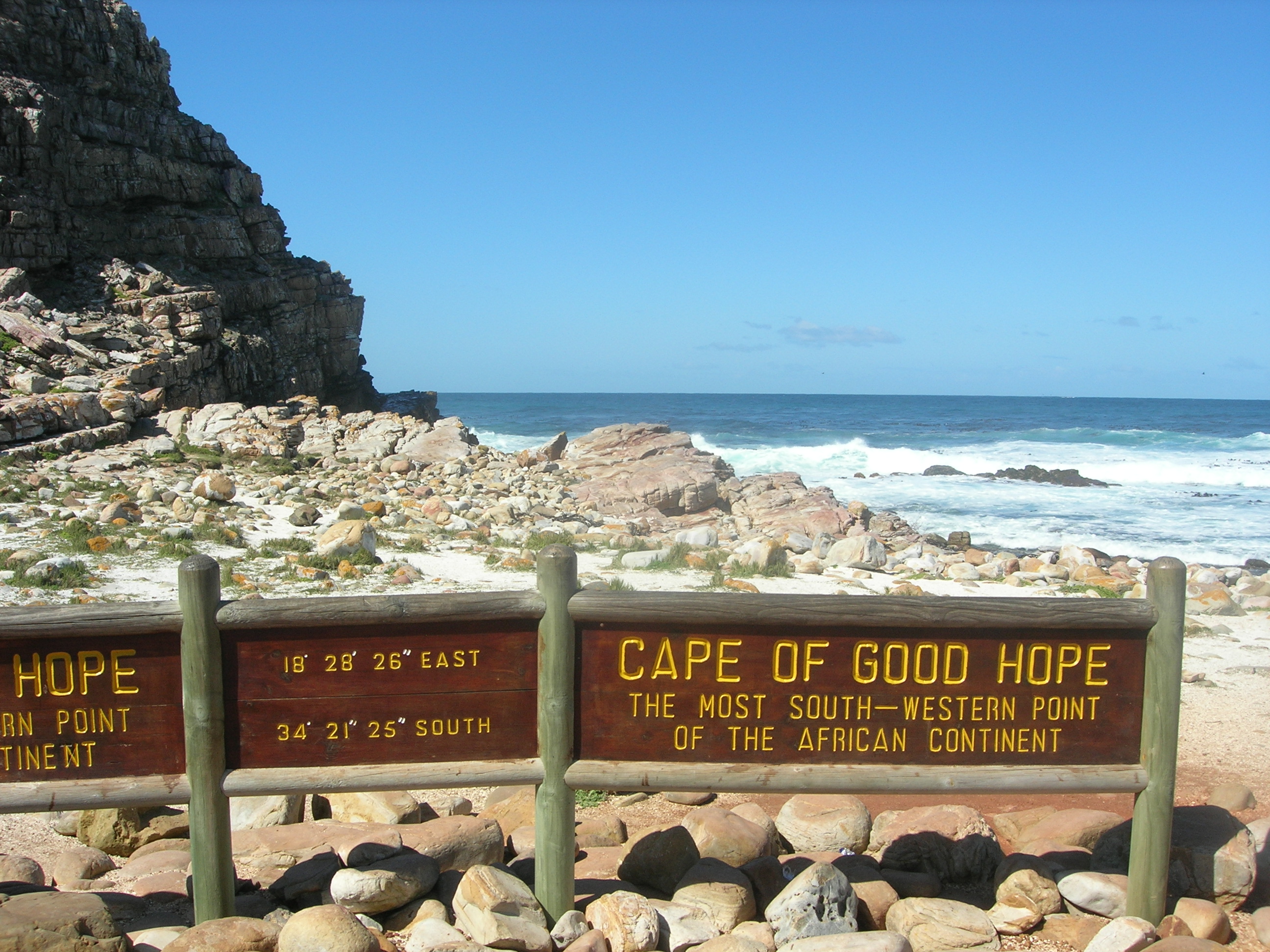
Note that the Portuguese called the Southern point of Africa the ‘Cape of Storms’.
The British rebranded it as ‘Cape of Good Hope’, maybe as a way to allay fears amongst those fortunate souls who were shipped off to Australia.
With the famous winelands, good surfing, and crayfish gallore, what a pain and punishment to be studying the ocean currents. How much are these ‘scientists’ being paid to work under such tremendous stressful conditions?
Can I apply, I might just be able to learn to cope with such an ordeal!
TomRude: Thanks for the link. I also took a quick look at his 2005 book “Global warming: myth or reality : the erring ways of climatology”. The title and table of contents appear interesting.
TomRude says: April 28, 2011 at 1:11 pm
Just the Facts, for once I dismiss the tri cellular model that your wiki carp endorses. Buzz off.
A very cogent argument indeed…
There is too much guessing and speculation here. Please read the actual HTML code of the article before you comment.
Start with the generated comments and tags around the following statement:
“Recent research points to an increase in Agulhas leakage over the last few decades, caused primarily by human-induced climate change.”
The underlying HTML code is as follows:
You can immediately see that the CAGWA rating of the authors’ attribution to human influences of the Agulhas Current System phenomenon has been rated
“weak” because of the unfortunate formulation “human-induced” rather than “human-caused”. The research is promising but this was an unforced error. You may notice that no member of their team has a UEA MBA in Strategic Carbon Management.
On the other hand the authors hugely improved their research grant eligibility by reversing the cause and effect of the relationship between temperature changes and the Agulhas current.
Their chances are not bad after all.
You need to know how to read these things.
Just The Facts says:
April 27, 2011 at 8:28 pm
“No, Boundary Currents;
http://en.wikipedia.org/wiki/Western_Boundary_Current
are subsets of Ocean Gyres;
http://en.wikipedia.org/wiki/Ocean_gyre
which are caused by Earth’s Rotation, not wind….
What’s the GHC? Are you talking about the Atlantic Meridional Overturning Circulation?”
You need to come to grips with dynamical basics instead of merely citing Wikipedia without proper sense of context. The great atmospheric and oceanic gyres are all DRIVEN by the wind. Rotation merely deflects the trajectory of motion into gyres.
In referring to the thermohaline circulation I mistyped GHC for THC. The attribution of primary oceanic heat circulation to the THC is one of the great shibboleths of “climate science.”
Did somebody hand out a list of ocean currents and recurring systems to groups of researchers, with an instruction to create a wonderful global warming paper? Just about every current and cycle has now been mentioned in the past decade as central to the problem of man-made global warming.
Can anybody refer me to one paper that clearly shows the source of heat that causes these warmed or cooled currents to do their acrobatics? Would it not help if authors showed if heat content was conserved within their nominated system, or whether their mechanism depended upon a clearly described external heating or cooling source?
Bob may I recommend “Dynamic Analysis of Weather and Climate” 2ed 2010, Springer Praxis by Leroux, his final book?
sky says: April 28, 2011 at 3:42 pm
You need to come to grips with dynamical basics
Yes, I struggle with this, and expect that humans will do so for many generations into the future.
instead of merely citing Wikipedia without proper sense of context.
Wikipedia is just a vehicle. We have had a number of requests for tutorials, e.g:
http://wattsupwiththat.com/reference-pages/geomagnetism/#comment-610048
I am working on developing link farms to try to serve this generally informative purpose, but I agree that one must be skeptical of Wikipedia, (well as all other sources), as some of the content is suspect, but this should comes as a surprise to few.
The great atmospheric and oceanic gyres are all DRIVEN by the wind.
“DRIVEN” is an entrée into semantics. Wind is an equalization of pressure due to atmospheric imbalances. Solar energy, earth’s rotational energy and tidal forces are the primary “drivers” of oceanic and atmospheric gyres.
The attribution of primary oceanic heat circulation to the THC is one of the great shibboleths of “climate science.”
I don’t understand your use of shibboleths but I do agree that THC Thermo Haline Circulation” represents only a segment of the ocean’s circulation system. How about we call it the Rotational Gravitational Thermo Haline Circulation (RGTHC)?
Just The Facts says:
April 29, 2011 at 10:56 pm
The basics of Newtonian dynamics are not as difficult as you suggest. The term “driven” is conventionally used to designate the factor that supplies the motive force. For ocean currents there are only the wind-stresses on the surface and the and the gravitational force acting to produce density-driven motions that, by definition, constitute the THC. There can be no THC without gravity. Shibboleth is an appropriate term when the massive ocean heat transfer poleward by the wind-driven gyres is misattributed to the orders-of-magnitude weaker adjunct of THC.
sky says: April 30, 2011 at 5:09 pm
The term “driven” is conventionally used to designate the factor that supplies the motive force.
Yes, but wind is just a medium, like saying rivers are driven by water, versus solar energy and gravity. Or that a car’s transmission drives the wheels, versus the engine doing so.
For ocean currents there are only the wind-stresses on the surface and the and the gravitational force acting to produce density-driven motions that, by definition, constitute the THC.
I disagree. Earth’s rotation results in the Coriolis Effect;
http://en.wikipedia.org/wiki/Coriolis_effect
hence why Gyres rotate clockwise in the northern hemisphere and counter-clockwise in the southern hemisphere. Earth’s orbit around the sun results in seasons, hence the building and melting of the Polar icecaps, which helps to fuel ocean circulation. Earth’s rotation in concert with the moon’s orbit around Earth, Earth’s orbit around the Sun, and the gravity of Earth, the Moon and the Sun, result in the continually evolving tidal force on Earth, which impacts circulation, e.g.:
http://horizon.ucsd.edu/miller/download/GoA_Tides/GoA_Tides.pdf
Shibboleth is an appropriate term when the massive ocean heat transfer poleward by the wind-driven gyres is misattributed to the orders-of-magnitude weaker adjunct of THC.
I do not disagree that wind impacts ocean circulation (particularly surface currents) through Ekman Transport;
http://en.wikipedia.org/wiki/Ekman_transport
http://oceanmotion.org/html/background/ocean-in-motion.htm
and Langmuir Circulation;
http://en.wikipedia.org/wiki/Langmuir_circulation
however the energy is simply transferred, the Wind is not in and of itself a driver. Furthermore, I agree that Salinity and Temperature are likely minority factors in Ocean Circulation, however when Earth’s Gravity, the Moon’s Gravity, the Sun’s Gravity, Earth’s Rotation and Earth’s Orbit, are included, my sense is that the energy transferred to the Oceans by wind is minority factor in the overall Oceanic Circulation. How about the Gravi Ekman Rota Thermo Haline Circulation (GERTHC)?… 🙂
Just The Facts says:
May 2, 2011 at 8:12 pm
I’ve sketched the physical basis of scientific terminology as used by physical oceanographers. You seem intent on making up your own, with scant comprehension of physical dynamics. To say that wind is merely a medium, like water in a river is to ignore the tractive forces it exerts on the ocean surface. They produce not only the major currents, but also the wind-driven sea waves. Rivers are gravity driven, as is the THC. And unlike wind-stresses, the Coriolis effect is not a real force; it cannot make pool balls roll on a flat table. It is a FICTITIOUS “force” used to explain the EFFECT of meridional differences in the rotational speed, which merely deflect the trajectory of motion in an earth-bound reference frame, in opposite directions in the two hemispheres. Instead of relying on Wikipedia, pick up an introductory text in oceanography (Dietrich wrote a good one) to comprehend what is being said here. Sorry, but I can’t take more time for tutoring.
sky says: May 2, 2011 at 10:17 pm
Just The Facts says:
May 2, 2011 at 8:12 pm
To say that wind is merely a medium, like water in a river is to ignore the tractive forces it exerts on the ocean surface.
The water in rivers exerts tractive forces on the riverbed, hence the resultant erosion, but water is still a medium. As I said earlier, semantics.
Rivers are gravity driven
What about solar energy/evaporation?
And unlike wind-stresses, the Coriolis effect is not a real force; it cannot make pool balls roll on a flat table.
You mean like this?:
http://ww2010.atmos.uiuc.edu/%28Gh%29/guides/mtr/fw/gifs/coriolis.mov
It is a FICTITIOUS “force” used to explain the EFFECT of meridional differences in the rotational speed, which merely deflect the trajectory of motion in an earth-bound reference frame, in opposite directions in the two hemispheres.
More semantics, i.e. “force” versus “effect”, as I referred to it. If the Earth wasn’t rotating then gyres wouldn’t rotate as they do, hence Earth’s rotation is a driver of oceanic gyres.
Sorry, but I can’t take more time for tutoring.
Your pearls of wisdom will be sorely missed…
Just The Facts says:
May 3, 2011 at 8:15 pm
This is getting silly. The video cleary shows balls being THROWN onto a spinning platform, whereupon the trajectory is deflected, mimicking the Coriolis effect. What puts the balls into intial motion (i.e., the thrower) from a state of rest is the driver in accordance with Newton’s laws of motion. That’s not semantics, but an analytic distinction. I’m not going to waste any more time on your elementary confusions.
sky says: May 4, 2011 at 7:39 pm
This is getting silly.
I concur.
The video cleary shows balls being THROWN
Yes, this is to simulate the energy imparted by the Sun, Earth’s Rotation and Earth’s Orbit and Tidal Forces.
mimicking the Coriolis effect
Obviously, as Wikipedia clearly states, “The Coriolis effect is caused by the rotation of the Earth and the inertia of the mass experiencing the effect.”
http://en.wikipedia.org/wiki/Coriolis_effect
In the video the rotation is caused by whoever spun the merry go round…
What puts the balls into intial motion (i.e., the thrower) from a state of rest is the driver in accordance with Newton’s laws of motion.
In relative to what? The ball was in motion relative to Earth before it was thrown. The point is that the rotation imparts vorticity, whether it be Planetary Vorticity or Relative Vorticity:
http://oceanworld.tamu.edu/resources/ocng_textbook/chapter12/chapter12_01.htm
That’s not semantics, but an analytic distinction.
I agree, and a simple one at that. Planetary Vorticity plays an important part in Ocean Circulation, i.e.:
“12.4 Important Concepts
1. Vorticity strongly constrains ocean dynamics.
2. Vorticity due to Earth’s rotation is much greater than other sources of vorticity.
3. Taylor and Proudman showed that vertical velocity is impossible in a uniformly rotating flow. The ocean is rigid in the direction parallel to the rotation axis. Hence Ekman pumping requires that planetary vorticity vary with latitude. This explains why Sverdrup and Stommel found that realistic oceanic circulation, which is driven by Ekman pumping, requires that f vary with latitude.
4. The curl of the wind stress adds relative vorticity to central gyres of each ocean basin. For steady state circulation in the gyre, the ocean must lose vorticity in western boundary currents.
5. Positive wind stress curl leads to divergent flow in the Ekman layer. The ocean’s interior geostrophic circulation adjusts through a northward mass transport.
6. Conservation of absolute vorticity in an ocean with constant density leads to the conservation of potential vorticity. Thus changes in depth in an ocean of constant density requires changes of latitude of the current.
http://oceanworld.tamu.edu/resources/ocng_textbook/chapter12/chapter12_04.htm”
I’m not going to waste any more time on your elementary confusions.
Yes, maybe you should waste some time on your own…