From the National Science Foundation: Threading the Climate Needle: The Agulhas Current System

Increased Agulhas “leakage” significant player in global climate variability

The Agulhas Current which runs along the east coast of Africa may not be as well known as its counterpart in the Atlantic, the Gulf Stream. But now researchers are taking a closer look at this current and its “leakage” from the Indian Ocean into the Atlantic Ocean–and what that may mean for climate change
In results of a study published in this week’s issue of the journal Nature, a team of scientists led by University of Miami Rosenstiel School of Marine & Atmospheric Science Oceanographer Lisa Beal, suggests that Agulhas leakage could be a significant player in global climate variability.
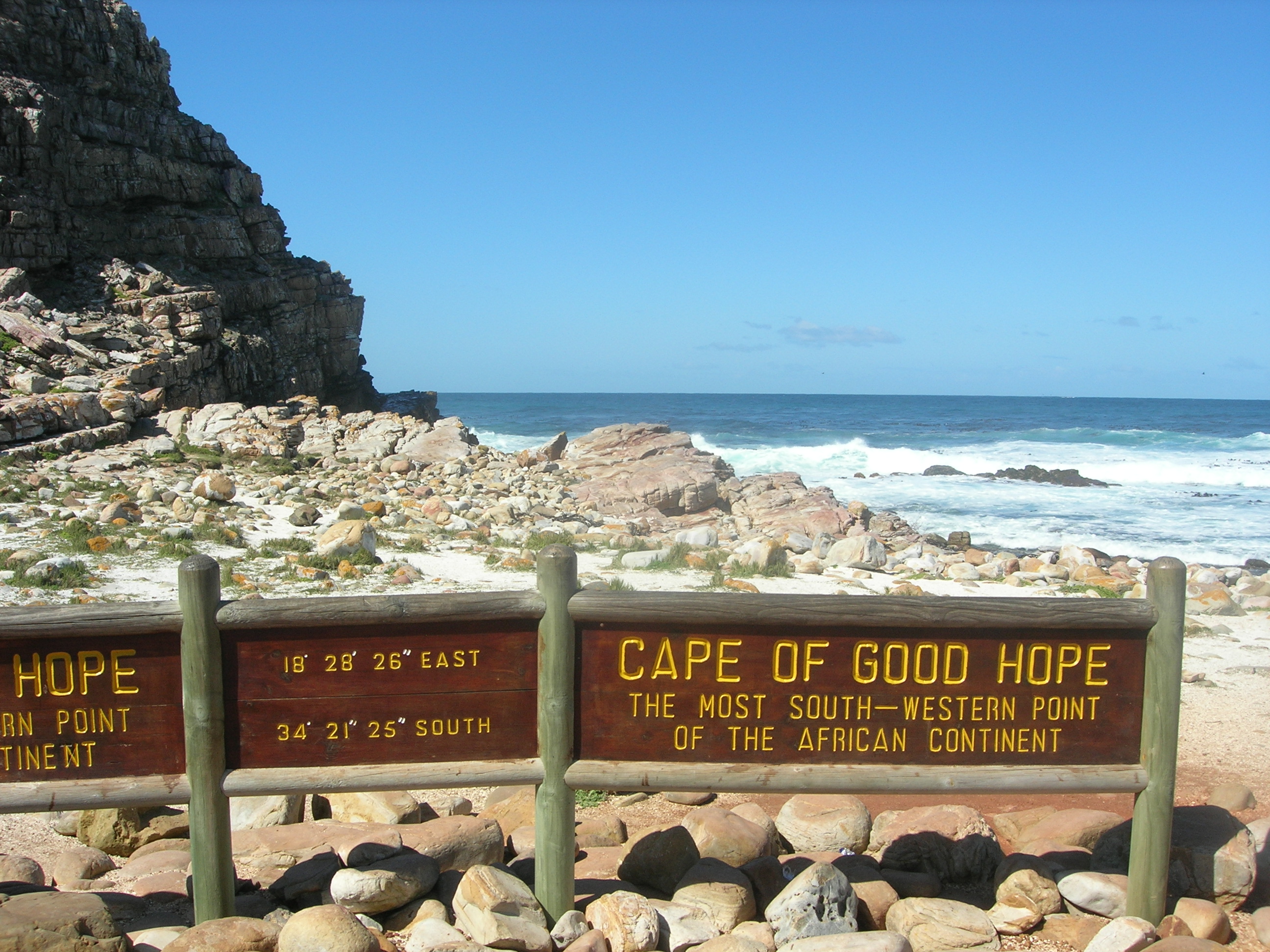
The Agulhas Current transports warm and salty waters from the tropical Indian Ocean to the southern tip of Africa. There most of the water loops around to remain in the Indian Ocean (the Agulhas Retroflection), while some water leaks into the fresher Atlantic Ocean via giant Agulhas rings.
Once in the Atlantic, the salty Agulhas leakage waters eventually flow into the Northern Hemisphere and act to strengthen the Atlantic overturning circulation by enhancing deep-water formation.
Atlantic overturning circulation is technically known as Atlantic meridional overturning circulation (AMOC); it carries warm shallow water into northern latitudes and returns cold deep water southward across the equator.
Recent research points to an increase in Agulhas leakage over the last few decades, caused primarily by human-induced climate change.
The finding is profound, oceanographers say, because it suggests that increased Agulhas leakage could trigger a strengthening in Atlantic overturning circulation–at a time when warming and accelerated meltwater input in the North Atlantic has been predicted to weaken it.
“This could mean that current IPCC model predictions for the next century are wrong, and there will be no cooling in the North Atlantic to partially offset the effects of global climate change over North America and Europe,” said Beal.
“Instead, increasing Agulhas leakage could stabilize the oceanic heat transport carried by the Atlantic overturning circulation.”
There are also paleoceanographic data to suggest that dramatic peaks in Agulhas leakage over the past 500,000 years may have triggered the end of glacial cycles.
These data are further evidence that the Agulhas system and its leakage play an important role in the planet’s climate, Beal and others say.
“This study shows that local changes in atmospheric and oceanic conditions in the Southern Hemisphere can affect the strength of the ocean circulation in unexpected ways,” said Eric Itsweire, director of the National Science Foundation (NSF)’s physical oceanography program, which funded the research.
“Under a warming climate,” said Itsweire, “the Agulhas Current system near the tip of South Africa could bring more warm salty water from the Indian to the Atlantic Ocean and counteract opposing effects from the Arctic Ocean.”
The study establishes the need for additional research in the region that focuses on Agulhas rings, as well as on the leakage, believes Beal.
Climate modeling experiments are critical, she said, and need to be supported by paleoceanographic data and sustained observations to firmly establish the role of the Agulhas system in a warming climate.
“Our goal now is to get more of the scientific community involved in research on the Agulhas system and its global effects,” said Beal. “The emphasis has been too long in the North Atlantic.”
The Agulhas Current Time-Series Experiment, or ACT, was launched in April 2010 to measure the variability of the Agulhas Current using a combination of current meter moorings and satellite data.
Beal, who serves as chief scientist, spent one month aboard the research vessel Knorr in the southwest Indian Ocean deploying oceanographic instruments.
The data gathered in situ, when combined with along-track satellite information, will help increase our understanding of how the Agulhas system is changing in a warming climate, Beal said.
The scientific team included Beal, Wilhelmus P.M. de Ruijter of Utrecht University in the Netherlands, Arne Biastoch of Leibniz- Institut für Meereswissenschaften (IFM-GEOMAR) in Germany, and Rainer Zahn of the Universitat Autònoma de Barcelona in Spain.
It also included members of the Scientific Committee for Oceanic Research (SCOR) Working Group 136 on the Climatic Importance of the Agulhas System, sponsored by SCOR, the International Association for the Physical Sciences of the Oceans, and the World Climate Research Program.
For information on the program, please visit the ACT website.
-NSF-
Does this mean all the $billions that’s been wasted in the West on bird mincers, and all the CO2 taxation we’ve been subjected to, and the $billions squandered on carbon trading has been for nought! Oh spiffing. So it’s not our fault after all – the blame for global warming – ooer, global warming! – lies squarely with the Indians and Chinese. Or maybe it’s those nasty pirates in Somalia, maybe it’s all their fault, churning up the waters with their boats as they bag another oil tanker for ransom. Then again, maybe it’s the great white sharks off the tip of South Africa, mixing the waters as they chase after seals, thus causing the leakage of warm water from the Indian Ocean into the South Atlantic. CAN I HAVE A GRANT TO STUDY THIS, PLEASE!
First, *if* this finding is correct, there are a number of points to consider:
– The role of the Agulhas has long been studied, and this is only one more in a sequence of growing understanding, and not a definitive conclusion (e.g. http://www.sajs.co.za/index.php/SAJS/article/view/160/281)
– “the IPCC models are wrong” is a partial irrelevancy … (aside from the fact that the IPCC does not have models — more correctly these are modeling groups contributions to the CMIP archive which is reported on in the IPCC) … the primary importance of projections to society is on policy horizon time scales, and on these timescales the shutdown of the AMOC is not an issue.
– If this paper is right, then the consequence is an exacerbation of warming in Europe … not good!
It must be written on a rock.
IPCC does not have models.
There is leakage around the Cape of Good Hope..?
Will someone for [snip . . pete’s sake? . . kb] put the plug back in..!
Gord Richmond says: April 27, 2011 at 2:58 pm
“Recent research points to an increase in Agulhas leakage over the last few decades, caused primarily by human-induced climate change.”
They appear to be so deeply in love with the notion of human-induced climate change that it completely escapes them that changes in the Agulhas leakage may be a cause of the little climate change as we have experienced, rather than an effect.
Well said!
This is just classic group think in the extreme.
They are literally blind to the absurdity of their claims and can’t even see the logical implication that this is another thing that causes natural variability – natural variability which they obstinately deny because it doesn’t fit their groupthink myopic viewpoint.
The Agulhas current produces some freak waves sufficient to sink ships. Is this a way to create freak waves to sink the ship that is IPCC?
I like warm weather folks, long may it continue.
John Marshall – it doesn’t need a freak wave – or ANY wave – to sink the IPCC…
It would – and should – just sink….
Profound!! The only profound thing in this study is the prostitution of science for monetary gain. Human Induced Climate Change!! 39/100 ths of one% of CO2 is causing major changes in ocean currents *****! Profound indeed that prostitution is the oldest known profession, these current so called modernist scientists have no shame, nor will they ever have real acclaim or a worthwhile reputation in history.
Yet Western governments are asked to prepare first for warmer NH winters and now colder NH winters.
Here is Dr. James Lovelock talking to the Guardian in March 2010.
The entire report is made irrelevant by their comment “caused primarily by human-induced climate change.” This is simply an assertion. They have assumed what needs to be proved. Reference to hundreds of thousands of papers assuming what needs to be proved (the weight of the evidence?) does not remove the defect.
Embedded in this totally irrelevant paper is a phrase that makes the paper even more irrelevant: “Climate modeling experiments are critical”.
Excuse me. Since when is modeling an experiment? Experiments may be suggested by model results but the model results are NOT results from the real world. A model is nothing but a synthetic working form of an hypothesis at best or a rank off the wall speculation at worse. A model cannot produce data – no way and do how. Even if actual data from the real world matched the numbers from the model, the model is not proved to be a correct description of the real world. It is simply not disproved.
So here we have it. The paper starts with an unproven assumption, asserts that a newly discovered phenomenon is changing, makes a Humpty Dumpty use of a trigger word, and concludes with “we need more money to study the problem.”
They are NOT doing science. They are simply pimping for more free money.
I have a simple answer for them: HELL NO!
This confirms it, they are Insane. The Aghulas current is huge, massive and it flows round South Africa where it is joined by water from deep upwelling and continues as the Bengueala current. Where the hell is Leakage in a continuous system, How can a few molecules of gas effect trillions of tonnes of water flowing???????????
Ocean current system is the most likely source of the long term natural climate change. This particular current may have its role, but I doubt that it is the primary cause.
‘Recent research points to an increase in Agulhas leakage over the last few decades, caused primarily by my wife changing the colour of her lipstick…’
Any less logical..??
Allan M says
Climate modeling experiments are critical, she said, and need to be supported by paleoceanographic data and sustained observations to firmly establish the role of the Agulhas system in a warming climate.
Isn’t that the wrong way round?
————————————————————————————–
Not for a pre- judged outcome no,you can adjust the paleo data,real time observation
is much more hard to adjust to the required meme…unless your name is Hansen!!
Here is a chart of the Agulhus going back to 1871. It has strong multidecadal features like the other major ocean indicies such as the Atlantic Multidecadal Oscillation.
Most importantly, it is highly correlated with Southern Hemisphere temperatures.
http://img535.imageshack.us/img535/7262/agulhasfeb11.png
Two thoughts:
a) Is there good fishing down there? Mixing zones are usually great. (Weather study money and fishing could be a win-win).
b) Leakage can be prevented by use of “Kendall Incontinence Diapers & Briefs. Free Shipping On Orders 49+”.
Ah, so humans driving their cars is changing oceanic circulation. Of course! How could we be so blind? CO2 from our vehicles would just obviously be on the same order of the equation as the coriolis effect, solar heating, wind direction, sea floor morphology, etc..etc..
Why would anyone financially support someone who jumps to conclusions as quoted above?
In answer to the question whether the sub-tropical convergence could cut off the Agulhas Current, we published a paper in Paleooceanography that showed that the Agulhas Current kept going during the last glacial, rather than being cut off. However it was based on only 2 deep sea cores that sampled that period. I think people have agreed for a long while now that the Agulhas was an important leak of heat from the Indian to the Atlantic ocean, and it does it when, instead of retroflecting towards the subtropical convergence, rinks break off and float west into the S Atlantic. This became clearer through the era of satellite imagery where the warm Agulhas water is easily distinguished from Atlantic water. The rest of the implications are less clear.
James Sexton says: April 27, 2011 at 6:21 pm
What part of this “This could mean that current IPCC model predictions for the next century are wrong, and there will be no cooling in the North Atlantic to partially offset the effects of global climate change over North America and Europe,” said Beal. do you guys not understand?
I thought that line is a set-up for how much warmer it will get in the western NH.
Am I the only one seeing a conflict between these two statements from this report?
“Recent research points to an increase in Agulhas leakage over the last few decades, caused primarily by human-induced climate change.”
“There are also paleoceanographic data to suggest that dramatic peaks in Agulhas leakage over the past 500,000 years may have triggered the end of glacial cycles.”
Ferd says:
April 28, 2011 at 7:50 am
Am I the only one seeing a conflict between these two statements from this report?
“Recent research points to an increase in Agulhas leakage over the last few decades, caused primarily by human-induced climate change.”
“There are also paleoceanographic data to suggest that dramatic peaks in Agulhas leakage over the past 500,000 years may have triggered the end of glacial cycles.”
No, you’re most certainly not the only one!
How come they are unable to see the contradiction for themselves?
But more pertinent – scientists who have such ‘profound’ contradictions in their paper ought not to receive any more funding.
Oh – and one wonders how come this wasn’t picked up by the peer reviewers, pre-publication?
I think everyone is being very unfair to this respected bunch of mendicants. Al Gore got it much wronger – he had the Agulhas as a cold stream flowing north up the East Coast of Africa and the Benguela as a warm current flowing south on the West Coast. I think he was trying to talk about the thermohaline circulation, but he didn’t say so.
Bob,
please start with this:
http://ddata.over-blog.com/xxxyyy/2/32/25/79/Leroux-Global-and-Planetary-Change-1993.pdf
Just the Facts (or Wikipedia…) Learning over parrotting.
In fact Just the Facts, you quote too much of Wiki for not being one Canadian wiki writer… LOL