Guest Post by Willis Eschenbach
Trading food for fuel, in a world where high food prices already affect the poor, has always seemed like a bad idea to me. If I have a choice between growing corn to fuel SUVs versus growing corn to make tortillas, to me that’s a no-brainer. I’ve known too many people for whom expensive tortillas are unobtainable tortillas to vote any other way.
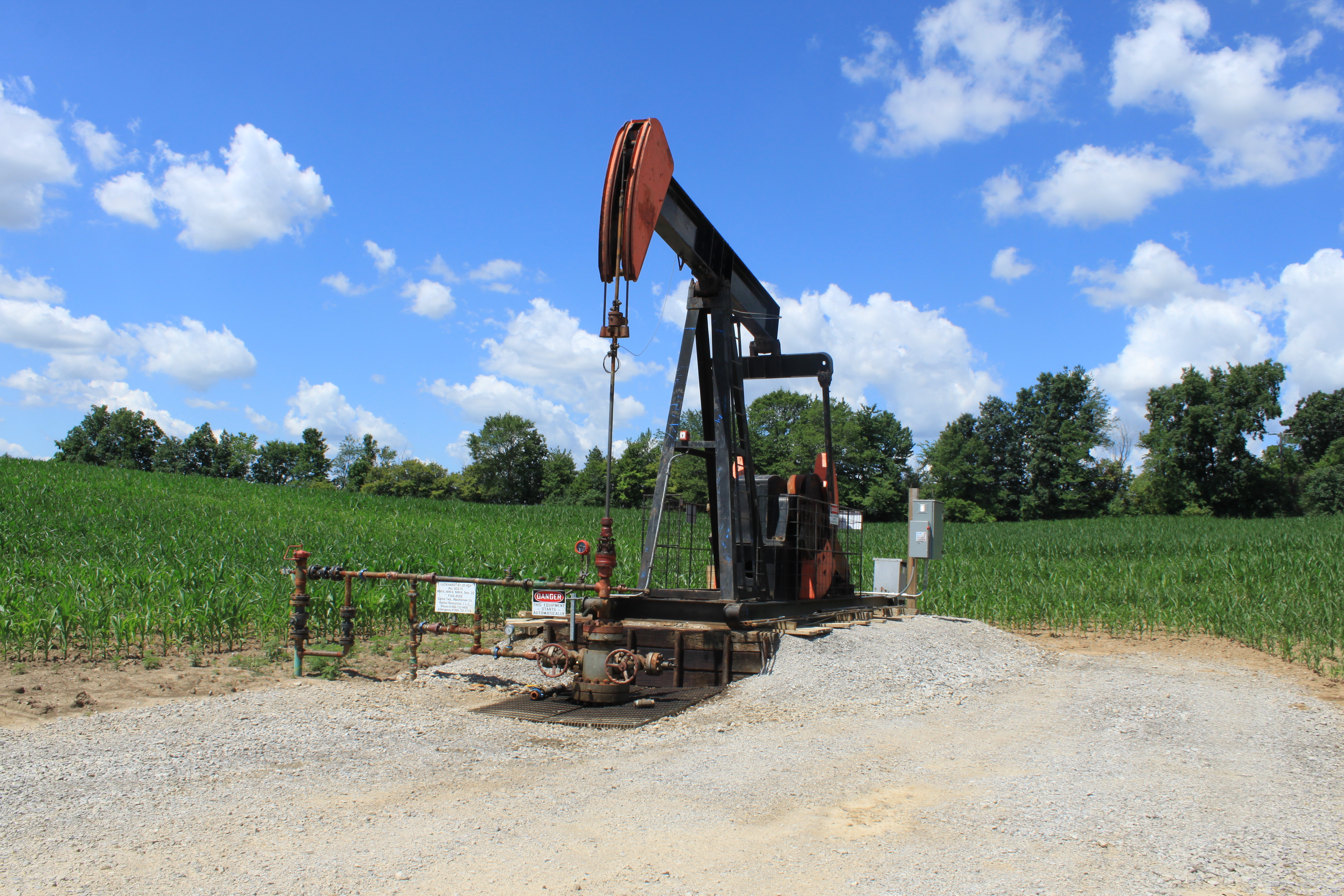
 Figure 1. The preferable kind of corn-field-based fuel, brought to you by a corn field in Michigan. SOURCE
As a result, I’m a long-time opponent of turning corn into fuel. I think it is a crime against the poor, made the worse by the unthinking nature of the ethanol proponents as they advocate taking food out of poor kids’ mouths.
But that’s not the only way that our monomaniacal insistence on renewable energy is taking food from the plates of the poor. For example, tropical forest has been cleared for oil-palm plantations for fuel. But even that is not what this post is about. This post is about trading food for energy in California, the breadbasket for the nation. Here’s the headline:
Fresno County judge rules in favor of I-5 solar project
Jan 03 – The Fresno Bee, Calif.
A Fresno County judge has ruled that a solar energy project along Interstate 5 can move forward despite arguments from the state farm bureau that it will eat up valuable California farmland.
The decision, which comes as good news to the state’s burgeoning solar industry, is the first handed down in the ongoing land war between solar developers seeking real estate for renewable energy and Central Valley farmers trying to protect their tillage.
While the ruling pertains only to the Fresno County project, the decision sends a message across the Valley that agriculture doesn’t necessarily reign supreme.
“I do think it gives a boost to the solar development community,” said Kristen Castanos, a partner at the law firm Stoel Rives in Sacramento who has represented energy ventures and tracked solar efforts on farmland. “This gives counties and developers a little more confidence in moving forward.” SOURCE
This is unbelievably short-sighted. The only good news is that compared to say buildings, it’s much easier to remove a solar installation and return the land to actually producing food. Not easy in either case, but easier for solar. But the good news stops there.
The bad news is, the power thus produced will be much more expensive than power from either fossil fuels or hydropower. But both fossil fuels and hydro are verboten under Governor Jerry “Moonbeam” Brown’s plan to get 30% of all electricity from renewable sources, with “renewable” meaning “renewables other than hydro”. Thirty percent! This madness has already given us some of the highest electrical rates in the country, and we’re not even near to 30% renewable yet.
The worse news is what the dispute was about. California has a strong farmland act, called the Williamson Act. If you put your farmland under the Williamson Act, you can’t develop it, it has to stay farmland. In exchange you get various tax advantages. The important thing to note is that it is a legal contract between the State of California and the owners of the land. This is to prevent the landowner from taking the benefits and then developing the land.
In this case, the article cited above goes on to say (emphasis mine):
Superior Court Judge Donald Black found last month that Fresno County officials acted appropriately two years ago when they canceled a farm-conservation contract that allowed a solar development to proceed on ag land near Coalinga.
The California Farm Bureau Federation sued the county, alleging that the Board of Supervisors did not have the right to cancel the contract put in place under the state’s farm-friendly Williamson Act.
Black said county supervisors met Williamson Act requirements for canceling the contract.
“All parties concede the development of renewable energy is an important public interest both in the state of California and in Fresno County,” Black wrote.
I’m sorry, but there is no public interest in wildly expensive solar power. Nor should County officials be able to break a legal contract at their whim, based on some fanciful claim of a public benefit. The only people being benefitted here, above the table at least, are the owners of the project. The owners will be paid a highly inflated price for their power, which I and other ratepayers will be forced to subsidize. Expensive subsidized energy is not in the public interest in any sense.
In any case, breaking a Williamson Act contract to put in a solar installation definitely reveals the profound hypocrisy of the people behind the project and the useful idiots that support it. They’re approving massive, hideous development on prime farmland in order, they claim, to save the environment. Yeah, pave it to save it, that’s the ticket …
It also sets an extremely bad judicial precedent for future breaking of Williamson Act contracts. Since Kelo vs. New London the expansion of the “taking” powers of governments under the infinitely flexible rubric of “public interest” has ballooned unbelievably. Now we are to the point where they can even take away Williamson Act protections.
The Williamson Act is there to protect the totally irreplaceable, amazingly productive farmlands of California. The Fresno County officials are breaking the intent and spirit of the Williamson Act so that private developers can make a fortune picking the ratepayers’ pockets … and that’s supposed to be in the public interest? Spare me. For me, a kid who grew up on the good rich California earth, that’s a very sad day.
So yes. The idea that you shouldn’t allow the development of solar installations on some of the world’s finest farmland, not just any farmland but farmland legally protected under the Williamson Act, appears to be history in Californica. Infinitely stupid.
Y’know, I love the land here—the fold and break of the coastal hills dropping into the ocean; the wide valleys full of farms; the Sierra Nevada Mountains, where I grew up, towering over the Central Valley; the crazy, blazing deserts; the forests and groves full of deer and fox and mountain lion; and my own little corner where I live in the middle of a redwood forest, with a tiny triangle of the sea visible through the coastal hills. What’s not to like?
But I am roundly fed up with the government, and with the ‘lets power the world on moonbeams, we can all ride high-speed unicorns for transportation and just eat veggie-burgers’ crowd of folks that thinks losing irreplaceable farmland is a good thing in a hungry world, and thinks that hydropower is not renewable energy …
Regards to all,
w.
As far as the corn is concerned, and these facts have been presented to you by varous commentators time and time again, False dichotomy. We don’t raise the kind of corn you can make tortillas from. The surplus the government engineers us to raise will either rot on the ground at the elevator or be converted into distillers grains for cattle feed and alcohol to lower your exhaust emissions. The infrastructure is not in place for switching to flint corn, either.
This is a fascist response to a fascist intiative, leading nowhere but downwards. Fascism from an economic standpoint consists of private “ownership” with state control. The state should be forbidden constitutionally from regulating the use of land for any purpose. It’s a private matter.
Greed and Karma….
Re Kelo v. City of New London
Wikipedia:
In spite of repeated efforts, the redeveloper (who stood to get a 91-acre (370,000 m²) waterfront tract of land for $1 per year) was unable to obtain financing, and the redevelopment project was abandoned. As of the beginning of 2010, the original Kelo property was a vacant lot, generating no tax revenue for the city. It is still vacant.
I’m all in favor of building privately-financed solar power facilities on suitable land; for example, in deserts such as Death Valley. But here in CA-CA land, our senator “Ma’am Barbie Boxer” has blocked a Death Valley solar proposal – because it might impact some underground tortoise or something.
Too bad the orchard owners can’t find some rare tree slug that needs to be protected!
Willis, you need to understand that farming is environmentally nasty. It’s dusty, dirty, they use chemicals and it displaces the natural wildlife. Replacing all that nasty farmland with nice, clean solar is a net positive. So what if the electricity is more expensive, the net CO2 reduction is 0 because you have to have conventional electrical capacity on line to make up for lows and it displaces food? We have the rich to tax for subsidies and food stamps for the poor. It’s all covered. Besides, do you think people own the land? The government owns the land, so they can do with it as they please. Besides, there is more tax money and more graft in the solar, so why wouldn’t they want to steal the land?
Who is John Galt?
Right on, Willis. they are mad. I hate ad hominem, but I’m sorry, there is no other means to describe modern government as protector of the human interest.
Steve Schaper said “As far as the corn is concerned, and these facts have been presented to you by varous commentators time and time again, False dichotomy. ”
I’ve never heard that before, not that I hear everything. But I’m quite sure I could take any hybrid of corn, grind it up into flour, and make a tortilla out of it. But even if what you say is true, because the price of corn is so high, most likely because of the diversion to ethanol, the acreage devoted to corn has gone up considerably. Therefore, there is less farmland to devote to other crops. So all prices on all crops have gone up, not just corn. The farmers love it. They are getting rich.
You know… that “$1 per year” part of the Wikipedida article on Kelo v. City of New London reminds me of “16th section land” in Mississippi and similar things from other states.
As originally envisioned and laid out, the revenue from every 16th section of land was to be used to finance the operation of the school system. This land remained the property of the government and could only be leased, not sold, to private entities.
Generally it was leased out at a dollar per year to people with connections to members of the government.
Is there a count of how many trees are chopped dowm to make way for wind turbines, or to provide access to land for wind turbines ? …………………….
WHY ARE THE GREENS SOOOOOOOO ANTI-ENVIRONMENT ????????
We do convert food to fuel-due to the acreage of the land being taken to grow fuel crops.
Agree 100%…
Ken that is exactly the way to fight such bureaucracy, use their own rules against them. Im sure there is an endangered creature somewhere out there 🙂 🙂
This is the same logic which allows windmill farms that kill 1000’s of birds but blocks harvesting of timber because it might impact a bird, the spotted owl. The logic and the hypocrisy of the enviros is beyond my comprehension. I would call it bad science but I see no science involved.
Isn’t there a desert or two in California?
Steve Schaper says:
January 5, 2013 at 5:00 pm
Steve, you miss the point. You can use the same land either to grow food or to grow fuel. That is what we call a real dichotomy. Call me crazy, but I vote for growing food. One reason is that the world has a much greater thirst for energy.
I just ran the numbers. According to the FAO’s fantastic dataset FAOSTAT, humans in 2009 consumed about 2.9E+16 joules of food energy.
During the same year, the BP Statistical Workbook says that humans used 4.6E+20 joules of primary energy in all forms.
This means that we are using ten thousand times as much fuel energy as food energy. Which in turn means that given the chance, filling only a few percent of global fuel consumption could use every hectare of arable land on earth …
Finally, the most infuriating part of the equation is that it is imposed by force. Refiners are forced to adulterate perfectly good gas with an inferior diluent. That’s sputter-inducing. If it were a valid solution to the energy problem, people would be falling all over it. But it’s not. It is a bogus solution to an imaginary problem, held in place by government fiat at my expense … which is why I sputter. That’s why at the end of the day the numbers don’t matter.
w.
Keb writes “I’m all in favor of building privately-financed solar power facilities on suitable land; for example, in deserts such as Death Valley.”
I’m in favour of decentralised Solar installation. Solar panels on every roof. Centralised power generation is better suited to large efficient methods like nuclear, gas turbine or even coal.
If every one of the proposed panels were to be placed on someone’s roof instead, then there is no need to use the farmland at all for the same energy output. And less need (probably no need) to change the transmission infrastructure.
To Mr. Schaper: The ground in question can raise many crops, not just corn, I’m sure. Out of production is out of production, whatever the other contemplated or mandated use. Stupid ideas remain stupid, whatever the rationalization. Solar power still depends upon expensive and land-hungry installations to produce part-time electricity that has to have a back-up elsewhere in order to be useful. Willis’s point remains valid.
The Law of Unintended Consequences. Green projects hurting the poor once again. Most Green supporters do not understand that this what their policies are actually doing.
They are promoting them because they think they will do good. But they are causing pain instead and are hurting poor people while making some investors richer. Opposite to what they wanted. They need to understand this.
So, Willis, you want central planning. Well, so do the climate alarmists. All we need to do then, is to decide who is going to do the planning! This just re-enforces my long held view that when someone is very bright in one area, he tends to make up for it in some other area.
Looking at corn production and consumption, I can make a case that this year having acres in corn production that was planned to go for ethanol could very well have limited the price increase in this drought year. Corn that was planted to go to ethanol has been diverted into production of (mostly) meat. We have imported large quantities of ethanol made from sugar to replace some of the domestic product. IMHO, there is no better method of allocating resources than the marketplace. We’ve seen just how central planning has turned out in recent history, but we still think it must work here in the US.
Probably the most ironic thing about central planning is how Greenspan thought he could plan the economy. Think about it – one of the inner circle of Ayn Rand. He seemed to think that central planning would work – as long as he was doing the planning. Well, we see where that has led us.
Let the marketplace work. If you feel the need to help people buy the necessary food to live comfortably, that is a political problem, and money can be provided so that they can buy what they need in the marketplace. If there is demand, believe me, the market will respond much better than any centrally planned economy.
GRRRRRrrrrr….
You already know my feeling on this subject Willis.
The word Traitor comes to mind.
This madness has been over the top for a long time. The only thing that is going to speed up the death of this scam is anger from the ordinary citizen. Fortunately they are waking up and beginning to frown. The Greenie promise is proving false, and stirrings are beginning. That’s reflecting through the way politicians are beginning to hesitate on all things Green, particluarly Green waste and Green lies. It’s coming. Painfully slowly, but it is coming.
Nobel prize winning biochemist, Helmut Michel, says all biofuels are “nonsense.”
See…
http://climatesanity.wordpress.com/2012/02/25/nobel-prize-winning-biochemist-says-all-biofuels-are-nonsense/
Has anyone worked out how much diesel alone goes into each litre of ethanol produced. I suspect that it is getting close to a litre…
Ken Mitchell said: ” To bad the orchard growers can’t find a rare tree slug that needs protecting”
Au contrare it is the Waxman slug.
Kermit says:
January 5, 2013 at 5:52 pm
Dang, is my writing that bad? Did anyone else think that was what I said?
What I want is for the Williamson Act contracts to be honored, instead of being improperly nullified via a government “taking”.
w.