By P Gosselin
Green energy follies: An EF-1 low intensity tornado exposes the true vulnerability of solar energy
An article from the German climate science critical Report24 reports on a major disaster involving a solar farm in Indiana that was destroyed by a tornado, underlying the fragility of PV systems as a source of energy.

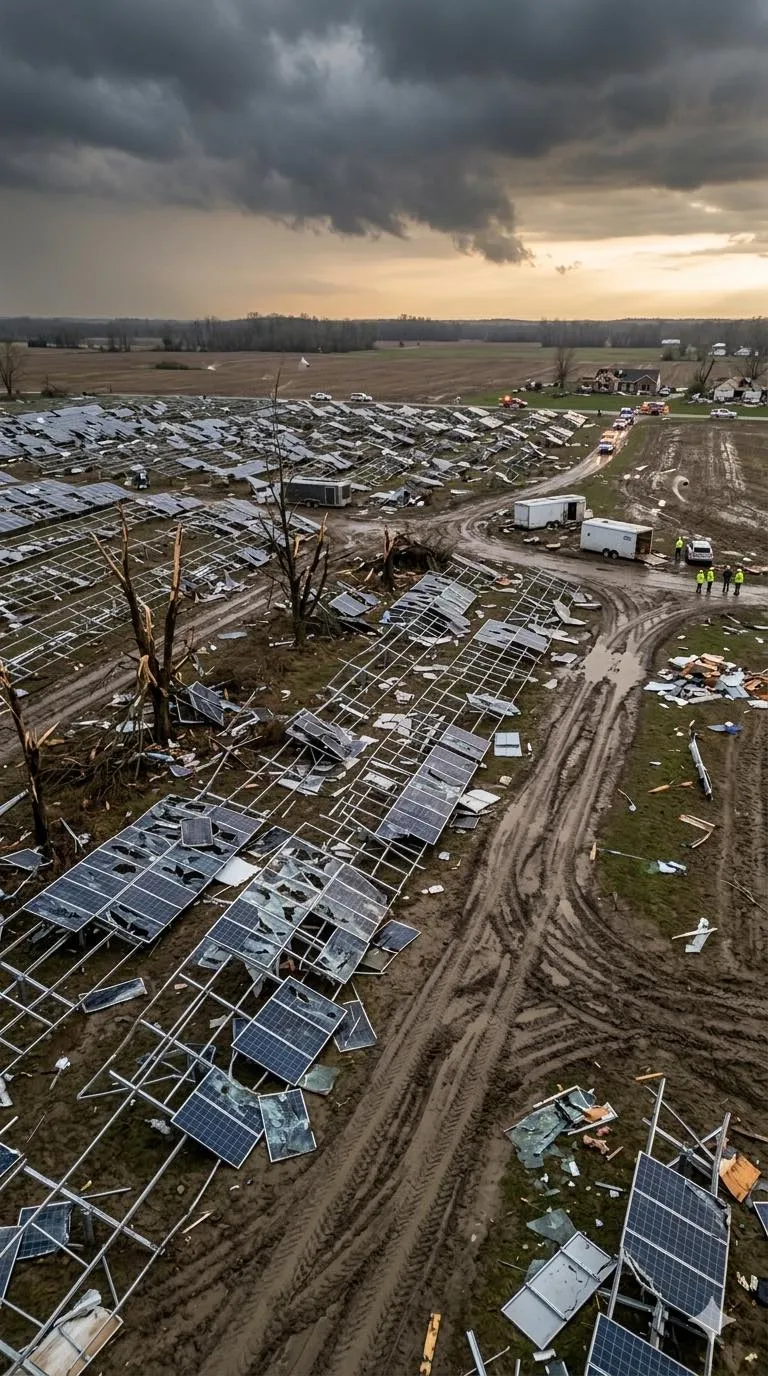
Tornadoes can tear PV farms apart with little ease. Symbol image generated by Grok AI.
On March 10, an EF-1 tornado (a relatively low-intensity storm) struck Wheatfield, Indiana. It directly hit the “Dunns Bridge I & II” solar projects, destroying a significant portion of the facility. According to Report 24, approximately 2.4 million solar modules were damaged or destroyed. Aerial footage showed rows of panels ripped from the ground and twisted metal frame.
The facility is valued at approximately $1 billion. According to sources, manufacturer warranties often exclude tornado damage, potentially leaving the operator (NIPSCO) or customers with a massive bill for reconstruction, unless the government steps in with a bailout plan.
Report24 highlights the “toxic risks” of the sdestruction, suggesting that broken panels could leak heavy metals or other hazardous substances into the soil and groundwater.
The central point of the article is a critique of “green” infrastructure, pointing out that a nearby coal power plant remained unscathed by the storm, showing that traditional energy sources are more resilient and reliable than solar energy.
Report 24 is highly critical of “climate fanatics” and “green ideology,” framing the event as proof that renewable energy infrastructure is too fragile and expensive for practical long-term use. But Germany’s leaders refuse to acknowledge this reality, insisting that green energies are plentiful, cheap, reliable and that the real problem is that not enough has been invested in them.