Guest essay by Eric Worrall
According to the University of Houston and Houston Advanced Research Centre, more investment in renewable energy will prevent a repeat of the deadly power outages during last year’s ice storm.
Energy experts say renewable energy will be key in making Texas’ electricity more reliable in 2022
To learn more about what’s expected in 2022 for clean energy, Houston Public Media spoke with Gavin Dillingham, Vice President of Research for energy with the Houston Advanced Research Center.
KYRA BUCKLEY | POSTED ON JANUARY 7, 2022, 1:20 PM
Experts watching Houston’s energy industry say the pandemic has accelerated the transition away from fossil fuels and towards renewable energy — and demand is growing worldwide for clean, affordable energy.
It comes as leaders in Texas are working to increase reliability of the electric grid after last February’s deadly winter storm caused widespread outages across the state.
Growth in renewable energy will be key making the grid better able to handle sharp increases in energy demand, like what happened during Winter Storm Uri.
To learn more about what’s expected in 2022 for clean energy, Houston Public Media spoke with Gavin Dillingham, Vice President of Research for energy with the Houston Advanced Research Center (HARC).
…
Read more: https://www.houstonpublicmedia.org/articles/news/in-depth/2022/01/07/416801/in-2022-expect-renewable-energy-to-be-key-in-discussion-around-how-to-make-texas-electricity-more-reliable/
My first reaction was to wonder what they are putting into the drinking water in the University of Houston. Anyone can tell just be looking at the output graph (above) that renewables performed dismally during the ice storm. Solar energy dropped away to almost nothing, and wind turbines froze solid.
I’m not denying winterising wind turbines might have saved a few from freezing, but there are other problems.
New York Times wrote a frantic defence of wind last February, which hilariously claimed that “… Blades of some Texas wind turbines did freeze in place, but wind power is estimated to make up only 7 percent or so of the state’s total capacity this time of year in part because utilities lower their expectations for wind generation in the winter in general. …“.
If utilities do “lower their expectations” for wind power generation in winter, there seems no point chasing more wind.
Solar is also a poor performer because in winter the days are shorter and the angle of the sun is lower, even without the added bonus of winter storm clouds darkening the sky or ice and snow covering the solar panels.
So the question is, how could more investment in renewables possibly improve the situation? No amount of investment can capture renewable energy which does not exist, in a winter environment which appears to be consistently hostile to the harvesting of any form of renewable energy.
This is exactly how the leftist Marxist machine works.
The output of this algorithm (if you want to call it that) is… dollars. Dollars that the university makes, that is.
What was Einstein’s definition of insanity … oh yeah, “doing the same thing over and over and expecting a different result”!
It’s worse than that. Having Einstein point out my error is OK (“it takes an Einstein to catch my errors”).
But in fact that’s an adage of Alcoholics Anonymous (origin unknown). They know all about dysfunctionality. Not so flattering for wind advocates to need their guidance.
i happend to be in Texas during Winter Storm Uri. The wind didn’t blow. If wind was as low as 1000 Megawatts improving capacity by 100% would provide 2000 Megawatts with the same exact weather pattern. Not the answer.
What is a “winter storm Uri”???
Exactly my question. I’m from Texas and nobody was calling it that at the time, except maybe the Wx Channel who are always “Uri”-nating on themselves.
That’s what I wanted to know.
Were there 20 named storms similar to the Feb. 2021 arctic cold front, before they got to “Uri”? They do start their storm naming with “A”, don’t they?
Shouldn’t this be called Arctic Storm Uri? Not that I favor naming weather fronts. I think it is a stupid idea which is used as a means to hype human-caused global warming by equating these weather fronts to hurricances. Next thing you know, they will be naming tornadoes.
Note to self: If you see a University of Houston job candidate, immediately delete the résumé.
Furthermore, I would like to fleshed out the correlation between the Plandemic and the retreat from thermal energy to unreliables.
The article does nothing to support the headline, other than hand-waving to a undiscussed DOE experiment of micro solar plus storage. But it contains this howler:
”Storage is competing very well against natural gas peaker plants and actually are lower cost than the natural gas peaker plant.”
Perhaps true, but it’s a daft comparison – batteries providing hours of energy vs. a gas peaked plant that can run for long periods of time.
Small gas plants are dime a dozen
Here is a link to a sat view of 8 units that back up the local nuke plant in central ill
Lee Energy facility
1674 Red Brick Rd, Dixon, IL 61021
https://goo.gl/maps/3Re2irLGgxCiUwHV6
Note the token solar panels also. Curious to compare usage at site.
If you are good navigating Google street view you can drive by and take a look on I88
Wouldn’t surprise me if the grid storage he was comparing against, was the storage that was designed purely to provide frequency stability.
And that;
“Is not even wrong.”
cheers
“Energy experts say unreliable energy will be key in making electricity more reliable in the future.”
Because of the eastern QBO, I predict with high probability a SSW in late January (even though the stratosphere temperature over the Arctic Circle is low). Strong planetary waves appear in the upper stratosphere.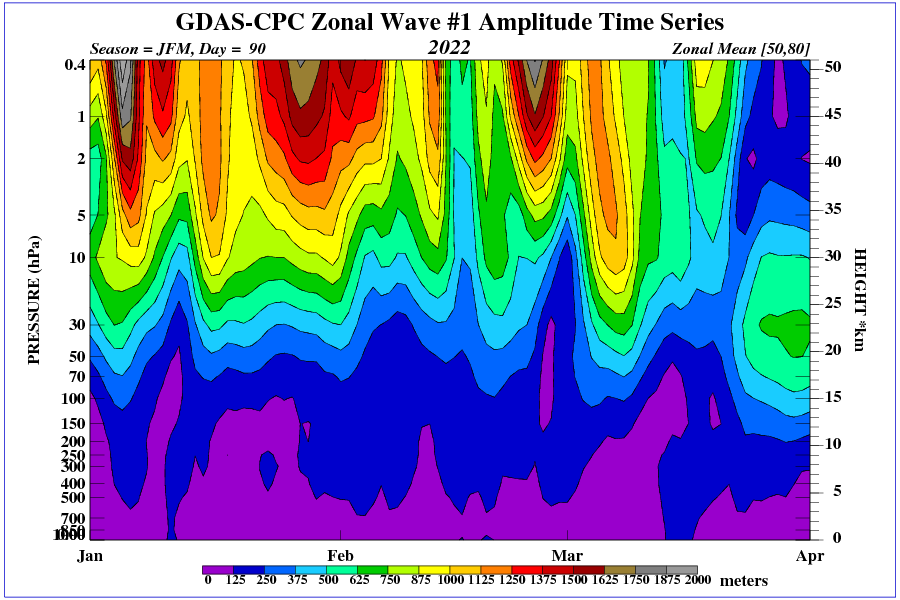
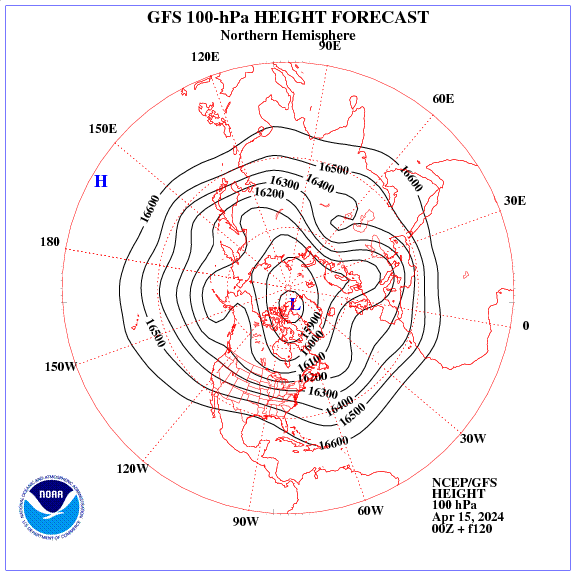
Well OK then. Falsifiable. ‘Alia Acta zest’
Had to look up QBO to make sure I had the right pro-nouns.
In this instance what does ‘SSW’ refer to please? Hard for me not to think of SouthSouthWest.
Also what is the source of the figures please?
Please.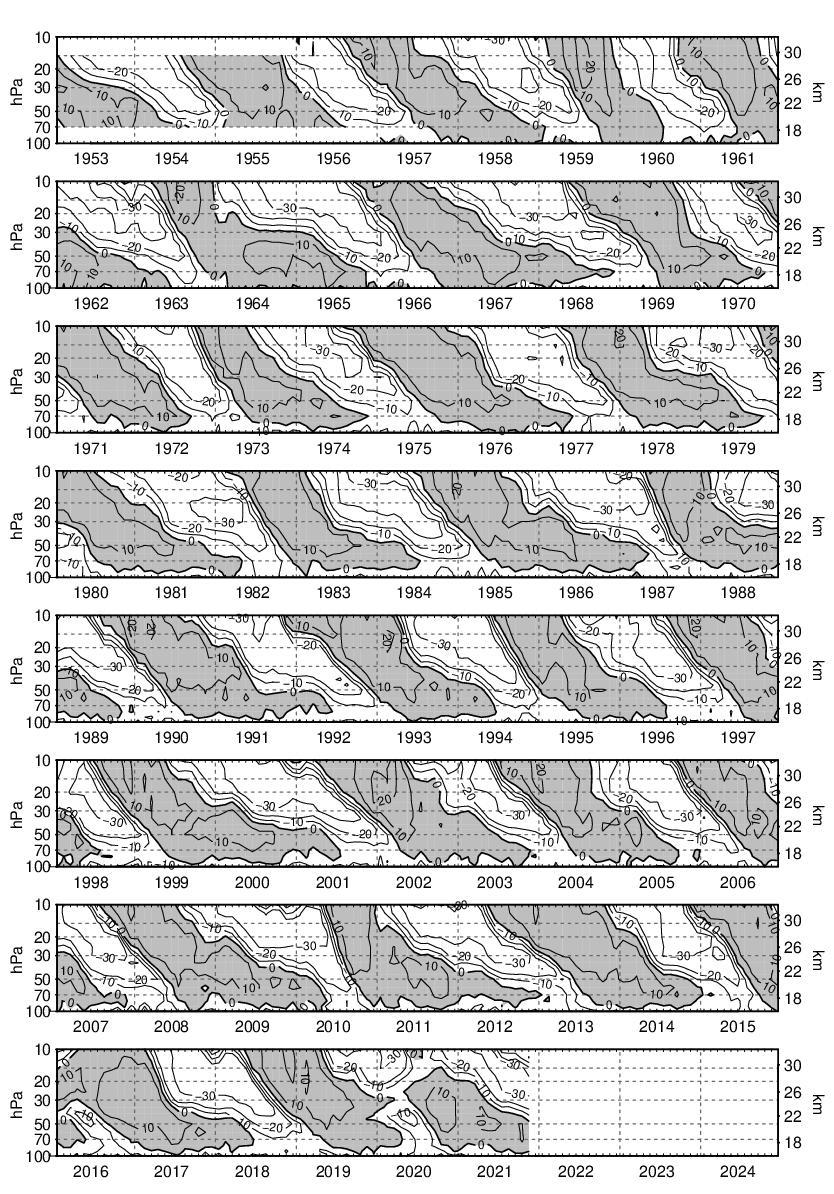
https://www.geo.fu-berlin.de/en/met/ag/strat/produkte/qbo/index.html
https://www.cpc.ncep.noaa.gov/products/stratosphere/strat-trop/
The relationship between the stratosphere and the troposphere has widely been recognized. During winter, tropospheric planetary waves propagate into the stratosphere along the westerly jet (e.g., Charney and Drazin 1961). More recently, the converse relationship that the zonal mean zonal wind anomalies slowly propagate from the subtropical upper stratosphere to the polar region of the lower stratosphere and the troposphere during the boreal winter, is also noted (Kodera et al. 1990). It has been shown that SSWs occur in association with slowly propagating zonal mean zonal wind anomalies, and the related changes in the troposphere exhibits the Annular Mode (AO) (Thompson and Wallace 1998) like structure (Kodera et al. 2000). Baldwin and Dunkerton (1999) also showed that the downward propagation of the AO from the stratosphere to the troposphere occurs in association with SSWs.
http://ds.data.jma.go.jp/tcc/tcc/products/clisys/STRAT/readme.html
A major stratospheric sudden warming (SSW) ended in the Northern Hemisphere at 30-hPa around 13 February 2021
Sudden Stratospheric Warming(SSW) is my guess, maybe this is the link for what is being referred to:
https://www.severe-weather.eu/global-weather/polar-vortex-returns-usa-europe-winter-2021-2022-fa/
“To see a practical example, look no further than last winter. We witnessed strong stratospheric warming this year in early January, which was during a west QBO, and might come as a very slight surprise, as negative (east) QBO is usually more favorable for such an event.
On January 5th, the preliminary date of the Sudden Stratospheric Warming event was marked, as the winds around the polar circle have reversed. The stratospheric warming wave has crawled over the entire North Pole in the stratosphere, effectively splitting the cold-core of the polar vortex into two parts.
One part of the broken polar vortex has moved over North America and one over the European sector. At this point, this does not have much to do directly with the winter weather on the surface, since this is at a 30km altitude. But the weather influence followed quite soon after.”
https://www.severe-weather.eu/global-weather/polar-vortex-returns-usa-europe-winter-2021-2022-fa/
Run a series of simulation models with different energy source configurations. Use the last 10 years of weather data. Run an optimization. See what it all tells you. Will adding unreliable sources of energy increase reliability, or will adding reliable sources of energy increase the reliability of energy supply?
I guess there’s no way to know for sure until you run the numbers.
So long as the shortfall of renewables is predictable, that gives us time to buy a portable generator.
Make certain you have enough fuel for several days of continuous operation.
How could they say anything else?
Because within the Dark Age that we’re currently in, for Uni of Houston to step out of line and say anything different, Uni Of Houston would be summarily cancelled.
And everybody within that august institution, Damn Well Knows It.
But the HARC, an independent research institute, not part of the university, is who said these things. Their founder, an oil & gas pioneer and legend, would be rolling over in his grave.
Yes! Investing in renewables will stop the next outage. More gas, more coal, more hydro and more nuclear. THEY ARE THE FUTURE!!!!!
Oh no, I thought it would be coming g out of Austin, not Houston. I hope energy authorities and operators are more logical than woke professors.
Hang on, just got something that may indicate that the University of Texas is sill at it.
All this appears to prove is that universities are unlikely to provide solutions to problems going forward. They mainly promote groupthink.
Agreed. Most are woke and should go broke.
Why risk tenure?
It is much safer to teach wind, solar nonsense.
The gullible students question nothing, even the smarter ones remain quiet.
Why risk a bad grade?
After they graduate, they will go through the motions the same way, even after retirement
THERE IS NO HOPE, BECAUSE THEY CONTROL THE MONEY AND WE, SKEPTICS, DO NOT
Zero times anything still equals zero. It doesn’t matter how many non producing assets you have.
I’d advise everyone to stay away from the University of Houston as long as they refuse to admit this truth.
Back in the not so ancient days, when I went to engineering school with those remote students who run the Comanche Peak Nuclear Power Plant in Glen Rose, nuclear energy provided close to 40% of all power to the grid, 35% was natural gas, and 25% was coal. I remember specifically because at the pre-deregulated time any pricing changes had to be approved by the State regulators. The price of natgas had risen 25% and they were trying to justify a 25% price increase for electricity rates. They got a smaller increase approved and later an even larger fee added for T.Boone Pickens wind grid expansion.
As if GHG emissions really matter, but our present day emissions are substantially the fault of the environmental activists, who successfully shut down the rapidly expanding nuclear industry following Chernobyl and Three Mile Island. If it weren’t for the enviros, Canada could confidently look forward to the perpetually frozen existence that they so seem to love.
If the new University of Austin is up and running, we need seriously to hear from them on this dingbat proposition.
If the University of Houston were running a bilge pump, it would discharge INTO the boat.
I like to plot data.
Here is the ERCOT data from that storm.
Wind was doing OK prior to the storm as was solar.
After the storm hit, demand sky rocketed while wind and solar collapsed.
Anybody who looks at these graphs loses all respect for so many experts and trusted media sources who say solar and wind were not the problem.
BTW, I was challenged by a liberal engineer about this and he said send me the data. I sent him this graph. No, he said, send me the data. I did. He never got back. Later, I asked him about the data. He vaguely said he couldn’t see what I was talking about, mentioned some vague scaling problem,and that was the end of the subject.
This is a smart guy. They live in a bubble of denial. He works for the US govt and can’t possibly have the “wrong” opinion.
The issue is there was no storm, in the way people think of it.
As the arctic high moves in, along the edges you get some weather as that is the boundary between warm and frigid, that gave some freezing rain and snow, but once the system arrives everything stops. Cold dead air.
My weather channel app shows wind speed hour by hour, i was looking at different part of texas and various times over the next few days, was your basic dead air everywhere.
No wind, no wind power. Doesn’t matter how much you install
Because doubling down on failure always ensures success.
“because utilities lower their expectations for wind generation in the winter in general.” They must have data that tells them winds are not as plentiful in the winter. You can cover all of Texas with wind-turbines but if the wind doesn’t blow you got nothing. Why is this hard to understand? Can lefties be this stupid?
yes. They are of the no limiting principle mindset.
Yes, yes they can and are. They fall in love with ideas Iin this case fantasies) and never ask questions, never reflect, never open their minds to contrary facts.
The reality of Multiplication by 0 eludes the liberal arts majors.
Just what qualifications do these ‘experts’ have in power generation and grid operation?
From what I have read from a few academics commenting on power is that they don’t seem to understand the basics?
Just keep adding more and more and more and more. Never ever look at the world from outside your ideological POV.
It took a little digging, but it seems Dr Gavin Dillingham’s Doctorate is in Political Science and his Bachelor’s is in Psychology (https://www.linkedin.com/in/gavindillingham/#).
He’s not a scientist. He is a Certified Climate Change Professional, however. Interestingly, this is abbreviated as CCP.
More windmills not spinning – why didn’t I think of that?
I’m struck by how similar adding more non-functioning renewables to an inadequate grid is to getting booster shots of a vaccine that doesn’t create resistance to Omicron, to address an outbreak of Omicron.
If all you have is a hammer, everything looks like a nail.
Other than the linked article, I’m not able to find another connection to the Univ. of Houston. I could see a connection to RICE, via their Pythias Analytics group and its Climate Risk Assessment tool. I didn’t spend a lot of time on this though.
I was perusing the HARC financials and it appears that they get ≈50% of their donations from a single donor who is “like-minded” in their cause. Most of the HARC research appears, upon cursory perusal, to promote renewable and some climate-change-is-humanity’s-fault narrative. So it shouldn’t be surprising that they are calling for “carbon neutral” energy generation.
Some questions I would ask:
It would seem the issue was probably a confluence of “poor capacity planning” and “extreme weather”. Why not, instead:
This would necessarily mean you would have “idle” capacity, to the tune of around 20% (using my guess) of the generating capabilities of the system.
Yes, this would exclude Wind and Solar from the electricity generating systems as they are not able to provide continuous duty generation of electricity. But, this would not exclude individual home/business owners from utilizing those technologies to reduce their demand upon the baseload generating facilities. Let them pay for those technologies if they wish to use them. Do not make the baseload consumers foot the bill for those sorts of generating systems when they cannot provide continuous duty operations.
20% idle is a little high but not unreasonable in a grid that allows maintenance time for generating units. Refueling nuclear plants or working on generators in a steam plant is not something done overnight. Offline for a month for some maintenance is not unreasonable.