Reposted from Dr. Roy Spencer’s blog
January 24th, 2019 by Roy W. Spencer, Ph. D.
A “Siberian Express” weather disturbance currently crossing the Arctic Ocean will meet up with the semi-permanent winter “polar vortex” over Canada, pushing a record-breaking cold air mass into the Upper Plains and Midwest U.S. by Wednesday.
Chicago All-Time Record Low?
Both the European (ECMWF) and U.S. (GFS) weather forecast models are in agreement that by Wednesday morning temperatures in the Chicago suburbs will be approaching -30 deg. F. The all-time official record low for the Chicago metro area was -27 deg. F (O’Hare) on January 20, 1985, and that 34 year old record could fall as the ECMWF model is forecasting -32 deg. F for Thursday morning while the GFS model is bottoming out at -26 deg. F on Wednesday morning. Of course, these forecasts will change somewhat in the coming days as the cold wave approaches.
Dangerous Wind Chills
Like the record-breaking event of January 1985, the frigid temperatures will be accompanied by strong winds — gusting to 20 to 30 mph — with wind chills plunging to -60 deg. F at times. This is dangerously cold, and I suspect schools will close, water lines will freeze, and travel will be discouraged. Again, this event is still several days away, but the public should be aware of the potential severity of this cold wave.
Not Just Chicago
The GFS forecast temperatures for Wednesday morning shows most of the upper Midwest will be well below zero, and temperatures might not get above -20 deg. F even at midday on Wednesday as far south as northern Indiana. Again, the strong northwest winds will be pushing this air southeast, and Thursday morning will also bring record-breaking cold into the Ohio River Valley.
 Forecast temperatures Wednesday morning, January 30, 2019 from the GFS model. (Graphic courtesy of WeatherBell.com).
Didn’t NOAA predict a warmer than average winter. Hmmmmm.
I live near one of the -35 F predictions. Just one day like that wouldn’t be bad. However, we are supposed to get up to 12″ of snow Sunday night and then drop below 0 F on Monday and stay below zero until Friday afternoon. Winds are supposed to be 15-20 mph during this period as well. That means wind chills -60 F or worse.
Yeah, good thing we’ve had all this global warming or it might get really cold.
At least it is supposed to warm up to only 10 degrees below average next weekend before the next cold blast hits us.
The stratospheric intrusion slowly moves to the east.


Extremely dry air over Eastern Canada shows where the core of the polar vortex is located, around which the air circulates.
Arctic Temperatures
Daily Mean Temperatures North of 80 degree North.
http://ocean.dmi.dk/arctic/plots/meanTarchive/meanT_2019.png
In 2007, when I started following this stuff, I did an experiment with our local weather forecasts after I had noticed as earlier commenters here report, that they seem to have “added” a degree or two to forecast temps. I took their 7 day forecasts and subtracted one degree C from each day’s. Over a couple of months, my 7 day “forecasts” were better than the official over 70% of the time. I think a long test of this method would be statistically revealing.
Because of this brief test, I’ve wondered if weather forecasting comes up with numbers over a range, and that belief in the theory results in selection of a possibility on the high side as a “hedge”.
I’m going to make a forecast: With all this Arctic air moving out of the poorly monitored Arctic, into the more densely monitored Canada and US, 2019 will show another decline in GAST.
This weather will kill people. If we followed the advice of the AGW cheerleaders, it would kill more people. Real people, right now! Not in some future problem that is always in the distant future of constantly wrong computer models.
Energy from fossil fuels and nuclear energy, is the difference between life and death for millions of people this time of year. To oppose that is to support people dying of preventable causes.
The GangGreen movement is anti-human. And their policies are designed to remove the “excess human population” from the Earth. And they plan to make sure they have the power to decide who is “excess”. The only thing standing in their way is Constitutionally Guaranteed Freedom, supported by Free Market Capitalism. At the root of the AGW problem, it is not a “science issue”. It is a political one. How to destroy what works for the most people, and replace it with what works for the fewest people. That is their top level agenda. Wind mills and solar panels are just a side show, to keep use arguing about W/m and zettajoules.
The stratospheric intrusion slowly moves to the east.
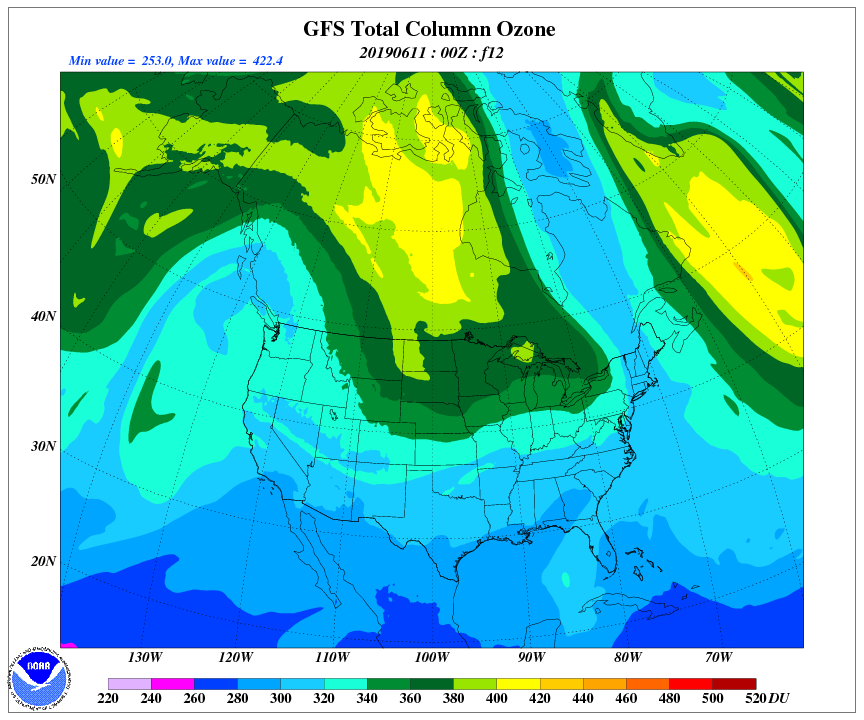
Extremely dry air over Eastern Canada shows where the core of the polar vortex is located, around which the air circulates.
http://tropic.ssec.wisc.edu/real-time/mtpw2/product.php?color_type=tpw_nrl_colors&prod=namer×pan=24hrs&anim=html5
The temperature (C) before dawn 26.01.2019.

It is a dry cold, not like those damp colds that.. like vampires, suck the heat out of you.
Real cold is always dry. It is too cold for the air to hold moisture. It has to warm up to snow. When the “Siberian Express” hits town, we call “damp cold”: WARM!
As a person that has lived outside in places from New England, to the NW US and Alaska and the Alps in Europe and up in Norway I am convinced there is an as yet unidentified factor that effects our perception of cold. IOW what I am saying is that in Up state NY into the Green Mountains of Vermont or the White Mountains of New Hampshire, 0 F or -30 F feels colder than the same temp in the Alps in Germany or Italy. IOW the cold in NE hurts more, is more bitter, than the cold at the same temp in Germany. There has be some factor which we do not perceive or measure to account for that. To find the same bitterness in cold in Europe as I have experienced in New England and up state NY, one has to get up into Norway. This is not just my own perception since I was an SF medic working to keep team members from suffering cold weather injuries in all of those places during the depths of winter and I know that others have had the same perceptions.
Wind and humidity are factors.
Best is to staying inside when T drops below -15C
It is the exchange rate between *F and *C 🙂
The obvious reason is the wind, which can be difficult to compare accurately, over extended time periods. Gusting winds are more efficient at penetrating your defenses, especially when they sandblast you with ice crystals. So equal comparison are difficult, but you already know that.
The other two areas that come into play are sunshine, and altitude. During daylight hours the sunlight does not heat up the air very much in snow covered areas, because it is not absorbed by the snow covered surface. But your surface is absorbing sunlight, both directly, and from the reflection off the snow. In mountainous areas the sun is more intense because it goes through less atmosphere, and is frequently intensified through sloping surfaces that can reflect more light on you, than a flat surface would.
The altitude also lowers the air density, which means a similar wind would have less of a wind chill factor just because of a lower density of the moving air.
The way to isolate your “unidentified factor” is to see if it is independent of daytime versus nighttime. Then try to isolate if it is altitude dependent.
My guess would be the sunlight issue. The intensity of the sun is greater at altitude. Combine that with snow reflection amplification and it feels warmer even on cloudy days. Once the sun goes down that effect rapidly goes away, and the nighttime cold would feel similar.
See the map of volume of the sea ice.
http://polarportal.dk/fileadmin/polarportal/sea/CICE_curve_thick_LA_EN_20190125.png
Sometimes She just needs to remind Her underlings who is really in charge.
Samuel
Thanks for ur comment.
I can check again, if you want me to, just give me some time on that
but it appears that the ‘killing’ of bison by humans was not as much as what was previously thought and that the amount of bison simply killed by the drought was much larger. It is just that the two things came together
– at a terrible time for the bison population –
no doubt
I am predicting that the next decade is going to be a disaster, food wise, for either man or animal.
I have been told recently that it is really cold in the USA but not cold in the UK but the USA is generally at a higher elevation than the UK and many areas in the UK have a lower maximum elevation then the mean USA elevation therefore to get a fair comparison with the UK you would need to allow for elevation. I don’t know how this winter is going to end up it changes every day but the jet stream plunging south at the UK does mean it is heading away from the North Pole which should help the growth of arctic sea ice ,if we get high pressure over Greenland then maybe it will get a bit colder in the UK this winter.
You should write a paper, or a book, sounds like you can guess with the best of them 🙂
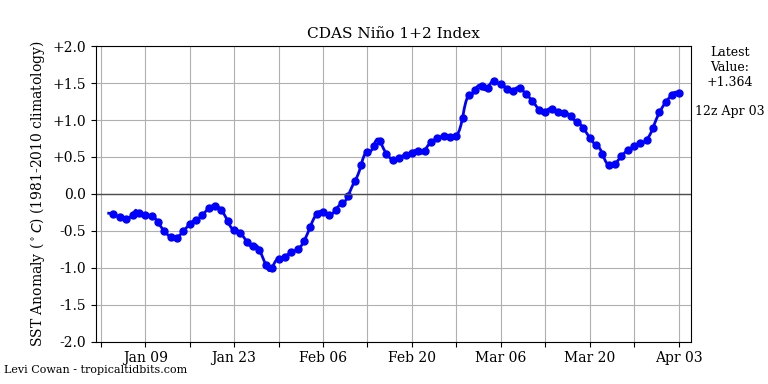
Again, falling 1.2 Niño important for North America.
The CBC never late for any horn-blowing climate change alarmism gratified us with this gem:
https://www.cbc.ca/news/canada/montreal/expect-more-wacky-weather-longer-and-more-frequent-cold-snaps-mcgill-scientist-1.4993004
This morning the lowest temperature in Canada was in NU at minus 47.4 centigrade.
This image shows the distribution of cold air, Siberia clearly experiencing as cold or colder temperatures too, invalidating the comments of “Siberian air” responsible for Canada’s cold.
Funnily enough, the experts consulted by CBC do not marvel at the existence of such brutally cold air in the Arctic where “amplification” is supposed to rule the day…
So global warming creates colder air that tends to affect larger zones and push back some warm air around it. Huge discovery from these experts.
Should a glaciation occur, it will be a case of runaway global warming…
It is better to look at the solar minimum and magnetic field of the Earth.

http://www.geomag.nrcan.gc.ca/images/field/fnor.gif
Forecast of the stratospheric polar vortex.

Our new Governor JB Pritzker just signed the State of Illinois this week to join the Paris Climate Agreement. Talk about bad timing with the historical cold front moving in next week makes me wonder if Al Gore plans to visit.
https://ipha.com/news/post/3544/gov-pritzker-joins-u-s-climate-alliance-becomes-18th-governor-to-uphold-the-paris-climate-agreement
Even more snow in Illinois!

RealFeel® Temperatures can plummet under 40 below zero F across the Upper Midwest on Tuesday night and hold there through Wednesday. This includes in Minneapolis and Chicago. In some communities, such as Fargo, those readings can plunge under 50 below F.
That not unusual for Fargo, in 1997 we had a cold spell for 72 hours id did not get warmer than -20 the highs of -20s was the norm. When it warmed up to -19 I unzip my coat when I was blowing off the driveway, by the way that year we got 117 inches of snow. My home town 70 miles away is colder as are points further east, they are all higher than Fargo. The coldest I seen is -50 radial tires get flat spots at those temperatures it was kind of funny since bias ply tires get flat spot in the – teens something I had been use to by -50 was the first time it had happen with a radial tire. That -50 was in western North Dakota in the mid 80s, when I was a child I did have to walk to school and back in that kind of weather all though our parent drove us if it was in the teens of below, the coldest I walk to school was in -30 degree morning the car would not start that morning even with the tank heater. Northern Minnesota and North Dakota can have nasty winters, that is why I live in Arizona now, shoveling sun shine is a lot easier than snow.
It is good the State of Illinois is broke. Hard to send money to foreign lands when you can’t fund the public workers retirement fund.
With very cold air near -20 F and below we can be entertained using water
first squirting very hot water out of a water bottle
https://m.youtube.com/watch?v=qOAzRIPpoqU&t=0h0m4s
Then squirting hot water from a water squirt gun
https://m.youtube.com/watch?v=051ddIvQ2hI&ebc=ANyPxKr87ShOX-E5uvRmNX5EoM-qoHU81GLItAbGkcvPmEMU-0sQTBFYVtCGMMBsxjTgD06bh2kITSBRLn46zfTrZuuUVj2zhA
Watching water get super cooled in plastic bottles
https://m.youtube.com/watch?t=0h0m1s&v=_9N-Y2CyYhM
Or just blowing soap bubbles
https://m.youtube.com/watch?t=0h0m4s&v=OM9WXrGftXE
Wind and humidity are factors.
Best is to staying inside when T drops below -15C
Looks like Wed. is the day Chicago will bottom out on temperature…and a lot of it might move into the citrus area so be ready with the smudge pots, etc. (FLA)… just sayin…
Buy Orange Juice futures this coming Monday
Another visible front over Wisconsin will bring record cold air to Chicago.

Extremely cold air moves as a cold front to Lake Ontario.
I think you all are missing an important opportunity here….now is the time to round up all those people that believe CO2 will make them warmer; I have a greenhouse in a field next door, it’s big enough for all of them, all we need is some extra CO2, we could put them in there and let THEM decide if CO2 is a contributing factor after they spend the day and night Wed. Bonus if we give them a knob where they can increase or decrease the CO2 levels and watch the temperature gauge to record it.
I live in NE WI, we are really trying to not have to break records of the Polar Vortex of 2014, where it was -60 wind chills at my house and I had frost inside. It was a fantastic indicator as to where the damn drafts were coming in, let me tell you. Come Spring, those places got some extra insulation and silicone caulk. Now I am in an apartment and am off today to go get more plastic and tape, because there is a draft alongside the north wall–where the wind will be coming in. I don’t need frozen carpet.
Anyone that believes a warmer Earth is bad, needs to sit in that greenhouse IMO. It’s the PERFECT opportunity to wipe out this nonsense in 1 blast from Mother Nature.
Just Jenn
I think where things got wrong in the past with Arrhenius and Tyndall is precisely because they limited their experiment to a closed box, I think similar as to what you propose… There probably would be some heat trapped in your greenhouse. The effect of ‘global warming’ was compared to stepping out of a shower cubicle long after you switched off the water: there is some lingering heat in the water vapor so you feel the cold when you step outside?
They only ‘measured’ the heat from earth in the closed box as apparent from the trapped radiation from earth 10-15 um. They did not look at the spectrum of the whole molecule, simply missing the radiation that is deflected off from earth in the 0-5 um which is in the spectrumof the sun.
I am trying to explain to you in a simplified version as to why warming by GH gases was a fail to begin with.