From the “ship of fools” department and the UNIVERSITY OF RHODE ISLAND – INNER SPACE CENTRE
Scientists, students to make first live, interactive broadcasts from Arctic Ocean’s Northwest Passage
Expedition in August/September seeks to increase understanding about changing Arctic frontier; For citizen scientists, teachers, students, and the public worldwide: First interactive events from Northwest Passage, via Facebook Live
The Arctic Ocean, with its vast icy islands and peninsulas, was once known as terra incognita – the unknown land – the planet’s last great un-navigated maritime frontier.
This summer, a team of scientists and students, conducting research aboard One Ocean Expeditions’ vessel Akademik Ioffe, will offer select museums, as well as classrooms and citizen scientists worldwide, an opportunity to explore with them in real time a dramatically changing Arctic Ocean, and to discuss their research in the first-ever live, interactive broadcasts from the fabled Northwest Passage.
From August 23 to Sept. 13, the University of Rhode Island’s Inner Space Center (ISC), with major funding from the U.S. National Science Foundation and additional support from the Heising-Simons Foundation, will conduct the innovative Northwest Passage Project research expedition with a team of natural and social scientists, students, and a professional film crew. This ground-breaking opportunity is also supported by One Ocean Expeditions as a key marine partner, having operated in Arctic waters for over 20 years.

Research to aid understanding of / document climate change effects
Aboard the Akademik Ioffe, the team will collect water, ice, and air samples to advance understanding of and document the effect climate change is having on the environment and biodiversity in the Canadian Arctic Archipelago.
The project will help fill significant gaps in critical scientific data about the region, using of a suite of oceanographic instruments throughout the ship’s 22-day transit.
The expedition’s chief scientist, Dr. Brice Loose of the University of Rhode Island Graduate School of Oceanography, is coordinating and leading the research into the exchange of greenhouse gases between the water and atmosphere, and changes in distribution and abundance of two vulnerable levels of the Arctic food web – plankton and seabirds.
The project’s four scientific research areas are further detailed in an appendix below.
A suite of high-tech tools: 1st autonomous underwater glider flight to collect information in NW Passage water column
Plans include deployment of the Slocum Glider, an autonomous underwater vehicle (AUV), to be retrieved after sampling the waters of eastern Lancaster Sound – a critical choke point in the Northwest Passage between the Beaufort Sea and Baffin Bay.
Freshwater export from the Arctic can have dramatic impacts on ocean circulation inside the Canadian Arctic Archipelago, as well as globally when it discharges into the North Atlantic Ocean.
Led by Donglai Gong of the Virginia Institute of Marine Science, the AUV team will be the first to fly an underwater glider collecting water column information inside the Northwest Passage.
Named Amelia (after aviation pioneer Amelia Earhart), the glider’s sensors will collect valuable information about increased freshwater storage and transport from the upper Arctic Ocean.
The glider will be deployed for more than 10 days and will focus on water column measurement of temperature, salinity, dissolved oxygen, chlorophyll-a fluorescence, colored-dissolved organic matter fluorescence, and optical backscattering (the reflection of waves, particles, or signals back to the direction from which they came). This suite of measurements will provide a high resolution view of the Lancaster Sound currents, water masses, and primary biology.
NW Passage geopolitics, and how climate change affects indigenous populations
The project will also contribute to understanding of the maritime history of the Northwest Passage, the role of the Inuit people in Arctic history, the effects of climate change on indigenous populations, and the geopolitics of a waterway confronted with threats from resource extraction, increased shipping commerce, and pollution.
Engaging students and the public
A group of 22 undergraduates, graduate students, and post-doctoral researchers from the U.S. and Canada will join the scientists. In addition, six teams of high school teachers and students (total 18) will be in residence in the ISC’s mission control facility during the first week of the expedition and interact directly with the participants at sea.
The expedition team will engage a wide public audience through an extensive and unprecedented Internet presence from the area, including Facebook Live broadcasts from sea. Special interactive broadcasts will be beamed via the Inner Space Center (ISC), the U.S. facility that supports ocean exploration and education, to three prestigious science museums across the country – the Smithsonian National Museum of Natural History, Washington DC, the Exploratorium, San Francisco CA, and the Alaska SeaLife Center, Seward AK.
Information and details on the project’s other general public events via Facebook Live and daily highlight videos will be available at http://www.
A two-hour, ultra-high 4K definition television documentary by the onboard film company David Clark, Inc. will air in 2019.
“It is important for people everywhere on Earth to understand how this region affects all citizens. The region’s meltwater, water circulation, and flux of greenhouse gases between the ocean and the atmosphere are impacting wide-scale environmental and climatic changes, including how these changes affect people and wildlife diversity,” says NPP principal investigator and project director Gail Scowcroft.
“The project’s natural and social scientists will engage a group of university students in hands-on research, as the team addresses important research questions. In addition, diverse audiences will be reached through real-time interactions from sea, a two-hour documentary, and related events. The NPP will provide a visually stunning and historically poignant platform from which diverse audiences will experience this innovative expedition.”
The Akademik Ioffe
The project will take place onboard Akademik Ioffe with One Ocean Expeditions, a world leading expedition cruise operator whose core mandates include ocean health, science, and education as part of it’s educational programming, while offering immersive experiences for passengers.
The 364-foot Akademik Ioffe is equipped with multiple laboratories, cranes, a “moon pool” shaft through the hull for lowering and raising equipment, and a full suite of oceanographic research tools.
The ship will depart Resolute Bay on August 23, travel south and west to Cambridge Bay via Bellot Strait, then return to Lancaster Sound and Pond Inlet, before travelling down the east side of Baffin Island, with many stops along the way. The expedition will end in Iqaluit on September 13, 2018.
On the 22-day journey, students will participate in hands-on research with onboard scientists, and make shore visits, including to wildlife and research sites.
Scientific research areas
The physics of Arctic ocean circulation: Transpolar water drift through the Canadian Arctic Archipelago (CAA)
Scientists will investigate the increased freshwater storage and export from the upper Arctic ocean due to a warming Arctic. As ice melting occurs, increased freshwater is accumulating in the Arctic, resulting in a large freshwater anomaly.
Freshwater inputs can have dramatic impacts on ocean circulation, particularly when freshwater is discharged into the North Atlantic Ocean from the Arctic. The CAA, and particularly Northwest Passage, is one of the principal conduits for freshwater transport from the Arctic Ocean to the North Atlantic.
There is uncertainty about the magnitude of the flow of water through the various restricted outlets from the Arctic to the Atlantic. One of the pathways for this freshwater transport can be found in the Northwest Passage, where the Northwest Passage Project expedition will take place.
Chemistry of the melting Arctic and marginal seas: Water column chemistry affecting greenhouse gas fluxes
The concentration and isotopic composition of methane and carbon dioxide in the Arctic Ocean and atmosphere are of great interest, as both are greenhouse gases and the sources and flux of both between the ocean and atmosphere are important components of the global climate system.
The Arctic Ocean generally absorbs carbon dioxide, but ice cover limits air-sea exchange. Measuring carbon dioxide and its isotopic composition can provide information about the carbon system’s sources and fluxes into the atmosphere.
Methane, a more potent greenhouse gas than carbon dioxide, is found throughout the Arctic Circle, and the Arctic appears to be an ever growing source of methane to the atmosphere. Methane is found in land-based permafrost and as methane ice or methane hydrates, which are distributed along the seafloor.
With less sea ice cover, there can be an increased flux of methane into the atmosphere from the ocean. However, some microbes in ocean water use methane as a food source. If microbial breakdown of methane is rapid enough, it may serve to offset the methane that escapes to the atmosphere. There is little data to provide estimates of this methane breakdown in Arctic water. The Northwest Passage Project will study this microbial breakdown of methane and the rate at which it occurs in the Northwest Passage region.
Ecosystem surveys of Arctic habitats in transition: Distribution and abundance of zooplankton and phytoplankton
As the waters of the Arctic warm and the sea ice cover decreases, the Arctic surface ocean ecosystem is anticipated to undergo considerable changes. Habitats are changing and moving, perhaps disappearing, and species distribution and abundance also may be changing rapidly.
To observe phytoplankton and zooplankton, the Northwest Passage Project will periodically conduct plankton net tows in the upper water column (100m and less). The contents of the nets will be catalogued. The organisms collected in these net tows will be counted with a laboratory bench-top Flowcam.
The Flowcam counts and images micrometer size particles using an imaging microscope. This provides the ability to identify and quantify ‘particles’ from some sampled volume. These particles can be sediments, phytoplankton, or even zooplankton. This imaging system will generate a library of images for each run and store them for processing later.
Ecosystem surveys of Arctic habitats in transition: Distribution and abundance of seabirds
In addition to the water column studies, there will be surveys of marine birds for the duration of the expedition. As top predators of marine food webs, seabirds play an important role in marine ecosystems. Colonies of international importance are found in this region and their abundance and distribution at sea can be used to monitor changes and variability. The Northwest Passage Project cruise will use a standard method to perform seabird counts and contribute to the seabird survey database of the Canadian Wildlife Service used to monitor the status of marine birds in Canada.
URI Inner Space Centre’s advanced telepresence technology
Live interactive broadcasts throughout the expedition will use the ISC’s advanced telepresence technology and video production facility. Pre-expedition webinars, archived online for public viewing, will prepare the students for their research experiences.
The ISC will also produce daily video blasts using footage supplied by the onboard filmmakers. These video blasts will be used during broadcasts and live interactions with partner sites. They will also be available on the ISC’s YouTube channel.
The ISC will receive a live satellite link from the ship and connect it to the partner sites, allowing audiences to communicate with the shipboard scientists and students. The pre-produced video segments will be made available to the partner institutions for use in their other educational activities, and will also be made available on the project website.
Since the Arctic is an extreme environment and at any time during the expedition may experience weather that disrupts the satellite signal, these highlight videos will allow the ISC to conduct an interactive program with the partner institutions without the live interaction from sea, if necessary.
Frozen Obsession: A two-hour television documentary by Emmy-winning director David Clark
Emmy Award-winning director David Clark will produce and direct a two-hour television documentary, Frozen Obsession, which will explore the changing Arctic by documenting the NPP expedition. The film will highlight the expedition’s research and document the activities of the diverse group of participants (scientists, historians, journalists, educators, and students) and their various experiences.
The documentary will also explore the maritime history of the Northwest Passage, the role of the indigenous Inuit people in the Arctic’s history and changes affecting their way of life, and the geopolitics of this Arctic waterway (more information: http://www.
Special screening events will take place at each of the NPP partner institutions, at Penn State’s Polar Center, and at the Environmental Film Festival. The film will have a television broadcast and also be available for future theatrical distribution. The program will be combined with online/social media, community outreach, and youth activities. The project’s participants will host screenings of the documentary in their schools and institutions.
Award-winning author and journalist Ed Struzik, who has written about the Arctic for three decades, will be onboard to share his perspective on critical wildlife issues, the native Inuit culture, impacts of climate change, and prospects of Arctic resource extraction and commercial shipping traffic in the Passage.
###
Project Partners:
Lead Institution:
University of Rhode Island: http://www.
Graduate School of Oceanography: web.uri.edu/gso
Inner Space Center: web.uri.edu/gso/inner-space-center
David Clark Inc. http://www.
One Ocean Expeditions: http://www.
U.S. Minority Serving Institutions:
California State University Channel Islands: http://www.
City College of New York: http://www.
Florida International University: http://www.
Virginia Commonwealth University: http://www.
University of Illinois at Chicago: http://www.
Alaska Sea Life Center: http://www.
Exploratorium: http://www.
Smithsonian Institution National Museum of Natural History: https:/
Virginia Institute of Marine Science / William and Mary: http://www.
Canadian Wildlife Service, Environment and Climate Change Canada: https:/
Climate Change Education Partnership Alliance: http://ccepalliance.
Consortium for Ocean Science Exploration and Engagement: http://www.
Penn State: http://www.
Climate Central: http://www.
People, Places, and Design Research: http://ppdresearch.
Interface Guru: https:/
When I were a lad there were bloody mammoths kayakin’ around ‘t pole.
With all that technology onboard what could possibly go wrong?
You mean, if people with common sense were attending and in charge?
A luxury cruise at taxpayers expense.
I’m doing something wrong.
… sort of what my first impression was too.
… funding applied for and spent on exotic vacations for offspring of very affluent parents, who keep university alumni associations financially viable to finance more enticements to attract more offspring of more affluent parents to take pride in their offspring going on well-funded exotic vacations, mass marketed on modern social media as being research for a good cause.
I’m SUCH an unreasonable snark.
it doesn’t look as if they are actually transiting the Northwest Passage, just going into the Atlantic approaches.
A laugh really as sailing ships back in the 19th century were only 150 kilometers short of traversing the NWP. As the data from back then illustrates the NWP conditions to be similar to today I’m not sure what they are trying to prove.
They are trying to prove how virtuous they are and of course add to their cv…..
The precious little snowflakes won’t even be on the ship. “…six teams of high school teachers and students (total 18) will be in residence in the ISC’s mission control facility during the first week of the expedition and interact directly with the participants at sea…” It does say some college students will be on the ship and “…participate in research with on-board scientists…”. I gotta tell you, I was achieving nearly six eye-rolls/paragraph.
Well of course they aren’t going through the Northwest Passage. Mommy and Daddy would be most displeased if their lil’ pumpkin found themselves trapped in ice.
I fully expect it to get trapped in ice by an “early” freeze.
I fully hope for it. I thought I read at realclimatescience that the NW passage is frozen over.
Caused by Globall Warmining!
The ships captain is obviously not a fool, they rarely are. He’s responsible for the safety of the ship and it’s cargo (the precious snowflakes).
One suspects the captain of Akademik Shokalskiy was also not a fool, yet he managed to be trapped in Antarctic ice during Christmas 2013
The so called scientists had left the ship and refused to return when the captain ordered them to.
The captain was faced with the choice of abandoning scientists to an almost certain death, or allow his ship to be iced in.
OK, so the captain got it wrong first time round and next time it will be a toot of the ship’s horn as they wave goodbye.
I completely agree with MarkW. I’ve been on a few cruises with these russian “Professor” and “Akademik” ships and the crews are very professional with extensive arctic experience. The “Ship of Fools” incident was entirely due to the irresponsible behavior of the so-called “scientists”.
It is always emphasized that if the Captain recalls the land parties you comply immediately and as fast as physically possibly, no matter what you are doing at the time.
So they aren’t actually traversing the Northwest Passage. Just sailing in a big circle. It looks like this time they might have looked at how thick the ice was… on the edges don’t be surprised… I was going to say that it was thinner, but then the ice bridge is melting late at Baffin Bay. Last year was a banner year for ice bergs. With all the melting this past winter at -30 C, it should be clear sailing…. I like how they use the term ‘students’, reminds me of the Taliban. Brainwashed psychopaths.
Do I expected any other findings than ‘ global warming is worse than we thought’?
I am sure the press releases have already been written.
I always think of something else… after I posted. Since they already know what they are going to find…. I mean the models outweigh reality…. and if it’s not, they just change it anyway… maybe they’ll say they went, but didn’t go.
And paid for.
And the research conclusions are already in the current press release.
“Catastrophic global warming is worse than we thought!’
FIFY
Make sure they have enough peanut butter and banana milkshakes. There was trouble on Turney’s Antarctic expedition when these key tourist stocks ran out.
“Frozen Obsession” would also be a great name for a cologne. Might even make more money than the two-hour yawner.
So wait…..they are not actually going inside the NWP……only hanging outside and looking at it
…did they really just admit it might not be open..and they don’t want to run the risk of having to cancel
or the biggly press if they get trapped
Me thinks they don’t even believe their own hype……..
They are going into the more difficult areas of the passage by not a through transit
And then they all write up their ‘findings’ as technical papers and present them at the next ‘climate crisis conference’ in Bali… or Bangkok….. or Tuvalu!
“Yeah! That’s the ticket!”
How can they measure and document change if they are measuring something for the first time?
Does it really matter? It takes two points to make a line, but they already know what they want the slope to be.
We know what the conditions used to be.
We used our climate models to hind cast the conditions.
You forgot the /sarc yah, I hope
I suspect it’s more factual than hyperbole.
Lots and lots of data used to be recorded via sensors, buoys and cameras, but that’s been dialled right back since the early 2000s. So they’ll be collecting data to fill the gap that’s occurred since the data stopped being collected when it diverged from AGW theory.
I’m half expecting the trip to be cancelled on orders from on high
“It is important for people everywhere on Earth to understand how this region affects all citizens. The region’s meltwater, water circulation, and flux of greenhouse gases between the ocean and the atmosphere are impacting wide-scale environmental and climatic changes, including how these changes affect people and wildlife diversity,” says NPP principal investigator and project director Gail Scowcroft.
Gail already knows what she will find. She just needs to make the trip to justify her “scientific” confirmation of the wide-scale changes, so she can then extrapolate that confirmation towards how it affects the world (and her future income).
Collecting data, providing field experience to students, broadcasting the activity with state of the art technology to the public who paid for it– what’s the problem?
Okay, the problems come with the politicization and lousy press releases, but going out and sampling the environment is WAY better than modeling it from physical principles.
The problem is that from the get-go, the agenda isn’t science, though they’ll pretend that it is. They are looking for “signs” of “climate change”.
They aren’t looking for “signs” of “Climate Change”. They are looking for “effects” of “Climate Change”. If they were looking for signs of “Climate Change” they might have to report that they couldn’t find any.
Still not the problem until the data are either 1) misrepresented, 2) restricted from access by others, 3) associated/correlated/linked with a false assumption. This expedition is doing the first part of all scientific investigation — collecting data.
Of course they’re looking for climate change. And they’ll find it ONLY if they have comparable data from an earlier period. That’s the hard part. We may not have faith in their motives or competency in interpretation, but they should not be criticized for collecting data.
‘Aboard the Akademik Ioffe, the team will collect water, ice, and air samples to advance understanding of and document the effect climate change is having on the environment and biodiversity in the Canadian Arctic Archipelago’
Climate is analysis of weather over decades. Taking a few measurements in the Arctic tells you double ought nothing about climate. Camp out there and take measurements for 30 years, THEN you can talk about climate.
All their findings will be meticulously written up and then pay walled at $150 per read, to generate a little more money for the next exotic cruise — I mean, “scientific expedition”.
I agree. Let them collect lots of data. Data is good.
Then we will see what is done with the data, and if it is being tortured, skeptics can point it out.
When I got to the part where they said they were taking “social scientists” along I sopped reading. Are they also including astrologers and homeopaths?
Polar bear phrenologists. Can’t wait to hear how that works out…
Not only that. But have they sorted out the details of “safe spaces” and “transgender bathrooms”?
Enquiring minds need to know!
Gazing into my crystal ball, I ‘project’ – nay, predict that they will prove that Things Are Worse Than They Thought.
Get ready for the footage of various critters choking on Plastic Waste. Why, they’ll take some stock footage from a river in Vietnam. To be certain.
Astrologers at least give decent advice sometimes.
Exactly what I did. As soon as I saw “social scientists” (aka activists), I just skimmed through the balance of the material. It does appear that this does have a chance to collect some interesting data – as long as it the data is kept in its original form for use outside of this group.
I missed that bit. That’s great. We now have the full set required for an interesting horror movie. I hope they have lots of on board webcams for the authentic docco feel as they tear each other apart
And actually, I want to play with that drone, the “Underwater Glider”? That sounds like fun!
Akademik Ioffe???
A RUSSIAN ship?
What kind of Putin’s pawns are these students? Don’t they realize that these RUSSIANS are dangerous foes who hijack our elections so that Hillary receives the most votes and still loses?
Giving aid and comfort to our enemies!
Kinda like the one that got stuck in Antarctica
Akademik Shokalskiy…another Ice Hardened ship that was designed to traverse 1st year ice
The “Akademik” ships are ice-hardened, yes. Not ice-breaking. Ice-hardening only means that they can follow an ice-breaker through hevay ice.
tty: Correct. HEAVY ICE can only be broken through by an ICE BREAKER.
The Russians use the ice-breakers to open channels and then
“escort” (tow)other shipping through the NW and NE Passages ,
mostly needed in Winter
but it depends in the conditions. Recently they had to restrict
their use by tourists in the OTHER SEASONS as the ice was
thicker and more persistent.
Surprisingly , the NUCLEAR-POWERED ICE-BREAKERS belong to
The Russian Federation Government but are operated by a Private
company Atomflot or Rosatomflot ,
and ARE NOT PART of the Russian Navy .
The “50 Years of Victory” Or 50 Let Pobedy , is a
two-reactor powered ship and I understand that it is the
most powerful ice-breaker in the World
at 75,000 hp.
( 2 reactors powering 3 electric motors driving 3 propellors )
Impressive !
https://www.youtube.com/watch?v=6G9B1fyqV4g
.
tty: The Ioffe and Vavilov DON’T FOLLOW ice-breakers usually ,
they just skirt around the heavy stuff and use “zodiacs” to take
tourists ashore , whether there is ice or not ( e.g.Falklands Islands ).
.
The OTHER ALTERNATIVE is a SUBMARINE !
Everybody is doing it these days it seems !
I think that the first vessel at the North Pole was a US Submarine !
Probably been more visits by subs than ships !
Suggest Google :
Images , Dragonfly and Dreadnought Submarines at North Pole.
What is the problem? The only thing I know of that Rhode Island is famous for are its reds.
“One Ocean” is a Canadian Firm which contracts Russian vessels in their
“OFF SEASON” and uses them in Polar “Expedition” Cruises to the Arctic
and the Antarctic areas.
The Ioffe is the “sister ship” to Akademic Sergey Vavilov , although Russian ,
they were built in Finland in 1989 and 1988 respectively.
Very nice ships and crew. They can safely negotiate THIN ICE and “growlers”
but it scares the hell out of the passengers when they hit something really solid !
Since Reagan and Gorbachev met at Reykjavic ( in the glasnost and perestroika
era ) and eventually worked out a SALT Treaty the Russians haven’t really been
our enemies…….more like “distant one-time allies” !
Both ships STILL engage in polar research.
The term research carries different meanings with different people and in
different times ! The derogatory term used to be “spy ships”.
If you have the opportunity to travel to Svalbad or Greenland or Iceland or
the Polar regions THAT IS A GREAT WAY TO TRAVEL.
I’ve just got an invite to go with Polar Pioneer to one of their polar crusing expedition. Regretfully it’s not free, prospectus is here:
https://www.auroraexpeditions.com.au/ship/polar-pioneer
The email said:”With a heavy heart and much sadness that we must now say “пока” to our beloved Polar Pioneer.
It is time to say goodbye… Sadly we must bid farewell to our beloved Polar Pioneer… She has been our home away from home for more than 17 years, and heart and soul of every polar expedition since then.”
Are you tempted to join it’s last voyage? Not me, thanks.
Typo: cruising
First and last voyages tend to be problematic, especially if it’s both the first and last.
The last cruise is the one you don’t want to be on.
So a 22 day 2,850 mile Northwest Passage trip that doesn’t actually traverse the entire Northwest Passage but as far as Cambridge Bay. I hope they are faux transiting with an Ice Breaker Escort
If they don’t travel behind an Ice Breaker and get stuck in ice, there will be a new Catchphrase “Global Warming Truth…It’s Akademik”
Bryan ==> Their “cruise” is cruising around in Canada’s Northwest Passage Region.
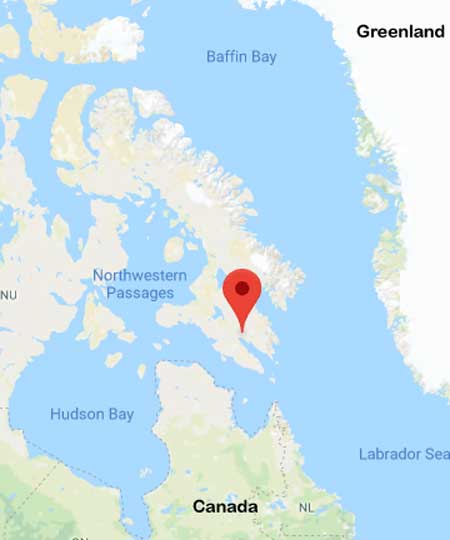
The Google Pin marks their end point.
And their start point is on the southern side of the small island in the upper right corner. It starts east from there then turns south. They will travel west through a small passage south of Somerset Island then south to the southeastern corner of Victoria Island. Then they backtrack to your eventual end point. So it’s only a partial passage traverse and not the entire NW passage. Similar to the “Row to the Pole” stunts that never went to the pole.
I wonder if the education system is about anything but protest anymore.
Seriously, seems to me all they teach kids anymore is how to throw tantrums, stamp their feet, and hold their breath until they turn blue. A practical solution to any issue is utterly beyond them.
Check out the Heising-Simons Foundation, one of the sponsors: https://www.hsfoundation.org/programs/climate-clean-energy/. They have nearly $500,000,000 in assets. One contribution last year from a trust in the amount of ~$35M. Director gets paid north of $300K.
linked to Clinton Foundation
“James Simons, a hedge fund magnate who spent $11m in support of Hillary Clinton’s 2016 presidential campaign, amassed investment profits in the Lord Jim Trust, a vast private wealth fund set up on the Atlantic island in 1974.”
https://www.theguardian.com/news/2017/nov/07/democratic-donor-james-simons-private-wealth-fund-tax-haven-paradise-papers
Akademik ioffe? Shoukd that not be Akademik Ioffe Ioffe from the kingdom of Bumundi?
Hmmm, I wonder if it’s time for Dr Crockford to do a sequel to “Eaten”
michael
Ship of Fools to Antarctica and Ship of Tools to the Arctic
Weeping for the thinning ice when Shackleton saw it as a wonderful opportunity to boldly go…..
Hopeless
Humm….let’s use ships and ice breakers to break up arctic ice to publicize how humans are causing arctic ice loss…
Yes, the route chosen is to avoid getting frozen in.
Some friends are booked on the cruise from Coppermine to the East.
We will see how it goes.
But mainly these trips are to prove to the world that the polar regions are losing ice.
Bob Hoye
Science and activists. Yuck. Is there a pool and water slide?