Note: The title of the post was changed at 5:12 PM CDT, June 29, 2017. The original title was “Toxic Waste From Solar Panels: 300 Times That of Nuclear Power.” Please see addendum for an explanation.
Guest post by David Middleton
Are We Headed for a Solar Waste Crisis?
June 28, 2017 by Mark Nelson
Last November, Japan’s Environment Ministry issued a stark warning: the amount of solar panel waste Japan produces every year will rise from 10,000 to 800,000 tons by 2040, and the nation has no plan for safely disposing of it.
Neither does California, a world leader in deploying solar panels. Only Europe requires solar panel makers to collect and dispose of solar waste at the end of their lives.
All of which begs the question: just how big of a problem is solar waste?
Environmental Progress investigated the problem to see how the problem compared to the much more high-profile issue of nuclear waste.
We found:
- Solar panels create 300 times more toxic waste per unit of energy than do nuclear power plants.
- If solar and nuclear produce the same amount of electricity over the next 25 years that nuclear produced in 2016, and the wastes are stacked on football fields, the nuclear waste would reach the height of the Leaning Tower of Pisa (52 meters), while the solar waste would reach the height of two Mt. Everests (16 km).
- In countries like China, India, and Ghana, communities living near e-waste dumps often burn the waste in order to salvage the valuable copper wires for resale. Since this process requires burning off the plastic, the resulting smoke contains toxic fumes that are carcinogenic and teratogenic (birth defect-causing) when inhaled.
The study defines as toxic waste the spent fuel assemblies from nuclear plants and the solar panels themselves, which contain similar heavy metals and toxins as other electronics, such as computers and smartphones.
[…]
By Jemin Desai and Mark Nelson
Jemin Desai is an EP Fellow and a student at UC Berkeley. Mark Nelson is EP Senior Researcher.

Piling on a bit here… Nuclear waste can easily be safely disposed of:
SANDIA REPORT
SAND2009-4401
Unlimited Release
Printed July 2009
Deep Borehole Disposal of High-Level Radioactive Waste
Patrick V. Brady, Bill W. Arnold, Geoff A. Freeze, Peter N. Swift, Stephen J. Bauer, Joseph L. Kanney, Robert P. Rechard, Joshua S. Stein
Prepared by
Sandia National Laboratories Albuquerque, New Mexico 87185 and Livermore, California 94550
[…]
Preliminary evaluation of deep borehole disposal of high-level radioactive waste and spent nuclear fuel indicates the potential for excellent long-term safety performance at costs competitive with mined repositories. Significant fluid flow through basementrock is prevented, in part, by low permeabilities, poorly connected transport pathways, and overburden self-sealing. Deep fluids also resist vertical movement because they are density stratified. Thermal hydrologic calculations estimate the thermal pulse from emplaced waste to be small (less than 20° C at 10 meters from the borehole, for less than a few hundred years), and to result in maximum total vertical fluid movement of ~100 m. Reducing conditions will sharply limit solubilities of most dose-critical radionuclides at depth, and high ionic strengths of deep fluids will prevent colloidal transport.
[…]
DOE estimates that 109,300 metric tons heavy metal (MTHM) of high-level waste and spent nuclear fuel – primarily commercial spent nuclear fuel (CSNF), but also DOE spent nuclear fuel (DSNF), and high-level waste glass (HLWG) – will need to be disposed of in the US (the projected US HLW and SNF inventory is summarized in Appendix A).,Deep borehole disposal, characterization and excavation costs should scale linearly with waste inventory: small inventories require fewer boreholes; large inventories require more boreholes. Not needing a specially engineered waste package would also lower overall borehole disposal costs. Both aspects might make borehole disposal attractive for smaller national nuclear power efforts (having an inventory of 10,000 MTHM or less). In the US, the 70,000 MTHM of waste currently proposed for Yucca Mountain could be accommodated in about 600 deep boreholes (assuming each deep borehole had a 2 km long waste disposal zone that contained approximately 400 vertically stacked fuel assemblies). The remainder of the projected inventory of 109,300 MTHM could be fit into an additional 350 or so boreholes.
Because crystalline basement rocks are relatively common at 2-5 km depth (See Figure 2; also see O’Brien et al. 1979; Heiken et al. 1996), the US waste disposal burden might be shared by shipping waste to regional borehole disposal facilities. If located near existing waste inventories and production, shipping would be minimized. A disposal length of ~2km, and holes spaced 0.2km apart suggests the total projected US inventory could be disposed in several borehole fields totaling ~30 square kilometers.
Petroleum drilling costs have decreased to the point where boreholes are now routinely drilled to multi-kilometer depths. Research boreholes in Russia and Germany have been drilled to 8-12 km. The drilling costs for 950 deep boreholes to dispose of the entire 109,300 MTHM inventory, assuming a cost of $20 million per borehole (see Section 3.1), would be ~ $19 billion. Very rough estimates of other costs are $10 billion for associated site characterization, performance assessment analysis, and license application, $20 billion for disposal operations, monitoring, and decommissioning, $12 billion for ancillary program activities, and $10 billion for transportation, resulting in a total life-cycle cost for a hypothetical deep borehole disposal program of $71 billion (in 2007 dollars). Although there are significant uncertainties in the cost estimates for deep borehole disposal presented here, the estimated total life-cycle cost may be significantly lower than the estimated total cost of Yucca Mountain. Note in particular the lower construction/operation and transportation outlays that borehole disposal would allow.
This document outlines a technical and performance assessment analysis of deep borehole disposal of US HLW and SNF.
[…]

This is worth repeating:
The drilling costs for 950 deep boreholes to dispose of the entire 109,300 MTHM inventory, assuming a cost of $20 million per borehole (see Section 3.1), would be ~ $19 billion. Very rough estimates of other costs are $10 billion for associated site characterization, performance assessment analysis, and license application, $20 billion for disposal operations, monitoring, and decommissioning, $12 billion for ancillary program activities, and $10 billion for transportation, resulting in a total life-cycle cost for a hypothetical deep borehole disposal program of $71 billion (in 2007 dollars).
$71 billion (in 2007 dollars) to safely and permanently dispose of the entire inventory of 109,300 metric tons heavy metal (MTHM) of high-level waste and spent nuclear fuel.
That would be $84 billion in 2017 USD.
According to BP’s Statistical Review of World Energy June 2017, from 1965-2016, US nuclear generating stations produced 26,386 TWh of electricity (26.4 trillion kWh).
$84 billion divided by 26.4 trillion kWh is $0.0032/kWh… 1/3 of one penny per kWh to dispose of the entire inventory of high-level nuclear waste.
If solar panels and the rest of the toxic waste associated with solar installations could be compacted in such a manner that they could be disposed of in deep boreholes, the cost would be greater than $1.00/kWh (300 * $0.0032 = $0.96 plus the cost of compacting the panels, etc.).
So… Why would anyone in their right mind prefer solar over nuclear power?
As if that wasn’t bad enough for solar…

While I personally don’t ascribe much value to the reduction of carbon emissions, the advocates of solar power probably do… Yet most of them oppose nuclear power and/or natural gas.
- Solar = 1/4 the availability of nuclear.
- Solar = $500,000/MW less valuable than nuclear in emssions reduction.
- Solar = 300 times the toxic waste per MWh compared to nuclear.


Addendum: June 29, 2017 5:00 PM CDT
The Energy Collective article doesn’t clearly distinguish “waste” from “toxic waste.” So, wherever the phrase “toxic waste” appears in this post, it probably should have been written as “toxic and/or other waste products.”
If you read the sources …for http://www.theenergycollective.com/energybants/2407383/headed-solar-waste-crisis
“The study defines as toxic waste the spent fuel assemblies from nuclear plants and the solar panels themselves, which is only a tiny fraction of total waste for former …
EP estimated that a typical 1 GW nuclear reactor produces 27 tonnes of waste annually.”
citing http://www.world-nuclear.org/information-library/nuclear-fuel-cycle/nuclear-wastes/radioactive-waste-management.aspx
So basically comparing used solar panels to spent fuel rod assemblies to used which are high level waste (HLW).
There is a lot of low level nuclear waste also, and would assume toxins from manufacture of solar panels.
The citing doc also
“HLW accounts for just 3% of the volume, but 95% of the total radioactivity of produced waste.”
Comparing just the spent nuclear fuel rods to solar panels as toxic waste by energy produced is a half hour study and far from any real analysis. It is like comparing apples to oranges plus ignores the brunt of waste. It is clearly not a good study, but has a citeable sound bite bottom line about the ratio of nuclear to solar waste which can be used as propaganda against the latter.
The TheEnergyCollective.com is funded by Siemens Energy and Royal Dutch Shell. Not surprised, but would have to look at rest of so called studies to assess a bias or agenda.
I am not too worried about low level nuclear waste which decays quickly, but on other end worried about the danger of high level nuclear waste if say a terrorist target, think about a 9/11 event ramming a plane into a spent fuel rod pool which could be Chernobyl times 50. A bit different risk than say cancer from an old solar panel tossed into a land fill.
Government should not debate or chose energy generation sources, however real costs should be added in by producers such as safe disposal/storage of toxic by-products, and costs not decided by politics. The current subsidies to solar are a total waste driven by lobbyists and political donations in search of corporate profits in the vise of being marketable as environmentally friendly when may be not. Half a $ billion wasted on Solyndra alone, and Elon Musk and Tesla using the old building now for second round of feeding. It is a blend of marketing, socialism, and crony capitalism lining someone’s pockets with green where the purchased perception of green or black is no more than a thin layer of paint.
“if say a terrorist target, think about a 9/11 event ramming a plane into a spent fuel rod pool which could be Chernobyl times 50. ”
No, Chernobyl was an operating reaction without moderating rods in place so it melted and caught fire. Ramming a plane into a spent rod pool would drown the occupants and put out the (jet fuel) fire.
Well said.
So far as I know, there aren’t any spent fuel rod pools in the middle of Manhattan, either…
A plane crashing into one of the pools would cause a mess in the immediate vicinity, but would be cleaned up pretty quickly. Robots would be used to collect the scattered fuel casks and place them in another pool. There would be very little long term impact.
Of course, if we were reprocessing these rods and removing the useful isotopes and encasing the rest in glass for permanent storage, there would be no fuel rods in pools for people to worry about. All of these problems in nuclear power were CAUSED by political people who refused to look deeper into how this stuff really works.
” Robots would be used to collect the scattered fuel casks and place them in another pool.”
…
Robots are having a hard time in Fukishima: http://www.cbc.ca/news/technology/fukushima-nuclear-robot-radiation-1.3973908
ZOMG! THEY HAD TO REPLACE THE CAMERA ON THE ROBOT! WE’RE ALL GOING TO DIE!!!!!!111eleventy!!!!
First, these bots were going into a very hot zone which was the site of an actual meltdown. The cooling ponds aren’t that hot and while they will have problems if left exposed indefinitely they do have time to service them. But the hysteria’s cute. Really.
Well the economics aren’t as great as once through so reprocessing has been a dud in the US. But, hey, the greed energy guys like to claim that their pony is coming real soon now if we just keep up the subsidies, so why not play the counterfactual game and claim that reprocessing and vitrification would be cost effective now if we had just spent decades investing in it?
More like a better use for the waste stream. It should have been the process all along. Then the storage pools at the reactors wouldn’t be full of decades worth of spent fuel, just the last couple of years while waiting for a processing slot. At this point it is a cleanup problem more than just an economic one and the politics keep driving the costs through the roof. The antinuclear crowd is EXTREMELY good at frivolous lawfare.
The sediment thickness map is incorrect and entirely misses what is probably the best place for disposal of nuclear waste in bore holes, the Midcontinent Rift System, because it is entirely closed in by hard basement rock and is very deep. In Kansas and Iowa the depth is well over 10,000′.
http://geosphere.geoscienceworld.org/content/geosphere/11/5/1607/F1.large.jpg
The map is of sediment thickness. It’s based on the 1978 AAPG Basement Map of North America…


The MCRS wouldn’t be apparent on it.
http://www.kgs.ku.edu/Publications/Bulletins/237/Woelk1/gifs/fig1.png
The MCRS is based on a strong Bouger gravity anomaly in the middle of the craton.
The sediment thickness map correlates with sedimentary basins…
http://www.earth.northwestern.edu/people/seth/research/microplatemodel.jpg
According to the Sandia study, a sediment overburden of ~3 km would be ideal. The less sedimentary overburden the harder and more expensive the boreholes. Drilling through 10,000′ of sedimenary rock and 3,000′ to 6,000′ of igneous/metamorphic rock is a lot easier than drilling through 13,000′ to 16,000′ of igneous/metamorphic rock.
The fact that Canada has so much proves conclusively that there is no God.
David, that’s exactly my point, the MCR is perfect for this because it is a 10-15,000′ Precambrian aged basin filled mostly with a thick synrift sedimentary rocks capped with extrusive volcanics. I guess the thickness of sedimentary section would depend on whether you call the volcanic cap rock the basement. I don’t consider it to be since there are thousands of feet of sedimentary rocks below extrusive rocks.
http://www.iihr.uiowa.edu/igs/introduction-to-the-midcontinental-rift/?doing_wp_cron=1498760654.6537489891052246093750
http://www.kgs.ku.edu/Publications/Bulletins/237/Woelk1/midcontinent.pdf
The map shows 0.5 to 1 km of sediment over most of Iowa…

The Texaco Poersch #1, drilled through the MCR in Kansas, drilled through Precambrian basement at 867 m and then drilled through an extensive igneous rock section before entering a thick section of arkosic sandstone, with interbedded diabase and basalt layers.
I think this is kind of the opposite of what the Sandia report suggested would be a good deep borehole disposal site.
What I’m saying is that is not the actual Precambrian Basement, it’s a Precambrian Aged extrusive overlying a thick section of sedimentary, metasediment, and basalt rocks. Do you consider Black Mesa to be the basement? It’s a mafic igneous rock on the surface, so why does the USGS show over a km of sedimentary section there? The basement is defined as the crystalline igneous and metamorphics below the sedimentary section, not the first occurrence of any crystalline rock, therefore the basement under the MCR is much deeper than the old USGS map proposes.
I think the Noel-Porsche drilled the horst whereas the Eischand #1 in Carroll Co, Iowa drilled in the graben just to the west of the horst block and “penetrated over 2.5 miles of the sedimentary rocks”. “These basins contain an astounding 36,000 cubic miles of sedimentary rocks, nearly 3 times all the earth materials above sea level in Iowa!”
http://www.iihr.uiowa.edu/igs/introduction-to-the-midcontinental-rift/?doing_wp_cron=1498760654.6537489891052246093750
“Assessment of this segment is based on analysis of 40 core and cuttings samples from the 17,851-foot (5,440 m)-deep Amoco M.G. Eischeid No. 1 well drilled in 1987 in an asymmetric halfgraben-like basin northwest of the medial horst (Iowa horst), Carroll County, Iowa (figs. 1, 2) (Palacas and others, 1990). The Eischeid well penetrated 2,802 ft (854 m) of Phanerozoic (mostly Paleozoic) strata, 14,898 ft (4,541 m) of Middle
Proterozoic (Keweenawan) unmetamorphosed sedimentary rocks, and 151 ft (46 m) of Middle Proterozoic gabbroic intrusive rocks.”
https://pubs.usgs.gov/bul/b2146/J.pdf
I wouldn’t consider Black Mesa to be basement because the Raton basalt is aPliocene extrusive.
36,000 cubic miles sounds like a lot. Iowa covers 56,272 mi². The sediment thickness map shows an average of 0.5-1 km of sediment over most of Iowa.
The rift system is a narrow band covering 42,000 mi². The sedimentary section in the rift would average 1.2 miles thick. This isn’t inconsistent with the average over the State being less than 0.5 mi thick.
The rift comprises 42,000 sq mi of Iowa’s basement alone and averages 5.5-6.5 miles thick in the grabens where the bulk of the sedimentary section is.
http://academic.emporia.edu/aberjame/student/sedlacek5/total.gif
You keep going back to that USGS map, it’s an erroneous map that does not include the several thousand feet of sedimentary section of the MCR.
The 1978 AAPG map is not a detailed map of every sub-basin. 36.000 mi^3 of sediment over a 42,000 mi^2 area is an average thickness of less than 1 mile.
36,000 / 42,000 = 0.9
Learn something every day (especially here). Never knew that petrogeologists used the terms “giants” and “supergiants.”
But we don’t use the term “petrogeologists”… 😉
“Petro” means “rock” or “stone.”
Aargh. Blame it on 103 in the office at the time. That one I knew. “Rock oil” or “petroleum” geologists. Sigh.
At least I didn’t double down on sounding like an idiot and mention that I’d only heard astrologers use the terms before…
That’s OK. My first day in Earth Science 201: Physical Geology, I thought petrology was the study of oil.
Petros = rock
Oleum = liquid
I always get a kick out of “petrodollars”… makes me think of the Dire Straits’ Money for Nothing… 😉
Married men know that some rocks involve quite a few dollars… Fortunately, my spouse prefers certain copper compounds instead of carbon.
Because the sedimentary section is not evenly distributed across the basin…
Speaking of solar…..
The sun is set to ‘change form’ as NASA says solar minimum is on the way
The sun is heading into a period known as solar minimum, during which activity at the surface will ‘change form.’
http://www.dailymail.co.uk/sciencetech/article-4648214/NASA-says-solar-minimum-way.html#ixzz4lPV5p1kK
DUMB QUESTION: Exactly what is/are the substance or substances that we are calling, “Toxic Waste From Solar Panels” ? Okay, I’ll Google it, while the rest of you shake your heads at my ignorance.
What exactly produces the waste? I need to see a list. Is it the panels themselves? Do panels wear out this fast that enough of them mount up in a short time span? Is it the chemicals in the panels? Is there leakage of chemicals? What?
I just do not know anything about this aspect of it.
Thanks for cluing me in. (^_^)
Depends on the panel type. First Solar’s CdTe (cadmium tellurium on glass) thin film is obviously toxic. But First Solar has its own 100% recycling program at end of life. For crystalline and polycrystaline silicon, there really isnt anything. Glass, doped silicon, copper, silver. The Japan study included the mounting frames made of aluminum. The articles cited are a little overwrought.
I think their toxicity is comparable to printed circuit boards.
Depends to some degree on what country you are in and in the US, what state you are in. California has a list 50 miles long of chemicals known to cause cancer, many of which are probably used in the panels. I don’t think the definition of toxic is any where close to universal.
Sell the panels on Craigslist for $1 apiece. They’d make good siding for a shed or small building.
But what if the plane explosion caused the spent fuel rods to be spewed in the air?
The at reactor pools at Fukushima were above ground (and some used MOX type fuel), and nearby was quite a bit larger secondary long term storage pond.
I also really doubt the water in the spent fuel pool would simply “put out the (jet fuel) fire.”
Merely having the water escape from the SNF pools, or no emergency power to cool reactors, would be comparable to what actually occurred, less or ignoring the possibility of a Chernobyl type event by a plane exploding. Tepco can give a yen figure assessment.
I will defer risk assessment, but comparing plutonium, etc., in spent fuel rods to a pile of used solar panels eventually stripped off a roof is not a good comparison. I am not sure what would stack better in a football stadium (and if authors thought about need to fill it with water), but makes good graphics. It is still apples and oranges despite any theoretic terrorist risk.
A highly toxic Leaning Tower of Pisa-high football field is more easily disposed of than a two Mount Everest-high football field of less toxic materials.
Fukushima reactor #4’s spent fuel pool sits 100′ in the air on top of the damaged reactor building. If it had collapsed due to an earthquake or ground subsidence, the amount of radiation released to the atmosphere would threatened the entire northern hemisphere. Fortunately, they were able to empty the pool after about 3 years’ effort. We dodged a bullet.
Threatened the northern hemisphere?! I see lots of ppl forgot their meds today.
The radiation in those ponds is almost 100% in the rods. Had the pond collapsed lots of mildly radioactive water would have spilled, and the rods would have laid there until a robot could be sent in to move them to another pond.
Shouldn’t we be looking at the toxic waste where the panels are produced? Driving a D9 into the storage area for toxic waste at a copper mine, or composite carcinogens stored on site, is a better comparison. Also, let’s assume the waste is immediately dumped into a river or water supply, just for this scenario. What if someone liberates stored or dumped arsenic used in gold mining in the 1800’s? Dumps it into a river because they don’t know it’s there. How many people die and how much cleanup? I agree there’s no half-life involved, but try and separate toxins from water and dirt.
Factor in the toxic gases used in the manufacturing of the solar panels.
Yes, you are a robot.
When it comes to the disposal of nuclear waste, why not fight “fire with fire?” – i.e. Instead of having multiple borehole disposal sites, just have a few deep sites that are designed to do the following:
Once the nuclear waste in a deep hole builds up to a certain volume, lower a nuclear device for exploding its transmuting nuclear particles into the waste, thereby turning the waste into a potpourri of hopefully, (have to do some research here), radioactive isotopes with shorter half-lives of radiation. Repeat until a site becomes overused – whatever criteria that may involve.
OK, I’m sure such an approach is fraught with many problems – not the least of which would be to sell the idea to greenies.
Won’t work. The troublesome part of nuclear waste is the transuranics, particularily the plutonium. The strongly radioactive fission products become harmless fairly quickly. To make your idea work you would have to get all the transuranics to fission. You just work out how big a nuclear explosion that would take and how big the resulting nuclear explosion would be to realiza that it isn’t a good idea.
Storing solar plant toxic waste does not require expensive drilling technology. I am not an expert but I guess that a shed in the desert could do the job. At some point of time a recycling technology could make it even cheaper. It could easily be say 100 times less expensive than nuclear waste storage. The final cost will be hardly $1 per kWh.
It might be one day, but…
The more they try to scale-up solar, the worse it will get.
Scaling would not increase $ per kWh value. On the contrary – the more you produce the cheaper it gets. This also applies to waste storage.
toxic—please explain. Are you saying the more waste we produce, the cheaper the disposal? I think NYC and LA would beg to differ. The more garbage, the higher the cost. Maybe “per unit” the cost goes down, but there are a pile more of units as you increase the waste amount. The cost goes up.
to Sheri: The total cost goes up indeed. The “per unit” disposal cost goes slightly down. The additional $ per kWh cost also goes slightly down.
side note: today is the first day in the past 8 days that the temp has risen above 80F.at my house in central Indiana. NOT a hot summer so far!
Has everyone forgotten the programs, cost, effort, etc. associated with those small mercury batteries? The asbestos removal programs?
How soon till the local garbage dump becomes a supper fund site?
Over the years, asbestos removal rules seem to have become more lax – at least where I live. At first, asbestos removal crews would wear Level-A hazmat suits, and the removal cost would be very high. But now, I know workmen who remove asbestos popcorn ceilings just come in and remove it in their every-day work clothes and dump the stuff who-knows-where?
How about lighting your house with curly mercury lamps run on solar energy. The greens don’t care about the real environment or human, bat’s bald eagles, etc health.
Asbestos, CFCs and now the CO2 molecule, what’s next?
The permissible “asbestiform” particles per m^3 is an order of magnitude less than what is found in natural streams or wind blown in metamorphic terrain of which half of Canada, Scandinavia, Australia, etc is made out of and where the healthiest people on the planet live.
The ozone hole has been growing again despite the Montreal protocol.
http://www.express.co.uk/news/science/615822/NASA-ozone-hole-grown-larger-Earth-warning
Buy they won’t let go of a busted theory.
Toxic solar panel waste is only one of the environmental problems from solar energy. Solar power rare earth metal strip mining operations pollute vast amounts of ground water. Solar farms destroy acres of wildlife habitat. In addition, solar panel construction, maintenance, backup and decommissioning consume more energy than the panels can possibly produce in their lifetime. There is nothing “green” about solar power.
Solar power rare earth? That’s a new one. Link, please.
http://www.resourceinvestor.com/2016/04/06/effect-solar-power-growth-metals-demand
https://e360.yale.edu/features/a_scarcity_of_rare_metals_is_hindering_green_technologies
http://earthjournalism.net/stories/the-dark-side-of-renewable-energy
(These links are not hard to find, if you actually are interested in looking for them.)
In the event of an EMP attack, every PV solar panel facing the sky will instantly be destroyed. So, there is yet another side to the disposal story.
Twenty years ago while in the military I was taught that all solid state electronic devices above ground or connected to an antenna would be destroyed beyond repair. Now that most of the needs home solar panels have micro-inverters it seems to me that these too will be “fried.”
My years in the electrical power generation industry tell me that the best chance for power will be the old pneumatic and mechanical control/protection system plants. Have personally witnessed direct lightning hits with immediate recovery.
The worst thing that can happen to a solar panel from an attack is to be rendered nonfunctional. A nuclear plant that is bombed would be a whole different problem…
Nuclear plants are designed with the risk of bombing in mind. To my knowledge, no thought is given to broken or damaged solar panels and what risks are associated with those. I have read firemen do not like the panels due to electrocution risks. You comparison is weak, to say the least.
Sam R: kind of a moot point if it is a nuclear bomb that hits the nuclear power plant, isn’t it? If a foe can get a bomber with conventional bombs into our country, we would have more problems than the nuclear plant, wouldn’t we? Like all out war maybe?
PS: please see my response to your 8:39 post. It is always my pleasure to get into a discussion where I can share my knowledge of radiation effects.
Which further supports the argument that they, solar/wind will be worthless regardless of how far they are “distributed” after a CME, Carrington Event or EMP. Which envirowhackos would be less likely to loss due to distribution.
Nuclear plants are shielded from EMPs.
I have a tile roof in an earthquake country. Does anybody know what guarantees are provided for rooftop solar panels in a M6+ earthquake?
If faced with the resposibility to dispose of high volumes of waste I can easily imagine European manufacturers of PV cells taking one of two courses: wind up the company after 25 or so years; or export the waste to somewhere offering cheaper landfill costs than in Europe.
It’s all Polly’s fault she just wanted tea. https://www.songsforteaching.com/folk/pollyputthekettleon.php
I’ve included this before. It’s a reclaimed uranium mine. Cattle graze nearby and there’s a public fishing area.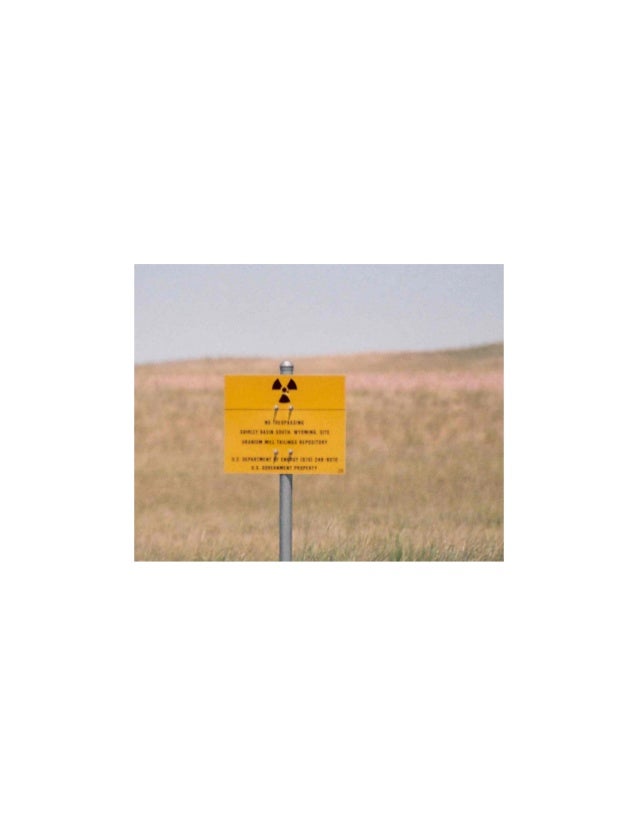 ?cb=1487895224
Consider paring it down to 100×100 pixels. Equally useless.
Not sure what you are asking—is the image too large? Is is unreadable?
Large, no. Unreadable, yes.
I see—the problem is I can’t link to my blog and this is probably a pdf file rather than a Jpeg. I’ll see what I can do.
Okay, here are two and they should be visible here:
http://i1353.photobucket.com/albums/q666/fotoes4all/Needed%20photos/img299_zpsa5jvqorc.jpg
http://i1353.photobucket.com/albums/q666/fotoes4all/Needed%20photos/scan0031_zpsuqgfawqr.jpg
I don’t know what all the fuss is about.
By definition, there’s no such thing as “green” toxic waste.
Sure, the greens have no problem wasting our green. Many of them consider our green to be toxic so wasting it is part of the world “going green”.
Now, nuclear power, on the other hand, actually works. So despite no CO2 emissions, it would be “toxic” even if it had no waste.
Another political myth is dispelled. Green drivers. Gray converters.
Utility-scale photovoltaic panels (and windmills) are low-density, non-renewable, intermittent energy converters that are a blight on the environment. This characteristic of “green” energy products should be considered when determining the weighting of technologies in the energy production basket.
Excellent analysis.
s important to note that although much of the waste produced is considered toxic (in the form of carcinogenic cadmium-contaminated water), there is no evidence it has harmed human health. Conversely, energy derived from natural gas and coal-fired power plants creates more than 10 times more hazardous waste than the same energy created by a solar panel. Although the U.S. solar industry has been dutiful about reporting its waste and sending it to approved storage facilities, coal-fired power plants send mercury, cadmium and other toxins directly into the air, which pollutes water and land around the facility.
Fromgreenbiz.com
The article and the post are not about solar vs coal.
However, if we were taking about the full impact of estimated premature deaths per unit of generation, nuclear power wins by a wide margin…
https://www.forbes.com/sites/jamesconca/2012/06/10/energys-deathprint-a-price-always-paid/#75615bd4709b
The fallouts from nuclear accidents are harder to quantify because their health effects are delayed, and the fallout zones affected are widely and irregularly distributed, and thus those effects are easier to dismiss in industry studies like these. Those studies are often commissioned by the industry, or at least driven by an agenda. we’ve seen it in the MSM coverage of global warming.
Globalist agencies like the WHO are blatantly pro-nuclear, as are most science media outlets. You see the same positive biases towards GMOs for instance.The problem with nuclear energy media coverage is that both the MSM and large swaths of the skeptic community (to which I belong) have positive biases towards it (see Monbiot).
Independent scientific studies like that of Jiřina Vitázková and Errico Cazzoli estimate the number of Fukushima victims in the hundreds of thousands:
“The results with respect to health effects show that within 80 years the number of victims of the Fukushima disaster can be expected to be AT LEAST in the range of 10,000 to 300,000 people in terms of deaths due to infectious diseases, cardiovascular diseases, genetic diseases, and cancers;and about the same number of sicknesses/syndromes needing prolonged hospitalization and health care are expected to occur. This estimates accounts only for the population already living at the time of the accident.
A comparable number of excess deaths and sicknesses may be expected in the population that will be born in the period. In addition to these, more than 100,000 excess still-births and a comparable or larger number of excess children born with genetic deformations (e.g. Down syndrome) are expected.”
http://www.npsag.org/upload/reports/00-004/00-004%20Castle%20Meeting%202011%2009%20-%20Paper.pdf
Just a quick follow-up about the Fukushima cover-up and “no one died in Fukushima” narrative: hundreds of US Navy sailors who were in the vicinity of the accident came down with cancers and other radiation-related illnesses, at least two have died:
“200 young sailors [say] TEPCO deliberately lied to the public and the U.S. Navy about the radiation levels… The lawsuit includes claims for illnesses such as Leukemia, ulcers, gall bladder removals, brain cancer, brain tumors, testicular cancer, dysfunctional uterine bleeding, thyroid illnesses, stomach ailments and a host of other complaints unusual in such young adults… One Sailor, age 22… states, “Upon my return from Operation Tomodachi, I began losing my eyesight.I lost all vision in my left eye and most vision in my right eye. I am unable to read street signs and am no longer able to drive… I know of no family members who have had leukemia.”…
https://www.facebook.com/NuclearHotseat/posts/664103563703489
Hundreds of cancers? Again, try to stay on the meds. Lucidity is a good thing.
Sam R: You’ve got to be more sceptical than that! This stuff is cranked out by the neomarxbrothers scare mongers. Did you know, at Hiroshima, no question the biggest nuclear disaster, the whole city was back down below ordinary radioactive background before a year had elapsed? They rebuilt the city and it is a thriving healthy tourist destination. Did you know that the Chernobyl exclusion zone is now the Serengeti of Europe with large and small animals and birds thought to have been extirpated making an African grade game park.
All these stories you read are the hysterical activist stuff you get at the time. Few bother to go back and recheck. I’ve given the links a hundred times here. Don’t be a lazy browser of the hyped “news” of decades ago. Do some real research and remember these guys are experts with meta data and have clogged searches with their B’S. Move to Missouri if you are having trouble not being sceptical of virtually everything you read, even here and it is the best you will ever find!
The usual ugly manipulators were greatly disappointed that the death toll at Fukushima was virtually all caused by the Tsunami. They cooked a fairytale that those who have had the modern designer-brained lefty education would believe without question.
Sam R, you read too much fake news. That one-eye sailor is Popeye. He didn’t get leukemia from Fukushima. He got diarrhea from spinach. Don’t you get the joke?
http://www.fitnessrxformen.com/wp-content/uploads/2014/01/Popeye-logo.jpg
Translation, anyone who doesn’t buy into the nonsense I’m spewing is blatantly pro-nuclear.
Earlier in the year we had a nutcase who tried to convince us that the Pacific Ocean had become lifeless because of all the radiation from Fukushima that leaked into it.
Sam R is equally as nutty.
Yeah, “no evidence it has harmed human health”…
http://www.washingtonpost.com/wp-dyn/content/article/2008/03/08/AR2008030802595.html is over 9 years old.
http://www.thenational.ae/news/world/asia-pacific/environental-protests-halt-production-at-polluting-chinese-solar-panel-plant – no harm? Baloney.
10 times more waste and thousands times more energy.
When talking radiation and Chernobyl, it’s worthwhile looking at how things are going there now:
“It may seem strange that Chernobyl, an area known for the deadliest nuclear accident in history, could become a refuge for all kinds of animals—from moose, deer, beaver, and owls to more exotic species like brown bear, lynx, and wolves—but that is exactly what Shkvyria and some other scientists think has happened. Without people hunting them or ruining their habitat, the thinking goes, wildlife is thriving despite high radiation levels.”
http://news.nationalgeographic.com/2016/04/060418-chernobyl-wildlife-thirty-year-anniversary-science/
Some people even want to visit:
“Can there be a more unlikely location for visitors than the corner of Ukraine that was the site of one of the most notorious and disturbing incidents ever to cast a shadow across our planet? Cast your mind back, if you will – and if you are of a suitable age to remember – to the bleakness of the east European spring three decades ago, and ask yourself: Could you ever imagine that the Chernobyl Nuclear Power Plant would be a tourist destination?”
http://www.telegraph.co.uk/travel/destinations/europe/ukraine/articles/how-can-i-visit-chernobyl-and-is-it-safe/
Say cheese! Tourists basking in the deadly Chernobyl radiation
One does not become a contrarian, just by being wrong.
I’m all for nuclear power as baseload but to compare toxicity of the nuclear waste to toxicity of solar panels is beyond a joke.
That comparison was never made in the article or the post.
Title of this post: “Waste From Solar Panels: 300 Times That of Nuclear Power”
Please point to the word “toxicity” anywhere in that title. Reading is FUNDAMENTAL.
Unlike you, some people read more than the title, and I guess this is what you need to read: “Solar panels create 300 times more toxic waste per unit of energy than do nuclear power plants.” It’s not that far below the title, you’d have seen it if you read the article.
The article clearly states that it is 300 times the volume of waste (including toxic waste); not 300 times the toxicity of waste
Granted… The EC article did blur the distinction between toxic and other waste products, as did my original title of this post.
David writes
Nobody said 300 times the toxicity. The article says its toxic and there’s 300 times more of it with the implication that the toxicity is somehow comparable. Its just not. At all. The comparison is stupid.
Solar panel waste.
Nuclear waste is collected and stored safely in specified sites.
Dumping old solar panels goes to … the same place the mercury from burnt out compact florescent light bulbs go? Back into the wide, wide world?
After the CAGW scare dies, will they throw “solar powered” tuna against the wall?
Solar panels essentiallly do what CO2 purports to do; but more efficiently.
If you wish to warm up the planet, then plaster it with Solar Panels.
They are designed to capture as much radiation as possible, prevent it being reflected back and to convert the absorbed energy to a higher level as heat or electricity. Result: Captured energy – >> increased temperature.
Weird Green logic!
https://wattsupwiththat.com/2016/10/18/define-irony-photovoltaic-heat-island-effect/
About a half dozen miles south of me, so I know it well. The problem with the panels is essentially the same as the problem with asphalt paving – they both change the spectrum of the reflection / emission drastically.
The natural soils there are the same as in my back yard – very reflective of wavelengths that are not in the absorption bands of the atmosphere. Put asphalt, or solar panels, over that soil and you have them absorbing those wavelengths and then emitting wavelengths that are in the absorption bands.
So you get more heat retention in that area and the surrounding region. Which is, of course, the UHI effect in a nutshell…
Second hand, not official, story, but… I knew a road engineer that told me about their putting in a test section for the durability of various line painting materials. As part of that, they had a temperature monitor right at the side of the road. When they freshly painted that section with their white test materials, the average temperature dropped by 2 degrees F (~1.1 C). As the paint degraded, and accumulated gunk, the average temperature went back to “normal.” (Why my block wall house is painted gloss white, and I keep the dust washed off…)
Confirming Writing Observer comment
In my younger days we used to get off the boat in the back bay, swim ashore and walk over to the beach barefoot, on the way the hot summer sand was brutal enough, but crossing a hot asphalt road was even worse. The only refuge was to get to the while line in the middle of the road, let the feet cool off a bit and then run across the other half of the road back to the sand.
No actual temperature measurements but real data.
Should read white line