0
0
votes
Article Rating
Harvard news says:
“Yet, if coal-fired power is used to meet electric vehicle electricity demand, the absence of tail pipe emissions will likely be entirely offset by incremental power generation.”
Clearly someone at Harvard does not understand what the word “pollution” means.
They appear to be confusing a colourless, odourless, non-toxic gas that boosts the worlds food production with something else.
Whatever real polluttants come out of a modern coal-fired power station are better to have at several hundred feet out of urban areas than concentrated at street level in cites.
Sadly, enviros seem to have completely forgotten what real pollution is and so have stopped even talking about reducing it. Perhaps a few field trips to China would be a useful educational experience. Thoiugh they’d probably come back convinced they could smell CO2 and that it made them cough.
Here’s an interesting perspective on electric cars from a photography guy who also happens to be an electrical engineer:
http://www.kenrockwell.com/business/electric-cars.htm
Might as well strive for “rubber band propelled” vehicles. Wind ’em up with electric motors and wind ’em down where the rubber meets the road. All we’d need to make this work is a breakthrough in the energy density of rubber and a few thousand percent increase in the fatigue life of rubber. That’s not such a tall order, is it? We’ll employ a “modified field of dreams” theory to make this happen as follows: “Legislate and subsidize to make it happen. Screw the fundamental laws of physics”
“China set itself an ambitious goal: to dramatically ramp up its electric vehicle production and surpass the rest of the world’s automobile industries in this important new market.”
I see the problem. There is no market. Politicians/governments cannot create a market. The market has no use for electric vehicles.
I have a electric car, a TWIKE. It’s not in use, due to broken down NICAD batteries. To get it running again with Li-ion batteries, I would have to invest 10,000€ to get a driving range of 200km.
I also have a VW up! with CNG engine. It runs 400 km on 10 kgs of natural gas. This would be 94 miles per gallon, if you try to convert it. Seems this is the way to go.
And it is a great fun to pay 12€ for a full tank in Europe. My Volkswagen Transporter needs 120€ to get full tank…
Yes, Obama should have gone with natural gas. America has literally a wretched excess of the stuff. He fell for the CO2 scam though…and never thought about those filthy-minded plants that just love to lap the stuff up. He could have pushed NG and put the unemployed to work planting forests to balance out the ‘pollution’. But… That would have required genius and well, ther’s a shortage of that in D.C.
Whilst I am unconvinced at present by the advantages of electric cars, we should look forwards at what might be feasible, not at current/historic technologies, prejudices and behaviour patterns:
– the energy still needs to be generated – mostly from fossil fuels (?)
– emissions relocated to generation point rather than tailpipe
– use surplus night time energy generated when other demand is lower – effectively mobile storage devices
– most journeys in UK are short – two car families could have one electric for local use
– most people live in towns and cities
– improve easy hire of petrol/diesel vehicles for infrequent longer journeys
– battery lease and exchange stations to minimise “recharge time” – 5 mins changeover
In a UK context there are some relatively easy initiatives (if the will was there) that have not been actively pursued:
– there are about 20,000 black cabs in London – they would be an ideal testing ground for electric technologies as journeys are rarely more than 25 miles and often only 2 or 3. Only a limited number of fast charge/battery exchange stations would be required. Similar initiatives could be deployed by local delivery services.
– there are something under 100 motorway service stations in the UK – equipping them with decent battery exchange facilities would not be a real challenge. Typically the distance between stations would be around 20 – 40 miles – entirely workable if vehicle range were increased to 150 – 200 miles in the future.
Clearly there will be locations where this is still not feasible – but may capture 80% + of cars
I’m going to sleep for a hundred years. I bet when I wake up the electric car is still useless.
We should start ‘The Electric Car Wheel of Misfortune’ and list all the electric car concepts on it. My guess is it will turn out like the ‘V/STOL Wheel of Misfortune’ which depicts all the (overwhelmingly failed) concepts for vertical/short take-off aircraft.
http://vstol.org/wheel.htm
In 10 months of 2014, there have been 100,000 e cars manufactured, 40,000 of them US of which Tesla makes about a third of them and they are ramping up production. China’s 40,000 are from several years of production.
http://insideevs.com/monthly-plug-in-sales-scorecard/
I had a dream ride in a client’s new Tesla from Quebec City to Ottawa (450km). He’s put about 7000km on it and it has cost him CDN$0.03/km (US$0.04/mile). Mind you Quebec electricity is the cheapest in the world and did you know there are all kinds of free charging stations? Tesla itself has installed quick charge stations at Best Western hotels and other places 300-350 amp, 300v. Upscale coffee shops have 30 amp chargers for free while you go and drink their coffee and eat a sandwich. The free charge at a number of hotel chains is only 30 amps but if you are spending the night there, it gives you a pretty good topping up. A friend of his planned a free car energy holiday traveling in eastern Quebec and New Brunswick. The unexpected business opportunity presented by offering free charges is going to be a game changer for electric cars.
Tesla has come out with the supercharger – half charge in 20 minutes and don’t forget that this baby gets 450km on one charge and they space out their superchargers so you can do this across the country! World auto makers have been piddling around such problems for a couple of decades – Tesla solved the problem in a number of months.
Yes China may not be able to jump start their electric dreams even with an autocratic government making the plans and opening all doors and even buying the cars themselves. US free enterprise does it in jig time. The Gang Green with their desire to kill cheap energy are shooting themselves in the foot if they make energy too expensive to support electric cars. They seem to want to kill everything.
Electric cars [in] cold weather…….really?
Where’s your interior heat coming from? Need windshield wipers? A fan to circulate that heat? Is it dark, necessitating headlights? How much have you now degraded that 180-200 mile charge?
Now, add in the fact batteries don’t fully charge when cold (or are you going to try a heat blanket on the batteries….another charge draining item, after parking it in a heated garage…another cost) and take longer to charge (a chemical hurdle) to, what, maybe 80-85% when the batteries are new.
Yeah, sign me up.
A Norwegian owns 6 of the earlier Roadsters above the Arctic Circle. The cars are superb in snow. The batteries heat as they charge, but take a while (~15 minutes) to get up to full capacity when started cold. They are usually parked plugged-in, and an internal timer will preheat them before you plan to leave. Cabin heating can add 20% to use in sub-zero weather, but the other drains are negligible.
The Tesla batteries are temperature-controlled, and should be good for 500K miles or more. The 85kWh batteries and drive trains are warranted for 8 years or unlimited miles, whichever comes first. Tesla has stolen a huge march on the rest of the industry. They have internal liquid cooling. They sell fine in AZ etc., and have NO trouble there with the heat. Cooling is much easier than heating.
Brian H, in cold weather, it isn’t your butt/back that gets cold, it’s your feet, hands & head (extremities). A heated seat won’t help that.
I’d assume the engineers have considered it, but a shroud around the electric motor (and the battery-pack?) ducted to the baseboard of the interior would help heat the cabin — free heat. Close off the duct in summer…
The price paid out of pocket for electricity pr mile might be CAD0.03, but the actual out of pocket cost is likely far, far higher. After all, the main point of an electric car is that you have prepaid a big chunk of the energy use in the creation of the battery pack.
In the case of your friend – the net cost per mile is guaranteed to be much higher.
TCO ends up the equivalent of a car $25k cheaper or so after 10 yrs, but things get complex projecting further out. Some drivers have passed 80-100k miles so far with 5-10% capacity/range loss. Later losses are expected to be much less.
IAC Musk expects to get battery costs down to $100/kWh from the current (mfr) $180* or so long before 10 yrs are up, with about double capacity. Currently, a 500-mi battery would be too expensive, but is on the cards and in the plans.
*Only Tesla has achieved this. Others are far behind, about double.
BTW, the city-car canard is inapplicable here. Tesla owners seek out long-distance trips to make, and the SC networks are racing to enable them. The first SC was built 1½ yrs ago, and there are now >120 in the US alone…
The Tesla is 85 Kw-Hr. To charge that in California at 35 cents would be U.S.D. 29.75. At max range that works out at 11.22 cents per mile. Who would /why give that away free? petrol is cheaper. Plus that is max range. Tesla services all vehicles, it actually knows what the real average range is. that should not be a secret, all makers have to give their fuel consumption figures based on a standard test. this includes A/C and heaters etc.
Simple, take a scrap Prius apart, no folding rear seat and small boot due to battery and safetys. Under the bonnet, a whole box of electronics. Yes easy.
Ya, California is running out of Other People’s Money, which powers its socialist paradise. But rates in the US average 11¢/kWh, and overnight charging, the usual, is about half that.
But ask any Tesla owner. They’d pay extra per mile to be able to avoid gas stations and spend a few seconds to plug in at night and unplug in the morning. Never an oil change. Treated like royalty rather than marks by service staff, most fixes done remotely or by home visits (no charge under warranty), etc.
And the SuperChargers have enabled many to criss-cross the country while charging free every 150 miles or so. Usually ready to go before they have time for a snack and potty break. Travelling becomes a pleasure, which owners look for excuses to replicate. More and more hotels are making free overnight charging available for guests, or during meals for diners.
Autopilot hardware has just been added to new models as of Oct 1, and will gradually be activated more and more fully as software is refined to use it. Installed OTA.
Musk says Tesla’s patents are now open to all who wish to use them in “good faith”, but notes that speed of innovation is its real competitive advantage. It is likely to be long and long before anyone catches up to that moving target. He deeply regrets having to do all the heavy lifting, but hopes some others will stop playing with hybrids and make competitive BEVs. No sign of serious efforts yet, though some vapourware is starting to get announced.
“The unexpected business opportunity presented by offering free charges is going to be a game changer for electric cars.”
That describes a gimmick, not a “game changer.” And “free charges” to describe “somebody else pays” is more gimmickery.
What is going to happen to your friend when he pulls into the Best Western at New Brunswick and SOMEBODY ELSE IS CHARGING THEIR CAR? WTF IS HE GOING TO DO?
The problem lies with the batteries. There are at least three four ways to overcome this.
1. An extremely long extension lead.
2. Connection to overhead cables, as with trams, trolley buses, and dodgem cars.
3. Hydrogen fuel cell.
4. Mr. Fusion.
I’m placing my bets on number 4. Either that or a car “powered by my own sense of self-satisfaction.”
I don’t give a sh!t about CO2 (as evidenced by my presence on this website). I care A LOT about real pollution: HC, CO, NOX, etc. I have driven hundreds of track days in all kinds of cars and on various motorcycles. I have drag raced (at the strip) rental cars just for fun. I am a “motor head” in every sense of the word.
I now drive a Chevy Volt as my daily drive. Why? Because I’m convinced that electric is the way to go. Internal combustion engines will be the nostalgic rides of the future. Once you experience the smooth, unfettered torque and power of electric propulsion you will not want to go back. Sure, electric cars do not meet all needs today, but they will, maybe not soon enough for some, but they will. I don’t drive a Volt to “save the planet”, I drive it because it’s a great car. I still have a conventional pickup and a motorcycle, but I hope that one day those too will be electric drive. And I hope that battery and charging technology will eliminate the need to carry along an internal combustion engine backup, as with the Volt. But for now I am happy. I don’t hunt for charging stations, I charge at night at home. I buy gas when I need to and don’t cringe. I floor it at stoplights just for the fun of catching much faster cars off guard. I sneak up on deer and coyotes and then spook them with a toot of the pedestrian horn! Way fun.
You might change your mind when the subsidies fail and hybrids either fall victim to skyrocketing prices or get cut completely. It will be quite a while, possibly even past my time (I’m 20), before electric cars even begin to become feasible in large numbers thanks to the innumerable logistics and economic issues (subsidies and tax credits). Electric cars now have the exact same range as electric cars in 1910, whereas the mileage and efficiency of internal combustion engines has yet to show signs of slowing down. 20 years ago no one would’ve thought that it would be possible to make a quarter ton gasoline truck that got 25mpg on the highway. On the other hand there’s natural gas, which has major downsides but shows a whole lot more promise in the long term. Hydrogen is another possibility. Then by the time we get to a point where we could go electric, we will probably have no incentive to because we’ll have other power sources that are every bit as efficient as the electric car of the future.
There’s a big downside to Tesla’s acceleration. They forgot that instant torque grinds the gears. Gas cars take 0.7 seconds to spool up, and that’s as much for gearing preservation as anything else. Tesla should’ve programmed a similar spool-up, but they’re not a car company so they didn’t know.
http://www.edmunds.com/tesla/model-s/2013/long-term-road-test/2013-tesla-model-s-drive-unit-iv-the-milling.htm
Also: While the Tesla Model S “performance” model will zip off the line because of that insta-torque, the fast gas cars beat it in the quarter-mile.
This points to the absurdity of the greens. Pollution can be problem, Pollution has to be managed or it can degrade quality of life. Beijing is one of the better examples of this with air quality issues. I lived in a city next to a river that was disgusting and could not be used for recreational purposes. Actions were taken and 25 years later, the city has a river park and the river is sprouting boat clubs.
Instead of focusing on the year 2100 and beyond, planetary doom, and making a villain out of vital life giving CO2, focus on cleaner water, cleaner air and better transportaion for cities. If that includes electric cars and more bike paths, so be it.
BTW rural areas just need the greens to stay the fork away.
“Yet, if coal-fired power is used to meet electric vehicle electricity demand, the absence of tail pipe emissions will likely be entirely offset by incremental power generation.” As skeptical as I am, you lost me on this sentence. By virtue of economies of scale, the amount of carbon emitting fuel used in coal plants is far less per mile than gasoline. The problem with electric cars will always be charge times and access to a re-charge. This inconvenient truth escapes the idealist that thinks we all have money for our electric “commuter” and our occasional use gasoline car. The other problem is electric cars are ideal for small commutes, meaning cities, but if you can’t park next to your outlet, what’s the point. Until every parking spot has a socket that can be metered like an Easy Pass, it’ll never fly. For smog reasons (not CO2), I wish it would.
@ur momisugly T Nails:
A Nissan Leaf, or a Tesla S has an energy consumption of ~5km/kWh during standardized drive cycle tests. According to Tesla, the charger and charge process has an efficiency of 91%. Therefore you’ll consume 0.22 kWh from the electrical grid per km driven.
In Germany, the industrial country that’s going crazy with renewable energy to the point where it creates problems in the grid due to their volatility, electricity production still produces 560 grams of CO2 per kWh according to the german environmental ministry, and therefore to charge a Leaf or Tesla 132 g of CO2 per km are produced. In contrast, a 2014 2 Liter VW Golf Turbodiesel produces 119 g of CO2 per km in the same drive cycle. That’s how much sense electric cars make when you worry about CO2.
As regarding real pollution:
The multiple catalytic converters, particle filters and so on in a modern Diesel car makes it most likely cleaner in regards to air pollution (NOx, particles, CO) than even a modern coal fired powerplant. In fact, driving a ULEV diesel car during a smoggy summer day in LA causes the tailpipe pollutant concentration to be lower than that of the ambient air.
For example, my 2010 Diesel car is so clean, that even after now 85,000 miles on the odometer, you can swipe your finger inside the tailpipes and your finger stays clean (if it was clean to begin with).
It is amusing that someone buying a $100 k or more Tesla cares one whit about the cost of the fuel. Does cheap electricity really enter into the equation when one spends this kind or $$$$? The interest on the cost of a Tesla would pay for the annual cost of gasoline.
Also advocates have not a clue as to what it costs to provide the infrastructure currently available for gasoline or diesel powered engines in a large country like the USA or Canada? This was developed by the capitalistic system not tax payers. The advocates want the taxpayers to pay for a system to replace one paid for by private enterprise.
No thanks.
The SuperChargers are paid in full by Tesla to install and use. Forever. Costs about $2000/car averaged across the fleet, and they can expense it as marketing if they want, as they spend little else except a bit at their new vehicle launch parties. When the infrastructure is dense enough they will turn over associated solar generation and battery storage for grid buffering to Solar City, which will try to make a profit by over-generating vs demand over the course of each year and selling the excess to utilities. Battery buffers will also be used to lower expensive demand peaking.
World-wide. Musk isn’t playing California Dreamin’ word games like so many ignorantly suppose. The products are superb, “compelling”.
expect when its dark or their is little sun in which case they will have to rely on ‘evil fossil fuels ‘ or become the worlds most expensive shopping cart as you push them down the street. Give him credit Musk is a first class marketing guy that knows a sucker , even if a rich one , when he sees one.
In the premium market, which they said up front was the only one they could handle the volumes for and which would generate adequate margin to move on to the middle range family car, it is very moderately priced. Many who buy it have never spent over $20-30k before on a car. It is not a showpiece or toy. And with its drastically simplified but over-built engineering, it should last indefinitely. Many who buy hope and assume the battery can be switched out for $10-$15k in 8-10 yrs after buying for an even longer-range one. Looks possible, and the batteries would then have a “second life”, even longer, as static storage units. When decades later even that is past, they are designed to be ground up and recyled for raw materials for the battery factory (built-in facility there). No toxins will be released. Li, btw, is about 1-2% of the content.
The dealer network hates them, as they offer few opportunities for service gouging, and Musk has directed them to operate at break-even only, and not as the main profit source as are all other makers’ service and parts departments. Owners are blown away by the (mostly free) attention to detail, spontaneous extra work done without charge, etc.
By contrast, the glitzy BMW i8 2+2 needs two techs to open the hood, is being marked up from $150k to $250k just because the dealers can for the moment, and is a year wait to obtain. About 5% the battery range, after which it putts along with a 3-cylinder turbo on its skinny low-performance tires. A joke.
When I lived in England between 1971 and 1973 the milk delivery arrived by a small electric vehicle, even though I lived in the suburbs of London. A good application? Is that still true?
Keep in mind that in Europe, they tax the He$$ out of petrol for social programs. Will they do the same with electric cars?
Norway has both one of the world’s highest petrol/diesel tax levels and a crazy high tax on cars themselves (this tax depends on vehicle weight, CO2 emissions and horsepower). For instance, for an expensive and powerful diesel car like the BMW M550d xDrive, the taxes amount to roughly 50% of the price (you pay USD 78,000 in taxes!). But for a Tesla Model S, which is an even more powerful and faster car than the M550d, you pay zero taxes. In addition, you may drive in the lanes normally reserved for buses and taxis, you don’t pay any toll on toll roads, you get free parking almost everywhere and there are lots of free-of-charge charging stations.
So if you plan to visit Norway, don’t be surprised to see Teslas everywhere in Oslo. In the first half of 2014 3134 new Model S were sold in Norway (keep in mind that the total number of private cars is only 2.5 million).
Bjorn Nyland has been filming his tours around Norway and Europe in his red Tesla, both before and after a) his marriage, and b) expansion of the SC network. All seasons: http://www.youtube.com/user/bjornnyland
It’s interesting to read the comments for the tribalism. I own two vehicles: an Think City EV and a big diesel pickup truck, each bought within the last two years. And I’m here on Watts Up because I think the AGW hypothesis is a pile of b.s. from here to the moon. I own the EV because I’m a car nut and because I got a great price, and I own the pickup for over-the-road use.
The EV costs 8 cents a mile to operate — half for the electricity and half for the cost of battery degradation net of avoided oil changes and maintenance of transmission and exhaust components. The operating cost of an equivalent gas car would be 13 cents a mile.
Range on 80% of the battery — generally recommended in the EV world — is 65 miles throughout the year. In summer 75 miles, in winter 50 miles. This is in Seattle, where top summer temps are 90 degrees and low winter temps are 20 degrees. The EV’s driving performance is similar to that of any other subcompact, and it serves me well as a city runabout. I can count on the fingers of one hand the number of times I worried that the EV would run out of power.
I consider EVs to be niche vehicles. Tesla’s EVs are status symbols having nothing to do with economy. Nissan’s LEAF is roughly the same cost as a gas car in operation, maybe a bit cheaper, but also less capable due to the range limitation.
I don’t think this will change for the foreseeable future. Lithium batteries will get cheaper due to manufacturing economies, but it will take a breakthrough in materials to deliver the combination of cost and energy density necessary to move these vehicles into the mainstream, even as city commuter vehicles. That said, I hear about potentially larger lithium batteries at similar costs, and think the niche might expand.
I’ve written a lot already and will stop. I am all about the facts, and promote nothing.
http://i.imgur.com/yYK6rOS.jpg
Thank you CWP – good comments. Some musings follow – no coffee yet so it may be all nonsense.
I confess (Heresy ! Bung the leper!) that I like the concept of electric cars in cities and I think they have their place. I believe battery technology will continue to improve in time, so am less pessimistic than many on this page.
I think the concept of small urban cars is here to stay and will continue to evolve.
We have a fleet of “Cars-2-Go” in Calgary – rent-by-the-minute Smart cars and they are popular and fun to drive (like a tall go-kart) – the problem is finding one after 7am in my neighbourhood. Also they are remarkably uncool – nobody has yet had the courage to try to pick up girls in one.
Methane is a clean fuel that is widely available – also known as natural gas. A methane-powered internal combustion vehicle would be simple and clean – range would be short due to limited “gas tank” volume, but re-fueling would be quick – another city car concept. This would work better than battery power in colder climates.
I have never been a fan of hydrogen-power (eg Ballard fuel cells) for reasons that are obvious. I do like methane fuel cells (eg Bloom Energy cells).
However, I suggest that the lower price per mile of the electric car is due in part to the fact that electrics pay no equivalent of the “road tax” levied on gasoline. These “road taxes” are generally low in the USA but very high in Europe.
I’m somewhat skeptical of natural gas as a vehicle fuel. From what I know, it combines the hassle of a gas station with limited range. Not as short as an EV, but a lot shorter than gasoline. So I do wonder what the point is. That said, for short range, city vehicle fleets whose owners have a natural gas tank on premises, I could see it.
The tax issue is worth mentioning. I didn’t get into it because my post was long, and there are lots of ways to skin that cat. Suffice to say that, if my EV paid an equivalent tax to what’s levied on gasoline, it would be 0.5 cents per mile. Not enough to move the needle. WA State charges a flat $100 a year on EVs, which is way too much and makes a straight comparison impossible. This fee is partly counterbalanced by a sales tax exemption for EVs purchased new within the state.
Another way to compare would be to the pretax price of gasoline, which cuts the operating cost of the equivalent gas car from 13.3 cents a mile to 11.4 cents a mile. Taking it out to that decimal place, the EV’s cost is 7.5 cents a mile.
The U.S. doesn’t do a lot of monkeying around with the price. The effect of the $7,500 federal tax credit is somewhat overstated because a lot of people don’t qualify for the whole thing on account of the income tax structure here. (Perversely, the higher the income the more likely you get the whole thing, which means that those $100,000 Rolexes, er, Teslas always get the whole thing, while a lot of Nissan LEAFs get very little.)
Because iithium-ion batteries are so expensive, EVs are almost always more expensive than the gas equivalent, especially given the reality of how the tax credit works. So, buying an EV is very rarely, if ever, a true economy move. I save money with mine, but that’s because Think went bankrupt and made them available for $8,500 net of the full credit, which I was able to claim. But this was a special situation, and economy was never my motive.
To toss a further curve into this, most of the cheaper EVs, i.e. the top-selling LEAF, are leased. I frankly don’t know how the tax credit works for leased EVs, but I do know that Nissan subsidizes those leases. I’ve done the numbers, and concluded that someone who leases a LEAF rather than the equivalent Versa pays a premium of about $25 a month to drive an EV, including fuel savings and lease costs. I’d also note that leasing removes the battery degradation cost.
I regularly fight elsewhere online with the “EVangelists” who portray these vehicles in world-saving terms, and who vastly overstate both the cost savings and their performance. In particular, the Tesloids simply cannot bear to be told that a Model S is not an authentic road trip vehicle, the so-called “superchargers scattered along major highways notwithstanding. I’ve provided excruciating factual backup, but just like the cultists of The Worldwide Church of Climatology ™, you cannot bring facts to a Tesloid.
I think there’s a strong theoretical case for electric motive power apart from the Green Crapola ™, and I do support EV subsidies for the same reason that I generally support subsidies for all emerging technologies with wider benefit. But I don’t see EVs being anything more than a niche for quite a while. It’s all about battery cost and energy density, and regardless of what the insufferable blowhard who runs Tesla bleats out this week, I regard lithium-ion as a transitional stage that will not bring these vehicles into the mainstream.
p.s., I’m not a fan of Smart cars, because they have so little cargo capacity. Those are by far the smallest cars on the road. My Think EV and Scion’s iQ are tied for second. Mine often gets mistaken for a Smart. I’ll post a pic at the end, and you’ll see the difference. A Think (or Scion iQ) is a foot and a half longer, a little wider, and a little taller. The result: A Smart has 7 cu ft of room for cargo, while a Think has 28 cu ft.
This makes a huge difference in daily use. I’m frequently blown away by how much stuff I can cram into a Think. It holds much more than it looks like it will. The car was designed by Ford and spun out to Norwegians. Too early for the market — the lithium batteries cost too much, so no one was going to pay $36,000 for the automotive equivalent of a Chunky candy bar.
But it’s a very solid little bugger, and the reports from other Think drivers are that the batteries are holding in there, unlike both Nissan and Tesla, which have had early problems. Beyond all that, I’m suspicious of car sharing. I view it as an attempt by the so-called progressives to attack the individual ownership and use of automobiles. That’s a different conversation, though.
http://i.imgur.com/wilHJA5.jpg
Again, thank you CWP for your thoughtful and worthwhile comments.
A few comments on Alternative Energy, Natural Gas Prices, and Excess Winter Mortality:
Grid-connected wind power and solar power are uneconomic nonsense at this time. Intermittency is the biggest problem. This may change if a “super-battery” is ever developed, but this seems unlikely.
Corn ethanol is uneconomic at this time – as are most other biofuels, with the exception of waste product and novel feedstocks such as tallow, wood chips, straw, algae, etc. that may be economic now or in the future.
Cheap abundant energy is the lifeblood of modern society. When uninformed politicians fool with energy systems, real people suffer.
My main concern at this time is with Excess Winter Mortality across the Northern Hemisphere – our problem is North America is that both Environment Canada and the USA National Weather Service have predicted a warmish winter, and it is going to be very cold in the central and eastern two-thirds of Canada and the USA – much like last year – so people may be unprepared. In Europe and across Russia it will be even colder compared to seasonal norms, but at least they have a realistic cold weather forecast so are forewarned.
The great advantage of North America is cheap energy – even though natural gas prices have risen sharply in the past two weeks, wholesale natgas is still just over $4/GJ on NYMEX. In Europe, natural gas prices are 2-3 times higher, thanks in large part to greens who oppose fracking of gassy shale formations.
In Northern climes, many more people die in Winter than in Summer.
For Europe and all of Russia:
Assume a very low Excess Winter Mortality Rate of 10% (it varies from about 10% to 30% in Europe);
About 1% of the population dies per year in Europe and Russia, or about 8 million deaths out of about 800 million people;
The Excess Winter Mortality of this population is (4 months/8 months) * 10% * 8 million = at least 400,000 Excess Winter Deaths per year.
This is an average number of Excess Winter Deaths across Europe and Russia – it varies depending upon flu severity, cold etc.
Many people in Europe, especially older people on pensions, cannot afford to adequately heat their homes so are especially susceptible to illness and death in winter.
The population of North America subject to cold weather is less than half the above.
I hope I’ve slipped a decimal or two – these numbers seem daunting.
In any case, please bundle up and stay warm this winter.
Regards to all, Allan
*********************
Excess Winter Mortality in Europe: a Cross Country Analysis Identifying Key Risk Factors
http://jech.bmj.com/content/57/10/784.full
Table 1 – Coefficient of seasonal variation in mortality (CSVM) in EU-14 (mean, 1988–97)
CSVM 95% CI
Austria 0.14 (0.12 to 0.16)
Belgium 0.13 (0.09 to 0.17)
Denmark 0.12 (0.10 to 0.14)
Finland 0.10 (0.07 to 0.13)
France  0.13 (0.11 to 0.15)
Germany 0.11 (0.09 to 0.13)
Greece  0.18 (0.15 to 0.21)
Ireland 0.21 (0.18 to 0.24)
Italy   0.16 (0.14 to 0.18)
Luxembourg 0.12 (0.08 to 0.16)
Netherlands 0.11 (0.09 to 0.13)
Portugal 0.28 (0.25 to 0.31)
Spain   0.21 (0.19 to 0.23)
UK      0.18 (0.16 to 0.20)
Mean    0.16 (0.14 to 0.18)
******************
http://newsoffice.mit.edu/2012/liquid-batteries-0214
RE MIT super-battery.
Thank you CWP – we’ll see what works – I remain pessimistic about super-batteries.
Years ago I proposed a super-battery that may someday materialize…
http://wattsupwiththat.com/2009/01/10/polar-sea-ice-changes-are-having-a-net-cooling-effect-on-the-climate/#comment-72001
Storage of electricity is much easier said than done.
One interesting idea for electricity storage is a “super battery”, consisting of many plugged-in electric cars. This could be possible in a decade or two.
Regards, Allan
Here is a better use of wind for traction. Spooner’s boat.
http://www.festrail.co.uk/content/publish/frnews/The_Boat_sails_into_Birmingham.shtml
http://www.geograph.org.uk/photo/1848521
Well these days you buy your milk at the supermarket and they have largely disappeared, although they are still used to some extent.
http://en.wikipedia.org/wiki/Milk_float
The electric milk float was well suited for the application – known daily distance, very frequent stops (every 50 ft perhaps). Used for a few hours each morning, then back to the depot to be charged for the next day.
Milk companies presumably used them because they were an economical solution.
In November 2013, Bruno Van Zeebroeck wrote an article “Electric cars as polluting as cars running on petrol”. “An average electric car is responsible for as much (or even more) particulate matter in the air. This is because it is heavier, due to the heavy batteries. This causes more wear and tear on the brakes, tyres and the street surface, Bruno Van Zeebroeck of the Transport & Mobility Leuven (TML) research bureau concludes in a survey.Things should be put into perspective though, as electric cars are still a lot better than diesel cars, which emit more fine particulate matter than petrol cars.” (http://deredactie.be/cm/vrtnieuws.english/Health%2Band%2BEnvironment/1.2144594)
To be more concrete: “A gasoline car today is responsible for about 18 milligrams of particulate matter, i.e. the sum of emissions due to the combustion of traditional fuels and other emissions. For an electric car the sum of emission amounts to 17 milligrams. A diesel car built in the year 2000 shows an emission of nearly 80 milligrams. The difference between a gas vehicle and an electric car is thus negligible.” (in Dutch: http://www.hpdetijd.nl/2014-11-10/onderzoek-elektrische-auto-produceert-nauwelijks-minder-fijnstof/)
A brief version of his study: http://www.tmleuven.be/project/fijnstof/belang_niet-uitlaat_fijn_stof_emissies.pdf.
Earlier, it was known that electric cars are not intrinsically better regarding CO2 emissions. “If a typical electric car is driven 50,000 miles over its lifetime, the huge initial emissions from its manufacture means the car will actually have put more carbon-dioxide in the atmosphere than a similar-size gasoline-powered car driven the same number of miles. Similarly, if the energy used to recharge the electric car comes mostly from coal-fired power plants, it will be responsible for the emission of almost 15 ounces of carbon-dioxide for every one of the 50,000 miles it is driven—three ounces more than a similar gas-powered car.”
To end, I give some figures from my country. In Belgium, today there are about 1800 electric cars (on a total of 7 million cars or 0.026%) and about 860 recharge points. Europe obliges us to build 21,000 recharge points by 2020. If we know that electric cars are not much better than gasoline cars regarding emission of particulate matter and of CO2 but are much more expensive, and that prices of electric power are skyrocketing (to afford efficient investments in electric plants a doubling of the prices is necessary!), we can only conclude that electric cars are and will represent a very expensive tool, reserved only for a minority.
The quote concerning CO2 emissions is from Bjorn Lomborg “Green Cars Have a Dirty Little Secret”. (http://online.wsj.com/news/articles/SB10001424127887324128504578346913994914472)
Lomborg was wrong. He based his statement on a study that had to be corrected because it vastly overstated the materials content of electric motors and inverters used in cars. An EV isn’t any more or any less energy or pollution intensive in manufacturing.
I frankly don’t care about the carbon side, but I did research it just for the hell of it. At the mix of fuels used to generate electricity in the U.S., an EV emits about 60% of the CO2 that a gas car does. Obviously, this varies depending on where you live. Here in Seattle, where 100% of the electricity comes from hydro or wind, my EV emits no carbon in use.
By the way, before anyone tags me as a Greenoid ™, please do me the favor of reading my posts above, okay? I own an EV, but I am not, not, not an “EVangelist.” I’m a car nut, that’s all, and Joe Friday when it comes to facts.
An average electric car is responsible for as much (or even more) particulate matter in the air. This is because it is heavier, due to the heavy batteries. This causes more wear and tear on the brakes, tyres and the street surface.
Nissan LEAF: 3,240 lbs.
Nissan Versa: 2,485 lbs.
The LEAF uses a traction motor, which dramatically reduces brake use. Pavement wear is a function of the 4th power of weight per axle, and is relevant only for heavy trucks and buses.
Don’t know if those CO2 calcs are true, but great, if so. CO2 production is a major benefit of recycling all the buried and fossilized plant food.
But none of that changes the ranking of the Tesla as the best car ever built! The mid-size Model 3(≡) will start at $35k, minimum range of 200+ miles. It will still only sell a half-million cars a year, though, by about 2020. Not even taking reservations yet. Even that won’t get them “next to the decimal point (of 0.1% of annual sales) though.
Thanks Matt
Matt November 10, 2014 at 11:10 am As Prof Muller ..said ..the electric car is dead (for technical reasons)
see the beginning of this video http://www.youtube.com/watch?v=zmdRQ9f5vhc#t=223
‘… Investors thought there would be some Moore’s Law for batteries, but the physics make that impossible .. it’s a dream … If you really wanted a popular electric car go lead-acid battery, it’s not massively more expensive than conventional cars, but cos they’re heavy the range is 50miles. Electric cars won’t take off until they get a mas market in developing countries and maybe in China 50 miles would be enough for a budget electric car.’ ..my paraphrasing
Background to the video is on this page : http://berc.berkeley.edu/dr-richard-muller-author-of-energy-for-future-presidents-speaks-on-evs-and-natural-gas/
Batteries? Chemical fuel cells seem to me to be the better alternative. Not H, but, something that can actually be stored.
But, I did used to do maintenance on electric forklifts and power dollies. There would be a need for better contactor materials. Maintenance on the electronics alone is expensive.
Have they made any progress since this effort?
[youtube https://www.youtube.com/watch?v=nQGvXx4rfUY%5D
This is the problem we have in the West.
The media is led by brain-dead liberals who actually believe that a perpetual motion machine like this will work. And they broadcast it to the world, and their fellow brain-dead liberals in government enact it into legislation. Meanwhile, the Western economy and Western society slides into decay and decline.
We need a new broom throughout the Western media, to sweep away the idiots and replace them with rational people.
Ralph
My mother-in-law, a limousine liberal, explained to me her Prius gets better mileage in the city due to the brakes charging the batteries. My undergraduate degree is in mechanical engineering but she’s not interested in my opinion.
Western civ is run by people with high social IQ (lol), the fawning mutual groomers of the monkey troop sitting in the banana tree. The annoying rationalists have been pushed out into the scrub, ignored until the banana tree is stripped and they’re needed again to find another.
.
You mean the coal or gas powered car??
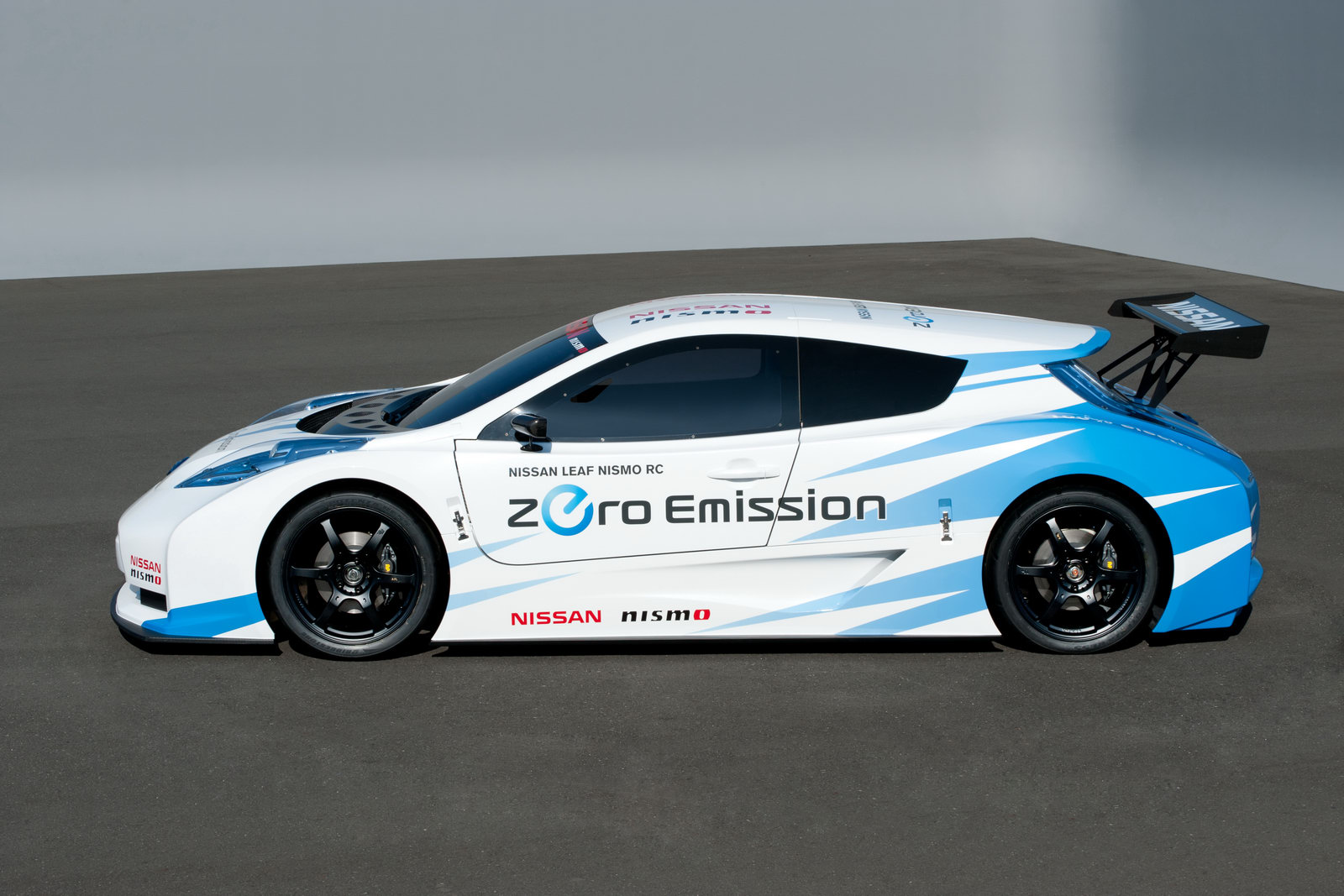
I won this debate the UK’s advertising standards authority. The Nissan Leaf was being advertised as ‘zero emissions’, until I pointed out there were plenty of emissions — at the power station. Nissan were forced to delete this false claim from their advert. And so in the UK Nissan now say the Leaf has no exhaust pipe, which is technically true, but still misleading.
The old ‘zero emissions’ claim:
http://www.autoblog.gr/wp-content/gallery/nissan-leaf-nismo-rc/nissan-leaf-nismo-rc-21.jpg
The revised ‘no exhaust’ claim:
http://www.nissan.co.uk/GB/en/vehicle/electric-vehicles/leaf/discover/main-features.htmlhttp://www.nissan.co.uk/GB/en/vehicle/electric-vehicles/leaf/discover/main-features.html
I note that in other countries, Nissan are still advertising the Leaf as ‘zero emissions’. Perhaps you could all get writing to whatever agency controls advertising.
Ralph


China’s Electric Vehicle Policy Not Turning Over
November 6, 2014
By Robert O’Neill
Toward the end of the past decade, China set itself an ambitious goal: to dramatically ramp up its electric vehicle production and surpass the rest of the world’s automobile industries in this important new market. It was a policy intended to play a crucial role in the country’s economic development and long-term energy strategy and in solving some of its important environmental and health problems.
“Examining the Chinese effort to develop an electric vehicle market offers a window into the country’s economics and politics as it confronts these three challenges,” write Henry Lee, senior lecturer in public policy and Jaidah Family Director of the Environment and Natural Resources Program at Harvard Kennedy School, and his coauthors, Sabrina Howell and Adam Heal, both research associates at the Kennedy School, in “Leapfrogging or Stalling Out? Electric Vehicles in China.”
[,,,]
The Chinese government’s goals were to have 500,000 electric vehicles on the road by 2011 (accounting for 5 percent of total vehicle sales) and 5 million on the road by 2020. But, as the authors point out, “in mid-2013, China had only about 40,000 electric vehicles on the road, more than 80 percent of which were in public fleet vehicles, such as taxis and buses.”
[…]
While China’s program has been primarily driven by a desire to build globally competitive electric vehicles, air pollution, especially in the cities, has become a national imperative. Yet, if coal-fired power is used to meet electric vehicle electricity demand, the absence of tail pipe emissions will likely be entirely offset by incremental power generation.
Source: http://www.hks.harvard.edu/news-events/news/articles/electric-vehicle-policy