Guest essay by Joe Born
Lead author Christopher Monckton turned down my request for further information about how the Table 2 “transience fraction” values in Monckton et al., “Why Models Run Hot: Results from an Irreducibly Simple Climate Model,” were obtained from a Gerard Roe paper’s Fig. 6. Those values are implausible, so in this post we will follow Lord Monckton’s suggestion that we obtain our own 
The innovation in Monckton et al.’s model 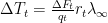




“Transience fraction” is the name they gave that shape component 
However, that graph contains only one or arguably three curves, whereas Monckton et al.’s Table 2 contains values for five. Rather than explain in response to my consequent inquiry how the authors might have accomplished this loaves-and-fishes feat, Lord Monckton simply stated: “The table was derived from a graph in Gerard Roe’s magisterial paper of 2009 on feedbacks and the climate. Far from obscuring anything, we had made everything explicit.”
Lord Monckton also issued an invitation: “If Mr Born disagrees with Dr Roe’s curve, he is of course entirely free to substitute his own.” I reluctantly accept that invitation, not because I know of any reason to reject (or accept) Dr. Roe’s curves but because the values that Monckton et al. inferred from them are implausible.
Fig. 1 depicts the step responses of which Monckton et al.’s Table 2 are normalized versions. That is, it shows the results of multiplying each row’s entries by the corresponding 


Consider that plot’s various values for 


How’s that again? A higher current temperature increase implies a lower equilibrium climate sensitivity?
Theoretically, that result is not completely impossible; if you make different system assumptions for different feedback levels, you can get results like that. But it is far from self-evident that the Roe paper from which Monckton et al. purportedly derived their Table 2 dictates so implausible a result. So, to use Monckton et al.’s model but employ more-plausible behavior, we resort to rolling our own version of Table 2.
To that end we will model the system in the manner that Fig. 2 depicts. We use the 




For reasons that will become apparent in due course we adopt the following coefficient values: 



Fig. 3 depicts the response that such a system exhibits when its input

To obtain the step responses for the various levels of feedback in Monckton et al.’s Table 2, we add feedback, as our Fig. 2’s feedback block indicates. This is a simple matter of replacing 



Fig. 4 depicts the solutions to that equation for a unit step in forcing and shows that they approximate all Monckton et al. Table 2 values except the implausible 

The

For the feedback values in Monckton et al.’s Table 2, the coefficients are as follows, with the 

Recall that the total-feedback values 

That objection is largely conceptual rather than substantive. Response curves exactly the same as Fig. 4’s would have resulted if the calculations had been based on the block diagram of Fig. 5 rather than that of Fig. 2. Note that, as Lord Monckton prefers, the feedback-block legend in Fig. 5 is simply 


Now, that response’s 


It bears emphasis at this point that Lord Monckton was correct in saying that “in all runs of our model that concerned equilibrium sensitivity (and most of them did) [the transience fraction
The model is advisedly simplified, intended to be simple enough that the authors could commend its use to “those who have no access to or familiarity with the general-circulation models,” just “a working knowledge of elementary mathematics and physics.” And Lord Monckton quite understandably turned down requests for computer code on the basis that users could readily implement the model on a pocket calculator and thereby “be determining climate sensitivity more reliably than the [IPCC] in minutes.”
But the latter feature is the result of the fact that their model 

In response to my observation that, as he put it, “we relied on a model generated by a step-function representing the effects of a sudden pulse in CO2 concentration rather than one in which concentration increases by little and little,” Lord Monckton admitted that they had indeed relied on a step stimulus. But he justified that approach with wisdom he had gotten out of a related experience:
“I had first come across the problem of stimuli occurring not instantaneously but over a term of years when studying the epidemiology of HIV transmission. My then model, adopted by some hospitals in the national health service, overcame the problem by the use of matrix addition, but sensitivity tests showed that assuming a single stimulus all at once produced very little difference compared with the time-smeared stimulus, merely displacing the response by a few years. Similar considerations apply to the climate.”
Even for “determining the transient and equilibrium responses of global temperature,” that experience may have had rather less wisdom than Lord Monckton supposed.
Fig. 7 illustrates transient climate response, i.e., the temperature increase that will have resulted at the time when CO2 concentration has doubled after increasing by 1% per year. The legend in the upper left gives the equilibrium climate sensitivities that Monckton et al.’s Table 2 feedback values imply: it gives the changes in temperature that would ultimately result if that doubled concentration remained in perpetuity. For the corresponding systems, whose step responses Fig. 4 depicts, Fig. 7’s solid curves represent the responses to an instantaneous CO2-concentration doubling, and its dashed curves represent corresponding responses to doubling over about 70 years (

If after the 70 years in which CO2 concentration has doubled we observe the 1.7 K temperature change marked by an “x” on that the plot, then the equilibrium climate sensitivity inferred by the Monckton et al. approach, i.e., from multiplying the current stimulus value by the current step-response value, would be the 3.4 K associated with the solid curve closest to the marked value at 70 years. But the equilibrium climate sensitivity inferred from the more-conventional approach of convolving the stimulus’s derivative with respective step responses would be more like the 12.4 K associated with the closest dashed curve.
There are those who would consider such a difference significant.
Again, this does not mean that the Monckton et al. model is completely unworkable. In particular, I know of no specific problem with the results it gives for the
Also, although we have seen that the difference between Monckton et al.’s simple multiplication and the more-accurate, conventional convolution approach can be significant, a simple-multiplication approach may still be justified if the expected forcing trajectories are obliging enough. If the trajectories that the forcings
But it is not clear that those conditions apply. In short, Monckton et al.’s model has limitations of which “the user manual for the simple model, bringing it within the reach of all who have a working knowledge of elementary mathematics and physics” omits warnings the reader could have profited from. At the very least, users should exercise caution when they use the model’s
Does it matter?
Feedback formulae don’t, but the variability of the source of energy ( sun ) does !
At the time there was a bit of disagreement about TSI/sunspot role.
The sunspot count for March from SIDC is 38.4 well down on recent peak as you can see HERE .
It appears that the SC24 has peaked about a year ago (see link above)
This is surprisingly as anticipated about some 12 years ago.
Dr. Leif Svalgaard, referring to the rather heretical approach, once said:
“You may turn out to be correct for the wrong reason”
For time being I’ll put stronger accent on ‘correct’ than ‘reason’, case of a conformation bias no doubt.
Well, of course there might be another peak in a year or so, but I strongly doubt that it will exceed one from the early 2014.
Vuk, color me impressed!
What matters is that scientific papers be clear and rigorous.
When I can’t understand a scientific paper, and that happens more often than not, I tend to attribute that to my limitations. No doubt I’m often right.
But I have to say that when I’ve actually taken the time to dig into them I’ve too often found them so marred by latent ambiguities and faulty logic that they couldn’t really have informed anyone, even though many readers have seemed to imagine they’ve been edified. The impression one gets is of a large body of literature largely untouched by human minds. And of large amounts of readers’ time wasted in trying to make sense of things that don’t.
Perhaps an occasional critical review will tend to improve the situation. Or at least that is my hope.
Assuming your numbers are correct, Fig 4 would appear to be a correction to the original, indication that the original f=0 curve was calculated incorrectly.
Fig 7 I have some problem with. The solid lines look like the response one would expect if CO2 doubled today. The dashed lines look like the response one would expect if CO2 doubled over a period of 70 years.
I find it hard to believe that this difference in Fig 7 results from using a discrete approach as compared to a continuous approach. mathematically they should be identical at the limit. We do this all the time on computers for practical reasons, with little difference in accuracy, so long as the problem is well behaved.
The large difference in Fig 7 is to my mind much more likely a result of a difference in assumptions.
ps: the solid lines in Fig look to me like a 100% step size in the first year, with no increase beyond that. A more reasonable assumption is that you would use step sizes of 1/70th of the doubling each year for 70 years. This would return virtually the same curves as the dashes line as derived using the continuous function, with worst case error of about 1/2 year over 70 years.
The actual magnitude of the temp change should be virtually identical, regardless of using a stepped funcion or a continuous function, as per Newton’s, so long as the steps are kept reasonably small.
the advantage of the stepped functions is that it is typically much simpler to work with than the continuous function, with some small loss of accuracy.
ferdberple: “I find it hard to believe that this difference in Fig 7 results from using a discrete approach as compared to a continuous approach.”
That isn’t the difference. The difference is as you surmise here:
ferdberple:”the solid lines in Fig look to me like a 100% step size in the first year, with no increase beyond that. A more reasonable assumption is that you would use step sizes of 1/70th of the doubling each year for 70 years. This would return virtually the same curves as the dashes line as derived using the continuous function, with worst case error of about 1/2 year over 70 years.”
You’re right; steps of 1/70th cumulatively applied would end up looking just about the same. The reason for the whole step at time t=0 is that it’s the basis for Monckton et al.’s figures.
You’re right; steps of 1/70th cumulatively applied would end up looking just about the same. The reason for the whole step at time t=0 is that it’s the basis for Monckton et al.’s figures.
==============
You have given a misleading result by stopping Fig 7 at 70 years. If you let Figure 7 run longer, to say 105 years, both the solid lines and the dashed lines should converge to roughly the same values. (In climate terms, 35 years is a few years). What you have demonstrated is what Monckton replied:
“but sensitivity tests showed that assuming a single stimulus all at once produced very little difference compared with the time-smeared stimulus, merely displacing the response by a few years.”
I hope that Anthony will in due course print my reply to this post.
ferdberple: “You have given a misleading result by stopping Fig 7 at 70 years. If you let Figure 7 run longer, to say 105 years, both the solid lines and the dashed lines should converge to roughly the same values.”
Not really. Monckton et al.’s approach is to draw an inference from the current forcing value, and their model is based on the theory that this value had prevailed for t years. So the step response would be 130 / 70 times as high as in Fig. 7 unless the forcing increase had obligingly stopped at t = 70.
But you’re right that they’ll come out close in some situations. But you would have to run a check like that of Fig. 7 above to determine whether your situation is one of them. That was my point.
I don’t have time to debate the post contents because I’m scouting baseball players in Spain during Easter, and yesterday I found a phenomenom: a Spanish 17 year old with a 106 mph fastball which flies in with a slight rising motion. The kid throws so hard I had to use three catchers in a 30 minute session. And to make this find even more incredible he also runs a 4.2 second 40 yard dash…he can pinch run when he’s not pitching and steal bases at will.
I know the idea of a rising fastball sounds impossible, but we took a high speed video, and it seems the kid puts a super high speed spinning motion on the ball and this creates a vacuum which lifts the ball against the force of gravity with one loop approximation.
For those who are interested in this effect, which I have named the “Juancho”, the renormalization group analysis of mass is performed with the extra initial condition 4λ=g2=(5/3)g′2 for the baseball’s quartic and SU(2)L and U(1)Y gauge coupling constants. This initial condition is introduced in the new scheme of noncommutative differential geometry, but the grand unification of the coupling constants is not realized in this scheme.
I’m signing Juancho to a five year contract and plan to sell him to the NY Mets for $80 million, which may be cheap considering he is going to revolutionize American baseball.
April 1st ?
Yes, it’s April 1, 2015. Are you from the future?
I believe so.
I went to his blog, and he compares this pitcher to Sidd Finch.
http://en.wikipedia.org/wiki/Sidd_Finch
Hi
I was referring to:
plan to sell him to the NY Mets for $80 million
regardless of the date,.I wish you success
His arm will fall off in 2020, if not sooner.
97% confidence?
Or 97% of scientists are confident?
~Just enquiring . . . . . .
Auto
On April first.
Hoax. Spaniards cannot engage in organized baseball in the USA because afternoon games interfere with Siesta.
I can delay my nap to watch… what’s the problem here?
Brian, I’m recruiting these kids from a small fishing village, I picked Juancho from a group of 50 because he was willing to pitch in the afternoon provided he could get up at 10 AM, have a nice breakfast and use social media before going to work. Juancho isn’t as fast as Sidd Finch, but he’s definitely faster than other legends.
Surely this is wonderful. Lord Christopher has been complaining for years that the warmistas will not argue science, preferring to argue all kinds of Latin stuff like hominem and absurdum. This looks like he has got his wish. Or have I got it wrong? My brain has been up close and personal with that other latin word “ischaemic” recently and is not what it used to be.
Robin,
Not, I hope, a silent ischaemic do?
I had to have a stent for mine.
Auto
Ouch, sounds like you are worse off than me. There was no doubting my symptoms, I stood up and went blind in my left eye for 10 minutes. It was quite exciting because I did not know what was coming next.
Robin
I am indeed happy that a warmes ta has argued science. I hope my reply will be posted shortly.
It’s Greek isn’t it. Oh dear.
April stulti est. Non satis tenebrarum.
Net mean Earth surface IR in self-absorbed GHG bands is exactly zero; the mean 63 W/m^2 is 40 atmospheric window Space and 23 non self-absorbed water vapour bands, absorbed over kilometres.
No CO2 or other main band surface IR means no surface IR thermalisation in the lower atmosphere, no Enhanced GHE. The non-enhanced GHE for all well-mixed GHGs is also kept at exactly zero.
BOTTOM LINE: the paper is a pleasing mathematical curiosity with no bearing on the real atmospheric physics…:o)
Thank you. Finally a voice of reason.
”the paper is a pleasing mathematical curiosity with no bearing on the real atmospheric physics”
Well it certainly has no bearing on atmospheric physics, although I’m not entirely sure why you find it “pleasing”.
Anyone who claims a positive (warming) “climate sensitivity” for CO2 above 0.0ppm is clearly verging on the illiterate regarding radiative physics or fluid dynamics.
My concern is that Viscount Monckton knows he’s got it wrong, but doesn’t care. There seems to be some crazed belief amongst lukewarmers that a Realpolitik “warming but less than we thought” soft landing can be engineered for the hoax. The bottom line is that it can’t. Any attempt to engineer such an exit for the AGW travellers just makes the sceptics involved look incredibly foolish.
Words and flawed mathematical models cannot change physical reality. Those like Monckton who have dabbled in politics cannot perceive the paradigm shift. It no longer matters what the majority think, it now matters what the skilled minority say. The lame scream meeja are no longer the gate keepers of opinion or record. The old rules do not apply. The harsh truth – “there is no net atmospheric radiative GHE on planet ocean, therefore AGW is a physical impossibility” cannot be erased or hidden. The only thing that will be achieved through Monckton’s Realpolitik approach is sceptics looking as stupid as warmulonians.
This is a new age, the age of the Internet. There is no hope of Monckton and his lukewarm ilk herding all sceptic cats behind his “warming but less than we thought” banner. Unless he takes an “AGW is a physical impossibility” stance, he has relegated himself to the losing side.
The greenhouse effect is well demonstrated experimentally. The magnitude of the effect of its enhancement on global temperature is, however, questionable. Our paper questioned that magnitude.
An excellent discussion has developed about science and methods involved in climate related research.
Well done, I welcome a suitable response shortly.
I think the article is bogus, I used the equilibrium climate sensitivity inferred from the more-conventional approach I developed using Kimura´s evolutionary theory and arrived at an equilibrium climate sensitivity below 4 degrees C. And this assumes a 4 watts per m2 positive feedback from clouds between 45 degrees and 65 degrees South latitude. I think the whole post needs to be re-written in a much shorter format and published in the Finnish Academy of Science´s “Lehden noin Roskatiede¨.
I am hoping that my response to this post will be posted shortly.
“Also, although we have seen that the difference between Monckton et al.’s simple multiplication and the more-accurate, conventional convolution approach can be significant, a simple-multiplication approach may still be justified if the expected forcing trajectories are obliging enough.”
Cymini Sectores?
Lord Moncktons birthday today……..or at least it should have been.
I am no mathematician, but as a lifelong software engineer very familiar with garbage in-garbage out, this bothered me:
“Fig. 3 depicts the response that such a system exhibits when its input x is a unit step: it asymptotically approaches a linear increase without bound. This is what we would expect of a system that steadily receives heat but sheds no heat in response.”
If we are talking about climate sensitivity to CO2, I thought from many other articles that climate sensitivity was logarithmic? If so, then basing a new set of equations on a model that presumes as its basis that the response should by asymptotic to a linear increase does not sound right and it also presupposes that there are no negative feed backs that would increase to compensate.
Perhaps those on this site other that the OP could explain why this should not bother me.
I am indeed told that the response to CO2 concentration is logarithmic. But in this case the stimulus we’re talking about is the forcing that results from the CO2-concentration increase. Monckton et al.’s model is linear aft of the CO2-to-forcing step.
Yes, H_0(s) does not include any feedbacks; the feedbacks come when the loop is closed. H_lambda(s) does include what many would call feedback but Lord Monckton prefers not to.
And I agree that radiative feedback must surely increase non-linearly. But we’re talking here about Monckton et al.’s linearized model.
Hello Joe Born.
I think that the problem actually stands at the point of considering what sensitivity and what response mean in the climate and atmosphere term in relation with CO2 and RF.
As far as I can tell, if I am not wrong, these two aren’t the same.
From my point of view, the atmospheric response to CO2 concentration or CO2 emissions is logarithmic, simply because that is the same relation that atmosphere has with RF.
As the actual logarithmic relation of CO2 variation with RF is too insignificant compared to that of RF and atmosphere, then it can be safely be assumed that the response to CO2 is logarithmic.
The actual response is not to CO2 perse, is actually to energy that atmosphere is subjected to, depending on the energy that RF subjects it too.
The atmospheric response to any warming or cooling it will depend on the RF.
RF dictates to atmosphere when to allow warming or cooling,,,,,,,,,,, CO2 emissions drive the RF.
THere is no direct feedback of atmosphere to the CO2. The CO2 is not sourced from atmosphere.
Unless CO2 considered a climate changer, then there is no any posibility of any feedback either positive or negative in the system above the 0.2C in a climatic term at about above the century mark and further.
The very definition of the CS per a doubling shows the insignificance of the logarithmic relation between CO2 and RF.
Cheers
Mr Born assumes, incorrectly, that our model is linear. However, the values of the transience fraction over time may be tuned to simulate any desired response profile, however non-linear, from the original forcing to equilibrium – a point that is made explicitly in our paper. It is, however, regrettable that in formattingg for poblication an appendix that included a further discussion and mathematical representation of non-linear feedbacks was cut immediately before publication.
If anyone wants a copy of the appendix, or of the supplementary matter, email me.
Monckton of Brenchley: “Mr Born assumes, incorrectly, that our model is linear. However, the values of the transience fraction over time may be tuned to simulate any desired response profile, however non-linear, from the original forcing to equilibrium.” is nonlinear. I’m merely saying that the portion
  employed by Monckton et al. to obtain values
  of the response from values
  of the stimulus appears linear to me.
 values that make that apparently linear system nonlinear, I hope that Lord Monckton’s response sets it forth with specificity. I will be fascinated to see it, since I have been unable to imagine such a set.
We all know that the climate system being modeled is nonlinear. And I agree that the conversion in Monckton et al.’s model from carbon-dioxide concentration to forcing
If Monckton et al. have arrived at a set of
Mr Born does not need “imagination” to work out a non-linear climate-sensitivity curve. Just look at our Fig. 4, which reproduces Roe’s Fig. 6.
And I should add that the IPCC’s own feedback response estimates, insofar as one can derive them from its characteristically obscurantist reports, show a linear response over the first 100-150 years after a forcing.
Monckton of Brenchley: “Mr Born does not need ‘imagination’ to work out a non-linear climate-sensitivity curve. Just look at our Fig. 4, which reproduces Roe’s Fig. 6.” the Table 2 values Monckton et al. purportedly obtained from that curve is linear.
Who knows what Lord Monckton means by “non-linear climate-sensitivity curve”? And who knows whether the model that Roe used to generated his curve was linear? But what we do know is that the model you get by plugging into
‘users should exercise caution when they use the model’s r_t values.’
has they should with ‘ALL MODELS’ because far from being ‘settled science’ on which massive changes to society and the spending of trillions can be justified . There is much is poorly or even unknown.
One of the differences between the alarmist and sceptics, is that sceptics are able to accept fair criticism of their work and can be honest about how much is really know to be true .
can you point to any calculation or any piece of science that _doesn’t_ involve a model?
if you didn’t use a model to estimate ecs, what _would_ you use?
I am currently writing a vision processing algorithm to detect various phenomenon. This algorithm is currently connected to a real live video camera where I (shockingly enough) create the phenomenon in real life.
It is certainly science/engineering. No models necessary.
your algorithm is, of course, a model.
turning photons into pixels requires a model, the quantum mechanica of how semiconductors function, to turn light waves into electronic signals.
not sure what you mean by “create,” but I highly suspect it uses a model.
One of the funnier articles (and I assume intended – so well done!)
” In short, Monckton et al.’s model has limitations” – yes.
The difference is that these limitations are very obvious and we can all discuss them.
In contrast, the models used to provide IPCC estimates also have limitations, but their unwarranted complexity hides them and prevents proper discussion.
But the proof of the pudding is in the eating.
As far as I know I’m the only person who has said that:
“The Null Hypothesis (Natural Variation) is Consistent with Global Temperatures”
http://www.publications.parliament.uk/pa/cm200910/cmselect/cmsctech/387b/387we32.htm
Which, I would suggest provides a prediction based on Natural variation which would tend toward a “pause”. And guess what? Since that statement in 2009, there has been a pause.
So, I think I’m the only one who’s prediction has been validated (so far).
vukcevic
April 1, 2015 at 3:04 am
He appears to take part of the prize-his forecast was 2004.
Hi Gary
Not exactly, Dr. S’s forecast was made public in 2005, my formula was submitted for publication some time in 2003 and published on January 8th 2004, more than a year ahead of the Dr. Svalgaard’s announcement.
“The public are sick and tired of seeing exaggeration used to “sex up” a situation, creating an atmosphere of fear in order to manipulate us. We saw it with Weapons of Mass Destruction (WMD), and now we see it in global warming.”
Or “50 million uninsured”…..
the null hypothesis isn’t that natural variability explains modern warming — that’s a hypothesis on its own, and it’s never been proven.
the null hypothesis is that manmade co2 (& othe ghgs) have no relationship to planetary temperatures.
the null hypothesis is rarely, if ever, proved in science, except in a few contrived examples in statistics textbooks.
“the null hypothesis is that manmade co2 (& othe ghgs) have no relationship to planetary temperatures”.
=============================
That statement assumes that manmade CO2 has been observed or is observable.
The null hypothesis is that nothing at all (vis-à-vis the global av. temperature) needs explaining.
Validating a hypothesis is tricky. You have to invalidate every competing one and fail to invalidate your own despite extensive and competent efforts to do so. But my money’s on the Null.
In 2006, when I first wrote about global warming, I predicted that some global warming was to be expected, but on balance not very much. In the eight years 2006-2914′ the world has warmed by 0.07 K.
Make that 2006-2014. I’m using an iPad.
Well this makes it conclusive that climate models are non-conclusive.
For me the point is not that there is inadequate theoretical proof the models are wrong, there is plenty of empirical evidence they are wrong.
The point is while the climate models are the best that science currently has to offer in describing a model for the climate, discussing the validity of climate models results in relation to forecasting real world events is a non-sequitur. In other words, climate modelers mixed meteorology with delusional visions of global grandeur to create their own peculiar version of a false prophet, the climate model.
The CET is back into line after short fall below the 20 year average
http://www.vukcevic.talktalk.net/CET-dMm.htm
Next: Schrödinger’s cat in a box problem is solved and the world’s temperatures return to ‘normal’ (whatever that is).
The solution is that observers’ opinions don’t matter; only the cat’s does.
Thanks for using latex for the equations. I have found MathJax to be easier and produce better-looking results, and all you need is knowledge of Latex.
Thanks for the tip about MathJax. I’m not sure how Joe Born created his LaTeX but it comes out as alt text for the image of the formula. That means a screen reader will output the formula. My screen reader is Fangs and I can’t get it to play nice with MathJax. Any ideas?
Thanks for the tip. I write it with TexMakerX, which has been working well for me.
In fact step response might be radically different from any of those curves: Consider the step resposne of a high pass filter where feedback is delayed and negative.
gives some suitable curve types. They dont look anything LIKE what is under discussion here…
which goes to show that most people messing with models dont have a clue, and just pick the one that gives them the answers they want.
Thanks Leo. Some of us have been saying that for years.
In finance, the Black-Scholes model is still the basis of most models used for valuing derivatives despitei the fact that the principal author, Fisher Black, wrote more than one article poiniting out the “Holes in Black-Scholes” (there were at lest ten) a couple of years after the equation was published. Some years later, both Scholes and Merton won “Nobels” in economics for their work on the equation. (Black had already died, tragically young). And just a few years after that Long Term Capital, the hedge fund of which Scholes and Merton were both directors and investors, collapsed and had to be rescued.
I have an even simpler model that is even more effective:
1) I look at Wikipedia’s info on the contribution of CO2 to the Greenhouse effect
2) When I see that it is listed as “between 9% and 27%” of the claimed 33K “extra” heat the greenhouse effect supplies, I laugh at the precise mathematics and wonder which models use 3K as their starting data and which ones use 8K
3) undeterred I make a graph with temperature and CO2 concentration. Using either 3K or 8K ( feel free to use any value inbetween) I make a point at 280ppm and draw a line from zero
4) at 400ppm and 0.8K higher than the last point I make another dot
5) I connect the first dot with the second and make a second line
6) using the artistic side of my brain I make the two lines into a curve if necessary (this will depend on whether you chose 3K or 8K as the temperature value in your first line)
7) I extend the trajectory of my line past 560ppm and onwards towards Venus! (965,000ppm)
8) I laugh at the proponents of CAGW like its April a Fools Day
Joe Born, perhaps Mark Twain’s remark was even one level more clever. I have taken issue with a number of presentations, such as those of Bob Tisdale, Lord Monckton, this thread, etc. because of assumptions accepted by their authors about IPCC CO2 feedback, the HadCrut, etc temperature records, etc. Now I understand the power in debate of accepting a premise of your ‘opponent’ and then showing what ridiculous things it leads to, logically, but it always leaves me wishing they might take another step. E.g. Bob Tisdale is arguably ‘the’ world expert on ocean heat dynamics and to avoid an extra level of criticism, he illustrates everything using the latest fictitious SSTs and global temp series from the CAGW keepers and creepers of data without comment. There is a limit to the efficaciousness of this continual watering down of one’s thesis. Lord Monckton, too, has used this stratagem and it does cause some heartburn to IPCC chefs.
The problem is we are simply not addressing real climate science this way. We are basically adopting the alarmist’s futures: we are going to hell but it will take longer. A geologist has a harder time than a mathematician in accepting this. I take issue also with the throwing hands up and saying its all chaos and unknowable. We know plenty. We know there is an unbroken chain of life for over a billion years, with some creatures, shellfish, that have even not changed that much. We know that whatever has happened, the earth system has a centering facility that swings it around a few degrees either side of a moderate mean temperature. Even Le Chatelier’s principle that chemical reactions resist influences on them by reacting to counter changes to the existing condition.
http://en.wikipedia.org/wiki/Le_Chatelier%27s_principle .
The universe is governed by negative feedbacks (or it would long ago have gone out in a spectacular manner). Finding a fit with a model that doesn’t recognize this as a controlling feature, or correcting this model is an exercise in futility.
The universe is governed by negative feedbacks
========
try and build anything with positive feedbacks and see how long it lasts! no doubt there have been an infinite number of universes with positive feedbacks. and they destroyed themselves before life had a chance to get going. we are here because this specific universe and this specific planet are both ruled by negative feedbacks.
“Any change in status quo prompts an opposing reaction in the responding system.”
Way to damp the conversation 😉
That’s why many young people are social train wrecks. They get awarded ribbons and trophies for blinking or having a pulse.
That’s also why Facebook doesn’t have a ‘Dislike’ button; social media is by design a weapon of destruction.
(Someone LIKE this, quickly! It’s been a minute since I’ve had my fix!!!)
A-bombs operate on the principle of positive feedbacks. As Gary Pearse pointed out, the feedback factor must be strongly negative, or the climate would have blown up long ago.
http://clivebest.com/blog/?p=2678
Hello ferdberple.
I generally agree with and appreciate a lot your comments here, but I do at this point disagree with you.
The negative feedback will be a response if there is a positive feedback change in status quo.
The problem is that there is no any such positive feedback observed or measured in the atmosphere in the climatic term. The AGW problem.
The change from status quo appears to be the presiding warming before that of the CO2 emissions.
The increment of RF due to CO2 increment is the means of atmosphere to respond as a system.
It has adopted to it and has evolved that way.
Actually a positive feedback is a lesser change from the status quo of climate than the negative feedback.
Both not observed or measured thus far, as all “climatic constants” still remain so.
While it takes very little to trick the GCMs to project warming due to an artificial positive feedback, it will take much much more to make the same GCMs project a negative feedback.
Cheers
a car steering wheel is an excellent example of negative feedback. as you turn the wheel, the wheel tries to turn itself back to the center. imagine now that instead of negative feedback, the steering wheel had positive feedback. as soon as you turned the wheel slightly off center, the wheel would try and force itself more and more off center in the direction of the turn. you would need to fight the wheel to bring it back to center, and if you overshot the wheel would try and force itself in the opposite direction.
how long would such a car last before it drove itself off the road or into another car?
That’s not too much to do with the steering wheel, wheels and tyres directly. That’s, mostly, to do with steering geometry, namely camber, castor angles and the ackerman principal. Try putting 56″ wide axles from a Range Rover on a shortened 88″ chassis, you will get amazing tyre scrub when turning full lock! Perfectly OK Off-road! But I get your point. The system is designed, after many years of design and testing, to “straighten out”, or return to a more neutral position with minimal “input” so that you don’t ram someone else or run off the road. Does not always work though!
That used to be called manual steering.
Nope. The same principals apply. And I have driven many manual and power assisted steered vehicles (PAS). PAS does not alter the performance of the steering geomerty, just makes it “lighter” on the user. The “power assit” bit. Maybe a bit like “PAS” brakes! Or “servo assist”.
Steering (And suspension, and chasiss and power and yeah you get it…before computer control that is) geometry is crucial in vehicle handling. One reason why Lotus, and their cars, were so good! They, eventually, understood automotive geometry. It’s why a Ford Mustang cannot go around a corner like a BMC Mini, or a Lotus Cortina, or a Lotus Escort of the time!
In all due respect (which, from your comments is deserved) I have to disagree with your automobile steering example. It’s primarily a function of the caster geometry in the steering. If one plots a line through the steering pivot axis and all the way to the ground, and this line meets the ground forward of the tire contact patch then the tire will follow that forward pivot point. The steering wheel will not return. Think of the front wheels of a shopping cart. Caster makes cars (and motorcycles) track a straight line at high speed. However, caster increases the effort necessary to steer the car; a somewhat moot point with power steering.
This is the phenomenon known as “over-steering”. Read any number of car enthusiast magazines and you are likely to find it a topic of discussion. IIRC, it was more of an issue 40 or so years ago, the last time I spent any effort following the automotive arts. It had its evil twin, “under-steer” that sometimes had to be reckoned with. It was never as extreme as your example, but it did/does exist.
To understand positive feedback in a car’s steering, try driving backwards at high speed. Coast down a really steep hill so gearing won’t limit your speed. Report back if you survive.
Those movies of people zipping in and out of traffic in reverse with one hand on the wheel? About as realistic as a climate model.
over-steering
=======
nope. that is caused by unequal front-rear tire slippage at right angles to the direction of travel. over-steer the rear wheels slip sideways faster than the front wheels. under-steer the reverse. of the two, over-steer is typically the most dangerous.
since the front tires wear fastest on most cars, they tend to get replaced while the rear tires do not. This can lead to over-steer, as the front tires will grip while the rear tires slip.
Called a “jackknife”.
I just got a new boat and trailer, how do I back the thing. I’ve thought watching the tube videos. but somehow this post turned into a better driving lesson than all of those.
Ferd, (No disrespect, I always read your name as “Fred”. That’s dyslexia for ya) depends on the steering geomerty again, *and* depends on the drive system. Indepedent front wheel drive will be set up for “toe out” (Plus all the other geometry settings I mentioned). Rear wheel drive, the front wheels will be set up for “toe in” (Plus all the other geometry settings I mentioned). Independent suspension all round and 4×4 (Think Audi Quatro, Subaru Legacy/Impressa etc. Fully independent. Fully adjustable) set up “toe out” at the front, “toe in” at the rear (Plus all the other geometry settings I mentioned). Or two solid “live” axles (Think Landrover. Totally not adjustbale and set at the factory)? The variables, which are all known, cannot be used in your analogy.
The only system that I know of that has no “feedback” at all in steering is something fitted to a 4×4 excavator with a hydraulic ram steering system in the middle. There is no “geometry” and there is no “feedback”.
Driving a vehicle with steering setup for forward motion, CANNOT be driven noramlly (I stress normally) in reverse. The steering system, given the normal geometry of that system, is not “self correcting” in reverse. That’s why it is easy to lose control quickly!
Ignoring centrvical forces, especially with big wheels, ever wonder why bikes and motorbikes can be ridden without holding the handlebars? It’s in part to the “rake” of the front “struts”, or in cars, the castor angle!
It seems to me the IF the CAGW premise was actually true, the reality today would be that the proponents would never have existed to propose it.
Gary Pearse
“The universe is governed by negative feedbacks (or it would long ago have gone out in a spectacular manner). Finding a fit with a model that doesn’t recognize this as a controlling feature, or correcting that model, is an exercise in futility.”
That sums it all up
I corrected your only mistakes. The second “this” should be “that” and the second “model” should be followed by a comma. Now you are “perfectly” correct.
I just love common sense.
Eugene WR Gallun
I’m not sure that Lord Monckton actually believes that you can model the Earth’s climatic system with an 8 parameter model – he is always the first to rub the global warming alarmists noses in it when another month goes by with no appreciable warming. All he demonstrated was that you could do better than the more complex climate system models using similar assumptions and parameters.
In science, some models are simple and the parameters have meaningful interpretations. However, most complex phenomena can not be modeled by a simple equation with a few parameters. (For example, turbulent flow over an aircraft wing – a wind tunnel with actual measurements does a much better job).
In geology and hydrology, statistical methods are often used for interpolation. Nobody claims that the statistical model has any reality – it a just a tool that provides a solution to an otherwise intractable problem. The validity of this type of model (as with any model) lies in its ability to produce accurate predictions.
In this case, all we can say is that within the class of models that use CO2 and a small number of other parameter to model global temperature (whatever that means), Monckton’s model dominates all of the others. As far as I can see, Monckton’s model still predicts a rise in temperature over the last 18 years, even though no appreciable rise has actually occurred.
Walt D is right. Every model is a simplification. Every simplification is an analogy. Every analogy breaks down at some point. That is why science based on models’ oredictions can never be settled science.
Yes, our model would predict some warming over the past 18 years – around 0.1-0.2 K. However, most of those years have been in the negative phase of the PDO. That’s why going back to 1990 is better – about half the period is in each phase of the PDO. Our model was spot on when we did that hindcast.
The universe is governed by negative feedbacks
================================
not really — the (positive) expansion of the universe is accelerating
Allegedly.
Cosmologists seem to going a bit “epicycles” in recent years.
allegedly? the nobel prize was awarded to that discovery. one of those nobel laureates works on richard muller’s BEST project.
Ah, but if you really research the problem of cosmological red shift you will encounter problems ranging from Halton Arp’s photographs (he did not take them) of apparently physically linked high and low red shifts objects (active core galaxies seemingly linked to quasars), through apparent quantization of cosmological red shift to the problem of reconciling it with the laws of thermodynamics. You will also encounter at least four alternatives to the standard model which all are reasonably efficient at articulating the observed phenomena. No, what is really the case is that a so-far useful theory has accounted some observations and the Nobel folks liked it. It is worth noting that Edward Hubble himself rejected Le Maitre’s argument. Cosmology has a great deal in common with climate science, genetics, and other big-ticket research efforts. So do Nobel prizes.
PatrickB,
I don’t think that strictly qualifies as a feedback.
It’s been cancelled. Implosion in a few 10s of billions. So, what’s the point of fixing the climate?
Both Al Gore and Obumbala got Nobel Prezzies … so ? 😉
In response to Duster, wasn’t he Erwin rather than Edward Hubble?
Mr Pearse would enjoy reading our paper. We refer to the remarkable thermostasis of the past 800,000 years. And I have at no point written that we are going to hell in a handcart, only more slowly. It is self-evident from our paper that little anthropogenic warming is likely – less, in fact, than what would be necessary to bring us up to the peak temperature during the last interglacial. That means the rate of warming will be slow, giving flora and fauna plenty of time to adapt.
An exercise in futility because CO2 and the GHG effect is in response to the climate it does not govern the climate.
http://jennifermarohasy.com/2013/12/agw-falsified-noaa-long-wave-radiation-data-incompatible-with-the-theory-of-anthropogenic-global-warming-2/
The reality which makes this exercise a more or less wasted effort.
You might as well use President Mugabe’s dna for all the difference it would make. All we need to know is that it just isn’t warming. Who cares why? Even if we find out it wont make any difference because there is no logical solution. If it warms we fry and if it gets cold we freeze to death but as regards saving the planet think that might just still be here. Can someone explain to me in simple detail why this endless endemic navel gazing really is necessary? Clearly there are just too many people who have nothing better to do with their lives than picking over nano sized detail for no good reason or is that the reason because the climate is so utterly confused and confusing that it allows the more addle brained amongst us to resolve to spend their whole lives pontificating about it because the task that confronts them is endless and sufficiently complicated to allow Obama to enforce his beliefs because you cannot argue with belief, its time to get a life.
I suspect that a really good reason to be examining everything published about GW / AGW / CAGW / Climate Change / Climate Disruption / Climate Chaos is that the proponents of same are using their “data” and projections to affect policy of the several Governments. The policies are, IMHO, detrimental to the future of our economies and our countries.
It all comes down to the money, large sume of which, again, IMHO, is being wasted.
bottom line :
climate is chaos and CANNOT be modeled by linear systems
http://wattsupwiththat.com/2015/03/15/chaos-climate-part-1-linearity/
burning carbon mays rise GHG ; or lower them ! after all CO2 is food for plants, and if you give more food to the predators, they mays develop so much that the prey plummet down.
And then rising GHG today may (or not) rise temperature tomorrow. Or cool the planet the day after. or both !
And catastrophe will happen, whatever we do or don’t.
Just be prepared as much as possible.
Climate is chaos, and cannot be modeled by temperature measurement.
The optical-density increase raises the effective altitude—and, lapse rate being what it is, reduces the effective temperature—from which the earth radiates into space, so less heat escapes, and the earth warms.
Which data show to be otherwise. My post at 7:47 am Apr 01
lapse rate is a function of conservation of energy. also, while there is more blanketing with increased co2, at stefan’s law level,the emissivity increases causing more radiation from a shell of gas at a given T. The T must drop at this shell as there is not enough new absorbed power to accommodate both the outward and downward increase in radiation. Hence there is a greater differential in T and an increase in conduction/convection. This bs of an effective altitude is non physical. There’s no such thing as a radiating surface at some altitude whose radiation is black body. . Some is from the surface, much of the rest is from cloud tops or wherever there are particulate surfaces that can radiate continuum. higher altitude gas absorption loses its pressure broadening and becomes less effective at affecting broader bands. .
Normal scientific hypotheses propose a mechanism, and them make some predictions by which the validity of that mechanism might be tested. AGW is quite a specific mechanism. There must be lots of ways that it can be tested. A few of these, indeed, came from the alarmists themselves – increased water vapour and the tropospheric hot-spot, for instance.
As far as I know, ALL of these predictions have been proven false. Given that we are spending huge sums of money on this scam, why are more people not calling for a program of hypothesis testing using simple straightforward techniques? It seems to me that modelling will never prove anything, and that when yet another prediction fails the alarmist simply wave their hands and say ‘That doesn’t matter…’ and everyone just stops questioning them…
their calculations are based on all worst case scenarios for all variables. they assume that rather than constant relative humidity, it will rise but they also assume that Earth cannot have cloud cover greater than what it is now, around 62%. otherwise they couldn’t have their catastrophe.