People sometimes ask me why I don’t believe the endless climate/energy use predictions of impending doom and gloom for the year 2050 or 2100. The reason is, neither the climate models nor the energy use models are worth a bucket of warm spit for such predictions. Folks concentrate a lot on the obvious problems with the climate models. But the energy models are just as bad, and the climate models totally depend on the energy models for estimating future emissions. However, consider the following US Energy Information Agency (EIA) predictions of energy use from 2010, quoted from here (emphasis mine):
In 2010, the U.S. Energy Information Administration projected that in 2019, the U.S. would be producing about 6 million barrels of oil a day. The reality? We’re now producing 12 million barrels of oil a day.
Meanwhile, EIA projected oil prices would be more than $100 a barrel. They’re currently hovering around $60 a barrel.
EIA had projected in 2010 that the U.S. would be importing a net eight million barrels of petroleum by now, which includes crude oil and petroleum products like gasoline. In September, the U.S. actually exported a net 89 thousand barrels of petroleum.
In 2010, EIA projected that the U.S. would be producing about 20 trillion cubic feet of natural gas by now. In 2018, the last full year of annual data, we produced more than 30 trillion.
The EIA had projected that coal electricity would remain dominant in the U.S. and natural gas would remain relatively stable — even drop slightly in its share of power supply. The opposite is happening. Coal-fired power is plummeting and natural gas has risen significantly.
Now remember, we are assured that these energy projections are being made by Really Smart People™, the same kind of folks making the climate predictions … and they can’t predict a mere ten years ahead? Forget about predicting a century from now, they are wildly wrong in just one decade. The EIA projections above missed the mark by 100% or more and sometimes didn’t even get the sign of the result correct … but as St. Greta the Shrill misses no opportunity to remind us, we’re supposed to totally restructure our entire global economy based on those same shonky predictions.

But I digress … Dr. Roger Pielke Jr. recently posed an interesting question—how can we fix what he called “apocalyptic” projections of future climate?
My response was:
My fix would be for all climate scientists to stop vainly trying to predict the future and focus on the past.
Until we understand past phenomena such as the Little Ice Age, the Medieval Warm Period, etc. to the point where we can tell why they started and stopped when they did and not earlier or later, pretending to understand the future is a joke.
For example, the Milankovich astronomical cycles that have correlated well with episodes of glaciation in the past say we should be in a full-blown “Ice Age” today. These cycles change the amount of sunlight in the northern hemisphere. And when the world went into the Little Ice Age (LIA) around the year 1600, there was every indication that we were headed in that direction, towards endless cold. The same fears were raised in the 1970s when the earth had been cooling for thirty years or so.

Gosh … another failed climate prediction. Shocking, I know …
Regarding why the Milankovich cycles indicated an ice age, here are Greenland temperature and solar changes in the Northern Hemisphere for the past 12,000 years or so.

But instead of the Little Ice Age preceding us plunging into sub-zero temperatures and mile-thick ice covering Chicago, the earth started to warm again towards the end of the 1700s … why?
Well, the ugly truth is, we are far from understanding the climate well enough to answer why it was warmer in Medieval times; why we went from that warmth into the LIA in the first place; why the LIA lasted as long as it did; why it didn’t continue into global glaciation; or why we’ve seen gradual slight warming, on the order of half a degree per century, from then to the present day.
And until scientists can answer those and many similar questions about the past, why on earth should we believe their climate/energy predictions for a century or even a decade from now?
The only thing that seems clear about all of those questions is that the answer is not “CO2”. Here’s another look at Greenland, this time with CO2 overlaid on the temperature:

My Dad used to say “Son, if something seems too good to be true … it probably is”. I never realized until today that there was a climate corollary to that, which is “Son, if something seems too bad to be true … it probably isn’t”.
So my advice is to take all such predictions of impending Thermageddon, drowned cities, endless droughts, and other horribly bad outcomes by 2100, 2050, or even 2030, with a grain of salt. Here’s what I’d consider to be the appropriate size of salt grain for the purpose …

My best to everyone,
w.
“Prediction is very difficult, especially about the future” – Neils Bohr
Among the best comments about science ever recorded.
Willis’s title of failed serial doomcasting is priceless. It reminds me of all of the faux religions predicting the end of the earth to take effect on a specific date, all long past. I hope he doesn’t mind my using the phrase anytime someone questions why I am, among other reasons, a climate skeptic.
Stu, I toss my words on the electronic winds in the hopes that someone will do what you are talking about, take them and use them. I learned long ago that I can accomplish most anything if I don’t care who gets the credit …
I first came up with the term to describe Dr. Paul Ehrlich, the king of them all. He’s still at Stanford, professors have no need to ever be right, they won’t lose their jobs.
And amazingly, he’s still making the exact same predictions of famines and food riots and the like … he just says he got the timing wrong before, but it’s sure to happen in the next 20 years, just wait and see …
In passing, let me say that Dr. Ehrlich is who I always think of when someone says either “But Ms. X has a PhD, she must know what she’s talking about” or “Mr. Y doesn’t have a PhD, you can’t believe a word he says” … yeah, right.
Best to you,
w.
He’s still at it, and I think the extinctionrebellion crowd might be using this as their Bible/Koran:
https://www.pnas.org/content/114/30/E6089
I have to say that I haven’t seen any of the other nutcase suspects using the annihilation word. I would like to think that our doomsayer-in-chief is losing some of his lustre, but I think it’s more likely that “annihilation” is a hard word to spell correctly.
The time over which such a prediction is said to occur was named the “Hermie” by the (recently expired) Clive James in 2009.
His article, full of the the James wit:
http://news.bbc.co.uk/1/hi/magazine/8408386.stm
“Until we understand past phenomena such as the Little Ice Age, the Medieval Warm Period, etc. to the point where we can tell why they started and stopped when they did and not earlier or later, pretending to understand the future is a joke.”
My thoughts exactly. And a reason why there has been so much effort to show a consistent result from paleo recons from “the Team” and associates. Even if it means overweighting certain inappropriate proxies so that they overwhelm all the others, or flip the signs of other proxies in order to get the desired result.
… see my comment above why this interglacial may be a bit longer.
“ … we should be in a full-blown “Ice Age” today.”
I think we are waiting for the next “glacial advance” of the current Ice Age.
Glacial advances appear to start slowly and finish more abruptly.
As for Milankovich cycles:
Here is an interesting post by Luboš Motl regarding the issue – review/analysis of a report by Gerard Roe:
people confuse functions and their derivatives
How ‘climate scientists’ (whatever that means) think they can predict the future with all the variables involved in the calculation is beyond my comprehension. CO2 is just one factor on a long and uncertain list.
I don’t believe the scary forecasts because the earth has had much, much higher CO2 levels in the not too distant past, without any of these scary things happening.
In the not too distant past? Sometime before the evolution of C4 plants.
A couple million years isn’t that long ago from the perspective of plants and the planet.
We’re not talking about ‘a couple of million years’ though!
https://e360.yale.edu/features/how-the-world-passed-a-carbon-threshold-400ppm-and-why-it-matters
Are you actually trying to argue that CO2 behaves differently today compared to millions of years ago?
If 5000 ppm had no impact on climate, than 400 won’t either.
Pure speculation. There is no causation without correlation. They only show the parts where there is correlation between T and CO2 and leave out the others e.g. when the cooling starts with high CO2 levels.
Merry Christmas Willis, Your writing is a gift to this site. Thanks.
Thank the Lord for Willis. Gusts of “fresh air” circulate around our understandings – against the stale ,fetid air, of the ignorant, the greedy and the would be manipulators!
Excellent article.
Keyword “uncertain”.
There is uncertainty regarding how much we’ve warmed since the end of the LIA, there is uncertainty on how much warming atmospheric carbon dioxide causes, and there is uncertainty regarding how much of the atmospheric carbon dioxide is caused by human activity.
But, you know, the science is settled.
“The EIA had projected that coal electricity would remain dominant in the U.S. and natural gas would remain relatively stable — even drop slightly in its share of power supply. The opposite is happening. Coal-fired power is plummeting and natural gas has risen significantly.”
‘Big oil’ is the main beneficiary of the carbon lie.
No surprise there.
Willis i spot one error in your article:
That grain of salt is still too small 🙂
Salt – it’s what for dinner!
They would certainly explain why temperatures have dropped in unison with sea level over the past thousands of years.
But I wonder if the cycle of eccentricity in progress can explain the accelerated migration of the magnetic pole.
Daily space weather news from the astrophysics/plasma point of view, for an alternative to MSM climate news, with comments and links to scientific papers. It’s a different kind of gloom and doom about the pebble we ride through the cosmos.
“Until we understand past phenomena such as the Little Ice Age, the Medieval Warm Period, etc. to the point where we can tell why they started and stopped when they did and not earlier or later, pretending to understand the future is a joke.”
Better to look carefully at a phenomenon which is better instrumented. While not up to modern standards, the data set relating to ‘The Blip is probably the best you’ll get of a temperature anomaly. Discard the Climategate adjustments and see what can be picked out of the real records.
JF
Simple common sense suggests that a Millennial Solar activity peak was reached in 1991 +/- and a corresponding global temperature peak and turning point from warming to cooling was reached at 2004+/-.It’s not “rocket science” or a “wicked problem” in the long term. Reasonably plausible multidecadal to millennial length forecasts can be made with useful probable accuracy.Short term weather forecasting is much more difficult.
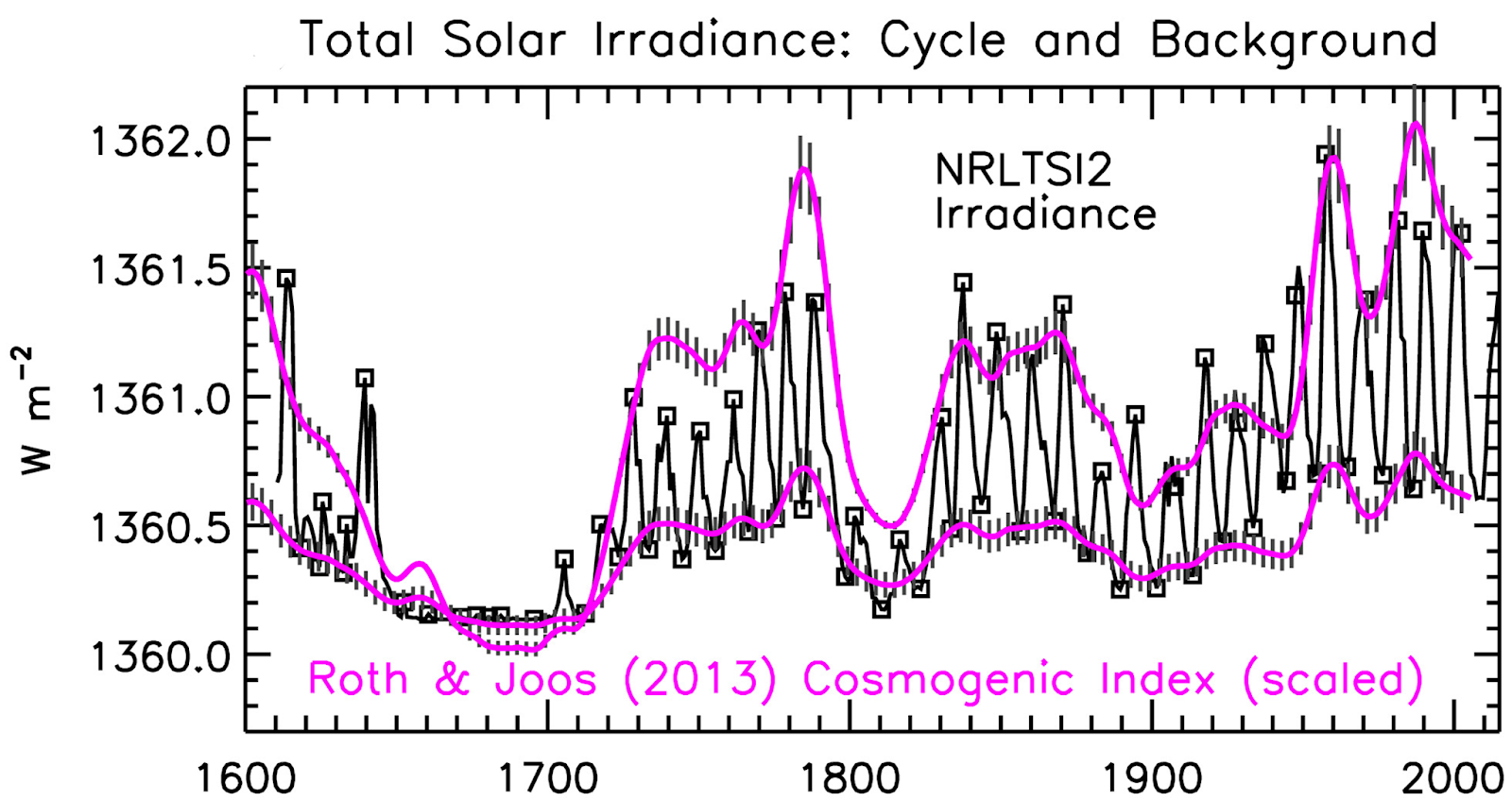
Here is the Abstract from my 2017 paper linked below
“This paper argues that the methods used by the establishment climate science community are not fit for purpose and that a new forecasting paradigm should be adopted. Earth’s climate is the result of resonances and beats between various quasi-cyclic processes of varying wavelengths. It is not possible to forecast the future unless we have a good understanding of where the earth is in time in relation to the current phases of those different interacting natural quasi periodicities. Evidence is presented specifying the timing and amplitude of the natural 60+/- year and, more importantly, 1,000 year periodicities (observed emergent behaviors) that are so obvious in the temperature record. Data related to the solar climate driver is discussed and the solar cycle 22 low in the neutron count (high solar activity) in 1991 is identified as a solar activity millennial peak and correlated with the millennial peak -inversion point – in the RSS temperature trend in about 2003. The cyclic trends are projected forward and predict a probable general temperature decline in the coming decades and centuries. Estimates of the timing and amplitude of the coming cooling are made. If the real climate outcomes follow a trend which approaches the near term forecasts of this working hypothesis, the divergence between the IPCC forecasts and those projected by this paper will be so large by 2021 as to make the current, supposedly actionable, level of confidence in the IPCC forecasts untenable.”
These general general trends were disturbed by the Super El Nino of 2016/17. The effect of this short term event have been dissipating so that “If the real climate outcomes follow a trend which approaches the near term forecasts of this working hypothesis, the divergence between the IPCC forecasts and those projected by this paper will be so large by 2021 as to make the current, supposedly actionable, level of confidence in the IPCC forecasts untenable.”
See my 2017 paper “The coming cooling: Usefully accurate climate forecasting for policy makers.”
http://journals.sagepub.com/doi/full/10.1177/0958305X16686488
and an earlier accessible blog version at
http://climatesense-norpag.blogspot.com/2017/02/the-coming-cooling-usefully-accurate_17.html
And /or My Blog-posts http://climatesense-norpag.blogspot.com/2018/10/the-millennial-turning-point-solar.html ( See Fig1)
and https://climatesense-norpag.blogspot.com/2019/01/the-co2-derangement-syndrome-millennial.html
also see the discussion with Professor William Happer at http://climatesense-norpag.blogspot.com/2018/02/exchange-with-professor-happer-princeton.html
For the current situation check the RSS data at : http://images.remss.com/data/msu/graphics/TLT_v40/time_series/RSS_TS_channel_TLT_Global_Land_And_Sea_v04_0.txt
I pick the Millennial turning point peak here at 2005 – 4 at 0.58
I suggest that if the 2021 temperature is lower than that (16 years without warming ) the crisis forecasts would obviously be seriously questionable and provide no secure basis for restructuring the world economy at a cost of trillions of dollars.
The El Nino RSS peak was at 2016 – 2 at 1.2
Latest month was 2019-11 at 0.71
However the whole UNFCCC circus was designed to produce action even without empirical
justification. See
https://climatesense-norpag.blogspot.com/2019/01/the-co2-derangement-syndrome-millennial.html
” United Nations Framework Convention on Climate Change, later signed by 196 governments.
The objective of the Convention is to keep CO2 concentrations in the atmosphere at a level that they guessed would prevent dangerous man made interference with the climate system.
This treaty is a comprehensive, politically driven, political action plan called Agenda 21 designed to produce a centrally managed global society which would control every aspect of the life of every one on earth.
It says :
“The Parties should take precautionary measures to anticipate, prevent or minimize the
causes of climate change and mitigate its adverse effects. Where there are threats of serious or
irreversible damage, lack of full scientific certainty should not be used as a reason for postponing
such measures”
Apocalyptic forecasts are used as the main drivers of demands for action and for enormous investments such as those in the new IPCC SR1.5 report .”
The establishment’s dangerous global warming meme, the associated IPCC series of reports ,the entire UNFCCC circus, the recent hysterical IPCC SR1.5 proposals and Nordhaus’ recent Nobel prize are founded on two basic errors in scientific judgement. First – the sample size is too small. Most IPCC model studies retrofit from the present back for only 100 – 150 years when the currently most important climate controlling, largest amplitude, solar activity cycle is millennial. This means that all climate model temperature outcomes are too hot and likely fall outside of the real future world. (See Kahneman -. Thinking Fast and Slow p 118) Second – the models make the fundamental scientific error of forecasting straight ahead beyond the Millennial Turning Point (MTP) and peak in solar activity which was reached in 1991.These errors are compounded by confirmation bias and academic consensus group think.
The editors of Science and Nature magazines have acted as Guardians of the establishment position and have sought to promote radical solutions to a non existent warming problem. Most of the MSM, particularly the BBC, and the western eco-left chattering classes now promote anti-development anti-capitalist crisis ideologies based on badly flawed science.
Extrapolation of future conditions using the recent past is not scientific nor is it useful for purposes of business. Which is largely why all the ten year energy prices projections we’re so far off.
I don’t know what projections were made in 2007, when the iPhone was introduced, as to future smart phone use would be a decade later … but I will go ahead and assert that virtually every person in the world (including a very large portion of elementary school age children, and very high proportions of impoverished third worlders) would own a smart phone in 2017 would have elicited massive hoots and derision and calls to buy a bridge or swampland in Florida.
So how can we possibly predict future energy use world wide, decades out, and any resulting CO2 emissions in a world with large scale fracking, next gen fission reactors, renewable sources, and quite likely nuclear fusion technology dominating the future energy supply? And how can we accurately forecast energy demand in a rapidly developing group of nations like China, India, Indonesia, etc., and in the face of energy conservation developments like LED lighting, high efficiency appliances, more efficient transportation machines, etc?
There were plenty of devices before the iPhone. I used several of them. I used to use an iPaq (from Compaq) and a folding keyboard to take meeting notes, instead of lugging around a laptop (which were heavier back then). The iPhone just made the next step, integrating the phone and camera. It was a big step, granted, but not that large a leap.
The real benefit of the iPhone was the ability to actually SEE what you were doing. Nokia had cameras on the phones in 1998, at least they demoed them at CEBIT 98 in Hanover, Germany. The micro display on the phone was a serious handicap to actually doing anything useful.
I had a smart phone a few years before the iPhone. Full touch screen, clamshell with full hardware keyboard, windows CE. In many ways much better than the iPhone.
I also had an mp3 player many years before the iPod. Much cheaper, maybe not better, though.
Apple really never produce anything new, they just use existing technology to create a more accessible product with better marketing. The only thing they have ever done which was innovative (as fast as I can tell, I never saw it before the iPhone) is the ‘pinch to zoom’ part of the user interface. Everything else is just copied.
Apple produced the smart phone for the masses. Prior to iPhone, the masses were totally ignorant of smart phones. The typical question asked by the average person on the street in 2007 was “why on earth would I ever need a “smart phone”?”. Now people cannot imagine living without their smart phones.
It does not matter a bit who popularized and massified smart phones – my point is not to glorify Apple.. my point is that NOBODY predicted in 2007 that nearly all people on the planet would within a decade own and depend every day on their smart phone digital communications devices. NOBODY.
That was just 12 years ago
I too used a smart phone years before iPhone .. but prior to iPhone, virtually all smart phone users were business people and professionals like lawyers, and even then only a small proportion of such folks had such devices. Those early devices were terrible compared to iPhone, no wonder they were only of value to a tiny percentage of the population. Sure, Android phones came along and took much of the market away from Apple’s iPhone .. but the Androids were and remain a knockoff of iPhone and IOS.
Apple created and marketed the first smart phone for the masses. Today most elementary school children own and use smart phones. My own grandchildren started using their parents’s smart phone at age 4. Today your average goat herder in the middle east owns a smart phone. That was impossible to forecast 12 years ago, as it would have seemed utterly preposterous.
What’s wrong with us that we can’t get this stuff into the public domain and debated? Aren’t we trying hard enough?
I think we need volume- many letters, many complaints.
Write P. Trump. Suggest P.S.D. ( President Sponsored Debates)
Global Warming
Foreign Policy etc…
I’ve been wondering if any of the climate models show a returning iceage if CO2 levels are reduced to pre-industrial levels? Is there a model predicting an ice Age if CO2 levels are maintained at current levels? If yes to either when will it be?
Ice ages come when CO2 is high. So we shall keep CO2 levels low. {/s}
Willis, looking at the data source for the CO2 the most recent datapoint appears to be 173 years BP (1777 CE), however, it doesn’t look like that on the graph? Perhaps that could be shown in the legend?
Also since the effect of CO2 is expected to depend on log(CO2) it would be more realistic to present it so on the graph.
The simplest explanation to climate cycles is that the Sun shines hotter/cooler over long periods. But what scientist is going to earn his pay with that theory? First, some solar specialist must come up with a mechanism for the Sun to do that, regardless of the circumstantial evidence for it. In particular, it seems all our planets have warmed recently — if so, it’s obviously Solar output. Why isn’t that being published?
BTW, Willis, you may want to re-think your paragraph: [My Dad used to say “Son, if something seems too good to be true … it probably is”. I never realized until today that there was a climate corollary to that, which is “Son, if something seems too bad to be true … it probably isn’t”.] The 2 corrolaries should have the same outcome.
NZ Willy December 27, 2019 at 11:23 am
Willy, I wish the world were that simple. H. L. Mencken is reputed to have said “For every complex problem, there is a solution that is simple, neat, and wrong.” See my post here on the subject.
OK, call it a “parallel” or something, I’m easy.
Regards,
w.
Yeah, it should also end in “is” instead of “isn’t”. Potent, well argued article from WE. Thank you.
“My fix would be for all climate scientists to stop vainly trying to predict the future and focus on the past.”
This sensible idea assumes that scientists have a say in what research they choose. In fact, their options are highly restricted by funding opportunities, by the acceptability of their research’s conclusions (within their home institutions and the community at large), and by the impact factor of the journals that accept publication of their work, as determined by the political outlook of those publications’ referees.
Even prominent dissenters like Lindzen, Curry, or Happer have reported how they were ostracized. The lesson of Climategate is that we’re in a political/propaganda battle where deceit dominates the discourse. PR pros give deceptive presentations without fear on contradiction by the press, and dissent is suppressed by gaslighting.
Just think of all those 7 year olds coming home today brainwashed by their teachers that we have 7 years left. They will be rebellious 14 year old teens who realize they were subject to a con job and the veils will fall from before their eyes.
““The day of Sunday, July 4, 1976, the 200th birthday of the United States of America, will dawn on a nation not in celebration but one that will be desperately trying to save itself from the crush of a collapsing, economy because of a shortage of energy.”
He envisions an unemployment rate of 22.6 per cent with some 31 million cars unable to move for lack of gasoline; 20 million homes without oil or gas and a million businesses, from manufacturing plants to barber shops, forced to close down.”
https://www.nytimes.com/1973/04/17/archives/energy-crisis-shortages-amid-plenty.html
Read this article, they mention resource use without global warming which is what is mentioned today with global warming. Since we’ve found new oil reserves, looks like The issue has switched from peak oil (And the NEIO) to global warming.
Past interglacial analogs suggests that fifty percent of the time an interglacial duration lasts approximately 16 kyrs. The Holocene interglacial has several thousand more years to go.
https://imgur.com/a/TvRGJkx