Reposted from the Cliff Mass Weather and Climate Blog
We are constantly exposed to extended forecasts in the media and online, with predictions extending through the next month and more.
Can you rely on such predictions? Are they really worth paying attention to?
Quite honestly, probably not–and if you do consider them, do so with the knowledge that their skill is marginal at best.
Take this month (October) for example. The official NOAA Climate Prediction Forecast for October temperatures, made on Sept. 19th, was for warmer than normal conditions over the west and MUCH above normal over the southwest U.S.

What actually happened? Nearly the entire west was much colder than normal, with the northern parts MUCH, MUCH colder than normal. A miss. In fact, a big miss.

Or the official 3-4 week forecast, made on October 4th? Warmer than normal over the west.

Such poor forecasts even a month out are not unusual. UW graduate student Nick Weber and I evaluated the skill of the main U.S. long-term forecasting model (the CFSv2) and found that skill is typically lost after roughly 2 weeks (see below and published in the peer-reviewed literature). This figure shows the forecast error (root mean square error) at 500 hPa—about 18,000 ft, a good level to view atmospheric predictability. The situation is the same over Washington, the western U.S., the continental U.S. or global. Skill is rapidly lost the second week out.

While meteorologists struggle to produce improved forecast skill past two weeks, we have gained a great deal of skill at the shorter time ranges, particularly for days 3-8.
So why is our skill improving rapidly for the shorter periods, but not the longer ones?
Because the forecasting problem is very different at the different temporal scales.
For the short periods, forecasting is an initial value problem. We start with a good description of the 3D atmosphere and our models simulate how things evolve. Because of weather satellites and other new data sources, our initial description of the atmospheric has gotten MUCH better. And our models are much better: higher resolution, much better description of key physical processes, and more. That is why a plot of the skill of skill of the 1-10 day forecasts of the European Center has improved greatly over the past decades (see below)

But small errors in the initial description of the atmosphere and deficiencies in our models inevitably lead to growing errors, and by 2 weeks such errors swamp the forecast. The forecasts are not much better than simply using the average conditions (or climatology).
There is hope for some skill beyond two weeks, by taking advantage of the forecast skill available from aspects of the environment that are changing slowly (such as sea surface temperatures, sea ice extent, snow extend, soil moisture). These aspects influence the atmosphere and potentially can torque the atmosphere one way or the other. Essentially, the forecast problem has changed from an initial values problem to a boundary-forced problem (the boundary being the surface characteristics that can influence weather).
But the skill that might be available from the boundary conditions is different—not about the conditions at a specific time, but for the average conditions over a month or season. A good example of such skill is the relationship of the warmer (El Nino) or colder (La Nina) temperatures of the tropic Pacific sea surface and weather around the world. There is some skill there, but it is relatively modest.

Unfortunately, our models still have key deficiencies (such as poor description of thunderstorms) that make it difficult for us to derive all the potential skill that should be available from the slowly changing boundary conditions. A lot of work is needed, but I am hopeful that eventually forecast skill beyond two weeks will improve.
Weather forecasting for dummies: when you get up in the morning look out the window. If you fancy yourself an intellectual look at the wind direction and see if there are weather signals upwind. That having been said the introduction of weather satellites has done a lot for some increase in forecast accuracy, and some weatherpersons actually seem to combine common sense and satellite data to produce better forecasts. Fun fact: At Roseburg, Oregon they regularly report things like “goats high and scattered” or “goats bunched up and descending”, which is what the wild (ferral) goats on the mountain are doing. High and scattered is great weather and bunched up and descending is deteorating weather.
Matt. 16
2 [Jesus] answered and said unto them, When it is evening, ye say, It will be fair weather: for the sky is red.
3 And in the morning, It will be foul weather to day: for the sky is red and lowering.
Red sky in the morning, sailor take warning. Red sky at night, sailors delight
It’s just the opposite in the tropics as the prevailing flow is just the opposite.
Red Sky at Night, VietCong delight
Red sky in the morning, napalm bomb warning.
From ‘The “Vietnamese Archers”, an every day story of country folk’
It’s shepherds in England – or an alternative:
Red sky at night means the castle’s alight.
The shepherd’s delighted, the earl has ignited.
Mares tails and mackerel scales
Cause tall ships to carry small sails.
Alternative regarding marine winds.
If the cows are lying down in the field chewing their cud during the day, its a sign of impending rain.
I think that has been shown to be just that their legs are tired.
My wife keeps insisting on this, but “impending” seems to mean “within 2 weeks”. Not very helpful. Although, it could be that they’re lying down due to a cold front moving in, and their bellies and udders are cold.
“I think that has been shown to be just that their legs are tired.”
Yeah, ….. right, ….. a whole herd of cows whose legs get tired at the same time. “DUH”, I should have thought of that.
Cows will lie down when chewing their cud, …. and lying down on a dry, warm spot beats the ell out of lying down on cold, soaking wet ground.
Cows are smarter than some people. I useta raise beef cattle, I know.
Train whistles tend to sound different (mournful?) when rain is imminent.
High humidity and Doppler effect.
Robins have a kind of warbling song before it rains. My dad use to say the robins are singing for rain.
It was autumn, and the Indians on the remote reservation asked their new Chief if the winter was going to be cold or mild. Since he was an Indian Chief in a modern society, he had never been taught the old secrets.
When he looked at the sky, he couldn’t tell what the weather was going to be. Nevertheless, to be on the safe side, he replied to his tribe that the winter was indeed going to be cold and that the members of the village should collect firewood to be prepared.
Also, being a practical leader, after several days he got an idea. He went to the phone booth, called the National Weather Service and asked, “Is the coming winter going to be cold?”
“It looks like this winter is going to be quite cold indeed,” the meteorologist at the weather service
responded. So the Chief went back to his people and told them to collect even more wood in order to be prepared.
A week later, he called the National Weather Service again. “Is it going to be a very cold winter?”
“Yes,” the man at National Weather Service again replied, “it’s definitely going to be a very cold winter.” The
Chief again went back to his people and ordered them to collect every scrap of wood they could find.
Two weeks later, he called the National Weather Service again. “Are you absolutely sure that the winter is going to be very cold?”
“Absolutely,” the man replied. “It’s going to be one of the coldest winters ever.”
“How can you be so sure?” the Chief asked.
The weatherman replied, “The Indians are collecting wood like crazy.”
Still a good tale. It’s the one that came to mind when I read about the goats!
This is called the perfect positive feedback!
Precisely the factor at play both in the CO2 “tipping” point trope as well as in the herd mind of its adherents.
Outside of that, positive feedback is rare in natural processes and a trap for buying into the CAGW mania.
The one that I heard was about the New England Weather Forecast office who had a terrible reputation for producing consistently inaccurate forecasts. One day the lead forecaster noticed that the local newspaper was putting out incredibly accurate daily forecasts. After studying the newspaper forecasts for several weeks, he anonymously contacted the editor and asked him how they managed to produce such spot-on forecasts. “It’s easy”, replied the editor. “We just look at whatever the Weather Service says, and we print the exact opposite of their forecasted weather”.
There’s an actual statistic for the accuracy of forecasts, from the aviation community. Every forecast is 98% accurate – for the first hour after it’s issued – then it goes rapidly downhill.
But the GWAlarmists can forecast weather out over twelve years, yep…
Model schmodel. Repeat ad nauseam.
“All models are wrong. Some are useful.” A quote from one of the best modelers the Ontario government has ever had. I’d give his name, but it might cost him dearly.
The models all agree. The observed data is wrong. Not mine but still funny
I always tell my friends that the weather is under no obligation to read or follow the forecast. Climate even less so.
I think maybe my friends are getting tired of hearing that joke.
“But small errors in the initial description of the atmosphere and deficiencies in our models inevitably lead to growing errors, and by 2 weeks such errors swamp the forecast. “
Cliff Mass’s observation about long-range forecasting and it’s explosion of error propagation into junk sails right over the heads of the Climate Change congregation and it’s priesthood.
And yet Nick Stokes, Mosher, even Dr Spencer still seem to “believe” supercomputer GCMs have some kind of value projecting a set of wiggly line temps to 2080 and beyond. That some GCMs might better project the number of angels on the pinhead than others. That is, that uncertainty and statistical error propagation cease simply because it is a “climate model” and not a “weather model.” And a belief that some do it better than others. News Flash: They’re all junk.
The climate modeler community — all just a bunch of Self-Licking Ice Cream cones, that is a jobs program for scientists, computer engineers and programmers paid for with tax dollars. The only utility they provide is supporting a politically-driven policy narrative. Science they are not most assuredly. The sooner most folks admit that obvious conclusion, the sooner science can begin a Road to Redemption.
Everything derives from the set of conditions that exist NOW. If we knew enough (everything) about the NOW we would be able to tell with certainty what NOW + 1 would be. We can’t, we won’t and we never will be able to know enough.
It’s not just knowing perfectly the initial conditions. The structural models in GCM equations are wrong since they parameterize so many important energy flow processes, which itself leads to its own unknowable propagating errors even if the IC’s were perfect. Judith Curry made that point clear in her recent blog post re-posted here yesterday.
nw sage October 31, 2019 at 7:04 pm
And 30 seconds (or whatever) from NOW ……. becomes the “new” NOW, …… right?
As Willis E. might say, …… an Emergent Phenomena might prove you wrong every time you predict something.
Another example of the dangers inherent in the science-government complex that Eisenhower warned about in his Farewell Address. This is a nefarious, interconnected mutual admiration and reward society.
“Cliff Mass’s observation about long-range forecasting and it’s explosion of error propagation into junk sails right over the heads of the Climate Change congregation and it’s priesthood.”
Mmm, right over their heads…
You should ask Cliff to explain the difference between short term weather forecasts and climate simulations. Because judging by your post you seem to think they are the same thing.
They are not the same thing. They are worse! At least the forecast models start of with good observations and decent equations of the fluid dynamics of the atmosphere. Climate models don’t really start with initial conditions as much, but they also don’t have good equations that describe the climate dynamics. Consequently, their output is really a function of the assumptions that go into them, and has very little to do with reality.
There are no real world observations that support the assumptions (or conclusions) of the climate models, unless you cherry-pick very specific time periods where the curves match up for a brief time.
Loydo,
You display your ignorance when you fail to understand the problem of “error propagation” in climate models. And that is merely the start of the profound problems of climate models.
There are no existing models of global climate that are capable of providing reliable predictions of future climate, and there are good reasons to suspect such models will not be capable of development within the lifetime of anybody now alive.
I provide the following theoretical and pragmatic explanations of these assertions.
No model’s predictions should be trusted unless the model has demonstrated forecasting skill. Climate models which existed 25 years ago have been altered (because they proved inadequate) so now do not exist. In other words, existing climate models have not existed for 25, 50 or 100 years so it is not possible to assess their predictive capability on the basis of their demonstrated forecasting skill; i.e. they have no demonstrated forecasting skill and, therefore, their predictions are unreliable.
Put bluntly, predictions of the future provided by existing climate models have the same degree of demonstrated reliability as has the casting of chicken bones for predicting the future.
The ability of a computer model to appear to represent existing reality is not a guide to the model’s predictive ability. For example, the computer model called ‘F1 Racing’ is commercially available. It is based on physical principles (if it were not then the racing cars would not behave realistically), and ‘F1 Racing’ is a much more accurate representation of motor racing than any GCM is of global climate. But the ability of a person to win a race as demonstrated by ‘F1 Racing’ is not an indication that the person could or would win the Monte Carlo Grande Prix if put in a real racing car. Similarly, an appearance of reality provided by a GCM cannot be taken as an indication of the GCM’s predictive ability in the absence of the GCM having any demonstrated forecasting skill.
Furthermore, the climate models are based on assumptions that may not be correct. The basic assumption used in the models is that change to climate is driven by change to radiative forcing. And it is very important to recognise that this assumption has not been demonstrated to be correct. Indeed, it is quite possible that there is no force or process causing climate to vary. I explain this as follows.
The climate system is seeking an equilibrium that it never achieves. The Earth obtains radiant energy from the Sun and radiates that energy back to space. The energy input to the system (from the Sun) may be constant (although some doubt that), but the rotation of the Earth and its orbit around the Sun ensure that the energy input/output is never in perfect equilibrium.
The climate system is an intermediary in the process of returning (most of) the energy to space (some energy is radiated from the Earth’s surface back to space). And the Northern and Southern hemispheres have different coverage by oceans. Therefore, as the year progresses the modulation of the energy input/output of the system varies. Hence, the system is always seeking equilibrium but never achieves it.
Such a varying system could be expected to exhibit oscillatory behaviour. And, importantly, the length of the oscillations could be harmonic effects which, therefore, have periodicity of several years. Of course, such harmonic oscillation would be a process that – at least in principle – is capable of evaluation.
However, there may be no process because the climate is a chaotic system. Therefore, the observed oscillations (ENSO, NAO, etc.) could be observation of the system seeking its chaotic attractor(s) in response to its seeking equilibrium in a changing situation.
Very, importantly, there is an apparent ~900 year oscillation that caused the Roman Warm Period (RWP), then the Dark Age Cool Period (DACP), then the Medieval Warm Period (MWP), then the Little Ice Age (LIA), and the present warm period (PWP). All the observed rise of global temperature in the twentieth century could be recovery from the LIA that is similar to the recovery from the DACP to the MWP. And the ~900 year oscillation could be the chaotic climate system seeking its attractor(s). If so, then all global climate models and ‘attribution studies’ utilized’ e.g. by IPCC and CCSP are based on the false premise that there is a force or process causing climate to change when no such force or process exists.
But the assumption that climate change is driven by radiative forcing may be correct. If so, then it is still extremely improbable that – within the foreseeable future – the climate models could be developed to a state whereby they could provide reliable predictions. This is because the climate system is extremely complex. Indeed, the climate system is more complex than the human brain (the climate system has more interacting components [e.g. biological organisms] than the human brain has interacting components [e.g. neurones} ), and nobody claims to be able to construct a reliable predictive model of the human brain. It is pure hubris to assume the climate models are sufficient emulations for them to be used as reliable predictors of future climate when they have no demonstrated forecasting skill.
Richard
Richard….+10
Some good analogies & explanations that make way more sense than the drivel from the CAGW zealots.
”There are no existing models of global climate that are capable of providing reliable predictions of future climate …”
I seem to recall that one member of the “climatology community” (can’t remember which one) admitted that even the starting point for models doesn’t reflect reality either!
Look up the special pleading fallacy.
I reckon you know that weather and a double pendulum are quite different, too…
I would be happy to see a 2 day forecast that was consistently right. Doesn’t happen.
CTM
“That is why a plot of the skill of
skill ofthe 1-10 day forecasts of the European Center has improved greatly over the past decades.”Great post…
This is exactly why I only post images in the comments of the 6-10 outlook. It is pretty reliable out to 10 days in my experience watching for about 10 years. Beyond 8 days, I had seen the NOAA/NCEP 8-14 day outlook fail numerous times.
Here’s the current 6-10 day outlook (10/31/2019). Bundle up Great Lake-Midwest to Texas.
https://drive.google.com/file/d/156tOicNFqP_GnFi5OGFzHtO-YdcpSlyf/view?usp=sharing
the NOAA/NCEP URL to bookmark is:
https://www.cpc.ncep.noaa.gov/products/predictions/610day/
“Quite honestly, probably not–” what probably not?
….they can’t even get our daily forecast right….on the day it’s happening
Latitude. That’s a silly comment because the vast majority of the time daily forecasts are correct. The FACTS prove that.
“ vast majority”
I am with Latitude…when the weather is fairly consistent they are accurate but when a big change is about to occur…wellllll
The weather app on my smartphone, provided by AccuWeather, tells me it’s raining in my area right now. It isn’t.
A classic on the text comment stream at a test match a year or so ago where the start was being delayed.
‘well that forecast is quite different to the one they gave us an hour or so ago’ LOL
I don’t know that I’d go so far as to say the vast majority of the time. Daily forecasts have proven to be more accurate than they use to be but they still get it wrong quite often. Part of the problem is that forecasts cover a large area. For example a forecast for rain or a high of 60 could be accurate in one location but be inaccurate just a few short miles away (but well within the forecast area).
I’m with Latitude as well. Of course we need to define “right”.
I still have a screen capture of a local forecast from Accuweather I think it was, which showed sunny and clear right then, when in reality it was overcast from horizon to horizon.
I used to track these, and got tired of keeping up, but it was pretty horrific.
My favorite put down of weather forecasting involves a “disaster” report by a cute little blonde anchorette back before the 6 second delay was imposed. She wasn’t reporting on a disaster, her reporting became a disaster.
When it came time to introduce the Meteorologist to give the nightly forecast, she really pulled a boner…er, uh,…made a boo boo. Apparently he had predicted a large snow the previous day, but it didn’t materialize. She looked at him, and with a stern look asked, “So, where’s that 10 inches you promised me last night?”
As the weather guy and the sports guy did a double face-palm and almost fell off their stools trying to stifle laughter, she got that “deer in the headlights” look, realizing how that must have sounded. The station quickly faded to a commercial.
I once had an LP (lost it sometime over the years) called, “Pardon My Bloopers,” compiled by Kermit Shafer. It was hilariously ribald at the time it was produced; rather mild today. There were several weather-related bloopers. They included, “Helena got six inches during the night. Uh, Helena, MONTANA, got six inches OF SNOW during the night.”
An Alaskan radio DJ, “Let’s take a leak out the window, and see if it’s freezing.”
And somewhere on the east coast, “the fog was as thick as sea poop.” ( pea soup).
I’m afraid many of the bloopers would be declared offensive, today.
Live television is glorious. Nothing else separates the “readers” from the pros.
Where I live we are daily given both 7-day and 10-day forecasts. I have learned from experience that both fall below 50% accuracy more than two days out. Get those up to near 100% and then I’ll consider “climate forecasts.”
I prefer an old piece of rope hanging from a gum tree.
If it is swinging back and forth it is windy.
If is wet it is raining.
You obviously qualify for a forecasting certificate. Now buck-up and get adegree.
In Swansea, in South Wales, there are two forecasts.
If you can’t see the Mumbles [local hill/headland] – it’s raining.
If you can see the Mumbles – it is about to rain.
Auto
Kip Hansen posted this double pendulum example a while back:
https://www.youtube.com/watch?v=bZV8nos_opg
After about five or six swings the divergence becomes obvious.
Another point to make concerning even Dr Mass’s El Nino-La Nina atmospheric zonal-meridonal flow graphs above.
Winter 2018-2019 was wet across the western US. We saw that in the flooding leading to late plantings due to wet fields from Washingston State barly and oats to the Midwest cornfields. But what was the Winter 2018-2019?… El Nino. What does the ENSO meter over to the right on this page say (+0.6), we’re into El Nino territory again, but where has the moisture and flow been recently (a meridonal pattern – October snow and cold records from Montana to Texas).
And what was the West Coast atmospheric flow to bring in all that moisture last winter-spring (January-March) and now? Last January-March it was a La Nina type meridonal flow bringing moisture to the Northwest and cold air and moisture to the MidWest in Arctic polar vortex excursions. It was not a warm-dry Zonal El Nino flow pattern to the northern US last January-March even though El Nino conditions existed in the tropical Pacific. So even that long-range forecasting “paradigm” breaks down.
To say that El Nino/La Nina produce specific weather patterns in specific areas is largely false. They can give all kinds of different weather.
I am really perplexed why this goes on and on. Seldom and mostly never are the predictions rights but it gets swallowed without challenge retractions never make the news. The Brasil fires are a prime example. Common sense tells that it the early eco-terrorist statements were suspect and not logical and graphs were readily available to refute those claims but it just kept rolling along.
Lorne Newell October 31, 2019 at 7:08 pm
Lorne, the simple answer is, ……. “it’s the nature of the brute”.
Three (3) day weather forecasting began back in the late 1800’s, primarily for the benefit of farmers and the military. Near-surface air temperatures, etc., were collected and stored, but never checked or verified because their “life expectancy” was only good for three days. In the late 1970’s, … that stored collection of temperatures became known as the US Historical Temperature Record …… and now the “climate scientists” claim it is actual, factual, unquestionable air temperatures for the entirety of the US.
Anyway, it was back in the 1950’s and early 60’s when TV broadcasting became popular, the major TV broadcasters needed “programming” just to “fill-in” during the dinner/suppertime hour while their audiences were enjoying their dinner, …….. and “TA DA”, ….. the 6:00 PM News and Weather programming was born.
News reporting back then was opiniated, biased, haphazard and selective, …. but no one cared, ….. and the weather forecasts were “iffy maybe” at best, …. but the audiences liked to watch it anyway. Challenges and retractions didn’t happen back then, and not today either because it is mostly political.
The author wrote that the weather models are not very accurate! That’s a first and is to be commended but to say accurate out to 8 – 10 days is total bullshit. Admission of only two days out with 50% accuracy would have made a winning/truthful reading.
Nevertheless, it is better than anything I have read for quite some time on weather related models. Politicians, weather forecasters, and so-called “climate scientists” seem to be the only ‘species’ that get a free ride with less than a coin flip of being correct.
The New England Weather Stick does not work well when placement is in the lee of a mountain range; central Washington State being an example.
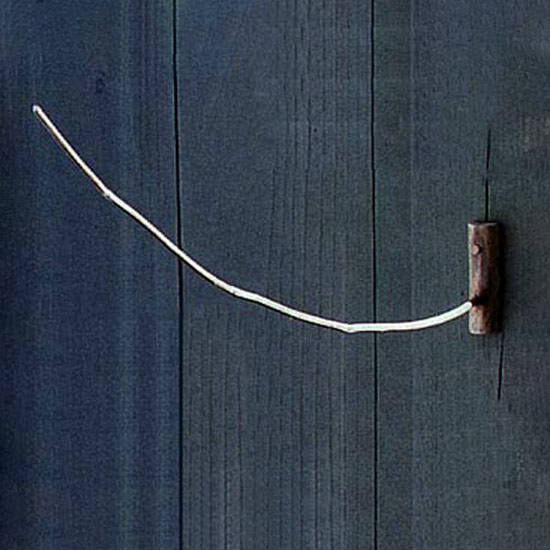
A friend in Western Pennsylvania — up slope winds — finds hers quite accurate.
~ ~ ~ ~ ~
National Weather Service forecasts are for large areas. Just because there is a 60% chance of rain in the forecast does not mean much at a specific place. Reminds me of the song line “it’s 5 o’clock somewhere.”
“National Weather Service forecasts are for large areas. Just because there is a 60% chance of rain in the forecast does not mean much at a specific place. Reminds me of the song line “it’s 5 o’clock somewhere.””
So we’re down to large-area vague forecasts. I don’t see much use there.
1. The ‘official’ prognosticators can’t even get tomorrow correct – BoM in Australia is often 3°C wrong in their guess for the next day even as late as 10 PM. Today I woke to a ‘possible thunderstorm’ that wasn’t even on the map last night.
2. Long range weather forecasters actaully do exist and are quite accurate – they just aren’t paid for by the public purse. Inigo Jones, Farmers’ Almanac and others have a long history of getting long range pretty well nailed across decades.
“Extended Forecasts are Not Reliable
Can you rely on such predictions? Are they really worth paying attention to?”
Geez Charles I figure the extended forecast is damn near always reliably wrong.
Just as the predictions of Doom from CAGW have all been consistently wrong.
There is some kind of consistency and reliability here.
Of course the weather channel day 3 is always promising better weather than ever occurs.
“So why is our skill improving rapidly for the shorter periods, but not the longer ones?”
Well, we have geosynchronous weather satellites viewing the clouds and measuring temperatures, and Doppler radar tracking precipitation and winds is ubiquitous in the US. Neither were available when I was young. And, we keep making technological improvements in those two technologies. Extrapolation on fronts isn’t too theoretically challenging for 2 or 3 days out.
The money being wasted on climatology would be better spent on improving the theory of meteorology forecasts.
In 2017, I planned a trip to Missouri for the Great American Eclipse. The first long range forecast for eclipse day was: cloudy, 60% chance of rain. We went anyway, the weather was 99% perfect.
So the experts can’t tell me what temp and other conditions are going to be in 15 days in my immediate location, but the experts can tell me what the climate (which is essentially temps and other conditions) are going to be WORLDWIDE in 50 years. I have some bridges I could sell you.
” … we have gained a great deal of skill at the shorter time ranges, particularly for days 3-8.”
I beg to differ, our BoM here in Australia struggles within the forecast period of 24 hours ahead.
In all fairness to weather forecasters, some conditions add great complexities to their attempt to forecast.
I live north of Atlanta. Our weather genetally comes from the northwest during winter (southwest in summer). But there is a problem forecasting winters. The Appalachian mountian range is just north of us, angling from the southwest to the northwest. Air coming from the northwest must flow over the mountains to reach us. Some cold fronts manage to do this; some don’t. The cold air wants to hug the base of the mountain, and a sufficient volumn of air must pile up at the base, for it to get over the mountains. They clearly have a problem with their ability to predict if a cold front is going to reach Atlanta, and if so, just how cold the coldest air getting over the mountains will be.
This is the situation as I write this. Last week, tonight’s low temperature was forecast to be 38 degrees F. This morning, they were saying 32. Right now (close to midnight), it’s suppose to drop to 29.
Forecasting for the short-term is difficult; for the long-term, impossible. I don’t see that changing much in the future.
Those darn mountains keep moving around, screwing up the forecasts.
T
Dr.Tim Ball
https://wattsupwiththat.com/2013/01/08/wrong-prediction-wrong-science-unless-its-government-climate-science/
EC
https://weather.gc.ca/saisons/ver_e.html
Mods, why are all of my posts disappearing down the worm-hole ?
Worms need to eat too.
Models are not reliable for extended forecasts? Ya think!
This is the whole problem with weather and climate “forecasting” it’s all BS. I see comments that in many threads about weather and climate that weather/climate models are just in need of more computing power to improve resolution and thus improve forecast reliability. Which, of course, is totally bogus. I just do not see how computer models that have so limited variable inputs can in anyway predict extended “weather” patterns. In my experience most “forecasts” have be wrong, 48% of the time.
Patrick MJD
One has to be careful about what is called “wrong.” There are false positives and false negatives. It is my impression that, with respect to precipitation, false positives — that is, forecast precipitation that doesn’t materialize — are common, whereas surprise precipitation (false negative) is rare. So, for some areas, such as coastal California with a Mediterranean Climate (two seasons) with broad cloud cover in the rainy season, false positive are probably more rare than in the Appalachians.
The weather models go off the rails in 1-2 days without new infusions of observational data every 6-12 hours.
See Sylvie Gravel’s manuscript (search google scholar or see Climate Audit) on the explosive growth of mathematical relative l_2 errors at each level for the Canadian weather model compared to radiosondes over the US. Skill scores are misleading unless one knows the magnitude of the deviations at a given level. Relative errors provide percentage errors so are easily understoo.
Jerry