A new paper about to be in press, comes at the end of a flurry of papers and reports published this week that claims Antarctica was losing ice mass. Zwally says ice growth is anywhere from 50 gigatons to 200 gigatons a year.
NASA glaciologist Jay Zwally says his new study will show, once again, the eastern Antarctic ice sheet is gaining enough ice to offset losses in the west.
By Michael Bastasch
Is Antarctica melting or is it gaining ice? A recent paper claims Antarctica’s net ice loss has dramatically increased in recent years, but forthcoming research will challenge that claim.
NASA glaciologist Jay Zwally first challenged the “consensus” on Antarctica in 2015 when he published a paper showing ice sheet growth in eastern Antarctica outweighed the losses in the western ice sheet.
Zwally will again challenge the prevailing narrative of how global warming is affecting the South Pole. Zwally said his new study will show, once again, the eastern Antarctic ice sheet is gaining enough ice to offset losses in the west.
Much like in 2015, Zwally’s upcoming study will run up against the so-called “consensus,” including a paper published by a team of 80 scientists in the journal Nature on Wednesday. The paper estimates that Antarctic is losing, on net, more than 200 gigatons of ice a year, adding 0.02 inches to annual sea level rise.
“Basically, we agree about West Antarctica,” Zwally told The Daily Caller News Foundation. “East Antarctica is still gaining mass. That’s where we disagree.”
Reported ice melt mostly driven by instability in the western Antarctic ice sheet, which is being eaten away from below by warm ocean water. Scientists tend to agree ice loss has increased in western Antarctica and the Antarctic Peninsula has increased.
Measurements of the eastern ice sheet, however, are subject to high levels of uncertainty. That’s where disagreements are. (RELATED: Earth’s Largest Ice Sheet Was Stable For Millions Of Years During A Past Warm Period)
“In our study East Antarctic remains the least certain part of Antarctica for sure,” Andrew Shepherd, the study’s lead author and professor at the University of Leeds, told TheDCNF.
“Although there is relatively large variability over shorter periods, we don’t detect any significant long-term trend over 25 years,” Shepherd said.
However, Zwally’s working on a paper that will show the eastern ice sheet is expanding at a rate that’s enough to at least offset increased losses the west.
The ice sheets are “very close to balance right now,” Zwally said. He added that balance could change to net melting in the future with more warming.
So, why is there such a big difference between Zwally’s research and what 80 scientists recently published in the journal Nature?
There are several reasons for the disagreement, but the biggest is how researchers make what’s called a glacial isostatic adjustment (GIA), which takes into account the movement of the Earth under ice sheets.
Scientists use models to measure the movement of land mass in response to changes the ice sheet sitting on top. For example, Zwally said eastern Antarctica’s land mass has been going down in response to ice sheet mass gains.
That land movement effects ice sheet data, especially in Antarctica where small errors in GIA can yield big changes ice sheet mass balance — whether ice is growing or shrinking. There are also differences in how researchers model firn compaction and snowfall accumulation.
“It needs to be known accurately,” Zwally said. “It’s an error of being able to model. These are models that estimate the motions of the Earth under the ice.”
Zwally’s 2015 study said an isostatic adjustment of 1.6 millimeters was needed to bring satellite “gravimetry and altimetry” measurements into agreement with one another.
Shepherd’s paper cites Zwally’s 2015 study several times, but only estimates eastern Antarctic mass gains to be 5 gigatons a year — yet this estimate comes with a margin of error of 46 gigatons.
Zwally, on the other hand, claims ice sheet growth is anywhere from 50 gigatons to 200 gigatons a year.
Discover more from Watts Up With That?
Subscribe to get the latest posts sent to your email.
Its funny. GIA comes out in force during sea level discussions to “show” that sea level is rising even when it isnt rising so fast in reality. But very inconvenient when it comes to ice sheet loss.
The greatest mystery in Antarctica is not the ice-loss or ice-gain, but the McMurdo Dry Valleys! – Why are these thousands of sq kilometres of depressed land dry and mostly free of ice and snow. The snow that falls there, is seen to melt in hours.
The most common explanation is: The foen effect (adiabatic heating and drying due to down-flowing wind). However, I will not buy this explanation, and, of course, have another and much more interesting explanation…
See how the speed in the polar vortex increases in the southern hemisphere. Does anyone still believe that the Antarctic ice will melted?
The contour interval is 5 m/s.
http://ds.data.jma.go.jp/tcc/tcc/products/clisys/STRAT/gif/zu_sh.gif
Will the ice in Antarctica be melted faster when the sea surface temperature in the southern hemisphere is lower than the average in 1971-2000?
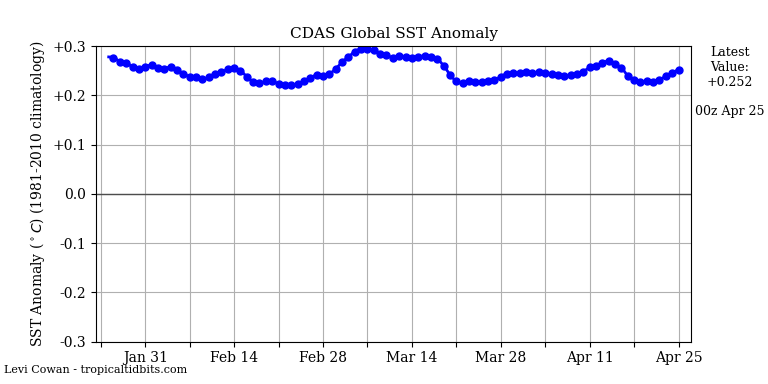
http://cr.acg.maine.edu/wx_frames/gfs/ds/gfs_world-ced_sstanom_1-day.png
And all of this because of something that naturally occurs, but the premise of the CONSENSUS (hey that rhymes!) is to scare the public into submission in giving up their freedoms, liberty through obnoxious govt money grabbing to ‘fix’ the problem. “Yeah, weeze gotta build that glacier ya knowz, because we must!’
Idiots all.
There’s this:
https://wattsupwiththat.com/2018/06/15/actual-science-press-release-headline-how-to-save-antarctica-and-the-rest-of-earth-too/
Which among other things says there will be more snow in Antarctica, which will cause the ice glow rate to increase (due to there being MORE ice) which will result in more ice being lost at sea which will result in DISASTER!!! So we have the absurdity of more snowfall and more ice resulting in much less ice. It’s truly hard to believe that these people actually think about what they are saying. Maybe they know they are lying and rely on the stupidity of others to believe it.
But how could this ever get published? Where are the gatekeepers that supposedly reject all research questioning the majority?
Eeeh hmm, maybe someone could just remind the MSM that Roald Amundsens tent now is under 50 feet of ice? 😉
Has anyone bothered to read the study? The headline above is more than misleading.
https://www.nature.com/articles/s41586-018-0179-y
This post is about Jay Zwally’s upcoming paper. Your link is to Shepherd et al., 2018.
To be precise: this post is about a report in the DailyCaller (AKA Trumpistan Prawda) about a not yet published paper. And it is fun to watch so many people to discuss somthing which is not even published yet.