Guest post by David Middleton
I didn’t realize this was “Apocalypse Week”….
Nasa’s ambitious plan to save Earth from a supervolcano
With an eruption brewing, it may be the only way to prevent the extinction of the human race.
17 August 2017
Lying beneath the tranquil settings of Yellowstone National Park in the US lies an enormous magma chamber. It’s responsible for the geysers and hot springs that define the area, but for scientists at Nasa, it’s also one of the greatest natural threats to human civilisation as we know it: a potential supervolcano.
Following an article we published about supervolcanoes last month, a group of Nasa researchers got in touch to share a report previously unseen outside the space agency about the threat – and what could be done about it.
“I was a member of the Nasa Advisory Council on Planetary Defense which studied ways for Nasa to defend the planet from asteroids and comets,” explains Brian Wilcox of Nasa’s Jet Propulsion Laboratory (JPL) at the California Institute of Technology. “I came to the conclusion during that study that the supervolcano threat is substantially greater than the asteroid or comet threat.”
[…]
Notes to the Beeb:
- It’s NASA, not Nasa.
- Civilization has a “z” in it.
- Yellowstone is a supervolcano, not a potential supervolcano.
If “the supervolcano threat is substantially greater than the asteroid or comet threat,” does this mean we can stop fretting about Gorebal Warming and the Sixth Mass Extinction? Is NASA really moving on to actual threats to the planet? Well, not threats to the planet… The planet has handled supervolcanoes, asteroids and comets quite well over its 4.5 billion year lifespan.
I’ll rephrase the question: Is NASA actually taking on genuine threats to humanity? Or at least threats to these United States? Let’s return to the article and find out…
READ MORE:
- Would a supervolcano wipe us out?
- The greatest threats to humanity as we know it
- The atomic bomb too big to use
There are around 20 known supervolcanoes on Earth, with major eruptions occurring on average once every 100,000 years. One of the greatest threats an eruption may pose is thought to be starvation, with a prolonged volcanic winter potentially prohibiting civilisation from having enough food for the current population. In 2012, the United Nations estimated that food reserves worldwide would last 74 days.
[…]
That’s “funny.” One of the “solutions” proposed for Gorebal Warming is geoengineering a volcanic winter by pumping sulfate aerosols into the upper atmosphere. Maybe we just need to ramp up GHG emissions now, so that when Yellowstone does pop off another Ultra-Plinian eruption, Earth will be warm enough to handle a volcanic winter. A more pertinent concern is how we’ll handle having much of our nation covered with volcanic ash…


As bad as the eruption and lava flows would be, the tephra deposition would be even worse.
From Mastin et al., 2014: “Table 3. Average, Maximum, and Minimum Deposit Thicknesses at Selected Cities, From Simulations Illustrated in Figures 6-8a”
| City | Distance km | Longitude | Latitude | Thickness (mm) | ||
|---|---|---|---|---|---|---|
| Average | Minimum | Maximum | ||||
|
||||||
| Albuquerque | 1091 | −106.61 | 35.111 | 24.9 | 4.1 | 73.9 |
| Atlanta | 2556 | −84.387 | 33.748 | 3.1 | 0.5 | 6.5 |
| Austin | 1942 | −97.743 | 30.267 | 2 | 0.1 | 4.2 |
| Billings | 227 | −108.501 | 45.783 | 1429.5 | 1028.7 | 1785.6 |
| Boise | 452 | −116.215 | 43.619 | 144.8 | 26.9 | 347.9 |
| Calgary | 777 | −114.058 | 51.045 | 32.8 | 1.8 | 68.2 |
| Casper | 391 | −106.313 | 42.867 | 516.9 | 325.9 | 844.3 |
| Cheyenne | 600 | −104.82 | 41.14 | 152.9 | 96.3 | 274.4 |
| Chicago | 1887 | −87.63 | 41.877 | 14.9 | 5.5 | 29.4 |
| Denver | 700 | −104.985 | 39.737 | 98.1 | 63.6 | 131.9 |
| Des Moines | 1420 | −93.609 | 41.601 | 40 | 19.9 | 59.6 |
| Fargo | 1111 | −96.789 | 46.877 | 57.7 | 22.9 | 78.6 |
| Flagstaff | 1028 | −111.639 | 35.201 | 16.3 | 0 | 50.6 |
| Kansas City | 1454 | −94.621 | 39.114 | 31.7 | 7 | 57.2 |
| Knoxville | 2455 | −83.92 | 35.96 | 4.3 | 1.2 | 10.5 |
| Lincoln | 1211 | −96.682 | 40.807 | 52.9 | 22.6 | 88.5 |
| Little Rock | 1905 | −92.289 | 34.746 | 8.4 | 1.6 | 25.2 |
| Los Angeles | 1323 | −118.244 | 34.052 | 5.2 | 0 | 27 |
| Miami | 3453 | −80.226 | 25.788 | 0.5 | 0 | 1.7 |
| Minneapolis | 1374 | −93.267 | 44.983 | 39.2 | 23.2 | 53.5 |
| Missoula | 375 | −114.019 | 46.86 | 240.6 | 48 | 474.4 |
| Mobile | 2508 | −88.043 | 30.694 | 1.8 | 0.1 | 3.9 |
| New York | 3025 | −74.004 | 40.714 | 2.5 | 1.4 | 3.7 |
| Portland | 950 | −122.676 | 45.523 | 8.3 | 0 | 30.6 |
| Raleigh | 2884 | −78.639 | 35.772 | 2.7 | 0.8 | 4.5 |
| Rapid City | 593 | −103.231 | 44.08 | 208.3 | 168.2 | 330.2 |
| St. Louis | 1819 | −90.199 | 38.627 | 15.3 | 3 | 32.5 |
| Salt Lake City | 419 | −111.891 | 40.761 | 247.9 | 124.9 | 408.3 |
| San Francisco | 1229 | −122.419 | 37.775 | 8.5 | 0 | 44.7 |
| Seattle | 966 | −122.332 | 47.606 | 9.2 | 0 | 41.2 |
| Toronto | 2498 | −79.383 | 43.653 | 3.7 | 2 | 6.2 |
| Washington DC | 2855 | −77.036 | 38.907 | 2.9 | 1.3 | 4.4 |
| Winnipeg | 1188 | −97.137 | 49.899 | 37.9 | 14.3 | 59.1 |
A Plinian or Ultra-Plinian eruption of Yellowstone would be really bad.

So… How does NASA plan to save us from this? Back to the Beeb:
When Nasa scientists came to consider the problem, they found that the most logical solution could simply be to cool a supervolcano down. A volcano the size of Yellowstone is essentially a gigantic heat generator, equivalent to six industrial power plants. Yellowstone currently leaks about 60-70% of the heat coming up from below into the atmosphere, via water which seeps into the magma chamber through cracks. The remainder builds up inside the magma, enabling it to dissolve more and more volatile gases and surrounding rocks. Once this heat reaches a certain threshold, then an explosive eruption is inevitable.
But if more of the heat could be extracted, then the supervolcano would never erupt. Nasa estimates that if a 35% increase in heat transfer could be achieved from its magma chamber, Yellowstone would no longer pose a threat. The only question is how?
[…]
Instead Nasa have conceived a very different plan. They believe the most viable solution could be to drill up to 10km down into the supervolcano, and pump down water at high pressure. The circulating water would return at a temperature of around 350C (662F), thus slowly day by day extracting heat from the volcano. And while such a project would come at an estimated cost of around $3.46bn (£2.69bn), it comes with an enticing catch which could convince politicians to make the investment.
“Yellowstone currently leaks around 6GW in heat,” Wilcox says. “Through drilling in this way, it could be used to create a geothermal plant, which generates electric power at extremely competitive prices of around $0.10/kWh. You would have to give the geothermal companies incentives to drill somewhat deeper and use hotter water than they usually would, but you would pay back your initial investment, and get electricity which can power the surrounding area for a period of potentially tens of thousands of years. And the long-term benefit is that you prevent a future supervolcano eruption which would devastate humanity.”
[…]
Sounds like a win-win! Save humanity from both Yellowstone and from solar power!
So… What’s the catch?
But drilling into a supervolcano does not come without certain risks. Namely triggering the eruption you’re intending to prevent.
“The most important thing with this is to do no harm,” Wilcox says. “If you drill into the top of the magma chamber and try and cool it from there, this would be very risky. This could make the cap over the magma chamber more brittle and prone to fracture. And you might trigger the release of harmful volatile gases in the magma at the top of the chamber which would otherwise not be released.”
So… NASA proposes to drill these geothermal wells under the magma chamber and extract the heat from below. Sounds like they need to hire the world’s best “deep core drillers”… Again…
Instead, the idea is to drill in from the supervolcano from the lower sides, starting outside the boundaries of Yellowstone National Park, and extracting the heat from the underside of the magma chamber. “This way you’re preventing the heat coming up from below from ever reaching the top of the chamber which is where the real threat arises,” Wilcox says.
However those who instigate such a project will never see it to completion, or even have an idea whether it might be successful within their lifetime. Cooling Yellowstone in this manner would happen at a rate of one metre a year, taking of the order of tens of thousands of years until just cold rock was left. Although Yellowstone’s magma chamber would not need to be frozen solid to reach the point where it no longer posed a threat, there would be no guarantee that the endeavour would ultimately be successful for at least hundreds and possibly thousands of years.
[…]
Such a plan could be potentially applied to every active supervolcano on the planet, and Nasa’s scientists are hoping that their blueprints will encourage more practical scientific discussion and debate for tackling the threat.
[…]
It’s “meter,” not metre and there’s no “u” in endeavor… And such a plan might not cool the magma chamber at all…

The lower part of the magma chamber is about 10 miles deep. The magma reservoir goes down to the top of the mantle (~30 miles deep). The deepest geothermal well drilled to date, only goes down a bit over 3 miles.
Iceland is drilling the world’s deepest geothermal well
By Kesavan Unnikrishnan Jan 22, 2017 in Technology
Iceland is digging world’s deepest geothermal borehole into the heart of a volcano at a depth of 3.10 miles (5 km) to tap renewable energy. The extreme pressure and heat at such depths could derive 30 to 50 MW of electricity from one geothermal well.
[…]
Read more: http://www.digitaljournal.com/tech-and-science/technology/iceland-is-drilling-the-world-s-hottest-geothermal-well/article/484178#ixzz4q6rLq5Xs
10 miles is 52,800 feet. The deepest well ever drilled for any reason, the Kola Superdeep Borehole in Russia, only went down 40,230 feet. Prior to this, the deepest well was the 31,441 feet deep Lone Star Producing Co. 1–27 Bertha Rogers well in Washita County, Oklahoma. In a note of totally unrelated trivia: Lone Star Producing became Enserch Exploration, my first employer in the oil “bidness.” The Bertha Rogers TD’ed (reached total depth) in molten sulfur. Enserch’s executives all had sulfur paperweights from the Bertha Rogers.
While I am happy to find out that at least some folks at NASA are actually considering genuine threats to this nation and the other people on this planet… Their proposed solution to the supervolcano threat appears to be straight out of Fantasy Land.
Note: Yes, I know the BBC is British and that we are “two peoples separated by a common language.” I just like poking fun at the way they misspell so many words.
Reference
[1] Mastin L. G. Van Eaton A. R. Lowenstern J. B. (2014). Modeling ash fall distribution from a Yellowstone supereruption. Geochemistry, Geophysics, Geosystems 15, 3459–3475.
Further Reading
[1] Kummer, Larry (2017). Geologists warn us about dangerous volcanoes. Will we spend pennies for warnings? Watts Up With That?
Lets assume this works, and we start cooling most of the volcanoes on earth – this would be the end of life as we know it. The whole carbon cycle depends on CO2 trapped in limestone formed on the bottom of the ocean getting subducted and re-released into the atmosphere via volcanic activity. No more volcanoes, and we get a major drop in CO2 eventually ending life on earth.
I guess it would make the Al Gore types happy.
I think the effort is to study ways to manage super volcanoes, not all volcanoes.
The scientists can’t agree on global warming or what the weather will be next weekend and we should applaud the efforts to “stop” a (super or not) volcano from erupting ? How about we instead agree dial to back the speed on which private companies wish to implement AI ? How about we agree that the climate treaty leads to net increases in coal use/pollution over the next 20+ years ? How about we agree to clean up the monster pile of floating plastic detritus in the Pacific ?
I applaud the women and men who spend 8+ years in university capable of proposing phantasmagorical solutions to such noted problems as super volcanoes and “impending climate doom”, but I would prefer a good old round table discussion on solutions for the current woes facing the world……and could someone put the trans fats back in my Oreos while they’re at it, they just tastes better that way.
The first letter b in BBC stands for British. That is why they use British spelling.
Maybe you need to focus on any REAL criticism you may have , not knit-picking minor spelling issues you mistakenly think you have found. It looks really petty and like you do not have anything better than pointless snark.
Hey , we invented the language, that is why it called “English” , not “American”. If you have to simplify it because remembering how to spell is too complicated for you to deal with, that is your choice, not anyone else’s for “misspelling” their own language.
marq2
The whole carbon cycle does not depend on volcanoes alone to recycle
the CO2 trapped in limestone deep in the earth. At great depth, heat, pressure
and water convert the minerals to hydrocarbons, mostly natural gas.
The natural gas and other hydrocarbons rise, and some are trapped in rock
layers and over time, the accumulation can be drilled and produced as oil
or natural gas wells.
A substantial portion rise as natural gas and in the presence of adequate moisture
and oxygen, microbes consume the natural gas, enriching the soil and oxidizing
the hydrocarbons creating CO2.
This is easily observed by a simple test. I use an anemometer, thermometer,
a 14″ stainless steel salad bowl, a 10 lb rock, and an inexpensive CO2
meter which allows for lengthy exposure readings.
On my last observation, the wind was less than 2 mph, the ambient C02
reading was 404 ppm. I put the meter on the ground in an area which has
dark brown topsoil approximately 12″ deep and the grass had been cut short.
I then inverted the ss bowl over the CO2 meter and placed the 10 lb rock
on top of the bowl.
12 hours later, I retrieved the meter and recorded the CO2 reading. It was
961 PPM.
This is a real test It is easy and inexpensive to replicate. Your readings will
vary depending on the richness of your topsoil, and therefore, the amount
of natural gas upwelling in your area.
In Kansas and most of the midwest, the CO2 reading will be very much higher
than, for example, the area around Atlanta, Ga. where the soil is red, because the
shield is very close to the surface and blocks most of the natural gas, thus little
to no CO2 output.
The amount of CO2 contributed to the atmosphere in this manner is unknowable
because on my property, the CO2 output varies by 300% in less than 1000 ft.
In deserts, the natural gas can pass into the atmosphere unoxidized because
there is not enough moisture to support an adequate microbial culture, and
the gas is then oxidized in the atmosphere.
Jerry Henson,
“an inexpensive CO2
meter which allows for lengthy exposure readings.”
I’m interested in purchasing a sensitive CO2 meter. Where did you get yours and do you have specs?
I have periodicaly searched for a CO2 meter that can measure as little as 10 ppm or less without success.
Cheers
Roger
http://www.rogerfromnewzealand.wordpress.com
when a child living on a farm in the prairie wilderness we used to entertain ourselves with such fancies of the imagination.
Of course, back then there was no internet, TV, or even radio except for the rare occasions when a battery was available.
I think that is right as far as it’s understood, and I am studying volcanocity as a climate change mechanism. However, there are two quite different scenarions for the end of Tectonic activity, supposedly in a Billion years or so. Venus has massive volcanoes and no tectonics. The BBC “Space Volcanoes” programme on this shows how little we really know, and its obviously a macro level balance of native atmospheric components, solar intensity, magnetic field, mass, density, etc particular to each planet and it’s orbit. It won’t be a problem for the human race, though.
“Civilization has a “z” in it.”
Not according my dictionary!
At least in Britain.
And the BBC is British, ergo uses British English
Same with metre and meter …. I have a gas meter and an electrical meter but I measure things in metres.
England and America are two countries separated by a common language.
GBS
and endeavour has a ‘u’ here too.
It’s a good thing for the USA that the Brits didn’t copyright the language or we would be paying HUGE Royalties to the Royalites
THAT’S why we changed all the spellings! Avoid the royalties!
In the United States we call our language ‘English’ out of fondness for our motherland which really and honestly has given us much that has made us what we are today.
However… England 53 million, US 325 million. The language could very well be called ‘American’. How many people around the world practice their English by watching movies from Britain (or the UK)? (No slight to Mr. Rowan Atkinson intended! He is worth learning English to hear, even though there isn’t much to hear!)
Also,to quaesoveritas remark,:endevour is with a ‘u’. A metre is a standardof European & now also UK measurement. a meter is a machine or device for measuring gas flow ,or electricityconsumption , as in’ gas meter’ ‘,electricity meter ‘etc. the ‘re’ending ,as also found in’ theatre’ is from French ,&is the correct spelling .it was pronounced with a slight roll of the ”rr”sound, not the anglicised version of ”er”
kendo2016
Only a Scotsman truly knows how to ‘roll his ar’s’.
Ahem.
I thought that was Scottish lasses
Civilization has a “z” in it. Quite true. And Civilisation has n “s” in it.
So?
That’s funny.
And it’s pronounced ‘zed’, not ‘zee’.
Love it.
And NASA is a singular noun so stop with the plural verbs already. It’s a collection of people, true, but the collection is a single entity, so “Nasa have conceived” is wrong. The Brits don’t seem to know their own language…
Wrong. The plural is standard British English.
Yanks see NASA as a single thing with a mind of its own, taking the singular. English-speakers see NASA as a community of people, taking the plural like any other group. I’m afraid the constant sniping at good spelling greatly diminished the authority of this article in my eyes.
>> … NASA is a singular noun …
An organization, made of of many people, but referred to as a single entity. Similar to how collective nouns (e.g. ‘jury’) refer to a set as a single object.
Back when Noah Webster composed the (American) English Dictionary, he made a few spelling corrections, adjusting a handful of words so their spellings matched the way they were pronounced. Which has changed less on this ‘side of the pond’ than in England.
As us Brits are pointing out the BBC spelt it perfectly correctly.
Tonyb
Spelled it perfectly correctly.
I don’t care which side of the pond you live on, “us Brits”, in this usage (subject of the subordinate clause), is wrong. It should be “we Brits”.
quaesoveritas
Agreed.
Civilisation is spelt Civilization by the Uncivilised.
Couldn’t resist it David.
🙂
Good sarcasm is good sarcasm… even when it’s directed towards me.
Sarcasm is a bit strong. Call it a friendly dig.
🙂
I regard the Oxford English dictionaries and their companion
volumes on grammar etc, as the definitive publications about
the English language.
This is one word on which both languages (American and English)
agree on the spelling.
My Oxford English Dictionary says civilization along with civilize
and all its derivatives (civilized, civilizable etc ).
Quite correct, Mr Middleton, quite correct.
I’ll change when you stop spelling problem with CO2 in it all the time!
John Harmsworth
Plenty of Brit’s on here agree with you mate.
I’ll be even happier when the scientific community can figure out the difference between coal fired chimneys spewing diamonds into the atmosphere, and CO2.
Civilisation most certainly does not have a “z” in it.
And while we are about it, it is not Zee, its Zed.
For rocket scientists, they ain’t too bright
In the defense of NASA, it is their job to think of science fiction ideas and then find ways to make those ideas realities.
I think that was one of Bruce Willis’ lines in Armageddon.
“You’re the guys that’re thinking shit up! I’m sure you got a team of men sitting around somewhere right now just thinking shit up and somebody backing them up!”
Harry Stamper (Bruce Willis) quote in Armageddon
One of the BEST bad science fiction movies ever made. My favorite scene is when Stamper hits golf balls at the Greenpeace protesters.
I deal with NASA regularly. They do employ scientists and few engineers, BUT NASA is a contracts administration entity. THEY DO NOT DESIGN SPACECRAFT NOR ROCKETS. They contract with private companies to design and build them, and then paint their “meatball” logo on to them. They then parade it about saying see what we did! When, in fact, all they have done is manage and maintain launch facilities.
They will even go as far as appropriating authorship for concepts and papers submitted by request from contractors. I have had my architectures and designs appear on NASA sites listing NASA as the originator, and they didn’t even have the decency to change the names we had coined.
As I have said before any scientist can calculate a number, but it takes an engineer to show you how big a sh*tload that really is.
Is this the line for people ripped off by government? Sure is long!
Dear Rocket Scientist
A friend of mine is a plumber, i.e. he works with lead. He did some leadwork for a roof restoration. The architect won an award for it.
DP
PS Nice to see a salad scientist take an interest in other areas. DP
rocketscientist: NASA only puts their logo on successful programs. The failures are all the fault of the contractors. I’ve had experiences with both.
I once went to an coal fired Edison Electric plant to solve an abrasion problem they were having with a part of their fly ash handling system. I submitted a drawing showing the design and specifying the specs and configuration of the abrasion resistant ceramic lining of the replacement part I proposed. Two weeks later I received my drawing back with a request to quote from their purchasing department but they had accidently included a distribution note in their cover page. They had sent my drawing out for bid to every major competitor we had.
Another note, I was trying to figure out the power of the explosion. 1.5 megatons, is approximately the output of a 1 gigawatt power plant in a year. The energy of one supervolcano explosion would be the output of 10,000 gigawatt plants in a year. I suspect science underestimates the power of these explosions as well.
Good catch.
I was wondering about the power plant comparison as well.
My bet is that the journalist or editor screwed that comparison up.
Actual scientists know that volcanoes deliver vastly more power than 6 power plants.
I think the point they try to make is that 6 gigawatts per year could stabilize it. Over 1000 years it would potentially cut 6000 plant years. I just wanted to see how the actual explosion compared.
No, the article is correct. The explosion is the instantaneous release of the energy built up over time. The power plant comparison is with rate at which the energy builds up over time.
The comparison is nonsensical. It’s like saying that a stick of dynamite will power my car X miles [ it will of course, but not a manner in which velocity, direction and structural integrity are controlled..]
Then they might as well used mouse turds for energy buildup and size comparison.
A) The period that energy builds up is unknown.
B) The pent up energy is unknown.
Current major-super volcano eruptive energy estimates are based on some character(s) guesstimates from small sections of ashfall deposits.
Such guesstimates are sheer flights of fantasy; all they accomplish is some imagery for humans to grasp.
http://battlerdy.net/uploads/3/4/6/2/3462101/6316962_orig.jpg
This is Yellowstone’s current caldera. Which should be considered as an exit for eruptive materials.
https://www.thenakedscientists.com/forum/index.php?action=dlattach;topic=9628.0;attach=567;image
This is the current earthquake vibration imaged magma chamber and pipe.
http://pm1.narvii.com/5979/34c8943227da998a9cdc1d7b6a0860646878f46b_hq.jpg
A few years ago as the ability to image magma chambers was improving, this is their Yellowstone magma chamber image:
http://www.uusatrg.utah.edu/FIGURES/New_Plume.jpg
Few volcanoes are as well studied as Yellowstone. Yellowstone magma chambers and pipe volumes are impressive; leaving many questions regarding other super volcanoes
Hopefully, those are the sorts of questions that won’t ever be answered by anything other than isopach maps of ancient tephra deposits.
NASA misspelled the word, too. Check out shuttle names.
Another case of wasting time worrying about something there is very little chance humanity will ever be able to stop. It makes interesting fiction, but why are government agencies wasting time on it?
I believe STS Endeavour was named after a British ship… So, the misspelling was intentional.
But, if the spelling was intentional, was it misspelled? 🙂
One of Captain Cook’s. You really are a ‘mickey-taker’ Dave. Laughter, the best medicine, as the digest said….
…Civilization has a “z” in it….
Not in any civilised country…..
Hey, like America invented the English language and has the copy write on spellings.
American is a degenerate form of back country English.
I mean ‘bugrlarize’! Really!
That may be but America has yet to loose a war with the Brits
Tire? – Tyre.
Airplanes? – Aeroplanes
Bougainvillea? – Bougainvillaea
Cesarean? – Caesarean
Catalog? – Catalogue
Check? – Cheque
To name but a few. However we are not spelling Naz*’s so unlike the French, we accept the our language evolves. In fact, the English language is a bastardisation of numerous languages. Please note folks, that’s bastardisation, not bastardization.
🙂
The only truly useful bit of British spelling is “arse”.
Tom Halla
Oh dear. You even got that wrong. The full term is arsehole. Being that ‘you are an’.
Not you personally of course, it’s just an illustration.
🙂
@Bryan A. Let’s put it this way: the USA didn’t *win* the War of 1812. If Britain hadn’t been busy fighting Napoleon, things might have gone rather worse for the USA than they did. Mind you, if the US military had been as competent at the beginning as they were at the end, things might have gone the other way.
Be that as it may, but we now drive the language.
“That may be but America has yet to loose a war with the Brits”
We’ve yet to fasten one either.
It’s “copyright,” not “copy write.” …as long as we’re making fun
If/when Yellowstone blows, all the greenies need to do is get lots of electric trucks to collect the ash and tip it into the San Andreas fault.
The Yellowstone hotspot actually has a long history of eruptions going back 16 million years (and don’t forget the Columbia River eruptions which were much larger than any Yellowstone group eruptions).
Columbia River and Snake River are plateau basalts from fissure eruptions. The more recent Yellowstone eruptions have been caldera collapses.
By the way it seems a lot more likely that Long Valley than Yellowstone will erupt relatively soon.
The Columbia River fissure eruptions occurred when the hot spot that caused Yellowstone was adjacent to the southern edge of that area. It would seem that the odds are heavy that there is a connection.
Nick on the Rocks gives a great lecture on it:
https://www.youtube.com/watch?v=VQhjkemEyUo
Notice he emphasizes that the hot spot is not moving, the North American plate is. Lots of disagreement on the rate the plate moves but the claims run from 1 cm to 10 cm per year. Now how long did they say it would take to cool that magma chamber? And would not a new one form to the NE anyway?
BTW I made my first trip to visit Yellowstone the first week of July. What a magnificent and fascinating place. We were staying in a Condo in Driggs, ID and drove to Yellowstone twice spending about 12 hours in the park each time. I think I could spend weeks or longer and not get bored. I guess we were lucky though. Saw two Grizzlies with one only 30 yards away. From talking to others I get the impression that lots of people have spent far more time in that park and never saw a single bear. And yes I know they were Grizzlies. Seen several black bears in the wild before.
The more recent magmatic eruptions in Yellowstone have been typical volcanic eruptions. I have a photo that shows some 23 different ash layers, all form since the last caldera collapse.
In the relatively short time I was at Yellowstone I tried to visually pick out Tuff from the three different eruptions. I’m pretty sure I got two of them.
What could possibly go wrong? Messing with Nature Mom on this scale never turns out well. NASA is beyond Neptune and keeps on going.
Metre is the French (International) spelling. American’s use Meter.
Just saying……
Named after Cook’s HMS Endeavour…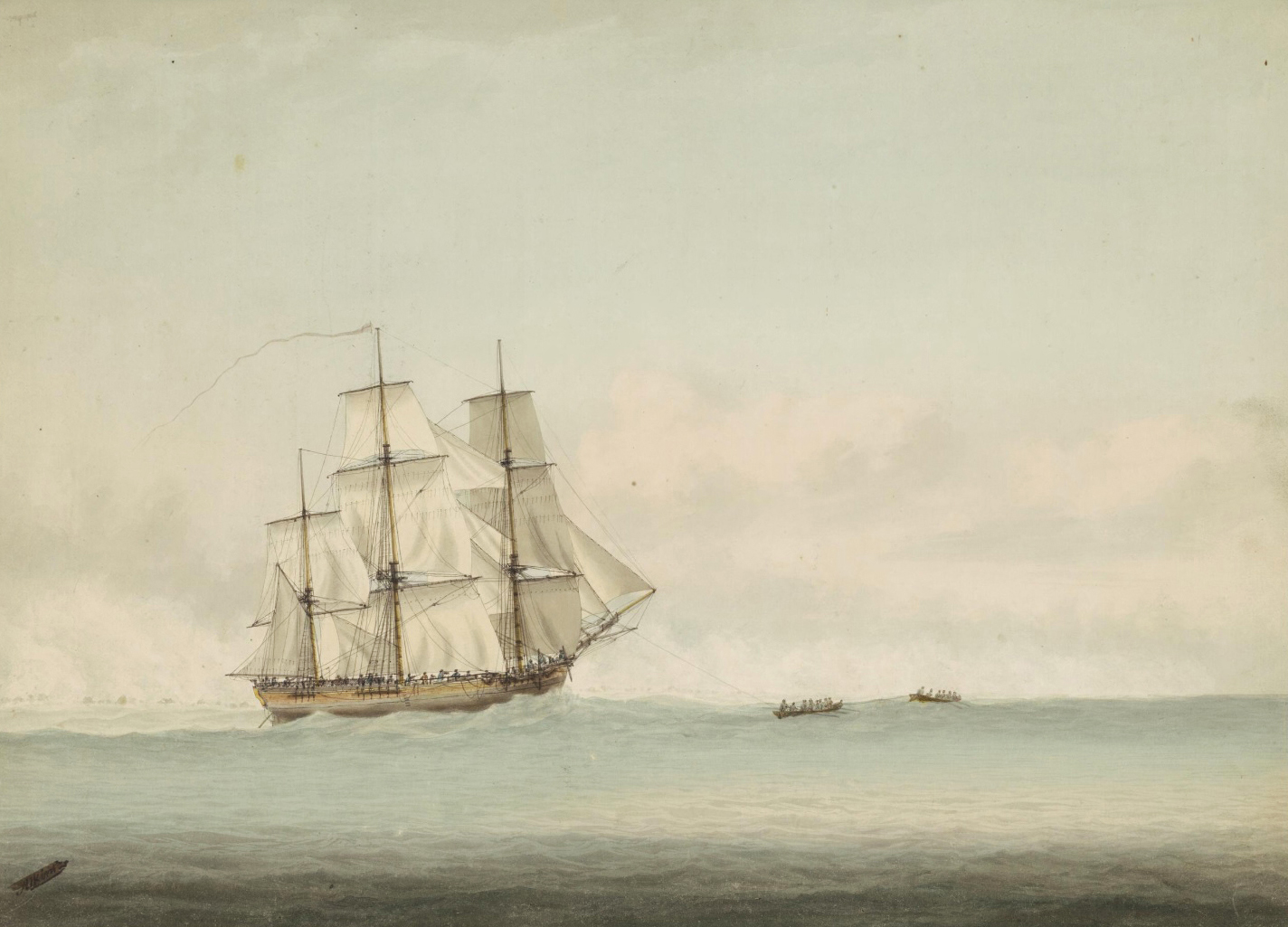
What is NASA doing in the field of terrestrial geology? This is infantile babble one would expect from a lunatic …
I was wondering the same thing. Oh, I get it. They are building spaceships so we can get off the planet when the big one hits….
Not “we” but “they can get off the planet…”. They don’t give a crap about the rest of us.
See my previous comment: NASA doesn’t build spacecraft. They buy them.
Everyone seems to forget the last A in NASA stands for “Administration”.
And, they really have no business in terrestrial geology.
BB,
Perhaps because the USGS is being morphed into the USBS, they don’t have many qualified geologists left to address this issue. Or, the geologists left know better than to engage in “infantile babble.”
How do you think the Astronauts learned what moon rocks to grab and how to describe the lunar landscape and geology they were seeing? By studying geologic processes on earth they learn much that can be applied to understanding the geology of other planets. For example the “blueberries” the Opportunity rover found on Mars were recognized for what they are because they are found here on earth. https://en.wikipedia.org/wiki/Martian_spherules
True, BUT the astronaut was a trained GEOLOGIST. I would suspect that the astronaut learned about rocks while studying geology (not so much from studying orbital mechanics). Scientist from all fields are necessary for studying extraterrestrial bodies. That doesn’t mean that NASA should be training geologists geology, not botanist botany. Hire the scientists and then cross train them on how to survive in space an operate the vehicles they’ve bought.
The ONLY scientist that flew a Mercury, Gemini, or Apollo mission was NASA geologist Harrison Schmitt. ALL of the others were test pilots/engineers. Schmitt flew on Apollo 17, the final Apollo mission. My reading of the accounts of the various astronauts is that there was strong opposition to letting Schmitt on the crew, but NASA was forced politically to do so. The general scheme of selecting astronauts based on disciplines other than engineering came along during the space shuttle days.
So the Astronauts that flew the moon missions were trained by NASA Geologists here on earth for their moon walks.
RAH,
The landing sites and directions for what to look for were derived from geologic maps prepared by the USGS. NASA did not prepare the geologic maps!
RAH,
You said, “So the Astronauts that flew the moon missions were trained by NASA Geologists here on earth for their moon walks.” My recollection is that the NASA astronauts were trained by USGS geologists such as
Eugene Shoemaker, who essentially invented astrogeology. At that point in time, NASA employed very few geologists other than Schmitt. Where are you getting your ‘facts’ from?
https://www.hq.nasa.gov/alsj/ap-geotrips.html
Beginning in March 1964, the Apollo astronauts participated in a number of geology field trips designed, firstly, to introduce the astronaut corps to geologic concepts and, latterly, to give crews assigned to specific missions detailed training in the types of observations they might expect to make on the Moon. Details can be found in a training history by Gerald Schaber with a US Geological Survey perspective and one by William C. Phinney with a Manned Spacecraft Center perspective. Relations between the two groups of geologists were often strained. Apollo 17 astronaut/geologist Jack Schmitt suggests that both accounts be considered in gaining a balanced perspective.
Appendices from draft copy of Phinney’s account were provided for the ALSJ in 2002 by Glen Swanson, historian at NASA’s Johnson Space Center. The appendices are entitled “Geology Field Exercises: Early Training” and “Geology Field Exercises for Apollo Missions”. They provided lists of Apollo astronaut field trips including training locations and the names of the astronauts who participated in each.
In 2004, Jennifer Troxell, then an intern working with Steve Garber of the NASA Headquarters History Office, independantly compiled a spreadsheet devoted to Apollo geology training using information gleaned from the History Office archives, from Phinney’s draft, and from Don Wilhelms’ book “To a Rocky Moon” Troxell’s spreadsheet has much of the same information as the Phinney appendices but also details sources and lists relevant NASA photographs.
NASA photos S64-23846 and S64-23847 show a group of twenty astronauts at Philmont Scout Ranch during the 3-6 June 1964 field trip. From left to right, they are: Pete Conrad, Buzz Aldrin, Dick Gordon, Ted Freeman, Charlie Bassett, Walt Cunningham, Neil Armstrong, Donn Eisele, Rusty Schweikhart, Jim Lovell, Mike Collins, Elliot See, Gene Cernan (behind See), Ed White, Roger Chaffee, Gordon Cooper, C.C. Williams (behind Cooper), Bill Anders, Dave Scott, Al Bean.
RAH,
From Wikipedia ( https://en.wikipedia.org/wiki/Eugene_Merle_Shoemaker ):
“Shoemaker helped pioneer the field of astrogeology by founding the Astrogeology Research Program of the United States Geological Survey in 1961 at Flagstaff, Arizona and he was its first director. He was prominently involved in the Lunar Ranger missions to the Moon, which showed that the Moon was covered with a wide size range of impact craters. Shoemaker was also involved in the training of the American astronauts. He himself was a possible candidate for an Apollo Moon flight and was set to be the first geologist to walk on the Moon but was disqualified due to being diagnosed with Addison’s disease, a disorder of the adrenal gland. Shoemaker would train astronauts during field trips to Meteor Crater and Sunset Crater near Flagstaff.[6] He was a CBS News television commentator on the early Apollo missions, especially the Apollo 8 and Apollo 11 missions, appearing with Walter Cronkite during live coverage of those flights.”
NASA was in charge of the Apollo program, and coordinated the training. However, no one at NASA is/was as well known or as much of an expert as Shoemaker. The lunar geology maps were made by the USGS and no one at NASA was as much of an expert on impact craters as Shoemaker. It seems to me that an administrative agency is trying to take too much credit for actually teaching “…what moon rocks to grab and how to describe the lunar landscape and geology they were seeing.” However, that isn’t anything new. NASA is currently taking credit for the knowledge obtained from the Landsat satellite program, which they co-sponsor with the USGS. However, it was the USGS that was responsible for first launching the ERTS satellite, later re-named Landsat, processing and analyzing the data, and developing many of the algorithms for extracting information from multispectral imaging.
NASA also studies biology in order to know how to look for alien life.
And they started studying climate and weather on earth to apply it to the study of other planets but soon the scope of their climate study expanded. I mean how can one Administer the Air and Space without studying it? 😉
I think that NASA needs to have the scope of it’s climate studies reigned in. It is redundant. How many agencies do we need telling us each year was the hottest ever?
Gloateus
Are they responsible for discovering the green blob then?
Shame on them.
Hi David, Interesting post, thanks. I’d be worried about applying any technique that might cause a rapid change in magma pressure.
By the way, ‘civilisation’, ‘metre’ and ‘endeavour’ are all correct standard English language spellings outside N.America. But I’m sure you knew that already and were just taking the mick.
I was spelling those words *inside* North America… 😉
But criticising something that was written “outside” the United States. An attempt at a cheap joke not worthy of you Mr Middleton.
I live for cheap jokes.
If you want to communicate with a given audience, your spelling and usage should be as the audience expects. Otherwise, you distract from your message. Mad Av knows this, which is why high-end goods are shilled in the US with an ersatz-Brit voice-over.
David,
Interesting post and I thoroughly enjoyed the spelling ‘corrections’!
Interesting (to me) how many folks were miffed… and a few seem to be headed for a tiff.
Does a stiff upper lip necessarily prevent a smile and sense of humour?
Maybe you can get Soros to chip in some of the money he uses for trolls in order to buy higher class jokes?
PS: My tongue is so thoroughly embedded in my cheeks that I’m in danger of developing Gillespie pouches.
J Mac
Miffed, Tiffed and Stiffed.
There’s a limerick in there somewhere.
https://en.wikipedia.org/wiki/Metre International spelling, which includes Canada, so not even just “North American” spelling, but just everywhere that speaks English (or otherwise) except the USA. The USA is getting it wrong with English, not everywhere else. Just use Canadian English, the perfect hybrid. Aluminum (not Aluminium), but Colour and Armour as well! If you want real fun, try this sentence: “I’m going to center ice of my favourite sports centre.” 😉
Canada- Hey, we use proper English too.
Not in Quebec.
Take off, eh!
currently in Europe we need saving from terrestrial terr0r1s(z)m. European governments ‘endeavo(u)r’ amounts to bu-ger all to preserve the European ‘civilis(z)ation’ as we use to know it.
typo: bug-ger , double gg on the both sides of the pond
Re bugger https://www.youtube.com/watch?v=6RfAYnCxkK0
Stewart Pid
I really don’t want to click that link!
@ur momisugly Stewart Pid
Thanks for that …
Love the dog at the end (:-))
vukcevic
As non PC as it may be, I think Trumps observation on dipping ordnance in pigs blood to combat terrestrial terr0r1s(z)m is an excellent idea.
My proposal of wrapping their carcasses in pig skins before burial seems clumsy by comparison, and likely to offend lots of pigs.
It’s always apocalypse week on the BBC, CNN, NYT, WP et, isn’t it?
I like being in the civilised world, measuring in metres, to the best of my endeavours.
Perhaps certain departments in NASA can see some of their funding streams getting a little dry. Time to manufacture some new ones.
THats by far the best and most perceptive answer. As with climate science, you need to create fear in people that justifies lot of bad science about looming catastrophe from some innocent, improbable or unavoidable bogeyman, backed up by junk science from “Authoritative bodies” – like Piltdown Mann and friends, that depend on supporting the government fraud initiated in the name of the avoidable fear for their priestly rewards. Good old time religion at work, or Josef Goebels.
That justifies lobbyists and politicians in the trough being paid a lot of easy money to solve a catastrophic problem no one can really prove, but it is made career limiting to disprove, and all the insiders involved will have spent the easy money and be long gonr by the time the protection racket is exposed – by the laws of nature. Or a bloody great bang in this case. Same old scam either way. I blame the lazy belief in propaganda in as supposedly educated society (mostly technicaly illiterate), and the dishonest scientists who support the obvious rackets.
There is something really wrong with the scaling – the energy of 10’s or 100’s of cubic kilometers of liquid hot magma? A few puny deep holes? This is some kind of joke article.
If this proposal was to proceed, It surely would lead to a catastrophic outcome !! We should NEVER interfere in Nature to this extent – its gotta be plain lunacy
Arguably, we are interfering in nature by burning fossil fuels.
And of course, allowing greens to procreate.
I’m surprised they’ve figured out how to procreate.
John Harmsworth
Oh! they don’t know what they’re doing. Instinct, just like dogs.
I guess it’s our failure for not castrating them.
Pumping water into an imperfectly known magma reservoir doesn’t sound very safe. I’ve seen icelandic studies that indicated that the early explosive phase of the Laki 1783-84 megaeruption was largely due to the rising magma cooking off groundwater. N. B. it is the explosive phase that does the most damage.
“… it is the explosive phase that does the most damage.”
Since we’re all picking nits I’ll have a go at that one.
The latest study on the end-Permian extinction proposes that the worst damage was done by sills being intruded into sulfur (sulphur?) containing carbonates which released all sorts of toxic gases – mostly SO2 and the ever catastrophic CO2. An article about this study was posted here at WUWT not too long ago.
lower case fred
“sulfur (sulphur?)”
Laughed at that one.
“The latest study on the end-Permian extinction proposes that the worst damage was done by sills being intruded into sulfur (sulphur?) containing carbonates which released all sorts of toxic gases – mostly SO2 and the ever catastrophic CO2.”
However to have global effect the gases have to go into the stratosphere, which only happens during the explosive phases, as shown during the Laki eruption. During the effusive phase effects are mostly local since the nasty stuff gets washed out fairly quickly (not the CO2, but that is hardly dangerous)
Well, we’ve still got Brucie, all the backup we need !!yes?
kendo2016
‘Brucie” died today. A British legend.
We spoke twice, contact me via email.
vukcevic
“We spoke twice, contact me via email.”
Forgive me, but that sounded a bit commanding. Have I done something wrong?
Were you referring to me?
To hot scot ,just to clarify,i was (somewhat Tonguein cheek ),referring to the’ die hard’ bruce,at that momentintime I was not aware of the death of the famous uk legend,but thanks for your comment
God no, no one commands to a Scot, the least a Balkan vagabond. I was about to tell you about couple of conversation I had with Brucie, but you got me worried now.
“no one commands to a Scot” I can second that. Those people throw telephone poles at each other for sport! 🙂
Middleton ==> “Note: Yes, I know the BBC is British and that we are “two peoples separated by a common language.” I just like poking fun at the way they misspell so many words.”
Strictly speaking, we call it “English” because it comes from England — they spell things right and the colonials in the Americas spell them wrong.
Reversing the arrow of origin is provincial — literally.
If I have to tell people when I’m being sarcastic… It would take all of the fun out of being sarcastic.
Ditto.
Are you serious?
(Now where did i put that sarc tag…..)
All this sarcasm over the English language, and from Americans — how ironic.
Irony is my other favorite medium.
Wasn’t Webster an American.
MarkW ==> It is the venerable OED — the Oxford English Dictionary — which is considered “the definitive record of th4 English language”. That’s Oxford, England.
“the definitive record of the English language”
Webster was a drunken subject of KIng George 3rd, who gave inflamlattory speeches after 6 brandies, ate too much lobster and was a general trouble maker and rebel, as I recall from sharing the xperience at Quincy Market one weekend…. As was Paul Revere and his Raiders. Didn’t he sign some declaration or other? Probably fake news by the slave owning propagandists of the time, though.
brianrlcatt August 18, 2017 at 10:13 am
Perhaps you can tell us if there are any statues or monuments in England honoring
George Washington, Thomas Jefferson, or any other of our Founding Fathers ………. for historical purposes.
Tom in Florida
Does Pocahontas count?
Very nice statue of her in Gravesend, not 10 miles from where I live.
Tom in Florida
Just a quick search, in response to your inquiry, and other than Pocahontas, it seems there are six statues of American presidents in London alone. Washington, Lincoln, Roosevelt, Eisenhower, Reagan and Kennedy
https://www.guidelondon.org.uk/blog/around-london/statues-6-american-presidents-london/
Now apart from the bust of Churchill Obama had removed from the Oval Office, and replaced with one of Martin Luther King, are there many statues of British statesmen, or any others in the US?
HotScot,
No, Pocahontas doesn’t count. She did not rebel against the Crown My point was that the U.S. has statues of leaders and warriors of the Confederate States. They have been referred to as “traitors” and consequently should not be honored and their statues taken down. So I was wondering if England has statues honoring those who lead the Colonies in rebellion against the King.
England has no title to English. The language came originally from NW Germany and Denmark, ie Saxony and Anglia, after c. AD 450. It then spent some in Britain, where it came under the baleful influence of Old Norse and Norman French, due to further invasions, until c. 1600, after which time, it was perfected in North America, while degenerating in the UK.
after which time, it was degenerated in North America, whilst being improved in the rest of the world
Gloateus
To the best of my knowledge the good people of NW Germany and Denmark don’t speak English. So England kind of has first dibs on the unique evolution of the language, as it stands of course.
However, we British (ahem) are relaxed about its adaptation because that’s how it emerged in the first place. The French, on the other had have a government department dedicated to protecting the French language.
Just don’t misspell mademoiselle, you will be hunted down.
And they, and much of Europe, genderise everything. Now that’s odd.
And as the most widely spoken language on the planet, it’s bound to have some parochial adaptations..
A Scot! Ye cannae understand their vocalizations bu’ ye cannae question their application of the alphabet!
John Harmsworth
That would be ‘vocalisations’
Other than that, almost perfect.
🙂
It’s quite interesting more so to note, that the language of “English” did not actually originate in England.
Welsh & (extinct) Cumbric is pretty much the closest to Briton’s original language.
Welsh is a Celtic language, and by anything I have seen on the subject, the Celts originated somewhere other than Britain/Ireland (Central Europe?).
Wholly off topic. Language evolved in the Great African Rift Valley but was corrupted by religion, tribalism , politicians and lawyers to exploit the less able, and now by environmentalists and art critics. IMO. https://www.youtube.com/watch?v=CUTGC5N7hCI
I suggest NASA steers a meteor to impact the Yellowstone caldera. Pre-emptive strike so to speak. Two birds with one stone.
Using the geothermal energy from these areas is a very practical and physically correct idea. There is no reason not to — not that I recommend drilling into the magma — but geothermal power plants are in use in Iceland generating about 30% of their electricity and could make a real contribution to America’s energy mix.
I doubt that our use of geothermal would prevent a super-volcano — but it couldn’t hurt.
I doubt the magma chamber would even notice.
But no doubt all the tree huggers would object to the project because it could potentially impact the geysers. Better to have devastation than tourists disappointed.
I would agree. At the “estimated” cost of just 1 10 Km hole you would bankrupt the world economy just to drill a few handfuls of these boreholes and still not have enough heat transfer to make any real difference (and that’s if you could actually get it to work). This type of “study” just reminds me of the old cautionary saying “Don’t believe everything you think”. Makes for an “interesting” diversionary newspaper piece, but total junk science and worthy of sarcastic, snarky comments.
link
Iceland is the world expert on geothermal energy. They have plans to go 100% fossil fuel free. They could do it and would thereby improve their balance of payments … well except for the fishing boats and Icelandair.
I wish we could bring some Icelanders to Hawaii to show us how to do geothermal. We are sitting on top of several active volcanos, but must make do with imported oil, roof top solar panels, and a few bird choppers.
…However those who instigate such a project will never see it to completion, or even have an idea whether it might be successful within their lifetime. Cooling Yellowstone in this manner would happen at a rate of one metre a year, taking of the order of tens of thousands of years until just cold rock was left. Although Yellowstone’s magma chamber would not need to be frozen solid to reach the point where it no longer posed a threat, there would be no guarantee that the endeavour would ultimately be successful for at least hundreds and possibly thousands of years….
Could anything be better planned to create a job for life? And for your great-grandchildren and further on, to infinity and beyond…?
Dodgy Geezer
Unless, of course, it went pop in 5 years time. Despite the best efforts of NASA (and it’s contractors) and billions of taxpayers money spent trying to control the unpredictable.
Hmmmmmmm…….isn’t this where the climate debate began?
…But if more of the heat could be extracted, then the supervolcano would never erupt. Nasa estimates that if a 35% increase in heat transfer could be achieved from its magma chamber,…
Pardon me for my lack of maths, but I suspect that would be a fair amount of heat that they are thinking of extracting from this one supervolcano. I understand that they might want to do it with several…
WHAT ARE THEY GOING TO DO WITH THE HEAT?
If, as I understand it, global warming is such a dangerous phenomenon, and our climate is critically balanced such that a few PPM of CO2 will send us into oblivion, can someone with a calculator tell me how many degrees it will raise our atmosphere if we extract all the heat out of a supervolcano or two and dump it in the air…?
They would turn the heat into electricity.
http://www.ucsusa.org/sites/default/files/images/2014/12/energy-renewable-geothermal-plant-designs-diagrams.jpg
Pollution-free electricity…
http://www.energy.ca.gov/geothermal/images/geysers_unit_18.jpg
Unless you count steam (water vapor) as a pollutant.
Well, the steam does increase the humidity, which might change the microclimate until it precipitates out.
The Alarmists do that all the time showing condensation coming from power plant water cooling towers or stacks as smoke.
David Middleton
They classified CO2 as a pollutant, so why not steam?
A question though, is steam actually water ‘vapour’?
I used to think it was but various discussions on here have made me question myself. My science is appalling and I’m sorry if it’s a stupid question.
Hydrothermal steam is decidedly nasty with lots of toxic compounds, it isn’t exactly distilled water.
tty
Interesting, thank you.
Basic thermodynamics: that does not get rid of the heat! They just extract power from it as it passes through on its way to the atmosphere.
Steam is from boiling of water usually at 100 C (higher or lower depending on pressure) Water vapor is from evaporation of water at ambient temperature (usually 0 to 40 C) and from chemical reactions like combustion of hydrocarbons. Of course they are the same H2O gas molecules
No. They can smell the end of the CO2 scare. This is the replacement scare!
tty – heat exchangers!