Guest essay by Clive Best
Marotzke & Forster(2015) found that 60 year trends in global surface temperatures are dominated by underlying climate physics. However, the data show that climate models overestimate such 60 year decadel trends after 1940.

The recent paper in Nature by Jochem Maritzke & Piers Forster ‘Forcing, feedback and internal variability in global temperature trends’ has gained much attention because it makes the claim that climate models are just fine and do not overstimate warming despite the observed 17 year hiatus since 1998. They attempt to show this by demonstrating that 15y trends in the Hadcrut4 data can be expected in CMIP5 models through quasi random internal variability, whereas any 60y trends are deterministic (anthropogenic). They identify ‘deterministic’ and ‘internal variability’ in the models through a multi-regression analysis with their known forcings as input.
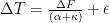
where 


This procedure was criticised by Nick Lewis and generated an endless discussion on Climate Audit and Climate-Lab about whether this procedure made statistical sense. However for the most part I think this is irrelevant as it is an analysis of the difference between models and not observational data.
Firstly the assumption that all internal variability is quasi-random is likely wrong. In fact there is clear evidence of a 60y oscillation in the GMST data probably related to the AMO/PDO – see realclimate. In this sense all models are likely wrong because they fail to include this non-random variation. Secondly as I will show below the observed 15y trends in Hadcrut4 are themselves not quasi-random. Thirdly I demonstrate that the observed 60y trends after 1945 are poorly described by the models and that by 1954 essentially all of the models predict higher trends than those observed. This means that the ‘deterministic’ component of all CMIP5 models do indeed overestimate the GMST response from increasing greenhouse gas concentrations.
Evidence of regular climate oscillations

Figure 1 shows that the surface data can be well described by a formula (described here) that includes both an net CO2 forcing term and a 60y oscillation as follows:

The physical justification for such a 0.2C oscillation is the observed PDO/AMO which just like ENSO can effect global surface temperatures, but over a longer period. No models currently include any such regular natural oscillations. Instead the albedo effect of aerosols and volcanoes have been tuned to agree with past GMST and follow its undulations. Many others have noted this oscillation in GMST, and even Michael Mann is now proposing that a downturn in the PDO/AMO is responsible for the hiatus.
15y and 60y trends in observations and models
I have repeated the analysis described in M&F. I use linear regression fits over periods of 15y and 60y to the Hadcrut4 data and also to the fitted equation described above. In addition I have downloaded 42 CMIP5 model simulations of monthly surface temperature data from 1860 to 2014, calculated the monthly anomalies and then averaged them over each year. Then for each CMIP5 simulation I calculated the 15y and 60y trends for increasing start year as described in M&F.
Figure 2 shows the calculated 15y trends in the H4 dataset compared to trends from the fit. For comparison we first show Fig 2a taken from M&F below.

M&F regression analysis then goes on to show that the deterministic effects in the CMIP5 models should dominate for longer 60y trends. In particular the error on the 60y trends as given across models is ± 0.081 C which is 30% lower than random variation. Therefore the acid test of the models comes when comparing 60y model trends to the obervation because now statistical variation is much smaller. These are my results below.

This analysis shows two effects which were unreported by M&F. Firstly the 15y variation in trends of the observed data is not random but shows a periodic shape as is also reproduced by the fit. This is characteristic of an underlying natural climate oscillation. The quasi-random natural variation in the CMIP5 models as shown in Fig 2a above encompases the overall magnitude of the variation but not its structure.
Secondly the 60y trends also show a much smaller but still residual structure reflecting the underlying oscillation shown in blue. The spread in 42 models is of course due to their different effective radiative forcing and feedbacks. The fact that before 1920 all model trends can track the observed trends is partly due to parametric tuning in aerosols to agree with hindcast temperaures. After 1925 the observed trend begins to fall beneath the average of CMIP5 so that by 1947 the observations lie below all 42 model trends in the CMIP5 ensemble. This increase in model trends above the observed 60y trend cannot now be explained by natural variation since M&F argue that the deterministic component must dominate. The models must be too sensitive to net greenhouse forcing. However M&F dismiss this fact simply because they can’t determine what component within the models causes the trend . In fact the conclusion of the paper is based on analysing model data and not the observation data. It is bizarre. They conclude their paper as follows:
There is scientific, political and public debate regarding the question of whether the GMST difference between simulations and observations during the hiatus period might be a sign of an equilibrium model response to a given radiative forcing that is systematically too strong, or, equivalently, of a simulated climatefeedback a that is systematically too small (equation (2)). By contrast, we find no substantive physical or statistical connection between simulated climate feedback and simulated GMST trends over the hiatus or any other period, for either 15- or 62-year trends (Figs 2 and 3 and Extended Data Fig. 4).The role of simulated climate feedback in explaining the difference between simulations and observations is hence minor or even negligible. By implication, the comparison of simulated and observed GMST trends does not permit inference about which magnitude of simulated climate feedback—ranging from 0.6 to 1.8 W m22 uC21 in the CMIP5 ensemble—better fits the observations. Because observed GMST trends do not allow us to distinguish between simulated climate feedbacks that vary by a factor of three, the claim that climate models systematically overestimate the GMST response to radiative forcing from increasing greenhouse gas concentrations seems to be unfounded.
It almost seems like they have reached the conclusion that they intended to reach all along – namely that the models are fit for purpose and the hiatus is a statistical fluke not unexpected in 15y trend data. This way they can save the conclusions of AR5, but only by ignoring the evidence that the observational data support the AMO/PDO oscillation and moderate gloabl warming.
Physics has always been based on developing theoretical models to describe nature. These models make predictions which can then be tested by experiment. If the results of these experiments dissagree with the predictions then either the model can be updated to explain the new data or else discarded. What one can’t do is to discard the experimental data because the models can’t distinguish why they dissagree with the data.
My conclusion is that the 60y trend data show strong evidence that CMIP5 models do indeed overestimate global warming from increased greenhouse gasses. The discrepency of climate projections with observations will only get worse as the hiatus continues for probably another 10 years. The current 60y decadel trend is in fact only slightly larger than that that in 1900. Once the oscillation reverses around 2030 warming will resume, but climate sensitivity is still much less than most models predict.
I quote:
“Figure 1 shows that the surface data can be well described by a formula (described here) that includes both an net CO2 forcing term and a 60y oscillation….”
That formula is worthless because it is fitted to a non-existent watming. HadCRUT 4 (and NCDC and GISS) all show the eighties and the nineties as a global warming period when in fact there is no warming for 18 years. That makes it a hiatus period as long as the present one is. I proved this 5 years ago and even put a warning about it into the preface of my book (“What Warming? Satellite view of global temperature change.” See Figure 15) Nothing happened, they kept using that fake warming of the eighties and nineties in their temperature curves and eventually it became a part of AR5. The three data sources actually collaborated in creating that fake warming because unbeknownst to them their cooperative computer processing left identical traces of itself in all three publicly available data-sets. Satellite data are free of this fake warming and free of computer manipulation. I suggest that the only believable temperature data after 1979 are satellite temperature measurements. Do not use the fake ground-based warming from those three – it will lead you into pseudo-science without you even being aware of this.
Correct. The global surface temperature “anomaly” plots from UEA, NOAA, GISS are corrupt.
Theose places need a full audit and recovery of raw temp records.
There are a few well sited long term stations with scientific quality control. Those show zero warming.
Compare the long term land reported by BEST to satellites.
http://www.woodfortrees.org/plot/best/scale:3/plot/rss-land
USCRN temps also shows zero warming.
I spent unnecessarily long time finding out that all blue lines in graphs above are mere distraction. Why are they there at all?
If I disregard blue lines, it seems to me there is clear negative relation between reliability of models fit to observations and CO2 concentrations. It would be nice to see scatter plot of that.
Better than what you want is available from the start of major increased in fossil fuels burning.
We have extremely reliable CO2 concentration measurements since 1958 from Mauna Loa. I would prefer from 1946 or so but the best we have are from 1958.
These measurements are available on a daily, weekly, monthly and yearly basis. Yearly basis is simply nonsense, we know seasonal variations exist. Daily or weakly may be a little too much to ask. But monthly would seem the most appropriate. So, if CO2 is a driving force there should be some correlation between the increase in CO2 measured monthly and temperature measured monthly.
The scatter plot you want is here:
http://www.climate4you.com/images/HadCRUT4%20GlobalMonthlyTempSince1958%20VersusCO2.gif
Here is the CO2 from 1958 to present: http://www.ecology.com/wp-content/uploads/2013/05/Mauna-Loa-Historical-CO2-524.jpg
I see [no] dips or inflections. I saw some good tips upthread about how to chose the right data filter.
@rd50, temperature anomally vs. CO2 increase should be a gradual natural log rise. Since it’s not it needs some explanation like PDO/AMO or other signal.