Guest Post by Willis Eschenbach.
For all of its faults, the IPCC (Intergovernmental Panel on Climate Change) lays out their idea of the climate paradigm pretty clearly. A fundamental part of this paradigm is that the long-term change in global average surface temperature is a linear function of the long-term change in what is called the “radiative forcing”. Today I found myself contemplating the concept of radiative forcing, usually referred to just as “forcing”.
So … what is radiative forcing when it’s at home? Well, that gets a bit complex … in the history chapter of the Fourth Assessment Report (AR4), the IPCC says of the origination of the concept (emphasis mine):
The concept of radiative forcing (RF) as the radiative imbalance (W m–2) in the climate system at the top of the atmosphere caused by the addition of a greenhouse gas (or other change) was established at the time and summarised in Chapter 2 of the WGI FAR [First Assessment Report].

Figure 1. A graph of temperature versus altitude, showing how the tropopause is higher in the tropics and lower at the poles. The tropopause marks the boundary between the troposphere (the lowest atmospheric layer) and the stratosphere. SOURCE

The concept of radiative forcing was clearly stated in the Third Assessment Report (TAR), which defined radiative forcing as follows:
The radiative forcing of the surface-troposphere system due to the perturbation in or the introduction of an agent (say, a change in greenhouse gas concentrations) is the change in net (down minus up) irradiance (solar plus long-wave; in Wm-2) at the tropopause AFTER allowing for stratospheric temperatures to readjust to radiative equilibrium, but with surface and tropospheric temperatures and state held fixed at the unperturbed values.
In the context of climate change, the term forcing is restricted to changes in the radiation balance of the surface-troposphere system imposed by external factors, with no changes in stratospheric dynamics, without any surface and tropospheric feedbacks in operation (i.e., no secondary effects induced because of changes in tropospheric motions or its thermodynamic state), and with no dynamically-induced changes in the amount and distribution of atmospheric water (vapour, liquid, and solid forms).
So what’s not to like about that definition of forcing?
Well, the main thing that I don’t like about the definition is that it is not a definition of a measurable physical quantity.
We can measure the average surface temperature, or at least estimate it in a consistent fashion from a number of measurements. But we can never measure the change in the radiation balance at the troposphere AFTER the stratosphere has readjusted, but with the surface and tropospheric temperatures held fixed. You can’t hold any part of the climate fixed. It simply can not be done. This means that the IPCC vision of radiative forcing is a purely imaginary value, forever incapable of experimental confirmation or measurement.
The problem is that the surface and tropospheric temperatures respond to changes in radiation with a time scale on the order of seconds. The instant that the sun hits the surface, it starts affecting the surface temperature. Even hourly measurements of radiative imbalances reflect the changing temperatures of the surface and the troposphere during that hour. There is no way that we can have the “surface and tropospheric temperatures and state held fixed at the unperturbed values” as is required by the IPCC formulation.
There is a second difficulty with the IPCC definition of radiative forcing, a practical problem. This is that the forcing is defined by the IPCC as being measured at the tropopause. The tropopause is the boundary between the troposphere (the lowest atmospheric layer, where weather occurs), and the stratosphere above it. Unfortunately, the tropopause varies in height from the tropics to the poles, from day to night, and from summer to winter. The tropopause is a most vaguely located, vagrant, and ill-mannered creature that is neither stratosphere nor troposphere. One authority defines it as:
The boundary between the troposphere and the stratosphere, where an abrupt change in lapse rate usually occurs. It is defined as the lowest level at which the lapse rate decreases to 2 °C/km or less, provided that the average lapse rate between this level and all higher levels within 2 km does not exceed 2 °C/km.
This is an interesting definition. It highlights that there can be two or more layers that look like the tropopause (little temperature change with altitude), and if there is more than one, this definition always chooses the one at the higher altitude.
In any case, the issue arises because under the IPCC definition the radiation balance is measured at the tropopause. But it is very difficult to measure the radiation, either upwelling or downwelling, at the tropopause. You can’t do it from the ground, and you can’t do it from a satellite. You have to do it from a balloon or an airplane, while taking continuous temperature measurements so you can identify the altitude of the tropopause at that particular place and time. As a result, we will never be able to measure it on a global basis.
So even if we were not already talking about an unmeasurable quantity (radiative change with stratosphere reacting and surface and tropospheric temperatures held fixed), because of practical difficulties we still wouldn’t be able to measure the radiation at the tropopause in any global, regional, or even local sense. All we have is scattered point measurements, far from enough to establish a global average.
This is very unfortunate. It means that “radiative forcing” as defined by the IPCC is not measurable for two separate reasons, one practical, the other that the definition involves an imaginary and physically impossible situation.
In my experience, this is unusual in theories of physical phenomena. I don’t know of other scientific fields that base fundamental concepts on an unmeasurable imaginary variable rather than a measurable physical variable. Climate science is already strange enough, because it studies averages rather than observations. But this definition of forcing pushes the field into unreality.
Here is the main problem. Under the IPCC’s definition, radiative forcing cannot ever be measured. This makes it impossible to falsify the central idea that the change in surface temperature is a linear function of the change in forcing. Since we cannot measure the forcing, how can that be falsified (or proven)?
It is for this reason that I use a slightly different definition of the forcing. This is the net radiative change, not at the troposphere, but at the TOA (top of atmosphere, often taken to mean 20 km for practical purposes).
And rather than some imaginary measurement after some but not all parts of the climate have reacted, I use the forcing AFTER all parts of the climate have readjusted to the change. Any measurement we can take already must include whatever readjustments of the surface and tropospheric temperatures that have taken place since the last measurement. It is this definition of “radiative forcing” that I used in my recent post, An Interim Look at Intermediate Sensitivity.
I don’t have any particular conclusions in this post, other than this is a heck of a way to run a railroad, using imaginary values that can never be measured or verified.
w.
Robert Clemenzi:
srsly – there is a problem here.
it looks like I’m going to have to baby step through the logic – care to do this with me and identify the contradiction?
proposition #1: is the ocean radiating 400W / sq m constantly or not?
this is true or not – no need to quibble over nanowatts.
so, it’s yes or no.
400 is not the value I would use, but yes it is radiating energy.
Do you agree that if something is radiating more energy than it receives, it will git colder?
And conversely, if it receives more energy than it emits, it will get warmer?
DirkH
pardon the quibble, but my statement was absolutely true. to express your blackbody relationship of radiant energy proportional to an exponent of temperature requires an additional factor not present in any temperature measurement or power measurement.
watts = amps * volts
does a thermometer specify the emissivity or temperature of an amp or a volt? no.
but for now, please consider what it would be the actual effect of having 3.6A of 110V incandescent bulbs burning on every square meter of your ceiling.
that’s the focus of my issue, i.e., what seems completely absurd to me. it passeth not the sniff test.
Gail Combs you have placed another excellent post. Enjoyed the links. Don’t read Dutch though. 🙂
R.Clemenzi:
“Do you agree that if something is radiating more energy than it receives, it will git colder?
And conversely, if it receives more energy than it emits, it will get warmer?”
yes.
proposition #2) is it true that 400W of power is enough to boil a gallon of water in about an hour?
again – it’s true or it’s not. if it takes a calorimeter, so be it. a few minutes here or there is not a quibble.
mkelly says:
December 19, 2012 at 5:31 pm
Gail Combs you have placed another excellent post. Enjoyed the links. Don’t read Dutch though. 🙂
_________________________________
Google Translate is your friend. http://translate.google.com/?tl=nl&q=undefined
I happen to read enough German (required of a chemist) that I can sort of wade through it, but google is a heck of a lot easier.
Willis says to gnomish a few comments above here:
“I swear, to you guys, theory is far more important than measurements.”
Huh? Willis, what are you saying? Maybe YOU are the one who thinks theory is more important than empirical evidence, eh?? Just where are the measurements for downwelling long-wave IR for Atlanta and Phoenix, so I can compare them. Atlanta should have many times more W/m2 than Phoenix, since Atlanta has, on average, about 4 times as much GHGs doing the downward radiation gig. For some reason, I can easily access direct radiation from the Sun at these locations, but there appears to be no database for GHG radiation at night. WHY??? It should be very easy for someone to measure the downwelling radiation at night, so we can see just what those GHGs are doing. But I don’t know of any database for such radiation. Do you? Would that data not be an important to all the “climate scientists?” Or are they all just watching radiation cartoons?
jae says, December 19, 2012 at 6:39 pm: “It should be very easy for someone to measure the downwelling radiation at night, so we can see just what those GHGs are doing.”
======================================================
Jae, to learn that those “GHGs” can not be doing well, nowhere, it is sufficient to learn about the Wood’s experiment. The “climate science” must have been aware of it since 1909.
That is the reason, I guess, for their bogus “otherwise much colder Earth”-calculation and the apparent absence of any experimental proof for their “back radiation warming”.
gnomish says:
December 19, 2012 at 5:46 pm
Only if it is not losing energy – either by radiation or thru the walls of the container. Or any other method!
jae says:
December 19, 2012 at 6:39 pm
Are you sure? Please provide data.
CO2 should be the same at both.
Assuming H20 at 30,000 ppm, that would translate to an RH of
100.10 % at 76°F
63.65 % at 90°F – Atlanta
34.84 % at 110°F – Phoenix
17.49 % at 135°F – desert
The fact that the RH is different does not necessarily mean that the amount of water in the atmosphere is different. Water on the ground tends to cool things off and I think that that is the main difference. If want to see some actual data for Jacksonville and Tucson, you can try my program.
http://mc-computing.com/Science_Facts/Lapse_Rate/Lapse_Rate_Animations.html
Greg House says:
“Jae, to learn that those “GHGs” can not be doing well, nowhere, it is sufficient to learn about the Wood’s experiment. The “climate science” must have been aware of it since 1909.”
Greg, Wood’s experiments related to real greenhouses, not to an open atomsphere. Not relevant here, PROBABLY (but not FOR SURE, since convection is so extremely important that it might completely overwhelm any radiative GHE effect–another topic).
jae says, December 19, 2012 at 8:04 pm: Greg, Wood’s experiments related to real greenhouses, not to an open atomsphere.
=========================================================
This is so wrong, Jae, I can not believe it.
The Wood’s experiment demonstrates that “back radiation warming” is either zero or negligible.
The back radiation in his experiment was produced by glass, not by so called “greenhouse gases”, but this does not matter at all, because his experiment debunks the very MECHANISM (“back radiation warming”), by which the “greenhouse gasses” are claimed to warm, anyway according to the IPCC version of the “greenhouse effect”.
So, please, read it again, in this form this time: Wood’s experiment = back radiation does not work.
thanks, R. Clemenzi.
presently you may help me resolve my issue, for which i thank you for your time.
proposition #3: is there any distinction between watts radiated by ocean water or watts radiated by an electrical element?
gnomish says:
December 19, 2012 at 8:41 pm
They are the same 🙂
Watt = Joules per second
http://en.wikipedia.org/wiki/Watt
It is simply “the rate of energy conversion or transfer”.
The amount of energy transferred is the number of watts times an amount of time.
“Heat is energy transferred from one body to another by thermal interactions” – wiki ref
R. Clemenzi – thanks for your patience and persistence.
i’m almost at the crux of the matter, now.
proposition #4:
if a person sits on a 100W electrical heating pad, will his 1/4 sq meter butt be noticeably warmed?
gnomish says:
December 19, 2012 at 12:31 pm
gnomish, one of the brilliant discoveries of the early scientists was that solid things radiate in the infrared. A couple of guys named Stefan and Boltzmann discovered the relationship between the temperature, and how many watts are radiated at that temperature. That turns out to be
W = σ e T4
where W is watts, σ is the Stefan-Boltzmann constant ( 5.67E-8 ), e is the emissivity of the object, and T is the temperature in kelvins.
So watts of radiated energy do indeed convert to temperature, gnomish.
Again let me say, truly you do not understand this stuff. Get a textbook and catch up, your gyrations are painful to watch.
w.
PS—Regarding my used of “uphill” which you reference in your post, I had said:
When I asked above how you planned to make the energy flow “uphill”, the word “uphill” was slang for making the energy flow from cooler to warmer.
Sorry for the confusion.
gnomish says:
December 19, 2012 at 5:25 pm
Assuming that the ceiling is about 75°F and already emitting 441 W/m2.
396 + 441 = 837 W/m2
yielding an expected floor temperature of 167°F. However, this this would also heat the ceiling to about the same value. Maybe higher if the walls can’t git rid of enough energy. A bit lower if the windows are open.
hold off, Willis, if you please.
emissivity is not a property of temperature nor of heat, so there is no direct conversion between degrees and watts, as i stated.
please let Robert finish his attempt to help me resolve a point you are missing.
gnomish says:
December 19, 2012 at 11:04 pm
Yes, even if it is turned off. When you stand, the air cools you (assuming it is less than your body temperature). When you sit, the heat can no longer escape. As a result, what you are sitting on warms up to your internal body temperature. So does that part of your anatomy. Both objects heat up.
When you turn on the heating pad, things get even hotter. Fortunately, many heating pads have a thermostat so they won’t get hot enough to burn you. After a few minutes, these pads will be putting out only a few watts, not their full rated values.
“Now, if there is DLR, it does several things to this nightly overturning. First, it slows the heat loss of the surface water. As a result, it delays the onset of nightly oceanic overturning. Finally, it slows the overturning once it is started.”
====================================
Why would it slow the heat loss? By warming the skin it will increase conduction to the air, increase radiation to the air, and increase evaporation to the air.
Ok, so it would reduce your “overturning” which amounts to a sort of inverse convection, but your data set for this phenomenon seems to be personal sensation on a few night dives. Have you never felt these during the day? I have.They are very common. How far above the bottom were you diving?
R. Clemenzi-
to save Willis needless pain, I’ll cut to the chase.
(i hope i’ve eliminated all extraneous variables to avoid gyratory discursion)
if an electrical source of radiation emitting 400W (from a gram of nichrome wire isolated in a thermos bottle but for a one sq. meter exit in my direction) produces noticeable heat on my skin but a square meter of ocean (which does not significantly chill in the process) fails to do so, what is the explanation?
thank you for being most considerate and obliging.
jae says:
December 19, 2012 at 6:39 pm
So, just what is your contention here? That DLR isn’t measured? I discussed the DLR measurements at the TAO buoys here. There’s downwelling longwave radiation measurements for a half dozen sites here.
w.
gnomish says:
December 19, 2012 at 11:11 pm
Look, my friend, you made a statement to me about how it is not possible to convert watts to temperature.
I answered you, pointing out people have been doing that exact conversion for centuries. Now you are bitching and whining because I answered it? Well, excuuuuse me.
Sorry, that’s how it works. It’s called a discussion. Of course, my pointing out ugly reality, that people have converted watts to temperature for a couple centuries, doesn’t faze you. You have your fantasy, and by God, neither Stefan nor Boltzmann are gonna get in your way.
Now, you come back with the meaningless statement that since emissivity isn’t a function of temperature, there is no “direct conversion” of watts to temperature … what on earth are you on about? For a given object,
W = C T4
where “C” is a constant. How direct a relationship do you want?
Finally, “hold off” and “let Robert finish”? What does “hold off” mean? I am not stopping Robert in any sense, how could I. Whether I “hold off” or not, Robert is free to try to assist you. You should check up on how this “blog” thing works, gnomish. Robert doesn’t have to stand in line and wait merely because I am posting.
w.
Robert Clemenzi says:
December 19, 2012 at 7:26 pm
Gnomish, let me suggest close attention to this answer from Robert. Absorbing radiant energy doesn’t mean that an object will warm up. It all depends on how much energy that the object is losing at the same time.
If you could hold your thermal losses to zero, the constant addition of even 1 W would be enough to eventually boil water.
But we don’t have that situation. Suppose we set your gallon of water in front of my desk. My desk is radiating, with the amount of radiation being proportional to T4. At 20°C (~ 70°F), it’s radiating about 400 W/m2.
Assuming that the gallon of water is at 20°C as well, it is also radiating 400 W/m2, just like the desk.
And as a result, the water is gaining energy at a rate of 400 W/m2, and at the same time is radiating energy away at the same rate, 400 W/m2 … so it doesn’t change temperature at all.
HTH,
w.
jae, you asked about records of downwelling longwave. Here is a day of downwelling and upwelling longwave and shortwave.
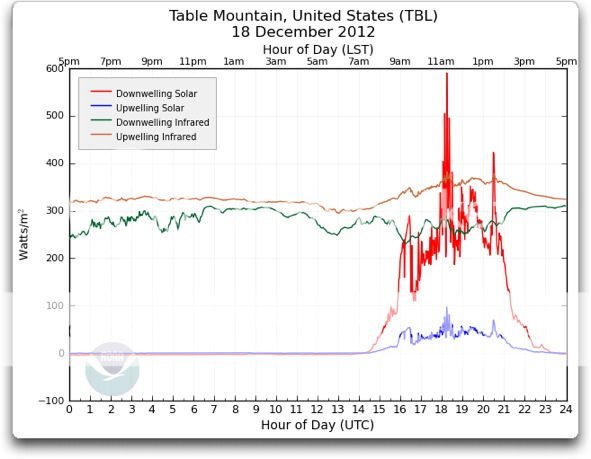
Figure S1. Up and downwelling radiation. Local time is shown along the top. SOURCE.
Note that the DLR is about 300 W/m2. This is because it is winter and the location is cold (Colorado). As a result, the DLR is coming from a colder atmosphere. Assuming an emissivity of 0.95, that converts to a few degrees below freezing.
Of course, the upwelling longwave also reflects the winter. It is slightly warmer than the overlying atmosphere, as we would expect. You can see how it increases with the warmth of the day, and then decreases as night approaches. It reaches its coldest point in the early morning.
w.