 Guest post by Steven Goddard
On the same day when President Obama and Prime Minister Brown separately warned of imminent economic catastrophe, the new US Energy Secretary Dr. Steven Chu issued a different catastrophe warning. The LA Times quoted him saying ““I don’t think the American public has gripped in its gut what could happen,” he said. “We’re looking at a scenario where there’s no more agriculture in California.” And, he added, “I don’t actually see how they can keep their cities going” either.”
This is a terrifying warning of drought, coming from a cabinet level official whom the LA Times describes as “not a climate scientist.” And perhaps a little surprising, since it was only two winters ago when the “world’s leading climate scientist” Dr. James Hansen, forecast a “Super El Niño” with severe flooding for California. Dr. Hansen has also warned of a return to wet El Niño conditions during the current year or so.
One of the commonly made claims from the AGW camp is that global warming is causing more El Niño events. Roger Pielke Sr. just did a web log on this topic.
El Niño Impacts: Weaker In The Past, Stronger In The Future?
“What about the future of El Niño? According to NCAR senior scientist Kevin Trenberth, ENSO’s impacts may be enhanced by human-produced climate change. El Niños have been unusually frequent since the mid- 1970s.
El Niño is famous for bringing copious amounts of rain and snow to California. I have spent several El Niño winters in the Bay Area where Dr. Chu lives, including the big one in 1998 when the rain was nearly continuous for months. Living Redwood trees were sliding across Highway 17 in the Santa Cruz mountains. I remember a wonderful weekend in LA in February, 2005 during their second wettest winter on record when they received six inches of rain in three days. It didn’t stop pouring for five seconds the entire weekend. According to NOAA:
(LA 2005) had its 2nd wettest rainfall season since records began in 1877 and the wettest season in 121 years. Over 37 inches of rain (37.25) fell downtown, just failing to reach the record 38.18 inches set during the 1883-1884 rainfall season. Average wet season rainfall for LA is 15.14 inches, making the 2004-2005 season 246% wetter than the 1971-2000 normal.
Snowfall in the Sierras is also normally high during El Niño years. Below is a graph of Lake Tahoe snowfall from 1918-2008 – official data taken from here. Not much of a trend, except to note that the Dust Bowl in the 1930s was dry, as Steinbeck and the Okies observed.
From: this spreadsheet El Niño years bring lots of water to the cities, farms and reservoirs, and allow for periods of high agricultural productivity. So I am not sure what it is that we are supposed to be terrified of – famously dry La Niña years in California, or famously wet El Niño years caused by “global warming?” The official horror story morphs so fast, it is often difficult to keep up. Reading Steinbeck, one might get the impression that dry periods are part of the normal climate cycle in California, rather than a recent invention caused by the burning of fossil fuels. President Roosevelt said at the time – “We have nothing to fear but fear itself.“Heavy rain and snow is forecast for California today.
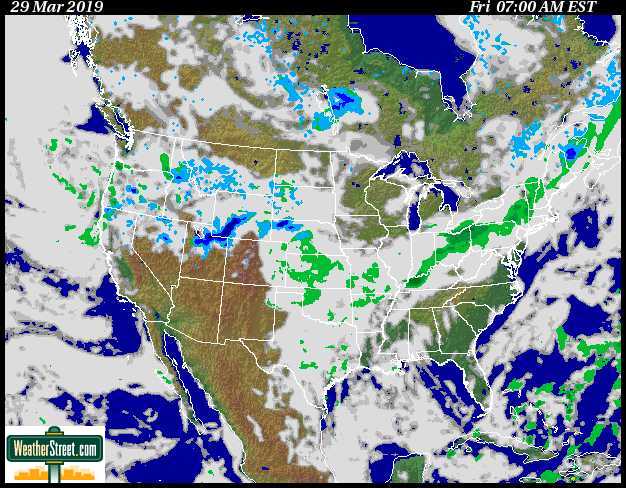
Perhaps we now have the “Chu Effect” working in concert with the Gore Effect?

From weatherstreet.com
Gee… even google “climate change” 1975 gives us 6,200,000 hits including:
Climate Change Prediction — Broecker 283 (5399): 175 — Science
In 1975, Science published my paper “Climate change: Are we on the brink of a pronounced global warming?” (1). This paper was prompted by the observation …
http://www.sciencemag.org/cgi/content/full/283/5399/175f – Similar pages
by W Broecker – 1999 – Cited by 2 – Related articles
It sure looks to me like ‘global warming’ and the use of the phrase ‘climate change’ have been joined at the hip since birth. Long before 2002. (But a google of 1970 yielded talk of ice ages; though several recent pages were also caught that tried to claim there was no claim of impending ice in 1970… based on there not having been ‘a consensus’ – just lots of scary cover stories in popular magazines by scientists… uh huh… )
You know Brendan H. and DJ, that memo certainly does show that W. was slow on the uptake. A full 27 years late at least. God that guy is slow some times… Or is your position that the Republicans were conspiring for 27 years and only then sent the memo to W.? Or that W. was ‘leading the way’ from 27 years after the fact? Or what? (Oh, never mind; we all know W. caused WWII, and created malaria as a plot against Africa, and is really the antichrist reborn, and…) /sarcoff>
Hint: Horse in front, cart in back. Horse pointed forward. Cart with wheels down.
Anthony, re arctic ice grayness- I noticed it also on the nsidc.org,
Link is here.
My wizardry is small for this one. Perhaps one of you Gandalfs can look into this.
Ric Werme (10:05:09) says:
Hmm, this is cute – with 12 month smoothing, then the start point is warmer than the end point. http://www.woodfortrees.org/plot/uah/from:1980/mean:12/plot/uah/from:1980
The trend is still positive, it’ll take time for current conditions to remove the warm period before the PDO flip.
My comment:
Very good points Ric.
Note that the UAH data source shows Monthly LT’s and 12-Month Running Means, but not 60 months RM’s.
Here is a skill-testing question for general discussion, if there is any interest:
Based on your knowledge of climate science, including paleoclimatology, which would be better for humanity and the environment – global warming or global cooling? Feel free to qualify (and quantify) your answers.
Regards, Allan
Hi Ric,
Please look at the first graph at:
http://www.iberica2000.org/Es/Articulo.asp?Id=3774
This graph suggests there has been no net global warming since 1940, despite an ~800% increase in humanmade CO2 emissions.
I used Hadcrut3 ST from 1940 (despite of its warming bias), and UAH LT thereafter.
This is the result when one plots the FULL PDO cycle, instead of attempting to extrapolate the WARMING HALF-CYCLE, as many warmists do.
I suggest it is no more valid to extrapolate temperatures since ~1980 rising into the future, than it is to extrapolate temperatures falling into the future since 1998. These practises simply extrapolate one segment of a natural cyclical parameter, and are unlikely to have any long-term validity.
What do you think?
Regards, Allan
Allan M R MacRae,
I looked at your paper on the website you linked to. Very impressive work! Thanks.
@Allan M R MacRae (16:31:22) :
“Here is a skill-testing question for general discussion, if there is any interest:
Based on your knowledge of climate science, including paleoclimatology, which would be better for humanity and the environment – global warming or global cooling? Feel free to qualify (and quantify) your answers.
Regards, Allan”
I’m interested and I’ll bite. As for which condition is better for humanity, look at world population distributed by latitude. Civilization has voted and the the areas with temperature extremes lose. Water and food availability are more important than temperature but water and food are less abundant where the temperatures are extreme.
As for which condition is better for the environment, life will find a way. There is life everywhere on earth. When temperature conditions change, some species fail and others move in to fill the niches left by failed species.
“Which is better for the environment warmer or colder?” is by far the more interesting question. The planet earth cares not a whit if there any life on its surface unless there is evidence that planets are sentient. Is Mother Earth somehow superior to the sun or the moon or Mother Mars or Mother Venus?
John, try this before posting:
http://w3schools.com/html/tryit.asp?filename=tryhtml_basic
John Philip
“I see: so the satellite data is clean but the adjusted surface record suspect? This gives us the opportunity to assess just how severe is the contamination from these adjustments by comparing the two…. Hmmmm – do you see anything to worry about? I don’t.”
But of course you just pointed out the main reason why I’m fairly sure about it – from 1979 at least. Independent verifications are really nice. So is 3rd party review by the way, but such a thing seems to be not only completely missing but very actively discouraged in climate circles. There is of course some suspicion that Hadley are now largely tracking the satellite data mind you. We’ll probably never know for sure though because they won’t say.
Of course you’ll knew that the most substantial adjustments are made to the pre-1979 data did you, which means your comparison is somewhat invalid? Of course if i were a suspicious sort I might think that if satellite measurements hadn’t been available then the trend from 1979 on in Hadley wouldn’t be showing a plateau at all. As it is, they have almost succeeded in getting away with sweeping upwards adjustments to the satellite and the radiosonde measurements for the tropical troposphere – in line with model ensemble predictions of course. Upwards, always upwards! So much for the normal distribution of errors.
Sorry, Anthony. I was referring to the NSIDC image. It changed rather dramatically in the last day or so. There’s a pie-shaped wedge that’s gone gray and other areas that must be losing ‘old ice.’
Thank you for your thoughts HR – very much appreciated.
I will now take a shot at my question:
Based on your knowledge of climate science, including paleoclimatology, which would be better for humanity and the environment – global warming or global cooling?
I refer to the plot of temperature vs time for the past ~430,000 years at
http://www.brighton73.freeserve.co.uk/gw/paleo/400000yrfig.htm
This plot shows Earth has experienced ~4 deep-freeze Ice Ages, one every ~100,000 years, with warm intervals averaging about 10,000 years. We are now about 10,000 years into our current warm period, and can another Ice Age could start at any time…
Since these Ice Ages typically include several kilometres of ice thickness over most of the “developed” world, it is reasonable to expect that humankind and the natural environment will experience serious challenges for survival. Over time, both systems may heal themselves, but the process will not be pretty.
The global warming argument seems to have been framed as if natural Ice Ages did not exist – so let us frame our discussion within this fiction for the moment. I find the arguments in favor of catastrophic humanmade global warming to be unconvincing. As stated previously, temperature extrapolations of a natural warming half-cycle, the strongest point in the warmist argument, are almost certainly false. Examination of a full PDO cycle shows no net warming since 1940, in spite of an ~800% increase in humanmade CO2 emissions. The sensitivity of Earth’s temperature to atmospheric CO2 is insignificant.
Furthermore, CO2 lags temperature at all measured time scales. The warmist argument therefore seems based on the premise that the future can cause the past. If this were true, many of us would now be selling our depleted stock portfolios at the peak of the market, many months ago.
Regards, Allan 🙂
@Allan M R MacRae (16:31:22) : “Here is a skill-testing question for general discussion, if there is any interest:
Based on your knowledge of climate science, including paleoclimatology, which would be better for humanity and the environment – global warming or global cooling? Feel free to qualify (and quantify) your answers.”
Normal human body temperature is 98.6 F. Most humans are not covered with hair or fur to keep warm in cool temperatures. Humans have sweat glands for cooling not warming however we die if our body core temperature goes below 80 F. Humans evolved eating fruits and vegetables that grow in warmer climates. It seems logical that humans are designed for warm climates with 88 -92 F being optimal.
Richard Sharpe says:
You misapprehend my point. I am not claiming that you or any other AGW-doubters are creationist (other than Roy Spencer, who has pretty much identified himself as such). What I am pointing out are the parallels in the argumentation. I would tend to say that if you can pretty much take a statement or argument and substitute the word “evolution” for “AGW” and find similar sort of argumentation out there, that is a bad sign.
As I have stated before, the analogy is not absolutely perfect. And, I freely admit that on a quantitative certainty scale there is still more legitimate room to argue for a low climate sensitivity than for evolution to be wrong. (Although, as I have said before, people who actually doubt more basic aspects that have overwhelming evidence such as the basic radiative effect of CO2 or who embrace Beck’s nutty ideas are probably akin to “young earth creationists”.)
However, the analogues are there for all to see: The statement about it (evolution or AGW) being an “unsubstantiated hypothesis”, the fact that people who have only have a limited understanding of the science feel that they still know enough to come to conclusions at odds not only with most experts in the field, but also with all the major scientific academies and societies. And, even some of the arguments are similar. For example, the argument by Gerlich and Tscheuschner that the greenhouse effect violates the 2nd law of thermodynamics parallels the argument that evolution violates the 2nd law of thermodynamics. And, of course, there are the arguments about how their legitimate scientific views are being repressed, e.g., peer review is being used to keep their ideas out sound very much like what you hear in the movie “Expelled”.
Joel Shore,
I find in dealing with the AGW issue, that it is the AGW believers who are using more religious terms and argument styles than the skeptics.
Evolution is sound science, and has been tested from fossil to lab to field study of present.
AGW evidence is quite different: Nearly always based on some proponent extracting huge conclusions from data seldom outside the MOE. AGW leadership making global statements about the implications of their work in areas far outside their area of study.
AGW leaders, like Hansen, making specific predictions that are wrong. AGW leaders calling for the jailing of those who disagree. Those behaviors have far more in common with religious thinking than science. Or even reasonable behavior.
The recent work regarding the alleged warming of portions of Antarctica is a great case in point.
The record is quite clear that within very small periods of time, the AGW consensus was that a cooling Antarctica was exactly what AGW predicted. Oddly enough that is what the data showed. Now, without any reconciliation with that specific prediction, a new study comes along and claims it is warming- a tiny bit, but still warming, and that is now exactly what AGW was predicting.
The public square is littered with these sort of about faces from the AGW community.
The other thing that is clearly faith based in the AGW community is how any weather event, drought, flood, storm, calm, heat wave or cold snap, no matter if predicted or not, is *proof* of AGW.
So while it may be fun to defend AGW by playing word games, it does not hide the pattern of AGW at all.
I think you misapprehend your own point. The validity of one theory does not pertain to the validity of another, totally unrelated theory. This is nothing but a non-sequitur.
Allan M R MacRae (19:13:56) Post-Script:
Another problem with Ice Ages (as if there were not already enough), is the very low level of CO2 in the atmosphere, as low as ~180 ppm if the previous plot is to be believed, at
http://www.brighton73.freeserve.co.uk/gw/paleo/400000yrfig.htm
Since most plants do not survive well below ~200ppm atmospheric CO2, a prolonged Ice Age could put severe strain on plants, the base of the food chain.
The fact that many plant and animal species have survived the last several Ice Ages suggests that perhaps the CO2 levels were not actually as low as suggested by ice core analyses. Are there other explanations?
The alleged “pre-industrial level” of CO2 at ~280ppm is uncomfortably close to the fatal 200ppm. As CO2 is naturally sequestered in carbonates and fossil fuels over geologic time, it is reasonable to expect that all life on Earth will ultimately cease due to CO2 starvation.
Does anyone else find the current demonization of CO2 by the warmists just a bit ironic? Instead of fining energy companies for producing fossil fuels, maybe we should be subsidizing them for extending life on Earth, if only for a little while. 🙂
Richard Sharpe: “…you cannot dismiss natural variation in the system.”
I am not dismissing natural variation. I was replying to this claim: “The AGW hypothesis has the burden of falsifying the accepted theory that the climate varies naturally within its normal historical parameters…”
The claim is that there is or was an accepted “theory” of natural climate variation. But such a theory is useless, since all climate phenomena can be explained as ‘natural variation’. A theory is a more specific claim, along the lines: ‘the cosmic rays done it’, or “water vapour is a negative feedback’ etc.
EM Smith: “You know Brendan H. and DJ, that memo certainly does show that W. was slow on the uptake.”
We’re talking about intention. The original claim was: “I think you mean climate change don’t you. That’s the new in term among the hysterical alarmists.” This claim implies bad faith and intent to deceive on the part of AGWers.
We have shown that the idea to use ‘climate change’ in preference to ‘global warming’ in fact arose on the sceptic side, in an attempt to ‘manage’ the issue. We have also pointed out that the term ‘global warming’ has been used interchangeably with ‘climate change’ for many years.
These items of evidence refute the above claim. You have now agreed with us. Thanks for the confirmation.
Joel: “And, of course, there are the arguments about how their legitimate scientific views are being repressed, e.g., peer review…”
And funding, careers, peer pressure, religion (‘secular humanism’), hidden agendas. Creationist arguments all. Did I mention funding?
Roger Sowell (15:30:40) :
From some other odd data, I’ve concluded that the image is made up of a bunch of stripes of image draped across the globe. (Think paper mache.) I haven’t seen the gray before, but I’d bet it is old or stale data used to fill in missing data from a more recent pass.
I’m sure it’ll get resolved over the next day or two.
I called myself the Resident Wizard of Mudge during my freshman year at CMU. Is that good enough for Gandalf status?
Brendan H says:
My theory, a very specific theory, is that the AGWers have deliberately poured CO2 into the environment. (Note, this is sarcasm.)
The first thing you have to demonstrate is that there is a problem. If CO2 level vary naturally within certain bounds, and there is lots of evidence from the past of higher CO2 levels than today, then your theory is worthless, as it too does not explain anything.
Note. To qualify my previous statement.
I do think there is adequate evidence that humans are contributing to the increased levels of CO2 we are seeing in the atmosphere. That is, they are one component.
I don’t think it will lead to any sort of thermal runaway or other disaster. I also think that plants will thrive as a result and I suspect that life in the oceans will benefit.
Brendan H wrote:
No. AGW climate scientists need only show that AGW is the best explanation for the current climate, ie that AGW best explains the evidence. Proof is a mathematical, not a scientific, concept.
You don’t like the term “proof” even though you use “evidence”? Okay.
As far as I understand, the AGW hypothesis is that man-made CO2 is the cause of the rapid increase in temperature. How do you test this hypothesis? Where is the empirical data that supports this hypothesis? And, no, statistical models don’t count as empirical data. How can the AGW hypothesis stand when global temperatures have been declining for the past 10 years while CO2 levels continued to rise during the same period?
If “AGW best explains the evidence” such that the elevated temperatures in the last century were due to man-made CO2, where did the man-made CO2 that caused the Medieval Warm Period and the Roman Optimum come from? If the elevated temperatures back then were not due to man-made CO2, why would those in the 20th century be due to man-made CO2? How did man-made CO2 shut off the natural mechanism that caused the Medieval Warm Period and the Roman Optimum?
Brendan H wrote:
I am not dismissing natural variation. I was replying to this claim: “The AGW hypothesis has the burden of falsifying the accepted theory that the climate varies naturally within its normal historical parameters…”
The claim is that there is or was an accepted “theory” of natural climate variation. But such a theory is useless, since all climate phenomena can be explained as ‘natural variation’.
Useless for what? Fear-mongering? Calls for political action?
@Michael D Smith (01:10:46) :
“If it gets too cold in California instead, will it be known as the “Ha-Chu” effect?”
Gore-zundheit
@Mike McMillan (01:30:11) :
“I suggest you recalculate that. Dr Chu has a PhD, after all.”
Sorry, Mike. Zero degrees C is 32 degF. 3 degrees C is 37.4 degF. If you can’t do the arithmetic, I suggest you find a 3rd grader who can help you. If you can’t find a grade school student, this link may help you…
http://www.wbuf.noaa.gov/tempfc.htm
It’s people like Mike who think that Zero-Bungler’s “stimulus” debacle will help instead of cause massive damage. Sigh.
@ur momisugly John Philip (15:10:43) :
When I am being conscientious (not always, as you can tell from the errors in some my posts) I enter my post in another website where they do have a preview, and check and correct it, then come back and post it here. It’s a little bit of a pain, but not overly so.