By P Gosselin
Snowfan here reports there’s also there’s no heatwave in sight across much of Europe and Germany.
Summer in Germany has slowed halfway through as there’s no sign of Health Minister Karl Lauterbach’s predicted heatwaves or Marc Benecke’s “hell-summer of the century“, which of course could have led to health emergencies and possible lock downs.
In fact, quite to the contrary, the North Sea and Baltic Sea are severely under-cooled in mid-July, as Europe finds itself surrounded by under-cooled seas.

Source: NOAA reanalysis SSTA eastern North Atlantic with additions
In mid-July 2024, the NOAA reanalysis shows that the seas off the coasts of Europe and off West Africa up to the equator are widely undercooled compared to the global WMO climate mean 1991-2020 (blue and purple). This applies to the eastern North Atlantic, including the North and Baltic Seas, and even the central Mediterranean.
Next we look more closely at the North and Baltic Seas:

Source: NOAA reanalysis SSTA North Sea and Baltic Sea with additions
With the latest data from July 13, 2024, the NOAA reanalysis shows that large parts of these two seas are noticeably cooler than the global WMO climate mean 1991-2020 on July 16, 2024.
Reports of allegedly too warm water there in mid-July 2024 were obviously fake news.
“In mid-July 2024, the NOAA reanalysis shows that the seas off the coasts of Europe and off West Africa up to the equator are widely undercooled compared to the global WMO climate mean 1991-2020 (blue and purple)”
Not really if you look at the whole picture. Here is the NOAA AVHRR data; I don’t yet have 16 July, but here is 12th. It’s a slightly different base – 1971-2000, but that makes only a small difference:
“1971-2000
around 1979 was the COLDEST period in the 20th Century, especially in the NH.
“makes only a small difference”
So you are saying 1991-2020 wasn’t much warmer than 1971-2000, which included that really cold period.
Well done. Now take out your foot, and replace it with the other, clown !
The differences are large, eg orange is >1.. 20 years difference in base makes about 0.4C difference in climatology.
New crayons needed
What should the North Atlantic temperature be now?

It looks kind of chilly in the North Atlantic. Apparently, there’s no “ocean boiling” going on there.
Sea surface temperatures are regional, as can be plainly seen in the graphic.
When Climate Alarmists say the world’s oceans are boiling, they are lying.
When an alarmist’s lips move they’re lying.
“What should the North Atlantic temperature be now?”
Do you have an answer? That is the problem with absolute T plots. You use most of the colors showing the climatology, which doesn’t change from year to year. It’s very hard to see whether regions are hotter or colder than they should be.
How widely can temperatures vary? What are the limits of natural variation – have you a range?
It’s half the temperature in the UK compared to what it was two years ago. The coldest summer for > 25 years. With much rain.
It was nothing like this two years ago….
As you said.. they don’t vary much !!
20 year base-line difference ““makes only a small difference””
You do not have the vaguest clue what they “should be”…
Perhaps you could reach round and pull out a number like 1.5C warmer.. or something.
You use all the crayons your handlers give you which is mainly the red and orange ones.
It’s very hard to see whether regions are hotter or colder than they should be.
Should be? Maybe you could elucidate on what they “should be”!
They are what they are. If they are different from the past, does that make the temperatures a PROBLEM?
“Should be?”
Ask Irene, It’s her phrase.
You used it in your post, you are responsible for it.
Since the word “climate” has been redefined by the UN/WMO to be only 30 years of weather, instead of the thousands to millions of years most people were taught, the climatology which is now just the weather is always changing.
“Since the word “climate” has been redefined by the UN/WMO to be only 30 years of weather”
It hasn’t.
I’m curious who gets to determine what “they should be”.
Do you have an answer?
hotter or colder than they should be.
The question was what should the temperature be? You’re the one who seems to think it’s wrong, so what is the right temperature? If you can’t answer that, how can you say it’s not right?
I can only answer the question in the terms it was posed. The query clearly meant was it hotter or colder than normal. I don’t need to make pedantic objections; I just answer with information.
“I don’t need to make pedantic objections…”
Are fking joking. YOU are the defn.
If you don’t Need to, then why do you continuously do it?
“hotter or colder than they should be“
Nature cares not a jot for what you think temps (or climate) ‘should’ be
Wearily, again:
Irene asked me
“What should the North Atlantic temperature be now?”
I answered the question in her terminology. It is so typical of WUWT that a dozen people jump on me, and take no notice of the original usage.
It might be an idea if some commenters followed what the Old Testament advises:
If people wish climate alarmist websites to show respect towards them, then they should show respect towards climate alarmists who comment on WUWT. Comment on the comments, not the people making the comments.
Nick,
It’s probably because we’ve been asking that same question for years, not just of you, and have yet to receive an answer.
If nobody can define what the temperature should be, how do we know it’s wrong?
It is an excellent point. Warmists cry about creatures that are unable to adapt to warmer temperatures. What about the creatures that disappeared because of glaciation? Or, those from warmer interglacials. Mother Nature is a harsh mistress. If organisms are so evolved into a very niche temperature range, and if they are unadaptable, they will perish sooner or later on this earth.
With that, just what is the best temperature for the earth? Little Ice Age maybe? Maybe when dinosaurs roamed the earth?
This is a wonderful plot. The color spread is nice and appropriate. Mr. Stokes plot colors seem compressed and that distorts the data: only about 3 degrees for most of the color change but temperature range of 20 degrees.
Nicks plot doesn’t bother me much but the weather maps on the news always seem to show the country is burning up. It would be much more fair if a standard color chart was normally required based on average temperature and then wacko charts labeled by what ever the wacko standard is.
“only about 3 degrees for most of the color change but temperature range of 20 degrees”
The colors reflect the need to communicate the data. There are only a limited numbers of colors the eye can discriminate. If you spread them linearly over the 20 years, then its hard to see what happened in the 3 deg range where most of the world lies. Or, if you get good coverage of the 3 years, you have run out of colors for he rest.
Almost everyone who has grappled with this uses a scale like mine for anomalies.
roflmao..
You said ““makes only a small difference””
Poor Nick, yet another Biden moment !!
The anomalies are large, so using a baseline period that is different by 20 years makes only a small difference in the magnitude of the departures. Hopefully this clarifies things for you.
roflmao… !! so little difference in 20 years…
Then what are you complaining about?
Not complaining.. LAUGHING at your idiocy !!
Hadn’t you figured that out yet !
Let’s see, the mass of the Atlantic Ocean is about 80 times that of the Mediterranean Sea …. so which one affects the average temperature of the atmosphere the most?
It’s surface area that counts. Heat exchange happens at the surface.
So the ratio of surface areas of the Atlantic vs. Med is a mere 42:1.
Oh, and by the way, the total mass DOES matter a lot, because it is the thermal energy of the body of water that delivers the heat energy exchange at the surface.
The Earth’s surface waters, especially the oceans, are the heat sink of the planet, storing solar energy and transporting solar energy and releasing solar energy to the atmosphere. The surface waters heat or cool the atmosphere, not the other way around.
“because it is the thermal energy of the body of water that delivers the heat energy exchange at the surface.”
It is but at the same intensity.
Therefore the surface cooling/warming is the same for air advecting over both the Atlantic and the Med. Where thermal energy comes in, is the duration that can be achieved – and as the heat stored is constantly replenished by the Sun, then as Nick says it is surface area that counts.
That is ignoring the fact that the oceans are not of uniform depth and has currents and vertical layers that transport heat energy to the surface. As a heat sink, the total energy content of the oceans matters a lot. If that did not matter, and only a fixed surface area controls, then the oceans would heat continuously until boiling, being limited by the heat transport across the surface.
The land surface doesn’t hold heat. It’s the oceans that store up large quantities of heat and can release it over many decades.
The solar output has been the highest over the past hundred years of any 100 year period in the last 400 years.
https://lasp.colorado.edu/lisird/data/historical_tsi
Plus, cloud cover has declined due to pollution controls reducing sulfur emissions which seed clouds and smog controls which reduced smog letting more sunlight reach the Earth.
https://www.livescience.com/planet-earth/climate-change/cutting-pollution-from-the-shipping-industry-accidentally-increased-global-warming-study-suggests
https://e360.yale.edu/features/aerosols-warming-climate-change
None of which are in the IPCC models.
It is a heat sink. The ocean has great mass and stores vast quantities of heat. That makes it a pretty good source also because the heat doesn’t quickly leave the sink.
Yes, Jim … due to proven scientific knowledge that warmunists lack, or ignore even if they know it. Water has a specific heat that is four times that of air. Specific heat being the amount of energy input or loss it takes to cause a fixed mass to change temperature by a fixed amount. Additionally, the mass of the Oceans is about 266 times the mass of the atmosphere. Meaning that the oceans contain more than 1,000 times the energy at the same temperature as does the atmosphere.
Which is why the oceans warm or cool the atmosphere, not the other way around as the warmunists claim.
Relative to the land surface, water also has a much higher specific heat content, up to 4:1 depending upon the surface cover (vegetation vs. solid rock or sand or concrete or asphalt). And of course the surface area of the oceans is 2.33 times that of land. So surface waters have a much larger effect on temperature of the air than does dry land.
Surface temparature as of July 15, 2024.

The anomaly map shows that SSTs look pretty close to average for the German coast. Warmer than average close to shore.
Our two days of summer have arrived in England’s East Midlands with all the usually health warnings to those who haven’t died of hypothermia.
Dont forget the few days in June. We went on a cruise round the Baltic from the end of June to 11th July, and it was comfortable but not particularly hot (temperature ranged between 17 and 20 degrees Celsius) the same as the U.K. over the same period.
Cool or cold air also cause humans blood vessels to constrict raising blood pressure which causes many more heart attacks and strokes in the cooler months.
Why Hypertension, Heart Attack, Stroke Risks are Higher in the Winter
Don’t put the jumpers away just yet…
Current circulation in the North Atlantic.

Doesn’t make our weather any better
Another duff year
That is precipitable water (air humidity), not SST.
No, this animation perfectly shows the circulation in the Atlantic, the flow of air along with water vapor.
https://tropic.ssec.wisc.edu/real-time/mtpw2/product.php?color_type=tpw_nrl_colors&prod=global2×pan=24hrs&anim=html5
Then how come it shows flow over land as well as water?
Precipitable water is the amount of water in the air.
What is the surface temperature of the equatorial Atlantic now?

Now you can see that it must be cool in Argentina.
“Now you can see that it must be cool in Argentina.”
Here’s what it looked like on July 15, 2022. That’s what it always looks like
Here is what the anomalies looked like on 15 July 2024. Now you can see that it is, if anything, warmer han usual in this Argentine winter
Undoubtedly, the Western Pacific is hot. At the same time, the surface temperature of the open ocean can nowhere exceed 31 C, because strong evaporation is immediately activated. The area around 30 C is a constant maximum temperature because the global average pressure at sea level is constant, allowing evaporation to increase.
https://www.ospo.noaa.gov/products/ocean/sst/contour/index.html#ocean-3
UAH reported that June 2024 was the warmest June on record both globally but also for Northern Extent Land (NoExt_Land; covers 20-90 deg. N).
See my comment just below.
Real story is again.. strong El Nino events with long periods of near zero trend between.
Great that fungal is showing just how widespread the 2023 El Nino effect has been.
Now let’s see if he can invent some sort of fantasy human causation. 😉
Why do all the el ninos keep getting warmer and warmer and warmer over time?
He never gets around to answering that one, does he?
Another question might be: if global warming is caused by El Nino (as he appears to believe) then how come we had a periods of no warming for decades in the record?
The first half of the global temperature record, 1850-1930, has no warming trend whatsoever. Did El Ninos only appear in the 1930s…?
TheFinalNail:
I have an article that examines all El Ninos since 1850, “El Ninos: Their magnitudes and durations” which should help to answer your questions.
https://doi.org/10.30574/wjarr.2023.19.1.1306
The warmer surface water at El Nino events spreads out around the world.
Bob Tisdale shows this clearly with ocean temperatures.
Nobody needs to invoke magic fairy farts that hide away until the next El Nino.
The so-called “data” from 1850-1930 is pure faked gibberish, that you can’t tell anything from. Very few surface stations and even less ocean temperatures.
Show us where land and ocean temperatures were measured during that period.
How does this explain how El Niños keep getting warmer and warmer and warmer? You need to connect the dots a bit here.
OMG, it is like explaining to a demented chimpanzee. !
I’ve taught low-IQ 15 years old a couple of times…
… and you fall far short of that.
It has been explained many times.
But you could invent a “magic fairy fart” excuse if you wanted to.
I have yet to see such an explanation. Please share it if it truly exists.
Warm surface water spreading out.. as shown by Bob Tisdale.
Wake the **** up, idiot !
That explains why an El Niño is warmer than neutral or La Niña conditions, it doesn’t explain why each El Niño seems to be warmer than the previous one.
Maybe one day your mind will get functional enough to comprehend.
But not this century . !
So you can’t answer the question. Got it.
The standard reply from Mr Oxymoron.
As though being childishly insulting proved your point.
The concept pushed here, is physically impossible. Like magic. But of course magic is logical to those intent on ABCD.
It is akin to me trying to lift myself off the ground by pulling on my belt.
The needs to be an exterior force to achieve it. To push against.
Another example would be fixing a fan on the stern of a sailboat and playing the airflow into the sail. The boat won’t move.
The atmosphere receives the extra heat from an EN and loses it during a LN. It cannot retain that extra heat. It escapes to space.
In order for this to happen then the oceanic SST must be warmer. And guess what? – they are GLOBALLY. ENSO is a small part of the total global ocean surface area and so the effect is temporary. A spike. Whist the generally warming of SSTs is global. NB: I didn’t say all waters are warmer, like the atmosphere, where there is air mass advection, there are are ocean currents/upwelling.
The stepped nature to GAT rise is simply the combination of the cyclic ENSO pattern onto the slow AGW warming.
Cue Oxy’s ad hom rant as though that is both grown-up, intelligent and at all an answer.
Yes, in simple terms, the surface warming from an El Niño is just undone by the following La Niña – these processes represent a moving around of energy within the system, not an adding or subtracting of energy from the system, so there is no mechanism to produce long term warming.
UAH shows a near zero anomaly across most of eastern Europe in June.
That map shows that Germany was +0.5 to + 1.5C above the 1991-2020 average for June 2024. Further east this rises to +2.5 to +3.5C above average, culminating in the south-east (Greece, Turkey, etc) being +3.5 to +4.5 above average.
We can map-reading your your dismal list of shortcomings.
The topic is about Germany.. UAH shows nothing “hellish” whatsoever.
Stop making a complete fool of yourself in your puerile and desperate attempt to show something that hasn’t happened.
He didn’t say it was.
And Germany is in Western Europe.
Which just goes to show that a global average temperature has nothing to do with regional weather.
Or – more importantly – reality
The temperature of the troposphere is not exactly the temperature near the surface.
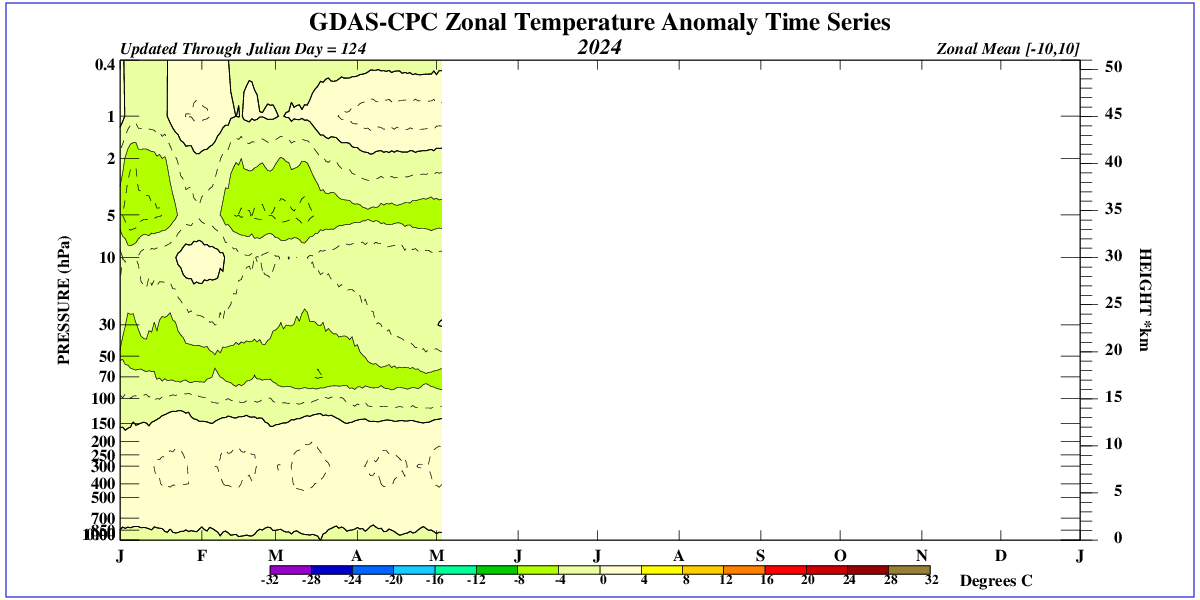
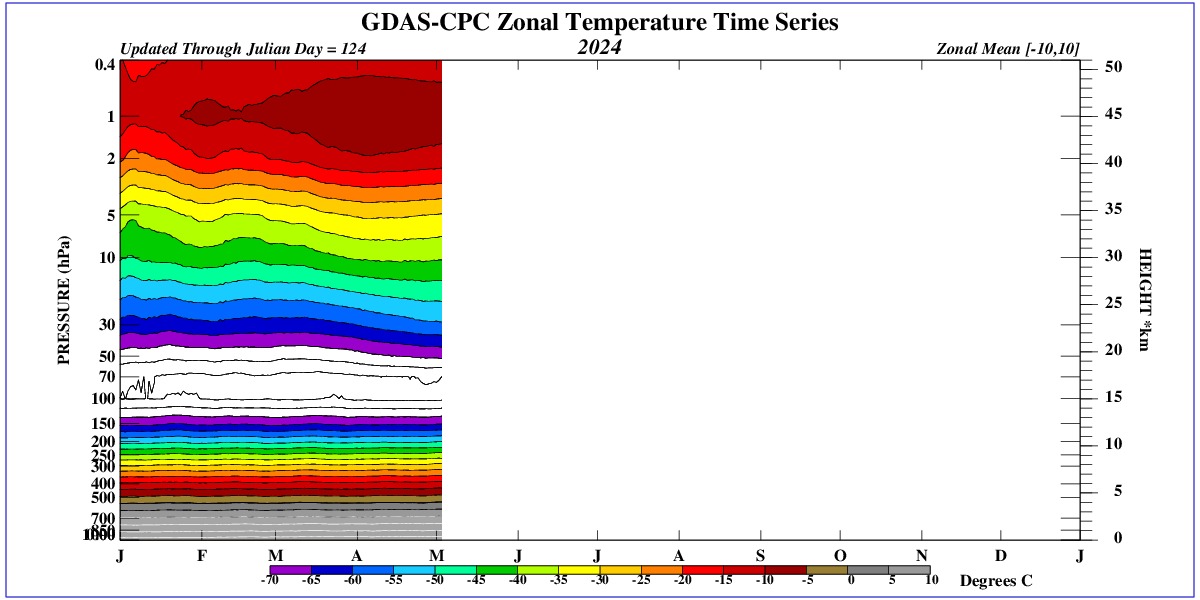
Note the anomalies near the surface at the equator up to 1 km altitude.
What is the meaning, exactly, of “undercooled”? If something, anything is “under” it is less so … and if anything is “over” it is more so. So “undercooled” should mean “less cooled” or alternatively, “more heated”.
Why not use plain English, as in, the seas around Germany and western/northern Europe are cooler than average for this time of year?
It is hotter than hell, just to the east.
Here in east Texas, summers are known to be warm and a bit humid. We somehow survive. Before air conditioning, people lived here, too.
Humans, like bears and other successful animals, are quite adaptable. If there really were changing climatic conditions, we would survive.
Currently, there is a big patch of cold below Iceland.
https://www.ventusky.com/?p=63;-21;2&l=temperature-500hpa
https://www.ventusky.com/?p=58.0;-19.3;3&l=temperature-850hpa
For what it’s worth, I spent eight days on the Baltic coast of Germany in June (15th to 22nd). Most days were pleasantly warm but there definitely wasn’t a heatwave (thank goodness).
However, I notice that this fellow is forecasting temperatures above 30 degrees C in some parts of Germany.
https://www.wetter.com/videos/deutschlandwetter/wetter-heute/56cba782217091ab20000030
But a forecast and what actually happens are not always the same.
The Northern Hemisphere cool anomalies for 2024 can most likely be attributed to the massive Canadian wildfire of late 2023.
And the peak of Transmission loss occurred at the inflection point of the summer solstice.
The piper will have to be paid this winter.
Note: Atmospheric Transmission has a missing segment from 2022-2023, because of the Horrific fire in Hawaii that damaged the monitoring system for Mauna Loa, and it was offline for a year and had to be moved. So, we more than likely missed the window in which the HT particulates, if any crossed the equator into the Northern Hemisphere.
The term “undercooled” is poorly defined in this article. Do they mean “insufficient cooling” or “supercooling”, as WIKI defines it? I find it very confusing and therefore poorly written/edited.
Idem! something colder can’t be UNDER cooled, – under cooled in proper English means it’s too HOT!
Being as I know the Baltic states pretty darn well, I can assure you the Baltic sea this year is a little COOLER than normal, while down here in France an alternation of 2 days of normal HEAT, 2 days of thunderstorms then 2 days of cool, + record amounts of rain for the last 8 months means this summer is basically totally screwed up!
As for the UK, it’s not warm by any stretch despite the mass media declaring a dangerous heat wave the moment the thermometer approaches the high 20s!
There’s nothing quite like the UK for weather hysteria – in winter the “beast from the east” deadly cold blasts and 2 flakes of snow – stay at home hype!
+
In summer we’re all gonna die it’s so hot!