By David Wojick
The grid was not built to run on “renewables”, and this simple fact is becoming clear at PJM, which is America’s biggest Regional Transmission Operator. To mix metaphors, the renewables stampede is swamping PJM, so the stampede is bogging down. This is good news.
By way of background, PJM once stood for Pennsylvania, New Jersey, and Maryland. It was a voluntary utility group formed after the huge blackout in the late 1960s. Today it manages the grid as far south as Virginia and west to Illinois, serving about 65 million people in 13 states, including me. Central megalopolis if you like.
PJM’s key role in this story is called “interconnection”. Any utility or independent power producer can build a wind or solar generating facility, but PJM has to approve its connection to the grid, without which it is useless.
Before approving a new connection PJM rightly conducts a grid impact analysis. This means modeling the operation of the grid with the new generation active, to see what problems it might cause. They also determine what transmission upgrades will be needed and bill the owner of the generator accordingly. This is basic grid management.
The renewables stampede has swamped PJM to the point where they have stopped approving new connections. The numbers are indeed staggering.
As of March PJM reportedly had an overwhelming 2,649 active projects in its generation interconnection queue. Almost all of these are wind and solar, and many are small.
Even more ridiculous is the amount of generation involved. PJM’s total installed electric generation capacity is approximately 192,000 MW. A lot of this is seldom used minor stuff as they only peak around 150,000 MW, which is just a few times a year.
In contrast, the stampede queue totals around 259,000 MW or nearly double the present peak need. Adding this monstrosity to their present capability gives an incredible 451,000 MW.
There is simply no way to assess the potential impact of this much intermittent nonsense. PJM is used to assessing the incremental addition of small numbers of reliable power plants. Most of these are relatively large, built to serve specific loads, and located near suitable transmissions.
In contrast, this glut of renewables is mostly located where the developer can find the land to build on. Neither need nor transmission is considered. In fact, since the land required is large, they tend to be located very far from urban load centers.
The first thing PJM did was to throw up their hands. They declared a two-year moratorium on approving new connections while they considered how to deal with this impossible stampede. Several steps are now being tried over a four-year go-slow trial period.
First, they are restructuring the connection application queue from first come, first served, to taking those projects that look ready-to-build first. Second, they are trying to bundle groups of these projects into clusters for purposes of assessment.
Whether these steps work remains to be seen, but in the interim, connection approvals are likely to be slow, as they should be. The grid does not need a stampede.
The transmission upgrade issue also looms large. According to one study, average interconnection costs for active projects rose from $29,000/MW to $240,000/MW between 2017 and 2022, an eightfold increase.
This huge jump is due to the remoteness of renewables. While the transmission upgrade costs for gas-fired power plants run around $24,000/MW the cost for renewables ranged from $136,000 to a whopping $335,000, or fourteen times gas.
Not surprisingly, these huge upgrade costs have rendered many wind and solar projects financially unworkable, which is how it should be. Those promoting the so-called energy transition have ignored the need to rebuild the grid along the way.
I am sure that PJM’s problems are universal. The renewables stampede is both costly and unmanageable since it requires rebuilding much of the power grid. The actual engineering is going to slow it way down, and that is a good thing.
Author

David Wojick, Ph.D. is an independent analyst working at the intersection of science, technology and policy. For origins see http://www.stemed.info/engineer_tackles_confusion.html For over 100 prior articles for CFACT see http://www.cfact.org/author/david-wojick-ph-d/ Available for confidential research and consulting.
You can explore more issues with Intermittent Wind and Solar at our ClimateTV page
I wonder if the capacities quoted are nameplate or expected deliverable? Or do they have to model the nameplate regardless?
They are nameplate, which they produce from time to time, especially solar. Intermittency is almost impossible to model because it is chaotic, an aperiodic oscillator.
“Intermittency is almost impossible to model”
Wow, something like that is impossible to model- yet some people think that they can model the climate of the entire Earth!
It’s certainly fine to try but smart to not take the model too seriously.
Climate models are fiction, human attempts at measuring and predicting a chaotic system. Climate models are mathematical coded fabrications, simulations. Built upon mechanistic ideology, the belief that science can measure all phenomena, observe and “fix” every perceived “problem”.
There are unknown unknowns that immediately discredit the models.
The problem that has been discussed here, is the green policy are based entirely on the models. Without modelling CAGW immediately collapses.
While it is impossible to predict the motions of an individual molecule of air, I can safely predict that a mass of air that is colder than the surrounding air will sink and air that is hotter will rise.
The reason why we can’t predict weather and climate is because our understanding of most of the forces that go into making climate and weather are poorly understood. We don’t even know if we have figured out what all the forces are.
And all models predict (as the amplified CO2 climate change hypothesis demands) tropospheric hot spots. All measurements show no such hot spots exist in the troposphere. The hypothesis fundamental to CO2 warming amplification as reflected in UN IPCC CliSciFi climate models has been falsified by experimentation.
The fact that official scientific bodies continue to insist that the CO2 amplification hypothesis is valid shows just how corrupt official science has become in Leftist academia, venal politicians, politicized Deep State operators, Marxist NGOs and crony capitalist profiteers. Every Western government is boldly lying and everyone involved knows it to lesser or greater extents.
D.J. Hawkins,
a grid connection to a renewable has to be sized for the maximum possible output, i.e. name plate, the fact that very rarely occurs means an expensive grid tie that will be very much under utilised and hence expensive.
Yes, and all the windmills and solar have to have conventional powerplants filling in for them when they can’t produce sufficient electricity when the wind doesn’t blow and the sun doesn’t shine.
So, in order to make use of windmills and solar, our power grids have to build twice as much capacity as is needed, in the form of conventional backup generators, which means our grids will be much more expensive using windmills and solar verses not using windmills and solar.
When will our leaders figure this little wrinkle out?
Since the conventional power plants that must fill in for the unreliable intermittent renewables will not be located in the same places as the renewables, the transmission capacity will have to be built to follow that also. Ka-ching!!!
FF, hydro and nuclear power plant owners should be suing ruinable generators for recovery of the costs of supporting their unreliable and unstable operations.
Why couldn’t the interconnection company require wind and solar to throttle their production when it gets too close to those rare peaks? E.g., either stop some of the wind turbines or adjust the blade angle to catch less wind.
This pertains to renewables, but OT a bit, however maybe Willis could have a look at this –
Green Datacenter | Data Center Services | Switch
This ‘green’ data center claims to use 100% renewables – but no solar panels or turbines to be seen. The design of the place, they have a lot of HVAC units that look like heat exchangers. They talk about ESG and all kinds of sustainability, seems like some greenwashing? It seems to be one of several internet hubs.
Most such claims are based on buying green certificates saying renewable juice was made somewhere, sometime.
I have inspected data centers, both during construction as a Building Inspector and after as a Fire Inspector(Marshall). The picture is not showing the back up generators and UPS with batteries for the short period between power failure and generator start up. A building that large would need BIG battery banks.
These centers produce a massive amount of heat in the data processing racks, thus the massive refrigeration equipment as shown, and can not go without POWER.
I also like the way they show that the building is surrounded by a gravel yard and inner and outer walls for security. That is REAL for a remote center like that one.
In downtown Las Vegas I was inspecting a high rise building and the neighboring multi story parking garage. My first walk around I found 4 generators. It turns out 1 generator was for the High rise emergency power and the other 3 were for 3 different data storage business. 1 in the High rise itself, and 2 separate ones in the garage. The 3 data centers each had UPS systems within the conditioned spaces and clean agent suppression systems with back up pre=action fire sprinkler systems.
Funny thing was 3 of the gensets were side by side by side, so someone renting space in two different data storage businesses could easily loose their data from one small explosive device. Or maybe even just an EV parked next to the enclosures. But I repeat myself.
Like every land rush, people will be picking up the pieces and repairing the unanticipated damages for decades. The old rules still apply: Get in early, earn bundles and get out ahead of the creditors and police.
My son’s employer burns methane and sells CO2 credits, mostly to companies in California, but anybody who needs them for their green bonafides. I think these data centers may be buyers, wherever they are.
Great job. Are other regional interchanges in the same boat? Most of the PJM projects should be mountaintop or coastal wind. The necessary transmission lines are going to ruin a lot of lovely, pristine wildlife habitat. I can hardly wait for the local environmental groups to see that.
They should be but I have not heard much, except the New England ISO saying 4,500 miles of upgrades needed to handle the proposed offshore wind. A good research topic.
One of my forestry clients in central Woke-achusetts was ready to lease all of his 20 acre forest to a solar company but the grid put a stop to it- apparently, also overloaded with nearby solar “farms”. Ticked me off that he wanted to destroy his forest for the money- which he hardly needs- he’s already an upper middle class retired doctor- so I dropped that guy as a client since I worked hard to manage a timber sale on that land a decade ago that left it in ideal condition.
Oh, rest assured; they are already reacting although some are being bought out (bribed). Its a lot harder to buy out everybody on a large transmission line project.
I am trying to find an article that I read in the last year but can not locate it as a bookmark or pdf I may have downloaded. The article was about renewable energy and the one thing that was different about this article was that the author several times gave the equations that governed various things. Such as the equations for solar cell efficiency and what governed properties of windmills along with comparing to Moore’s law, etc. Had lots of details and what would and would not work, costs, etc. Does this ring a bell? Could have been something I got from GWPF?
I have not seen such in one place.
Was it this?
Green Energy Revolution Can’t Meet America’s Energy Demands | Manhattan Institute
Yes! Thank You!!
A reference point. ERCOT in Texas is a lot smaller than PJM. It spent $6.9 billion over 3 years to build transmission capacity from wind in north Texas to the main population centers of Austin, DFW, and Houston. And the grid injustice is that the wind operators paid for none of it.
The PJM extra transmission cost would be orders of magnitude higher.
But, from the article, it sounds like they are very well positioned in one respect: it sounds like they are not obliged to connect, and they are also not obliged to provide transmission to the WS operators to get the power into the grid. If that’s right, it should lead to the WS operators being charged the full costs of connecting and using their supply, which will destroy their business cases.
Rud, OT but I’ve been thinking about our past discussions of the science establishment and Oregon State University not doing anything about the scientific fraud of Marcott’s 2013 Science paper. I came across a couple of sites that may help you and Steve McIntyre if you want to push your findings: PubPeer which allows people to anonymously post discussions if they want and Retraction Watch, including their RW Daily site.
They recommend also contacting their universities. I know you tried with Oregon State but Marcott moved on to a more prestigious school. They might be interested in his past research misconduct, especially considering the new emphasis on bogus research.
Grids are not designed for renewables, well said David.
The green blob need to understand the difference between Transmission and Distribution, it is clearly defined in the UK grid and of course the USA is a bit bigger.
https://en.wikipedia.org/wiki/Electrical_grid#/media/File:Electricity_Grid_Schematic_English.svg
Conversely, distribution is not designed for EVs.
And in many locations where gas is available and the need for aircon modest, they are not designed for heat pumps either.
Did a quick Google search. Oregon is about the same size as the UK, so yes, the USA is a bit bigger.
I know the sarc was implied, but I did the search anywho.
At a bare minimum any renewables should have sufficient storage on-site before being allowed to connect to the grid, enough to make them essentially the same as reliable dispatchable generation.
This link shows the US Transmission Line structure for 138 KV and above.
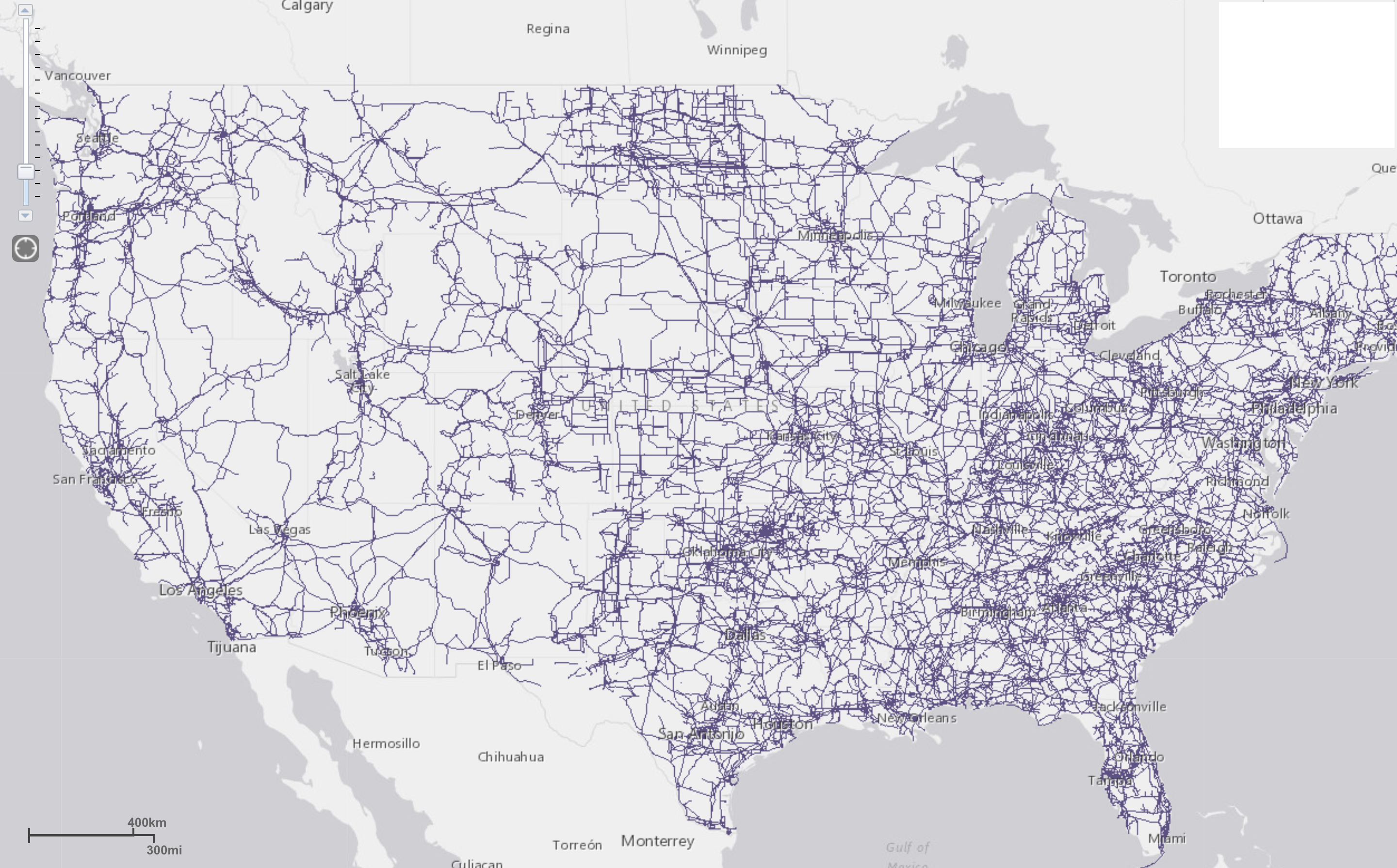
This link shows the power sources.
https://peguru.com/2018/09/who-controls-the-power-grid-in-usa/
Take note of the fact where conditions for massive amounts of wind and where massive amounts of Solar are available are lacking in transmission lines.
How many miles of Transmission Lines are needed to make the left side of the map look like the right side of the map?
How many miles of the lower voltage Distribution Lines are needed to complete the collection of “Distributed Generation” to the Transmission Lines?
How many legal battles will there be to finish the project?
How many trillion dollars is the total sum?
Good, Better, Best
If PJM allows that massive dead weight dark energy, aka renewables, to be plugged into the grid, three blessings will occur, aside from saving the planet:
1.- At most, less than 30% of all those unreliables will go into the grid. The rest, even if plugged in, will be lost along with consumers’ money. Good!
2.- Cancel or curtailment orders as well as capacity payments will go through the roof and, consistently, electricity bills will skyrocket. Better!
3.- Some CO2 molecules, if any, will be prevented from escaping into the troposphere but only if huge combined cycle gas power capacity is available to backup those pointless and expensive beauties. Best!
I hope PJM continues to have the courage to say NO.
pjm.com]
The essential elements of the capacity market are:
This chaotic situation is a typical result of a command economy. Western nations have morphed from demand to command economies in their blind obsession with net zero. Mao’s Great Leap Forward come to mind.
Indeed. Suddenly the government is in charge of everything. How did this happen?
One little step at a time.
David.
Very nice post. I wonder about the other interconnectors…[Western, ERCOT]
And
“How did you go bankrupt?”
“At first, slowly. Then all at once”.
[paraphrase: “How did the grid collapse?” … ]
Slightly OT: I just got 2 bids to install a whole house Generac 22KW
generator [in Arizona]: $19.2 & $19.6k. Ouch!
Just walk outside and see how much that $19+k hurts in comparison, depending on time of day and actual elevation in AZ.
Actually communism, facism, and socialism all rolled into one big government.
Don’t forget Marxism’s Critical Theory: There are only two classes, victim and oppressor. Pick your own mode of victimhood and us old, white, heterosexual, capitalist males will serve as the handy oppressor every time. I’ll begin caring about that Leftist crap when a mile-high Feminist Glacier pushes over my Las Vegas home.
STORY TIP: Here’s What Our Climate Overlords Fail to Understand About Fossil Fuels
Did a bit of research. PJM is actually in an awful position compared to ERCOT. They manage the PJM service area wholesale electricity market via their transmission system. But unlike ERCOT, they don’t own any generating assets. Those are owned by their utility ‘customers’. So they suffer the grid reliability problems of renewable intermittency but do not have the ability to provide needed backup generation.
Rud, PJM makes capacity payments to those who guarantee delivery up to three years in advance. The penalties for not providing power when demanded are pretty steep, and serve as an incentive for folks to provide generation. During the recent cold snap in December, it was a close call, but they were able to call on sufficient capacity to avoid blackouts. I believe it differs from ERCOT in that regard
“PJM is actually in an awful position compared to ERCOT.”
Well, yes. They have a lot less W&S in their system, possibly because they take a while to get around to looking at applications. So they have a higher burden of fuel prices.
But what they do is to run a capacity market. That pays generators to guarantee future production. They do it to an extent that some say amounts to a subsidy to FF.
It’s hardly a subsidy, and capacity payments are not limited to fossil fuels. Anyone who wants to guarantee that they will provide X amount of power three years in the future on a given date is welcome to bid into the capacity market. The fact that fossil fuels and nuclear can commit in advance, and intermittent sources cannot, is hardly a subsidy to the reliables. Quite to the contrary, they are making a commitment that means that my lights stay on. I pay for those capacity payments in my electric bills, and it’s one fee that I am happy to pay, so I have power when I need it most.
They try to pay generators so that, in an emergency, they could call on enough extra power to get out of trouble. That can go wrong in two ways
The policy is a good one. But if it veers off into either of those directions, it becomes a subsidy.
Nick, if only ERCOT had done that during the 2021 Winter Storm Uri, wed wouldn’t be hearing about how thermal sources failed and not Wind & Solar. What we do know form this event is that ERCOT needs to invest 35+ times its 2021 investment amount to replace thermal with wind and solar.
How doyou square that subsidy-based circle jerk, and still have failures amounting to ~200-250 deaths?
I’ll wait for your response.
You realize in the regulated environment we used to have, regulators allowed sufficient “slack”, i.e., overprovision of capacity. That slack was included in the rate base. It allowed for peaks and failures. That is why generation caused blackouts were unheard of. Most blackouts were caused by transmission/distribution failures. Primarily weather related damage.
Moving to a “market” system has done away with the ability to manage generation in a coherent manner. Unreliability has been tossed into the mix without an adequate protocol to deal with it’s unanticipated occurrences. The fact that FF generation can operate 99% of the time for decades is not a subsidy, it is just a fact.
Requiring unreliable generators to guarantee generation for some period of time into the future is not a penality. It is a simple admission that CUSTOMERS require this. I never hear you discuss CUSTOMER needs and how to meet those needs, only what the unreliable generators desire.
You are peeing into the wind right now. At sometime in the future customers, acting as the wind, will begin to revolt and blow back through voting people who will require generators to provide reliable power. At that point, wind and solar will become too expensive to compete. Sadly, the grifters will have already reaped trillions from poor, and middle class customers, and will move to another scam when this one fails.
I worked in the utility industry in the original PJM region when a major condition of having an electric utility monopoly was to provide reliable power to all customers. Meeting this condition necessarily required some level of over-capacity, usually 15% of anticipated peak load, because there is always the possibility of losing a unit to an unexpected problem. Most companies I knew seemed to keep old units operational even if they only operated 10-20 hours a year, because that was when they needed them the most. (This was not as expensive as it sounds as most of these old units were in plants with newer units, so the staff and fuel was there anyway.) i don’t remember any blackouts of any length during my employment.
30 years ago, I left home in an area served by the PJM and moved to an area served by the MidWest ISO. For the first twenty years i experienced fewer than 5 outages long enough to cause any concern. Typically, they were the type caused by car accidents. [They were so uncommon that they were News] Then the NPP I was working for was shut down as management decided “The Future is in Renewable Energy.” Since the transition to more than 30% of the power being supplied by Wind and Solar the number of outages has increased to over five a year that are of definite concern and over half of them happen on perfect weather days. No “Severe Storm Warnings,” major sections of the service area without power for four to eight hours – caused by the power purchasing personnel trying to find power from another utility. And a few that were back about the time that I got the Generator gassed up, Started and extension cords to the Fridg, Freezer and Cable box/WiFi and cordless phone hub.
When the Utility servicing YOU has more than 30% Renewable get ready for the new life style. It will be as described above until the utility has enough storage to provide electricity to the majority of their area for more than 12 hours. That will only reduce the mentioned problems it will not prevent the three outages in the last ten years in large portions of the Service Area, which lasted over 10 days.
P.S. To save headaches and phone service buy an Uninterruptible Power Supply (UPS) for the sole purpose of providing power for your Cable box, WiFi, telephone – if cordless and NWS Weather Alert. Get one that has a built in cell charger.
You keep saying or implying that installing wind and solar reduces fuel costs. But you have never produced any studies, not even a one page spreadsheet of your own, to evidence this.
I don’t believe it, but am open to looking at a piece of proper analysis showing it. I keep asking however, and never get an answer.
What you have to show is that a combination of wind + solar + gas has a lower cost over its life than a conventional plant. Either gas or coal or combination.
And that means when ALL of the costs are taken account of, and discounted in the usual way, including transmission. Basic cash flow analysis, the indicative number will be the NPV of the cash flows over the life of the system.
Its a case of put up or shut up.
Any country that has had even a smallish wind infection..
… has had rapidly increasing electricity costs.
Not just countries but any grid. Nick prove us wrong with real world examples.
“Back-up cost provision” is a term / column that gets automatically deleted from renewable acolytes’ LCOE analyses.
Its in fact somewhat Orwellian to refer to the gas facilities in these hybrid systems as being ‘back up’. They are an integral part of a hybrid system.
There is nowhere, anywhere in the world, that a pure W+S system is being deployed. It would be impossible to do. In all cases its a hybrid system. Without the gas component, switching on and off as the wind and sun vary, there would be no usable product.
This is not backup. Backup is when a hospital or phone exchange has a diesel generator which kicks in during a power outage. The gas in W+S systems kicks in all the time, probably daily much of the time.
So when you read that renewables have contributed some large percentage of supply, its a misrepresentation of the situation. What has happened is that its supplied all right, but its drawn in with it whatever the gas component is.
The more wind and solar you install, the more gas you will have to install, and the more gas you will burn.
Add to that the subsidy cost/cost avoidance being ignored by LCOE.
“That pays generators to guarantee future production.”
Which wind and solar can NEVER do. !!
Not a subsidy, just that they want RELIABLE supply !
I wonder whether it is reasonable to rate proposed suppliers by median predicted generation instead of average or total. Medians are often used to get a more realistic view, such as for wealth where a few very wealthy individuals distort the picture.
Every single solar farm would rate zero on an hourly basis. So they can all be refused connection quite easily.
Yes, the thing is that when you have extreme intermittency as in wind generation its actually misleading to speak of the total amount of power generated, expressed as any sort of aggregate or average.
The wind and solar systems are in fact hybrids, they are a combination of wind and rapid start gas. Without the gas the wind installations would not generate anything usable.
The right way to manage connection is very simple: set standards which anyone connecting must meet, with financial penalties for failure to meet them. Whether its wind, solar, gas, nuclear, coal – the technology is immaterial. The standards should specify the parameters of supply, including consistency, scheduled downtime. Points of delivery.
When a wind or solar operator is confronted with the requirement to deliver reliable power to the same parameters met routinely by gas or coal operators they will find they have to install gas generation duplicating their wind and solar, also very expensive transmission to the interconnect points, and their business cases will blow up in their faces. The requirements need to be not only on the low end, but also on the high end. No constraint payments. If you are generating too much, your problem, deal with it. If your wind farm is off shore someplace hundreds of miles from demand centers, get it to somewhere useful.
Wind and solar are not economically viable technologies. The only way people get away with installing them is by extracting government subsidies to cover a lot of the costs.
The use of a “mean”, in this case, generation, requires that one also has a distribution from which to calculate the mean. That distribution also has a variance. When average supplied power is shown, the variance of that distribution should also be included so the distribution shape can be adequately understood. Traditional baseline generation will have a mean of 99% and a Standard Deviation of ± 0.99%! Something W+S will never have.
No doubt the alarmists will just pass a law requiring PJM and other grid managers to just accept any renewable energy applicants. Can’t let something as trivial as reality get in the way of saving the planet.
As to costs, they will also demand that existing fossil fuel plants be charged those costs. How better to prove their claims that renewables are cheaper than fossil fuels.
If the existing fossil fuel plants are charged for the costs of the transmission upgrades needed to support wind and solar, then we could witness a situation where the Levelized Cost of Electricity (LCOE) for fossil fuel plants begins to rise dramatically, thus adding more pressure on the utility regulators to close them down even faster than the Net Zero transition calls for.
As more and more costs are carried by fewer and fewer fossil fuel power plants, then we might witness a LCOE critical mass of plant closures which quickly sends the reliability of the power grid into a tailspin from which there is no recovery except for imposing drastic energy conservation measures on all electricity consumers.
The faster they close the plants the sooner blackout rationing occurs, especially if they fail to have a replacement pipeline of dispatchable capacity.
As Ron White puts it “you can’t fix stupid”. Worse yet without the government subsidies there would be none of this stupidity.
Build new fossil fuel and nuclear generators and remove wind and solar from the grid.
Well no you don’t want to remove existing wind and solar from the grid but simply demand the level playing field grid supply from them. ie 24/7/365 with FCAS and not the dumping they enjoy now.
Yes, remove the windmills and solar. They are a blight on the landscape. They are an expensive, unnecessary, affront!
I am sure that PJM’s problems are universal.
Definitely like Australia’s vast NEM grid covering Qld NSW Vic Tas and SA-
“The Australian Energy Market Operator’s (AEMO) 2022 Integrated System Plan (ISP), published 30 July 2022, provides a 20-year plus forecast of the NEM’s infrastructure needs. The ISP shows we need more than 10,000 km of new transmission lines and 9 times the large scale renewable generation we currently have. It recommends key transmission projects to keep the NEM reliable and secure.”
Delivering priority transmission projects | energy.gov.au
Such grids run into diminishing returns with renewables as the early bird unreliables grab the low hanging fruit. Right from the start all generators require a level playing field with supply to the communal grid in the interests of end consumers. That means unless generators can reasonably guarantee their electrons 24/7/365 along with FCAS then they can keep them for themselves.
Yes that’s you too all the residential rooftop solar owners but you know home batteries don’t pay and even with them you wouldn’t have any spare reliable electrons to supply anyway. That’s a lot of voters for the climate changers to fess up to they got it wrong with unreliables and the real costs so the myth of cheap renewables lives on except in struggletown’s electricity bills.
Story tip.
Renewable insanity in Scotland. In the UK Telegraph:
Almost 16 million trees have been chopped down on publicly owned land in Scotland to make way for wind farms, an SNP minister had admitted amid a major drive to erect more turbines.
Mairi Gougeon, the Rural Affairs Secretary, estimated that 15.7 million trees had been felled since 2000 in land that is currently managed by agency Forestry and Land Scotland (FLS) – the equivalent of more than 1,700 per day.
And why are they doing this, you wonder? The SNP (its them that’s doing it) explained:
A spokesman said: “Renewable energy generated from wind farms is a key element in Scotland’s response to the climate emergency and the shift towards net zero and the infrastructure on land that we manage generates enough power for 600,000 homes.”
Morag Watson, director of policy at trade body Scottish Renewables said: “The volatile price of imported gas has left energy consumers suffering some of the highest prices in living memory, alongside a climate emergency which means cutting the amount of carbon we emit as quickly as possible.
“Building new wind farms – the cheapest form of power generation – tackles both problems at once.”
Oh, I see. Its tackling the climate emergency.
They are making a desert and calling it saving the planet.
“The stupid – it burns”
A couple of years back the estimate was 14m trees. So almost 1m a year seems to be the going rate. How long can this continue before they’re all gone?
Plus, I thought planting trees was seen as some way to ameliorate ‘the crisis’.
“I am sure that PJM’s problems are universal.”
I do not know the situation of all regions, but a little spec of this globe called “the Netherlands” is indeed seeing this problem. In some parts, new solar parks are not allowed anymore because the grid cannot handle it. In other parts, companies now have to wait 5~10 years to get an extra connection which they would need for expansion. Getting a new company connection to the grid in some parts also takes 5~10 years. All because the current grid cannot handle it.
If you know some Dutch, you can see the size of the problem here:
https://capaciteitskaart.netbeheernederland.nl/
In case you do not know Dutch, red and orange in the picture of the above link means “problem”.
This is called “Running into the Reality Wall”.
In the UK the grid is saying it can take 10 – 15 years to connect new generation to the network.
there is nothing wrong with the grid, after all it is a simple mesh connection of generators to consumers. It is renewable generation that is unsuited to grid supply for several reasons.
“I am sure that PJM’s problems are universal.”
This topic has been getting some attention recently in the UK. A long technical article here: Fixing grid connection delays needs major regulatory reform – Watt-Logic
Government solution to reality: Regulate the queue and all related analyses and conclusions. Mandate outcomes and times. Levy fines and taxes. Pay subsidies.
David
It is great to see this misused word appropriately qualified
This is the essence of false advertising for wind and solar energy collectors. A better term would be energy wasters because they consume more energy in their implementation than they can produce over an operating lifetime. The world”renewable” is sad joke on the gullible who do not understand sustainability.
The point you miss here is that the guaranteed capacity from wind and solar is precisely ZERO. If you expect to get more than ZERO over a small region spanning a couple of time zones then you do not understand that wind can be nothing and there is no sun at night.
I optimised my solar/battery system for minimum price to serve my daily load air above 99% reliability and the solar panels operate at 3.9% CF. Anyone expecting better than single digit CF for an entirely weather dependent grid is incompetent. So the stated 259,000MW of non-dispatchable capacity is equivalent to about 25MW of average capacity if there is around 1200,000MWh of storage. Less storage would mean lower CF.
Making the present Electrical Grid provide necessary power to the Electrical consumer will be as difficult as taking a freshly made Spider web and turning it inside-out without breaking a single strand in the web.
The present electrical grid has been designed to take the power generated from the center of the web and send it out to the consumer. Incorporating Renewables will mean taking the power that is now produced in the outer peripheral portion of the service area and send it to every other substation. The problem is, that every one of those spider web spokes have “Reverse Current” breakers on them. The RC Breakers are going to trip as soon as the current reverses direction trying to send Wind/Solar power from the outer peripheral area to those in the center will get no power. There is not enough area where the present power generating stations are to place the Wind/Solar farms where they were. You are talking tens of square miles that has less than one square mile open, even after removing the power plant. The cheapest way, which will cost double of what is already there is to build parallel distribution in the opposite direction Get ready fo a doubling of your Electric Bill. Obamas prediction will come true. The cost of electricity will Skyrocket – to the moon!
PJM should expect lawsuits for delaying the “transition” to cleaner energy It can only get worse. No one ever said that saving the planet by making electricity more expensive was going to be easy. The statement was something to the effect that “electricity prices would necessarily soar”.