Guest Post by Willis Eschenbach [see update at end]
Over at the marvelous KNMI website, home of all kinds of climate data, they’re just finishing their transfer to a new server. I noticed that they’ve completed the migration of the Climate Model Intercomparison Project 6 (CMIP6) data to the new server, so I downloaded all of the model runs.
I thought I’d take a look at the future scenario that has the smallest increase in CO2 emissions. This is the “SSP126” scenario. KNMI has a total of 222 model runs using the SSP126 scenario. Figure 1 shows the raw model runs with the actual temperatures.

Figure 1. Raw results, 222 model runs, CMIP6 models, SSP126 scenario
So here, we have the first problem. The various models can’t even decide how warm the historical period was. Modeled 1850-1900 mean temperatures range all the way from twelve and a half degrees celsius up to fifteen and a half degrees celsius … hardly encouraging. I mean, given that the models can’t replicate the historical temperature, what chance do they have of projecting the future?
Next, I took an anomaly using the early period 1850-1880 as the anomaly baseline. That gives them all the same starting point, so I could see how they diverged over the 250-year period.

Figure 2. Anomalies, 222 model runs, CMIP6 models, SSP126 scenario
This brings up the second problem. As the density of the results on the right side of the graph shows, the models roughly divide into three groups. Why? Who knows. And by the time they’re out to the end of the period, they predict temperature increases from what is called the “pre-industrial” temperature ranging from 1.3°C up to 3.1°C … just which number are we supposed to believe?
Finally, the claim is that we can simply average the various models in the “ensemble” to find the real future temperature. So I compared the average of the 222 models to observations. I used an anomaly period of 1950-1980 so that the results wouldn’t be biased by differences or inaccuracies in the early data. And I used the Berkeley Earth and the HadCRUT surface temperature data. Figure 3 shows that result.

Figure 3. Global surface temperature observations from Berkeley Earth (red) and HadCRUT (blue), along with the average of the 222 climate models.
This brings us to the third and the biggest problem. In only a bit less than a quarter-century, the average of the models is already somewhere around 0.5°C to 0.7°C warmer than the observations … YIKES!
And they’re seriously claiming they can actually use these models to tell us what the surface temperatures will be in the year 2100?
I don’t think so …
I mean seriously, folks, these models are a joke. They are clearly not fit to base trillion-dollar public decisions on. They can’t even replicate the past, and they’re way wrong about the present. Why should anyone trust them about the future?
Here on our forested hillside, rain, beautiful rain, has come just after I finally finished pressure-washing all the walls, including the second story … timing is everything, the rain is rinsing it all down.
My warmest regards to all, and seriously, if you believe these Tinkertoy™ climate models are worth more than a bucket of bovine waste products, you really need to sit the climate debate out …
w.
Update: Rud Istvan, a valued commenter, pointed me to look at the INM climate model since it agrees well with the observations. When I took a look, I found an excellent example of the fact that past performance is no guarantee of future success …

Figure 4. Model runs from two versions of the INM-CM model.
As you can see, they both do an excellent job hindcasting the past, but give totally different versions of the future.
Further Reading: In researching this I came across an excellent open-access study entitled “Robustness of CMIP6 Historical Global Mean Temperature Simulations: Trends, Long-Term Persistence, Autocorrelation, and Distributional Shape“. It’s a very thorough in-depth examination of some of the many problems with the models. TL;DR version: very few of the model results are actually similar to real observational data.
In addition, there’s a good article in Science magazine entitled Earning The Public’s Trust on why people don’t trust science so much these days. Spoiler Alert: climate models get an honorable mention.
As Always: When you comment please quote the exact words that you are discussing. This avoids many of the misunderstandings that plague the intarwebs.
If only we had a peer reviewed accredited group of climate realists to debate , combat or refute the other so called ‘peer’ reviewed climate alarmists .
Sadly the alarmists have or are making so much $ and political gain from alarmism only reality will wake the voters minds up to think for themselves regarding weather / climate /economy .
“only reality will wake the voters minds up to think for themselves regarding weather / climate”
We need about a decade of cooling to really change the game.
We might get a decade of cooling, too, if we go by historical, written records which show the climate is cyclical and warms for a few decades and then cools for a few decades and then repeats the process.
If history is a guide, then we may have started into the cooling phase of the cycle. Time will tell. But one thing is for sure, CO2 in the atmosphere is increasing, yet the temperatures have cooled 0.7C since the highpoint of the 21st century. That’s just the opposite of what alarmists claim should be happening when CO2 increases.
w. ==> You forgot to remind readers that when the models are run, there is code that throws out all the outliers — the runs that produce temperatures that soar towards infinity or fall to absolute zero. What you see above in your graphs are only those runs with results that seem “reasonable” to the modelers and their handlers.
Kip — your observation was certainly illustrated in Stainforth 2005 ClimatePrediction dot net Nature paper.
They tossed out all the runs that unaccountably showed cooled climates with rising CO2.
Which was said to be, “due to known limitations with the use of a simplified ocean (see Supplementary Information).”
The simplified ocean somehow was no limitation on the accuracy of the warmed climates, however. Nature’s reviewers evidently agreed.
Pat ==> If you haven’t read the ‘Chaos Theory required reading list’ , you’ve cheated yourself. Absolutely mind-changing concepts which explain a great deal of the mystery pf things.
I’m sure the list is in one of my essays on Chaos here at WUWT.
Troposphere temperatures will still remain below average in March in North America. The polar vortex continues to operate. La Niña will become active in May. As solar activity increases, hurricane activity may increase, both in the western Pacific and Atlantic.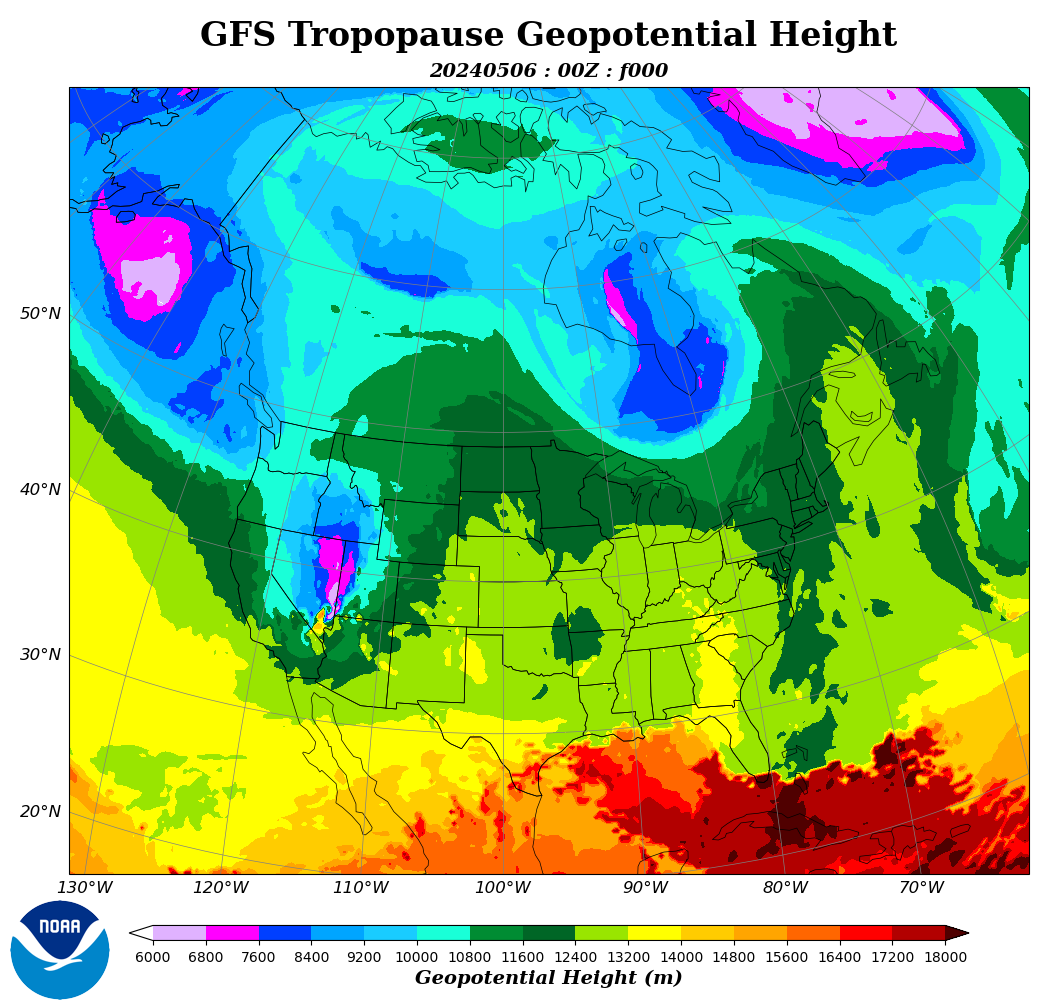
https://www.longpaddock.qld.gov.au/soi/
This month, the forecaster consensus favors a slower decay of La Niña due to the recent renewal of ocean-atmosphere coupling, which contributed to cooler near-term forecasts from several state-of-the-art climate models. For the summer and beyond, there is large uncertainty in the state of ENSO; however forecasters lean toward negative Niño-3.4 index values even if the index does not reach La Niña thresholds. In summary, La Niña is favored to continue into the Northern Hemisphere summer (53% chance during June-August 2022), with a 40-50% chance of La Niña or ENSO-neutral thereafter; click CPC/IRI consensus forecast for the chances in each 3-month period).
https://www.cpc.ncep.noaa.gov/products/analysis_monitoring/enso_advisory/ensodisc.shtml
“Also, La Niña three-peats (triple dips?) are very rare—only two exist in our more reliable historical record going back to 1950 and both occurred after major El Niño events, which our current event did not. The time evolution of the Niño-3.4 index for the two La Niña three-peats is featured in the darker blue lines in the image below. It is also interesting that out of the eight double-dip La Niñas in our historical record, three ended up evolving into an El Niño for the third winter (red lines) and the remaining three ended up on the cooler side, close to La Niña thresholds, but were ultimately classified as ENSO-neutral winters.”
Amazing. The models are trained using past temperatures. And having seen the answers they still cant get the past correct. But this in no way affects their ability to predict the answer the model builders will accept.
What if a climate model said temps were going to increase 100C? The model builder would change the code until a more reasonable result was delivered. And it would be the model builder that determined this was the correct answer regardless of how buggy or error ridden the code might be.
As such models do not predict the future. They predict what the model builder believes the future to be.
Computer models like these with so many parts with missing physics are basically just the modellers beliefs or opinions dressed up in computer code.
Lipstick on a pig.
In the absense of test data there is no way to validate or verify a computer program that predicts the future.
Further there is no mathematical solurion known to the n-body problem which is the equivalent problem to the n dimensional chaos climate model are trying to solve. All current methods diverge from rather than converge on the correct answer.
This result is well known outside of climate science, where peoples jobs do not rely upon finding the wrong answer.
Really? You all are *still* trying to pretend away climate science with your pseudo-scientific clap-trap? What a disgrace to our nation.
MGC March 18, 2022 10:40 pm
“MSC”, the disgrace is that in addition to not having the courage to sign your own name to your words, you have totally ignored my request to quote the exact words you are discussing.
As a result, we have no clue WHO you are referring to, nor WHAT you are calling “pseudo-scientific clap-trap”.
Let us know when you want to grow up and join an adult discussion of actual scientific issues. Until then, I’ll just continue to point and laugh.
w.
[snip. NO Barry, you do not get to hijack the thread and start a general discussion on the aspects of AGW and CO2. If you want to contribute to this post which is about the unreliability of climate models, that is the substantive and on topic, feel free. We do logic here, not shouting-cr]
It’s unfortunate that you feel the need to shield Eschenbach from three simple and impersonal yes/no questions. Were they outside the topic of climate change? Did they insult anyone? Isn’t Willis old enough to answer three simple questions on his own?
(Being on topic about the quality of the models in question was too hard for you to talk about?) SUNMOD
No Barry. We are being adults here and you’re arguing points tangential and unrelated to the topic because you want to prove how smart you are and how dumb we are in your mind.
There’s a long history in the AGW flame wars. You’re old, but naive and uninformed.
Sorry, but an “adult” discussion of science does not start by intentionally ignoring decades of scientific research that have led to a conclusion that you refuse to accept.
MGC, here’s how science works, since you don’t seem to understand the process.
Someone, say me, posts a variety of scientific claims, say about the CMIP6 climate model results released two years ago. To support these claims, someone, say me, provides all of the data, logic, and math that supports the claims and allows for replication of the claims.
Someone else, say you, quotes something that I’ve said, and uses data, logic, and math to demonstrate, not claim but demonstrate, that what I said is wrong. If you are successful, it will be obvious to all … and the same is true if you’re not successful.
However, although I’ve done part A of that process, you haven’t even begun to approach point B. Instead, you make the unsupported and insulting accusation that I’m “intentionally ignoring decades of scientific research” regarding the CMIP6 results.
Which were released two years ago.
It also seems you think that the CMIP6 results have led to some unspecified “conclusion” that I “refuse to accept” … but since I have no clue what that “conclusion” might be, that statement is meaningless to me.
Here’s a post regarding how to tear my results to shreds. Spoiler alert—you can’t do it by foolishly attempting to insult me. That just makes people point and laugh.
My regards to you, and seriously, you need to up your game if you wish to be taken seriously. READ THE POST BELOW, it tells you exactly how to show that I’m wrong.
w.
http://wattsupwiththat.com/2015/04/05/agreeing-to-disagree/
Willis,
Since the admins felt it necessary to shield you from my three simple yes/no questions earlier, I’ll try again while ensuring these questions are focused specifically on climate models.
Yes or no, please:
Looking forward to your answers. A total of three words, in fact, will suffice.
Three words will suffice? Sure. “Osculate My Fundament”.
After all the nasty things you’ve said about me, I am under NO obligation to answer any of your questions.
However, if you’ll allow me six words to answer your three questions, here you go:
• No Clue
• No Clue
• No Clue
Seriously, I’ve never investigated any of those models. And in a thread about CMIP6 models, they’re wildly off-topic.
But for fun, I just looked at the Exxon model.
Red line is Berkeley Earth observational temperature estimate, LOWESS smooth. Blue line is HadCRUT observational temperature estimate, LOWESS smooth
You ask if it’s “accurate against direct observation?
Nope. They’d have done better with straight-line extrapolation.
Regards,
w.
I suppose I should explain my comments in more detail.
I hadn’t been to the WUWT site in many years, for the more than obvious reasons.
When I stopped by this time, I couldn’t help but make a general comment on my disbelief in finding that you all are, after all these years, still blindly tilting at windmills; yes, still “intentionally ignoring decades of well verified evidence”, still making all kinds of fairy tale excuses to try to pretend away the overwhelming worldwide scientific conclusion regarding AGW, a conclusion based upon decades of well verified evidence researched by thousands of scientists from dozens and dozens of nations.
And now, specifically regarding the CMIP6 climate models:
There are radically different results of the CMIP6 climate projections published elsewhere; results that bear no resemblance at all to what you’ve shown here. See one representative link below.
One possible explanation for this massive discrepancy is that what you’ve shown here, which you describe as so-called “raw model runs”, is in some way an inaccurate representation of the actual climate models track record. Perhaps, in some way, intentionally inaccurate.
I can’t say for sure why your article shows such a massive discrepancy compared to published results seen elsewhere, but it is clearly there. What I can say for sure is that there are already some easily spotted errors in your article: for example, “SP126” is not the lowest CO2 emissions model scenario. SP1-1.9 is. One can’t help but wonder what other less easily spotted errors may also exist in your “analysis”.
https://cbhighcharts2019.s3.eu-west-2.amazonaws.com/CMIP6/historical_timeseries_obs_cmip5_cmip6.html
“CMIP6 model historical runs from 1850-2014 are combined with mean projections through 2019 across all available scenarios. One run is used per model. Solid lines show the multi-model mean, while the shaded areas represent the two-sigma range. Values in brackets reflect the number of models used in the analysis. Chart by Carbon Brief using Highcharts.”
That’s three time you’ve accused me of intentionally being inaccurate or ignoring evidence.
Piss off.
I don’t have any truck with slimeballs like you who accuse me of lying. I was brought up under what in my family was called “The Captain’s Code”, the rules of life of my great-grandfather, a Mississipi riverboat captain.
One of these rules was:
I’ve done my best to live by that. However, since it’s no longer the 1870’s, I don’t kill people for calling me a liar as you have done. Instead, I have to content myself with pointing out that you are a vile waste of valuable oxygen, that you are lower than pond scum, that your antecedents obviously had sexual congress with reptiles, that you are cordially invited to stuff your accusations up where solar panels don’t work, and that I will have NOTHING further to do with you.
Go be nasty to someone else. You’ve burned your bridges with me.
w.
Translation of Eschenbach’s lamentable screed:
“MGC pointed out that the CMIP6 climate model track record posted in this article has massive discrepancies as compared to other public records of the same datasets, and has provided evidence to back his statement.
Rather than try to understand or explain those discrepancies (as a true scientist would do) I’ll just post a litany of ad hominem attacks against him, in order to deflect attention away from having to address those discrepancies.”
One can also look back through the climate model track records in all the historical IPCC reports. Those also bear no resemblance to what you’ve posted in your article.
Thanks for great article! But I dont see the ‘actual’ (true) temperatures in Fig 1. Can you help?