The Impact of CO2, H2O and Other “Greenhouse Gases” on Equilibrium Earth Temperatures
By David Coe
The cries of Climate Emergency are becoming ever more strident. We are bombarded on a daily basis from almost every section of the media with stories of impending doom unless we take immediate and decisive action to prevent a climate catastrophe. This action includes the rapid adoption of a “zero carbon economy”. But what does this actually mean?
Carbon is the atom which, above all others, is the basis of life on this planet. Its unique atomic structure enables it to combine with other atoms to produce the amazing variety of complex molecules necessary for all forms of life.
Of course ,what is meant by “zero carbon” is actually zero carbon dioxide, the molecule which has been “fingered” as the demonic source of global warming, now known as climate change, climate emergency, climate catastrophe or whatever the next superlative tag can be attached to the word climate.
Just how does carbon dioxide come to be the instigator and chief cause of global warming? I say chief cause, because other gases are also in the frame as contributors, namely methane and nitrous oxide, for which the global agricultural sector is shouldering the blame, because of methane liberated by cattle and nitrous oxide from fertilisers. The story goes like this.
The atmosphere contains 400 parts per million (ppm), 0.04%, of carbon Dioxide (CO2) which is known to be a strong “greenhouse gas”. A “greenhouse gas” is one which is transparent to incoming solar radiation, but which is a strong absorber of outgoing infra-red energy radiated by a warming earth. The more CO2 in the atmosphere, the more outgoing radiation is absorbed and the warmer the planet gets. Simples!
Carbon Dioxide
Carbon dioxide just happens to be the vehicle for providing the carbon for the production of the complex organic molecules necessary for life, through the process of photosynthesis in plants which in turn provide the feedstock for all other forms of life. Without CO2 in the atmosphere there will be no life on earth. Photosynthesis extracts huge quantities of CO2 from the atmosphere on a seasonal basis. As a result, atmospheric CO2 concentrations exhibit a significant seasonal variation as shown in Figure 1, with the effect that CO2 levels undergo a rapid reduction in the northern hemisphere in the spring and summer as vegetation awakes from its winter slumbers and bursts into life with massive regrowth from the CO2 sequestered from the atmosphere.
In addition to this seasonal variation there is an underlying persistent increase in CO2 levels, which has been attributed to the release of CO2 into the atmosphere from the combustion of fossil fuels which have powered the industrial economies since the start of the industrial revolution some 200 years ago. Since that time CO2 levels have risen from 280ppm to over 400ppm. It is also worth noting that the seasonal variation itself increases with latitude so that the seasonal variations in the arctic circle are some 10 times greater than the annual increase attributed to the combustion of fossil fuels, underscoring the role that nature plays in the atmospheric presence of CO2.
Figure 1:- annual variations in CO2 concentrations at latitudes up to 82°N

It is this annual increase, however, which is fuelling the concerns over the warming of the planet. At first sight these concerns appear to be well founded and should not be dismissed. Equally, neither should the economic consequences of a “zero carbon economy” be ignored. It was absolutely right therefore for the United Nations to take a lead in determining the exact nature of the causes and implications of “anthropogenic global warming” by setting up the “Intergovernmental Panel on Climate Change” (IPCC) in 1988. Their mandate was and still is to identify the evidence to support the concept of global warming and seek methods to mitigate its impact.
The IPCC set about its task with exemplary determination in seeking evidence to support the concept of anthropogenic warming, while, unfortunately, studiously ignoring any and all evidence which might suggest an alternative narrative. There is thus an inbuilt bias in the terms of the IPCC and certainly in the manner in which it operates.
After some thirty years of extensive efforts by thousands of climate scientists around the world and the expenditure of billions of dollars, granted to universities and others for the research work, there is still considerable uncertainty about the impact on global temperatures of the so called “greenhouse effect”. This is summed up neatly by the UK MET office in its website “What is Climate Sensitivity?”, in referring to Equilibrium Climate Sensitivity (ECS), which is a parameter invented by the IPCC to represent the increase in average global temperature caused by a doubling of the atmospheric CO2 concentration.
“As there is no ‘perfect’ way of estimating climate sensitivity, it remains a hotly debated area of science and there remains a wide range of estimates of what the ECS could be.”
In fact, estimates of climate sensitivity throughout the years have varied between 1°C to over 6°C, settling down at this moment in time to a band between 1.5 and 4.5°C, still a factor of three variation. Why is there such uncertainty? Well, the atmosphere, while a relatively thin layer of gas around 50km thick, is an incredibly complex entity, often described as a non-linear chaotic system.
The Greenhouse Effect
The composition of the atmosphere has varied over history, but at this time comprises nitrogen(77%), oxygen(21%), argon(1%), Water vapour 1%, CO2 0.04% (400parts per million) with trace levels of methane (1.8parts per million) and nitrous oxide (0.32parts per million). Of these gases CO2, water vapour, methane and nitrous oxide are considered to be greenhouse gases. That is, they absorb some of the infra-red energy being radiated by the earth into space, while freely transmitting solar energy down to the earth’s surface.
The earth’s average temperature is determined solely by the energy balance at the top of the atmosphere. The radiation emitted by the earth is a function of its temperature. The warmer the earth, the more radiation it emits. When the energy radiated by the earth into space is equal to the solar energy received from the sun, the earth temperature will have reached equilibrium and will be stable. When some of this radiated energy is absorbed by the atmosphere, the energy balance is disturbed, and the earth warms in order to restore the balance. The question is, by how much?
Effective Earth Temperature
The starting point for this question is, what would be the temperature of the earth if no atmosphere existed and the earth’s radiation was emitted through to space without any absorption? From a knowledge of the intensity of solar radiation received by the earth and the infra-red radiation emissions as a result of the earth’s temperature, it is widely accepted that the average earth temperature would be a chilly -18°C.
Atmospheric Absorption
The current average earth temperature is generally reckoned to be a comfortable +15°C and so the total impact of the atmospheric greenhouse effect is to produce a warming of 33°C. What we need to know is precisely the impact of each of the “greenhouse gases”, particularly that of CO2. How do they each contribute to this warming? The answer to this requires a detailed knowledge of the infra-red absorption characteristics of these gases.
We are, therefore, fortunate to have HITRAN, a free access data base of molecular spectrographic data available to us. HITRAN was first introduced almost 50 years ago and has developed since then, particularly over the past 20 years, into the foremost repository of gaseous molecular spectra. From this dataset we can now calculate with high precision the radiation absorption characteristics of these “greenhouse gases”.
First, however, it is necessary to know the nature of the radiation emitted by the earth. All bodies radiate energy, the hotter the body, the higher the emitted radiation intensity. Figure 2 shows the intensity and wavelength of the radiation emitted by the earth at its current average temperature of 15°C. This radiation spectrum extends from the near infra-red (3micron) to almost microwave (100micron) wavelengths. Micron is a common unit of radiation wavelength equal to one millionth of a metre. Visible light, for example, extends from blue light at 0.4micron to red light at 0.65micron, and is emitted in copious amounts by the sun as a result of its high temperature in excess of 5000°C. The 15°C temperature of the earth results in emitted radiation at much longer wavelengths up to 100micron.
Figure 2

Absorption due to CO2
Figure 3 shows the transmission of the earth’s emitted radiation through the current 400ppm of atmospheric CO2 across the radiation emission spectrum shown in Figure 2.
Figure 3

The small amount of atmospheric CO2 takes a large slice out of the emitted radiation, absorbing some 18.7% of the total radiated energy.
Absorption due to Water Vapour
The most abundant greenhouse gas is water vapour. The concentration of water vapour in the atmosphere, unlike the other greenhouse gases, is determined solely by temperature and pressure, taking it out of the influence of mankind. Figure 4 shows the spectral transmission of the radiated energy to space through the atmospheric water vapour.
Figure 4

Water vapour takes an absolutely huge bite out of the radiated energy, absorbing 67% of that energy, including all energy at wavelengths beyond 20micron. This would imply that the combined absorption due to CO2 plus water would be 18.7% + 67.0% = 85.7%. This would also be wrong!
If you compare Figures 3 and 4 it will be apparent that the absorption bands of the two gases overlap to a large degree. In particular, because the water spectrum dominates, the impact of CO2 is much reduced so that when the two spectra are combined the absorption is as shown in Figure 5. In effect the two gases fight over the common absorption wavelengths, and of course due to its much higher abundance, water vapour wins.
Figure 5

The result is that the total absorption by the combination of CO2 and water vapour is 72.6% and the impact of CO2 on absorption is thus to increase the absorption due to water alone from 67% to 72.6% an increase of just 5.6% not the 18.7% due to CO2 on its own. This has a major bearing on the role of CO2 with respect to its global warming potential.
Absorption due to Methane
The role of methane is important, not simply because it is a “greenhouse” gas, but because it has been identified as a “major contributor” to climate change, to the point that there is now pressure to refrain from eating meat and to adapt to a vegetarian diet. This is on the basis that farm animals, and cattle in particular, are major emitters of methane. It would therefore be quite interesting to determine exactly the contribution made by methane to the atmospheric absorptivity.
Figure 6 shows the transmission of radiation through the 1.8parts per million (ppm) of methane currently in the atmosphere.
Figure 6

It has a much smaller absorption profile than CO2 providing a total absorption of 1.6%. So much for the erroneous claims that methane is 100 times more powerfull a greenhouse gas than CO2. As with CO2, the absorption bands overlap with those of water vapour and also those of CO2, so that the impact of 1.8ppm of methane increases the total absorption from 72.6% to 72.8%, an increase of only 0.2% The inescapable conclusion is that current methane levels have minimal impact upon atmospheric radiation absorption.
Absorption due to Nitrous Oxide
Atmospheric nitrous oxide concentrations at 0.32ppm are the lowest of the four commonly encountered greenhouse gases. Its absorption spectrum is limited to a small region of the radiation transmission as seen in Figure 7 with an absorption of 1.7%, similar in fact to the absorption of current levels of methane. Its absorption bands, also like methane, are overlapped by those of water vapour and CO2, resulting in a contribution to absorption also of 0.2% bringing the total atmospheric absorption of radiated energy to 73.0%.
Figure 7

Resultant Atmospheric Absorption
The combined total effect of greenhouse gas absorption is put into perspective in the pie chart of Figure 8, demonstrating the dominance of water vapour in the absorption of emitted radiation.
Figure 8

Section 1 blue – Absorption by CO2 5.6%
Section 2 orange – Radiation transmitted through the atmosphere 27.0%
Section 3 grey – Absorption by Water Vapour 67.0%
Section 4 yellow – Absorption by Methane + Nitrous Oxide 0.4%
It is clear from this chart that water vapour is by far and away the most powerful absorber of the earths radiated energy.
Absorbed Radiation – where does it go?
So far the data presented on the absorptivity of greenhouse gases is based upon the well documented gaseous spectral data in the HITRAN database and known atmospheric composition, without any conjecture or assumption.
The issue now is to compute the impact on global temperature of this atmospheric absorption of energy. First, however, we must answer one vitally important question. What happens to the 73% of radiated energy absorbed by the atmosphere?
It is not unreasonable to believe that the atmosphere itself will warm as a result of this energy input, and if so, will reradiate some of this energy into space, while the remainder will be retained by the earth thereby warming it. The question then is – how much of the absorbed energy is ultimately retained by the earth? Failure to provide an accurate answer to this question has resulted in the wide variation in estimates of the climate sensitivity to CO2 and uncertainty in the predictions of global warming to the present date. Attempts to answer this by computer modelling the complex atmospheric processes, while proving very lucrative for an army of climate scientists and universities over several decades, have been essentially futile.
There is, though, despite the pronouncements of the UK Met Office, a simple method for the determination of retained energy that requires no knowledge of, or assumptions about, the complex atmospheric processes, that will enable us to accurately determine the climate sensitivity of all greenhouse gases.
Current Earth Temperature
We know the solar energy reaching earth. It is the same value as used to calculate the Effective Earth Temperature of -18°C, with no atmosphere. It is also generally agreed that the average earth temperature is 15°C or thereabouts. From that temperature it is possible to calculate the amount of energy radiated by the earth. It is in fact the sum of the energies over the spectral range 3 to 100 micron shown in Figure 2. Now some of that energy will be absorbed and retained by the atmosphere. The rest will be transmitted through to space. It is a simple calculation, using the energy balance at the “top of the atmosphere” to show that, in order to maintain a temperature of 15°C only 61.5% of the radiated energy will be transmitted to space. Thus, a total of 38.5% of the radiated energy must be absorbed and retained by the atmosphere/earth.
This is not conjecture. It is a simple fact.
However, we have determined that the atmosphere currently directly absorbs 73% of the outgoing energy, therefore it is a further simple calculation to realise that only 52.7% of this absorbed energy is actually retained by the earth and its atmosphere (52.7% of 73% = 38.5%).
This figure of 52.7% of absorbed energy retained does not differentiate between which gases are responsible for the energy absorption. It applies equally to all the absorbed energy no matter which gas is responsible. This enables us to determine how much energy absorption and retention can be attributed to each greenhouse gas. It is simply 52.7% of the absorption values shown in Figure 8.
We can now look at the total radiation transmission and absorption budget in Figure 9

Figure 9

Section 1 blue – Absorption by CO2 3.0%
Section 2 orange – Absorption by Water 35.3%
Section 3 grey – Total Radiation transmitted through to space 61.5%
Section 4 yellow – Absorption by methane + nitrous oxide 0.2%
We see immediately that only 3% of the energy radiated by the earth is actually absorbed and retained by the CO2 in the atmosphere.
Impact on Temperature
The total energy absorbed and retained by the atmosphere (38.5%) produces the warming of 33°C to provide us with the current temperature of 15°C. Because we now know the absorption contribution for each of the greenhouse gases we can allocate their individual contribution to the 33°C warming ( Figure 10 ).
Figure 10

1 Blue – Methane + Nitrous Oxide 0.3°C
2 Orange – CO2 3.3°C
3 Grey – Water Vapour 29.4°C
Some 90% of the current warming, a total of 29.4°C can be directly attributed to water vapour. CO2 contributes just 3.3°C while the combined impact of methane and nitrous oxide is a barely measurable 0.3°C.
Not only can we attribute the present warming to individual greenhouse gases, we now have a method of predicting the warming resulting from increasing levels of individual greenhouse gases from their respective infra-red absorption spectra and the HITRAN database.
Warming due to the Increase in CO2 from 280 to 420ppm
It is believed that prior to the industrial revolution, atmospheric CO2 levels were typically 280ppm. Since then CO2 levels have increased to 420ppm. From the absorption spectra we can calculate that the absorptivity of the atmosphere will have increased from 72.7% to 73.0% during that period, due to this increase in CO2 levels. The increase in temperature resulting from that increased absorption of energy is 0.24°C. It is generally accepted that over this period the earth has actually warmed by around 1°C. It is therefore completely wrong to attribute this increase totally to anthropogenic global warming. Only 25% of that warming can be attributed to the increase in CO2 levels. More and more evidence is coming to light, that the earth undergoes regular variations (in geological timescales) in temperature, unrelated to atmospheric CO2 levels, possibly linked to the earth’s primary source of energy, the sun.
Warming Due to Future Increases in CO2 Concentrations
The following graph (Figure 11) shows the increase in absorptivity if CO2 concentrations were to increase up to 1600ppm, some 4 times higher than current concentrations. As can be seen from the graph, increasing CO2 concentration has only a small impact on total absorptivity, because of the near complete absorption of the emitted radiation corresponding to the greenhouse gas absorption bands. Adding more and more CO2 to the atmosphere has less and less influence on atmospheric absorption and hence global temperatures. This massive increase in CO2 would increase the atmospheric absorption from 73% to just 74.6% of the earth’s radiated energy.
Figure 11

This would result in an increase in temperature of just 1°C ( Figure 12 ).
Figure 12

Climate Sensitivity to CO2
Climate sensitivity is the measure of the impact of greenhouse gases introduced by the IPCC. It gives a value for the temperature increase caused by a doubling of greenhouse gas concentrations. This value may be deduced for CO2 from the previous graph of earth temperature v CO2 concentration. At current CO2 concentrations the climate sensitivity for a doubling of CO2 concentration from 400 to 800ppm is just 0.45°C implying an average earth temperature of 15.45°C when CO2 levels reach 800ppm, which at the current rate of increase of atmospheric CO2 concentration of approximately 1.5ppm per year (see Figure 13), will not occur for another 250 years. So much for the current climate emergency and hysteria.
Figure 13

Climate Sensitivity to Methane and Nitrous Oxide
The media are full of reports on how climate change can be tackled by restricting meat consumption on the basis that farm livestock, particularly cattle emit methane from their digestion of grasses. It is interesting to note exactly what the climate sensitivity is for methane. This is shown in the graph below (Figure 14).
Figure 14

Doubling the current methane concentration from almost 2ppm to 4ppm will increase global temperatures by 0.06°C. In the face of this, just how many people would be prepared to switch from eating beef to eating insects in order to “save the planet”, particularly when methane increases are limited by the natural oxidation of methane into carbon dioxide and water vapour within the atmosphere.
The climate sensitivity to nitrous oxide is little different
Figure 15

Doubling the current levels of nitrous oxide will increase temperatures by a total of 0.08°C.
These levels of potential temperature increase are so small as to be almost unmeasurable. Yet according to the all-knowing cadre of climate scientists and fawning media they pose an existential threat to the climate and to our future.
Climate Feedback Effects
Of course, when presented with data that suggests that there is no problem, the climate change enthusiasts will enlist the claim that the warming caused by these gases will be amplified by the feedback effects of water vapour. As stated earlier the concentration of water vapour in the atmosphere is dependent uniquely on atmospheric temperature. As temperature increases, the concentration of water vapour will also increase, and that increase will in turn increase atmospheric absorption and hence increase further the temperature in a never-ending cycle. It is easy to argue that this process will ultimately lead to a “tipping point” and runaway temperatures. A real climate emergency!
It is always useful to argue from a basis of fact.
Fact 1 Water vapour concentration exists predominantly in the lower atmosphere because of its relationship to temperature and pressure. Temperature and pressure both reduce with altitude, and so does water vapour. This is clearly seen in the accompanying graph in Figure 16.
Figure 16

Very little water vapour exists above 10km altitude.
Fact 2 The rate at which water vapour concentration (expressed as Saturation Vapour Pressure SVP) increases with temperature also varies with altitude, tailing off to almost zero above 10km. The largest change occurs at sea level and is typically 0.088% concentration per °C of temperature increase (Figure 17).
Figure 17

Fact 3 Water Vapour is a very, very powerful absorber of infra-red radiation. Even if the water vapour were to reduce to a tenth of its current atmospheric level the atmosphere would still absorb over 50% of the earth’s radiation (Figure 18). Paradoxically if water vapour was to increase by 20% from its existing level to a level of total atmospheric saturation the atmospheric absorption would increase only slightly from its current 73.0% to a value of 73.9% resulting in a temperature increase of just 0.5degC. This is because small amounts of water vapour quickly absorb most of the radiation in its absorption bands leaving very little effect for further increases in water concentration and consequently little effect on temperature.
Figure 18

Fact 4 From these known characteristics of water vapour, the water vapour feedback effect would not lead to a runaway temperature but would result in an increase in a temperature of 1°C being increased by 12% to a temperature of 1.12°C. There is not, and never can be, a climate tipping point. The earth, to a large extent, owes its temperature stability to the characteristics of water vapour over which we have absolutely no control or influence. Large variations in water vapour concentrations have relatively little effect upon atmospheric absorption and hence earth temperatures.
Conclusions
As a direct consequence of the greenhouse effect the earth is 33°C warmer than it otherwise would be. Without the greenhouse gases to warm the earth we would not be around to fret about the consequences. Of the 33°C warming, 29.4°C is entirely due to the absorptive effects of water vapour. 420ppm of CO2 delivers just 3.3°C of that warming, while methane and nitrous oxide are responsible for a mere 0.3°C combined.
Contrary to the blitz of propaganda, there is no climate emergency or even any significant increase in temperature due to increasing levels of CO2. The climate sensitivity to a doubling of CO2 is 0.45°C which increases to 0.5°C when the feedback of water vapour is taken into account. A four-fold increase in CO2 concentrations to 1600ppm will increase temperatures by 1°C and it would take around 800 hundred years to reach that point at the current rate of CO2 level increases. It would however offer multiple beneficial effects, such as increased crop yields and greening of desert areas. The adoption of a zero-carbon economy, at a cost of not just billions of dollars, but trillions, will have no discernible effect upon the climate whatsoever, even assuming that all nations would adopt such a policy. The IPCC pronouncements, which form the basis for the headlong stampede to “zero carbon” are simply wrong. Their estimates of climate sensitivity are out by a factor of at least three and possibly ten!
The fearmongering over methane emissions from cattle is just that. The climate sensitivity to a doubling of methane is just 0.06°C. And for this we are asked to restrict the consumption of beef and even replace it with insects and mealworms. No thank you!
Variations of earth temperature of many degrees Celsius, over millennia, are known to have occurred caused by entirely natural phenomena, particularly solar radiation intensity variations. The medieval warm period and little ice age are two recent examples. Scientific concern could perhaps be better focussed on the possibility, ne probability, that we are approaching the end of an interglacial period at which point the earth will enter a new ice age. Our impotance to influence the climate will then be clearly and painfully realised.
The data for this article is derived from the paper “The Impact of CO2 and Other Greenhouse Gases on Equilibrium Earth Temperature” published in the International Journal of Atmospheric and Oceanic Science.
The link to the paper is http://www.ijaos.org/article/298/10.11648.j.ijaos.20210502.12 .
Folks here are determined to complicate matters. The lapse rate, convection, ocean heat inertia, all of these things and many others have a role to play, but when it comes down to the planet’s energy balance, these things are not involved.
The only way energy can leave our planet is by radiation to space. And because we are not hot enough to radiate light, it has to be in the infra red. That fixes the outgoing part. The incoming part is obviously visible solar energy. Albedo modifies the amount of the latter that is reflected back. Equilibrium is achieved if there is no net warming or cooling.
Looking more closely at the outgoing radiation, it is infra red radiation bound for space. Absorption of some of that radiation is effectively a reduction of cooling. That is what the GHG in the atmosphere is doing. We then have the random emission of a photon, etc.
Let us pause at this point. The reduction of cooling is another way of saying we become warmer than would otherwise be the case. Greenhouse gases warm the planet more than if they were not present.
David Coe makes the point that most of this warming took place when the atmosphere first contained water vapour. That is also when the relationship with warming was greatest. Today, things have changed. The near logarithmic relationship means that warming per GHG concentration increase has reduced. Also, in the presence of so much water vapour, the trace GHGs such as methane give very little warming effect.
The IPCC regards CO2 as the climate control knob, a major influence on warming. It also claims that increases in Methane poses a major threat and we should stop eating meat in order to reduce cattle numbers.
The whole point of the current paper is to show that using spectroscopic data to look at the true absorbance characteristics of water vapour – trace gas mixtures, the minor gases have a greatly reduced effect on warming. We have nothing to fear from increased levels of CO2, Methane and Nitrous Oxide.
It may help to consider that the current paper is based on actual measurements of IR absorbance in atmospheres recreating actual atmospheric mixtures of water vapour and GHGs, which is what HITRAN is all about.
You still don’t understand..
A good emphasis on the issue. I wish it had been up front. That may have saved a lot of words.
Isn’t HITRAN a computer program?
No it’s a database.
Thanks David for an exceptionally clear and lucid explanation of CO2 ‘s role in climate and earth’s temperature. A great distillation of a complex topic cutting through to essential reality.
IR heats matter and IR is also emitted by hot matter, so on discussing the radiative IR pinball in the atmosphere, there is abundant opportunity for inversion of cause and effect, deliberate or otherwise. This is where the myth of physically nonsensical powerful CO2 warming has come from – cause-effect inversions.
“Of course, we know that the atmosphere is not isothermal. In fact, air temperature falls quite noticeably with increasing altitude. In ski resorts, you are told to expect the temperature to drop by about 1 degree per 100 meters you go upwards. Many people cannot understand why the atmosphere gets colder the higher up you go. They reason that as higher altitudes are closer to the Sun they ought to be hotter. In fact, the explanation is quite simple. It depends on three important properties of air. The first important property is that air is transparent to most, but by no means all, of the electromagnetic spectrum. In particular, most infrared radiation, which carries heat energy, passes straight through the lower atmosphere and heats the ground. In other words, the lower atmosphere is heated from below, not from above. The second important property of air is that it is constantly in motion. In fact, the lower 20 kilometers of the atmosphere (the so called troposphere) are fairly thoroughly mixed. You might think that this would imply that the atmosphere is isothermal. However, this is not the case because of the final important properly of air: i.e., it is a very poor conductor of heat. This, of course, is why woolly sweaters work: they trap a layer of air close to the body, and because air is such a poor conductor of heat you stay warm.”
https://farside.ph.utexas.edu/teaching/sm1/lectures/node56.html
18.7% of emitted radiation is absorbed by 0.04% carbon dioxide in air. I calculate that only 4km of atmosphere at 0.04% CO2 will absorb 18.7% Of emitted IR. Beyond 4km the bands would be exhausted – does HITRAN also show this effect?
Hitran shows CO2 absorption at 4km to be 17.2%. The reason for the lower figure is that at 4km although the concentration is 0.04%, the reduction of pressure with altitude reduces the number of molecules per cubic metre and hence reduces the absorptivity. From 4km up to 35km there is slow increase in absorptivity levelling out at 18.7% at 35km.
That’s the temperature at the edge of the stratosphere right now. The radiation in the stratosphere goes into space. That’s why the satellite readings may not be obvious.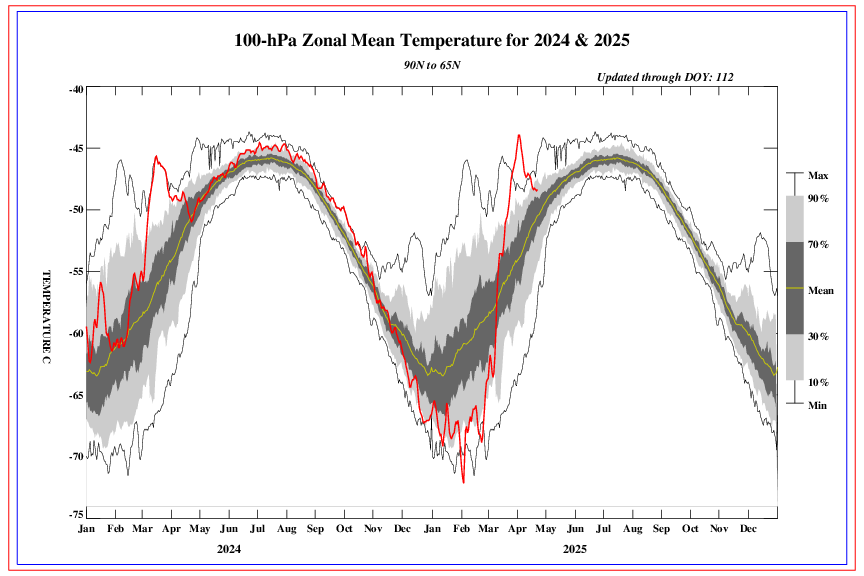

Now is the time to look at UV radiation.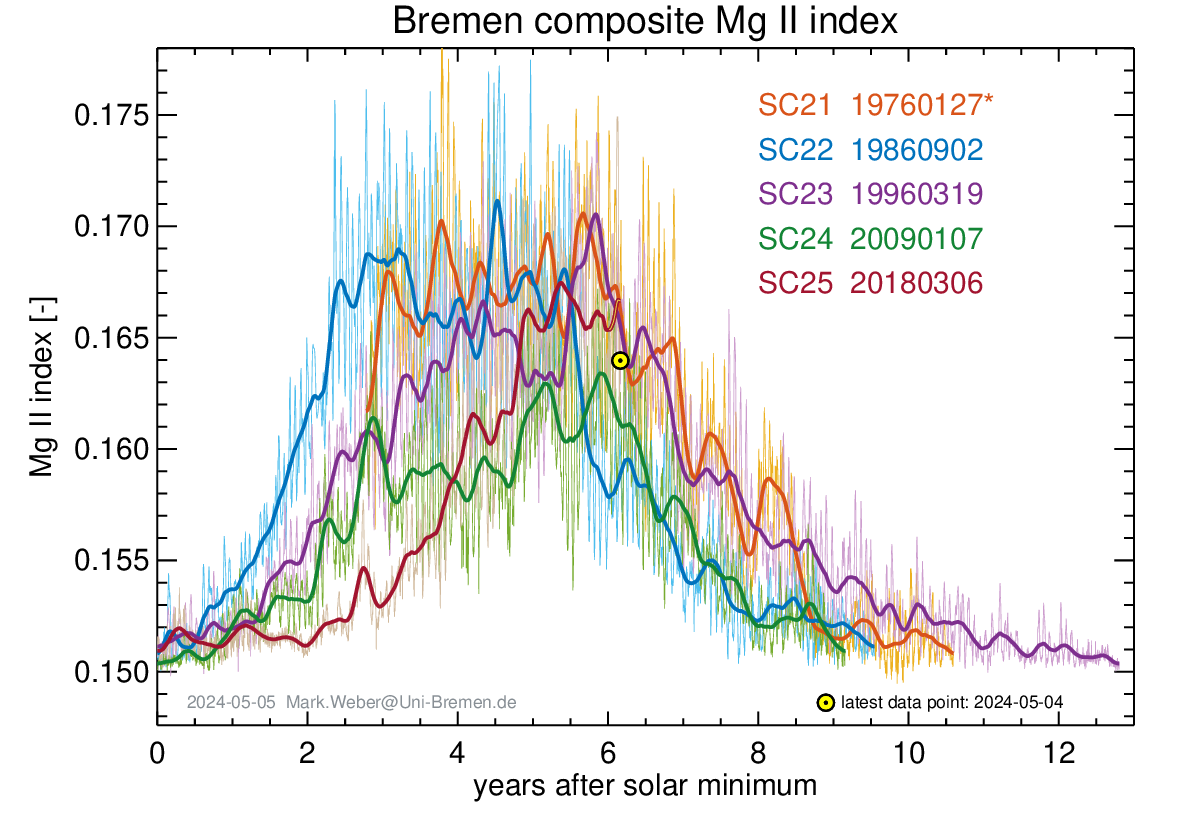
AbstractA minimum atmospheric temperature, or tropopause, occurs at a pressure of around 0.1 bar in the atmospheres of Earth1, Titan2, Jupiter3, Saturn4, Uranus and Neptune4, despite great differences in atmospheric composition, gravity, internal heat and sunlight. In all of these bodies, the tropopause separates a stratosphere with a temperature profile that is controlled by the absorption of short-wave solar radiation, from a region below characterized by convection, weather and clouds5,6. However, it is not obvious why the tropopause occurs at the specific pressure near 0.1 bar. Here we use a simple, physically based model7 to demonstrate that, at atmospheric pressures lower than 0.1 bar, transparency to thermal radiation allows short-wave heating to dominate, creating a stratosphere. At higher pressures, atmospheres become opaque to thermal radiation, causing temperatures to increase with depth and convection to ensue. A common dependence of infrared opacity on pressure, arising from the shared physics of molecular absorption, sets the 0.1 bar tropopause. We reason that a tropopause at a pressure of approximately 0.1 bar is characteristic of many thick atmospheres, including exoplanets and exomoons in our galaxy and beyond. Judicious use of this rule could help constrain the atmospheric structure, and thus the surface environments and habitability, of exoplanets.
https://www.nature.com/articles/ngeo2020
The stratosphere is for surface cooling because it absorbs UV radiation to a significant extent. The infrared released in the formation of an ozone particle must be transferred to a neighboring particle (this is the condition for the formation of an O3 particle).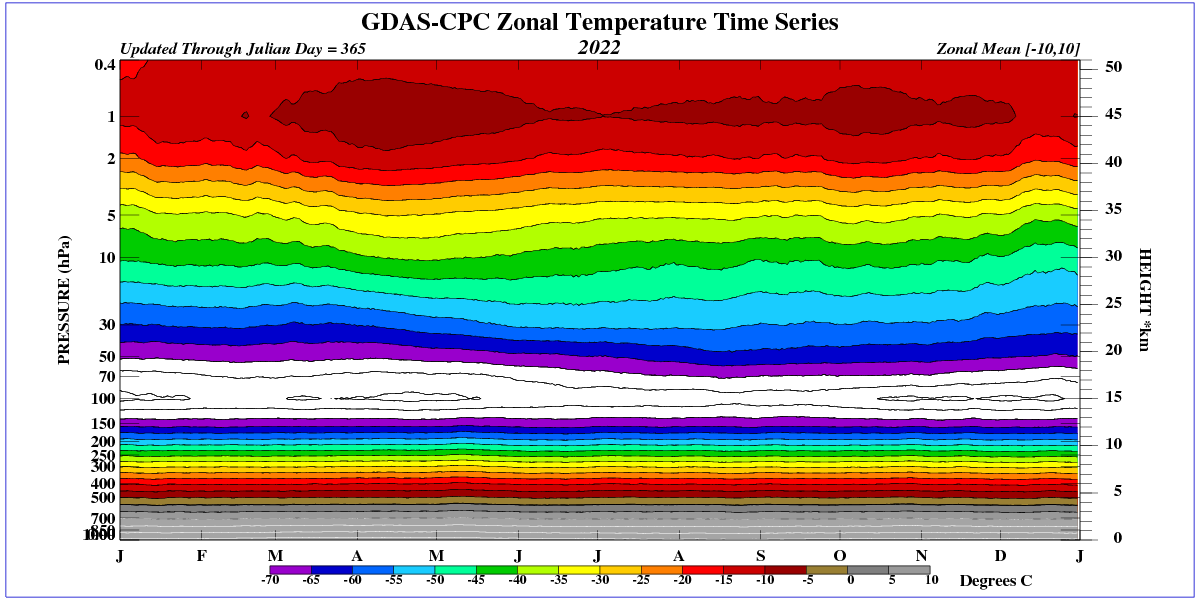
I must have read this a dozen times and I still don’t know what you are talking about.
Thank you David your article/paper is the best one I have read on WUWT I would send it to Boris Johnson but I think he has changed his email. The Hoyt C Hottel charts I use for emissivities of carbon dioxide and water vapour are for Pt = 1 ATM
In addition your article emphasises the minimal effect of Ch4 and NO emissions and the dominant effect of water vapour.
A similar observation applies to water vapour. Water vapour alone would absorb 67% of emitted IR in less than 200 m of traverse throughs the atmosphere. Beyond 200 m or less the bands would be exhausted of absorbable IR – does Hitran also show this effect?
“We know the solar energy reaching earth. It is the same value as used to calculate the Effective Earth Temperature of -18°C, with no atmosphere.”
The Moon with no atmosphere is -75°C, yet its sunlit side (at any given time) is much warmer than Earth’s sunlit side (at any given time). Water vapour and the oceans keep Earth’s sunlit side cooler, and both keep the dark side warmer, particularly the oceans as their surface temperature barely drops at night.
The -18°C figure has 30% albedo included, and is based on the wrong application of Stefan–Boltzmann.
DOES THE ATMOSPHERIC GREENHOUSE EFFECT REALLY WARM EARTH’S SURFACE BY 33°C?
The standard method calculates the equivalent black-body temperature for Earth, by imagining that the solar irradiance is spread evenly over the whole sphere. Which gives a black-body temperature of 278.6K, and minus 30% albedo is 254.83K. An additional 33K of proposed greenhouse effect raises that to 287.83K, or 14.68°C
For the Moon with 11% albedo the figure is 270.6K, which is 73.3K higher than the real global mean surface temperature of the Moon, at 197.3K. So what’s gone wrong?
Calculating the Lunar surface temperature for the sunlit side only, and averaging that with the mean temperature of the dark side, gives a far more sensible value.
394*0.5^0.25 = 331.31K
minus 11% albedo
331.31*0.89^0.25 = 321.8
and averaged with a dark side mean temperature of 90K (guess)
(321.8+90)/2 = 205.9K
Earth’s sunlit side (at any given time), is cooler than the sunlit surface of the Moon, mainly due to clouds and water vapour, but Earth’s global mean surface temperature is far higher than on the Moon, primarily because of the oceans keeping its dark side so warm. With a lesser contribution from longwave infrared from water vapour and clouds.
Earth’s black-body temperature for the sunlit side only, after 30% albedo, 6% Rayleigh scattering, and 16% solar near infrared absorption by water vapour, is 12.5°C. As opposed to 48.65°C for the mean temperature of the Lunar sunlit side.
The standard model removes the night cycle, and falsely attributes all of the influence of heat capacity on mean global surface temperature to the atmospheric greenhouse effect, and treats heat capacity merely as zero sum thermal dampening.
The main greenhouse house type effect on Earth is in the oceans, convection sets in at night and sinking colder water gets replaced with warmer water from below, so that the surface barely cools at night. That is primarily why Earth’s global mean surface temperature is 90°C warmer than the Lunar global mean surface temperature.
Bear in mind that daylight/night lasts ~327hrs on the moon.
The Moon rotating four times as fast would make virtually no difference to its global mean surface temperature. The sunlit side would still reach approximate equilibrium with the solar irradiance, and the dark side would have a similar mean temperature, but with a warmer dawn terminator and a cooler dusk terminator.
After reading this, my head hurts.
Nikolov & Zeller, and Joseph Postma attempted to address the hemispheric heating value, though in rather complicated ways. I have simply divided the sunlit disk area by 2 instead of by 4, which works well for the Moon. Also I have not invoked any atmospheric ‘pressure-head’ ideas to account for the temperature difference on Earth. Thermal reservoirs matter.
appologies, should have read further
David Coe:
why is your climate sensitivity of 0.5K so discrepant with the 2.2K found by Wijngaarden and Happer?
They also used the HITRAN database but get a very different result to you.
Dependence of Earth’s Thermal Radiation on Five Most Abundant Greenhouse GasesW. A. van Wijngaarden, W. Happer
http://128.84.4.34/abs/2006.03098
Don’t know. Can you understand their detailed methodology? No, neither can I!
No I can’t understand it ! Although you do cite this paper and say it came up with an ECS of <1 degree C, here in the Introduction:
More recent work, however, suggests ECS values of less than 1degC (Harde-2017) [3] (Wijngaarden and Happer 2020) [4].
W&H do not find a value of <1C in their paper, they find 2.2C. (The other reference you cite, (Harde 2017) does indeed find an ECS of 0.6-0.8C.)
So you are claiming in your introduction that your value is in tune with W&H when clearly it is not ?
I’m sorry if this comes across as overly critical, but the other side pick up on these things. If I am to use your work in discussions we have to get this straightened out.
Thanks for pointing this out, and you are not being overcritical. You are correct that W&H found a climate sensitivity of 2.2K. On the other hand they have a number of contradictory statements, such as
“Fig. 9 as well as Tables 2 and 4 show that at current concentrations, the forcings from all greenhouse gases are saturated. The saturations of the abundant greenhouse gases H2O and CO2 are so extreme that the per-molecule forcing is attenuated by four orders of magnitude with respect to the optically thin values. Saturation also suppresses the forcing power per molecule for the less abundant greenhouse gases, O3, N2O and CH4, from their optically thin values, but far less than for H2O and CO2.”
I included this paper as a reference not so much to support our results, but as a recent example of the use of Hitran data. On the negative side it is almost impossible to follow their workings to understand and make sense of what are contradictory findings. There are a number of other papers I could have cited showing climate sensitivities less than 1K. In retrospect perhaps I should have, NoTricksZone published a list of such papers recently.
I do not regret referencing this paper. It would perhaps have been better to reference it at another point in the text. Above all we have attempted to provide a determination of climate sensitivity by adhering to simple methodology while using the exceptional quality of data within the Hitran database, which can readily be replicated by others.
I find the calculation of climate sensitivity from the estimation of radiative forcing to be a complicated method of achieving the result that you need.
Thanks David
My suspicion is that the atmospheric physics calculations are correct, because that is your field. The discrepancy with W&H might come after that stage, where you attempt to “cut a swathe” through the retention of heat by the atmosphere.
I believe there is no effective peer review with Scientific Publishing Group. I suppose your work is published there because no journal within “climate science” would publish it. But it is that peer review of the stages after IR interactions with the atmosphere that is needed I think.
No, there is peer review with SPG. In fact a few days after publication the paper was retracted by the journal because of a complaint about methodology by a “scholar”. After I had responded to the complaints the journal agreed to conduct a further more rigorous review of the paper. 4 weeks later the paper was reinstated after that review. I do not have details of that review however.
We initially chose the journal because of its open access policy. But you are probably correct in that no main “climate science” journal would touch it.
kzb, I wanted to ask this question and have just read through 270+ comments to find out if anyone had asked it! Couldn’t you have posted this a few days ago and saved me 30 minutes? 🙂 I agree that it is important. David, a great paper but I agree that it would be useful if your team could talk to W&H and see where the difference is.
Easier said than done unfortunately. Before we embarked upon this paper we realised that the previous estimations of climate sensitivity went to some lengths to simulate the complex thermodynamics of an atmosphere with numerous variables. After some thought and discussion we realised that assuming the greenhouse effect was the dominant effect it would be possible to calculate with some precision the atmospheric absorption of the earths radiation from the Hitran data base. What we could not do was determine what the impact of that absorption would be on those complex atmospheric thermodynamics. We quickly realised that in order to satisfy the “top of the atmosphere” radiation equilibrium at an earth temperature of 288K 61.5% of the radiated energy must be transmitted through to space. This immediately enables us to conclude that some 52% of the 73% absorbed energy must be retained by those complex thermodynamic processes, without any knowledge of the detail of those processes. This quickly leads to the estimate of 0.5K for the climate sensitivity of CO2 and to an assessment of feedback effects.
The W&H paper while recognising the power of the Hitran data has then proceeded to attempt to quantify the effects of radiative/convection equilibrium, changes in water vapour concentration, adiabatic lapse rate and others, leading to the same complexities as most previous attempts at this task. Modelling the atmosphere in this way is a thankless task. It is therefore no great surprise that they have reported a high value of climate sensitivity along with many others.
My understanding of the W&H paper is that it is only meant to calculate radiative-convective equilibrium in clear sky. It is implied that the real sensitivity in all-sky must be lower. Not least because of the critical importance of condensation on convective instability and thus cloud height. The W&H analysis is only meant to illustrate an upper bound of sensitivity. Your analysis offers another important empirical finding, but empirical findings don’t go far towards changing minds. They are easily dismissed until the mechanisms are adequately described. W&H are taking the slow road, and I expect they will eventually contribute an all-sky protocol. However, radiation physicists may not care to venture there. I can’t say for sure.
Pat/David
My feeling is that what David says here is correct. The difference comes from W&H attempting to model further atmospheric factors, which come after the initial IR absorption, whereas David “cuts a swathe” through all that.
David’s paper calculates an extraordinary low ECS though. That being the case there needs to be a high level of justification, and I am not sure what experts in the field would think about this method of cutting a swathe. It’s possible there is a fundamental mistake built into that method; I wouldn’t know because I don’t have the expertise.
Two reasons for publishing a paper like this.
1 to get as much exposure to the work as possible
2 to invite criticism in order to expose errors or oversights. To this end we have been as transparent as possible in the way we have explained the work
To date there has been over 2300 downloads of the paper and over 8000 views. We have yet to see the paper refuted by anyone or any criticism of the method we have used to “cut a swathe”. That doesn’t mean we are correct but its a good start. If I thought there were weaknesses in our arguments WUWT is the last place we would come. Comments here can be caustic.
David. If you had looked at my Comment (26Feb2022, 5:50PM) you would have seen a quite different method. I used (very simple) Thermodynamics rather than spectroscopy – which very few understand apparently. It’s surprising that no-one else has used it as it is heat effects that are being discussed. It’s also much simpler and unequivocal and does not involve any mechanisms as does the IR method used almost universally.
It’s irrelevant that any molecule can absorb heat as IR because ALL gases absorb heat, one way or another, eg conduction and convection (eg winds). Therefore, ALL gases are Greenhouse Gases, and CO2, etc are very minor components and contributors to Earth’s warmth. You should note that all molecules radiate energy, whether or not they absorb it (Third Law).
The method can be found at my site Planet Earth Climate Topics on pjcarson2015.wordpress.com. It can also be accessed by simply clicking on my name above.
Two reasons for publishing a paper like this.
(1) to get as much exposure to the work as possible
This is reason enough particularly readers of WUWT in the UK who get no exposure to a paper like this in the media. Certainly not from the BBC or Guardian and not from the scientific journals either.
Unfortunately David you are caught between a rock and a hard place. You presumably could not get it published in an established journal, so went to the pay and publish site Science Publishing Group. Unfortunately that means it can be studiously ignored by the established scientific community. It gives them a reason to do so.
As we have seen on here, there are few contributors with the scientific literacy to comment sensibly on even basic issues, never mind something as complex as this.
Hopefully, amongst those 2300 downloads, some have gone to persons with the high level of expertise required to properly critique the paper, and they are still considering their comments. Perhaps you will hear from them in time.
I’m not at the required level of knowledge, but my suspicion is cutting a swathe has oversimplified the problem. You do find an unusually low ECS, and the only reference you cite which is in broad agreement is the Harde paper, which was similarly presented by the non-peer-reviewed Science Publishing Group.
After all Herman Harde is a well respected German scientist as is Gerhad Weiglib, one of my co-authors, who is a professor at one of Dortmunds universities.
Take a look at the NoTrickzone site referenced below for a growing list of papers showing low climate sensitivity values.
https://notrickszone.com/50-papers-low-sensitivity/
The other reference that could be quoted is AR5. The WG1 paper gives the overall temperature rise since 1850 as 0.9 degrees C with 0.5 of them being since 1950. It then goes on to state that at least 50% of the post 1951 temperature rise has been caused by humankind, that is, 0.25 degree C, the same as David’s paper. Mind you, AR6 gives a quite different number!
In light of my many articles on the Web completely disproving the U.N. IPCC’s greenhouse gas warming hoax, this article is totally obsolete.
The IPCC’s hoax is based on denial of Nature’s ironclad Second Law of Thermodynamics and its application to Planck’s Black Body Radiation Law, which gives each black body a deterministic “color temperature” inversely proportional to wavelength. The Sun is a black body with temperature of 5500C, and its visual wavelength (0.4-8) photons are absorbed by the black body of the Earth’s surface, raising its temperature normally to +50C or less. The surface then radiates Planck black body radiation to cool, in conjunction of air conduction/convection.
What the IPCC wants you to believe is that atmospheric gases absorb and reemit some of the surface thermal radiation back to the surface, reheating it with its own heat.
This is Looney Tunes crackpot science on many levels, but the biggest laffer is that NASA’s own measurements of downdwelling and upwelling radiation at the top of Earth’s atmosphere show a big transmission window at 8-13 microns where the atmosphere is transparent and allows virtually all of it to reach the top of atmosphere. But that covers the normal range of Earth surface temperatures, -50C to +50C, meaning that there are no such things as “greenhouse gases”, and their own satellites proved it!
There’s also a big absorption notch at 15 microns, CO2’s absorption/radiation wavelength. The IPCC claims that this proves that CO2 is absorbing this surface radiation and reradiating it back, causing global warming. Sorry, but the Planck black body temperature of 15 micron radiation is -80C, colder than dry ice, meaning that it’s indistinguishable from that from an iron rod chilled to -80C, which can’t even melt dry ice, much less an ice cube.
Where does the 15 micron radiation go? It bounces between CO2 molecules and Earth’s surface without heating anything until it’s harmlessly dispersed by entropy into the Heat Death of the Universe. Of course the IPCC also denies entropy because that’s another name for the Second Law of Thermodynamics. In their junk science, there must be a Sun-Earth “energy balance”, as if entropy doesn’t apply when they say so. All along Planck’s Black Body Radiation Law has a power-wavelength curve whose shape is constrained by the Second Law to maximally increase entropy.
When will my killer bullet disproof of the IPCC’s greenhouse gas warming hoax go bigtime and reach the general public so they can laugh them off? Are there any billionaires out there who can peel off a few million and give everybody with a high school diploma or higher a copy?
Here it is. It’s the shortest, most elegant and polished primer on Earth atmosphere thermal physics, proving that the IPCC lie machine is built on a foundation of sand: I hereby give permission to WUWT and all other anti-IPCC blogs to reprint it in whole along with my copyright notice.
http://www.historyscoper.com/whyaregreenhousegastheoriesdeadwrong.html
Of course there is a transmission window for radiation into space. For an equilibrium earth temperature of 286K 61.5% of the Planck radiation from the earth must be transmitted through the atmosphere to space. How else do you think it is going to get there?
You are simply making the climate alarmists job that bit easier.
Making the IPCC lie machine’s job easier?
I guess you don’t ‘get’ it that they deny the Second Law of Thermodynamics (Entropy) that gives every photon wavelength a Planck radiation temperature. The 8-13 transmission window covers all Earth surface temperatures, meaning that there are no “greenhouse gases” that block that radiation before it reaches space. Instead they go out of their way to misdirect you by showing the abscissa in wavenumbers rather than wavelength to make the 8-13 window seem insignificant and the insignificant 15 micron window seem gigantic.
If CO2, H2O, and CH4 don’t block 8-13 micron radiation, the IPCC scientists should repudiate their peer-reviewed papers and resign, and the IPCC disband and give the money back.
Please don’t pontificate on my killer disproof of the IPCC’s big hoax until you studied it, else you’re wasting everybody’s time.
Why Are Greenhouse Gas Theories Dead Wrong?, by T.L. Winslow (TLW), “The Historyscoper”™
Where does the 15 micron radiation go? It bounces between CO2 molecules and Earth’s surface without heating anything until it’s harmlessly dispersed by entropy into the Heat Death of the Universe.
In that one sentence you have removed any credibility. The 15 micron photons can be absorbed even by a warm surface and cause the temperature to increase.
Why do people like to pontificate on thermal physics without even having the knowledge of a 5th grader? Worse, why post nonsense like this after I worked hard to give them a free tutorial and they didn’t even try to read and understand it.
It’s the IPCC that has no credibility. 15 micron photons from CO2 are indistinguishable from those from an iron rod chilled to -80C, colder than dry ice. Can an -80C iron rod’s radiation increase the temperature of anything? If so, hurry and patent your dry ice-powered microwave oven that can boil coffee and cook a turkey, and after you make your first billion send me a 1% finder’s fee.
Sorry, those15 micron photons can’t raise the temperature of any object absorbing them higher than -80C. That’s required by the Second Law of Thermodynamics. Did I mention that the entire IPCC lie is based on its denial?
Even the IPCC claims that downdwelling 15 micron radiation is on the order of a few watts per square meter. The Stefan-Boltzmann Law applied to a thin sheet of dry ice gives 78 watts per square meter. So excuse me for not being afraid of the IPCC’s second Sun.
Stefan Boltzmann Law Calculator (omnicalculator.com)
Denying the Second Law means denying entropy. No surprise, the IPCC never mentions entropy in their entire greenhouse gas warming fake science hoax, because they’d be dead in the water if they did
Every time thermal energy is transferred in the form of heat, entropy is increased, making some of the energy forever unavailable to heat anything or do work. This is the overriding way Nature worked since the Big Bang, progressing toward the final Heat Death of the Universe. The units of entropy are Joules per Kelvin. The Stefan-Boltzmann Law has units of Joules per second per square meter, is proportional to T^4, meaning that black body radiation increases entropy proportional to T^3.
It’s sad that even scientific IPCC critics like AW have fallen for this hoax. A lukewarmer? The Second Law is ironclad, and a true physicist doesn’t fence-sit with it. Me, I stand my hand pat on the Second Law. What does the IPCC lie machine stand on? A house built on sand that’s trying to bilk trillions from science ignoramus world leaders before the public wakes up and laughs them off and demands the money back. Actually, they are demanding hundreds of trillions, maybe more money than exists. if they got it, what would be the result? The end of capitalism and economic growth, and a global Marxist police state that ends all freedoms, especially economic, and cancels history to cover its tracks. Over my dead body.
Is Global Warming a Hoax (Joke)?, by T.L. Winslow (TLW), “The Historyscoper”™
Consulting firm McKinsey estimates $9 trillion per year cost for climate accords | budbromley
” Of these gases CO2, water vapour, methane and nitrous oxide are considered to be greenhouse gases. That is, they absorb some of the infra-red energy being radiated by the earth into space, while freely transmitting solar energy down to the earth’s surface.”
I need some education. What is the reference for this statement? How are these greenhouse gases so intelligent to let the solar energy to freely transmit to the earth’s surface and then choose to absorb the energy trying to be radiated into space?
Have long desired to see a good reference for how this works.
It’s absolutely basic to the greenhouse effect. The atmosphere is transparent to visible light (solar energy) but only partially transparent to infra-red (energy radiated by the Earth into space).
The original reference goes back to Arrhenius in1896.
It is a question of wavelength of light. Visible light from the sun is short wavelength and is readily transmitted through the atmosphere. Radiation from the earth is long wavelength and is invisible, much like the heat from a hot plate. This radiation is readily absorbed by some of the atmospheric gases, particularly CO2 and water vapour. Hope this helps.
Still seeking a reference, and not just a statement of opinion. Who did the experiments , where did they do them, what were the results, where is this published? Thanks for your help.
Arrhenius 1896.
I am sure there have been many refinements since. The HITRAN data in this article must’ve been derived experimentally.
Also, have you thought why they go through the expensive process of launching infra-red telescopes into space?
Just Google Hitran and go see for yourself.
They don’t. Lots of people overlook that H2O absorbs a large amount of energy from the sun via short infrared, even water vapor and condensed water vapor. It isn’t all visible light.
Look at the chart. Almost 50% of the sun’s radiation is short infrared readily absorbed by water on the surface and in the air. It’s one reason deserts get hot, no atmospheric water to absorb the near IR.
The sun emits 90% of its total radiation between 0.1 and 3 microns. A very small % is IR much less than your ludicrous 50%
I gave you a chart, do you need more than one to verify this?
If you had read the chart more carefully, you would have noticed the horizontal axis is labeled “nm”. That is nanometers. Move the decimal place of each of those numbers and you get very close to what would be 0.1 – 2.5 microns.
NASA defines it from about 1000 – 5000 microns. Need I say more?
http://www.icc.dur.ac.uk/~tt/Lectures/Galaxies/Images/Infrared/Regions/irregions.html
It is a very poor chart. All the red stuff seems to be under Planck’s 288 K curve which defines outgoing radiation.
Good grief. What is the title of the chart? “SOLAR RADIATION CHART” That is incoming energy from the sun. It does follow the Planck curve.
The yellow is “Top Of the Atmosphere”. The red is “Radiation at Sea Level”.
That tall column on the left disappearing and cut off at the top is solar incoming and is not 50% IR by any stretch of the imagination. I do not care what NASA says.
If you map Planck’s distribution using Excel and plug in 10 000 F you will get the tall thin curve which is cut off at the top as you have shown on your chart.
Here is another diagram. The column on the left is just a depiction of visible light. You do realize the 10,000 deg is AT the sun and not at the earth don’t you? The energy does dissipate as the distance from the sun increases.
Still does not make any sense. I wonder if anyone else knows what you are trying to say including David Coe who is the model of clarity.
It is a question of wavelength of light. Visible light from the sun is short wavelength and is readily transmitted through the atmosphere. Radiation from the earth is long wavelength and is invisible, much like the heat from a hot plate. This radiation is readily absorbed by some of the atmospheric gases, particularly CO2 and water vapour. Hope this helps.
We are at cross purposes. Admittedly solar energy arriving at the surface can vary from 550Wm^-2 with cirrus clouds to 1025Wm^-2 with a clear day. I am more interested in radiation from the surface at 288 k of 392 Wm^-2 for black or grey body emissivity of 0.9 and subsequent absorption of part of this energy by gases and vapours (CO2 and H2O ) having very low emissivities; outgoing radiation rather than incoming. Also heat transfer by forced and natural convection from hot equatorial regions.
It is a question of wavelength of light. Visible light from the sun is short wavelength and is readily transmitted through the atmosphere. Radiation from the earth is long wavelength and is invisible, much like the heat from a hot plate. This radiation is readily absorbed by some of the atmospheric gases, particularly CO2 and water vapour. Hope this helps.
I gave the link to the best primer on the Internet, mine:
Why Are Greenhouse Gas Theories Dead Wrong?, by T.L. Winslow (TLW), “The Historyscoper”™
No shortage of self esteem here then.
I like this paper. It’s a model of clarity.
Two comments:
Stefan–Boltzmann holds for an object with one temperature, but not for
the arithmetic mean temperature of a body with many temperatures. It
would still hold for the 4th-order generalized mean of the
temperatures, which will always be higher than the arithmetic mean.
If the Equilibrium Earth Temperature of 288K is an arithmetic mean
temperature, this would bias the estimate of the energy retention
factor.
The earth temperature T in the paper is evidently the temperature of
the earth’s surface. If 288K is the mean temperature of the
atmosphere just above the surface, the difference could also bias the
estimate.
You are correct in that the T^4 power of energy v temperature means that an arithmetic average of earth temperature is not an accurate measure for radiated emission. The emissions average will be biassed towards the higher temperatures.Thus the value of 286K is only an approximation. However if another temperature is chosen instead, it has little impact on the estimation of climate sensitivity which results chiefly from the dominance of H2O IR absorption. The graphs of CO2 and total absorption v concentration will be unchanged.