Guest “Gizmodo must be Latin for ‘dumb as a shoe'” by David Middleton
EARTHER
EXTREME WEATHER
The U.S. Wheat Crop Is in Trouble
Spring wheat could see some of its lowest wheat yields in decades due to widespread drought and heat.
Molly Taft
Yesterday 12:10PMWheat farmers across the country are facing lower yields as 98% of the country’s wheat crop is in areas experiencing drought.
In the Northern Plains, the Department of Agriculture said Monday that farmers were projected to harvest their smallest crop of spring wheat—crops planted in the spring and harvested in the autumn—in 33 years.
[…]
The Pacific Northwest saw ground temperatures rise to 145 degrees Fahrenheit (63 degrees Celsius) during the heat wave worsened by climate change earlier this month, with the worst readings in the parts of Washington and Oregon where wheat is grown.
[…]
This summer’s wheat woes are a look into how crop yields may start to sputter more regularly, even as agriculture makes technological advancements. Ortiz-Bobea coauthored a study published in Nature Climate Change earlier this year that found that climate change has already made global farming productivity 21% lower than it could have been—the equivalent of making no improvements in productivity for seven years.
[…]
“This is going to become more frequent,” he said. “Climate change is already slowing down productivity at a global scale. It’s already happening but we don’t see it because this is a bad year compared to the previous one. We’re comparing today versus yesterday because we’re not thinking about what could have been.
Molly Taft
Writing about climate change, renewable energy, and Big Oil/Big Gas/Big Everything for Earther. Formerly of the Center for Public Integrity & Nexus Media News. I’m very tall & have a very short dog.
Gizmodo
US Wheat Production has actually been declining since 1981… Largely due to the fact that world wheat production has skyrocketed, reducing demand for US exports.
Wheat data in plots including 2021 are mid-year numbers.
US Wheat Production Peaked in 1981 (Peak Wheat)

US Wheat Exports Peaked in 1981 (Peak Exports)

World Wheat Production Has Nearly Doubled Since 1981

Wheat Appears to Like Warmer Weather

Wheat Appears to Like Plant Food

If Not For Climate Change…
This summer’s wheat woes are a look into how crop yields may start to sputter more regularly, even as agriculture makes technological advancements. Ortiz-Bobea coauthored a study published in Nature Climate Change earlier this year that found that climate change has already made global farming productivity 21% lower than it could have been—the equivalent of making no improvements in productivity for seven years.
Gizmodo

Mr. Data Likes to Laugh at Gizmodo and Earther Articles

David Middleton
Writing about climate change, reliable energy, Gizmodo articles and geology for Watts Up With That? Currently part the Climate Wrecking Industry. I’m fairly short & we have 10 very short dogs... Although the Corgis think they are legless German Shepherds.
Here’s a paper about how elevated CO2 (“eCO2”) benefits wheat:
https://www.ncbi.nlm.nih.gov/pubmed/26929390
David completely missed the obvious:
“Ortiz-Bobea coauthored a study published in Nature Climate Change earlier this year that found that climate change has already made global farming productivity 21% lower than it could have been—the equivalent of making no improvements in productivity for seven years.”
That makes it seem like farming productivity IS down. It’s not. That’s stating farming productivity is down from what it would have been without climate change. All based on models, of course.
Do we need 21% more productivity? Doesn’t seem like it to me and of course there’s absolutely no way to prove farming productivity truly is down by 21% whether it’s due to climate change or anything else.
We can never know what might have been had history followed a different path, even in relatively minor ways. Edward Lorenz provided us with a wonderful new theory explaining that. Modeling alternate outcomes is meaningless … even pointless, except as an entertainment. “Could have been” … reminds me of Marlon Brando’s cry; in On the Waterfront … “I coulda been a contenda … “. This isn’t science. It’s no better than a circus performance.
Excellent, Rory.
My life would have been completely different if I had been born as the son of an Indian Rajah. Come to think of it, my life would have been completely different if I had been born as anyone else but me. (Now if only I had bought McDonald’s stock in the ’50s… )
😁
That’s the perfect example for the futility of the “shoulda, coulda, mighta” qualifiers so often found in climate related papers and media coverage.
Beating our chests and tearing our hair over a vaguely possible outcome from a broad spectrum of other possible, often beneficial outcomes is a fools game that leads to madness.
Wheat production increases over the last several decades are due to many factors Mr Middleton and not just climate:
file:///C:/Users/Tony/Downloads/ipts%20jrc%2095950%20web.pdf
“According to French farmers’ opinion, the most important wheat yield determinants at national level are seasonal weather and soil quality; while Hungarians pointed climate change and seasonal weather. At the farm level, the high prices of inputs and the low wheat market prices are considered the most constraining factors in both countries. Wheat yields are positively correlated to higher agro-chemicals use in Hungary and to additional days of labour in France. The adoption of precision farming provides 7-12% higher yields in both countries, while yield gains from conservation agriculture and IPM are found in partial adopters. In both countries, the most frequently adopted innovation to increase wheat yields and grains’ quality are new wheat varieties”.
https://eos.com/blog/crop-yield-increase
“For centuries, farmers have pondered over and worked on the issue of increasing crop yields. Some of the solutions found were efficient and some were not. Today, in addition to the valuable experience of previous generations of farmers, the agriculture industry can also benefit from the achievements of modern science and technology. Let’s now look at the main ways for the farmers to increase crop yields and see how previous experience and advanced technology can be effectively combined to improve agrarians’ performance.
https://www.farmprogress.com/equipment/eight-major-factors-have-changed-agriculture-last-50-years
“With 50 years of change farmers can now produce more food and fiber on fewer acres and with fewer nutrient inputs. “Corn yields in 1950 averaged 40 bushels per acre,” says Travis Miller, associate department head, Soil and Crop Sciences, Texas A&M University. “More recently, average corn yield was more than 160 bushels. Soybeans increased from 22 bushels in 1950 to 40-plus bushels in 1980.”
Miller took the opportunity to reminisce a bit during the grain session of the 50thAnnual Blackland Income Growth Conference recently in Waco.
“I’ve never done this research before,” he admitted, “but it is fascinating,” to look at the changes in agriculture that have paralleled the history of the B.I.G Conference.
Miller said some of the key advancements include: Pest management through genetically modified plants; institution of integrated pest management programs; plant breeding that allows high plant populations; precision planting equipment; better fertilizer formulations and application equipment; global positioning system agriculture; larger, faster and more efficient tractors and combines; mapping plant genomes that allows more rapid breeding; rapid and more accurate soil testing; and semi-dwarf wheat varieties.”.
The point of the post was to demonstrate that there’s no actual evidence that wheat production has been harmed by climate change.
Of course productivity has benefited from the advances in technology and agricultural practices pioneered by people like Norman Borlaug. Without fossil fuels, we wouldn’t have “precision planting equipment; better fertilizer formulations and application equipment; global positioning system agriculture.” The Haber-Bosch process feeds half of humanity.
Global Warming + More CO2 + Fossil Fuels + GMO = More Food
“Global Warming + More CO2 + Fossil Fuels + GMO = More Food”
I wasn’t aware that the IPCC (or anyone else) were saying that any evidence was yet discernible.
Up to a certain point maybe.
Then
“Fertilizing” CO2 will be no good without water or with to much water.
And below some other climate impacts on wheat growth….
https://www.sciencedaily.com/releases/2019/07/190724084543.htm
“Levels of atmospheric carbon dioxide (CO2) are rising, which experts predict could produce more droughts and hotter temperatures. Although these weather changes would negatively impact many plants’ growth, the increased CO2 availability might actually be advantageous because plants use the greenhouse gas to make food by photosynthesis. Now, researchers reporting in ACS’ Journal of Agricultural and Food Chemistry say that a much higher CO2 level could increase wheat yield but slightly reduce its nutritional quality.”
and
https://www.nature.com/articles/s41467-020-18317-8
“ We estimate temperature impacts on yields in extensive regression models, finding that extreme heat drives wheat yield losses, with an additional 24 h of exposure to temperatures above 30 °C associated with a 12.5% yield reduction. Results from a uniform warming scenario of +1 °C show an average wheat yield reduction of 8.5%, which increases to 18.4% and 28.5% under +2 and +3 °C scenarios. “
And not least …
https://journals.plos.org/plosone/article?id=10.1371/journal.pone.0252067
“Our results indicate that an increase in temperature during the winter and spring lowers yield and increases crop abandonment. According to [39], high temperatures during the winter can stimulate wheat to grow so that the subsequent low temperatures in the spring will injure the crop. Li et al. [42] find warm temperatures during the winter stop hardening early, setting the crop for further damage when cold temperatures set in during spring. Extreme heat damage is most common during grain filling when the kernels are shriveled and prematurely ripe [39]. High temperature hastens the decline in photosynthesis and leaf area, decreases shoot and grain mass, weight and sugar content of kernels, and reduces water-use efficiency [43]. O’Leary et al. [44] shows that temperature impacts were more significant at warmer temperatures than at colder temperatures. Increased heat stress causes crop failure resulting in leaf senescence [45], and the shorting of the grain filling period [36]. Lobell et al. [46] found a temperature above 34°C to accelerate wheat senescence grown in northern India. This implies that the effects of temperature change would be spatially different across locations due to variations in soil characteristics and weather conditions across counties.”
From the subject article…
It’s in the fourth paragraph that I quoted.
What is it about trolls and their need to attack claims that were never made?
Mr Middleton has claimed theta there is no evidence of climate affecting temp.
I googled quite a bit and found none.
I accept I was wrong.
However I do note that Mr Ariel Ortiz-Bobeais not a climate scientist … which is what I was researching.
https://dyson.cornell.edu/faculty-research/faculty/ao332/
Regardless I gave science from his profession that supports his opinion.
Unfortunately the actual crop yield data don’t support his opinion.
Anthony Banton wrote, “‘Fertilizing’ CO2 will be no good without water…”
First, and most obviously, elevated CO2 (“eCO2”) does not cause droughts. There is no scientific basis for that claim. In fact, drought incidence has been trending down, slightly:
https://www.nature.com/articles/sdata20141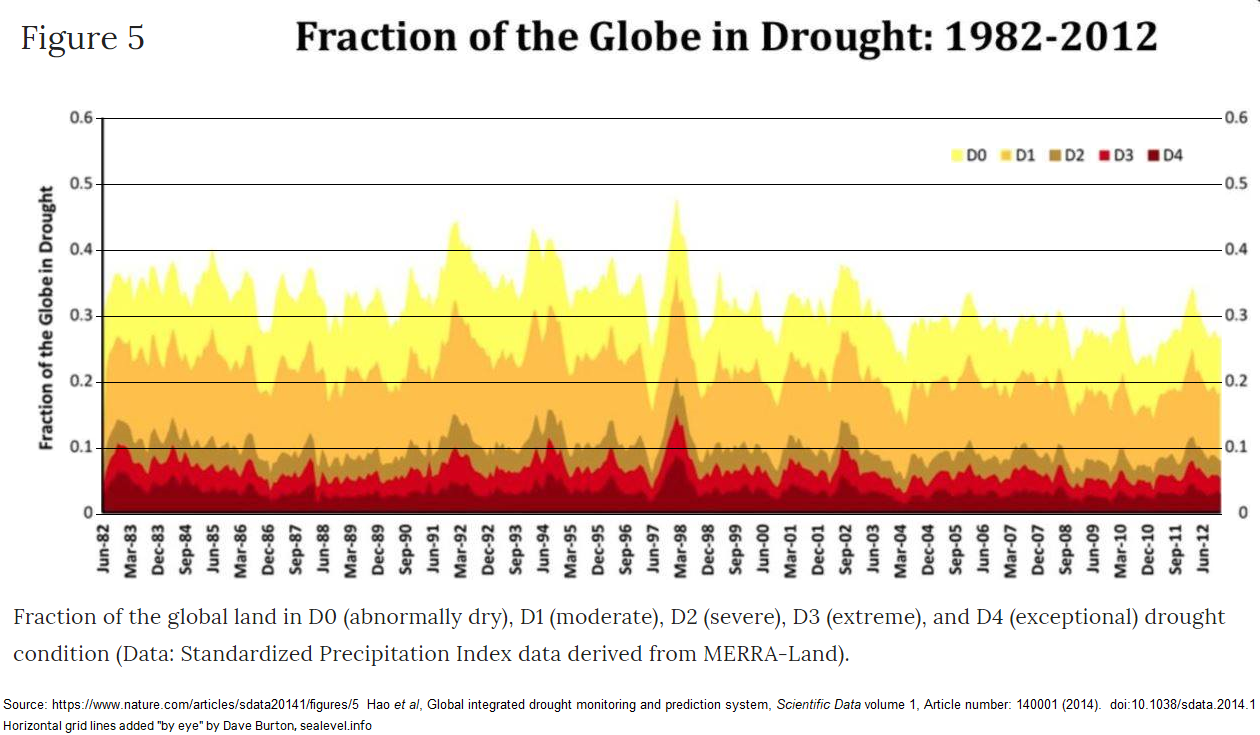
What’s more, elevated CO2 is even more beneficial for drought-stressed crops that for crops grown under ideal weather conditions. Here’s a paper about how elevated CO2 (“eCO2”) benefits wheat:
https://www.ncbi.nlm.nih.gov/pubmed/26929390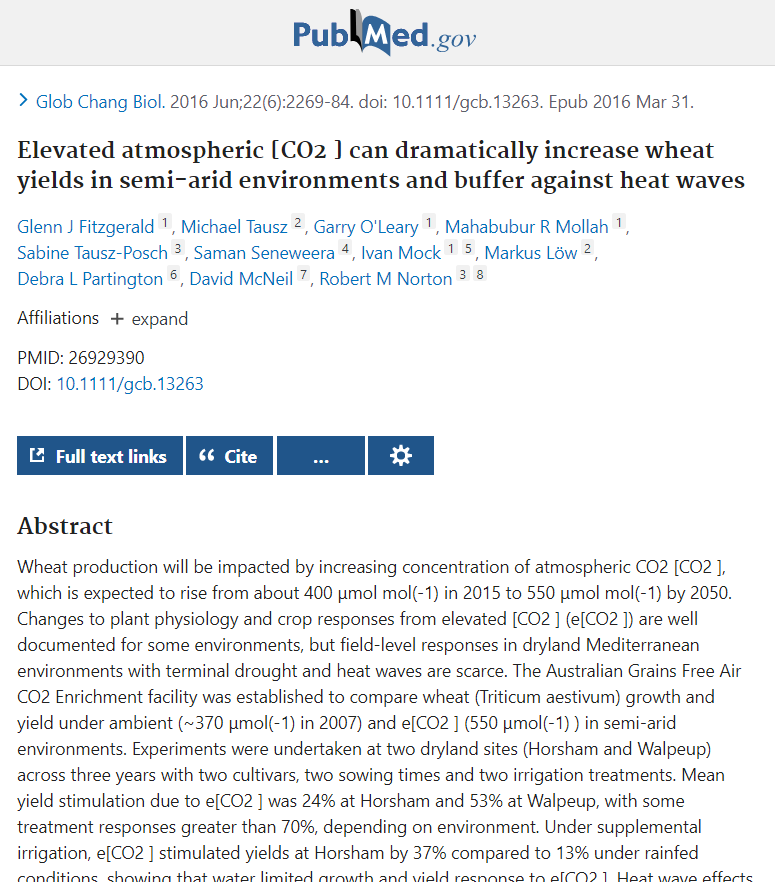
It is well-established that eCO2 makes crops more water-efficient and drought resilient:
https://www.sciencedirect.com/science/article/pii/S0168192310003163
Excerpt:
The world is literally getting greener, largely thanks to anthropogenically elevated atmospheric CO2 levels. Here’s a map:
https://sealevel.info/greening_earth_spatial_patterns_Myneni.html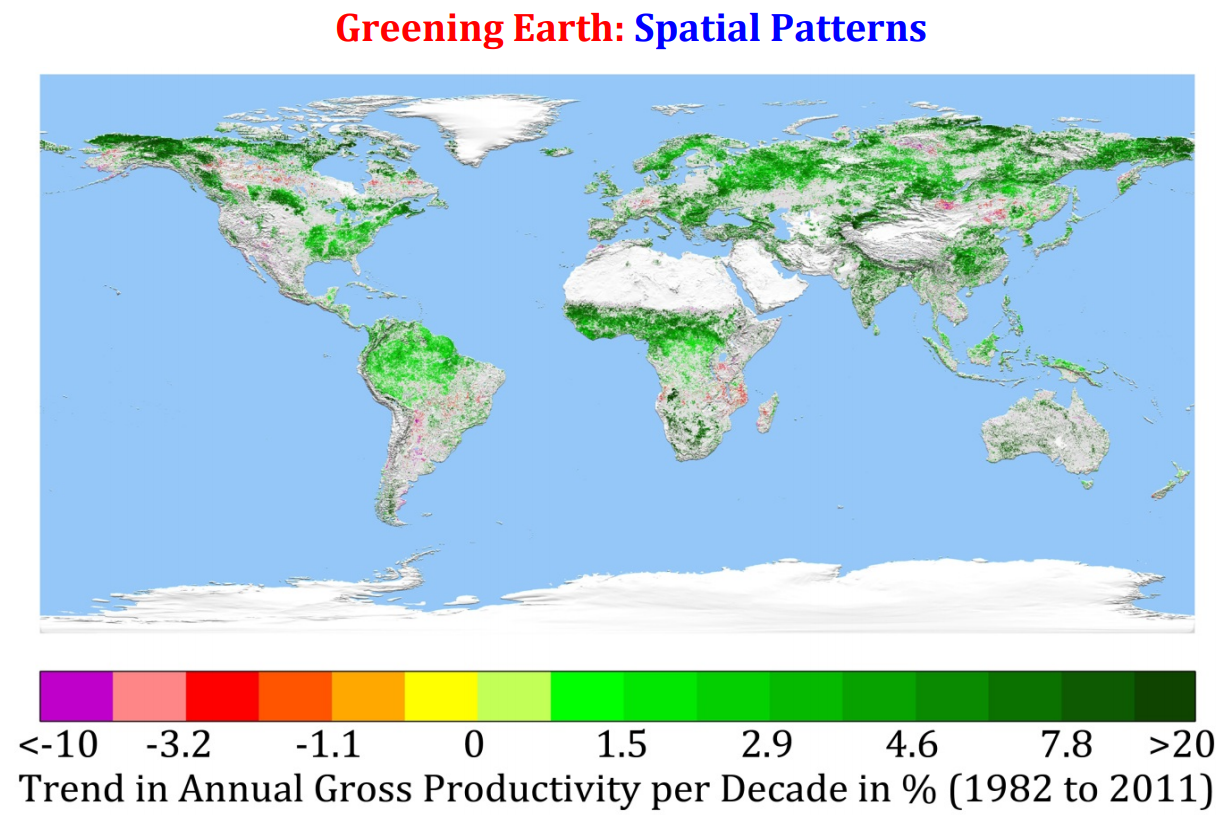
Here’s a National Geographic article, about how even the “Sahara” desert (really the Sahel) is greening:
https://www.sealevel.info/Owen2009_Sahara_Desert_Greening-atGeo30639457.html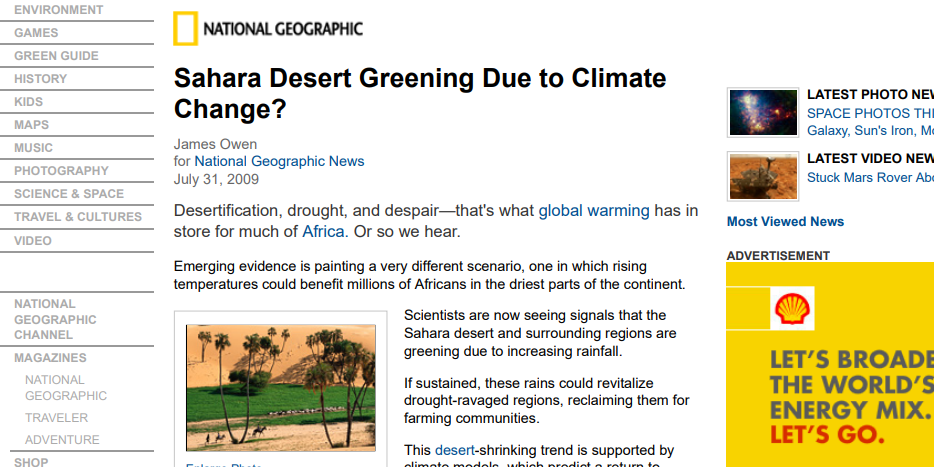
Excerpt:
Here’s another article about it, in New Scientist:
https://www.sealevel.info/Pearce2002_Africans_go_back_to_the_land_as_plants_reclaim_the_desert-New_Scientist.html
The New Scientist article mentions dramatic improvements in yields of sorghum and millet, both of which are C4 crops. They are often grown in semi-arid regions, because of their low water requirements and high drought-resistance — which is greatly enhanced by eCO2, as this study reports:
https://phys.org/news/2015-11-high-co2-sorghum-drought-seeds.html
Claims that global warming will reduce crop yields are crackpot nonsense. To find a result in which warmer temperatures cause significant crop damage, you either have to use unvalidated junk science models, or wildly unrealistic tests (like the Jasper Ridge wild grass study), or else assume that farmers are too stupid to adjust their planting dates (like PNAS’s Zhao 2017 did).
A 1°C temperature change moves isotherms only about 60 miles, as you can see in this growing zone map:
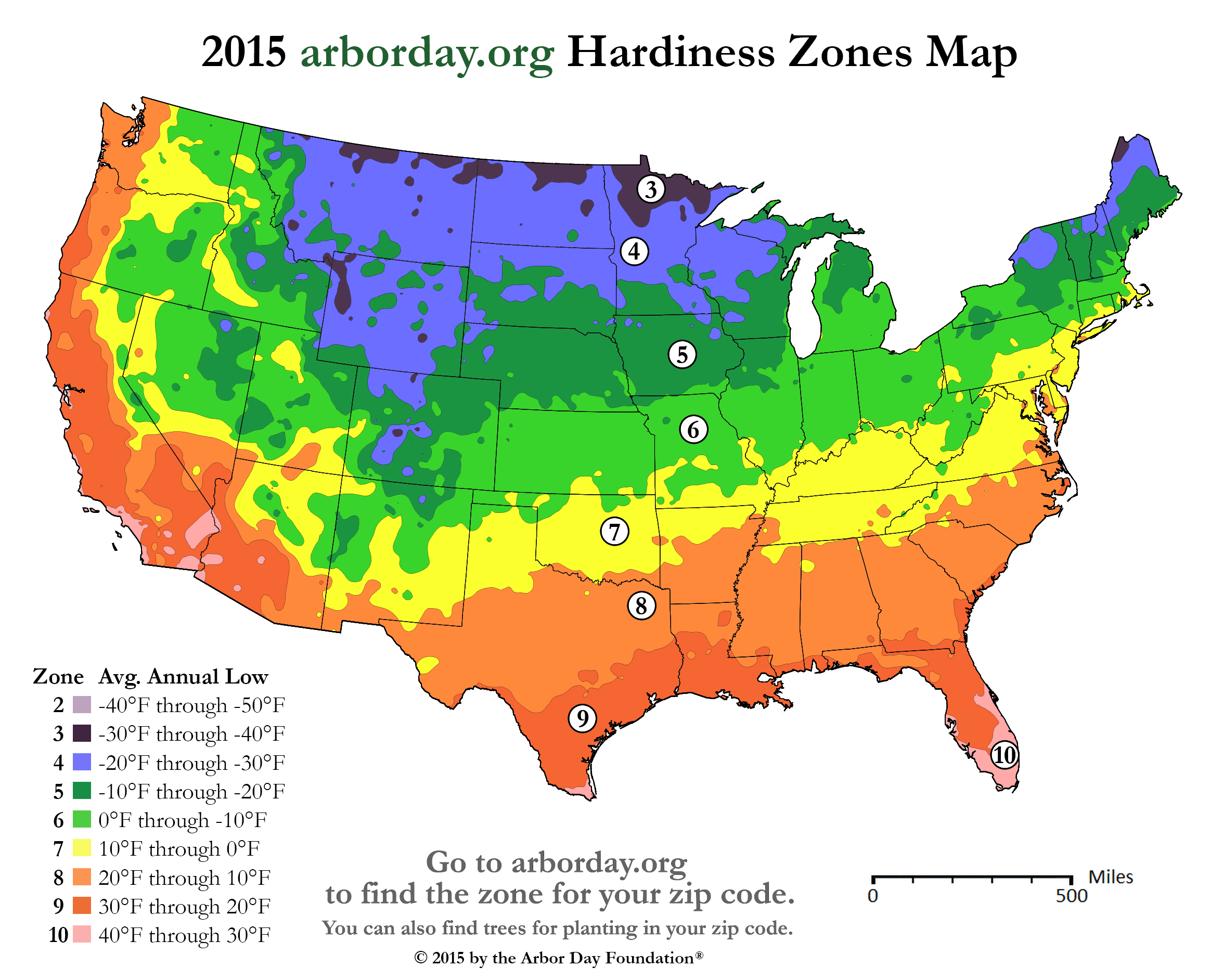
It is equivalent to about a 500 foot change in elevation.
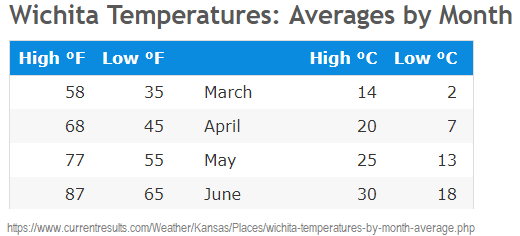
Farmers can typically compensate for that much warming by planting about six days earlier as you can see from the temperature stats.
Compare a 60-mile isotherm shift to the ranges over which major crops are cultivated. For example, wheat is grown from Texas & Louisiana to North Dakota & Canada. Here’s a map:
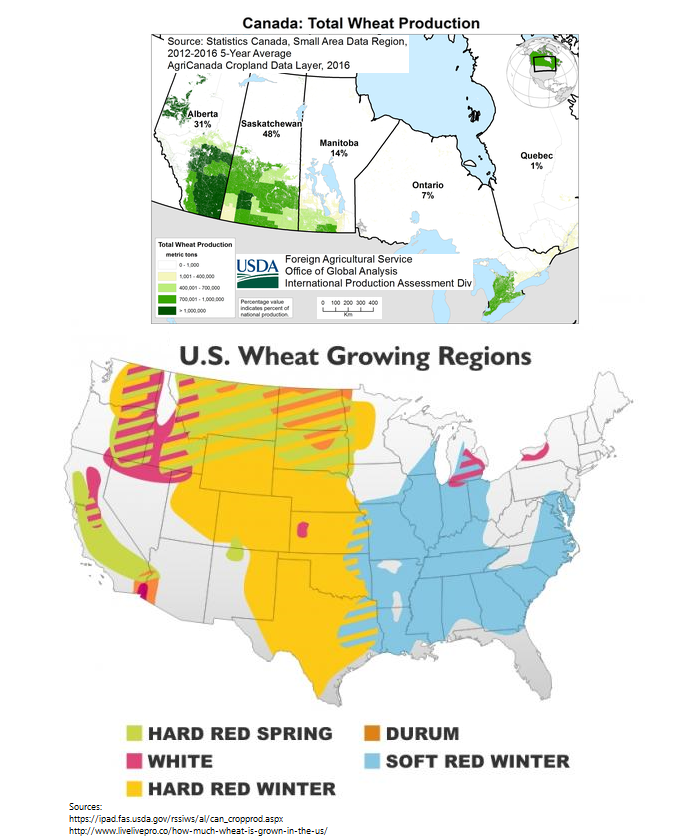
Fretting over a potential growing zone shift of 60 miles is just plain silly.
More CO2 = less famine, for two well-established reasons.
1. “CO2 fertilization” directly increases crop yields. More food = less starvation.
2. eCO2 makes crops more water-efficient and drought-resilient. It mitigates drought impacts — and droughts used to be the #1 cause of famines.
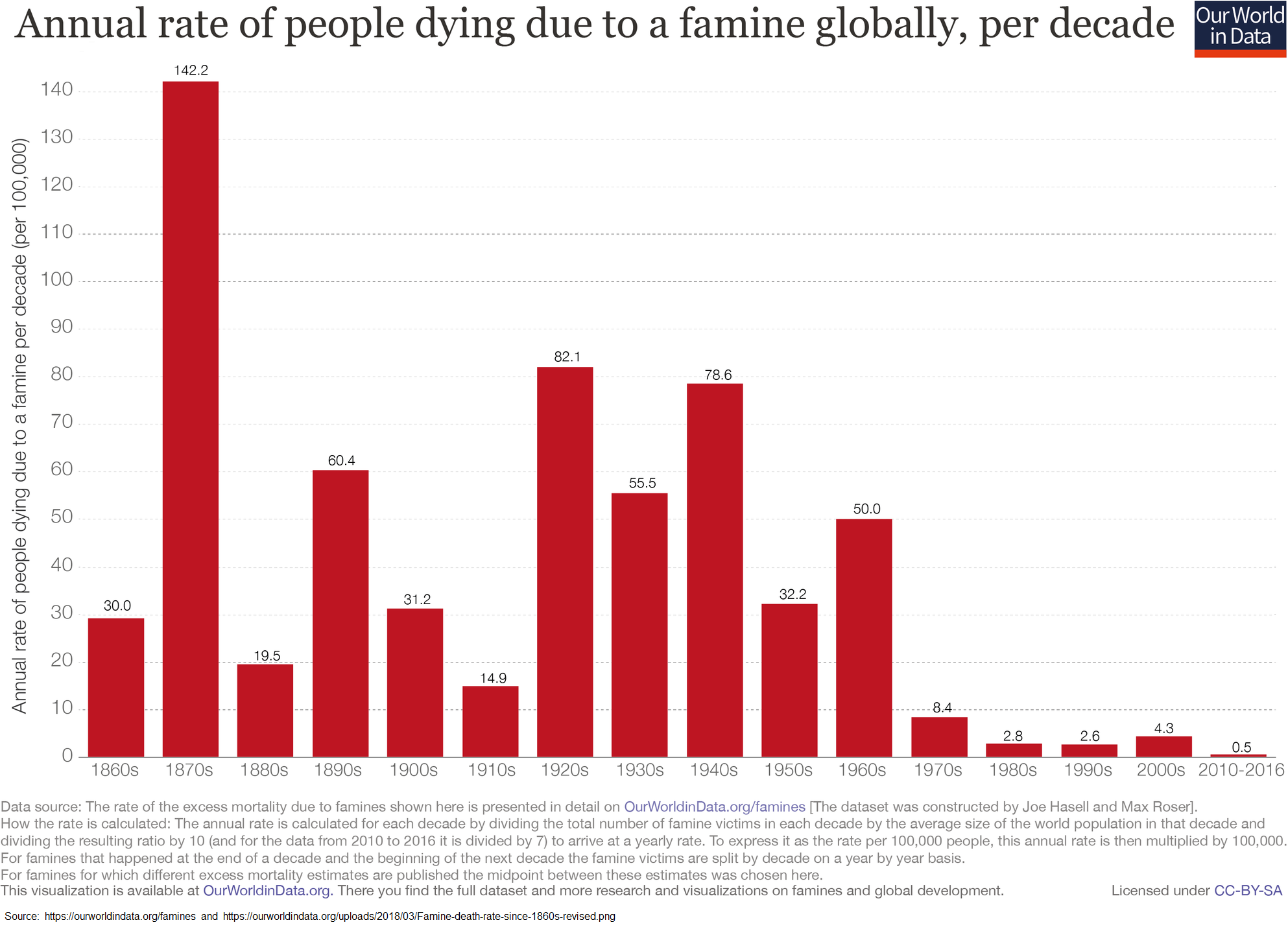
Rising CO2 level is one of the important reasons that large scale famines are fading from memory. It is almost impossible to overstate the importance of that welcome change.
Famine used to be a scourge comparable to war & disease. Compare:
● Covid-19 has killed about 0.053% of the world population, so far. (That might double or triple, before it is over.)
● The1918 flu pandemic killed an estimated 2% of world population.
● WWII killed about 2.7% of world population.
● The global drought & famine of 1876-78 killed about 3.7% of world population.
When I was a child, horrific famines were often in the news, in places like Bangladesh, but Bangladesh and India now have food surpluses, every year — and eCO2 is one of the reasons.
Don’t neglect the economic distortion caused by biofuel mandates. Roughly one third of the entire US corn harvest, and thus land devoted to growing corn, is used to make ethanol for blending into motor vehicle fuel.
I think it’s closer to “in the form of a goo” but there you go insulting shoes again. 😜
This report seems to have been done by someone living on the coast, far away from reality.
The primary wheat crop in the central plains is winter wheat, much of it hard red winter wheat. Spring planted wheat has been supplanted by corn and soybeans because of the higher profit margin. Nothing to do with climate and everything to do with profit.
We are in a drought in the northern great prairies, no question of that. What isn’t being brought up however is that there hasn’t been a significant drought in said region in roughly thirty years. Prior to that there was a solid drought pretty much every decade. So now that we’ve returned to normal in terms of actually having a drought it’s climate change? Take a look at the history of droughts in the Canadian prairies and you’ll find this isn’t unusual or exceptional.
Does anybody really believe that ground temperatures in the Pacific Northwest hit 145 F or 63 C? Did anyone really stick a thermometer into the ground and measure that? For anyone who believes that, I’ll sell them a bridge over the Puget Sound that hasn’t been built yet!