
Guest essay by Eric Worrall
h/t JoNova – According to Professor Jack Ponton of Edinburgh University, an additional 16,000 wind turbines covering 90,000 square kilometres (35,000 square miles) will be required to charge Britain’s electric cars, if Britain converts to an all electric car fleet.
Wind farms would need to ‘cover whole of Scotland’ to power Britain’s electric vehicles
SCOTLAND would need to be entirely covered by wind farms in order to power all of Britain’s electric cars, according to a leading academic.
By PAULA MURRAY, EXCLUSIVE
PUBLISHED: 00:01, Sun, Oct 29, 2017
Jack Ponton, emeritus professor of engineering at Edinburgh University, said another 16,000 turbines would be required in order to replace petrol and diesel cars with electric vehicles.
First Minister Nicola Sturgeon has pledged to phase out the internal combustion engine by 2032 – eight years ahead of the rest of the UK.
But Prof Ponton said that, even if the issues of power generation and charging points were sorted out, the National Grid could simply not cope with the increased demand.
He said: “It is a nice idea as electric cars are much more efficient, cleaner and actually simpler devices than the current internal combustion engine vehicles.
“Technically, it is an excellent idea. But the problem starts when you begin to think, ‘Where are you going to get the energy to run them?’.
“I’ve seen three different estimates for the amount of new generating capacity that we would need if were going to have all the cars in Britain running on electricity.
“The most detailed calculation says we’d be looking at five Hinkley nuclear stations to run this. It would be the best way, the most efficient way to get electricity because nuclear power stations can run 90 per cent of the time.
“If you want to do this with wind turbines, you are talking about 16,000 more wind turbines, four times as many as we have at the moment, and I’ve estimated that would occupy some 90,000 square kilometres, which is approximately the size of Scotland.”
…
This isn’t the first time British academics have run the numbers and demonstrated that renewables are utterly impractical. Back in 2008, Professor David J C MacKay of the Cambridge University Department of Physics, who also holds a PHD in computation from Caltech, upset advocates by running a few numbers and demonstrating how ridiculously inadequate renewables are to the task of powering Britain.
The renewables juggernaut rolls on regardless. Years from now, historians will marvel at how such eyewatering sums of public money were squandered on such a useless energy solution, and how people who claim they care about nature were seduced into covering the landscape with bird and bat killing industrial monstrosities.
It might be of interest to long-time readers that news has come through that Keith Briffa has passed away. Condolances to his family and friends.
Sad to hear this. He was a pioneer of dendroclimatology, a field that deserved better than Mike’s Nature Trick.
Dr. Briffa stood up to Mann and NOAA’s Susan Soloman in one of the Climategate emails, when they seemed to be advocating retaliation against Anders Moberg. He struck me as a man of character, despite giving in to the use of Mike’s Nature Trick in an IPCC report.
Condolences to Keith Briffa’s family. Briffa objected in the Climategate emails when scientific principles were violated, more than most of them did.
RobR
Are you sure? What is the origin of your news? Now, two days later, Wiki still has him as living (and they are usually very quick off the mark in updating their information); also Google didn’t turn up anything under news for his name.
The accepted figure for windpower when David Mackay wrote his book was 2W/sq meter land surface. Sure you can pack the turbines closer, but they get less efficient. Perhaps with today’s supersized ones reaching into the stratosphere its 3W/sq m.
If we take a capacity factor of 30% and the turbines are 5MW monsters, 16,000 turbines is 80GW installed capacity or around 24GW effective average capacity, which at 3W/sq m is 8,000,000,000 sq m or 8,000 sq km.
Methinks the prof has got his sums wrong. By a factor of 10. Or I have 🙂
The number of turbines sounds about right, but the land or sea area is an order too big.
Possibly, but remember not all land is equally suitable for wind turbines – lots of it is in the lee sides of mountains and other obstacles.
Yes Leo – he has his numbers wrong. I’m an EV enthusiast for reasons quite unconnected to CO2, and I dislike wind turbines and nuclear for different reasons. If we need extra power build some gas or coal stations and be done with it.
The UK National grid (http://fes.nationalgrid.com/media/1264/ev-myth-buster-v032.pdf) concluded “…The recent government announcement on the ban of new conventional petrol and diesel cars and vans by 2040 has resulted in some of National Grids FES numbers being quoted out of context. …The scenario which best fits the government’s statement is Two Degrees….The additional peak demand from EVs in that scenario is not 30 GW but more likely to be 5 GW….Nuclear power stations would not be the best option for meeting peak demand.
Two degrees of what? They explain the scenario, but not the significance or meaning of ‘two degrees’. They also don’t explain the other three scenarios they modeled. In they one they favor, people will charge their cars not based on when the remaining charge of the vehicle, but when it is cheapest to do so. Since price is instantly variable based on current demand, cost would have the effect of smoothing out the daily demand curve. This assumes behavior contrary to human nature. When the remaining charge is low, people will want to charge their car immediately, not at some future time. The car is considered a necessity, and must be available for use virtually at all times. Perhaps you need to find a non-biased analysis.
So John where is the natural gas and coal going to come from?
When you build a power plant you need to think of about a 60 year supply of fuel.
“I’m an EV enthusiast”
Me too! The only problems is every time I look at the cost of an EV, I decide I would rather spend the money on a new sailboat.
Here is the problem with enthusiasm, When it comes to doing something, you have to pick. For most of us, there is not time or money to do everything.
There lies the difference between a hobby and practical vocations. EV and residential PV are examples of hobbies.
When it comes to the vocation of supplying electricity when and where people need it, there are only a certain number of ways of doing it.
Technology has moved on since then.
8GW is a standard offshore turbine, where 30% is a minimum capacity factor around the UK. 13GW turbines planned.
The article is meaningless as it does not quote a figure for EV demand, nor say what size of turbine was considered.
and wind is not the only renewable energy source… even today UK was getting 4% of demand from solar in mid morning.
4% from solar in mid-morning, and may 11% from wind somehow translates to covering EVs at 100%. Can’t see the math ever working out. I do see a lot of stranded motorists and some ugly riots.
You mean 8 MWe.
When it comes planning, we 1600 MWe nukes with a 95% capacity factor and 60 year design life of 60 years.
So when it comes to best available technology, wind just fell behind by by 293 MWe.
More Wind power pays off in the long term with 25+ year life expected from new installations. These systems just keep on putting out power. And you don’t have to buy fuel to run them.
http://www.independent.co.uk/news/business/news/renewable-energy-electricity-new-record-uk-wind-solar-a7972266.html
@Leopold Danze Smith you are the winner the professors initial calc is right the conversion to area is wrong. Whether he made the error or the media I can’t say but I am pleased to see at least someone on the forum can do basic checks.
We can all rest easy we only a tenth of Scotland needs wind turbines.
Not to mention the MASSIVE upgrade needed to their power grid to do so.
City and urban ‘renewables’ become obscene rural blight. The ‘environ-mentalists’ rant about clear cutting mature forests sections, that subsequently renew browse for elk, deer, beaver, rabbits, and support large and small predators…. and then applaud with-standing-ovation installation of ridge top raptor chopping, eyesore windmills. How they resolve the logical conflicts, I can’t fathom…. beyond ‘The Ends Justify The Means’ indoctrination.
J Mac
And just try to build housing on the greenfield sites chosen for wind turbines. All of a sudden rare newts begin to appear.
Environmentalists in the early 2000’s decried oil and gas “destroying open spaces”. Yet wiping out thousands of acres with permanent 400 foot monstrosities is somehow okay now. They LIED. They always lie. They care not a whit about wildlife or open spaces. They want to destroy society. I see no other explanation for the behavior.
“I see no other explanation for the behavior.”
A short coming on your part.
Retired Kit P: How about enlightening me then?
The UK has a peak power generating capacity of 61 GW. According to the National Grid, the people who run the network, the additional peak demand to cater for an all-electric car market is 30 GW. The UK is building just one new nuclear power station (Hinckley Point C). Because of environmental, planning, capital and engineering issues it has been 20 years in development and is not due to come on stream until 2025 at the earliest). According to National Grid, we will need 9.6 of these plants (not 5) to sustain peak load for an all-electric car market.
Look, it’s not going to happen. I have driven a plug-in hybrid for the last three years – the technology is excellent and it delivers confidence because it has a petrol engine alongside its electric motor. The battery for the electric motor is charged via the National Grid and fossil fuels. By the way, what if the wind isn’t blowing when those 16000 turbines are built? Does Britain just not go to work on that day?
John Wright – not 30, more like 5 and nuclear is not the best option (see my quote from the National Grid in my reply a couple above yours)
By the way, what plug-in vehicle do you have?
John Hardy
“and nuclear is not the best option”
If the obsession with Co2 continues, nuclear might be the the only realistic option.
From the horses mouth, so to speak. And can you sense the contempt for renewables dripping from this presentation?
Official uk figures for 2016 give transport as consuming 40% of total uk energy output
Bryan.
Yes, it is more than I expected. It was 27% last time I looked, but more like 40% now. See chart 5.
https://archive.uea.ac.uk/~e680/energy/energy_links/statistics/UK-Energy/ECUK_Chapter_1_-_Overall_factsheet.pdf
R
Hi John – Sorry for this late reply. Interesting to see the National grid roll back on their initial figure. More likely they have had their fingers rapped for inadvertently telling the truth.
I drive a Mitsubishi Outlander Phev. It’s a company car and the deal in the UK for buying and running one was unmissable good. They gave us £5k towards the purchase price, charge no road tax, BIK comes out at 2% as opposed to, potentially, 15% and we offset the entire purchase price against taxable profits in year one. And all because the UK Government has bought into the plainly ridiculous CO2isevil movement. At the same time, thanks to the EU, they encouraged people to buy polluting diesel cars over petrol-engine cars. There’s no cure for stupid. By the way, we love the car and it is very fuel-efficient. I believe in the UK that it accounts for some 50% of the whole plug-in market.
The power industry is always planning ahead. Just a few years ago there were 30+ new nukes in the planning stage in the US because we were building LNG terminals to import gas. Now we are turning the LNG terminals into places to export gas.
The US will be happy to supply the UK with all the wood chips, gas, and coal you need. We also keep the sea lanes open for you.
I suspect the reason to build new nuke in the UK is to avoid seeing how many jobs can be created in the US.
There are some great photos above of densely packed turbines.
any idea as to the effectiveness of those in the front rank of generating power, compared to those in the middle of the pack and at the back?
tonyb
One of them is certainly manipulated and the other is of obsolete designs. Not typical/real
It’s manipulated because you don’t like it? Really, how foolish a comment is that?
not half as manipulated as skepticalscience…
Just shot with a telephoto
packing tight reduces turbine output but maximises output per unit land area.
Its been done, where land area was limited and subsidies were generous
In my part of Wandsworth in London the council installed 3 charging points acouple of months ago
They’ve never been used
Yes installing slow charge points in city centres is silly box-ticking. If you drive an EV you need fast charge on long distance routes and destination charging (hotels and maybe restaurants)
Fast charge example: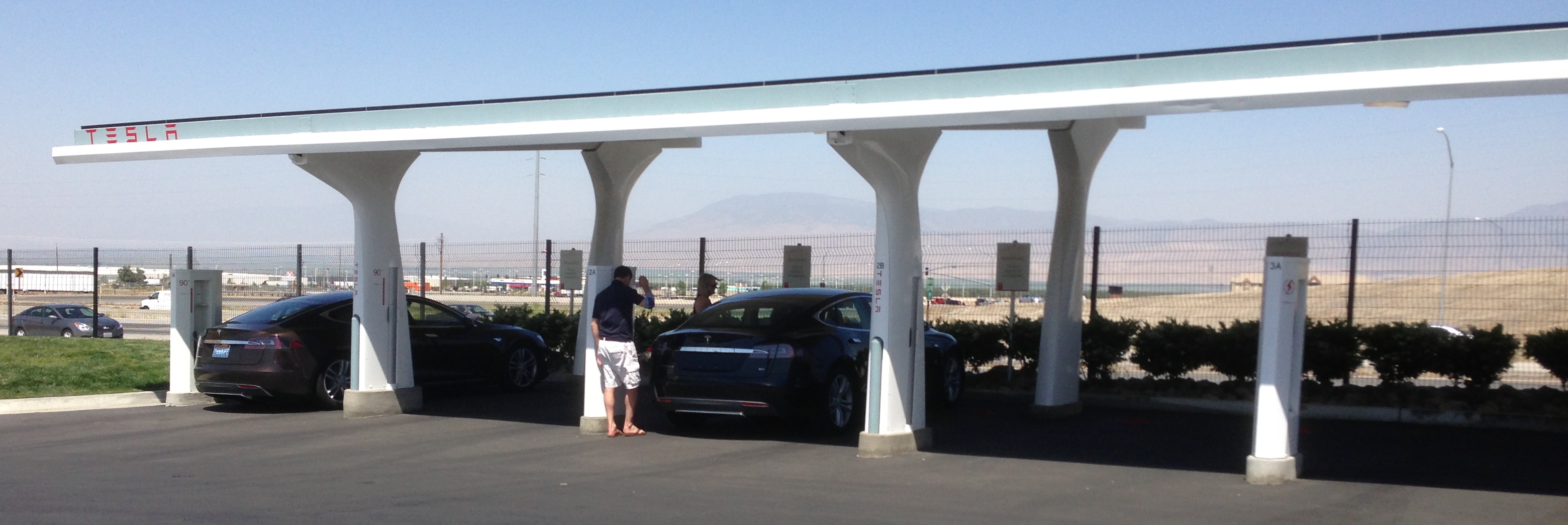
I suggest you check the stats on car journeys in the UK… the overwhelming majority of them are for short distances.
That is 56 km/day per car. Whether the number is right I have no idea but if you want to argue provide an alternative.
Griff “I suggest you check the stats on car journeys in the UK” That is a bit patronising: I am very familiar with these numbers – approximately 21 miles per day for private cars. My comments on charging stations are based on close to 5 years experience using an EV. Kerbside slow charge in city centres is a waste of space as most charging is done at home and you only need other chargers on long trips
dear griff. I suggest you check the stats for aircraft journeys. the vast majority of them are at less than 1.5g, so there is no need to spend huge amounts of money building aircraft that can withstand 4-5g
Then, John, I do not see why you are emphasising long distance charging… it is a minor part of driving for people most likely to consider an EV. And there is a roll out at service stations underway.
Destination charging is surely coming too: in Norway, for example, where EV take up large, charge points are going in at IKEA stores.
I can’t imagine hotels will pass up on this (though I find a lot of UK hotels don’t have much in the way of parking, strangely!)
Hot Scot: “and nuclear is not the best option”. I was quoting the UK National Grid paper directly. If you look at the paper they say of one of their scenarios “The peak demand is met with a combination of more flexible electricity generation sources with the predominate one being gas.”
Can someone explain why wind farms nowadays keep on replicating the vintage Dutch windmill design with propellers. What holds up the development of vertical axis wind turbines a bit further from this
http://www.rooftopwind.biz/images/urbanite_wall_mount_1kw_rooftopwp.jpg
This should enable harnessing the already constructed urban wind tunnels, preferably in the proximity of the organisations sustaining the cAGW illusion e.g. banks in Canary Wharf:
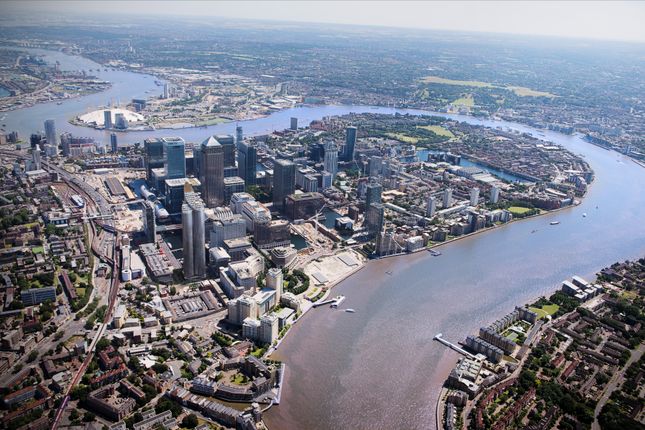
There are a number of different designs around, and mooted. Here is a mildly light-hearted look. https://www.engadget.com/2016/11/05/six-innovative-wind-turbine-designs/. I’m not a fan of any type I’ve seen to date. Give me roof-top solar instead
Thanks John. I agree. Especially the helium-filled floating wind turbine looks like a prank. Albeit would look perfect hooked to the tallest tower in Canary Wharf.
The Vortex Bladeless wind turbine design looks interesting.
vertical turbines are not as efficient as windmill designs, so the installed cost per kW is higher.
The answer is efficiency. I’ll give you a clue. Show me any aircraft, that has a vertical axis propulsor on the front……
R
You lost be there for a few reasons
http://www.uno.edu/campus-news/2016/images/helicopter.jpg
be=me
Ali Baba had this Chinese design. Perhaps one of the US courier companies are using it already

But Boeing CH-47 Chinook is among the heaviest lifting
http://static4.businessinsider.com/image/5032af6aeab8eab05e000015-900
A helicopter is very inefficent compared to a fixed wing aircraft. More fuel used when comparing distance and payload.
I meant a rotor like the one illustated above by Jakkok. (Like a fan-heater rotor). Tney are hugely innefficient.
A helicopter rotor is simply an aircraft rotor (wind farm rotor), in the vertical position. And yes, they are efficient because of their diameter.
R
Vertical turbines are not as efficient. So installed cost per kW is much higher.
it the same reason cars don’t have square wheels
Okay. Propellers being the most effective form of wind energy, installation in the city centre can be excluded. Majority of EVs being in the south-east of the country and to prevent energy lost in the transmission, about a 16,000 km2 of propeller coated doughnut would be required from M25 onwards. Even with a hypothetical average of 1 propeller/km2 it would be an impressive testament to the green blob raspberries. Griff 3…2…1…3/4….
Though uncommon in Western Europe the White Throated Needle Tail is not rare or endangered.
https://en.wikipedia.org/wiki/White-throated_needletail
yes. this one was way off course and would probably have perished anyway.
That figure of 16,000 wind turbines does not include the storage facility. You would also need several pumped starage systems, to go alongside these wind turbines. And since the wind can go offline for ten days or more, the pumped storage system would have to cover this span of time. It would have to be immense.
To cover ten days of charging cars and trucks, the UK would need 12,000 gwhr of energy storage (50 gw for ten days). One of the largest storage systems is the UKs Dinorwig plant, which can store 10 gwhr. So we would require 1,200 Dinorwigs to cover ten days without wind. And since Dinorwig was one of the world’s most expensive power plants, building 1,200 of them would be impossible).
And this is just for transport. We would require another 1,200 Dinorwigs for domestic electrical usage, and another 2,400 Dinorwigs for space heating). So that is 48,000 Dinorwigs, times 3 billion pounds each, or 144 trillion pounds. Prof McKay proposed reducing this figure by flooding many Scottish glens (valleys), and using quantity of water rather than height of water for storage. But that proposal would go down like a lead balloon in the Scottish parliament, as you might imagine.
Something tells me that this is looking-glass technology, powered by rocking horse sh!t.
Ralph
It’s a rocking UNICORN with rainbow coloured fur.
The wind does not go offline for 10 days or more.
And the UK will have up to 10GW of links to other countries in the 2020s.
Griff. Look at any wind velocity chart for Europe, and you will see very large outages in it. Ten days is not unusual. (Hint – generating at 10% capacity is no good for anyone.)
Ralph
You demand is currently 40GW as I look at the numbers
http://www.gridwatch.templar.co.uk/
You couldn’t afford to have to much go wrong on your island even with that.
See if this address works. This is Eastbourne, on the UK south coast. It had a zero average wind for the whole of April, in 2016. Thirty days, with no wind generation. I will look out for regional graphs.
https://www.wunderground.com/personal-weather-station/dashboard?ID=IEASTSUS51#history/s20161030/e20171031/myear
Griff.
Look at fig 8 in this paper of wind power in Denmark, where there are several whole weeks below 10% generation. And in February, there is at lest ten days below 10% generation. How does Denmark cope with no electricity for ten days? (This may be 2005, but wind is wind).
At present, Denmark asks Scandinavia very nicely if they can borrow some hydro (which is not renewable – apparently). But Scandinavia charges treble the price. that Denmark got, when it lent its wind power to Scandinavia. Hence Denmark has the highest costs i. Europe.
http://incoteco.com/upload/CIEN.158.2.66.pdf
Ralph
And it is as I respond LdB – with wind meeting 12% of demand, solar 2% and foreign interconnectors 7%
and the wind capacity will more that double in the next 10 years
Can someone point out where it has been proposed that a British fleet of electric vehicles would be powered by 16,000 wind turbines rather than a mix of power generation systems?
using reality based calculations would not grab headlines like scenarios where all power generation switches to wind. But wind is doing just fine right now, 30% of UK electricity in latter part of 2017.
http://www.independent.co.uk/news/business/news/renewable-energy-electricity-new-record-uk-wind-solar-a7972266.html
What the UK needs to do is to gradually reduce its population so that it will not need so many electric cars. Going back to animal power will also help to reduce the number of electiic cars that will be required. However even if the UK cut CO2 emmissions to zero, the effort would have no effect on global climate. There is no real evidence that CO2 has any effect on climate and plenty of scientific reasoning to support the idea that the climate sensivity of CO2 is really zero. According to the paleoclimate record and the results of modeling, the climate change we have been experiencing is caused by the sun and the oceans over which mankind has no contorl. Even if we could somehow stop the Earth’s climate from changing, extreme weather events and sea level rise would continue because they are both part of our current climate.
It is reported that Casey Stengel said, “You can look it up.” And that was before the internet.
Land-Use Requirements of Modern Wind Power Plants in the United States
https://www.nrel.gov/docs/fy09osti/45834.pdf
New study yields better turbine spacing for large wind farms
http://www.gazette.jhu.edu/2011/01/18/new-study-yields-better-turbine-spacing-for-large-wind-farms/
Although the internet tells us that it didn’t originate with Mr. Stengel …
Randall Short credits “You could look it up” to Casey Stengel. It is true that Stengel often said it in monologue with those he called “my writers,” but it probably originates with James Thurber.
http://www.nytimes.com/1991/03/03/books/l-you-can-look-it-up-577891.html
Quick calcs using 5MW turbines at 20% of nameplate (land based, sea-going mills do better), 30 million cars doing 10,000 miles each per year and using 0.33kWh per mile – it works out about right energy wise.
Area wise and considering Scotland…
The wind blows from the south west mostly and Scotland is hilly.
By definition, half the [place is on the wrong side of the hill.
Then you have valleys, lakes (lochs), towns and cities, roads and railways, existing transmission lines, National Parks, Areas of Outstanding Beauty, golf courses all reducing the available area.
Then there are oddities like the Seismic people at Eskdalemuir (looking for earth tremors etc etc) and you’re not allowed a turbine within 50 kilometres of them.
With regard spacing, lets imagine we want to build a shelter-belt for our houses, gardens, animals in a field or wherever.
We might plant a hedge or build a wall and the general guidelines say that you ‘get shelter’ behind the wall for a distance equal 10 times it height. You even get shelter in front of the wall for a distance of 2 times its height.
Of course folks look at windmills and see 3 big blades with huge space between them.
What the wind sees is effectively a solid disc, just like a wall. It will ride over that disc even before it gets there and for a distance 10 times its height afterwards.
At a guess and because the wind always comes from the same direction in Scotland, the ‘front of wall’ figure will apply sideways too
*There* is you turbine spacing calculation.
You very quickly run out of space.
What the UK Govt and National Grid have been very careful not to tell the public, is that their estimates of how much extra power is needed is based on the assumption that there will be many less cars on the road than now.
https://notalotofpeopleknowthat.wordpress.com/2017/08/01/ev-power-scenarios/
This, I think, is their true agenda in the UK, i,e., figuratively banning cars to the middle and lower classes. If you look at all the pieces – growing population, growing number of cars, massive traffic problems, massive lack of parking, no plans to reinforce the grid, no plans for quick-charging points, variable and instantaneous electrical pricing made possible by the quasi-forced acceptance of smart meters, and no way for the millions who own cars, and rely on street parking, to charge their cars – I can only conclude that the ruling class has no intention of allowing others to own cars.
An outright prohibition would be political suicide, but they can achieve the same goal by making car ownership cost prohibitive via electrical pricing. “Yes, electrical prices must be high, but that is so we can save the world from climate change. Think of the children! You can’t afford to charge your car? We’re sorry, but think of the children!”
Notice they couldn’t get away with simply charging still more for petrol. Their intent would be too obvious when compared to petrol costs worldwide, but by making it AN UNINTENDED CONSEQUENCE of pursuing a green energy policy, they can reclaim the roads for themselves and ‘drive’ us mere mortals away.
jtom,
Certainly some London Borough Councils – I live in the London Borough of Croydon – seem to be strongly discouraging cars – and other vehicles, except cycles.
We have had a proposal for new flats on our main town car park – formerly over 220 spaces.
There will be ‘152 flats’ – mix of 1, 2, and 3 bed flats is to be determined.
Also – mix of private sales, ‘affordable’ [in London – dream on!!!] and part-but, part-rent; and social housing to be determined, also.
Now the architectural design of the new flats is actually – IMHO – very nice.
But –
Car parking – a BIG problem.
The 152 flats – note, easy walking distance to either of two decent rail stations for commuting to London, and also several bus routes covering a decent part of Southern South London – will get 560 parking spaces.
The public car parks will be restricted to – if no second storey is provided [per the plans] – at most 100, and probably <90.
There are already issues relating to – amongst others – access to an electricity substation . . . .
These issues will cut the provision.
A decent methodology indicates that my town actually needs an additional 150-200 car parking spaces.
And the Council intends to cut provision – already greatly reduced from 220 to 124 [at best] – by a further 30 or so [noted that a few extra spaces – four, six, maybe ; could be found by Dobles Close, and, possibly a handful more- three or four -in the town].
Lesson – How to Kill a Thriving Town 101 – see Coulsdon.
So – yeah – if you can't afford a chauffeur to drive your car whilst you go to the shops, doctors', dentists', restaurants, IFAs, you need to use public transport and walking.
Public transport here is pretty good – but imagine doing the weekly shop- 5 Kg of potatoes, another 3 Kg of other veggies – rice; water, wine, etc., plus some luxuries like tampons – and some of the hills here – in the North Downs – are fairly long and steep.
Of course folks will take the car!
Auto – bemused at the ivory towers some politicians – as well as academics, obviously – live in.
Sorry – typo. My fault.
“The 152 flats – note, easy walking distance to either of two decent rail stations for commuting to London, and also several bus routes covering a decent part of Southern South London – will get 560 parking spaces.”
Should read –
“The 152 flats – note, easy walking distance to either of two decent rail stations for commuting to London, and also several bus routes covering a decent part of Southern South London – will get 50 parking spaces.”
A difference.
A difference of 510 car parking spaces!
Sorry
Auto.
Truth is, proof-reading what you, yourself, have typed – is very difficullt.
I should have picked that up – but didn’t. Apologies.
“Auto October 31, 2017 at 5:21 pm”
Sunny Croyinge (Croydon) going down the eco plug hole eh? Shame. Know the area well, North and South Downs too know it better than Sydney, Australia, I was born there after all. East Croydon station is very quick commute in to London.
which may not be unreasonable: young people drive less and car sharing (Zip car etc) and improved public transport in some cities is reducing use
Land use is something that governments have to plan for and manage. There’s literally no other way to adapt to increasing numbers of cars, roads, and people. This is a worldwide problem for cities, not just in UK.
OR, they could build more Drax plants. After all, we in the US have millions more trees that could be chopped down, ground up, compressed into pellets, and shipped over, and just think of all the trees elsewhere, once those are gone. Problem solved!
I know what you’re thinking – what will the ships be powered with? I’m glad you asked.
Unicorn farts and pixie dust, of course.
Drax is cutting back and may convert some capacity to gas: UK govt is not in favour of Drax/wood chip currently
So the Scots really, truly, and simply hate birds.
More birds of prey are shot in Scotland than are killed by wind turbines (very low figures, thankfully)
More white tailed sea eagles have been killed by trains than wind turbines.
wind turbines in the UK are only allowed after a year long survey of birds in the build area and are regulary refused permission where birds would be impacted.
The average serial killer kills 20 people. Therefore it doesn’t matter if I kill one or two.
Haha 🙂
What a load of ill informed tendentious nonsense from Griff. the figures on raptor deaths are a closely guarded secret, because although returns are made, they are collated by the RSPB who will not release them, citing “commercial confidentiality.” RSPB is of course hugely in favour of [turbines] as they are “green” — unless you are [talking] about a couple of offshore wind farms, where they have suddenly turned into the opposition because of feared sea [birds] deaths. there is a very major court case wending its way to the UK Supreme Court on this issue.
I have tried repeatedly to get these numbers released, as we know full well turbines kill raptors in large numbers. And guess what? Birds like the red grouse have learnt this, and congregate in considerable numbers on upland wind farms — as i know from personal experience. One famous grouse shoot even has lines of butts (for the guns/ shooters) under the turbines of a very large wind farm in the Scottish Borders.
There has been a survey done in Norway on sea eagle deaths. And guess what? It showed that one wind farm sited on an group of island with a major sea eagle population has killed 70 of them over a period of about 5 years.
And as for wind farms being refused when birds will be impacted? Oh then RSPB says nothing — as with a local scheme here where developers want to put turbines on moor with 7,000 wintering geese. So much for birds being protected.
When griff says something, you KNOW that it is going to be at least 97% utter BS and arrant nonsense.
Its as though he just makes up his own version of the truth as he goes. PURE FABRICATION.
I live in Scotland and see both on and offshore wind turbines every day. Do you live in Scotland? I certainly don’t recognize any of the crap you have been uttering above.
You are a total twat pushing somebody’s agenda
“roger October 31, 2017 at 4:12 pm”
Griff constantly comments on countries he does/has not lived in. A popular one for him is Australia, and in particular the state of South Australia in fact as that state is his poster state for renewables. They are building the biggest Li-Ion battery, supplied by Tesla!
heriotjohn
The Times tells me RSPB doucumented 80 cases of verified raptor death in the UK last year from shooting and poison.
The Norwegian site is an exception – all authorities, including the RSPB told them not to put it there. We would not site it in the UK like that.
The RSPB has objected to multiple wind farms and got them cancelled/restricted (e.g. London Array extension)
both points covered here:
http://www.independent.co.uk/environment/rspb-warning-as-wind-turbines-kill-sea-eagles-6110557.html
You left out bird strikes on buildings, and cats. It is amazing we have any birds left.
Remember the Kennedy family leading protest against off-shore wind-farm near their compounds? Their ancestors lived in Ayr (and Wigtown…) shire. Notify them so they can go back to protest there (and leave us free).
16000 pinwheels? The entire island will be vibrating in damaging infra sound.
Wind power is social virtue signaling that is limited by the environmental destruction that it causes. From the rare earth mining operations in China, to the cobalt mines in Africa, to the slaughter of millions of migratory birds and bats, to the toxic poisoning of landfills, wind power wreaks extreme environmental damage that would not be tolerated by any fossil-fuels operation.
Wind turbines do not use cobalt.
…
Do you know the difference between a wind turbine an a battery?
Permanent magnets in the turbine generators in fact use cobalt. Use a search engine.
Turbines with gearboxes don’t use permanent magnets.
..
Permanent magnets can be made without cobalt.
….
Googlists like you think you know something.
cobalt is a possible magnetic material.
Not magnets that use cobalt?
What do they use instead?
Where does it come from?
What are the living conditions where it’s mined?
I haven’t noticed any my refrigerator magnets missing.
Just what type of magnets do wind turbines use?
What is the math?
There’s 400bn vehicle-km per year in the UK. That’s cars and taxis only, does not include commercial vehicles.
I calculated an extra 80TWh per year needed for this without storage. With energy storage at say 70% efficiency you need up to 114 TWh per year.
All new wind development in the UK will be offshore, where the capacity factor averages 37%. Larger turbines will increase this.
It works out to an offshore area the size of Yorkshire.
I don’t get it. 16,000 wind turbines would need 90,000 square kilometers? That’s nearly 6 square kilometers per wind turbine. Why so much space? You can fit wind turbines a lot more densely than that. This guys figures seem bogus to me.
There is an error 5.6km versus 560m .. can you be the first to work out whats wrong.
I just don’t get this religious fascination with wind. its not reliable, its not cheaper without subsidies or feed in tariffs or required wind energy requirements, its ugly, it is inefficient, it takes up a large amount of area, it consumes a large amount of resources to build and maintain. Are we competing for some award for “im spending more money for green energy than you are?” All for some false save the planet from more co2 game? Do people realize if we took all the money we put into green energy in say the last ten years and instead put that into feed the hungry and saving lives from various diseases, how much of a bigger impact on humankind we would have been able to accomplish. No, let the hungry and sick suffer so we can pretend we are saving the planet by installing more wind turbines….what a waste.
You answered your own question — religious.
So if IC vehicles are banned how will people be able to tow their caravans? While towing range will be drastically reduced.
Teslas are not even allowed to tow anything. Too heavy by weight and too light by construction.