Guest Post by Willis Eschenbach
The Intergovernmental Panel on Climate Change, the bureaucratic agency which appropriated the role of arbiter of things climatic, has advanced a theory for the lack of warming since the turn of the century, viz:
The observed reduction in warming trend over the period 1998–2012 as compared to the period 1951–2012, is due in roughly equal measure to a cooling contribution from internal variability and a reduced trend in radiative forcing (medium confidence). The reduced trend in radiative forcing is primarily due to volcanic eruptions and the downward phase of the current solar cycle. However, there is low confidence in quantifying the role of changes in radiative forcing in causing this reduced warming trend.
So I thought I’d look at the CERES dataset, and see what it has to say. I started with the surface temperature question. CERES contains a calculated surface dataset that covers twelve years. But in the process, I got surprised by the results of a calculation that for some reason I’d never done before. You know how the IPCC says that if the CO2 doubles, the earth will warm up by 3°C? Here was the question that somehow I’d never asked myself … how many watts/m2 will the surface downwelling radiation (longwave + shortwave) have to increase by, if the surface temperature rises by 3°C?
Now, you’d think that you could just use the Stefan-Boltzmann equation to figure out how many more upwelling watts would be represented by a global surface temperature rise of 3°C. Even that number was a surprise to me … 16.8 watts per square metre.
 Figure 1. Blue line shows the anomaly in total downwelling surface radiation, longwave plus shortwave, in the CERES dataset, March 2000 to September 2012. Red line shows the trend in the downwelling radiation, which is 0.01 W/m2 per decade. Gray area shows the 95% confidence interval of the trend. Black line shows the expected effect of the increase in CO2 over the period, calculated at 21 W/m2 per doubling. CO2 data are from NOAA. Trend of the expected CO2 change in total downwelling surface radiation is 1.6 W/m2 per decade. CO2 data from NOAA.
But as they say on TV, wait, there’s more. The problem is, the surface loses energy in three ways—as radiation, as sensible heat, and as the latent heat of evapotranspiration. The energy loss from the surface by radiation (per CERES) is ~ 400 watts per square metre (W/m2), and the loss by sensible and latent heat is ~ 100 W/m2, or a quarter of the radiation loss.
Now, the sensible and latent heat loss is a parasitic loss, which means a loss in a heat engine that costs efficiency. And as any engineer can testify, parasitic losses are proportional to temperature, and as the operating temperatures rise, parasitic losses rise faster and faster. In addition, the 100 W/m2 is the global average, but these losses are disproportionately centered at the hot end of the system. At that end, they are rising as some power factor of the increasing temperature.
But let’s be real generous, and ignore all that. For the purpose of this analysis, we’ll swallow the whopper that a 3° temperature rise wouldn’t drive evaporation through the roof, and we’ll assume that the parasitic sensible and latent heat losses from the surface stay at a quarter of the radiation losses.
This means, of course, that instead of the increase of 16.8 W/m2 in downwelling radiation that we calculated above, we need 25% more downwelling radiation to account for the parasitic losses from the surface. (As I said, the true percentage of parasitic losses would be more than that, likely much more, but we’ll use a quarter for purposes of conservative estimation.)
And what that means is that if the IPCC claim of three degrees of global warming per doubling of CO2 is true, when the top-of-atmosphere radiation goes up by a doubling of CO2, an additional TOA 3.7 watts per metre squared, the surface downwelling radiation needs to go up by no less than 21 W/m2 per doubling. And although I was surprised by the size of the number, to me was very good news, because it meant that if it were there, it should be large enough to be quite visible in the CERES data. So I took a look … and Figure 1 above shows what I found.
The red line shows the trend over the ~ 13 years of the record … which is 0.01 W/m2 per decade, statistically no different from zero.
The black line, on the other hand, is the change in downwelling radiation expected from the change in CO2 from 2000 to 2012, calculated at 21 W/m2 per doubling of CO2. As you might imagine because of its steady increase, there is little difference between the CO2 data and the CO2 trendline, so I’ve left it off. For the same reason, there is virtually no error in the trend in downwelling radiation expected from CO2. The result is an expected increase in downwelling surface radiation of no less than 1.6 ± 0.007 W/m2 per decade. Over the period of the CERES data, it totals almost 2 W/m2, which in terms of the precision of the individual CERES datasets should certainly be visible.
So … does Figure 1 falsify the CO2 hypothesis? Not yet, we’ve got a ways to go, but it is an interesting finding. First, we need to look at the two explanations postulated by the good folks at the IPCC that I quoted at the head of the post—volcanoes and solar variations. And the amount that we are looking to explain is a missing increase of 1.6 W/m2 per decade.
Their first explanation was solar. Since the downwelling surface radiation has not increased as expected, perhaps there’s been a decrease in the incoming TOA solar radiation. This would offset a warming from CO2. Here’s that data:
 Figure 2. Trend in TOA Solar Radiation, 2000-2012. Red line shows trend, a decrease of – 0.15 W/m2 per decade.
So the IPCC is right about the solar. And from having to explain 1.6 W/m2, we’ve explained 0.15 W/m2 of it which leaves 1.45 W/m2 of missing warming.
Next, volcanoes. The IPCC says that the effect of volcanoes over the period was to cut down the amount of sunshine hitting the surface, reducing the total downwelling radiation.
The reduced trend in radiative forcing is primarily due to volcanic eruptions …
Here are the anomalies in that regard:
 Figure 3. Action of volcanoes in reducing surface solar radiation. This measures the anomaly in downwelling solar at the surface minus the anomaly in downwelling solar at the TOA. The trend in the transmission is a warming of +0.34 W/m2 per decade.
Bad news for the IPCC hypothesis. Rather than volcanoes counteracting the expected warming and decreasing the atmospheric transmission of sunshine over the period of record, we had a trend of increasing amounts of sunlight making it to the surface. The trend of this increase was 0.34 W/m2 per decade. Kinda blows holes in their theory about volcanoes, but all we can do is follow the data …
And as a result, instead of having to explain a missing warming of 1.6 – 0.15 = 1.45 W/m2 per decade, we now have to add the 0.34 W/m2 to the missing warming, and that gets us up to 1.8 W/m2 in missing warming. So rather than explaining things, overall the IPCC explanation just makes things worse …
Anyhow, that’s how it goes to date. If the IPCC theory about 3°C surface warming from a doubling of CO2 is true, we need to either a) come up with something else in the CERES data to explain the missing CO2 warming of 1.6 W/m2 per decade, b) back off on the IPCC climate sensitivity by a factor of about ten … or my perennial favorite, toss out the idea of “climate sensitivity” entirely and recognize that at equilibrium, temperature isn’t a simple function of TOA forcings because the climate system has emergent phenomena which respond and react to counteract the TOA changes.
The big problem that I see for the hypothesis that GHGs rule the temperature is that over the period of the CERES data, we should have seen a shift of almost two watts in the downwelling total radiation … but I find no such thing in the dataset. So I throw this question out to the climate science community at large.
Where in the CERES data is the missing warming? There is no trend (0.01 W/m2 per decade) in the surface downwelling radiation. The IPCC says that over the period, CO2 should have increased the downwelling surface radiation by ~ 2 W/m2. SO … if the IPCC hypothesis is correct, what is countering the expected increase of ~ 2 W/m2 in the downwelling surface radiation due to the increase in CO2 over the 2000-2012 time period?
Solar explains perhaps 10% of it, but the volcanoes push it the other way … so why can’t I find the two watts per square metre of expected CO2 warming in the CERES dataset?
w.
NOTES
USUAL REQUEST: If you disagree with something that I or someone else said, please QUOTE THE EXACT WORDS YOU DISAGREE WITH. Then, and only then, let us know what you disagree with. I can defend my own words. I cannot defend your interpretation of my words.
DATA AND CODE: I’ve put the data and code used to produce the graphs and calculations online. There are three code files: CERES Setup.R, CERES Functions.R, and the code for this post, CO2 and CERES.R. In addition, there are two datafiles, one for the CERES TOA files, and the other for the CERES surface files, entitled CERES 13 year (230 Mbytes), and CERES 13 year surface (112 Mbytes). I think that the data is turnkey, just pull up the CO
All of them need to be in the same folder, because the CO2 and CERES.R file calls the setup file, which loads the data files and the function file. If you’ve downloaded the CERES 13 year file, it is unchanged, no need to reload. Open the CERES Setup.R file to see the names of all of the datafiles loaded, and open the CERES Functions.R file for functions and constants.
And as Steven Mosher recommended to me, use RStudio as your portal into R, much the best I’ve found.
CERES Data: The top-of atmosphere CERES data is measured by the satellites. On the other hand, the CERES surface data is calculated from the TOA CERES data, plus data from the MODIS and GOES satellites. The calculated surface data is energy balanced, meaning that the surface flows sum up to the TOA flows.
I’ve run my own version of ground truthing on the CERES surface data by comparing it to the surface temperature data I was using previously. Differences were small overall, and both sets shows the same small details and fluctuations.
Is this how I’d like to do the analysis? Not at all. I’d rather that everything were measured … but this is the best we have, and the various climate scientists involved have used all of the available observational data from a variety of satellites to determine the various values, and have ground truthed the surface data in a variety of ways. So until we have better data, the CERES datasets are the closest we have to actual measurements … and as near as I can tell they show no sign of the claimed 2 W/m2 increase in downwelling radiation that we are assured is going on over the period of record.
Alex says:
January 14, 2014 at 11:47 pm
—————————————
“The total amount of energy received at ground level from the sun at the zenith is 1004 watts per square meter, which is composed of 527 watts of infrared radiation, 445 watts of visible light, and 32 watts of ultraviolet radiation.”
That’s SWIR the sun is emitting, very close to the visible spectrum. We are interested in reducing incident LWIR on the experiment. This is being emitted around the 10 micron band from the atmosphere. The use of a balloon will get above 90% of the atmospheric LWIR.
“At the top of the atmosphere sunlight is about 30% more intense, with more than three times the fraction of ultraviolet (UV), with most of the extra UV consisting of biologically-damaging shortwave ultraviolet.”
The increase in shorter wavelength radiation at altitude was considered. A 30% increase compared to the unbelievably awesome power of LWIR?! However this minor detail can be easily coped with by attaching a slightly conical tube above the transparent window on the experiment reducing the the area of incoming SW by 30%. By vacuum metallising the interior of the conical tube outgoing LWIR will not change. The outer surface of the tube will need to be sun shielded and air cooled to -50C.
“Telescopes are on mountains to reduce ‘light pollution’ from urban areas and because the air is thinner and ‘cleaner’, therefore better resolution of optics.”
As I said “one of the reasons”. IR astronomy is undertaken from high altitude balloons and aircraft, however space telescopes are far preferred.
Alex, the experiment is not perfect but it is far cheaper than this –
http://i42.tinypic.com/315nbdl.jpg
Empirical experiment can show that the oceans will not freeze in the absence of down welling LWIR. There is nothing radiative GHE believers can do to stop it happening.
I agree with the whole post. Does that mean I have to quote it all?
>;p
Willis Eschenbach says:
January 14, 2014 at 9:56 am
richard verney says:
January 14, 2014 at 3:52 am
///////////////////
Willis
I do not intend to revert in detail since the discussions with the oceans is side tracking your latest article (which is very interesting), and we have been there, done that before.
Your position (and arguments) in your article in radiating the oceans was circuitous, and therefore proved nothing. But if you wish to argue that the oceans receive substantial DWLWIR and this keeps them from freezing, then you need to explain how DWLWIR effectively gets into the oceans and the problem presented by the optical absorption characteristics of LWIR in water.
LWIR is almost fully absorbed within 10 microns, with about 50% of all LWIR within just 3 microns. The problem is that in the first/top 20 micron layer of the ocean, the energy flux is upwards, and LWIR cannot be conducted or swim against that flow. It is the first few microns that are the power source for the surface evaporation and thus, it appears that, any DWLWIR absorbed in that very narrow layer is being carried upwards, and not down to a depth where the ocean can heat.
Then there is a question mark as to how much DWLWIR actually reaches the oceans in the first place. The oceans are often viewed as calm as a mill pond, however, that is not reality. I hate averages, but conditions over the oceans average BF4+. At this wind force, there is already a divorced layer of windswept spray and spume. Of course, frequently, there are very strong hurricanes and cyclones etc. such that conditions of BF7 to 9 are not at all unusual, and conditions of BF11 & 12 are seen regularly somewhere over the great ocean expanses. Some of these can be the size of a continent. In these conditions, how much DWLWIR actually gets to the surface of the oceans? Given the absorption characteristics of water where LWIR is nearly fully absorbed within just 10 microns, very little if any DWLWIR in these stormy conditions could penetrate the divorced water droplet atmosphere raging above the ocean below. In these stormy conditions, DWLWIR would stay in the atmosphere and not even get to the ocean surface below. In the real world conditions of the oceans and the stormy atmosphere that prevails above the oceans for much of the time, I would suggest that less than the average DWLWIR figures that you claim to be relevant actually reaches the surface of the oceans.
As such your balanced equation (which uses gross figures), is not in balance since less DWLWIR actually reaches the ocean surface (and that LWIR that does can’t easily make its way downwards because the net energy flux is upwards in the first 20 microns).
These are real problems that (in my opinion) your article on radiating the ocean needs to address, should you wish to argue that DWLWIR plays a role in preventing the oceans from freezing.
In the summer, my swimming pool in Southern Spain reaches about 37degC, in the Middle East the pool was over 40deg. If one looks at salt lakes in tropical/equatorial areas these can be more in the region of 50degC. As your article on ARGO shows, the main oceans rarely exceed much over 30 degC. This is not because of lack of solar energy, there is enough to heat the equatorial/tropical oceans to about 50degC (Konrad suggests 80degC, I haven’t seen his figures), but is does not achieve these temperatures because the heat is carried away (some downwards to depth, some polewards by ocean currents) before it gets to these high temperatures. Quite simply, there is so much excess solar energy in the equatorial and tropical oceans that they would not freeze. Think about it.
There appears to be a problem with the GHE theory since all but none of the data supports it. Usually, there are issues with the data, and this prevents the claim of a killer blow. But the other side of ever reducing figures for climate sensitivity, is that it is possible that the entire theory on which climate sensitivity is based is fundamentally flawed.
Willis, as you pick more and more holes in the data and/or conclusions drawn therefrom, there may come a time when you conclude that there are fundamental flaws in the application of principles upon which the theory is based. We will see how the years develop.
richard verney says:
January 15, 2014 at 4:11 am
“Konrad suggests 80degC, I haven’t seen his figures”
————————————————-
http://i40.tinypic.com/27xhuzr.jpg
Now you have 😉
That little experiment just shows how hot water can get when conductive and evaporative cooling is prevented. However it is still exposed to downwelling LWIR, so it doesn’t tell us what we want to know.
I showed an expensive version up thread which would eliminate DWLWIR. Sadly it would require “dark money” or actual “big oil cheques”.
But I have worked out that the simple version just needs to be adapted for high altitude flight on a radiosonde balloon to get above 90% of DWLWIR in the atmosphere. Far better insulation and far stronger film on the water surface would be required.
The radiative GHE hypothesis could be utterly destroyed for under $5000 😉
REPLY: Right, so why haven’t all those fools over at “Principia Scientific” been able to do it yet? Between all of them, I’m sure they could come up with $5000. Maybe because nobody believes their own ridiculous claims in the first place, enough to put money behind it? I’m growing rather weary of this thread being polluted by “Konrad”, so you can continue over there. – Anthony
Thanks for the S-B details, Willis
The point I want to make is that temperatures everywhere are continuously changing. In my grid square the difference between daily minimum and daily maximum is now 5 to 10 C, and over the year the difference between the lowest low and the highest high is about 40 C. Since S-B involves the fourth power of temperature, using the average gives incorrect results (the fourth power of the average is not the average of the fourth powers). Calculating radiative output from an average temperature will understate the radiation. Calculating the average temperature from the average radiation will overstate the temperature. My estimate of the effect in my grid square is c 3% Of course this effect diminishes as you get nearer the tropics, and of course the temperature data sets are neither precise nor based on arithmetic means, but I still think it should be taken into account.
Willis
I think you are mixing units.
No. If the forcing jumped 3,7 W/m2 in 2000 we wouldn’t have seen a 3 C rise by 2012. It takes centuries. We would only have seen the transient response, ~2/3.
imarilyAs many other readers will be aware I am not a “single issue fanatic”. My empirical experiments clearly cover a range of issues –
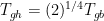 — a greenhouse amplification of the greybody temperature of roughly 1.19. Give a greybody temperature of (IIRC, I’m not recomputing it or looking it up) of 255K if the Earth were a steel greenhouse — perfect SW absorber with 100% of the LWIR from the surface blocked and symmetrically re-emitted — the mean temperature would be around 303K. This also gives us the opportunity to compute the “efficiency” of the total atmospheric effect relative to the steel greenhouse — the Earth’s atmosphere has a net heat trapping effect of 68% of the theoretical limit (using 288 K as its mean temperature, although this number like so many is highly uncertain).
 . That’s not a criticism of Willis’s model or anyone else who has “invented” it and used it in an argument with crazies who wish to “deny” that the GHE exists at all (PSI, anyone?) — including me and Dick Lindzen. It’s just that come on, guys, do you really think that climate scientists don’t understand this? What exactly do you think General Circulation Models are?
– Does LWIR slow the cooling rate of water that is free to evaporatively cool?
– Does the relative height of energy entry and exit in a fluid column effect the average temperature?
– Does gravity create a bias in conductive flux between surface and atmosphere?
– How hot would our oceans get without atmospheric cooling?
I can help you with some of this.
– Does your steel greenhouse work?
The “steel greenhouse” is also known as the “simplest single layer climate model” and is described in (even more) detail in Petty’s book on atmospheric radiation. In his book it has multiple parameters for e.g. the absorptivity of the atmosphere in (only) two generic decompositions of the spectrum — “SW” (UV through short wavelength IR, but mostly visible) and “LW” (IR in the BB band roughly centered on the Earth’s average blackbody emission peak). In the limit that the system has zero albedo, unit emissivity, zero SW absorptivity and unit LW absorptivity, you get the steel greenhouse, with its well-known solution
However, this toy model is just that — a TOY model. It treats a single slab atmosphere, where I suspect that the atmosphere needs at least five layers to get APPROXIMATELY, CRUDELY correct — a surface layer, a layer corresponding to “low” tropospheric clouds (low enough that the atmosphere above them is essentially opaque in H_2O and CO_2 absorption), another for “high” tropospheric clouds where the layer ABOVE them is diffusively transparent, the diffusively transparent layer (in depth) at the top of the troposphere where the atmosphere primarily radiatively cools, and the stratosphere. It might even need a sixth layer outside of the stratosphere as a lot of complex stuff happens there that has the potential to affect the jet stream.
The single layer toy model has no lateral transport, no vertical transport, no latent heat transport, no surface inhomogeneity, no ocean, no variation of insolation, and if it has an albedo it has a single one for the whole uniform sphere. Petty’s single layer model isn’t a heat engine at all — it is a passive differential system that approaches an analytically determinable equilibrium. The best that can be said of it is that one can crudely match the parameters to approximately measured or estimated numbers to see what non-unique span of values of AVERAGE LW/SW absorption, albedo etc correspond to the observed 68% and then to further muse on how this might change if one e.g. changes
– Does CO2 both absorb and radiate LWIR?
Are you being serious? The answer is a laughable, obvious, yes. Which you would know if you ever took anything vaguely resembling a physics course. Not only does it absorb and emit LWIR, but the absorption and emission cross-sections are pretty much the same. This is known as Kirchoff’s Law. That’s why we don’t have two different numbers, one for the absorptivity of CO_2 and a second one for the emissivity. However, the reason for it really is that molecules absorb and emit radiation via transitions between (primarily) dipole-coupled quantum levels and the same interaction term governs absorption and emission, per level. CO_2 is complex enough that it doesn’t just radiate from disparate sharp levels — there are so many that given various forms of line broadening at work they form bands. The bands are clearly visible in absorption/emission spectra. By all means, learn to do spectroscopy — it’s a better hobby than many — but don’t expect to “discover” that physicists are idiots and CO_2 doesn’t absorb and emit LWIR.
– Does LWIR slow the cooling rate of water that is free to evaporatively cool?
Again, are you serious? Sigh, I suppose you are. Look, most of us believe in this Law of Nature known variously as The Law of Conservation of Energy or The First Law of Thermodynamics. You are welcome, of course, to empirically test it — undergrads test it all the time in intro physics labs as that is one way to learn — but try not to hold your breath until you “discover” a violation that isn’t just you doing a sloppy experiment. With that in mind, let’s see what the first law tells us, if you arrange two identical containers of water that are adiabatic on the container sides (basically a thermos, no or limited cooling through the container sides) and place an infrared heat lamp over one of the two open water surfaces, directed down. You have to decide what temperature you are going to maintain the air above the water at, and whether or not you are going to regulate its humidity as well, because the water in both containers will approach a temperature that is in quasi-equilibrium with the air — quasi because it will be cooler than the air because the air will generally speaking be slowly evaporating the water, using energy absorbed from the air primarily from conduction but also via radiation.
Now imagine that you turn the heat lamp over one container on. Ooo, now there is another source of energy entering the surface! True, most of the energy will be absorbed in a very thin layer AT the surface, but this surface layer will become hotter! Some of the heat will be transformed into latent heat, increasing the evaporation rate, but since that rate depends on the temperature, an increased rate that balances the new rate of energy flux into the water will only be sustained with a higher surface temperature. Since the upper surface of the water is in thermal contact with the water below, its temperature will (slowly) rise to be in quasi-equilibrium.
Remember, you have a knob on your thermal lamp. You can turn up the intensity of LWIR to where it boils the container of water away in a matter of minutes. If LWIR can actively heat the water, do you seriously think that it won’t “slow the cooling” of water in the even that the water is disequilibrated at the start on the warm side? For some specific intensity, the warmer water won’t BE disequilibrated, and the “cooling time” will be “infinity” (as long as it takes to evaporate all of the water).
This is the basic physics that answers your question. What actually happens in the ocean is of course vastly more complex, but not because “LWIR doesn’t slow the rate of cooling” or whatever you want to postulate. The water has to obey the law of conservation of energy. LWIR is a source of strongly coupled energy. Of course it will.
Again, you can fantasize that climate scientists are ignorant of all of this, or you could be more concrete, look at the source and parameterization of GCMs that include an ocean slab, and see how they handle it. They might handle it incorrectly, to be sure. But desktop experiments are not going to correct it — the ocean surface is complex with constantly varying wind, sunlight, humidity, cloud cover, rainfall, with surface waves, varying salinity and temperature, upwelling and downwelling and sidewelling water currents carrying water with different salinity/temperature/density, mixing, silt content, surface ice or a lack thereof, and even varying surface pressure. Still, shallow water responds to “forcing” completely differently from deep water driven to whitecaps by a 30 knot wind.
If you want to try to measure some span of this, play through. You’ll need a fleet of ocean vessels (to make measurements all over the world), and some SERIOUS measurement apparatus. Or you’ll need a very expensive and well-equipped laboratory, e.g. one that contains a pool hundreds of meters across and at least 100s of meters deep, with wind machines, machines that can create and regulate “currents”, and ever so much more. I think the boats would be cheaper, and they’re still too expensive and their measurements still probably too inexact to be of much use. Hence the tendency to simplify, to parameterize, to approximate even if they do get it somewhat wrong.
– Does the relative height of energy entry and exit in a fluid column effect the average temperature?
Goodness, any cook knows the answer to that one. We heat pans at the bottom, not the top. We do this because if we do, convective instability distributes the heat, causing substantially improved mixing. If you heat at the top, the fluid stratifies, and since fluids are usually indifferent conductors of heat, it takes a long time to heat the fluid at the bottom by conduction.
One can heat a fluid at the top and stir it, of course, and end up heating it just as fast as you would heating it at the bottom and stirring it.
Does this affect the “average temperature”? Again, dumb question. The answer is obviously yes. But not because of “gravity” per se; because anything that alters the thermal boundary conditions of a material system is going to (in general) alter the average temperature. The only question is, how much, and what are the important mechanisms for heat transport inside the boundary and how do they change as you do. As I said, any decent cook knows about the top to bottom turbulent instability, and sure, that is going to dramatically alter the average temperature within a wide range of reasonable conditions.
– Does gravity create a bias in conductive flux between surface and atmosphere?
If you mean is heat more easily conducted vertically downward across a boundary than upward, the answer is no. I realize that you will not understand this answer and will want to doubt it, but bear in mind that any other answer constitutes a “Maxwell Demon” at the surface — the little invisible dude that lets faster molecules through going one way and slower molecules through the other way — and will lead to a direct violation of the second law of thermodynamics and the ability to create perpetual motion machines of the second kind. It violates detailed balance at the surface.
You can, I’m sure, come up with lots of arguments to try to convince yourself otherwise — the downward directed molecules should be “speeding up” etc — but trust me — they are false arguments when you consider detailed balance at the surface. They only hold when the density of the fluid in the parcels above and below the surface is varying (e.g. the fluid is compressing), not in equilibrium.
– How hot would our oceans get without atmospheric cooling?
That one I won’t answer, as the answer is too complex. Do you mean without an atmosphere at all? They’d boil away until they froze, then sublimate away until they were gone. Do you mean with an atmosphere but no GHGs? They’d freeze all the way to the bottom and never thaw anywhere but in small surface layers (perhaps) in tropical summer or around geothermal heat sources at the bottom of the ice. In between those limits, there aren’t any sane answers because there is no such thing as “atmospheric cooling” as a single channel you can turn on and off. Thermoregulation of the oceans involves radiation, conduction, convection, and latent heat in an actively driven constantly varying environment. Show me a “single switch”…
Hope that helps. Basically, I have to agree with Willis. It’s nice to have a hobby, but you are really wasting your own and everybody else’s time if you think that you are going to discover some answer to these questions that reveals that there is no GHE, or that gravity is important in some way OTHER than its already enormous importance as the co-driver of nearly all transport processes in the ocean and air. Which is really quite enough, and more than complex enough that desktop experiments are going to reveal nothing either unknown or likely to come as a revelation that changes everything in climate science.
In particular, they have almost nothing to do with Willis’s work above. You’re basically saying “Look guys, you might have all of the physics wrong and I’m doing experiments that will prove it to the world”. Except that no, the general physics you are looking at is well known and has been for decades to over a century in many cases, and it is doubtful that you understand physics itself well enough to understand why you are looking for things as elusive as perpetual motion machines.
rgb
***
rgbatduke says:
January 15, 2014 at 8:18 am
Now imagine that you turn the heat lamp over one container on. Ooo, now there is another source of energy entering the surface! True, most of the energy will be absorbed in a very thin layer AT the surface, but this surface layer will become hotter! Some of the heat will be transformed into latent heat, increasing the evaporation rate, but since that rate depends on the temperature, an increased rate that balances the new rate of energy flux into the water will only be sustained with a higher surface temperature. Since the upper surface of the water is in thermal contact with the water below, its temperature will (slowly) rise to be in quasi-equilibrium.
***
Well stated & a straightforward application of the 1st Law. I wish that would stop the nonsense, but…
“Do you mean with an atmosphere but no GHGs? They’d freeze all the way to the bottom and never thaw anywhere but in small surface layers (perhaps) in tropical summer or around geothermal heat sources at the bottom of the ice. ”
Dr. Brown, very nice summary of the physics involved in these various areas and I only end up with one question where your view and my view seem to diverge so greatly. On your other points I agree point for point, even adding further factors like the ellipsoiod flattening of our planet, the graviational acceleration constant varying from the equator to the poles, the axial tilt, and many more factors that are real and in a perfect analysis you can never ignore and besides there are many more.
You say with no GHGs in our atmosphere the oceans would all freeze over even after assuming that with no GHGs there are also no clouds either, so the albedo is hugely also reduces leaving the tropics (here assiming 30N to 30S being one half of the area and more than half of the radiation absorbed daily) receiving some ≈500 W/m2 which is more than is now received. With albedo assumed about 0.10 the noon zenith under the sun would receive about 1200 W/m2 at that instance.
How do you then evision all of the oceans freezing in this zone for that I don’t understand how you see this occurring even if all land is under snow and ice with high albedo. You must see some other physical factors that I am leaving out. Or, I do realize my view is trying to take a more realistic and not of an radiation averaged, evenly illuminated and flat disk Earth with no diuranal cycle from the rotation and maybe you were taking more this general climate science viewpoint, for that seems to answer the differences between our views but maybe I am mistaken here.
rgbatduke says, January 15, 2014 at 8:18 am:
<em"Look, most of us believe in this Law of Nature known variously as The Law of Conservation of Energy or The First Law of Thermodynamics."
Yeah, that is a good one. Welcome to the fantastic world of ‘climate physics’, where instantaneous fluxes are simply added together to make larger fluxes and thus directly create higher temperatures. How is the Earth’s surface warmed beyond the level that the mean solar flux according to the S-B equation can manage to maintain? We just add an extra flux down, a much larger one than the solar one at that, and voilà, we have a larger ‘total’ flux coming in and thus get a higher temperature. The instantaneous radiative flux coming from the Sun is on average about 165 W/m^2. This corresponds to a BB source temperature of -41 C. The alleged instantaneous radiative flux coming down from the atmosphere is on average about 345 W/m^2. This corresponds to a BB source temperature of +6 C. Still, put together, these two sources manage to heat the receiving surface to beyond the potential temperature of both. How is that possible? In the magical world of ‘climate physics’ you just add instantaneous fluxes together to create a larger one: (165+345=) 510 W/m^2 >> +35 C, woops, too high, but no problem, we simply subtract the convective losses before all the radiation from above is absorbed: (510-112=) 398 W/m^2 >> +16 C.
How neat isn’t this? Stefan-Boltzmann all the way. No storage of energy needed. Only instantaneous fluxes.
But where is the energy behind the 345 W/m^2 flux down from the atmosphere coming from? The input energy to the system is from the solar flux only. And this is never in the instantaneous flux scenario being restricted from freely leaving the surface again as soon as it’s absorbed to give a Stefan-Boltzmann surface BB emission temperature.
Note, this is NOT a matter of storing energy (thermal mass). This is simply all about sending instantaneous fluxes back and forth, adding them together to make them larger.
Roger Brown,
According to your logic, it’s OK for one and the same batch of energy to be shed from the surface as energy loss based on a certain temperature, to then go into warming the cooler atmosphere upon absorption to a slightly lower temperature and then next being sent back down again from this temperature to do some more warming of the already warmer surface, the very source that ejected it as thermal loss in the first place.
I would call that ‘super-conservation of energy’ …
It’s the second round of heating for one packet of energy that violates the laws of thermodynamics.
Robbo says:
January 15, 2014 at 5:09 am
Thanks to the same Dr. Robert Brown whose thorough fisking of Konrad’s claims appears above, we have an equation for the relationship between the temperature variation and the radiation. We know that if dT is the size of the swing in temperature above and below the average, and T is the temperature of the center of the swing, the radiation varies by 1 + 6 * (dT/T)^2.
This is why I much prefer to stay away from temperatures and deal with radiation—because energy is conserved, but temperature isn’t. That’s why we have an “energy budget” for the planet, but there is no such thing as a “temperature budget”.
I discuss some of these issues in my post The Moon Is A Cold Mistress, you might enjoy a read of that.
See also the NASA discussion, The Elusive Surface Air Temperature.
Since I am generally dealing with the energy budget of the planet, my practice is, never average temperatures unless I have to, always average radiation.
Having said that, however, let’s try an example. This morning it was about 40°F (4°C, 337 W/m2) at my house, and it will likely get up to 70°F today (21°C, 425 W/m2). That would make the temperature average 55°F.
On the other hand, using the average of the thermal radiation, 381 W/m2, and converting back to temperature gives us a temperature average of 55.65°F, or a difference of 0.65°F (0.36°C) between the two methods of averaging.
So in most cases, we’re not talking about a large difference. Since the average temperature around here is about 290K or so, a difference of 0.36K is about a tenth of a percent, certainly nothing like the 3% you mention.
Best regards,
w.
Now I realise just how silly Willis is looking for a change of 2 W/m2, guess what the Accuracy of CERES data is,
you got it +/-2 W/m2.
So he is looking for a signal less than the NOISE, really great Science.
See
http://ceres.larc.nasa.gov/documents/STM/2005-05/wielicki_global.pdf
Bye Willis Eschenbach
Kristian says:
January 15, 2014 at 11:27 am
Kristian, your lack of knowledge is large … but your arrogance in the face of that impressive lacuna is stunning.
Dr. Brown is right, and this is not “climate physics”—it’s called “physics”. There are sections on this very subject (warming by radiation) in any detailed college physics textbooks. All of them use the same procedure. You SUM THE INCOMING FLUXES to get the total incoming flux.
Simple example. You have a brick at thermal equilibrium which is being heated by an infrared lamp that is delivering 1,000 watts/m2 to the surface of the brick.
You add another infrared lamp, this one delivering 500 W/m2 to the brick. A couple of questions:
1) Will the addition of the second lamp heat the brick above what the first lamp could achieve by itself?
2) What is the instantaneous incoming flux at the surface of the brick?
The answers are, Question 1) Duh … and Question 2) 1,500 W/m2. You sum the fluxes. It’s not some novel idea dreamed up as “climate physics”. It’s bog-standard thermodynamics as understood and followed by everyone … well, everyone but you and a few others, I guess.
And your claim that it doesn’t work like all the standard physics textbooks say it works? Well, yes, that claim might be true … but for you to establish that two centuries of thermodynamics are wrong, you’ll need to be more than some anonymous internet popup without an equation to your name …
w.
A C Osborn says:
January 15, 2014 at 12:02 pm
A C, you’re not following the bouncing ball. Please look up the difference between precision and accuracy. A place to start might be my discussion of this very question in my post Accuracy, Precision, Accracy, and One Watt Per Square Metre.
For most folks, it’s easy to understand the difference between accuracy and precision if you consider someone shooting a rifle at a bullseye. Let’s say they shoot ten shots. Precision is how tightly the shots are grouped.
Accuracy, on the other hand, is how close the group of ten shots is to the center of the bullseye.
Note that a marksman could be very, very precise (tight grouping) and not be anywhere near the bullseye, so not accurate at all.
In fact, A C, I discussed this very distinction in this thread, had you been paying attention. I said:
In other words, your claim is 100% wrong. Since I am looking for trends in a precise dataset, the accuracy is not an issue, AS I DISCUSSED ABOVE.
I note in passing that your postings are becoming more aggro and more off-the-wall, and that you’re not reading the thread. I also note that you have not apologized for calling me a liar … your anger is not serving you well.
w.
Willis,
A number of points:
“Figure 1. Blue line shows the anomaly in total downwelling surface radiation, longwave plus shortwave, in the CERES dataset, March 2003 to September 2012.”
It seems that the start point of your data is not in 2003, but 2000?
“Gray area shows the 95% confidence interval of the trend.”
This is not the case, unless you have the source data and trends on separate scales.
“Black line shows the expected effect of the increase in CO2 over the period, calculated at 21 W/m2 per doubling.”
Something has gone amiss in your calculations here, but not sure what. Using the S-B equation is probably the reason.
“Trend of the expected CO2 change in total downwelling surface radiation is 1.6 W/m2 per decade.”
Given that the IPCC have quoted that the “estimated” change from 1750 to present is of the order of 1.6 W/m2, where did you get your reference from? If you consider that over a decade this is 1.6 W/m2, then you could be considered to be alarmist.
“Figure 2. Trend in TOA Solar Radiation, 2000-2012. Red line shows trend, a decrease of – 0.15 W/m2 per decade.”
No, this is a cyclical emission, it would be unwise to attribute a linear trend, but rather take an average over the time period you are considering, especially given that he cycle is approximately 11 years and you are considering a 10 year period.
Finally the CERES data that you are using. This attempts to measure the energy budget from the TOA. The surface downwelling surface radiation is computed from the atmospheric conditions. Now I may be wrong and would welcome any input to the contrary, but this is the incoming Solar flux only, and no account of greenhouse gases are taken into account.
The purpose of the data is therefore to provide inputs to models to compute the resulting effects of greenhouse gases. Therefore looking for a change in the signal of the CERES data is somewhat futile, unless there is any significant change in the solar, cloud, albedo, aerosol, etc, effects.
Would be glad to here your views.
Willis Eschenbach says, January 15, 2014 at 12:09 pm:
“Kristian, your lack of knowledge is large … but your arrogance in the face of that impressive lacuna is stunning.”
Oh my,
Here’s someone calling other people arrogant ignorants …
Your utter lack of understanding on this subject shines through in your last posting, Willis.
“Dr. Brown is right, and this is not “climate physics”—it’s called “physics”. There are sections on this very subject (warming by radiation) in any detailed college physics textbooks. All of them use the same procedure. You SUM THE INCOMING FLUXES to get the total incoming flux.”
Dear me.
Willis, a larger incoming total flux from added, separate objects HOTTER than the originally receiving object (like from the Sun to the surface of the Earth, not from the atmosphere to the surface, meaning positive ‘heat transfer’), but no hotter than the original source, will heat the receiving object FASTER, but could never create a higher end temperature. You really think that if you put one 100 C heater in front of a brick wall, the highest temp the brick wall could potentially reach is 100 C, while if you put two 100 C heaters in front of it, its final high temp could reach 170 C, warmer than each of the heaters, its energy sources, based purely on the doubled radiative flux it gets in?
You clearly don’t have the slightest clue about the difference between instantaneous flux and build-up of internal energy towards an equilibrium (steady-state) temperature.
Real objects with a thermal mass heat up through storing incoming heat (or work) from its surroundings. That’s what physics is telling us and always has been. You cannot determine the final temperature of real objects by using instantaneous fluxes, Willis. That only works with black bodies without thermal mass, where all energy exchange IN/OUT occurs instantly.
– – –
And, Willis, you conveniently ignored the rest of my last reply to you except the part where you bizarrely imply me being a servant of Konrad when simply pointing out that you used the exact same tactic on him as you accuse other people of doing to you, making claims about his words. My comment contained a lot more than that, Willis, pointed directly to your claims and assertions. I quoted you. Please read it again in full and consider what I’m saying. One gets the distinct sense that you’re evading, playing the la-la-la game like that.
http://wattsupwiththat.com/2014/01/13/co2-and-ceres/#comment-1535984
Dan says:
January 15, 2014 at 1:12 pm
Dan, thanks for your thoughtful post. I’ve fixed that typo.
The code is posted, and that’s the result the computer gave me. Not sure what your objection is, you’ll need to be more specific.
I fear that is not a useful objection, that something is wrong but you don’t know what …
The IPCC is referring to the change in downwelling TOA radiation from CO2, while I’m talking about the change in downwelling surface radiation. As the numbers indicate, they are very different things.
What do you think the IPCC is doing when they attribute the “pause” to a decrease in insolation over the period? I’m just measuring the same thing they are measuring, the post-2000 decrease in solar energy due to the variation in the sun’s cycle, to compare it to their claims.
You are indeed wrong. The CERES surface data contains upwelling and downwelling longwave and shortwave as four separate datasets.
I don’t understand that. You say that looking for a change is futile unless there is a change … that seems circular in itself, but in any case those values are changing all the time. In particular, the CO2 forcing is slowly increasing. To produce a 3° temperature rise the downwelling surface radiation must increase by 21 W/m2 or more … and that change should be visible in the CERES data, but it isn’t.
All the best to you,
w.
Willis, I like the analogy of a marksman to show the difference between Accuracy and Precision as I happen to have been one and a Shooting Instructor. I also happen to have been a Quality Engineer who specialised in Statistical Process Control.
I am sure you know before you can use Gauges for process control and trend analysis you have to do Repeatability and Reproducibility studies to show that the equipment is suitable for making the measurements before you can do any kind of Trend analysis.
The actual Readings from the CERES equipment is only Accurate to +/- 2 W/m2 plus a 0.5 W/m2 variation from year to year values. You say that you only need Precision to look for changes in Trend, however you cannot tell the precision of the the CERES values without recourse to a Master value.
Here is an example why
So let’s take some values for year 1 when the equipment is running with a bias of + 1.5 W/m2, the system it is measuring changes 3 W/m2 during year 2, but the measurement bias also changes to a -1.0 W/m2 + the 0.5 W/m2 possible annual error. The trend you get has not changed, but the system has. The values appear to be giving you Precision because the values are tightly grouped.
Yet you are looking for a change of only 2 W/m2.
As to my “Anger” it is in fact determination, Humour plus a need to understand.
Kristian says: January 15, 2014 at 12:52 am
Kristian: Wow, where to begin? You just keep digging yourself deeper.
You said in a previous post, “Sensors only ever detect heat.” I replied directly that this assertion was wrong, that many sensors detect radiation by converting it directly into electric current (not thermalizing it), and mentioned that I had even designed sensors like this. You accused me of redirection. Huh?
I work with optoelectronic devices on a daily basis. I used to design them. Photodiodes, phototransistors, and photovoltaic cells turn absorbed radiation directly into electric current. All of them can be, and are, used to measure the intensity of received radiation. The people who design these sensors all use in their analysis the quantum physics of how photons interact with the atoms in the receptor.
In the analysis, there is never any consideration given to whether the photon was generated due to thermal (Planck) effects or from other reasons, and if thermal, what the temperature of the radiating body is. All that matters is the associated frequency/wavelength/energy level (e = h * v) of the photon (and occasionally the polarity).
You ask, “why do we supercool the sensors if they can detect radiation directly from any source no matter at what temperature anyway …?” Not for the reasons you think. The receivers in the radio telescopes that detected the (thermally generated) cosmic microwave background (CMB) radiation of about 3K were at earth ambient temperatures of about 300K. We know that the CMB is a virtually perfect blackbody spectrum at a temperature of 2.725K +/-0.001K, and yet its radiation can be absorbed by bodies far warmer than it. (The supercooling is typically for reduction of electric noise and/or to enable superconductive effects.)
You say, “Read about how interferometers work.” I work with interferometers regularly as well. (I am presently taking a break from working on a circuit to process interferometer feedback.) You obviously have no concept of what an interferometer is or does, because they are completely irrelevant to the discussion at hand.
You say, “Your asserted 400 W/m^2 from the Earth’s surface has to come from somewhere. It is only made possible with 340-350 W/m^2 first added to the surface from the cooler atmosphere to increase the internal energy of the surface, raising its temperature beyond what the Sun allegedly can. A transfer of energy between thermodynamic systems with such a direct result is defined as ‘heat transfer’, ” Wait, are you agreeing that there is power transfer from the (generally) cooler atmosphere to the warmer surface?
Even if you are being sarcastic here, you have hit on the nub of the matter. The thing is, the 400 W/m^2 is well measured, not just asserted, and needs to be explained. It cannot simply be explained by the power input from the sun.
Every physics, thermodynamics, or heat transfer text I have ever seen on the topic discusses “radiative exchange” between bodies. They talk about bodies with temperatures T1 and T2, or Ta and Tb, never Thot and Tcold. (The only distinction in these analyses between the hotter bodies and the colder bodies is that the hotter bodies have higher numerical values of temperature.) They usually start with idealized blackbodies, because that makes the analysis easier. Here they all state that all of the radiation from Body 1 at T1 falling on Body 2 at T2 is absorbed by Body 2, and that all of the radiation from Body 2 falling on Body 1 at T1 is absorbed by Body 1.
Note carefully the implications of this. T1 and T2 can be different, so one body can be colder than the other. Regardless, its radiant energy can be absorbed by the other body, which is hotter. But doesn’t this violate the 2nd Law? No, because the radiant power from the body with the higher temperature to the body with the lower temperature is always greater than that in the other direction, so the resultant “heat transfer” is always from the hotter body to the colder body.
Even if you prefer to think of the process in terms of the 19th century “caloric” heat flux, still a useful fiction just as “magnetic flux” is a useful fiction, if there is a reduced difference in temperatures between the two bodies, the heat flux from the warmer body to the cooler body is reduced. If the warmer body has a separate constant power input, its reduced heat flux output creates a power imbalance that causes it to increase in temperature until its balance is restored. This is fundamental physics and thermodynamics, in conformity with the 1st and 2nd Laws. It is used every day in engineering practical systems.
You say, “even professional quantum physicists wouldn’t claim to understand this anywhere near down to the photon level.” Hogwash! Physicists understand plenty about what happens at the photon level. For generations, we have had the ability to detect the action of individual photons. We know very precisely what the size of the quanta is, and how they relate to all sorts of interactions. Most of solid-state physics would not be possible if we did not understand this. (This is not a claim that we understand absolutely everything at this level, but we do understand a lot.)
If photons are “just a concept”, then so are electrons and atoms. For that matter, so is Kristian…
Kristian says:
January 15, 2014 at 1:55 pm (Edit)
Ah, I see the problem, Kristian. You’ve misunderstood the claim that is made about the atmosphere and the surface.
You are correct that the GHGS in the atmosphere cannot make the surface warmer than the atmosphere. That would be a violation of the Second Law … but neither Dr. Brown nor I are making that claim.
Instead, what we are saying is that the GHGs in the atmosphere make the surface warmer than it would be without such an atmosphere, which is a very different thing. You think we’re making the first claim, the impossible claim. We’re not.
How much warmer is the surface because of the GHGs? Well, the surface will be warmer by the difference between the back radiation from the atmosphere (about 345 W/m2 as a global average), and the back radiation from space (about zero W/m2) that the surface would receive without the GHGs. That 345 W/m2 of radiation is absorbed by the surface, and as a result, the surface ends up warmer than it would be without that radiation.
The way you calculate the amount of warming (or avoided cooling, if you prefer, they are the same) is just the way that you deride so heavily and foolishly—you sum up all of the radiation that is hitting the object. For example, if I light a candle (during the daytime), the sun gets warmer. Strange but true.
How much heat is the sun receiving from my candle? Well, 1 candlepower over the square of the distance, a miniscule amount to be sure … but the sun still gets warmer when I light a candle. It has to, because the light from the candle is absorbed the sun, and its energy (however small) is added to all the other radiation impinging on the surface of the sun from stars and wherever else.
It’s a curious universe …
My best to you,
w.
Anthony,
I fully accept the criticism of Willis, Robert and yourself about thread pollution. I had my nose out of joint after Willis described an experiment design as “asinine tripe” on a previous thread. I was wrong to challenge Willis here.
I greatly respect your work in creating this site, especially the empirical work with surface stations and in combating P.S.I. and Al Gores greenhouse in a bottle. I will therefore respect your request not to post further comment at WUWT.
My apologies and goodbye.
Regards,
Konrad.
Konrad,
Thank you. Apology accepted, just keep it cool it the future OK?
You are welcome to continue to post.
Anthony
A C Osborn says:
January 15, 2014 at 2:14 pm
You gonna apologize for calling me a liar, A C, so we can move forwards?
I responded to your last comment just so others don’t get misled … but it’s not a discussion.
w.
Kristian says:
January 15, 2014 at 1:55 pm
Yes, and I would do it again. I read a comment until someone makes an egregious error, and I stop there. No point in discussing further until we clear that part up.
In your case, until you understand the basics of thermodynamics, which obviously you don’t, I’m not interested in getting involved in whatever further fantasies flow from your misunderstandings. Once you see the basic, fundamental, introductory textbook errors you’re making, then we’ll get to your further ideas.
Read Curt’s post above, note that he works in the field. Read Dr. Brown’s post above. Note that he teaches in the field. Read my post above, or read a college thermo textbook, I don’t care what you do to break through your lack of knowledge … but until you pull your head out of your fundamental orifice regarding basic thermo concepts, all of your claims will come out sounding muffled and will not smell right, and (as you point out above), folks like me will ignore them.
w.
sWillis, a larger incoming total flux from added, separate objects HOTTER than the originally receiving object (like from the Sun to the surface of the Earth, not from the atmosphere to the surface, meaning positive ‘heat transfer’), but no hotter than the original source, will heat the receiving object FASTER, but could never create a higher end temperature. You really think that if you put one 100 C heater in front of a brick wall, the highest temp the brick wall could potentially reach is 100 C, while if you put two 100 C heaters in front of it, its final high temp could reach 170 C, warmer than each of the heaters, its energy sources, based purely on the doubled radiative flux it gets in? for some resistive filament with a constant voltage delivered across it is precisely balanced by power lost through all channels. If we imagine that the heater is isolated and in a vacuum and a perfect blackbody emitter (all of which can easily be made approximately true by taking an ordinary 100W bulb, painting it black, and putting it in a vacuum chamber suspended by a thin conducting wire delivering the voltage) we can even predict the temperature of the bulb if it has a simple geometry.
Dear me indeed. First of all, we are talking about Mr. Sun, are we not? IIRC its surface temperature is roughly 6000K. I think I can safely say that this is not an issue. On the other hand, if you take an ordinary magnifying glass and use it to increase the incoming solar flux at a point, say, on the surface of your hand, I think you will rapidly agree that there is plenty of room in between the temperature of the sun and the temperature of your skin for your skin to warm. Or even burn right up. Similar considerations hold for things like the filaments of infra-red heat lamps, by the way. We’re not talking about water that is already superheated to 1200 K or whatever the filament temperature is. We’re talking about liquid water, a before condition that is at ambient temperatures and an after condition with a substantial downward radiative flux coming from a much hotter source.
Second, you aren’t even getting the physics right for the two 100 C heaters. Let’s imagine you have just one such heater, and instead of specifying the temperature of the heater, as that is rarely what is constant, let’s specify the power being delivered to the heater — say, 100 Watts. The heater will then heat to a temperature such that incoming power being delivered as joule heating,
Now imagine that you put a second 100 Watt heater right next to the first one. All of the power radiated into the mutual solid angle subtended by the two bulbs is absorbed by the other bulb. The bulbs, in fact, do not lose any net energy at all in that direction. In order to continue to lose power at the rate of 100 W in the remaining non-occluded solid angle, both bulb temperatures increase. Precisely the same thing happens for a passive absorber heated by the power source — as it heats, it radiates back along the direction it is being heated from, and the source temperature increases, although (usually) not by very much.
You sound like you’ve been hanging out with dragonslayers too much. You also need to think about how stupid a lot of your remarks sound, as many of them are contradicted by ordinary experience or common sense. I assure you that if you put your hand ten centimeters away from a 100 Watt light bulb, your hand will warm up. If you turn on a second bulb next to the first one, your hand will warm up more. If you turn on a five 100 watt bulbs and manage to crowd them together so that you have 100 watts ten centimeters away from your hand, you will not leave your hand there for long.
When describing the Earth, we aren’t talking about passive heat transfer between constant temperature reservoirs. We are talking about an open system. A complex open system. No, it cannot be trivially reduced to silly conclusions associated with non-sequitor statements about passive systems.
rgb