Guest post by Willis Eschenbach
There’s a new study out from NOAA called “Probable maximum precipitation (PMP) and climate change”, paywalled of course, which claims that global warming will lead to a 20%-30% increase in “probable maximum precipitation”. The abstract says:
Probable Maximum Precipitation (PMP) is the greatest accumulation of precipitation for a given duration meteorologically possible for an area. Climate change effects on PMP are analyzed, in particular, maximization of moisture and persistent upward motion, using both climate model simulations and conceptual models of relevant meteorological systems. Climate model simulations indicate a substantial future increase in mean and maximum water vapor concentrations. For the RCP8.5 scenario, the changes in maximum values for the continental United States are approximately 20–30% by 2071–2100. The magnitudes of the maximum water vapor changes follow temperature changes with an approximate Clausius-Clapeyron relationship. Model-simulated changes in maximum vertical and horizontal winds are too small to offset water vapor changes. Thus, our conclusion is that the most scientifically sound projection is that PMP values will increase in the future due to higher levels of atmospheric moisture content and consequent higher levels of moisture transport into storms.
When I heard that number, a 20%-30% increase in maximum rainfalls, my urban legend detector starting ringing like crazy.
 Figure 1. The authors’ guess at how much more rain will be falling by the end of the century.
So … why did my urban legend detector go off from this claim? It has to do with energy.
The press release quotes the authors as saying:
“We have high confidence that the most extreme rainfalls will become even more intense, as it is virtually certain that the atmosphere will provide more water to fuel these events,” said Kenneth Kunkel, Ph.D., senior research professor at CICS-NC and lead author of the paper.
Now, the increase in maximum rainfall is said by the authors to be due to the increase in water vapor in the air. It’s unclear if the 30% increase in maximum rainfall will be matched by a corresponding overall increase in rainfall. However, it is highly unlikely that an increase in water vapor will only increase maximum rainfall events. The authors themselves say that their projections show “a substantial future increase in mean and maximum water vapor concentrations”.
So to be conservative, let’s cut the 30% increase in maximum water vapor down to a 20% increase in mean water vapor, and see what that looks like.
I want to determine how much energy we’re talking about here. Suppose the rainfall were to go up (on average) by about 20% globally. Right now, the globally averaged rainfall is on the order of a metre of rain over the entire surface per year, a bit more or less depending on who is measuring. Twenty percent of that is 200 mm. So we need to evaporate an additional 200 mm over every square metre of surface to produce the stated increase in rain.
It takes 2260 joules of energy to evaporate a gram of water. For each square metre we need to evaporate 200 mm, or 200 kg of water. To evaporate that much water takes 4.52e+8 (452,000,000) joules of energy.
Now, a joule is a watt-second. We need 4.52e+8 joules of energy every year to evaporate the additional water, which is 4.52e+8 watt-seconds per year. Dividing that by the number of seconds in a year (3.16e+7) gives us the change in constant 24/7 watts needed to evaporate that much water. Remember, this is an increase in the constant watts of energy striking every square metre of the planet.
And that number, dear friends, the amount of additional energy needed to increase global evaporation and thus rainfall) by 20%, turns out to be 14.3 W/m2. That’s about the amount of energy increase from three doublings of CO2. Yes, CO2 would have to go from the current ~400 ppmv to about 3,200 ppmv to provide that much extra forcing …
So my urban legend detector is still working fine. There’s nowhere near enough energy available to power that claimed jump in rainfall.
Now, I could leave it there, since the energy necessary to make their claims possible doesn’t exist. But in order to confirm that finding, my plan of further inquiry was to see whether either the intensity of rainfall events or the mean rainfall has changed over the last century. People are always claiming that we don’t have any controls for our experiments when we study nature. But nature provides its own experiments. To start with, we have the warming since 1900. On land, according the Berkeley Earth Surface Temperature data, the temperature has gone up about a degree over that time … but did the rainfall go up as well?

Figure 2. Global precipitation over the land, in mm/day. Data Source 1901-2009: CRU TS 3.10.01 (land)
OK … no increase at all in global rainfall, neither in the monthly means nor in the maximums. So no support for their claims there.
So how about local maximum rainfall events? Are those going up?
For this, we can turn to the temperature and precipitation records of England. For the Central England region, we have daily temperatures and daily precipitation records since 1931. Since 1931, the average Central England Temperature (CET) record has gone up by just under one full degree. So we should see any thermal effect on the maximum rainfall. With that 1°C temperature rise as the backdrop, here’s the maximum central England daily rainfalls, month by month, for the last eighty years.
 Figure 3. Maximum daily rainfall, 1931-2012, Central England. Data Source Photo Source
Here, we find the same thing. There is no evidence of any increase in maximum rainfall events, despite a 1° temperature rise.
Hmmm …
The part I really don’t like in all of this is that once again, all of their claims are built on computer models. But what I don’t find is any serious testing of their whiz-bang models against things like the global or the CET temperature and rainfall records. In fact, I don’t see any indication in any venue that any computer models are worth a bucket of warm spit when it comes to rainfall. Computer models are known to perform horribly at hindcasting rainfall, they do no better than chance.
So once again, we’re back in the land of Models All The Way Down. I gotta confess, this kind of thing is getting old. NOAA and NASA appear to be falling further and further behind reality, still churning out useless studies based on useless models.
Just one more waste of taxpayers money.
w.
Outgoing radiation at night locally exceeds incoming radiation. The radiation the earth is receivng on the opposite side of the planet has no immediate effect on the radiation outgoing on your side- otherwise the weather in China or Australia would affect your temperature IMMEDIATELY because of that imaginary radiation balance requirement- there would not be a period of days or weeks for fronts to move about the earth- as happens in the real world.
atarsinc says:
“That statement is not just false. It’s ridiculous”
According to Prof Richard Lindzen of M.I.T., the global temperature as measured at the equator has not varied by more than ±1ºC over the past billion years.
Nick writes “It reverts to sensible heat on condensation, and can’t just be lost.”
And is supporting Willis’ argument without even realising it.
Nick goes on to suggest “OLR can’t increase, because it has to generally match arriving sunlight.”
And overall this is true.
And finally Nick writes “It has nowhere to go but down”
But this is incorrect. It will go up and down just like every other bit of radiation at that altitude. Just because it came as LH from water vapour means nothing. The broken part of the argument is that increasing rain can somehow magically occur without an outgoing radiative effect which in turn must drop the temperature at the surface. And this is the true part and what Willis is driving at.
No Nick, the energy doesn’t magically go back down to satisfy this particular AGW argument. Increased evaporation is an opposing effect to increased DLR warming.
atarsinc, again you’ve completely missed what’s being said.
In reality, if the temperature of the planet is within 5-10K over extremely long periods of time, like a billion or billions of years, that is “remarkably stable”. There have been immense changes along the way. The sun has a significantly higher output (see “Faint young sun paradox”). There have been ice ages. There have been immense amounts of CO2 injected into the atmosphere, meteorite hits that have created huge clouds of soot and toxic chemicals. Heck, the overall COMPOSITION of the atmosphere has changed, from a lot of CO2 and barely any Oxygen to 16% O2 and a trace of CO2. And yet, the paleological record shows relatively stable temperatures through it all.
This is because, as I said above, it is NOT the composition of the atmosphere that matters.
What determines average temperature is the size of the planet, and therefore the mass of atmosphere that it can sustain, and the distance from the sun. For example, the Goldilocks story could just as well have been written about Venus, Earth, and Mars. We’re “just right”, the other two are too close and too far.
The problems occur when people get cause and effect mixed up. The very concepts of “runaway greenhouse” and other non-scientific conclusions are either fabricated from nothing to fool the gullible or the result of Bad Science, of the sort this post is about. There is NEVER going to be “20% more” water vapor in the air. NEVER. The liquid water portion of the atmosphere simply does not work that way. And if you or someone has created a model where it does, then that model is wrong.
Thanks Willis, good BS detection!
Useless studies based on useless models, indeed.
CodeTech says:
April 8, 2013 at 4:00 pm
Code, If you consider the difference between “Snowballl Earth” and the Paleocene–Eocene Thermal Maximum to be “remarkably stable”, I think your definition of “remarkably stable” is far different than mine. If you consider the difference between the average temperature of the Paleogenic, 71.6 F and today, 53.6 F; “remarkably stable”; once again we have a big difference in definitions.
As far as all the “DragonSlayer” stuff goes, I suggest you look at Roy Spencer’s comments on the subject. Skeptics don’t even believe that baloney. JP
dbstealey says:
April 8, 2013 at 2:52 pm
Hi, D.B.,
Dr. Lindzen has played one of his tricks on you. The temperature at the equator HAS been remarkably stable. What ‘Code’ and I were discussing were Global Average Temps. When the latitude of Florida was covered in Glacial Ice, the daily temps at the Equator were not far off those of today. JP
Jphn Parsons,
Prof Lindzen is not the type to play “tricks” on people. He is a straight-talking scientific skeptic. I was simply pointing out an area that has been remarkably stable WRT temperature.
Yes, global temperatures vary over time, by ≈10ºC. We are currently on the cooler side of the long term average, and the wild-eyed scare stories are based on a reversion to the mean.
Nothing either unusual or unprecedented is occurring. And there is no verifiable, testable scientific measurements showing that the rise in CO2 is the cause of global warming. By taking the emotion out of the debate, all you are left with is natural climate variability; the Null Hypothesis. The AGW scare is fueled by grant money, not by scienctific measurements. Accept that basic fact, and you will be on the road to redemption.
D. B., No malicious intent with the word “trick”. It just makes you wonder why he would use that anomalous figure when the issue is about Global change. Perhaps he was talking about something altogether different. You weren’t trying to “trick” me were you? JP
John Parsons says:
“You weren’t trying to ‘trick’ me were you?”
John, ‘trick’ was your label. You brought it up.
No need to play word games, John. The plain fact of the matter is that global warming is entirely natural. Global warming is neither unnatural, nor unprecedented. There is no measurable, testable evidence showing that global warming is caused by human activity. None at all.
Once you accept that scientific fact, everything else falls into place. The entire “carbon” scare is a grant-fed scam. Really, there is nothing more to it than that.
Dragonslayer? So, you’re just going to ignore the observable reality by slapping a label on it and moving along? LOL…. ok then…
D.B., Just a joke. Not a very good one evidently. The rest of your comment reveals that your mind is completely made up. It makes me wonder why you even bother. You’ve already got all the answers. JP
John,
You are not a very good jokester. You have yet to show that CAGW even exists. It does not exist, of course, it is simply a figment of your imagination. Absolutely nothing either unusual or unprecedented is occurring. You cannot show otherwise. Your belief system is based on True Belief; but nothing more.
If not, then produce empirical, testable scientific evidence showing that AGW exists. You will be the first to be able to do so, and on the short list for the Nobel prize.
Really, John, give it up. There is no evidence that AGW exists. None. Your belief is enough for you… but it is insufficient for scientific skeptics, who require solid scientific evidence — something that you completely lack.
MikeB says:
April 8, 2013 at 11:22 am
Mike B., you want to lecture us about a “test of character”? Neither you nor anyone has advanced a mechanism for the majority of the energy to return to the surface to re-evaporate more water. Now you’re trying to slime and slander me by claiming that I know I’m wrong and I’m hiding it.
Listen, you little scumbag. I don’t do things like that, and accusing me of doing it without the slightest scrap of evidence is the action of a man without honor, not to mention a man lacking the smarts to come in out of the rain. Not only that, but you attack me and then provide a bunch of unattributed quotes that are not mine, but people don’t know that. That’s just plain sneaky.
Insulting me and slandering me is not a good idea, MikeB, it’s a very dumb idea. I bite back.
You want to start making nasty guesses about what’s in other people’s heads? Go do it somewhere else, because so far all you’ve shown us is what is in your nasty head, and it’s damn ugly. I don’t have any truck with people who try that kind of tactics. There is indeed a test of character around here.
You just failed it miserably.
w.
CodeTech, Your an intelligent person and I’ve learned some things from reading your posts. I’ve thoroughly investigated the idea that the composition of the atmosphere has no effect on the temperature of the planet. I agree completely with Roy Spencer’s argument on the issue. I’m not being dismissive of you…just that hypothesis. Thanks for taking the time to respond. JP
Mike B,
Best to not insult Willis, who has forgotten more about the subject than you will ever learn. Willis has a sterling charachter, which you clearly lack. Go back to SkS or RC with your character assassinations. Your ad-hom attacks are not appropriate here.
Willis, I think you can see that your post was very thought provoking. I consider that a successful effort. So congrats on that.
I don’t want to beat a dead horse, but in your initial math you had all the energy leaving the system within the year. You now say no one, “… has advanced a mechanism for the majority of the energy to return to the surface to re-evaporate more water.” Why would a “majority of the energy” need to be returned? Wouldn’t just a few percent each year be sufficient to cause a significant imbalance, creating more and more energy in the system over time? As far as a mechanism is concerned, the one I have in mind is the one we have: the reradiating of infrared.
Thanks for helping me understand this issue. John Parsons
Well JP or atarsinc or whoever you are, you’re just demonstrated that you have very low reading comprehension skills. At no point have I said “no effect”. And apparently you’re not investigated very far. What I have attempted to explain is that it doesn’t matter to the extent that the panty-wetting CO2 alarmists are trying to express, and certainly makes no long term difference.
The whole point of this thread was a ludicrous claim that there will be 20% more moisture in the air, which is a thoroughly impossible theory… both from observed effects of water vapor in the atmosphere, and the improbability of enough extra energy ever entering the system to create such a change.
The discussion was, of course, sidetracked by logic-challenged people claiming that such a feat would only require one “burst” of extra energy to get it started.
However, clearly attempting to explain something to you will continue to be an exercise in futility.
John Parsons says:
April 8, 2013 at 5:39 pm
‘
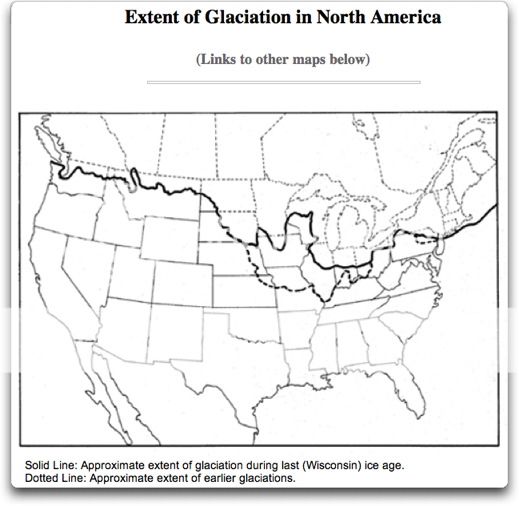
John, there’s a name for folks who wander around making claims like yours, that the ice covered to the latitude of Florida.
We call them “alarmists”. There’s no quicker way to lose traction around here than to make bogus claims like that.
w.
Willis,
That piece of information came from a skeptic blog called resilient earth, run by Doug Hoffman. Here’s the quote: “Eight hundred million years ago, during the Neoproterozoic Era, Earth underwent a monstrous ice age. There is evidence of glacial ice in tropical latitudes, only 15° to 30° north of the equator. In our world, this would mean glaciers as far south as Miami, Florida. Earth would have looked like a different planet, with almost no open ocean.”
The data you present Willis, is from the last Ice Age. I was discussing a period nearly 800,000 years earlier. Maybe you didn’t see the original context: “billions of years” of Earth’s history.
The point was, of course: to call differences in temp between the Neoproterzoic and the PETM “remarkably stable” is, to be kind, in the eye of the beholder.
Do you still believe I’ve “lost traction” for that point? Have I lost traction with you? Or do you see that I was talking about a far older time in Earth’s history.
Well Willis, you haven’t lost traction with me because of that misunderstanding. And I very much hope you can find the time to address my earlier comment.
From one old sailor to another, cheers, JP
Willis, I forgot to include this:
Climate of the Neoproterozoic
Annual Review of Earth and Planetary Sciences
Vol. 39: 417-460 (Volume publication date May 2011)
DOI: 10.1146/annurev-earth-040809-152447
R.T. Pierrehumbert,1 D.S. Abbot,1 A. Voigt,2 and D. Koll3
1Department of Geophysical Sciences, University of Chicago, Chicago, Illinois 60637; email: rtp1@geosci.uchicago.edu
2Max-Planck-Institut für Meteorologie, 20146 Hamburg, Germany
3Department of Earth and Planetary Sciences, Harvard University, Cambridge, Massachusetts 02138
Abstract
The Neoproterozoic is a time of transition between the ancient microbial world and the Phanerozoic, marked by a resumption of extreme carbon isotope fluctuations and glaciation after a billion-year absence. The carbon cycle disruptions are probably accompanied by changes in the stock of oxidants and connect to glaciations via changes in the atmospheric greenhouse gas content. Two of the glaciations reach low latitudes and may have been Snowball events with near-global ice cover. This review deals primarily with the Cryogenian portion of the Neoproterozoic, during which these glaciations occurred. The initiation and deglaciation of Snowball states are discussed in light of a suite of general circulation model simulations designed to facilitate intercomparison between different models. Snow cover and the nature of the frozen surface emerge as key factors governing initiation and deglaciation. The most comprehensive model discussed confirms the possibility of initiating a Snowball event with a plausible reduction of CO2. Deglaciation requires a combination of elevated CO2 and tropical dust accumulation, aided by some cloud warming. The cause of Neoproterozoic biogeochemical turbulence, and its precise connection with Snowball glaciations, remains obscure.
I wouldn’t want you to think I trust without verifying. JP
CodeTech,
Here’s what you said, “…I said above, it is NOT the composition of the atmosphere that matters.” So it has an effect, but it doesn’t matter. OK.
I’m John Parsons. My company is ATARS, Inc. When the discussion went over to wordpress, somehow two usernames were created. Sometimes it shows atarsinc and other times John Parsons. Nothing nefarious. JP
[Thank you. Please correct the typo in your email address assigned to this user-ID in WordPress. WUWT does require a valid email address be used, even though they are not displayed. Mod]
CodeTech,
Sorry, got interrupted. The authors presented a hypothesis with a mathematical model supporting that hypothesis. Willis challenged their hypothesis with a simple mathematical model of his own. Valid questions (some at least) have been raised about Willis’ model. One of these questions pertained to whether or not Willis was correct in his assumption that all the additional energy input into the atmosphere in a year would exit the system in that same year. This would markedly effect the results of Willis’ conclusions. As you pointed out, some have suggested that all that would be needed to achieve the hypothesized increase in heat in the atmosphere would be a onetime (one years worth) energy input. Others, including myself, suggested that the input would not leave as fast as it arrived (I.e., during the same year as it arrived) and would cause an imbalance in the system. The results of that would be different than those postulated by Willis.
I’m hoping Willis will clarify if his model needs to be tweaked or not.
You, on the other hand, apparently believe the composition of the atmosphere matters not at all. Given that, you may wish to offer a mathematical model of your own, accept Willis’ as it stands or simply say that “it doesn’t matter” because you have a completely different theory of how and why Earth’s temperature is maintained. I believe there is a group who call themselves the “Dragonslayers” who believe something similar to what you’ve…well…alluded to. If you propose an alternative model great. If you just say ‘that can’t happen’, well OK, CodeTech says that can’t happen.
You don’t need the snide remarks about “panty wetting” and all the rest. In fact, it detracts from your message. I don’t understand why you do that to your own ideas. JP
“[nobody] has advanced a mechanism for the majority of the energy to return to the surface to re-evaporate more water”. I believe in the conservation of energy, so the energy is not lost forever when used to evaporate water; actually, it is released in a form of heat when the water condenses again. That suggests one “return” mechanism: rain. Another mechanism is a convection; a downdraft is not as cold as it would have been otherwise. A third mechanism is a general heating of the atmosphere.
I always enjoy your articles but this one might be an exception; “Peter” and Nick Stokes have a valid point. But I also don’t like people who are always right.
John Parsons says:
April 8, 2013 at 1:44 pm
Lars, I agree. However, how long does it take for the system to achieve equilibrium? I don’t know that answer. I do know that for some forcings in the paleo record it’s measured in millennia. JP
The more I learn about climate the more I understand that it is never in equilibrium, it is always gaining or losing a bit of heat. This is coming also from the orbital movements where by the time the planet gain heat to come closer to equilibrium the situation changed again.
But it is coming also from internal variations which can be due to clouds and other factors.
The period you refer for 800 million years ago is really long ago (you missed 3 zeros in your post at 11:14) and we do not know the extend to which snowball earth existed and not even exactly where Rodinia was (how much was it centered around the South Pole like Antarctica? How exactly were the continents located plays a very important role to climate.
The atmosphere was also different, it was also before the ozone layer existed:
https://en.wikipedia.org/wiki/Rodinia
Look again at the current Earth energy budget:
http://en.wikipedia.org/wiki/File:Breakdown_of_the_incoming_solar_energy.svg
From 174 PW 33 PW are directly absorbed by the atmosphere, that is almost 20% of total solar incoming energy. What were the numbers at that time?
So a lot of differences. And even the temperature was indeed remarkable constant with all these variations (a 15 °C variation over hundred of million of years, I call it pretty constant, if you call it highly variable, that is a simple difference in definition)
http://www.geocraft.com/WVFossils/Carboniferous_climate.html
http://www.scotese.com/climate.htm
John Parsons says:
April 9, 2013 at 12:36 am
The authors presented a hypothesis with a mathematical model supporting that hypothesis. Willis challenged their hypothesis with a simple mathematical model of his own.
Sorry but not. Willis has done a simplified mathematical calculation of what does their model mean in energy transfer. This is not a model of its own but a simple the energy transfer calculation related to what was communicated.
And the problem to the “recirculation of energy which should come back down” as some have repeated, the problem to that is simple: the missing hot spot does not allow net energy transfer to come from the top of the atmosphere to the ground.
But evaporation & rain means net energy transfer from ground to top.