Guest Post by Willis Eschenbach
Trading food for fuel, in a world where high food prices already affect the poor, has always seemed like a bad idea to me. If I have a choice between growing corn to fuel SUVs versus growing corn to make tortillas, to me that’s a no-brainer. I’ve known too many people for whom expensive tortillas are unobtainable tortillas to vote any other way.
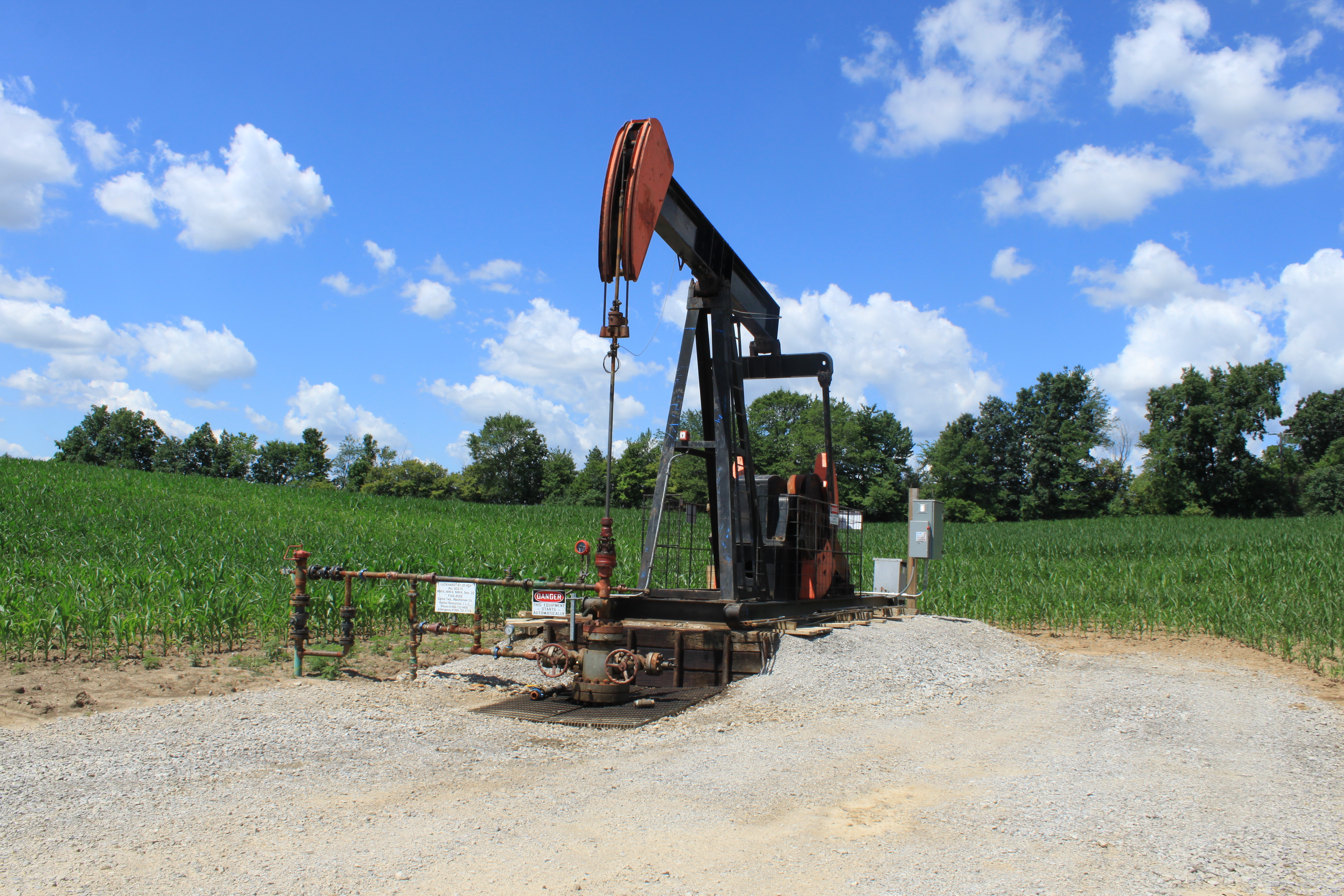
 Figure 1. The preferable kind of corn-field-based fuel, brought to you by a corn field in Michigan. SOURCE
As a result, I’m a long-time opponent of turning corn into fuel. I think it is a crime against the poor, made the worse by the unthinking nature of the ethanol proponents as they advocate taking food out of poor kids’ mouths.
But that’s not the only way that our monomaniacal insistence on renewable energy is taking food from the plates of the poor. For example, tropical forest has been cleared for oil-palm plantations for fuel. But even that is not what this post is about. This post is about trading food for energy in California, the breadbasket for the nation. Here’s the headline:
Fresno County judge rules in favor of I-5 solar project
Jan 03 – The Fresno Bee, Calif.
A Fresno County judge has ruled that a solar energy project along Interstate 5 can move forward despite arguments from the state farm bureau that it will eat up valuable California farmland.
The decision, which comes as good news to the state’s burgeoning solar industry, is the first handed down in the ongoing land war between solar developers seeking real estate for renewable energy and Central Valley farmers trying to protect their tillage.
While the ruling pertains only to the Fresno County project, the decision sends a message across the Valley that agriculture doesn’t necessarily reign supreme.
“I do think it gives a boost to the solar development community,” said Kristen Castanos, a partner at the law firm Stoel Rives in Sacramento who has represented energy ventures and tracked solar efforts on farmland. “This gives counties and developers a little more confidence in moving forward.” SOURCE
This is unbelievably short-sighted. The only good news is that compared to say buildings, it’s much easier to remove a solar installation and return the land to actually producing food. Not easy in either case, but easier for solar. But the good news stops there.
The bad news is, the power thus produced will be much more expensive than power from either fossil fuels or hydropower. But both fossil fuels and hydro are verboten under Governor Jerry “Moonbeam” Brown’s plan to get 30% of all electricity from renewable sources, with “renewable” meaning “renewables other than hydro”. Thirty percent! This madness has already given us some of the highest electrical rates in the country, and we’re not even near to 30% renewable yet.
The worse news is what the dispute was about. California has a strong farmland act, called the Williamson Act. If you put your farmland under the Williamson Act, you can’t develop it, it has to stay farmland. In exchange you get various tax advantages. The important thing to note is that it is a legal contract between the State of California and the owners of the land. This is to prevent the landowner from taking the benefits and then developing the land.
In this case, the article cited above goes on to say (emphasis mine):
Superior Court Judge Donald Black found last month that Fresno County officials acted appropriately two years ago when they canceled a farm-conservation contract that allowed a solar development to proceed on ag land near Coalinga.
The California Farm Bureau Federation sued the county, alleging that the Board of Supervisors did not have the right to cancel the contract put in place under the state’s farm-friendly Williamson Act.
Black said county supervisors met Williamson Act requirements for canceling the contract.
“All parties concede the development of renewable energy is an important public interest both in the state of California and in Fresno County,” Black wrote.
I’m sorry, but there is no public interest in wildly expensive solar power. Nor should County officials be able to break a legal contract at their whim, based on some fanciful claim of a public benefit. The only people being benefitted here, above the table at least, are the owners of the project. The owners will be paid a highly inflated price for their power, which I and other ratepayers will be forced to subsidize. Expensive subsidized energy is not in the public interest in any sense.
In any case, breaking a Williamson Act contract to put in a solar installation definitely reveals the profound hypocrisy of the people behind the project and the useful idiots that support it. They’re approving massive, hideous development on prime farmland in order, they claim, to save the environment. Yeah, pave it to save it, that’s the ticket …
It also sets an extremely bad judicial precedent for future breaking of Williamson Act contracts. Since Kelo vs. New London the expansion of the “taking” powers of governments under the infinitely flexible rubric of “public interest” has ballooned unbelievably. Now we are to the point where they can even take away Williamson Act protections.
The Williamson Act is there to protect the totally irreplaceable, amazingly productive farmlands of California. The Fresno County officials are breaking the intent and spirit of the Williamson Act so that private developers can make a fortune picking the ratepayers’ pockets … and that’s supposed to be in the public interest? Spare me. For me, a kid who grew up on the good rich California earth, that’s a very sad day.
So yes. The idea that you shouldn’t allow the development of solar installations on some of the world’s finest farmland, not just any farmland but farmland legally protected under the Williamson Act, appears to be history in Californica. Infinitely stupid.
Y’know, I love the land here—the fold and break of the coastal hills dropping into the ocean; the wide valleys full of farms; the Sierra Nevada Mountains, where I grew up, towering over the Central Valley; the crazy, blazing deserts; the forests and groves full of deer and fox and mountain lion; and my own little corner where I live in the middle of a redwood forest, with a tiny triangle of the sea visible through the coastal hills. What’s not to like?
But I am roundly fed up with the government, and with the ‘lets power the world on moonbeams, we can all ride high-speed unicorns for transportation and just eat veggie-burgers’ crowd of folks that thinks losing irreplaceable farmland is a good thing in a hungry world, and thinks that hydropower is not renewable energy …
Regards to all,
w.
Willis, in the 80’s and 90’s I saw and briefly visited shanty towns aroun Mexico City. The ones I saw were NE of Mexico City and one contained an estimated million people and the other an estimated 3 million. No electric power, no running water (it was all trucked in). Hauled water is too expensive for commercial agriculture. From the looks of these people and my friend/guide/translator’s remarks–poverty here for the millions of people was severe and precluded buying tortillas. They survived, they ate something, but I cannot figure how they did survive. I think of these people each time I am forced to use food-derived ethanol additions to my gasoline. Blowing food out the tailpipe is not my idea of a good solution to anything.
Corn is also part of diet in the slums around Lagos, Nigeria. But as my guide and companion advised me, it was just too dangerous to enter these areas. Can’t really comment much about the slums around Lagos except that they appeared worse than those in Mexico, Again, to waste food when millions are hungry is a sin. I too have visited places where corn and tortillas are too expensive for millions. Your analysis and comments re conversion of farmland are entirely correct, based on my observations and on what I was told by the locals. It stomps the poor further down.
Thank you.
E.M. Smith says January 6, 2013 at 3:44 pm:
=============================================
At last! Someone who knows what he is talking about. You are correct about MTBE, I had understood that methanol was formulated raw to the gasoline. Thanks for the education.
regards, mpainter
An example:
http://www.nytimes.com/2013/01/06/science/earth/in-fields-and-markets-guatemalans-feels-squeeze-of-biofuel-demand.html?_r=1&
@kakatoa:
IIRC T. Boone Pickens on an interview on CNBC said he had been fracking oil wells since the late ’40s. What changed was a guy figured out how to hold the fractures open a bit ( I think it is some kind of small crystalline ‘sand’ like stuff but the mixes are trade secrets which is why they are not keen on the EPA mandating they tell the competition how to steal their decades of trial and error… and ‘research’.. 😉
Near as I can tell, it was just “time” as nat gas had hit $12 / MBTU and it was worth it to ‘try stuff’. (Gas now about $4 as a result). For many years natural gas was a ‘waste product’ just flared off (still is in some OPEC areas) so doing more than poking a hole in the ground was not worth the money…
Doubt it had anything to do with Carter or the EPA or Dpt. of Energy or government at all. Near as I can tell, they are still trying to find out how it’s done and what is used down the bore 😉
(Mostly water and some kind of particulates. I’d speculate some soaps / detergents / solvents and likely some ‘lube’ to prevent particulate caking. Might also include a pH modifier to make the granules “stick” once in place holding the crack open, but that’s all just my speculation on how I’d go at it…)
In short, it’s the end result of a technology that has been in use and slowly incrementally developing over about 70 years.
Zeke says: January 6, 2013 at 1:52 pm
mpainter blazes, retorts: “I doubt if you understood the argument- how’s that for an ad hom?”
Was that an ad hom? It looked more like you dabble in omniscience and omnipresence as a side hobby. Look, try picking up the end that isn’t sharp next time. Then you will be able to do real ad hom attacks in defense of the failed and unscientific work of Malthus.
<<<<<<<<<<<<<<<<<<<<<<<<<<<<<<<>>>>>>>>>>>>>>>>>>>>>>>>>>>>>>
Zeke, in all sincerity, I believe that I am much better versed on this topic than yourself. You strike me as one of those who have conceived a prejudice against Malthus based on what you others say. In fact, your statement confirms your unfamiliarity of Malthus.
I do not think that you read much of the exchange at that thread. Willis did, and Willis learned something, if I understand his latest post there correctly. Go back and see what he learned, and maybe you can learn a few things, yourself. Or, maybe you can’t.
Now, one other thing. I did not invite you into this. You invited your bumptious self. See if you can’t improve your approach. You can benefit a lot if you do. Otherwise, you plaints ring hollow.
E. M. Smith:
What benefits does ethanol provide the user as a gasoline additive- do you know?
@Rune:
The issue is one of distribution, not production. We are no where near “over populated” in terms of ability to produce. ( We might well be over populated in terms of what makes any one person happy about what other folks do with their lives…)
The other major issue is that politicians are greedy everywhere. So they don’t care if the (tribe they don’t like) dies as long as they get a cut of the action.
FWIW, there are known ways to get about double the current production from land. Why don’t we do them? It’s cheaper and easier to do what we do now so why not? Look up ‘French Intensive” gardening and “Rice Intensification” (remember that rice matters to more people than corn…) Going to things like hydroponics and greenhouses we can get to 10x the production per acre. And for anyone wanting to say that’s ‘crazy talk’ due to prices, do realize that most of the fancy lettuces and tomatoes are presently grown that way. Even in California we have lots of greenhouses for 4 season production and minimal bug problems.
In Saudi Arabia they are building seawater based greenhouses that are cooled by evaporation that then condenses to water the food. Food from desert and seawater. It is economically viable too. There just isn’t any limit on food from a technical point of view that matters. It’s all about rich vs poor and distribution.
Basically, we have plenty of food… for the rich and powerful folks to throw away…
You are correct about ‘giving food away’. We (the rich west) have destroyed several local farm economies that way… “How to fix it” is harder. First you need to find a way to get rid of the power broker elite in the broken countries… (A USA circa 1800 legal / political model would work). Also farmers cooperatives and an ‘open source’ seed banking / agronomy college system helps. Private land ownership too. (That is, family farms that are large enough to mechanize and be profitable, but not gigantic multi-national agri-business monsters nor cute one family self sufficiency farms that are low productivity as they don’t mechanize.)
@Gunga Din:
Good point. Especially since a lot of the ‘3rd World’ funding goes to rich robber elite of their countries…
@Zeke:
Good example of how Malthus was wrong. The generic for it is “technological change” and “resource substitution”. Those are the two bits Malthus and all his followers miss or discount.
“The stone age did not end for lack of stones.”
We now use metal “2 by 4” studs in many places in stead of wood.
My TV set no longer needs a couple of dozen pounds of lead to make the “picture tube” x-ray safe for me to watch.
Look up the “earthship” house. Made largely from trash. Collects and processes its own water and sewage, even in the dry southwest of the USA. We run out of resources when we run out of garbage… (Earthships are largely built from worn out tires, empty bottles, and rammed dirt).
Please look at:
https://chiefio.wordpress.com/2009/03/20/there-is-no-energy-shortage/
http://chiefio.wordpress.com/2009/05/08/there-is-no-shortage-of-stuff/
so I don’t have to repeat it all here in dribs and drabs…
@RealityCheck:
While I would hope the ‘safety net’ is working better now, than then, ( it was a decade or two back and in a small 3000 person farm town ‘miles from nowhere’) I’d rather we just let folks work out their own problems rather than pay a State worker $60,000 / yr to make sure a person had $3000 / yr of groceries… We had effective charity when I was about 5 years old and it worked. The Mormons especially made sure no one of their members went hungry. Catholics did pretty good too.
Why do folks think “Government” is better at this stuff than they are?
@John F. Hultquist:
You are most welcome. (Now I don’t feel so bad about all those summers spent listening to Dad tell me endlessly about corn and Iowa 😉
Once, when about 9? I had the bright idea of making a hybrid corn, so planted some Indian corn in with the sweet. THAT was the year I learned that the F1 generation had corn kernels reflective of both parent types and it didn’t wait to be planted to manifest in the seeds… We had “tough sweet corn” that year and I learned not to experiment in the garden without asking first 8-}
The seed reflects both parents at formation, not just after growing out, so you can just look at the seeds and sort out “off type” outcrosses. Or select desired traits.
So simply sorting for “most wrinkled” seeds gives you ‘sweetest’ selection. (Same thing sort of works with peas. Hard round ones are better “soup peas” while wrinkled ones are better ‘sweet’ garden peas. It’s a bit harder as ‘pod type’ also matters for use (think ‘snow peas’). I’m presently selecting (slowly) a ‘sweet snow pea’ with a yellow wrinkled seed.
I have a collards / kale cross that is aphid resistant (but a tiny bit tougher) too. A 3 way cross of “Green Glaze” collards (themselves a cabbage / kale cross) with Dinosaur Kale with another cabbage. It, too, is naturalizing in a square of its own. (I’m trying to get self tending plants, so like to let them ‘take over’ a square and fight it out 😉 A “square” is a 4×4 foot area bounded by pavers.
I’ve almost got ‘self tending’ varieties of enough key plants to just ‘go pick and otherwise ignore’ 😉
All because Dad wanted me to know what it was like on the farm and I find life fascinating… and that one tiny little corn experiment that lead me to want to ‘learn how to do it right’…
I’m particularly selecting for “Catastrophe seeds”. Varieties that don’t need a lot of hand holding, chemicals, fertilizers, etc. Even if the aesthetics are a bit less. So I’ve got a giant green bean (harvested some from 20 foot up the tree…) that’s fine, but has some string in the pods. (Spouse hates the string, so I eat the older pods and she gets the youngest ones…)
I’m about 1/2 way to a self tending sorghum. It’s reseeded 2 years now, even though overgrown by the collards / kale. Time to give it its own square as a reward, I think 😉
“Darwin’s Garden (c). The Survivors will be eaten! (c) -E.M.Smith” 😉
At any rate, if interested in more on gardens and seed saving and ‘Darwin’s Garden’, you know where I hang out. 😉
@Mpainter:
You are welcome.
Just about every combination of ethers, alcohols, and alkanes (regular gasoline) and aromatics (high ‘octane’ benzin) has been tried. They ALL can make excellent motor fuels provided the engineer designing the motor has THEM as his ‘spec’ to which to design.
Where things ‘go bad’ is when after a few billion motors are built, some damn fool politician who is not an engineer decides to fiddle with the fuel specification…
Methanol ‘just dumped in’ has been tried, and it “had issues” so was abandoned. It works FINE in vehicles designed for it – witness drag racers…
Per ethanol “as a gasoline additive”. It provides a tiny bit better ‘octane’ rating and a little cooler burning (so engines with overheating problems run better / cooler). Otherwise it isn’t very useful, really. There’s a small reduction in some kinds of smog formation (NOx) due to the lower fuel burn temp, but an increase in vapor pressure and evaporative emissions on filling. Net about a wash. (Which is why California for a while at least fiddled with what months you could use it). Ethanol also has polymer softening and metal corrosion increasing effects, but small enough to not be a problem (for MOST cars and then only problematic in ones built 1980 or so and before… mostly).
In cars designed for ethanol / methanol (and ‘flex fuel’ is in that group) you can run much higher compression and get more theoretical efficiency. In highly loaded engines, the added cooling is a feature (thus the use in drag racers. They run about 900 revolutions from one end of the track to the other. By the time they reach the far end they are dieseling on the melted stubs of the spark plugs. ANY added cooling is a feature! 😉 In W.W.II there was an EWP lever in some airplanes. “Emergency War Power”. It dumped excess isopropanol ( 3 carbons instead of the 2 of ethanol or the 1 of methanol) into the fuel mix. Let you run the engines over design specification to haul your butt out of trouble. Good for ONE use, then you rebuild the engine – but better than being dead and shot down.
So in motors designed for it, alcohols can be more efficient, burn cleaner, and provide a very smooth operation at higher power loadings. That’s for any of the light alcohols. (Methanol, ethanol, propanol, butanol) Similar things can be said for ethers, though specifics vary more by the particular ether.
In short: You can make most any flammable liquid into a decent motor fuel in one kind of engine or another. Just tell the engineer what fuel specification to design for and leave them alone. It is changing the fuel spec after the fact that guarantees they did not design for it and breaks things.
(Kerosene and light oils are used in jet engines and Diesel engines. At one time I ran my Nissan 6 cyl truck on Crisco Shortening… dissolved in kerosene to thin the mix. I’ve also run propane in the air intake as a ‘co-fuel’. That can work too, but avoid stochastic mixes as that can cause problems… Did I mention I’ve been tinkering with ‘funny fuels’ for a long time? 😉
What we have now is the worst of all possible worlds. We design for one fuel, then keep changing what is sold for political reasons and frequently too….
FWIW, VW has (or had) a design for an engine that was highly fuel variation friendly. Had both spark plugs and compression ignition. You could run it on anything from gasoline blends to oil / kerosene / jet fuel. Don’t know what the production intent might be. I’d love to have one… The cost goes up as you add more fuel specs you must meet, though… so most folks design for one kind of fuel…
There is an alcohol / Diesel blend being tried too. About 5 to 10% IIRC. Takes some special care to avoid corroding the injectors… While I prefer to run my Diesel on the pure stuff, I’ve experimented with Alcohols in Diesels. It works best just fumigated into the air intake of a low compression Diesel ( Volvo Penta marine Diesel in my experiments) at below stochastic mix. As a liquid blend I would not like the corrosion question. But I tested it and it was OK. A 20% ‘gasahol’ mix (so about 2 % ethanol) gave smoother and more efficient burn in my Mercedes. (The 240 D that is placarded for up to 25% Regular gasoline as a winter blend. In the 300D that says up to 50% Kerosene only, it caused a ‘hard to start’ problem even when warmed up. Almost left me stranded in L.A., but I got it started and didn’t shut it off until I had refilled on straight #2. But IIRC that was about a 25% gasoline mix and may have been E15 in the RUG.)
So just because “it’s best to not screw around with the fuel spec” that doesn’t mean I haven’t played with it anyway 😉
For folks not willing to play “Bet Your Engine”, it is better do only what the engineer designed the motor to do…
mpainter says:
January 6, 2013 at 12:58 pm
Willis Eschenbach says: January 6, 2013 at 12:09 pm
News flash, mpainter. When you live on a dollar a day, ALL tortillas are expensive.
<<<<<<<<<<<<<<<<<<<>>>>>>>>>>>>>>>>>>>>>>>
I can believe the flash part, Willis, now how about answering the question that I put to you at 12:19 pm, thanking you ever so kindly:
I will answer that. (Remember you did ask)
Okay Willis, I’m game, where is this place where people can’t afford tortillas? Educate me, please and thank you.
>>>>>>>>>>>>>>>>>>>>>>>>>>>>>
I will answer that.
It is called del Rancho de Barro (sp – I do not speak Spanish) It is near El Sotano [the Pit] and in the middle of nowhere Mexico two days walk from the nearest road. I think it means village of the mud huts, a very good description of the place.
Buy tortillas? Heck those people could not buy ANYTHING. I doubt they had $1 among the entire village. They were so glad to see American cavers they just about kissed our feet. I think the members of the NSS were their sole source of income. At the jumping off spot to climb up the ancient Toltec road to Sotano de las Golondrinas [the pit of the golden swallows] another village actually built a rest room with a shower (cold) for American cavers (1974). The Mexican government actually consider us as an important set of tourists link because we are crazy enough to head to the far out back of beyond with $$$ and backpacks where no one else in their right minds would ever set foot. link showing karst terrain
The rugs we use to pad our ropes are a valuable item we leave with the villagers at the end of the trip. They use them on their burros so we cut them with that in mind. Our old ropes are also a much coveted item.
(And for the cavers, yes I climbed out on prussik knots.)
“Now that the United States is using 40 percent of its crop to make biofuel, it is not surprising that tortilla prices have doubled in Guatemala, which imports nearly half of its corn.”
http://junkscience.com/2013/01/06/as-biofuel-demand-grows-so-do-guatemalas-hunger-pangs/#more-33319
h/t Junkscience
EM Smith: I too would like to see people work out their problems on their own. However, where I live even the charities have become bureaucracies. People “apply” for school supplies, food baskets, etc. Churches may do better, but even thirty years ago, members of these churches could be talked into government assistance (maybe I was just really persuasive? Not.). I did like being a social worker back then because there were not so many rules and you could really help people. I would not go back into that field now.
(I made minimum wage back then–guess government positions really do pay well now!!)
As I read through some of the comments regarding fuel for auto engines I have the sense that underlying some of the comments is the assumption that a complete conversion of the fleet would be easy, quick, and cheap — sort of a full blown 100% “cash for clunkers.” The same easy fix notion also seems to be factored into replacement of utility scale grid power by alternatives. Although some things can change fairly rapidly, Detroit comes to mind, it is quite likely that cities, suburbs, and related infrastructures, support vehicles, and so on will look about the same in 2050 as they do today.
Reality check says:
January 6, 2013 at 2:29 pm
Gail Combs: My research on “hunger in America” indicate that many of these surveys are based on subjective data….
>>>>>>>>>>>>>>>>>>>>>>>>>
I have no doubt about that, however the # is going up due to the unemployment about doubling over the last four years to ~ 23%. The mortgage foreclosure crisis didn’t help either. A big problem is many people especially older folks are too proud to go on food stamps, too timid or do not know they can.
Are the numbers high? Probably but American wages are going down as food prices are going up.
E.M.Smith says:
January 6, 2013 at 4:12 pm
@kakatoa:
IIRC T. Boone Pickens on an interview on CNBC said he had been fracking oil wells since the late ’40s…..
>>>>>>>>>>>>>>>>>>>>>>>>>>>>>>>>>>>>>>>>>>>>
The original patent for fracking was just after the Civil War. link
@E.M. Smith:
“Another way to say it is that we can, should we choose, run our existing stock of reactors on any of U, Th, Pu / MOX (so fuel is functionally unlimited for them too) while taking the 20 years it will take to get design approval, site approval, build, approval, and operational status on new designs”
==========================================================================
I understand that you fully support and appreciate the significant advantages of Liquid Fluoride Thorium Reactors (LFTRs) over solid fuel reactors, however, I feel that America and Europe doesn’t have 20 years to waste in implementing this revolutionary technology.
China has already devoted $500 million to LFTR development (the Chinese LFTR project headed by nuclear physicist Dr. Jiang Mianheng, the son of retired Chinese President Jiang Zemin….) so China obviously sees the potential of this revolutionary technology.
I’m just guessing, but I wouldn’t be at all surprised if China doesn’t have a test LFTRs up and running by 2015 and able to implement a major rollout of LFTRs by 2020~25.
If this happens, the economic consequences to other nations would be devastating. A massive second wave of industrial production would shift to China as manufacturers around the world would take advantage of China’s cheap labor, cheap energy, large capital reserves, minimal EPA and labor rules/regulations, strong currency, low taxes and favorable business environment.
To the best of my knowledge, America has devoted $ ZERO to LFTR development and there is no action being done by the DOE, EPA, DOD or the NEC to establish the rules, regulations, approval process required to even start LFTR development in any serious manner.
Without the government LFTR regulations, it’s impossible to get private sector funding for LFTR research and development because of the risks and uncertainties are too great.
I’ve actually sent letters to Senators and Congressmen advising them of the need to move quickly on just establishing the rules and regulations for LFTR development and have just received auto replies and requests for campaign donations for my efforts…
Yeah, I know, who am I… but the US government is asleep at the wheel on LFTRs (as they are on many things).
So, yes, I know it’s possible to inefficiently burn Thorium in conventional reactors, but this is too little and way too late. Governments around the world need to take action now to get LFTRs developed quickly or the economic consequences of missing the start of the Thorium Age will be severe.
I know this is just my opinion… but I think my logic is sound.
Gail: DON’T AGREE WITH YOUR SCIENCE MUCH, BUT YOU ARE A SAINT! (CAPS ARE FOR W).
@Gail:
The reason prices for EVERYTHING are going up is that US Federal Reserve is now “PRINTING” $80 BILLION of bogus fiat currency A MONTH ($1 TRILLION/YR).
Contrary to what President Obama says, raising the debt ceiling isn’t about meeting America’s “obligation” to “pay” for all the wasteful spending Congress has passed, but rather an ADMISSION that we ALREADY CAN’T PAY what American owes.
America must BORROW and/or PRINT 40% of every dollar Congress currently spends because Congress spends 40% too much. (total tax revs $2.1 trillion, total spending $3.7 trillion)
Rather than spending cuts ON EVERYTHING (the best option) or drastically raising income taxes ON EVERYONE to pay for the $1.6 TRILLION shortfall, the Federal Reserve simply PRINTS about $1 TRILLION/yr and the Treasury sells an additional $600 billion in Treasuries.
BTW, the President Obama’s tax increase on the “evil” rich will only amount to $60 billion/yr. This $60 billion was ALREADY used up in the FIRST WEEK of this year to pay for the damage of Hurricane Sandy…… One week…Gone…. What about the remaining $1.54 TRILLION short fall? print, print, print….. Geez…
This is insane.
Printing money debases the VALUE of the US$, thereby requiring more devalued dollars to buy the same amount of goods; i.e. inflation.
No country can printer their way out of a fiscal and monetary crisis. Eventually inflation explodes, the currency and government bonds crash and the economy implodes as seen in every case throughout history; the most recent being Zimbabwe…. It will not work.
Printing money is an evil stealth tax because Congressmen are too worried about losing their cushy jobs by implementing the necessary spending cuts to enable government spending to match government tax revenues…
Print, print, print……poof… It’s just a matter of time.
Zeke said @ur momisugly January 6, 2013 at 2:24 pm
That’s some ad hominem there bro’! I’ll quote Willis:
And the fact remains that nobody has yet explained to me how he could have known what the future held.
E.M.Smith said @ur momisugly January 6, 2013 at 5:13 pm
Some of us have played with a tractorised version of French-intensive and yields are better than double depending on the crop. The tractor wheels run in permanent ruts between the beds so there’s no need to till compacted earth. End result is you can choose between getting twice as much tilling done in the same time, or halving your tractor power. Unfortunately, you need to build your own tillage/harvesting equipment because the wheel bases are different. Despite there being a market for common wheel base gear, it has yet to be exploited AFAIK after 30 years since the original research.
I don’t know that I buy the economics of hydroponics for growing grain staples. There’s not much dry matter content in a lettuce — it’s nearly all water. While people will pay a lot for something they eat little of, staples are a different matter.
On the latter and seed saving, I maintain a couple of heirloom varieties of peas and beans (fava beans). These latter yield less than the ordinary sort, but stay tender even when the seeds have attained full size and taste much better.
Gail Combs says: January 6, 2013 at 5:48 pm
=======================**********************===============
Yes, Gail, I was there, or somewhere very much like it. Mexico is a fascinating place- first win your heart; next break your heart; charm you, then alarm you. I long to return, it is another world.
Well… looks like even “Gourdseed” corn makes decent tortillas:
http://www.southernexposure.com/texas-gourdseed-corn-gourdseed-57-g-p-1152.html
(Sorry… just being fixated on odd corn varieties again 😉
@Gail:
Civil War, eh? It is rare I’m surprised… this one made the cut! Thanks! 😉
@John F. Hultquist:
The present average age of the car fleet is approaching 12 years. That means it will be 2026 before the average of the fleet is ‘turned over’. IFF we were all buying 100% of the cars in the “approved new fuel” kind, which we are not.
Any “solution” that passes through “Fleet Change” is not a solution.
Heavy equipment, specialty equipment, trucks, buses, ships, trains planes all have longer average lifetimes than private cars…
@SAMURAI:
Looks like Fuji has a MSR design on the boards. It is headed for any of U, Th, or Pu fuels. As this article is 5 years old, might be worth an exploration of what happened since then:
http://nextbigfuture.com/2007/12/fuji-molten-salt-reactor.html
That final bit is interesting. It’s harder to get joint projects killed for internal political reasons as there are usually contracts in existence…
FWIW, the reason to push for Th in CANDU and LWR/BWR/PWR types and to push for Pu, U, in MSRs (of which the LFTR is one specific) is to parallel track the processes.
(LWR Light Water Reactor, BWR Boiling Water, PWR Pressurized Water, MOX Mixed Oxide, MSR Molten Salt Reactor, LFTR Liquid Fluoride Thorium Reactor,
https://chiefio.wordpress.com/2011/04/12/nuclear-reactor-types/ )
It is good go break the link between Th and MS / LF for a couple of reasons.
First, getting Th into use in ANY reactor means that the regulatory agencies et. al. get used to it. The “fuel guy” gets sent off to Th class, or the “hazmat guy” gets the ‘what to do if spilled’ spec approved, or they hire the guy to make the Th class. It gets Th into the “usual and customary” category and out of the “exotic leave me alone” category.
Second, it means that you get the Th mining, hauling, refining, fabricating, etc. infrastructure built and rolling. It solves the “gas station problem” to some extent. (If you have a car that runs on Magic Dust, where are the Magic Dust Gas Stations? Like EV charging points…)
Instead, becomes just a new form of the fuel already in the same old supply chain…
Getting MSRs designed and approved and built now lets you have THAT on the shelf. Shifting it from U or Pu to Th becomes a smaller problem to solve. More like getting gasahol for the existing car fleet approved rather than a whole new kind of engine and fuel. As soon as any MSR is running and any Th is common in the fuel cycle, the MSR with Th (such as LFTR) will rise to the top due to better economics.
When you require that both a whole new fuel and a whole new reactor design be done at one go, the odds of folks just saying “never mind” goes way up.
If you can get it all in one chunk, fine. But I think it is just a lot more likely to happen one slice of salami at a time.
On the issue of inflation and govt stupidity with the printing press / fractional reserve banking:
https://en.wikipedia.org/wiki/Hyperinflation#The_Hanke-Krus_Hyperinflation_Table
And that is just the “Hyper” kinds, not the very very bad kinds…
The (BIG) table:
https://upload.wikimedia.org/wikipedia/en/8/88/The_Hanke_Krus_Hyperinflation_Table.pdf
A partial list:
Given that in 50 years the $US has lost about 95% of its prior value to inflation, and STILL doesn’t make the list, it gives you an idea what it takes to be thought of as ‘bad’ inflation…
I think what we have here is an existence proof that paper / fiat currencies are just a bad idea. Rather like was written into our constitution (and is now ignored…)
“And the fact remains that nobody has yet explained to me how he[Malthus] could have known what the future held.”
Malthus attempted to use the scientific method to predict future events for civilizations. He did not succeed, but failed. And the most important lesson is that “predictions” of future shortages or famines which scientists make are not predictions in the scientific sense of the word, they are really prophesies or soothsaying. And those who are involved in this doctrine are wrongly presenting the scientific method as a valid means to read future events for the world.
The interesting question to ask is, in what ways was Malthus unable to “know what the future held”? That is the list any true scientist will be interested in. – It does not end with the little scraps our resident “well-versed” Malthus scholars have yielded: agricultural advances. Every sector of western economies completely transformed and advanced in undreampt of proportions. Now today, we still do not know very much about plants and biologic systems, or the water cycles, or atomic forces, or the solar system, and yet scientists are just as arrogant and confident as Malthus was in his calculations regarding crop production and the number of people it could sustain. (He threw in a few more variables such as abortion and birth control for good measure. But he missed AC power and the tractor and fertilizers, and modern life in general.) This idea that science can prophesy scary “tipping points” in every one of earth’s systems ready to collapse under the weight of free humanity is truly an abuse of what is meant by scientific “prediction.” Do I have to accept that from academics and scientists? Or is it more appropriate for the lesser ranked person, if there are no brilliant scientists who are able or willing, to point out that science no longer recognizes its limitations?
Zeke says: January 6, 2013 at 10:14 pm
======================================
Hunh?
mpainter says:
January 6, 2013 at 10:29 pm “Hunh?”
I said, scientists cannot prophesy the future.
@The Pompous Git:
Well, generally I was ‘visioning’ hydroponics / aeroponics for things like vegetables and saladings… with ‘greenhouses’ and ‘rice intensification’ like methods for grains, there are folks doing some kinds of hydroponics with grains (though not the kind you were thinking of):
https://en.wikipedia.org/wiki/Fodder#Sprouted_grains_as_fodder
So nothing really prevents letting it ‘go to seed’, other than what’s cheaper…
http://www.interiorgardens.com/grow-hydroponics.html
Lists a lot of the stuff that can be done, commonly, today. Then there is this bit:
At the “Behind the seeds” tour of “The Land” in Disneyworld you can see very large things, including palm trees, being grown in a hydroponic operation. The food produced is used in the restaurants there.
Even cotton. See the pictures here:
http://www.disneyfoodblog.com/2011/02/14/disney-food-for-families-review-behind-the-seeds-tour-in-epcot/
I know NASA was working on a dwarf wheat, but this is the only link that came up quickly:
http://www.house-garden.us/articles/plants-in-space-the-new-frontier-of-hydroponics/
What was mentioned in the (more technical) article I can’t find now was just the volume issue. A one foot tall wheat means many more layers can be stacked under artificial or piped light per unit volume…
The reason we do as we do is because it’s what we are used to doing, and it is less bother (effort, cost, staff, whatever) than the alternatives.
This doesn’t even get into the whole Algae thing where you can get another 10x to 100x yield of nutrients boost per acre (and down to 1/10th the sunlight level needed…) While some people eat algae (spirulina anyone?) the ‘big deal’ is using it to enhance animal feeds.
By my estimate, we are between 1/10 and 1/100 the of the population where “ability to feed” becomes a technical problem. (And that’s probably off to the “not optimistic enough” side).
Don’t know if we want a world with single cities of 100 million population and apartment buildings / algae ‘farms’ / hog ‘barns’ 1000 feet tall; but nothing technically nor in resources available prevents it.
This isn’t really new, and isn’t really all that hard to do.
http://www.seawatergreenhouse.com/ under “technology” says:
http://www.seawatergreenhouse.com/abudhabi.html
Note that this is in production.
So just how much desert or “worthless” land is there in the world? And how much sea water?
I know I can grow amaranth (greens and grain) hydroponicly, as I have some that ‘volunteered’ out of a the space between my work bench bricks and lives on what is spilled from the watering jug… ( I’ve taken pity on it a few times and actually watered it and given it a squirt with the Miracle Grow sprayer some times… It’s on the third year of reseeding now… I have seeds from it in the freezer 😉
I have barley that has also grown from ‘cracks in the cement’… to seed.
The notion that we are “running out of” anything, but especially food or land on which to grow food is what is a broken idea.
Just like minerals and oil / coal: the distinction between what we do now as it is economical (“reserves”) and what we could do if we needed it (“resources”) is lost…
If we really needed to do it, the entire desert “OutBack” of Australia could be ‘farmed’ with the seawater greenhouse technology. Not a hypothetical, BTW…
http://www.seawatergreenhouse.com/australia.html
From the sundrop link:
and growing… The pictures at the link are rather stunning. Harsh desert background with ripe tomatoes being grown foreground…
So on the one hand, taking good ag land out of production to pave it is a bad idea. On the other hand, the real reason folks do not have food isn’t a shortage of means. It is a question of political / distribution / willingness to act / economic development.
We have the means. We lack the spirit… or the intelligence…