
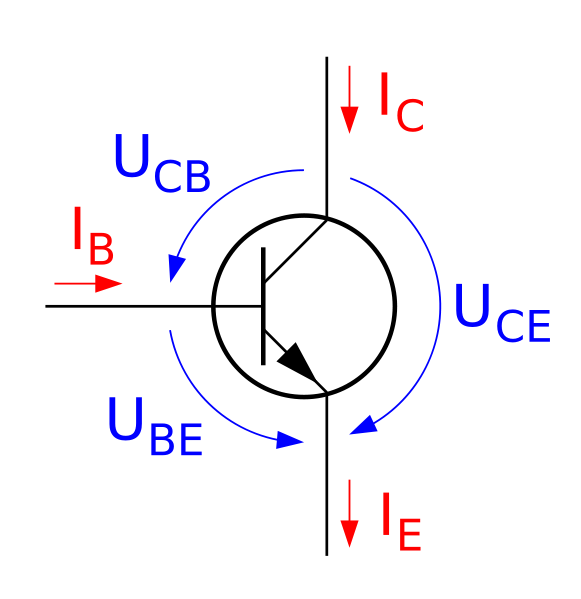

Some months back, I mentioned that I felt the sun-earth connection was much like a transistor. This new NCAR study suggests this may be the case where small solar variances are amplified in the earth atmosphere-ocean system.
From EurekAlert
Small fluctuations in solar activity, large influence on the climate
Sun spot frequency has an unexpectedly strong influence on cloud formation and precipitation
Our sun does not radiate evenly. The best known example of radiation fluctuations is the famous 11-year cycle of sun spots. Nobody denies its influence on the natural climate variability, but climate models have, to-date, not been able to satisfactorily reconstruct its impact on climate activity.
Researchers from the USA and from Germany have now, for the first time, successfully simulated, in detail, the complex interaction between solar radiation, atmosphere, and the ocean. As the scientific journal Science reports in its latest issue, Gerald Meehl of the US-National Center for Atmospheric Research (NCAR) and his team have been able to calculate how the extremely small variations in radiation brings about a comparatively significant change in the System “Atmosphere-Ocean”.
Katja Matthes of the GFZ German Research Centre for Geosciences, and co-author of the study, states: „Taking into consideration the complete radiation spectrum of the sun, the radiation intensity within one sun spot cycle varies by just 0.1 per cent. Complex interplay mechanisms in the stratosphere and the troposphere, however, create measurable changes in the water temperature of the Pacific and in precipitation”.
Top Down – Bottom up
In order for such reinforcement to take place many small wheels have to interdigitate. The initial process runs from the top downwards: increased solar radiation leads to more ozone and higher temperatures in the stratosphere. “The ultraviolet radiation share varies much more strongly than the other shares in the spectrum, i.e. by five to eight per cent, and that forms more ozone” explains Katja Matthes. As a result, especially the tropical stratosphere becomes warmer, which in turn leads to changed atmospheric circulation. Thus, the interrelated typical precipitation patterns in the tropics are also displaced.
The second process takes place in the opposite way: the higher solar activity leads to more evaporation in the cloud free areas. With the trade winds the increased amounts of moisture are transported to the equator, where they lead to stronger precipitation, lower water temperatures in the East Pacific and reduced cloud formation, which in turn allows for increased evaporation. Katja Matthes: “It is this positive back coupling that strengthens the process”. With this it is possible to explain the respective measurements and observations on the Earth’s surface.
Professor Reinhard Huettl, Chairman of the Scientific Executive Board of the GFZ (Helmholtz Association of German Research Centres) adds: “The study is important for comprehending the natural climatic variability, which – on different time scales – is significantly influenced by the sun. In order to better understand the anthropogenically induced climate change and to make more reliable future climate scenarios, it is very important to understand the underlying natural climatic variability. This investigation shows again that we still have substantial research needs to understand the climate system”. Together with the Alfred Wegener-Institute for Polar and Marine Research and the Senckenberg Research Institute and Natural History Museum the GFZ is, therefore, organising a conference “Climate in the System Earth” scheduled for 2./3. November 2009 in Berlin.
This brings a whole new level of meaning to the overshoot and ringing analogies.
Hi Stephen Wilde,
I suspect that there may be some good physics in your flywheel analogy. First a flywheel has two types of energy, potential (P= mgh) and kinetic (K=½ mv²), and energy dissipation due to friction with air which may be either laminar or turbulent. Second, there is a beautiful analogy with both a thermal system and an electrical RLC circuit. Finally the thermal analogy of your flywheel covers the nifty fact that the oceans may be modelled as a system with a large thermal mass and the air as a system with a small thermal mass. [This is more than an analogy!] What is fascinating is that although the different analogies are completely different, the understanding and the equations are nearly the same.
Thanks Invariant.
I think several of my ideas meet both observations and the basic physics better than the current models. Even the couple ocean/atmosphere ones.
The critical observation behind everything I say is that the air circulation systems always move latitudinally after the oceanic phase change at 25 to 30 year intervals.
So far I seem to be the only person treating both phenomena as part of a single process and trying to explore the logical implications of that.
I have found that those logical implications fit very well with what we actually observe throughout the climate system.
A little off-topic but the most brilliant scientist we have alive today is probably Freeman Dyson. He is looking through the equations and has a clear understanding of the underlying physics – see New York Times:
“What Feynman, Schwinger and Tomonaga were doing was stylistically different, but it was all “fundamentally the same.””
http://www.nytimes.com/2009/03/29/magazine/29Dyson-t.html
He also said about climate models,
“The models solve the equations of fluid dynamics, and they do a very good job of describing the fluid motions of the atmosphere and the oceans. They do a very poor job of describing the clouds, the dust, the chemistry and the biology of fields and farms and forests. They do not begin to describe the real world we live in.”
He is probably right.
I think the distinction between climate and mean global temperature needs to be emphasized .
Mean temperature is very tightly constrained by Stefan-Boltzmann/Kirchhoff to a quite precise relationship with the sun’s effective temperature . Climate is complex chaotic engine constantly driving to satisfy that balance . From the perspective of mean temperature the details of how climate gets the job done is no more necessary to understand than the particular paths of molecules in a gas are to it’s mean temperature .
I get the impression that many of the climate models fail to connect themselves to the SB/K constraints . Until that is done , and done correctly ( incorrect statements of SB/K abound ) it will be impossible to claim any science is settled .
tallbloke (04:47:50) :
Louis Hissink (04:18:47) :
following on from my previous, assume the Earth as a leaky capacitor, in circuit with the Sun and Solar System, think about Faraday motors, Plasma, and you should find enough tools to explain things differently to that of our Victorian predecessors who only knew of gravity.
Sounds great. Any coherent theories on offer?
———
I am not an acquaintance of Louis Hissink, but I do follow his blog:http://geoplasma.spaces.live.com/
Pertinent to this discussion would be “Global Warming in a Climate of Ignorance” here:
http://www.holoscience.com/news.php?article=aapprbh6
It would be interesting to hear your thoughts.
Zeke the Sneak
“”” The second process takes place in the opposite way: the higher solar activity leads to more evaporation in the cloud free areas. With the trade winds the increased amounts of moisture are transported to the equator, where they lead to stronger precipitation, lower water temperatures in the East Pacific and reduced cloud formation, which in turn allows for increased evaporation. Katja Matthes: “It is this positive back coupling that strengthens the process”. With this it is possible to explain the respective measurements and observations on the Earth’s surface. “””
This suggests the discovery of a new weather/climate phenomenon, where more precipitation results from less clouds.
If increased amounts of moisture are transported to the equator (where it is presumably hotter) that would seem to argue for more moisture retention in the atmosphere, so less prcipitation.
I would expect that the more precipitation; which results from more evaporation caused by increased mean global surface temperature (see Wentz et al July-7 2007 SCIENCE), would occur at cooler latitiudes; or alternatively at higher altitudes ove land; the monsoons for example.
I do agree with the part that increased precipitation will dissipate the rain bearing clouds, and let more solar energy reach the surface, so that it warms again to yeild more evaporation. But that is the negative feedback cooling part of the water cycle that maintains earth’s temperature range.
The water vapor (from evaporation) produces the positive feedback warming (yes water vapor is a GHG; the most important one); and the subsequent cloud formation; (liquid and solid water), produces the negative feedback cooling via albedo enhancement, and ground level solar blocking. The combined effects of evaporation and precipitation (which must balance over time), maintain the cloud level that supports the earth’s mean temperature range. CO2 just watches from the sidelines.
George
“”” Stephen Wilde (08:44:34) :
Geoff Sharp (04:54:51)
I tried to get at that point a while back but the replies were unhelpful. Either I was failing to get the point across or there was ‘avoidance’.
We all know that total TSI varies very little.
Of the TSI a lot gets reflected in the air or obstructed before it gets to the ocean surface. Of the portion that gets to the ocean surface much is reflected by the ocean surface and another portion fails to get past the region involved in evaporation.
Only a tiny portion of TSI actually gets deeply enough into the ocean to make any difference to ocean energy content and some wavelengths are more successful than others.
If one identifies the tiny proportion of the limited number of specific wavelengths that are able to affect ocean energy content we must find that it is only a tiny part of TSI. “””
I have no idea who wrote the above; or if it is joint authorship. If someone is citing someone else’s posting; it can be helpful to use some delimiter to identify who wrote what. In ordinary English Grammar that is often accomplished by using quotation marks (S/he said this” phooey !”)
I use this “”” Phooey ! “”” just to make it plainly obvious.
But as to the above writings by whomever; the observations are quite false.
First off, starting from a solar “constant” value of about 1366 W/m^2 in the mean earth orbit; by the time it reaches the surface it is about 1000 W/m^2, and that is for cloudless skies; so perhaps 25% is absorbed my the atmosphere (or scattered), and maybe 20% is due to water vapor, in the 750nm-4.0 micron region of the solar spectrum. So I wouldn’t call 25% “a lot”
Then there is this statement:- “”” Of the portion that gets to the ocean surface much is reflected by the ocean surface and another portion fails to get past the region involved in evaporation. “””
This is wrong on both counts. Water has a solar spectrum diffuse reflection coefficient of about 3%; it is only 2% for normal incidence. nobody would call 3% reflectance loss “much”.
Then there is that final other portion that doesn’t get past the surface “skin” that is involved in evaporation. Well the UV part of the spectrum is already highly attenuated before it reaches the surface, and yes it is absorbed relatively quickly, but the part of the spectrum that contains 99% of the ground level insolation penetrates readily into the se water; so in fact the bulk of the ocean incident solar energy IS captured in the ocean and converted to heat content of the ocean’s upper layers.
The very strong surface (skin) absorption of the ocean is reserved for the long wave IR emissions from the atmosphere (or clouds).
So it is quite incorrect to depict the oceans as the repository for only a small amount of the solar energy incident on the earth’s surface; they in fact collect most of it.
George
George E. Smith (17:48:01) :
Then there is that final other portion that doesn’t get past the surface “skin” that is involved in evaporation. Well the UV part of the spectrum is already highly attenuated before it reaches the surface, and yes it is absorbed relatively quickly, but the part of the spectrum that contains 99% of the ground level insolation penetrates readily into the se water; so in fact the bulk of the ocean incident solar energy IS captured in the ocean and converted to heat content of the ocean’s upper layers
Interesting read George….if I am reading you correctly you are describing a part of the UV spectrum, if so would you happen to know what part of the UV spectrum is doing all the “work” ?
Combining “Retired BChe (19:15:48)” and “George E. Smith (17:22:43) we can state:
“The water vapor (from evaporation) produces the positive feedback warming (yes water vapor is a GHG; the most important one); and the subsequent cloud formation; (liquid and solid water), produces the negative feedback cooling via albedo enhancement, and ground level solar blocking. The combined effects of evaporation and precipitation (which must balance over time), maintain the cloud level that supports the earth’s mean temperature range. Most of the heat the ocean is transferring to the atmosphere is due to evaporation, which cools the ocean slightly and increases the water vapor in the atmosphere. Then when the water vapor condenses to rain, it gives up that heat to the atmosphere.”
We can only add that the air temperature transients are faster as the thermal mass in the air is small compared to the thermal mass in the oceans.
In France we have such theory with a french geophysist (ancient IAGA secretary) and others ancients men who follow ALBERT NODON (1862-1934) observations with the electric activity of the Sun since 1950. We have a graph that compares pluviometry with aa-indice and solar cycles from 1950 to 1998.