
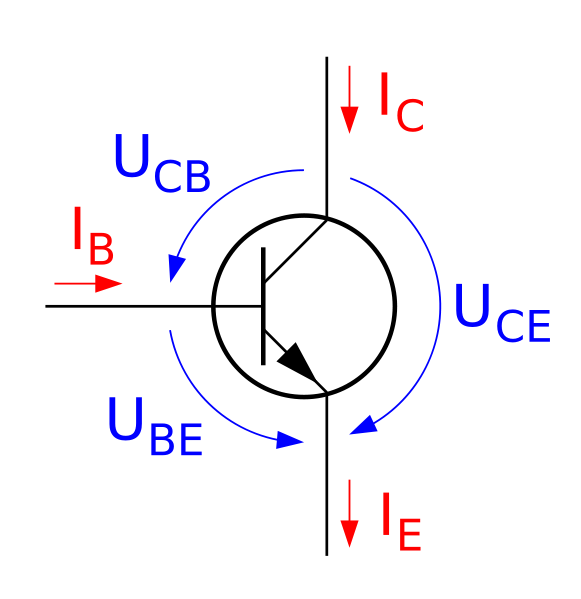

Some months back, I mentioned that I felt the sun-earth connection was much like a transistor. This new NCAR study suggests this may be the case where small solar variances are amplified in the earth atmosphere-ocean system.
From EurekAlert
Small fluctuations in solar activity, large influence on the climate
Sun spot frequency has an unexpectedly strong influence on cloud formation and precipitation
Our sun does not radiate evenly. The best known example of radiation fluctuations is the famous 11-year cycle of sun spots. Nobody denies its influence on the natural climate variability, but climate models have, to-date, not been able to satisfactorily reconstruct its impact on climate activity.
Researchers from the USA and from Germany have now, for the first time, successfully simulated, in detail, the complex interaction between solar radiation, atmosphere, and the ocean. As the scientific journal Science reports in its latest issue, Gerald Meehl of the US-National Center for Atmospheric Research (NCAR) and his team have been able to calculate how the extremely small variations in radiation brings about a comparatively significant change in the System “Atmosphere-Ocean”.
Katja Matthes of the GFZ German Research Centre for Geosciences, and co-author of the study, states: „Taking into consideration the complete radiation spectrum of the sun, the radiation intensity within one sun spot cycle varies by just 0.1 per cent. Complex interplay mechanisms in the stratosphere and the troposphere, however, create measurable changes in the water temperature of the Pacific and in precipitation”.
Top Down – Bottom up
In order for such reinforcement to take place many small wheels have to interdigitate. The initial process runs from the top downwards: increased solar radiation leads to more ozone and higher temperatures in the stratosphere. “The ultraviolet radiation share varies much more strongly than the other shares in the spectrum, i.e. by five to eight per cent, and that forms more ozone” explains Katja Matthes. As a result, especially the tropical stratosphere becomes warmer, which in turn leads to changed atmospheric circulation. Thus, the interrelated typical precipitation patterns in the tropics are also displaced.
The second process takes place in the opposite way: the higher solar activity leads to more evaporation in the cloud free areas. With the trade winds the increased amounts of moisture are transported to the equator, where they lead to stronger precipitation, lower water temperatures in the East Pacific and reduced cloud formation, which in turn allows for increased evaporation. Katja Matthes: “It is this positive back coupling that strengthens the process”. With this it is possible to explain the respective measurements and observations on the Earth’s surface.
Professor Reinhard Huettl, Chairman of the Scientific Executive Board of the GFZ (Helmholtz Association of German Research Centres) adds: “The study is important for comprehending the natural climatic variability, which – on different time scales – is significantly influenced by the sun. In order to better understand the anthropogenically induced climate change and to make more reliable future climate scenarios, it is very important to understand the underlying natural climatic variability. This investigation shows again that we still have substantial research needs to understand the climate system”. Together with the Alfred Wegener-Institute for Polar and Marine Research and the Senckenberg Research Institute and Natural History Museum the GFZ is, therefore, organising a conference “Climate in the System Earth” scheduled for 2./3. November 2009 in Berlin.
Leif Svalgaard (12:24:06)
It doesn’t matter how small the variation of the actual amount of energy involved is if it is sufficient to establish or maintain a trend.
The fundamental error that people commit is to deny the significance of small differences in a situation that relies on balance.
If someone cannot sell his house his loose change becomes critical to survival.
Small matter, but I would argue that vacuum valves make better analogues than transistors since they have slower and smoothed step responses that stem from greater inter-electrode impedance storage factors and the electron propagation physics of the materials used.
One might consider the ocean as an inter-electrode capacitance and the atmosphere an emitter inductance.
Vacuum valves also can have mulitiple elements that affect operation including heaters, grids, accelerators and suppressors.
Add a selected gas to the tube and heck, that might make for a possible climate model.
(Oh, just kidding.)
> It will be held up as a warning of how easily people will go along with bad science as long as it supports their views.
My definition of real science is when people do not know what they are trying to discover, because if they knew they would not need to discover it. Basically real scientists do not know what they are doing! So I think you are a little too hard on this Friis-Christensen and Lassen paper (1991). This field of science is probably not very well understood either, and to suggest new mechanisms in a “trial and error” manner can always be useful I think. For example if not only the amplitude but also the frequency is important, which is most common in the field of signal processing, then they would have made a major discovery. [This would, for example, make sense if the sun/earth is a forced oscillatory system.]
> One might consider the ocean as an inter-electrode capacitance and the atmosphere an emitter inductance.
Cool! Then we have both a capacitance (C), an inductance (L) and a resistance (R). A system without dissipation is not possible (2.nd law of thermodynamics) so there must obviously be a large resistance in the system. Could someone please calculate the resonant frequency of this harmonic oscillator? Please us this table to see suitable analogies,
http://en.wikipedia.org/wiki/Harmonic_oscillator#Equivalent_systems
Invariant (13:24:15) :
So I think you are a little too hard on this Friis-Christensen and Lassen paper (1991).
There are well-established rules and methods for doing science, and if a paper violates those, it is bad science.
The rules in question are:
1) don’t use a proxy for the real thing, if you have the real thing
2) don’t smooth one part of the data one way and another part differently [and if you do anyway, go to pains to explain why]
3) don’t calculate correlation coefficients on smoothed data with overlapping smoothing windows.
Any paper that violates those rules is bad and should be judged harshly. That the paper was published in Science was a failure of our peer-review system.
Stephen Wilde (12:39:21) :
If someone cannot sell his house his loose change becomes critical to survival.
Hardly relevant. He can always sell his house if the price is low enough [it will surely exceed his loose pocket change].
“Leif Svalgaard (13:59:09) :
Stephen Wilde (12:39:21) :
If someone cannot sell his house his loose change becomes critical to survival.
Hardly relevant. He can always sell his house if the price is low enough [it will surely exceed his loose pocket change.”
I meant in the sense that the capital in the house is not accessible in the same way that 99% or more of TSI has no effect on the ocean energy content.
Let me put a few things into perspective about the NCAR study. Those of you who think it is another nail in the coffin of AGW theory are sadly mistaken and I’m a skeptic myself. (Actually, I’m a skeptic’s skeptic; I’m skeptical of claims made by both sides of the debate.) Do you know anything about the lead author, Dr. Gerald Meehl? He has been a Contributing Author or Lead Author on every IPCC assessment report including AR4 (2007.) He is one of the IPCC’s leading climate model experts. On February 8, 2007, he summarized AR4 and warned of the perils of AGW in an address to the U.S. House of Representatives. (See http://www.ucar.edu/oga/pdf/meehl_testimony%202-07.pdf) Significantly, his theory of solar amplification in the Pacific climate system was well under development at that time, as the references in his current paper demonstrate.
In short, Dr. Meehl is a well-established AGW proponent and Insider. As noted in an earlier comment, the last sentence of his paper states that his theory “cannot explain recent global warming because the 11-year solar cycle has not shown a measurable trend over the past 30 years.” (By the way, he cites Lean, 2005 for this.)
At first blush, the NCAR study may appear to be the “smoking gun” the skeptics are seeking but, on the contrary, I predict it will be hailed by the AGW community for making an important incremental improvement to current GCMs and for resolving nagging inconsistencies between the models’ projections and observational data in the Pacific climate system. In other words, AGWers will claim that the models will become more accurate and credible because of Dr. Meehl’s work.
Speaking of oscillations I said this in another thread:
“If ANY variability is present in the flow of energy from the sun it will be compounded when it interacts with the inevitable variability in a fluid surrounding the bulk of a planet and the more of that fluid the better.
Once an imbalance exists (and of course it always does) then oscillations in the flow of energy will be set up within the receiving fluid.
The issue then is as to how large those oscillations can get. I propose that the size of the oscillations is not significantly dependent on the variability of the sun. Rather it is primarily dictated by the properties of the air and the oceans or more particularly by the circulation systems in each.
One could liken it to the resonance qualities of a tuning fork.
So despite the solar variations of only 0.05K (or whatever it might be) the system adopts whatever scale of oscillation it’s internal characteristics are tuned to produce and we see in the real world just how much larger than the solar variation it can become.”
Advanced apology for my ignorance on this topic, but the capacitor analogy captured my attention.
Since sunspots can last for months, then suddenly dissappear. Are we seeing a charge/discharge cylce causing the amplification. Slow build up, fast release.
Like a capacitor can the oceans be charged(energy build up) by the 1% variance for a period of time, such that the sudden removal of the variance, would release the energy at a shorter period of time but have a larger effect.
Perhaps the 1% variance is causing small changes to one or more “processes” over time. At the sudden absence of the variance, the “processes” would then snap back to it’s previous state. Like a driver whose steering is off by only 1degree would correct at a steeper angle upon realizing he is off course.
By “processes” I mean a catchall for anything that can be affected by the variance. Guess that means “Everything under the sun”. 🙂
Stephen Wilde (14:37:13) :
I meant in the sense that the capital in the house is not accessible in the same way that 99% or more of TSI has no effect on the ocean energy content.
The 99% contributes to ~99% of the heat content.
>Any paper that violates those rules is bad and should be judged harshly. That the paper was published in Science was a failure of our peer-review system.
Fortunately the entire paper is available here so everybody can judge themselves.
http://www.friendsofscience.org/assets/files/documents/Solar%20Cycle%20-%20Friis-Chr_Lassen-.pdf
I just read thought the paper once more now, and my point of view is that the hypothesis that long cycles may have a cooling effect has not been falsified experimentally yet. Fortunately we have a very long cycle now, so we may be able to falsify the hypothesis if the temperature does not drop significantly in the next couple of years. On the other hand, if the temperature starts to drop significantly, I suspect that “your nightmare paper” may be more popular than ever before. Obviously, it’s not possible to prove a theory,
No amount of experimentation can ever prove me right; a single experiment can prove me wrong.
— Albert Einstein
However, if the Danish hypothesis is not falsified during the Eddy Minimum then we may see a similar event in science as the famous test of Einstein’s theory in 1919
http://www.arkivverket.no/webfelles/manedens/jan2009/sol.html
Assuming that a future experiment reveals that both the amplitude and the frequency matters, I agree that they should have avoided using the frequency as a measure of the amplitude. This would surely have made most signal processing engineers upset too.
> Since sunspots can last for months, then suddenly dissappear. Are we seeing a charge/discharge cylce causing the amplification. Slow build up, fast release.
In physics this is called a relaxation oscillator
http://en.wikipedia.org/wiki/Relaxation_oscillator
Note that during the charging phase the oscillator is very sensitive for external forces. So the lack uf sunspots may extend or shorten the charging phase significantly.
Stephen Wilde (14:47:51) :
propose that the size of the oscillations is not significantly dependent on the variability of the sun. Rather it is primarily dictated by the properties of the air and the oceans or more particularly by the circulation systems in each
Here you will find those oscillations:
http://www.fao.org/docrep/005/y2787e/Y2787E00.HTM
and at Google:
http://books.google.com.pe/books?id=q3mGCiLjkBIC&dq=Climate+change+and+long-term+fluctuations+of+commercial+catches:+the+possibility+of+forecasting
As a licensed “ham”, I think this talk about the earth-sun system being analogous to an electronic circuit, with resonant oscillations, is a bit off-base. I seriously doubt that we know enough about the system to even attempt to calculate the resonant frequency. Remember that there are plenty of other energy storage systems besides electrical capacitors. A hot water bottle put in bed is one, and if you put a blanket on the bed, it will take longer to cool off. It seems to me that the earth’s energy balance is like a process responding to a controller with derivative action: that is, if there is an imbalance, it tries to control the move off set point with a proportional response; but if that does not correct things soon, the derivative action kicks in with an ever-increasing response. The fact that we don’t have big global runaways of more than a degree or so in a long period of time illustrates this point. We just don’t know how the controller works for our world. I do want to make one point about the ocean transferring energy to the atmosphere. This can only happen by radiation or conduction in situations where the water happens to be hotter than the air above it. I don’t know what percentage of the ocean or what percentage of time this is the case, but I think most of the heat transfer is by evaporation, which cools the ocean slightly and increases the water vapor in the atmosphere. Then when the water vapor condenses to rain, it gives up that heat to the atmosphere. Since the ocean has so much more heat content than the atmosphere, it acts as a huge flywheel to prevent rapid climate changes.
Invariant (15:11:10) :
I agree that they should have avoided using the frequency as a measure of the amplitude. This would surely have made most signal processing engineers upset too.
They did that because using the amplitude gave the result that the temperature [and BTW, they used only Northern Hemisphere] preceded the sunspot numbers, i.e. we can predict solar activity from Earth’s climate. They do have some hand waving about geomagnetic activity being a better measure for solar activity than the sunspot number, but then why not use that as your measure?
> They did that because using the amplitude gave the result that the temperature [and BTW, they used only Northern Hemisphere] preceded the sunspot numbers, i.e. we can predict solar activity from Earth’s climate.
Exactly! Thanks for all the helpful comments Dr. Svalgaard, this site is surely the most civilised place where different viewpoints can be discussed in a peaceful way! Yes, it is complete nonsense that temperature should somehow affect solar activity. But assuming that it is not nonsense and neither a coincidence that a long cycle seems to precede both weak cycles and a temperature drop, the actual effect should then be nearly instant compared to the slow transients usually observed in climate change. [Basically they “changed” the process from being more than instant to being just instant!]
However this is a little counter-intuitive due to the huge thermal mass of the oceans. But maybe the thermal mass is not that large after all and that it is only the upper part of the oceans that is relevant, then the “tau=R*C” time constant may be in the order of ~30 years meaning that we should see a significant drop after ~ 3 years. I think the Wolf number has been surprisingly low for nearly 3 years now, so we should expect a significant temperature drop any day now. If this does not happen the hypothesis may be falsified.
We surely live in interesting times.
Invariant (23:05:27) :
so we should expect a significant temperature drop any day now. If this does not happen the hypothesis may be falsified.
F&L have that covered too. Their hypothesis cannot be falsified, because if temps stay high we just have proof of AGW overpowering F&L, and if not, we have direct proof of F&L overpowering AGW. Any other result will just be a combination of the above two extremes.
Good point. The climate is so complex that any hypothesis can never be tested nor falsified. The big question then is whether climate research really science then? To summarize we
1. cannot observe the climate sufficiently accurately to feed a climate model with initial conditions,
2. cannot simulate the climate due to the limited computing power and the butterfly effect,
3. cannot test or falsify a climate model or hypothesis due the overall complexity of the system, and our limited ability to isolate the different contributions to climate change.
We can assume that we may actually see a temperature drop the start of this century exactly as we saw in the previous century when Titanic unfortunately hit the ice berg. But we can only think “here we go again” and suspect that something fishy is going on but scientific evidence is not possible at this point.
Stephen Wilde (14:37:13) :
I meant in the sense that the capital in the house is not accessible in the same way that 99% or more of TSI has no effect on the ocean energy content.
Leif Svalgaard:
The 99% contributes to ~99% of the heat content
I need clarification of that in view of previous comments about how little energy reaches the surface. I initially only used the 1%/99% ratio as an illustration and not as a fact.
There cannot be 99% available to affect ocean energy content after:
Reflection from the atmosphere, absorption and re radiation by the atmosphere, reflection from the ocean surface, absorption by the ocean surface and then convection, evaporation and re radiation from the ocean surface.
Just what proportion of TSI actually gets below the region of ocean surface involved in evaporation ?
> Retired BChe (19:15:48)
> I do want to make one point about the ocean transferring energy to the atmosphere. This can only happen by radiation or conduction in situations where the water happens to be hotter than the air above it. I don’t know what percentage of the ocean or what percentage of time this is the case, but I think most of the heat transfer is by evaporation, which cools the ocean slightly and increases the water vapor in the atmosphere. Then when the water vapor condenses to rain, it gives up that heat to the atmosphere.
Although I spent nearly 10 years working with a commercial multiphase flow simulator I never became an expert. Too many subtle phenomena like bubbles and droplets and various phase transitions that counter-intuitively were altered by temperature and pressure transients. Nevertheless my hunch is that the description of BChe (19:15:48) seems accurate; it is evaporation that is the major heat transfer from the oceans to the air. But this is a slow process. Changing the overall temperature of the oceans from T0 to T1,
T(t) = T1 + [T0 – T1] exp(-t/tau),
may take very long time due to the large value of the time constant tau for the oceans. Thus the analogy with a huge flywheel that prevents rapid climate changes seems very useful.
I have been known to suggest that the circulations in the oceans represent a very large slow flywheel and the circulations in the air a very small fast flywheel.
However I suspect it is the oceanic flywheel that is responsible for driving climate by altering the rate of energy release to the air then the air circulation flywheel acts very quickly to negate or minimise the oceanic effects.
The size of the oceanic flywheel also explains why solar variability is insufficient to drive climate changes on it’s own except over long time scales. The smallness of solar variability extends such time scales even more.
So, the ocean flywheel would prevent rapid climate changes from solar variability except that the solar variability is so small that that function of the oceans is hardly needed.
However the power of the ocean flywheel is two edged. Small changes in the oceans seem to produce changes in the rate of energy emission to the air which then cause the small air flywheel to respond very quickly just as we see in the way the air circulation systems all shift latitudinally in response to oceanic phase shifts at 25 to 30 year intervals.
I really don’t see why it is a problem for some to accept that all the global air temperature changes we have observed can be accounted for by oceanic behaviour.
There need be no significant change in the temperature of the planet if energy is just being shunted at differing rates between the two main components of water and air.
Thus we can obtain the climate changes we observe without any need to postulate a direct link with solar variability.
It is the physical properties of the oceans and air which dictates the size of any oscillations within the system. Not necessarily anything to do with the sun at all except for the provision of the initial energy content and the setting up of a long term background trend.
Leif Svalgaard (00:35:50) :
Kevin Kilty (20:02:33) :
Do I understand that when UV increases, then some other portion of the total spectrum decreases?
Of course not. I was pointing out that the statement by the article that UV varies 5-8% is incorrect. The variation of UV can be no larger than (total variation of TSI = 1.5 W/m2)/(amount of UV=105 W/m2) = 1.5/105 = 1.5% and is actually less as some of the total variation is not in the UV.
OK, thanks Leif. The differing ways that we use English sometimes makes it difficult to identify a hypothetical statement versus a factual one. I had interpreted your statement regarding 8 W/m^2 as factual when you meant it to be hypothetical.
If it is a ‘transistor effect’, then all you need is a “Miller effect” capacitor.
Two publications about the subject from Jeniffer’s site:
http://jennifermarohasy.com/blog/2009/08/global-cooling-has-begun-bob-foster/
http://jennifermarohasy.com/blog/2009/08/sunspots-just-part-of-the-story-fred-singer/