
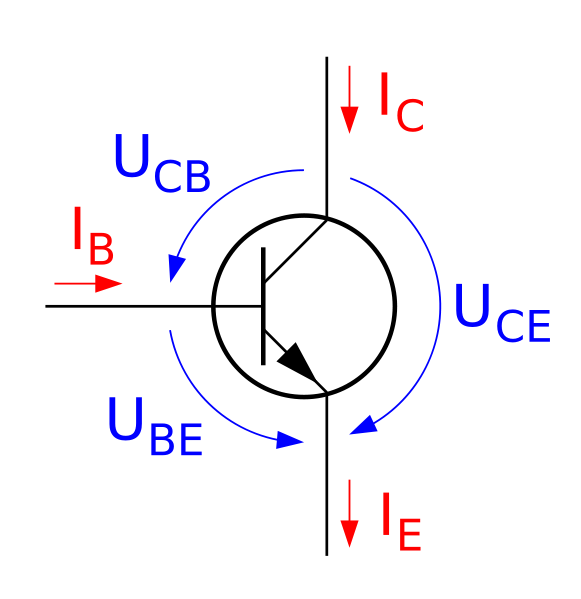

Some months back, I mentioned that I felt the sun-earth connection was much like a transistor. This new NCAR study suggests this may be the case where small solar variances are amplified in the earth atmosphere-ocean system.
From EurekAlert
Small fluctuations in solar activity, large influence on the climate
Sun spot frequency has an unexpectedly strong influence on cloud formation and precipitation
Our sun does not radiate evenly. The best known example of radiation fluctuations is the famous 11-year cycle of sun spots. Nobody denies its influence on the natural climate variability, but climate models have, to-date, not been able to satisfactorily reconstruct its impact on climate activity.
Researchers from the USA and from Germany have now, for the first time, successfully simulated, in detail, the complex interaction between solar radiation, atmosphere, and the ocean. As the scientific journal Science reports in its latest issue, Gerald Meehl of the US-National Center for Atmospheric Research (NCAR) and his team have been able to calculate how the extremely small variations in radiation brings about a comparatively significant change in the System “Atmosphere-Ocean”.
Katja Matthes of the GFZ German Research Centre for Geosciences, and co-author of the study, states: „Taking into consideration the complete radiation spectrum of the sun, the radiation intensity within one sun spot cycle varies by just 0.1 per cent. Complex interplay mechanisms in the stratosphere and the troposphere, however, create measurable changes in the water temperature of the Pacific and in precipitation”.
Top Down – Bottom up
In order for such reinforcement to take place many small wheels have to interdigitate. The initial process runs from the top downwards: increased solar radiation leads to more ozone and higher temperatures in the stratosphere. “The ultraviolet radiation share varies much more strongly than the other shares in the spectrum, i.e. by five to eight per cent, and that forms more ozone” explains Katja Matthes. As a result, especially the tropical stratosphere becomes warmer, which in turn leads to changed atmospheric circulation. Thus, the interrelated typical precipitation patterns in the tropics are also displaced.
The second process takes place in the opposite way: the higher solar activity leads to more evaporation in the cloud free areas. With the trade winds the increased amounts of moisture are transported to the equator, where they lead to stronger precipitation, lower water temperatures in the East Pacific and reduced cloud formation, which in turn allows for increased evaporation. Katja Matthes: “It is this positive back coupling that strengthens the process”. With this it is possible to explain the respective measurements and observations on the Earth’s surface.
Professor Reinhard Huettl, Chairman of the Scientific Executive Board of the GFZ (Helmholtz Association of German Research Centres) adds: “The study is important for comprehending the natural climatic variability, which – on different time scales – is significantly influenced by the sun. In order to better understand the anthropogenically induced climate change and to make more reliable future climate scenarios, it is very important to understand the underlying natural climatic variability. This investigation shows again that we still have substantial research needs to understand the climate system”. Together with the Alfred Wegener-Institute for Polar and Marine Research and the Senckenberg Research Institute and Natural History Museum the GFZ is, therefore, organising a conference “Climate in the System Earth” scheduled for 2./3. November 2009 in Berlin.
Stephen Wilde (02:23:32) :
I’ve dealt with the ‘holding’ issue as regards the ongoing flow of solar energy through the oceans but clearly that cannot be the whole story…
…The oceans have acquired that base energy by long term retention of solar and geothermal input…
…there will always be interactions between that lower water, the water which is affected by solar input (beyond the evaporation layer), the water in the evaporation layer and the air above…
…I suspect that those interactions within the oceans are the ones that periodically effect oceanic phase shifts causing variable rates of energy release to the air on multidecadal time scales and that is where we should be looking for the real climate driver.
Which is pretty much what I’ve been saying. Multiple interactions between multiple strata on multiple timescales. The heat from the solar input, most of which is absorbed and released from the top ~50m mixed layer on shortish timescales (daily, seasonal, quasi biannual,) accounts for most of the throughput. However, in my case study ~2.5% of the incoming energy between 1993-2003 got mixed further down into the next ~700m of ocean and was retained according to the calcs I did which Leif Svalgaard verified. Some of this escapes between solar cycles in the bigger el nino’s.
Most of the rest will escape during runs of low solar cycles when the sunspot count is averaging laess than ~40, and during the negative phases of the ~60 year ocean cycles which imperfectly but convincingly (to me and some others) correlate with phases in cyclic planetary motions and the concomitant reversals in earth’s length of day.
There was an accumulation of heat energy in the ocean between the bottom of the mixed layer and the thermocline from ~1935 to 2003 during the 8000 year high in solar activity. Now we have gone over a peak and according to Josh WIllis, the cheif ARGO data scientist, there has been a ‘slight cooling’ since 2003.
Below the thermocline, the water is cold and changes temp only slowly from there to the sea bed by ~4C, but this is the vast majority of the bulk of the ocean, and it contains a vast but very slowly changing amount of energy, depending on deep penetrating vertical currents, seabed volcanism, and other geothermal energy from radioactive material overturning at varying depths below the crust. The magnitude of the variability in these variables is not known, but might be important, and also seem to be linked to solar/planetary motion.
So we are mostly in agreement, just arriving at the same place from different angles.
What?
You mean that the Solar-Earth connection is electrical?
following on from my previous, assume the Earth as a leaky capacitor, in circuit with the Sun and Solar System, think about Faraday motors, Plasma, and you should find enough tools to explain things differently to that of our Victorian predecessors who only knew of gravity.
tallbloke (03:03:58)
Below the thermocline, the water is cold and changes temp only slowly from there to the sea bed by ~4C, but this is the vast majority of the bulk of the ocean, and it contains a vast but very slowly changing amount of energy,
OK lets assume the vast bulk of the ocean changes from 4degC to 5degC. This will require a phenomenal input of energy.
We no have 5degC water sitting at 700m. How is this going to change the temperature at the surface after 15 years?
There is no heat pump to pump this vast store of energy up to a higher temperature. There is no vortex tube to separate the hot molecules from the cold. So if the 5 degC water surfaces then the world surely cools? Unless it surfaces at the poles!
If you look at the ocean as a solid block with one side of the block dissipating energy to give a temperature of 4 deg C and the other receiving energy to cause a stable 17Deg C then if the 4 changes to 5 the 17 will change to almost 18degC. This I can understand. But this requires the surface to be tightly coupled with the depths. This has problem that the cold side is not radiating heat (where will it go?) so will tend to equalise with the hot side
this is not happening. The cold stays were it is and the waters above stay happily warmer i.e. the warm less dense floats on the cold more dense
As far as i am aware energy can only be store in water in the form of heat or motion. I do not understand how TSI can be converted to deap sea currents. This leaves heat as the storage. The ocean is cold low down and as far as I can see there is no simple way of pumping the lower cold to an upper hot.
Can you explain please the TSI storage mechanism of deep ocean? Thanks
Stephen Wilde (02:36:20) :
1) Whatever happens in the sea/surface mixed layer appears to involve an increase in the evaporation rate whenever more energy is added and there is a constant background flow of energy from water to air so dissipation downward from that layer appears to be negligible.
Depends what you mean by negligible. My calcs showed that only 2.5% of the incoming energy was retained below the surface mixed layer 1993-2003. Which sounds negligible but amount to 14X10^22J which is enough to make the ocean expand 5400km^3 as observed by the satellite altimetry. That amount of energy would increase the temperature of the top 700m of ocean by 0.15C on average. This figure is consistent with a rise in SST of ~0.3C and the observed fairly linear dropoff of temperature from surface to thermocline.
I have at least attempted some quantification and cross correlation, even if there is a good deal of uncertainty in the data.
Bill asks how the heat gets down there. According to well known AGW proponent oceanographer James Annan, tidal action and vertical currents account for this. It is well known that very cold water from the deep upwells off the south american west coast during la nina. I invite him to think about what this cold water from the deep is replaced by.
Reading through the highly diverse threads currently running here, it must be apparent to even the most partisan that with regards to climate science we don’t know far more than we do know.
Tonyb
Louis Hissink (04:18:47) :
following on from my previous, assume the Earth as a leaky capacitor, in circuit with the Sun and Solar System, think about Faraday motors, Plasma, and you should find enough tools to explain things differently to that of our Victorian predecessors who only knew of gravity.
Sounds great. Any coherent theories on offer?
D.T. (18:54:05) :
Additional info from the same place:
National Center for Atmospheric Research (NCAR)
News Release, August 27, 2009
Scientists Uncover Solar Cycle, Stratosphere, and Ocean Connections
http://www.ucar.edu/news/releases/2009/solarcycle2.jsp
The title is misleading since they haven’t uncovered anything that wasn’t already known or used before, long range forecast wise.
Dave L (20:37:27) :
This is a computer model simulation study. What does it prove/disprove?
It proves that computers, depending on the programming assumptions, can be both pro- or anti-AGW.
bill (02:42:11) :
There is no way of converting biomass in the ocean back to heat (it can change CO2 absorption, or albedo perhaps).
You need to bone up on your physiology. Organisms convert solar energy into stored molecular energy. Upon death, the energy is indeed released, unless the organism has been granted eternal life. Perhaps to be be reabsorbed by another organism for a period, but indeed it is released. Have you ever been around a compost pile? If there wasn’t degradation, all water bodies would eventually be thick stew.
So the ‘voltage’ is the constant(ish) insolation.
The collector current is how much heat gets through to the tropical ocean (to all depths).
The ‘base voltage’ with the high amplification is the amount of ITCZ Cu-Nims. High ITCZ activity both reflects incoming heat but also strips heat from the tropical ocean surface to redistribute. Low activity allows high salinity warm water to sink while surface waters are blown over by easterly trades.
The ‘cap’ to these ITCZ Cu-Nims is the temperature inversion at the tropopause but they punch a long way into the stratosphere by sheer vertical momentum.
I find it credible that relatively little energy in the stratosphere could seriously affect Willis’s heat-pump.
Off Topic I know, but interesting. Study of Urban Heat Island effect in Athens. Mentions in passing that UHI can raise city temperatures up to 10 degrees above surrounding countryside. I think that attempts to make cities more livable are going to give us some useful data on the causes and magnitude of UHI.
http://www.sciencedaily.com/releases/2009/08/090827101217.htm
This is going to be interesting . For the very first time there are instruments in place, that might, just might, be able to measure how the sun and the oceans and the atmosphere interact to produce earths climate. If the sun stays relatively dormant, it will be most interesting to see how Ocean currents and temperatures react. Almost as fun as it will be to watch the warmists spit and sputter and try to explain the sun away.
“bill (02:42:11)
And please give up on the resistor analogy as others have said you do not seem to understand electronics. The power dissipated in the resistor creates the heat (I^2*R or V^2/R). The operating temperature is determined by the thermal resistance to the heat sink (air).
I’ll give up on the resistor analogy if a clearer expression of your opinion justifies it.
The sun provides the ‘current’ in the form of solar shortwave radiation, the oceans provide the ‘resistor’ which either reflects away, converts to latent heat by evaporation or absorbs all that solar energy. With the oceanic resistor it is the lengthening of wavelength which results from slowing down that generates heat energy whereas in the case of a normal resistor it is the reduction in voltage which results from slowing down. We can disagree about the meaning of ‘slowing down’ but in the oceans the lengthening of wavelength does occur and in a resistor the reduction in voltage does occur. The power lost by both those processes has to remain in the system somewhere and I suggest heat energy in both cases. In both the resistor itself and the surrounding air in one case and in both the water and in the air above in the other.
That part of the solar energy which is absorbed (and neither reflected away nor evaporated away) is dissipated as heat and the air above the oceans determines the operating temperature, or rather the speed of the hydrological cycle does and that in itself is highly variable.
So, it looks like a resistor to me and I don’t currently understand your objection.
It doesn’t have to be an exact analogy, analogies never are exact, merely a useful way of envisaging the processes behind the real world observations.
A few points:
1. The change toal solar irradiance is double the frequently quoted 0.1%. The composite ACRIM record reached a value of 1368.3 w/m2 in 1979 and fell to 1365 in 1984 – a range of 0.24%.
http://www.climatedata.info/Forcing/files/BIGw02-sunspots-and-solar-irradiance.gif.gif
2. Cosmic radiation varies by about 60% over a solar cycle.
http://www.climatedata.info/Forcing/files/BIGw04-sunspots-and-cosmic-radiation.gif.gif
3. To show the effects of Milankovitch cycles values of radiation are generally quoted for 65N in July. The variation in whole earth/whole year radiation due to these cycles is much smaller, 0.7 % maximum and less for most cycles. This change is enough to drag the earth out of an ice age or send it into one.
http://www.climatedata.info/Forcing/files/BIGw01-milankovitch—cycles.gif.gif
In other words, there is evidence that solar cycles are more “powerful” than the 0.1% figure suggests and also that small changes in radiation can have big effects.
Actually in the case of the air and the oceans it does not seem to be the air above the oceans on it’s own that determines the operating temperature.
As demonstrated by the oceanic phase shifts the oceans have an additional property of periodically changing the rate at which they release energy to the air. They are unlike a normal resistor as regards that facility.
The answer to that lies in the internal mechanisms of the oceans and tallbloke has been having a stab at that. Not all the heat energy is promptly and neatly ejected by the oceans in obeisiance to all those standard theories and graphics that ignore oceanic variability altogether.
“tallbloke:
Most of the rest will escape during runs of low solar cycles when the sunspot count is averaging less than ~40, and during the negative phases of the ~60 year ocean cycles which imperfectly but convincingly (to me and some others) correlate with phases in cyclic planetary motions and the concomitant reversals in earth’s length of day.”
Energy release from the oceans would be highest during positive ocean cycles because that is when the resistor effect weakens and energy is released faster to the air. Negative ocean cycles occur when the resistor effect strengthens which slows down the release of energy so the air cools but ocean energy content increases (subject to solar input remaining high enough).
Otherwise your ideas seem logical and I look forward to future verification or otherwise. Something makes the oceans behave the way they do and their behaviour is fundamental to climatology. No one seems to have any better ideas at the moment having ignored the oceans as climate drivers since CO2 was chosen as the favoured culprit about 20 years ago.
If we’re going to be skeptical, Is it really that certain that sunspots are the thing behind the little ice age? I think I’ll take a wait and see attitude on the sunspot thing – which is not to say I’m not watching with great interest while I wait.
This was actually published in SCIENCE???
Gosh, those editors and peer reviewers must be slipping… After all, isn’t the science supposed to be “settled”? 🙂
Yes, the Earth can readily be seen as leaky in terms of its heat budget. And there are several potential leaks. There is direct reflection of short wave radiation, hot air vents with and without clouds, polar escape, etc. These all have their own chaotic but short-term predictable method of allowing heat to escape our atmosphere and get lost in space. We are very fortunate that the Sun is such a steady partner. It keeps this old tire, with all its leaks, fairly filled up so that it keeps working. I think we should be focusing on the very many ways that heat is lost to space first. Then we can more fully understand how the Sun keeps us from getting a cold flat tire.
Hmm. No response to A.E.Douglas, and poor bill can’t seem to get his mind around anything other than Co2 driven warming ( like many pro-AGWr’s). Admitting you don’t know can be very difficult. I know that none of us knows, as TonyB (04:47:12) succinctly pointed out. Stephen Wilde, I like your “resistor” analogy and had not seen your reference to it in the thread that you mentioned, but will give credit where credit is due. Judging by the responses, perhaps the resistor analogy is a closer approximation than some other explanations. Just curious as to Anthony’s thoughts on the resistor idea.
“Stephen Wilde (02:36:20) :
1) Whatever happens in the sea/surface mixed layer appears to involve an increase in the evaporation rate whenever more energy is added and there is a constant background flow of energy from water to air so dissipation downward from that layer appears to be negligible.
tallbloke:
Depends what you mean by negligible. My calcs showed that only 2.5% of the incoming energy was retained below the surface mixed layer 1993-2003”
When I said ‘negligible’ I was just referring to the surface region involved in evaporation. There is another layer below that which is more effectively penetrated by solar energy and the deeper that energy gets the more easily it can be diverted away from the surface by ocean movement. I think that most of the energy retained by the oceans for any length of time would be in that deeper layer.
I have no reason to doubt your figures.
Stephen Wilde (06:09:30) Perhaps these links will help
http://hyperphysics.phy-astr.gsu.edu/hbase/electric/ohmmic.html
http://www.physicsforums.com/archive/index.php/t-167950.html
Electrons in a wire do not travel at the speed of light but the electrical signal does. The voltage wave is not delayed by the resistor significantly.
Heat is generated “instantly” that a voltage is presented across the resistor.
the oceans provide the ‘resistor’ which either reflects away, converts to latent heat by evaporation or absorbs all that solar energy.
resistors do not reflect nor do they have latent heat – but I’ll let that pass
oceanic resistor it is the lengthening of wavelength which results from slowing down that generates heat energy whereas in the case of a normal resistor it is the reduction in voltage which results from slowing down.
Slowing down – no
conversion of UV to heat which then radiates as LW IR is not slowing down both electromagnetic waves travel near light speed (slower in water of course).
The power lost by both those processes has to remain in the system somewhere and I suggest heat energy in both cases.
There is no loss in conversion of UV to heat – what goes into the ocean as UV gets absorbed and generates heat (Just as the TSI instrument on the satellite does) This heat radiates in the long wave infra red (this is what is picked up by thermal imaging cameras which are sensitive to a range of frequencies and by satellite radar sensors). This heat stays in the system for as long as the thermal resistance allows (a thermos flask has a very high thermal resistance and will keep contents at constant temperature – A heat pipe has an ultra low thermal resistance as it is patially a fluid transport system – liquid boils in the hot end travels down the tube to condense at the cold end to be wicked back as a liquid to the heat, berillium oxide is a very low thermal resistance, solid heat conductor and was often used in power RF transistors)
The flow of currents in the ocean will be complex – water will conduct heat (not great) convect heat (better) or can move transfering its heat load elsewhere. It can vapourise removing quantities of heat as in the heat pipe with rain providing the return path of the liquid.
Considering the ocean to be a resistor does not add to the understanding of TSI to ocean heat storage in my opinion.
And I still cannot see how you are going to get all that energy stored as heat at 4degC to heat the surface at 17 degC.
tallbloke (04:44:55) :. It is well known that very cold water from the deep upwells off the south american west coast during la nina. I invite him to think about what this cold water from the deep is replaced by
That cold water will be replaced by whatever water is close by which could be hotter or cooler. Assume it is hotter, then that cool water at the next upwelling will also be hotter. And all this hotter and cooler water intermingling will surely make the deep oceans as warmer. So why does it stay at 4C? Is there a loss of heat down there somewhere?
Stephen Wilde (06:09:30) :
I’ll give up on the resistor analogy if a clearer expression of your opinion justifies it.
I think we should give up on it anyway, and consider the earth to be the complex varied place it is.
There has been far too much simplifying, homogenising, averaging and smoothing going on already without us adding to it.
What is this transistor of which you speak? The grid of the triode which controls the great surges of energy is actually the low level cloud over the oceans. tweak that and you can vary climate. Cosmic rays, variation in solar energy, aerosol pollution, farming pollution and dust, oil pollution of the ocean surface reducing aerosol production, all these are connected to the grid. Tiny change in, large change out: amplifier.
Whippersnappers can google ‘thermionic valves’ …
JF
tallbloke (04:44:55) “Bill asks how the heat gets down there. According to well known AGW proponent oceanographer James Annan, tidal action and vertical currents account for this. It is well known that very cold water from the deep upwells off the south american west coast during la nina. I invite him to think about what this cold water from the deep is replaced by.
Well-said.