
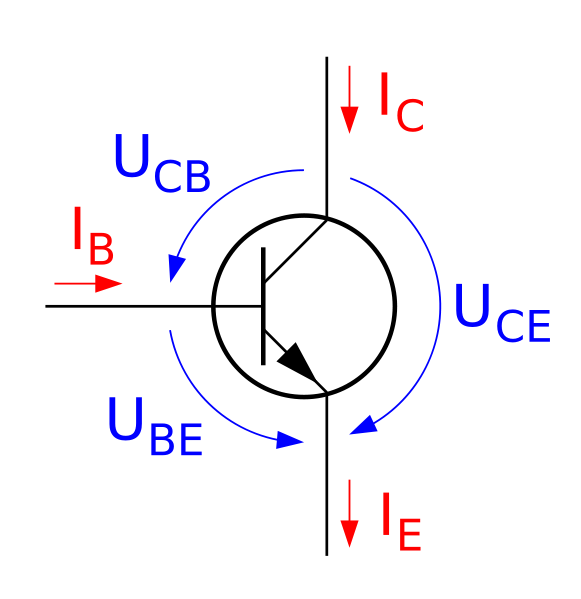

Some months back, I mentioned that I felt the sun-earth connection was much like a transistor. This new NCAR study suggests this may be the case where small solar variances are amplified in the earth atmosphere-ocean system.
From EurekAlert
Small fluctuations in solar activity, large influence on the climate
Sun spot frequency has an unexpectedly strong influence on cloud formation and precipitation
Our sun does not radiate evenly. The best known example of radiation fluctuations is the famous 11-year cycle of sun spots. Nobody denies its influence on the natural climate variability, but climate models have, to-date, not been able to satisfactorily reconstruct its impact on climate activity.
Researchers from the USA and from Germany have now, for the first time, successfully simulated, in detail, the complex interaction between solar radiation, atmosphere, and the ocean. As the scientific journal Science reports in its latest issue, Gerald Meehl of the US-National Center for Atmospheric Research (NCAR) and his team have been able to calculate how the extremely small variations in radiation brings about a comparatively significant change in the System “Atmosphere-Ocean”.
Katja Matthes of the GFZ German Research Centre for Geosciences, and co-author of the study, states: „Taking into consideration the complete radiation spectrum of the sun, the radiation intensity within one sun spot cycle varies by just 0.1 per cent. Complex interplay mechanisms in the stratosphere and the troposphere, however, create measurable changes in the water temperature of the Pacific and in precipitation”.
Top Down – Bottom up
In order for such reinforcement to take place many small wheels have to interdigitate. The initial process runs from the top downwards: increased solar radiation leads to more ozone and higher temperatures in the stratosphere. “The ultraviolet radiation share varies much more strongly than the other shares in the spectrum, i.e. by five to eight per cent, and that forms more ozone” explains Katja Matthes. As a result, especially the tropical stratosphere becomes warmer, which in turn leads to changed atmospheric circulation. Thus, the interrelated typical precipitation patterns in the tropics are also displaced.
The second process takes place in the opposite way: the higher solar activity leads to more evaporation in the cloud free areas. With the trade winds the increased amounts of moisture are transported to the equator, where they lead to stronger precipitation, lower water temperatures in the East Pacific and reduced cloud formation, which in turn allows for increased evaporation. Katja Matthes: “It is this positive back coupling that strengthens the process”. With this it is possible to explain the respective measurements and observations on the Earth’s surface.
Professor Reinhard Huettl, Chairman of the Scientific Executive Board of the GFZ (Helmholtz Association of German Research Centres) adds: “The study is important for comprehending the natural climatic variability, which – on different time scales – is significantly influenced by the sun. In order to better understand the anthropogenically induced climate change and to make more reliable future climate scenarios, it is very important to understand the underlying natural climatic variability. This investigation shows again that we still have substantial research needs to understand the climate system”. Together with the Alfred Wegener-Institute for Polar and Marine Research and the Senckenberg Research Institute and Natural History Museum the GFZ is, therefore, organising a conference “Climate in the System Earth” scheduled for 2./3. November 2009 in Berlin.
D.T. (18:54:05)
http://www.ucar.edu/news/releases/2009/solarcycle2.jsp
“”The Sun, the stratosphere, and the oceans are connected in ways that can influence events such as winter rainfall in North America,” says NCAR scientist Gerald Meehl, the lead author. “Understanding the role of the solar cycle can provide added insight as scientists work toward predicting regional weather patterns for the next couple of decades.””
Note the timescale he sets.
Ron (06:18:15) :
A few points:
1. The change toal solar irradiance is double the frequently quoted 0.1%. The composite ACRIM record reached a value of 1368.3 w/m2 in 1979 and fell to 1365 in 1984 – a range of 0.24%.
With you all the way Ron. See recent posts here about Nicola Scafetta (member of ACRIM team) and my debate with Leif Svalgaard about PMOD and TSI.
Stephen Wilde: 3) Just as with the AGW warmers they rely on a positive feedback. In this case they call it ‘positive back coupling’ as opposed to the water vapour feedback process of the warmers. The trouble is that all observations show that the climate system is always sharply negative otherwise the long term stability we see would have been lost long ago.
Stephen, would you please explain positive and negative feedbacks more fully for me? And why or how our climate system is always sharply negative?
Thanks in advance.
There’s a big problem with this hypothesis. The large volcanic eruptions early 80s and 90s reduced the stratospheric temperature significantly a few years after.
If this resistor analogy it is generalized it would take us to an electrical climate, which is involved anyway, as before raining clouds discharge its electricity. Then vegetation when present changes local weather, increasing precipitation (facilitating discharges?). Trees have also a capacitance…and so on.
The sun is involved here too in many ways.
“”” Stephen Wilde (14:53:21) :
A constant current through a resistor will result in different amounts of heat being produced depending on the efficiency of the resistor. “””
Well sorry Stephen; if it’s a “resistor”, and you are using that term in its strict electrical sense; then of course it is 100% efficient in converting electric current flow into thermal energy (“heat”)
If it is less than 100% efficient; it could be some as yet un-named higher orderelectrical effect; but then it isn’t resistance is it ?
And if you buy this “transistor” analogy, which I don’t for a minute; the equivalent circuit is much more complex than a resistor; and non-linear too.
The whole idea is a red herring; as Leif has pointed out the approximately 0.1% P-P range of TSI over the solar cycle, can explain but about 0.072 deg C change in mean global surface temperature.
There are NO earth situated processes, that are acting on that 0.1% TSI change; and “amplifying” it into some larger surface temperature change.
There are other SOLAR processes occurring at the same time; which may be causing ADDITIONAL CHANGES on earth; such as magnetic field disturbed cosmic ray flux affecting cloud cover; but in no way are those processes “amplifying” the effect of TSI change.
A jet airliner taking off from an airport does not “AMPLIFY” the road noise of a passing car; it contributes additional noise from a completely different source.
George
bill (08:33:22)
I am beginning to see the technical points that you take issue with but it doesn’t detract from the basic submission.
If the oceans convert ALL the UV to longwave then that is just like a resistor that converts ALL the energy entering it to heat energy so that nothing comes out the other side. So what, it’s still a resistor.
I know a resistor does not reflect energy nor convert energy to latent heat but the ocean does. I was implying that the resistor analogy only applied to the energy left over after those processes had drawn off the vast bulk of the energy from the sun.
TSI as a whole becomes irrelevant. It is only the solar energy that gets past the evaporating region near the water surface that adds to the ocean energy content. It is the degree of variation in that energy alone that matters and not the variation in TSI as a whole. As it happens the variability in the class of solar energy that can enter the water to the requisite depth is much higher than that of TSI as a whole but leave that for another day.
I take the slowing down point but it isn’t essential and I have seen it described elsewhere as a slowing down of the energy flow through a resistor but no matter.
In any event you say this:
“conversion of UV to heat which then radiates as LW IR is not slowing down, both electromagnetic waves travel near light speed (slower in water of course)”
I know that all electromagnetic radiation always travels at near the speed of light whatever the wavelength. That is directly analogous to the current entering and the current leaving a resistor. Both travel at the same speed going in and coming out despite the reduction in voltage. It is only whilst the energy is travelling through the resistor that the idea of slowing down becomes valid even if not technically accurate. Anyway you do accept that the speed is reduced in the water which is all that I am saying. The speed difference is miniscule but reflects the ongoing conversion of energy from shortwave to longwave and the consequent release of heat within the water.
The point is that energy entering the oceans from the sun is converted from shortwave to longwave thereby generating heat (more vibration of the water molecules ) and the oceans then vary the rate of supply of that longwave into the air and in the process the ocean heat content varies independently of solar input. Thus, critically, the issue of ocean heat content can be decoupled from solar variations and all the protestations about the inadequacy of solar variations to account for observed climate changes come to nought.
You correctly say this:
“The flow of currents in the ocean will be complex – water will conduct heat (not great) convect heat (better) or can move transfering its heat load elsewhere. It can vapourise removing quantities of heat as in the heat pipe with rain providing the return path of the liquid.”
It is that variability within the oceans and within the hydrological cycle that changes the rate of energy release to the air on multidecadal timescales. I propose that additionally such oceanic variability is capable of swamping solar variations in energy supply over considerable timescales.
The degree of such oceanic variability is sufficient to account for all observed climate change so far observed without involving CO2. The sun just provides a much longer term background trend.
The oceans are best described as a variable resistor.
Geoff Sharp (16:38:09) :
Are you reading this part clearly Leif? Shoots holes in your argument on another thread.
I don’t need to defend Leif (he is more than capable of defending himself), but I have read nothing in this press release that “shoots holes” in anything Leif has ever argued. First of all, you are basing your claim on a press release about a study that nobody has actually read yet. WUWT readers frequently jump to conclusions based on articles about studies (as opposed to the studies themselves) and I have pointed this out previously. Secondly, the findings of the study are based entirely on computer simulations. The “evidence” they present is the output of computer models. Doesn’t that sound familiar? Third, Stephen Wilde has already raised some serious concerns about their theory. Critical analysis of their actual methodology will likely raise more.
The researchers have proposed an interesting mechanism for solar amplification, but until it is proven by actual data, it is just an interesting and maybe promising theory. One final question: Are Svensmark’s theory and the one described in this article mutually exclusive?
George E Smith (10:56:33)
Thank you.
I see that if the oceans have 100% efficiency in dealing with the incoming solar energy which gets deep enough then the oceans cannot be a variable resistor but they would still be analogous to a resistor.
Attention then has to shift to the variability of the limited quantities of energy in the limited wavelengths that do get deep enough combined with the variable rate of release of that energy to the air and the time scales involved.
More thought required but I still think there is something in it as a result of observed oceanic behavioiur.
pyromancer76 (14:01:15) :
“This makes intiutive sense to me. I look forward to (real) scientists and engineers weighing in. Leif, what are your thoughts?
Have Prof. Richard Huettl of the GFZ, Alfred Wegener IPMP, Senckenberg RI, and the Natural History Museum invited contributors from WUWT? If not, can we contribute to send a few “delegates”?”
I am interested to go, I am in Germany during that time
I think I can square the circle.
The oceans may not be a variable resistor in so far as the level of resistance is concerned but they are a resistor.
The effectiveness of the oceanic resistor in building up or dissipating ocean energy content depends on a very variable rate of energy release to the air.
The oceans may be 100% effective at converting the energy they do receive to longwave IR but they vary greatly as to how long they can hold on to it.
That is where the apparent disjunction arises between the smallness of solar variability and the much larger swings in ocean energy content and global air temperatures.
I have followed the discussion at this site for some time now, and I must say that I am very impressed by all the different viewpoints and the quality of the discussion! I am not at all an expert in the climate science; in particular I have very limited experience with the different climate models and schools. However, I have a Ph. D. and M.Sc. in Physics and also a degree in Electrical Engineering, so I could possibly be to some help to improve the excellent analogies you have suggested in this thread. First, please take a look at the heat equation that describes heat conduction in a solid:
http://en.wikipedia.org/wiki/Heat_equation
A couple of years ago I worked with a commercial simulator that simulated all sorts of thermodynamic and fluid mechanic phenomena, and I learned that some quite complex analytical solution to the heat equation can be used as an analogy even if much more complicated heat transfer phenomena take place. In its simplest form this equation has exactly the same solution as the charging of an electrical capacitor, namely
T(t) = T1 + [T0 – T1] exp(-t/tau)
Here T is temperature, t is time, T0 the initial temperature, T1 the final temperature and tau the time constant. What is interesting here is the time constant tau. For ordinary heat conduction this time constant is proportional to
tau ~ V * k * cp / lambda
Here V is volume, k heat conductivity, cp specific heat capacity and lambda the thermal conductivity. This can be seen by the analytical solution of the heat equation in the Wikipedia link above. What does this mean, and how is it related to this thread? I have a few comments:
1. I very much agree with the viewpoint of Stephen Wilde that it is the oceans control the air at all times. The reason is simple. If we assume good mixing of heat in the oceans, it is obvious that the heat stored in the oceans is much larger than the heat stored in the air.
2. Then it follows also, as given by the tau equation that it takes much longer time to change the temperature of the ocean, the thermal mass (V * cp) is huge for the oceans compared to the air.
Thus it seems that there is a perfect analogy between the oceans and an electrical capacitor, based on the analogy between heat conduction in a solid and more complicated heat transfer phenomena like thermally driven natural/free convection. Note that in a more complicated case, like the heating of a fluid in a closure, one may observe many different time constants taking place simultaneously, but I am brave enough to postulate that in most cases there is one predominant process taking place, and that the analogy with the electrical capacitor is thus always meaningful. In particular, the tau equation for the time constant is extremely useful. Now, the interesting question is what is tau for the oceans? Possibly extremely difficult to calculate, but I guess it must be many years. So, if we go into another period with little solar activity, it may take quite some time before the oceans starts to cool significantly. [The supercomputers should better calculate cooling of the oceans than heating of the air.]
Please let me know if you have any questions.
[I know that heat conduction in a solid is a very trivial case, but the analogy can sometimes be most useful]
Re: Mike Abbott (12:33:57)
Mike, let’s keep in mind the social context in which these authors operate. (For example, what does one need to be doing in that field to be taken seriously by peers?)
Read between the lines here:
“With the help of increased computing power and improved models, as well as observational discoveries, we are uncovering more of how the mechanisms combine to connect solar variability to our weather and climate.” – Meehl.
http://www.ucar.edu/news/releases/2009/solarcycle2.jsp
These guys aren’t playing all their cards at once. The funding train might easily be persuaded to outlast their careers.
“woodNfish (10:37:57) :
Stephen Wilde: 3) Just as with the AGW warmers they rely on a positive feedback. In this case they call it ‘positive back coupling’ as opposed to the water vapour feedback process of the warmers. The trouble is that all observations show that the climate system is always sharply negative otherwise the long term stability we see would have been lost long ago.
Stephen, would you please explain positive and negative feedbacks more fully for me? And why or how our climate system is always sharply negative?
Thanks in advance”
Too far off topic for this thread but if you want to raise the question in my section at climaterealists.com I’ll have a go.
Note however that I’m just an enthusiastic amateur and my main function is to address the issues that would occur to an educated lay person. If I come up with something novel in the process then that will be largely fortuitous.
And you can always Google for the work of Roy Spencer who is good on that aspect of things.
pyromancer76 (14:01:15) :
Leif, what are your thoughts?
“This response also cannot be used to explain recent global warming because the 11-year solar cycle has not shown a measurable trend over the past 30 years.”
Folks, I have been away for a week [at the IAGA 2009 Scientific Assembly in Sopron, Hungary] so have fallen behind a bit. I’ll try to catch up. My talk is on my website.
A better explanation of the analogy is provided by MIT
“The time constant tau is in accord with our intuition, or experience; high density, large volume, or high specific heat all tend to increase the time constant, while high heat transfer coefficient and large area will tend to decrease the time constant.”
http://web.mit.edu/16.unified/www/FALL/thermodynamics/notes/node129.html (Equation (18.18) is the most important)
Now, I wonder whether our spinning earth may have a large number of different thermal masses, all with different time constants, and that another analogy, “the forced oscillator” may be useful. Obviously the earth is a dissipative system, but still there may be natural oscillations that can be sustained with very little effort. As the sun (until very recently) oscillates with a period of ~11 years, the characteristic intrinsic oscillations of our earth may be steadily disturbed. That’s why we cannot observe a regular pattern between the solar activity and the climate. Try to watch a forced oscillator and you will easily understand what I mean. However, when the external oscillator force disappears (as happens these days), it may be easier to observe (but not predict) the oscillations intrinsic our earth.
Wow, it’s great being ignored. Thanks everyone. Invariant (13:21:28), great post. bill(08:33:22) has done a lot of hand waving and tried to marginalize the analogy, yet has presented no better ideas. Typical. Never once has anyone mentioned that this is supposed to represent the atmosphere perfectly, just a loose idea of what it behaves like over all. In general it is a good analogy. Without a doubt, it is a very complex system. No illusions about that. I can see why so many people are lurkers and do not contribute to the conversation.
“The ultraviolet radiation share varies much more strongly than the other shares in the spectrum, i.e. by five to eight per cent, and that forms more ozone” explains Katja Matthes.”
Thus is the standard nonsense. UV is 105 W/m2 vs. total TSI 1361 W/m2. 7% [mean of 5 and 8] of UV is 105*0.07=8 W/m2. TSI only varies 1.5 W/m2, and UV is but a small part of TSI.
Sorry guys, typing error in the equations for the time constant,
tau ~ V * rho * cp / lambda
Here V is volume, rho is density, cp specific heat capacity and lambda the thermal conductivity. I have two more observations,
1. The transient heat transfer (convective cooling or heating) provided by MIT is actually a more realistic analogy as is describes convection which is more important for the fluid in the oceans and the air.
2. In the analogy provided by MIT, both the resistor and the capacitor is needed to calculate the time constant tau=R*C. Thus, the best analogy is both a capacitor and a resistor! So in a sense you were all correct.
http://web.mit.edu/16.unified/www/FALL/thermodynamics/notes/node129.html
Sorry for the confusion.
I am sorry, there is a typing error in the equation for the time constant,
tau ~ V * rho * cp / lambda
Here V is volume, rho is density, cp specific heat capacity and lambda the thermal conductivity. I have two more observations,
1. The transient heat transfer (convective cooling or heating) example provided by MIT is actually a more realistic analogy as is describes convection which is more important for the fluid in the oceans and the air.
2. In the analogy provided by MIT, both the resistor (R) and the capacitor (C) is needed to calculate the time constant tau=R*C. Thus, the best analogy is both a capacitor and a resistor! So in a sense you were all correct.
http://web.mit.edu/16.unified/www/FALL/thermodynamics/notes/node129.html
Sorry for the confusion.
Leif Svalgaard (15:21:34) :
“Thus is the standard nonsense. UV is 105 W/m2 vs. total TSI 1361 W/m2. 7% [mean of 5 and 8] of UV is 105*0.07=8 W/m2. TSI only varies 1.5 W/m2, and UV is but a small part of TSI.”
Leif you say UV varies 8w/m2 but then say TSI only varies 1.5w/m2??? I am a little confused by that statement when you have a starting number and it is 8w/m2 either it varies by that or it does not. Can you be more clear, does UV vary 8w/m2 or 7% or 1.5w/m2?
rbateman (20:05:06) : 27/08/2009.
“Bandpass is what I thought about many months ago, but the experts say no way, Jose. Cannot happen. Maybe it does, resistor, transistor, diode, whatever.”
Apologies for the time lag. ‘UV A’ (longest UV wavelengths) enters via the ‘visible light window’. ‘UV B’ (medium UV wavelengths) is on the edge of this window and is hampered by the ozone population in the stratosphere (ozone is also generated by UV and soft X-rays). The window blind is fully pulled down for ‘UV C’ (shortest UV wavelengths). Thus, in theory, the components of solar insolation to the surface include UV A and some UV C, but these also vary in intensity and tend to be directly proportional with sunspot propensity.
The average effect of UV absorption at the surface? Well at such a short wavelength, with its high energy level, the usual effect is to break some molecules, liberate a few electrons and (as we’ve all been warned) alter DNA. However, its effect on water and ice seems a bit different. Water and ice are almost invisible to UV. The path to extinction in pure water (or ice) for IR is about 3m, for the visible spectrum it’s about 70m (for the blue end, but the red end is less), but for UV it’s up to 700m. This is only an ‘off the top of my head’ analysis, so don’t quote me on it.
An important point to note here is that if no ‘catastrophic’ absorption of UV takes place, the energy degradation of the UV insolation component will be only ‘low grade’ and most likely take the form of thermal energy.
I can only see this as a ‘notch (or band pass) filter’ for UV solar insolation into an ocean depth (or ice). If OLR, or cloud cover, is included then the model changes from one of solar insolation to GHE (greenhouse effect). I thought this blog thread covered solar insolation. I don’t know where the transistor idea came in on the ‘front cover’.
PS. This thread has moved on a lot. I need to catch up.
Best regards, suricat.
Mike Abbott (12:33:57) :
Geoff Sharp (16:38:09) :
Are you reading this part clearly Leif? Shoots holes in your argument on another thread.
I don’t need to defend Leif (he is more than capable of defending himself), but I have read nothing in this press release that “shoots holes” in anything Leif has ever argued. First of all, you are basing your claim on a press release about a study that nobody has actually read yet. WUWT readers frequently jump to conclusions based on articles about studies (as opposed to the studies themselves) and I have pointed this out previously. Secondly, the findings of the study are based entirely on computer simulations. The “evidence” they present is the output of computer models. Doesn’t that sound familiar? Third, Stephen Wilde has already raised some serious concerns about their theory. Critical analysis of their actual methodology will likely raise more.
The researchers have proposed an interesting mechanism for solar amplification, but until it is proven by actual data, it is just an interesting and maybe promising theory. One final question: Are Svensmark’s theory and the one described in this article mutually exclusive?
As stated Mike the discussion was on another thread.
http://wattsupwiththat.com/2009/08/18/scafetta-on-tsi-and-surface-temperature/#comment-179258
The main point I was discussing is that there is more to the Sun/Earth climate link than 0.1% TSI variations that Leif continually states. Different bands of the UV spectrum vary by differing amounts greater than the 0.1% over the cycle and that all is not known in this area, also the Svensmark theory has to be considered (separately).
Leif has stated the science is settled in this area….I disagree.
I think I have exactly the same point of view as “tallbloke (06:51:04) ” in another thread (below). If a small change in the behaviour of the sun could result in an amplified effect in our climate (transistor hypothesis), I still think that the huge thermal mass of the oceans may delay things significantly. There are many interesting suggestions like increased cloud coverage, but still the heat must be dissipated from the oceans, one way or another, to reduce the temperature here. The classical Science paper by Friis-Christensen, K Lassen – Science, 1991 shows this “tau = R*C” delay.
http://www.friendsofscience.org/assets/files/documents/Solar%20Cycle%20-%20Friis-Chr_Lassen-.pdf
===================================
Original post by “tallbloke (06:51:04) ”
http://wattsupwiththat.com/2009/07/01/message-in-the-cloud-for-warmists-the-end-is-near/
“There is as much heat capacity in the top 2.5m of the ocean as there is in the entire atmosphere. Western Europe is kept warmer in winter not just due to the gulf stream, but the deflection of wind patterns southwards round the Rockies, then north eastwards to europe, picking up heat from the mid atlantic as it goes.
The ocean heats the atmosphere much more than the atmosphere heats the ocean, because longwave IR from the atmosphere doesn’t penetrate the ocean, just evaporates the surface. The ocean is heated by the sun, loses 170W/m^2 into the atmosphere, and stores the heat it can’t lose at the time due to atmospheric reflection and low temp diffs lower down towards the thermocline.”
Leif Svalgaard (15:21:34) :
“The ultraviolet radiation share varies much more strongly than the other shares in the spectrum, i.e. by five to eight per cent, and that forms more ozone” explains Katja Matthes.”
“Thus is the standard nonsense. UV is 105 W/m2 vs. total TSI 1361 W/m2. 7% [mean of 5 and 8] of UV is 105*0.07=8 W/m2. TSI only varies 1.5 W/m2, and UV is but a small part of TSI.”
The maximum sensitivity of the upper stratospheric temperature response is of
about 0.16K per 1% change in solar radiation at 205 nm eg Hood and Zhou, 1998.