From the Cliff Mass Weather Blog
Cliff Mass
The same tragedy has happened time and again.
An excellent prediction of a major weather-related threat is unheeded, leading to massive destruction and loss of life.
We need to do better. We can do better.
This blog will discuss the problem and how it might be addressed.
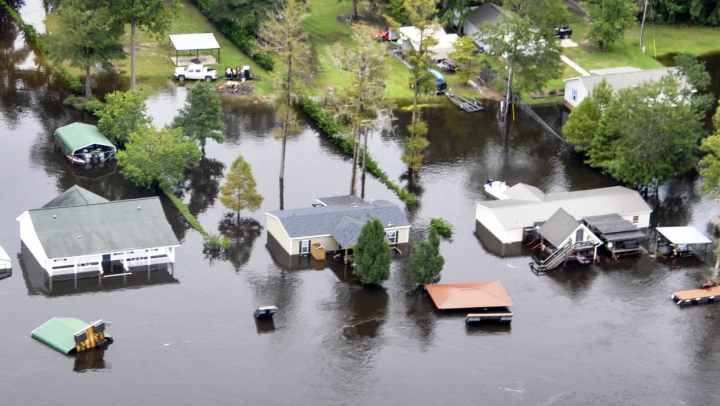

There are numerous examples of this failure mode; let me provide just a few.
Hurricane Katrina, 2005
In 2005, the landfall of Hurricane Katrina near New Orleans resulted in 1400 deaths and $125 billion in damage. Excellent forecasts by the National Weather Service and weather models.
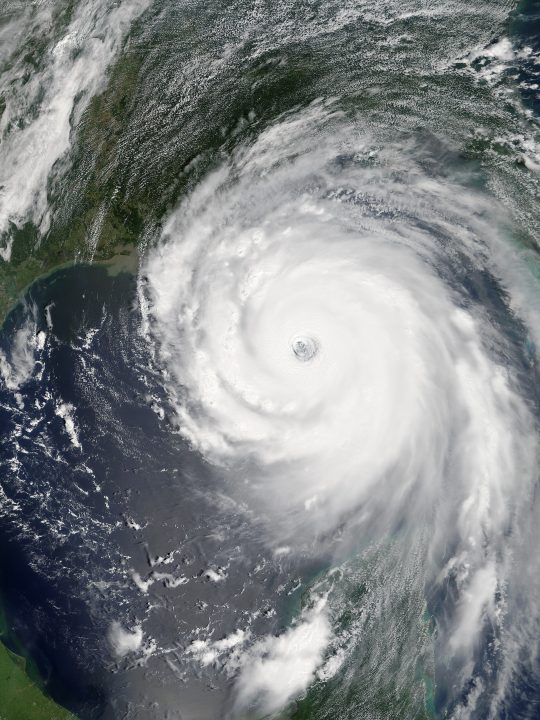
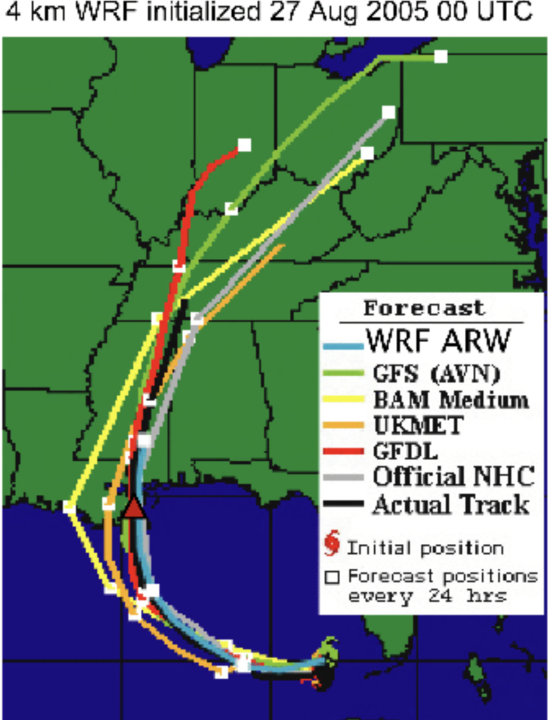
Local governments failed to take the forecasts seriously and did not evacuate vulnerable populations. Poorly designed levees failed.
LA Wildfires, 2025
The wildfires in LA led to 30 deaths and at least 100 billion in damage. Meteorological forecasts of strong, dry Santa Ana winds by the models were stunningly good and the National Weather Service put out an apocalyptic forecast (see below)
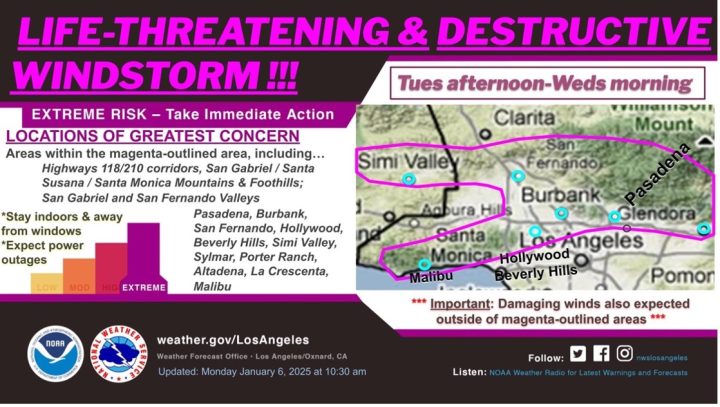

Power companies failed to de-energize powerlines, and local governments failed to pre-position fire-fighting capability and had emptied a critical reservoir, to name only a few of the mistakes made.
Maui Wildfire, 2023
Weather forecast models were emphatic that a major downslope windstorm would occur in the area around Lahaina. The National Weather Service had a red-flag warning for the lee sides of the islands, but did not identify the particular threat to Lahaina.
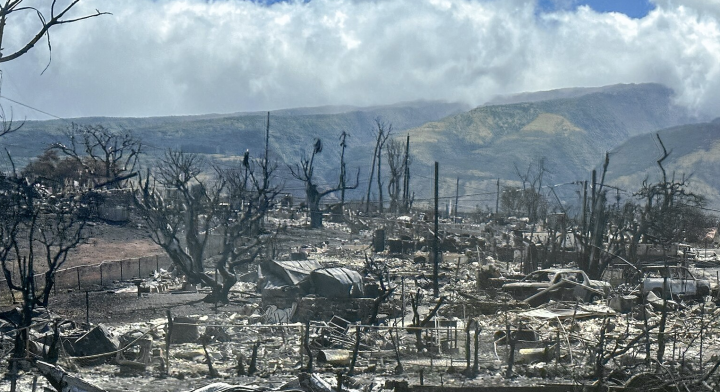

After the fire was started, the local response was very problematic, not staying with the fire when they thought it was out, blocking travel routes, and not facilitating an effective evaluation.
Hurricane Helene (2024)
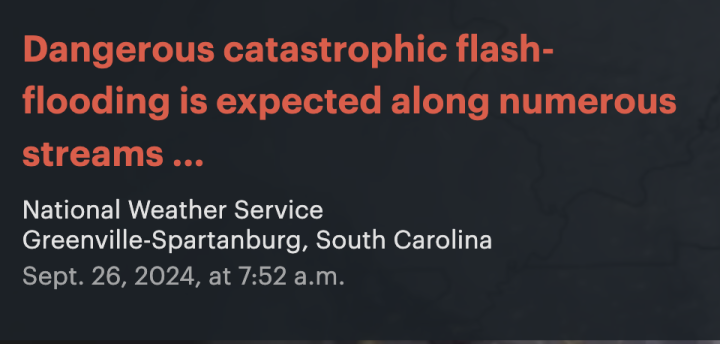
Heavy precipitation and flooding from this storm resulted in 250 deaths and nearly 80 billion dollars in damage. Heavy rain reaching as much as 30 inches led to catastrophic flooding. NOAA/NWS forecast models did an excellent job in predicting the hurricane path and heavy rain (see below).

The National Weather Service put out very strong warnings (see below), but a lack of communication and critical evacuations from threatened areas led to major loss of life.


Texas Flooding (2025)
As documented in my earlier blog and many other sources, the National Weather Service provided timely warnings, but local communities lacked the warning capability to effectively remove individuals from harm’s way. In addition, vulnerable camp facilities were located on threatened floodplains.
I could easily provide many other cases of excellent forecasts, but a lack of proper response, leading to massive unnecessary deaths and economic loss.
Why are we in this failure mode? How can it be fixed?
First, it must be recognized that weather prediction has gotten immensely more skillful over the past 30 years.
The combination of much more skillful global models plus high-resolution prediction capabilities has resulted in meteorologists now being able to forecast dangerous conditions with great skill days in advance.
For example, huge improvements in hurricane track forecasts (see below)


Heavy rain skill by the NOAA/NWS Weather Prediction Center? Going up rapidly (see skill of 1-inch totals below)


Second, it needs to be recognized that our ability to observe what is happening in real-time is immensely better due to far more comprehensive observations.
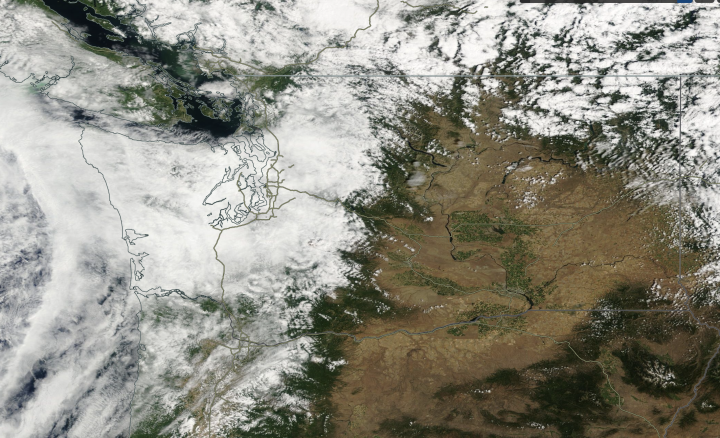
Improved weather radars and massive new satellite assets provide meteorologists and others with extraordinary knowledge of what is happening….abilities we did not possess 20-30 years ago (see a sample below).

With better observations and predictions, meteorologists, hydrologists, and others in NOAA and other government agencies are in a FAR better position to provide actionable guidance for saving lives and property.
Third, with this knowledge, local and state governments, in concert with the Federal government, must take responsibility for using the improved forecast capabilities to save lives and property.
This means better communications to the public, better warning systems, better planning for adverse conditions, and more.
We can radically reduce deaths and losses due to storms and adverse weather by recognizing the extraordinary potential of improved observations and forecasts, and then applying this information to warn and protect our communities.
What should we NOT do? Blame climate change or political parties you don’t like.
Climate change has only a very small impact on the intensity of extreme weather (there is very, very strong science to support this statement). Pushing climate as the origin of these extremes leads to inaction on the real problems. Even if climate change were important, adaptation can save most lives.
Both political parties have been in power as this situation has festered. This is a fully bipartisan problem. Name-calling and blame will lead to inaction and more deaths.

I live a bit north of Kerr county, and there were multiple flash flood warnings before the storm hit. Locally, we got some eight inches in that storm, while Kerr county got about 20.
The issue is that the warnings were ignored.
And history was ignored . And zoning regs were poor or not enforced .
Exactly.
What has happened before will certainly happen again.
With all the info sources available today, there is no excuse for anyone not being able to appreciate what the historical extremes of weather events have been since records began for their locations.
I’m talking also about contemporary newspaper reportage of notable weather events.
Too much reliance these days on ‘official’ weather records that only go back to say, 1910.
Which is bugger-all history when it comes to weather events.
Yep. And as for Camp Mystic event, there are zero flood warning sites on South Fork Guadeloupe. None, according to NWPS. Does show three catch dams up river from them. First overtopped and flooded into second, second overtopped and flooded into third. Also two catch dams up Cypress Creek which overtopped and added to the flood rise. Mystic was hit from two directions and had no flood warning sites near them.
I have family in region, building flash flood warning system has been talked about since the 1970s and very little has been done, even after multiple deadly flash flood events. You know this, you live there.
And would the sirens be tornado or flash flood specific? You need to quite different things in response.
Tom, in Comfort TX they have a single warning siren for both. Tornado is an up and down note wail. Flood is long steady down note only. They rehearse one of the other weekly. There are articles on it now. Comfort got flash flooded, but zero deaths or injuries.
Yes indeedy! A monitor on a dam, set to trip siren when that specific dam is about to overtop AT THAT SITE. Not alert an office 100-200 miles away. And obnoxiously loud and no auto or remote shutoff. Where I live there are three refinery/chemical processing plants in the valley, each of them has independent emergency warning systems, and each plant has at least three separate warning systems. Chemical spill, acid spill and fire. For personnel injuries they just trip fire. This ain’t rocket surgery or brain science, all has been figured out decades ago, just has to be done. And use money seize from drug dealers/cartels to pay for and maintain it all.
More electric cars would have prevented this disaster. /s
Re this —
— is the level of information that is needed to understand the catastrophic loss-of-life.
Refers to the time elapsed before the flash-flood ‘wall of water’ struck, from the specific alert. And the public-safety officers set out (going ‘door-to-door’) to order evacuation of the sites facing imminent danger … but that was already too late for some.
*Quoting from the statement by the NWS (their union leader or spokesman).
The owner of the girl’s summer camp
is among those reported dead. Getting people to act on warnings is the issue.
It is reported that this Director / Co-Owner died in the act of rescuing campers … in other words, he would be alive today if he hadn’t bravely entered the floodwaters. Nothing to do with ‘act(ing) on warnings’.
The cabins down by the river should have been evacuated. Brave and negligent are not mutually exclusive.
‘A little learning is a dangerous thing.’
Tom – I am in the DFW metroplex
I dont have details of the timing of the warnings in the Hunt Texas area, so my apologies.
However in the DFW area, I monitor the weather on weather . com. So the following comments are based on events in the DFW area. On July 4th, Hunt texas got hit around 4 am, while dfw got hit 9PM (different storm) On the morning of July 4th, weather com was reported near zero chance of rain in DFw for the next several days, At approximately 6 pm weather com changed their reporting to a high chance rain at 9pm,
Same thing happened on saturday july 5th, no rain in morning forcast for the next several days, then around 3pm high chance of rains forcast for 4-5pm which as accurate.
Tuesday, july 8, little or no chance of rain forecast for next several days, then 4pm small chance of rain, then 4:30 reporting no chance of rain, then actual heavy rainfall for 1.5 hours starting at 6pm.
I fully agree this was tragic.
I am not defending, praising or condemning the actions of the camp personnel, just noting that most people are not going to pay attention to the threat of rain or flooding if the forecast shows little or no chance of rain for next several days.
I live in southern Burnet county, and the warnings here were of possible flash floods, multiple hours before the worst of the storm hit.
Tom – As I said, I am in the DFW metroplex, so my comments were with that caveat.
my apologies, please correct me if I am wrong. I had the impression that the warnings came at approx 1am and the flash flood hit at approx 4am. let me know if that is reasonably correct.
I went to bed about 11:00 PM, but there had been multiple flash flood warnings that afternoon and evening.
My understanding is that the summer camp banned all electronics, so telephone text warnings would have been futile.
Thanks – appears my info was wrong. So the warnings were about 7 -8 hours earlier instead of 4 hours.
Regarding the banning of cell phones, I would guess that is because being a religious type camp, the policy is to interact with others instead of interacting with their cell phones. (again not condemning or defending, just noting)
The storm was very patchy, as Marble Falls where I am got some 8 inches, and that part of Kerr county got 20 inches.
Someone should have been monitoring the weather warnings, and moved the campers to higher ground.
But wouldn’t it make sense for at least some of the adults running the camp to have phones? For this reason as well as emergencies in general? I don’t know if they did or not, but if they did, they either were not getting or were not paying attention to any warnings.
There is almost no cell service in the area in and around Camp Mystic. Only NOAA weather radios that do not depend on cell service would have been of any benefit in issuing warnings.
Ah, thanks – makes the “no phones” rule a bit redundant, but also makes sense why they wouldn’t have gotten phone warnings. But that raises the question – did they not have weather radios?
If you run a camp and you don’t have cell service, then you get a satellite phone for emergencies like this. I volunteered at a Cub Scout camp and we had people watching the weather so we could shelter in a safe location if a thunderstorm approached.
And they are fairly cheap and widely available.
As a scoutmaster of more than 15yrs, a weather radio is part of the standard kit for backcountry events. We had one in 2008 while on a colorado river canoe trip that gave us warning of T-Storm activity over the next few days, even while the skies were clear and temps in the mid 90’s. We discussed and picked up the pace and came off the river a day early…. to the start of heavy rain and lightning to the ground with thunder under a second from flash. 7 P’s of success.
I live a bit further north in Brown county. I generally use the weather underground site and find it interesting that the 24 hour forecast can change frequently throughout the day, and the 10 day forecast is essentially worthless. During that 4 July time frame we went from 0 chance to 100% chance in less than a half hour, Consequently, I don’t put much stock in the forecasts–just pay attention to the sky over head and to the west.
The issue is that the warnings were ignored.
How can we address “warning fatigue” – where people see many warnings amount to nothing, so they start ignoring them?
IMO, incentives matter greatly.
The weighting of outcomes is heavily on the side to make “alarmist” warnings. (I know I would, if I was a forecaster.)
Consider two cases where your storm model yields a 50% chance for each scenario.
Case 1.) You issue a warning that the storm is “life threatening”, yet it fizzles and there is no loss of life. NO ONE in the public ever looks up the name of the meteorologist on that storm. Your boss might mention in passing that you missed by a bit on that last storm.
Case 2.) You do NOT issue a warning for a dangerous storm, and they the storm blossoms over a very short time period and kills 100 people.
Social media posts will call you an incompetent idiot and blast it to several million people. Local politicians will apologize for your lack of skill and say they are forming a panel to evaluate the accuracy of your past forecasts. They even question if your supervisor is capable of managing his department.
EVERY rational human would pick Case 1.)! Most people would still be making alarmist forecasts – even as the odds of being wrong moved to 60%/40%, or even more wrong.
I don’t know what the solution would be? However, we need “rational” human beings to make storm forecasts, but “rational” human beings will also be competent to correctly evaluate incentives.
Great article Cliff!
I liked his emphasis on not making this a partisan issue as well as it being weather with little connection to global warming.
I think the problem is human nature.
We’ve all been warned to death (yeah, I guess that’s hyperbole) about forecasted weather, and yet few of us have faced consequences. It’s simply a boy crying wolf in most situations.
Tornado sirens being an exception I suppose.
Media need to scare folks, and that just exacerbates.
People ignore warnings. Fact. I myself turn off most of the “warning” features on my cellphone because I am receiving things from two-three states away from me. As for amber alerts, turned that off because receiving alerts from California and Florida, I live in Pennsylvania. There is no possibility a child disappeared in one of those states a 1/2 hour ago is in Butler county PA. All of these warning systems are so arbitrarily screwed up that majority of people ignore them. THAT is the issue that HAS to be addressed.
___________________________________________________________________
This British Channel 4 YouTube on the Texas flash flood disaster features an interview
with Michael Mann and starts off with this loaded soft ball question:
Michael Man, I mean is there a risk that we’re in that kind of doom loop that
the more the earth warms the the wetter these summer gets the more of
these kind of floods we get and it becomes increasingly hard to adapt to it?
Well, ask a DUMBA$$ a loaded question and you will get a loaded answer….
Re
I find this appalling, it is so misleading. In the time (over days) that really mattered for preparation / evacuation of the NC Highlands, essentially all the projections were for the path to track NW-ward, over the Atlanta-metro region and into the Tennessee River Valley. Accordingly, all the major resources (for evacuations etc.) were directed thereto. To protect this highly populated region.
Instead, mysteriously, the path continued ~ due north, across the Savannah River, and thus struck the SE-slopes of the Southern Appalachians mountains, stalling out there. By the time this ‘low (negligible) probability’ track was recognized – understood – conveyed to the public & authorities, it was TOO LATE to evacuate the narrow valleys that were subsequently flooded out, leaving many thousands stranded (or worse).
P.S. As was said here before (in response to CM’s posting last week), in connection with the Kerr-County / Guadalupe South Fork catastrophe, it doesn’t matter how accurate the NOAA/NWS forecasts become, if the warnings are not Specific — Local — & Timely, they won’t save many lives.
In the aftermath of Helene, I read that Asheville (politicos and residents) turned down an offer of a flood control dam upstream decades ago during the Tennessee Valley Authority program – even though historic floods had severely damaged the town before.
Sorry to say but that’s a case of “chickens coming home to roost”. Much like Boulder CO surrounding itself with unmaintained grasslands and pine forests that predictably are subject to wind-driven wildfires.
Can’t fix stupid
Human nature: “It can’t happen here”. We can install a warning system some time, just not now”. “We don’t have the money”. “They always exaggerate anyway”. “God will protect us”. Stop being such a worrywart”.
Human nature.
Nature is deadly. It’s always been that way, and always will be.
Besides, it’s SO much easier to do nothing and just blame the climate change boogeyman instead.
People ignore weather warnings.
People drink and drive.
People smoke cigarettes.
People get obese.
You cannot fix stupid people.
In the specific flash flood case of Kerr County, TX, about $1.3 million could have provided flood warning sirens for the entire Guadalupe River. (Calculated in a previous post comment). They didn’t because it would have added a one time 2% increase to the county budget. Over 100 dead in that county alone.
Neighboring little town of Comfort further down the Guadalupe did install a flood and tornado warning siren (two different sounds from same siren)—result was zero dead or injured.
Israel has one of the best early warning systems there is. A rocket launch from Gaza generates a projected impact zone and every cell phone within that zone goes off. Time to shelter sometimes as low as 10 seconds. It has saved countless lives.
The difference is that Israelis practice regularly for these events, have purpose built infrastructure, know exactly what to do, and rarely ignore a warning. Until the recent war, they had more people injured rushing to shelter than they did from rockets.
The difference with weather warnings is that disasters are far and few between. Even if a weather warning is received, how many people know if they are camping in a flood zone or not? Given today’s education system, how many of them would know what a flood zone is, much less what their nearest path to higher ground might be? These things are part of a daily routine in Israel. In North America, for many people, it might be a once in a lifetime event. Little wonder than many dismiss it and go back to sleep.
Undoubtedly a major factor contributing to the tragic loss of life is the reported disagreement about installing an effective warning system for the past 10 years or more. I would think that local, state and federal agencies will not take no as an answer this time.
The trump administration has cut observations and the ability to collect observations. Denying reality doesn’t change this fact
Can you give some examples? The only cuts so far are in bureaucrats in D.C.and in antiquated equipment and processes to be replaced with new technology, and they don’t occur until next Fiscal Year, which begins October 1, 2025.
NWS flat out said they had extra staff on duty for this weather event.
Unrelated to what I wrote. The blog post says, “We can radically reduce deaths and losses due to storms and adverse weather by recognizing the extraordinary potential of improved observations and forecasts” and then tries to “both sides” what is clearly a much more significant issue coming from the trump administration
Unrelated to what I wrote.
Do you see that line under my name that starts with “Reply to”?
I wasn’t responding to you.
You sure were. Do you not see my factual comment above your unrelated comment
As an example
https://www.nbcnews.com/science/science-news/weather-balloons-stop-trump-cuts-forecasts-less-accurate-rcna198055
NBC… LOL… choose someone not part of the FAKE MEDIA next time.
Sparse, twice a day weather balloons are totally useless for the sort of forecasting needed for fast acting cells like this one was.
Your comment is, yet again, based on complete and absolute ignorance.
Its as if you have a deep-seated derangement syndrome of some sort. 😉
”fake media” 🤦♂️. You refuse to learn and rely on conspiracies
Your comment is, yet again, based on complete and absolute ignorance.
NBC, CNN, MSNBC.. All part of your TDS propaganda pap channels. !
You are a conspiracy nut
Not all conspiracy “theories” are wrong
Bullshit!
Reality. Swearing because you can’t post cognitive thoughts doesn’t change reality
He was just calling your comment for what it was.
They actually had forecast 5 officers on duty rather than the usual 2.
As always, your comment is based on complete and absolute ignorance.
The trump administration has cut observations and plans on additional cuts to observations.
Total bovex. Observations needed for this sort of event have not been reduced.
If you are capable of reading the whole thread, you will see that alerts were put out well in advance, and either not received or ignored.
Absolutely nothing to do with your deep-seated TDS.
You either don’t read the blog post or don’t understand what it was about
Another FAIL on your behalf, stemming totally from your TDS infliction.
You need to be much more introspective.
If you are capable of reading the whole thread, you will see that alerts were put out well in advance, and either not received or ignored.
Absolutely NOTHING to do with Trump. !
Try reading the blog post and then try reading something not from Fox News. Your TDS has made you ignorant
Weather balloons do not “collect observations.”
Weather balloons provide observations. My god stop being ignorant
Weather balloons collect data.
My god stop being ignorant.
Humidity is not an observation. It is a measurement that provides data.
Temperature is not an observation. It is a measurement that provides data.
Wind speed and direction is not an observation. It is a measurement that provides data.
Watching the balloon ascend is an observation.
The cuts do not go into effect until Oct. 1.
The cuts amount to a reduction of 15% of balloon flights.
NOAA says satellite data is more significant than sounding balloon data.
Focusing on a single factor is idiotic.
A previous posting reported that there were more forecasters on duty than usual. Budget cuts aren’t to blame.
My wife and I still feel a kinship with the Hill Country and surrounding area. We have friends and family who live in the area. Our second child, a son, was born at Seguin two week before I deployed to Vietnam. My wife’s parents were flooded out in the July 1972 flash flood when they lived on Treasure Island at Lake McQueeny. They rebuilt and later moved to Pleasanton. This was a few months before I left in November for my year of flying combat missions with the USAF in Vietnam.
About 20 years later, another major flood occurred on the Guadalupe River and totally wiped out the home of my wife’s best friend from High School, who was living in New Braunfels.
Hopefully, this disaster will be the wake-up call that has been needed for decades.
No wonder former Illinois Senator Everett Dirkson called them the STUPID Party and the EVIL Party.
“We have two parties here, and only two. One is the evil party, and the other is the stupid party. Occasionally, the two parties get together to do something that’s both evil and stupid. That’s called bipartisanship.” ~ Former Illinois
I wonder if part of the problem is older people whose “muscle memory” of forecasting is from an era when it was nearly as good. Also, people are so accustomed to errors in daily forecasts in inconsequential (and hard to predict) matters like whether it will rain a good shower or just drizzle. Also something we in the midwest experience regularly in the summer is that while forecasts are very good at predicting the likelihood of strong storms, and really good at the next hour predictions of strong storms, they do not predict a half day or day ahead exactly which areas will get storms and which will be bypassed. So I suspect people just don’t differentiate these more mundane areas of forecasting with the much higher certainty very near term dangerous situation forecasts?
The individuals that freely chose to place themselves along the river didn’t pay attention to forecasts, watches and warnings from a federal government agency. Most likely they would also have ignored any local warnings too.
And just how is any local community supposed to remove people effectively in a geographic area like the Texas Hill County? Cut down every hill, fill in every low spot, cover it all with multi lane highways?
What is needed is a better alert system based on cellphone proximity to the disturbance, so that people in the vicinity receive an emergency warning. The present large area alerts are ignored by many who consider it “just another exaggeration” until too late….
If the police can find the last place a cell phone was used in a missing person or criminal case by narrowing down the cell tower used location, it seems like those methods could be adapted for the NWS to narrow the areas where warnings are issued.
(Not to track the people in those areas. Just to issue more localized warnings.)
Gunga – it is easy to do. I used to make apps and from my experience, it’s not at all difficult to enable location services on the app, and then when sending a notification, flag it for specific locations.
The hill country reportedly has spotty and non-existent cell coverage.
Other suggestions include short wave radios.
But someone has to be paying attention and it all falls back on the people involved, not the NWS.
True that some people will ignore warnings even when they get them.
Sometimes that is because they get too many “false alarms”.
But I think the focus of the post and DMacKenzie’s comment is to, aside from improving forecasting, get the alerts/warnings to more people.
Here’s a thought.
There are companies that supply TV/Phone/Internet via satellites.
Require schools and camps to have a receiver with an identifier (like a phone number?) that the warning can be sent to via satellite to the local areas?
Schools need to start teaching Aesop’s fables again and the critical thinking behind them.
Bad voting decisions contributed to their disasters as the elected failed to do their job protecting their constituents.
If this region is a prone as it seems to be, there should be far more river gauges, sirens, and multi alert systems.
Apparently local councils nixed the idea of such alerts several years ago.
Perhaps now, something will be done about it. Trump with probably insist. !
In NSW, we have the SES (State Emergency Surfaces) to keep things real.
Sort-of State funded for equipment, with paid coordinators and local volunteers.
They work very closely with weather forecasters to make sure flooding , bushfires etc are alerted nice and early. They will even be doing door-knocks and vehicle mounted sirens/announcements if necessary.
They also provide a lot of clean-up help.
At a local caravan park (by the river, of course) before the first flood earlier this year, they actually went down and woke people up and assisted them to higher ground.
A great service to all, but disasters can still happen that are beyond what they can do.
A bit like the warning issued time and time and time again..
“Do Not attempt to drive through road floodwaters”
Yet people still do, and still get into trouble. !
NWS is too busy issuing warnings if it’s going to be too hot or too cold, in case you don’t naturally know what to do
How many people will associate the warnings with appropriate course of action?
How many people will sue because the NWS did not include appropriate courses of action?
all retail businesses in a flood zone should be required to have a verified communication pipeline for warnings and a published evacuation or mitigation plan to be followed (and no a weather radio doesn’t count unless it guarenteed to be on 24/7 and monitored) … I would extend it to all residents in a floodzone but that may be impractical/impossible …
I live on a mountaintop so I don’t worry about floods … but I do live amoung alot of 100+ foot trees so Wind is a big deal to me …