David Archibald
Religious cults promise a wonderful future if only people would believe. The promise the global warming cult made is that we would see the end of snow, no doubt about it. It seems that not enough people believe and that earthly paradise is yet to come. In the meantime, it is energy from the Sun that stops the Earth from looking like Pluto so we should keep an eye on what the Sun is up to, at least out of respect. Let’s start from the solar interior and work outward to the lower atmosphere.

Figure 1: Ap Index 1932 – 2024
The change in character of the Ap Index from the Modern Warm Period continues. Average activity is lower but the big change is the amplitude. This geomagnetic index would have its origin the Sun’s tachocline.

Figure 2: aa Index 1868 – 2024
The aa Index has dropped to the level of the last 65 years of the Little Ice Age.

Figure 3: Cumulative aa Index 1868 – 2024
This is a methodology that captures the long terms changes in trend. Now 18 years into the New Cold Period, it looks like a major trend has been established. With almost the same average level of the last 65 years of the Little Ice Age, the steepness of the downtrend is almost the same.

Figure 4: Interplanetary Magnetic Field 1966 – 2024
In this series Solar Cycle 25 has been appreciably more active than Solar Cycle 24. The 1970s cooling period of Solar Cycle 20 shows up as a period of small swings in activity.

Figure 5: F10.7 Flux 2008 – 2024
Whereas the aa and Ap indices have a lower amplitude of activity in the current solar cycle relative to 24, the F10.7 flux has been stronger, sooner than in 24.

Figure 6: Hemispheric Sunspot Number 1940 – 2023
Energy is conserved within a solar hemisphere from one solar cycle to the next, unless it is destroyed by a retrograde movement. The north and south hemisphere have different trends of activity which suggests that this is controlled by planets crossing the plane of the solar system.

Figure 7: Solar Wind Proton Density
This figure is from Nasa’s Omniweb page. It is included because it is one of a number of solar parameters that now show a clear break in their level of activity between the Modern Warm Period and the New Cold Period.

Figure 8: Oulu Neutron Count 1964 – 2024
Finally, this is where the rubber meets the road in terms of solar control of climate. The Sun’s magnetic field, carried on the solar wind, pushes galactic cosmic rays away from the inner planets of the solar system. This effect is strongest at solar maximum.
While they are called rays, they are particles – mostly protons and alpha particles. Upon hitting oxygen and nitrogen atoms in the upper atmosphere, a cascade of particles is created which is largely neutrons by the time they reach the lower atmosphere. A high proportion of the atmosphere is saturated with water but lacks nucleation sites for cloud droplet formation. The neutron tracks provide nucleation sites and there is a correlation between low solar activity, neutron flux and cloud cover. Clouds are more reflective than open ocean or land and so the Earth cools. Note the period of high neutron count associated with the 1970s Cooling Period.
David Archibald is the author of The Anticancer Garden in Australia.
Hey David!
Magnetic cycle 22 years on November 7, 2023.


You had to cloud the issue!
Upon hitting oxygen and nitrogen atoms in the upper atmosphere, a cascade of particles is created which is largely neutrons by the time they reach the lower atmosphere. A high proportion of the atmosphere is saturated with water but lacks nucleation sites for cloud droplet formation. The neutron tracks provide nucleation sites
How does a neutron produce nucleation sites? A charged particle should make an impact, (like in a cloud chamber), but how does a non charged neutron do it?
Eng_Ian, I think the cosmic “rays” strike the nucleus of atoms in the atmosphere and separate the nucleus, and maybe some electrons which do not go flying away violently, into charged particles (ions). The worlds largest cosmic ray monitor station is in Argentina, and is called the Pierre Auger Observatory. The Observatory especially searches for the very high energy (10 to the 20 power EV’s) by monitoring the cascading products of the high altitude collisions. These collisions produce a flash of light, and the causative particle has the energy of a golf ball hit 300 yards.
Ions are charged, they typically have no electrons at all. I know that they can be traced and recorded, due to their charged interactions with atmospheric or test equipment atoms/molecules.
My question was about the uncharged neutron. The article states that the “….neutron tracks…”, I’m still yet to find anything that show a neutron track, short of something to record it’s subsequent decay, or a subsequent impact that leads to the creation of charged particles.
In summary…. It’s not the neutron that leaves a track.
A proton is produced when a free neutron decays.
So after the life span of the neutron, it decays to a proton, an electron and a neutrino. Two of these leave a detectable trace. I’d still like to know how to track a free neutron. It’s not a hard question….. or is it?
An ion is an atomic particle which has a nucleus and electrons in a negative or positive mismatch with the protons.
In the chemical reaction world, that is 100% correct, I was referring to atomic particles, generated from nuclear level reactions. eg Alpha particle or a stray proton, resulting from cosmic ray interactions with atmosphere, etc.
As far as I know, the emitted ions from these reactions start off life without electrons, they most probably catch up with them later in their life, (since electrons would then be in excess on the parent atom following alpha decay.
My question still is, and maybe the author can advise, HOW does a neutron leave a detectable trace?
These neutrons are the product of extremely energetic cosmic ray collisions, so the product also neutrons emerge with high energy, enough to smash and rearrange the nuclei of atmospheric gases. That is how Carbon-14 is generated.
https://www.iter.org/newsline/-/2953#:~:text=Lone%E2%80%94or%20%22free%22%E2%80%94,depends%20on%20what%20they%20encounter.
I know, but HOW does a neutron leave a trace?
A free neutron, being an electrically neutral particle, doesn’t directly interact with electromagnetic fields, and has a short life only 15 mins. So probably doesn’t leave a trace until it collides with something it can react with, e.g. U235
, so the product also neutrons emerge with high energy,
this phrase is a word salad that conveys no information
:-]
The Little Ice Age ends for everybody but David Archibald in the 1840s. He extends it until the 1930s, thus including the mid-19th-century and early 20th-century warming periods that he ignores. The 1970s cooling period did not exist. The cooling period was 1945-1976. The new cold period since 2006 is warmer than the old warm period. He constructs a thoroughly false climate history to fit what is obviously a wrong hypothesis unsupported by the evidence. A scientist he is not. The only question is if he has fooled himself or is just trying to fool others.
He is not alone talking about a coming cooling period.
The future is unknown, but there has been no cooling period since 2006, and David Archibald’s climate predictions have been consistently wrong. He clearly doesn’t learn from his mistakes.
Yep, I was looking at that, saying to myself …
..”cooling since 2006″…. NOPE, that’s not correct !
Some Russian astrophysicists have been predicting global cooling since the late 1990s (or earlier) when I became interested in climate science. It does not seem that they will ever stop those predictions.
At the same time, Russian climate scientists created the least inaccurate climate model, the INM. Which almost gets ignored by the IPCC because its ECS of CO2 is below the preferred range and that’s no good for scaring people.
New Little Ice Age Instead of Global Warming?
Abstract:
Analysis of the sun’s varying activity in the last two millennia indicates that contrary to the IPCC’s speculation about man-made global warming as high as 5.8° C within the next hundred years, a long period of cool climate with its coldest phase around 2030 is to be expected. It is shown that minima in the 80 to 90-year Gleissberg cycle of solar activity, coinciding with periods of cool climate on Earth, are consistently linked to an 83-year cycle in the change of the rotary force driving the sun’s oscillatory motion about the centre of mass of the solar system. As the future course of this cycle and its amplitudes can be computed, it can be seen that the Gleissberg minimum around 2030 and another one around 2200 will be of the Maunder minimum type accompanied by severe cooling on Earth. This forecast should prove skillful as other long-range forecasts of climate phenomena, based on cycles in the sun’s orbital motion, have turned out correct as for instance the prediction of the last three El Niños years before the respective event.
The predictions are general for cooling starting around mid 2020s to 2030.
Was this El Nino a “last burp” before non-warming La Nina start to become more prominent. and the globe starts to cool.
Only time will tell.
It seems, from the article, that Archibald wants to use the ap index as a kind of terrestrial climate index, but he doesn’t present any solid data to support that hypothesis.
The ap index is a geomagnetic index, which records global activity in the terrestrial magnetic field, largely from interactions with the interplanetary magnetic field (IMF) which is carried by solar wind. But it is also affected by extreme ultraviolet (EUV) radiation which causes the daily generation of the E-layer of the ionosphere. So it is driven directly by magnetic activity on the Sun, in the sense that the solar flux can be accurately reconstructed from this solar index, as Leif Svalgaard did in this paper:
L. Svalgaard, “Reconstruction_of_Solar_Extreme_Ultraviolet_Flux_1740-2015″,
https://www.researchgate.net/publication/278413835_Reconstruction_of_Solar_Extreme_Ultraviolet_Flux_1740-2015
But Archibald fails to show how this relates to Earth’s global climate. The E-layer is way above the layers which represent daily weather and climate.
This needs clarification. I was referring to the enhanced conductivity zone in the E-layer, which follows the Sun as the Earth rotates.
Svalgaard describes it best in the paper I linked above.
TLDR: we can use geomagnetic indices (e.g. ap index) to model solar activity very well. But that does not necessarily imply that we model global climate using solar indices.
Yes, Karin Labitzke claimed that she modeled stratospheric temperature (30mb) using sunspot data, but Willis rejected the statistics of that claim. I also modeled her data (“QBO”) with a piece-wise regression tool (Cubist/M5) and also rejected her claim:
https://wattsupwiththat.com/2019/02/25/labitzke-meets-bonferroni/#comment-2641991
I am not aware that Labitzke ever modeled stratospheric temperatures. She claimed a relationship between the North polar stratosphere temperature in winter and solar activity once the Quasi-Biennial Oscillation is considered. That claim is correct and has been confirmed by several authors, including me.
Such a curve through scattered dots is meaningless. One more dot anywhere would make a significant change to the formula of the line… A straight grey trend line of 2 standard deviations in width, would show its weakness.
The correlation is better for the low solar activity years. You just have to divide the graph on the right into four squares and you will see that more than 80% of the dots fall into the upper-left and lower-right squares, and less than 20% in the other two. That correlation completely disappears in high solar activity years.
And Labitzke makes clear that the winter polar stratosphere temperature depends not only on solar activity, but also on QBO and ENSO, so there is no point in looking at a temperature correlation to only one of those.
What we see in the climate is an integration of all the factors that affect it, not just one.
I don’t see your point, Javier. You just wrote Labitzke found a relationship between stratospheric temps, solar activity and QBO (just like you did with your two graphs}. To me that means she was using and/or building some kind of model to study these relationships.
The impact of this modeling does not necessarily imply that solar activity affects tropospheric weather because the EUV which might be responsible for the 30 hPa changes is totally absorbed before it gets to the troposphere.
We know stratospheric polar vortexes can occasionally dive down into the troposphere and disrupt weather there. But I think that can mostly attributed to uneven heating of the sunny stratosphere compared to colder dark surface in winter, which drives these vortexes.
In my link I recall that I did some modeling on the Labitzke data myself, and concluded that sunspots and QBO were not needed to explain the data.
I think we will see the truth come out soon, the evidence points to the rotational speed of the core of the Earth perturbs the heat flux of the oceans. Nothing else makes any sense. Analysis indicates that this cycle occured sometime in the early 70’s and recent analysis indicates that the core may have slowed to near 0 degree per year in 2009. There are correlation associated with those two dates that lend credibility that decadal climate perturbations are driven by Earths internal heat flux. Felix from Ice Age now, may have been right.
But geothermal flux constitutes only a very tiny piece of longwave Earthshine. How much effect can it have on climate?
https://en.wikipedia.org/wiki/Earth%27s_energy_budget
I agree, but nevertheless it is the one cycle that is present in the data, that is not understood. Very little is known about the distribution of the deep ocean plate boundaries. So total geothermal heat flux at ocean crustal boundary is unkown. But in the few mission in which time variant temperature profiles were measured at great depths, the gradients measured were larger than expected. But geothermal heat flux at the ocean floor?, just a WAG, if anyone even has one.
Right. Ok. So you believe the transition from a warm period to a cold period (and vice versa) is as abrupt as flipping a light switch? That there can be no transition period going from one phase to another or, indeed, that a short ‘spike’ warm period cannot possibly occur during a cold phase, for example?
You are looking at terrestrial temperatures – the end result, whereas the author is looking at the sun – the start point. Don’t you think there might be other factors which might blur a clear correlation between start and end? Just interested.
No, I don’t believe that. But the planet is still warming. Less than what models predict but warming. It might be due to the 2016 super El Niño and 2022 Hunga Tonga, but it is still warming nevertheless. Saying the opposite is foolish.
It is very risky to predict an important cooling during a 200-year-long warming period. No doubt the warming will end one day, but good forecasting is conservative, not radical. We might see some cooling when/if the AMO flips, but the solar effect on climate is not as David Archibald thinks. It acts by affecting vortex strength and heat transport. The effect on surface temperatures is indirect and accumulates slowly. If you want to know what I think about climate and the solar effect you can read my latest book.
Very interesting. I’m not convinced yet, but if David is right it won’t be too many years before it becomes obvious. For all our sakes, let’s hope he’s wrong because global cooling is so much worse for us than warming. At least this time around we’ll have technology that wasn’t around in the Little Ice Age, though we need better governments too.
Mike, as you say we won’t have long to wait to know if there is any merit in this. Sadly, your faith in us having the technology to cope, is completely negated by the current political powers forcing us to deny/ban the application of said coping technologies.
If we had maintained faith in clean nuclear technology this past fifty years we would not have to be anxious about lack of energy or cost of it today.
Agreed with both of you. When energy can be made harness-able cheaply, it does work for people and raises our standards. The more abundant and cheaply, the more access –the higher the quality of life especially for the poorest of us.
Attacking energy and CO2 (the stuff of life as we know it) is good policy for people who need (to create) problems to solve by removing our freedoms.
I wouldn’t worry about a little global cooling. I lived through the coolest period since the early 1900’s, in the late 1970’s, and it would be hard to tell the difference between the late 1970’s, and today, as far as going about your daily business. Maybe a little more snow. then than now.
If we do go into a cooling phase, there is no reason to think we are heading directly for another Little Ice Age. It may just be a few decades of cooling before another warming trend develops. Like it has done since the Little Ice Age ended in the 1850’s.
Writing this in the midst of a multimillion-year Ice Age with a home on land that was covered by a mile thick glacier some dozen thousand years ago, I’m quite confident this present warm, interglacial will end. I’m equally confidant the earth will run out of coal, oil, and natural gas, too. Fortunately, these are not likely to happen in my lifetime, and even in those of a number of future generations. Fortunately, there is more than enough time for humanity to solve these problems.
IF we do it right.
It won’t be solved if we destroy the economies of the world the in the ways we are flailing at now. We’re wasting billions, if not trillions of dollars of money and resources on useless solutions that can never work in any time frame. This is not an imminent, catastrophic problem that must have worldwide solutions in a decade. It’s an important solvable problem that can easily be solved in a few generations of appropriate research and development. As long as we’re pouring our $trillions into funding near term windmills, EVs, solar panels, batteries, pumped hydro, Green New Deals, useless climate models, tipping points, bureaucratic IPCCs, private jet climate junkets for the rich, and little else, it will never be solved.
Going by past form I wouldn’t hold my breath.
Here he is in September 2007 predicting “…a global average temperature decline in the range of 1° to 2°C…” to 2030.
According to UAH, global temperatures have increased by +0.53C since Sept 2007; so it’s fair to say that the predicted ‘cooling’ has gotten off to a slow start
You sure?
I feel it’s at least 0.5832C
Such as wind turbines and solar panels? Of course there were some new things, such as FF, nuclear, and large hydro powered generating plants, but those are so yesterday now.
In one of the most amazing coincidences in the history of the earth, the LIA ended at the same time we started using thermometers to record temperature.
Oh yes, I hadn’t noticed that before, what with thermometers being used from about the 1650’s onwards and the Little Ice Age finishing about 200 years later in the 1850’s. sarc
By AGW-style correlation… that means thermometers are the cause of the warming ! 😉
Here we are less than one month after the warmest year of the instrument record, after 48 years of global warming … and this crackpot “CO2 Does Nothing Nutter” author declares:
(we are) “Now 18 years into the New Cold Period”,
The author apparently lives in an alternate universe.
And then we have the false claim that sunspots are a substitute for solar energy satellite measurements at the top of the atmosphere.
His theories require good measurements of global average solar energy reaching Earth’s surface,We have that.
We also have TOA solar energy measurements since the 1970s, showing no increase.
The amount of sunlight that reaches earth’s surface depends mainly on the quantity and type of air pollution (aerosols) and the amount of daytime cloudiness.
We know SO2 emissions increased from 1940 to 1980 and decreased after 1980. Both trends correlatewell with global average temperature trends.
The intensity of sunlight over decades related to ultra-fine, man-made dirt particles (phys.org)
We do not have data for global average cloudiness in daytime and at night.
Cloudiness, especially at night, are an important part of the greenhouse effect.
That means the greenhouse effect of CO2 in the atmosphere can not be separated from the greenhouse effect of changes in cloudiness.
There are also no data for average annual water vapor in the atmosphere, meaning no data to estimate the intensity of a water vapor positive feedback to troposphere warming.
Many questions in climate science can not be answered in the absence of appropriate accurate data. Sunspot counts are NOT accurate appropriate data.
The trend of sunspot counts has been down in the past 20 years. That suggests a cooling global average temperature. The opposite happened.
TOA solar energy MEASUREMENTS have been relatively steady since the 1970s, contradicting sunspot counts, and evidence that TOA solar energy changes were NOT the cause of the post-1975 global warming.
Sunspot counts are voodoo science, especially in the era of satellite measurements of TOA solar energy.
The CO2 Does Nothing – It’s Only The Sun Nutters are just another class of science deniers.
We have WV data at the 300mb layer (spec. humidity and rel. humidity, we have cloud data, we have UV data shown as TCI at spaceweather.com, that you don’t accelpt existing data is your not our problem.
Btw, we have problems measuring TSI
Further we have 2 TSI values
TSI Real Earth and TSI 1AU
both with strong differences.
But as you are highly educated in sciences are aware of that.
😀
You can’t fool me with
lies
There are no global average troposphere water vapor statistics. The scientists usually claim 2% to 3% because that’s their best guess
There are no global average cloudiness statistics for daytime or nighttime. There may be some local measurements but no accurate global average. Which would be needed for daytime and nighttime because the timing of cloudiness has different climate effects.
The global cloud cover averages around 0.68 when analyzing clouds with optical depth larger than 0.1.
This value is lower (0.56) when considering clouds with an optical depth larger than 2, and higher when counting subvisible cirrus clouds.
Hairy Krishna, please upgrade your disinformation to a higher level. If you can find the accurate annual GLOBAL averages of cloudiness and/or water vapor over at least several decades, please provide a link … I will not be holding my breath.
All done 😀
Here you find cloud data at your choice
Click here to download the raw data used to generate the above diagram. Use the following search parameters: Specific humidity, 90N-90S, 0-357.5E, monthly values, area weighted grid.Click here to see association between sunspot number, sea surface temperature, and atmospheric specific humidity at 300 mb.
Click here to download the raw data used to generate the above diagram. Use the following search parameters: Specific humidity, 90N-90S, 0-357.5E, monthly values, area weighted grid.Click here to see association between sunspot number, sea surface temperature, and atmospheric specific humidity at 300 mb.Click here to download the raw data used to generate the above diagram. Use the following search parameters: Relative humidity, 90N-90S, 0-357.5E, monthly values, area weighted grid.
Don’t need to fool you, dickie-bot… you are already one.
“ are just another class of science deniers.”
Who happen to be a few levels of science above dickie-bot !
Stop DENYING provable science, Dickie-bot.
Produce evidence to support your stupid AGW alarmista “CO2 is the god-molecule” idiocy.
You have failed utterly up to now,… in fact.. you haven’t even tried. !
Overdose of stupid pills today bNasty?
AGW is not alarmism.
I describe AGW as good news, but you lie about my position because you ae nasty.
More CO2 is good news too. I have read at least 200 CO2 enrichment plant growth studies that are evidence. There are thousands more.
Your nastygram comments are proof of a deranged mind.
“Produce evidence to support your stupid AGW alarmista “CO2 is the god-molecule” idiocy.”
And dickie-bot FAILS AGAIN !!
Zero evidence, just another dickie-tantrum ! Hilarious.
—
We are talking your AGW-brain-washed fetish of CO2 warming nonsense…
… and you go totally off-topic to something no-one argues about.. Plants LUV CO2.
“That means the greenhouse effect of CO2 in the atmosphere can not be separated from the greenhouse effect of changes in cloudiness.”
Ahhh ! Is that your feeble excuse for not being able to produce any actual evidence of CO2 warming.
Your brain is feeble.
You just admitted you have no evidence for CO2 warming…
…. , and that you never will have any evidence
And you say my mind is feeble.
You really are making Billy looking like a genius !!
“TOA solar energy… blah, blah…”
OMG .. dickie-bot still hasn’t realised that TOA readings are not the only solar variable…
So incredibly ignorance. !!
The Simpsons have Itchy and Scratchy (Fight, fight, fight—fight, fight, fight, The Itchy and Scratchy Show)
https://youtu.be/6o0o1-vTUKs
We have The Dickie and Nasty Show
About 99.9% of published peer reviewed studies support the AGW theory.
Why don’t you hire someone to read one or two to you?
You don’t because your claptrap El Nino Nut theory would fall apart faster than a cheap suitcase if you read contrary opinions and data. So you don’t, preferring to remain perpetually confused …and hiding behind a moniker.
About 99.9% of published peer reviewed studies support the AGW theory.
Wrong, only your wet dream 😀
Hairy Krishna is lying again.
More than 99.9% of peer-reviewed scientific papers agree that climate change is mainly caused by humans, according to a new survey of 88,125 English-language climate papers published between 2012 and 2020.
Based on my experience with leftist surveys, I will assume that 99.9% believe humans can affect the climate (AGW) but I suspect the claim that humans are the “main” cause of climate change is being exaggerated.
I am in the 99.9% because I am smart. You are in the 0.1% because you are dumb.
You probably do not know AGW consists of
Rising CO2 emissions
Falling SO2 emissions (and other air pollution)
Economic growth / rising UHI
Land use changes such as clear cutting forests for farming or solar farms
Unfortunately, there is also accidental or deliberate errors in temperature statistics, that seem to always increase the rate of global warming, which can not be a random error
Wet dreams?
Take a cold shower Hairy Krishna
The Irrelevancy of Lynas ‘99.9 Percent Certainty Climate Change’ Consensus
Laughable new paper claims 99.999% certainty global warming over past 25 years is man-made
Former UW Prof Among 1,600 Scientists To Declare Climate Change Not Emergency
Otherweise said, 99.9% are wrong 😀
You are in the FAKED 99.9% because you are terminally brain-washed.
STILL WAITING for actual scientific evidence.
Over many weeks all you have done is yap and yap and yap like a mindless chihuahua…
And produced absolutely nothing.
It is almost as if you are well aware that YOU HAVE NONE.
Richard, please stay away from percentages. You are not equipped for them.
That’s unsupported. Citation needed.
The study was debunked – the authors used flawed methodology on a ‘representative’ sample and came up with a figure that was about 60% too high. Good enough for an alarmist, though.
“Good enough for an alarmist, though.”
Certainly good enough for dickie-bot.
Only thing he has is this FAKED consensus, which he yaps on and on and on about.
Pathetically pitiful. !
poor dickie-bot…..guess what parrot-brain….
CONSENSUS IS NOT EVIDENCE!
Yet it is the only non-evidence you have,.. clinging on desperately.
Nada, empty, ZIP !!
That really is SAD !!
Perhaps.you’d like to read, study, then debate this research.
https://dailysceptic.org/2024/01/29/new-paper-argues-carbon-dioxide-causes-much-less-warming-than-is-commonly-believed/
I read that article and rejected it for my blog’s recommended reading list.
The last thing we need is another ECS of CO2 guess.
The fact that Climate Howlers make scary climate predictions is known by all climate realists and is not news.
I was amazed that the usually very biased “CO2 Does Nothing” author Kenneth Richard published a study where the ECS of CO2 was +0.72 degrees C. That number is very close to the typical +0.75 to 1.5 degree C. range for the large majority of skeptic scientists. The low end of that range could not include a water vapor positive feedback.
I am perfectly happy with “We don’t know the ECS of CO2”, but if pressured I usually say +1 degree C. based on work by William Happer and Richard Lindzen
I checked NTZ today and saw that Richard published a summary of a study of earth greening from more CO2 … my reason for advocating for at least doubling the current CO2 level to improve the planet’s food supply.
I think, you’re getting too close to the science, and being somewhat pedantic in the title “CO2 Does Nothing”, “Nutter”, and taking it too literal.
Considering the extravagant rhetoric of the alarmists, and how they exaggerate miniscule changes (even down to an alleged 1/100th degree). Then use it to scare the population, blaming it solely on CO2.
Whether, it’s 0.72, 0.75 or 1.5, is moot. Like you, I listen to Happer and Lindzen, and significantly, Happer has stated CO2, is not the control knob.
As I see it, he’s just trying to introduce a counterbalance to the extreme rhetoric, being touted by the political classes and the media.
The CAGW alarmists are awful but the AGW deniers will never persuade people to stop believing the CAGW fairy tales.
CAGW predictions don’t even qualify as junk science, but leftists get away with them
AGW denial is junk science but conservatives get attacked for that position.
Consensus climate science is not 100% right or 100% wrong. Those seem to be two popular positions.
The key to fighting CAGW propaganda is simple:
— CAGW is a prediction, not science based on data
— CAGW predictions have been wrong since first defined as a consensus in the 1979 Charney Report (the +1.5 to +4.5 pulled out of a hat)
I would call the +1.5 the upper limit of AGW while the 4.5 is definitely CAGW.
CAGW has never happened so there are no CAGW data — CAGW is an imaginary climate change theory with no data. Science requires data.
It is unfortunate that 59% of scientists believe in CAGW (2022 poll) even with no CAGW data.
The first CAGW believer was Svante Arrhenius. He was a Swedish scientist that was the first to claim in 1896 that fossil fuel combustion may eventually result in enhanced global warming.
The Arrhenius ECS of CO2 numbers were CAGW, higher than the IPCC numbers. 127 years later the CAGW predictions are still alive. And still climate astrology. Not much progress in consensus climate science.
Arrhenius used glass jars and found CO2 was a radiative gas.
He did absolutely no experiments re atmospheric CO2, and couldn’t even get the dimensions consistent in his equations…
… anything after that was baseless conjecture ,. and remains so.
Yet he is still the go-to guys for AGW stall-warts like dickie-bot.
And no, Arrhenius changed his mind later and said his conjectured warming would be beneficial.
So what is AGW belief then? Is that like proper science?
If you rejected that for your blogroll, would you care to share your criteria for accepting bonus bimbo pictures on it?
It is the blog of an irrational ill-educated child-mind… who cares !!
“bonus bimbo pictures “
Does he have a picture of Mickey Man, really !! ??
Would not surprise me.
More CO2 may be good but it is not a general lack of food production that has people going hungry in some locals, it is politics.
David never even mentioned CO2 in his article, nor did he say CO2 does nothing. So, what is the purpose of your dumb rant?
An article about climate change that does not mention CO2 is an article by a CO2 Does Nothing Nutter
A mindless blue-parrot-like comment from an ill-educated, non-scientist, AGW-cultist.
You have STILL not produced any evidence of CO2 causing warming, dickie-bot !
Moron.
lol we have direct observations of the radiative balance:
Our new publication “Radiative Energy flux variation from 2001 – 2020″ has brought to light a surprising result for climate science: the warming of the Earth in the last 20 years is mainly due to a higher permeability of clouds for short-wave solar radiation. Short-wave radiation has decreased sharply over this period (see figure), equally in the northern and southern hemispheres (NH and SH). With solar radiation remaining nearly constant, this means that more shortwave radiation has reached the Earth’s surface, contributing to warming. The long-wave back radiation (the so-called greenhouse effect) contributed only to a lesser extent to the warming. It was even largely compensated for by the likewise increasing permeability of the clouds to long-wave radiation emanating from the Earth. The authors come to this clear conclusion after evaluating the CERES radiation data.
Less ait pollution allows more sunlight to reach Earth’s surface
The effects of changes in cloudiness are unknown
If the majority of warming since 1975 is TMIN, which is a fact, that rising TMIN can not be explained by more sunlight reaching earth’s surface.
Rising TMIN can be explained by a stronger greenhouse effect globally and/or increased UHI at land weather stations
Another study for the garbage can.
Rising Tmin is caused by Urban warming, NOT CO2.
You have still not produced any evidence that CO2 causes atmospheric warming..
Waiting, waiting ….
There are many definitions of the greenhouse effect. What is yours? So far quite a few have been proposed and then knocked down by the laws of physics, including those of thermodynamics. Your understanding of the greenhouse effect is key to understanding your statement.
In many places over the earth there are remains of plants and animals buried in ice being uncovered by the current warming.
It is an absolute nonsense to suggest this is best explained by CO2 emissions.
The best explanation is: we don’t know. We do know that humans using primitive technology survived and indeed thrived. If anything our intelligence gives us a natural advantage in a changing climate.
So ‘Ye Naked Old Man’, continues to reign.
The shown AA index is out of use since around 2019…
At least I didn’t find any newer data timeseries.
There is no doubt that the surface temperatures of the southern and northern oceans are different, and this must be due to the availability of direct solar radiation. I emphasize that the Earth’s troposphere is thin and dry air is transparent to solar radiation. Therefore, we will observe large temperature differences in the two hemispheres as a result of the Earth’s orbital position. We don’t know what effect the decrease in ozone production will have during periods of weak solar flares.

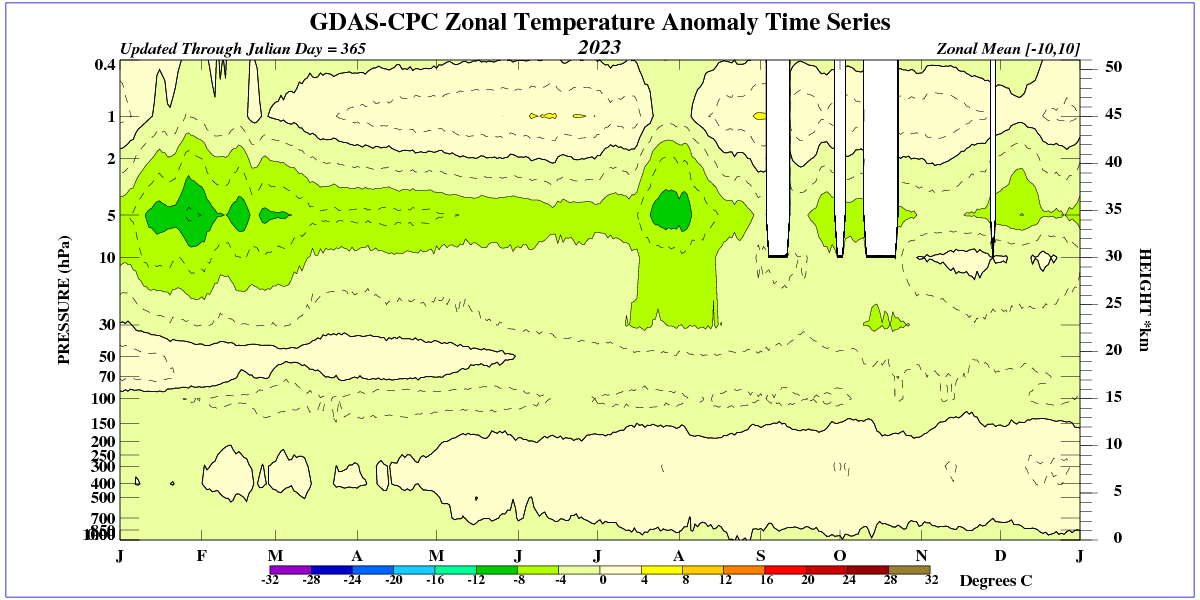
The galactic radiation diagram shows the weakening of the solar wind’s magnetic field, which indicates the weakening of the sun’s magnetic activity.

Here’s UAH showing “the new cold period” since 2008…. Brr!
Russian disinformation
ha ha
Gotta love those El Ninos.. use them while they are there. !
Note the COOLING from the 2016 El Nino to before the 2023 El Nino.
Note the green line.
David,
In 2006 you predicted a 1.5 C decline in global temperature through 2020. According to GISS it was 0.64 C in 2006 and 1.01 C in 2020.
In 2007 you predicted a 1-2 C decline in global temperature through solar cycle 24. According to GISS it was 0.66 C in 2007 and 1.01 C at the end SC24.
In 2009 you predicted a 2.2 C decline in mid-latitude temperature through solar cycle 24. According to GISS the land temperature in the US in 2009 was 0.22 C and 1.36 C at the end of SC24.
Your predictions are pretty bad. Like…they are so bad you could not even get the direction of the temperature change correct.
And I’ll remind you that it was only 13 months ago you said and I quote “the Modern Warm Period is over, that global warming is definitely over, dead and buried”. It only took 13 months for that prediction to crash and burn in spectacular fashion as well with the last 4 months being the highest in UAH dataset.
So tell us…why should be believe your cooling prediction now?
Who cares? Climate is always unpredictable; you can never rule anything out in the future. Never.
You can pretty much rule out anything Mr Archibald predicts, going on his previous record.
Perhaps we can apply contrary opinion theory here?
Contrary opinion is the opposite opinion of the sentiment held by the majority
We can CERTAINLY rule out anything the AGW cultists predict, going on their previous record.
basically 100% WRONG. !
CMIP3 multi-model mean versus vrs GISS global surface temperatures to 2023. Practically a bullseye.
You were saying?
First…there is a lot of things I can rule out with certainty.
Second…David is the one computing averages and making predictions here so why not address your grievances directly with him?
You are weaponizing a momentary, natural occurrence. The forthcoming days will reveal its temporary nature.
I’m not the who said global warming had stopped with such gusto that it was described as “dead and buried”. The last 6 months have demonstrated that is anything but “dead and buried” and with the 36m EEI at +1.5 W/m2 don’t hold your breath waiting for a new era of long term cooling.
Nothing says the EEI can’t go negative.
And I’m sure if you explained that Archibald he’d say that he predicts it go negative. But I think you’re going to have a hard to time explaining a metric like to that him since…ya know…you challenge the usefulness of any metric that is itself an average or constructed from averages of other metrics.
The last six months simply highlight the unpredictable nature of our climate. Did CO2 also experience a sudden spike in June and July to cause this? Only an idiot lacking understanding would attribute this to human fault or view it as an accelerated, long-term ‘transition’.
Had you been paying attention to my posts (and others on here) you would have seen that we were predicting a rise in temperature in the later half of 2023 and an end to the Monckton Pause in the near term so to say that it was unpredictable is simply untrue.
Similarly, had you been paying attention to my posts you would have also noticed that I (along with most others) have been saying all long that the warming in the later half of 2023 is primarily the result of the rapid transition from La Nina to El Nino. Many other agents play a role, but none so dramatic as the ENSO cycle on short time scales like these.
You are not the only one who sees his endless cooling prediction failures as several here make clear, what I did like is his charts making interesting inferences but his past predictions clouds it all up.
However, does this mean YOU and a few others will finally admit that the Hot Spot doesn’t exist and neither has the Positive Feedback Loop showed up?
Snicker…….
If you had been tracking my activity over the last decade you’d know that I already think the mid troposphere tropical hotspot is a deficiency in modeling that needs improvement. The same can be said for the cornbelt region, Arctic sea ice decline, and many other areas. The positive feedback loop appears to be playing out as modeled though. Models predicted an increase in OLR due to the positive shortwave feedback. We are observing an increase in OLR. And, of course, the GAT is following model predictions reasonably well.
The better approach would be to acknowledge that your theory might be incorrect and that dedicating time to exploring alternative variables would be more beneficial.
First…if by “theory” you the mean the broader consilience of evidence then understand that I had no involvement. Most of the fundamental pieces to the puzzle were discovered before I was born.
Second…the consilience of evidence already incorporates numerous variables including but no limited to GHGs, aerosols, dust, biological activity, volcanic activity, ocean currents, continental movement, atmospheric composition, solar output, orbital perturbations, and on and on.
Third…my own personal modeling, which I humbly admit is but a mere approximation that has its own deficiencies, already includes any variable that was 1) readily available and 2) exhibited skill in predicting the UAH TLT anomaly values. You can see that with just 4 variables (among the dozen I tested) and with little effort I am able to predict the GAT far better than David Archibald.
A puerile model based on ignoring most real warming sources….. NOT SCIENCE.
With enough variables/fudge factors you can make the elephant’s tail waggle. !
different variables make for different results. Data variables are not the same thing as parameter guestimate variables.
Here’s my observation graph of temperature movement in the climate I’ve lived in these past 75 years –
————————————————————
Have you checked that against your local weather station data?
The mind plays tricks on us.
Yeah, they stopped updating records in about 2012 when they concluded there was nothing changing.
From then they’ve just entered “DITTO” on every day’s line.
Sounds like a professional outfit. You’re a lucky man.
How do you know I’m a man?
Never assume anything from pronouns these days 🙁
That ain’t the model’s skill. If the planet warms, OLR increases. As simple as that. Warmer bodies emit more. Now, the cause of the warming is a different question.
I’m talking about TOA. Under the no shortwave feedback hypothesis OLR actually drops due to GHG forcing and then once the balance is restored again the OLR will revert back to what it was originally to match ASR. What has changed is the surface emittance; not the TOA emittance. However, under the positive shortwave feedback hypothesis the warming causes albedo to drop which increases ASR. OLR must increase to achieve the new balance. See [Donohoe et al. 2014] figure 1 an intuitive illustration of this effect.
fake models against fake models.. so funny.
Get a new comedy script writer.
That hypothesis has no supporting evidence because there is no way to know if the OLR increase is due simply to a warmer planet increasing its emission in response to the increase in ASR, which is the cause of the warming. This is the simplest explanation of the observations, as Occam would say.
You’re moving the goal post. You insinuated that the surface could not warm without an increase in OLR. I pointed out that it could if albedo does not change.
Anyway my original point is that models predict an increase in OLR due to a positive shortwave feedback. As such you cannot use an observation of an increase in OLR to then claim that models were wrong about the positive shortwave feedback.
Against URBAN data specifically adjusted to make it looks like it matches.
ONLY FOOLING YOURSELF.
It’s instructive to compare and contrast the 2007 Archibald global temperature prediction against the IPCC’s 2007 effort (the year AR4 was published).
IPCC, AR4, WGI, SPM (2007), pg. 12.
Warming since 2007 in every global surface data set, including satellite, is currently 0.3°C per decade.
How can you not question the absurdity of a model claiming such precise predictions about the ‘climate’?
I realize the question wasn’t posed for me, but I’ll answer anyway. I do question them. I question every model. None are perfect and none will ever be perfect. But like with every other discipline of science I’m going to use the model that can explain and predict reality the best. Archibald’s models are not even close to being in contention for the highest skill.
Similar question to you…How can you not question the absurdity of these solar-only models predicting cooling especially considering it has done the opposite?
Because, so far, they are proving to be skilful forecasts; unlike Mr Archibald’s, for which ‘absurdity’ is an appropriate description.
bdgwx, if that is your real name, solar activity is now consistently lower than it was in the second half of the 20th century. The Sun was more active in the second half of the 20th century than it had been in the previous 11,000 years. You would expect a climate response because it is the Sun that stops the Earth from looking like Pluto. There is a lag because of the thermal inertia of the oceans and all that. I am so old I remember the Great Pacific Climate Shift of 1976. What we are having now is similar – just noise. You have to call it as it is. There is a breakover in solar activity in 2006. Some things went to a lower level of activity in the late 1990s. In the records of WUWT there is a post by Anthony Watts at the time (2006) noting the drop in the Ap Index. How quickly such things are forgotten. We were there, recording scientific history as it was being made.
But 2006 looks pretty clean as the date. 18 years have passed now. It was a big thermal pulse. As I said and as it is in fact – the biggest thermal pulse for 11,000 years. The lag is big. Without a basis in solar activity, any date you pick for the end of the Modern Warm Period would be subjective. Be a good scientist, overcome your preconceived notions, get out of your bubble and embrace solar control of climate. By the way, it is flattering that you remember things I have said from almost two decades ago. Really flattering and I appreciate it. But I hope you are not too obsessive about me – mental health and all that.
David,
People foolishly put too much weight on climate predictions, which are destined to fail. Bdgwx seems oblivious to the non-linear nature of climate, ignoring the infinite dynamic factors at play. Take a glance at the model he employs — a mere 4 variables for a curve-fitting exercise — and he audaciously asserts that there’s nothing else to consider. This laughable approach to modeling is the most preposterous thing any person with even a modicum of experience in climatology or meteorology could encounter. Making absolute claims or ruling out possibilities with certainty is not just misguided but downright inappropriate.
In his case, yes, they are foolish.
It’s actually 5. The typo is on me.
Hardly. I’ve been saying over and over again that there are many factors; far too many for me to consider in there entirety.
What my model shows is that the CO2e hypothesis is not inconsistent with observations. It also shows that a mere 5 variables can explain 75% of the UAH TLT temperature time series.
If my model is so bad that it is laughable then I’ll presume you have something better in your back pocket. Now is the time to drop it. Let’s see just how much better you can do and how badly I did right now. I propose we adjudicate the issue using common metrics like root mean square difference (RMSD), Pearson correlation coefficient, or any other reasonable and established method.
Ruling out possibilities is one of the fundamental principals of science. So if you really think it is inappropriate then you’re probably going to be dissatisfied with science in general. But I suspect you’re not as convicted regarding your position as you let on since I presume you’d happily have tests performed to rule out possibilities regarding the cause of significant medical ailment so that you could hone in on the correct diagnosis and treatment. I know I have and would do so again in the future.
Solar activity does play a role. But so do a lot of other factors. It is the net effect of all factors acting together that dictates the planetary energy imbalance. The reason why your predictions were wrong is because you only consider the solar factor.
And the situation isn’t getting any better. Back in 2006 the EEI was about +0.6 W/m2. As of the end of 2023 it is +1.5 W/m2. We’ll certainly have periods (some extended) where the atmosphere cools as the energy gets redistributed in the climate system, but there isn’t going to be a top with a long term downward trend in temperatures until the EEI goes negative.
One thing 2023 has taught us is that global warming is not “dead and buried”.
Then why are the oceans also warming, David?
Ocean heat content has increased over the same period that the surface has warmed. One would expect that ocean heat content would reduce, if it is the source of surface warming.
How can solar heat stored in the oceans warm the surface without reducing the heat content of the oceans?
Also, even if it was the case, how come you failed to factor this into your numerous failed (and apparently ongoing) global cooling predictions?
well, we know shortwave radiation mediated by clouds dominates the radiative budget since 2000
so the question of “what controls clouds?” does seem paramount
not convinced the answer is “cloud changes are dominated by solar effects”
seems likely land/marine use changes have significant impacts via evapotranspiration and cloud trails from shipping
still, if it ever does start getting colder I’ll consider paying attention to the solar wind
on larger scales though, I’m starting to wonder whether the Faint Young Sun paradox might be explained by orbital drift due to Hubble expansion (rather than GHGs)
(see for instance this Nature study https://www.nature.com/articles/nature09961 )
don’t believe Earth or Moon are in self-correcting orbital resonance modes so there’s no particular reason for either to have always been the distances they are today… and the Moon’s recession rate is very close to the Hubble value
and notably we can’t even directly calculate the planetary orbits beyond a few tens of millions of years in the past because of the n-body problem (typically we avoid that problem by simplifying into a 2D 2-object model that works fine for millions of years, but that simplified model breaks down over longer periods of time)
if Earth were slightly closer when it was younger the stronger solar wind might have reduced cloudiness, in addition to the higher TSI from the inverse square law
apparently there are other known sources of orbital drift as well
https://www.forbes.com/sites/startswithabang/2020/04/09/earth-is-spiraling-away-from-the-sun-for-now-but-will-eventually-crash-into-it/?sh=5fb754622385
haven’t tried to calculate whether these effects are in the right order of magnitude to make Archaean Earth hot (presumably they would have to be larger than the annual perihelion/aphelion difference of 5M km, which has only small effects)
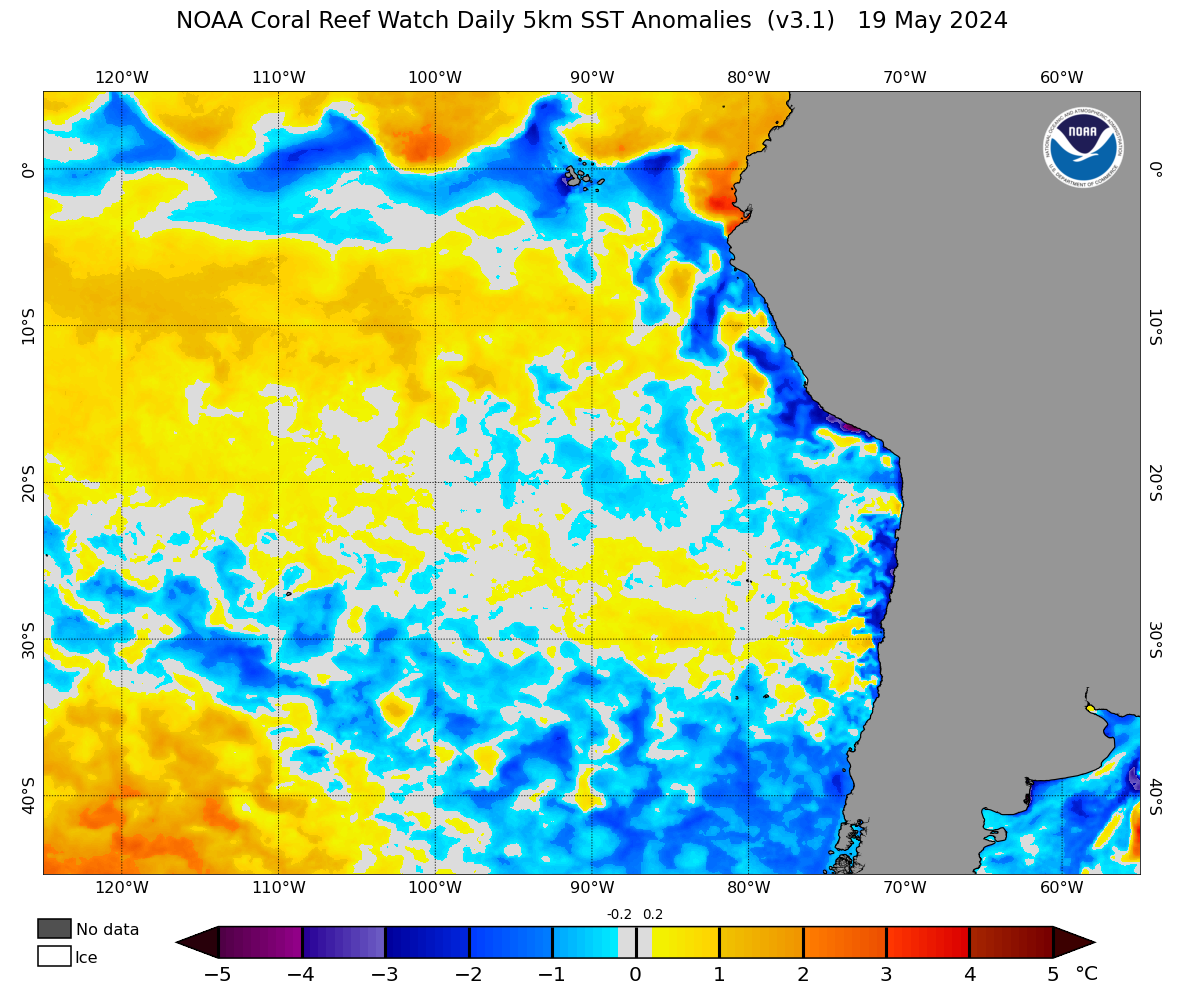
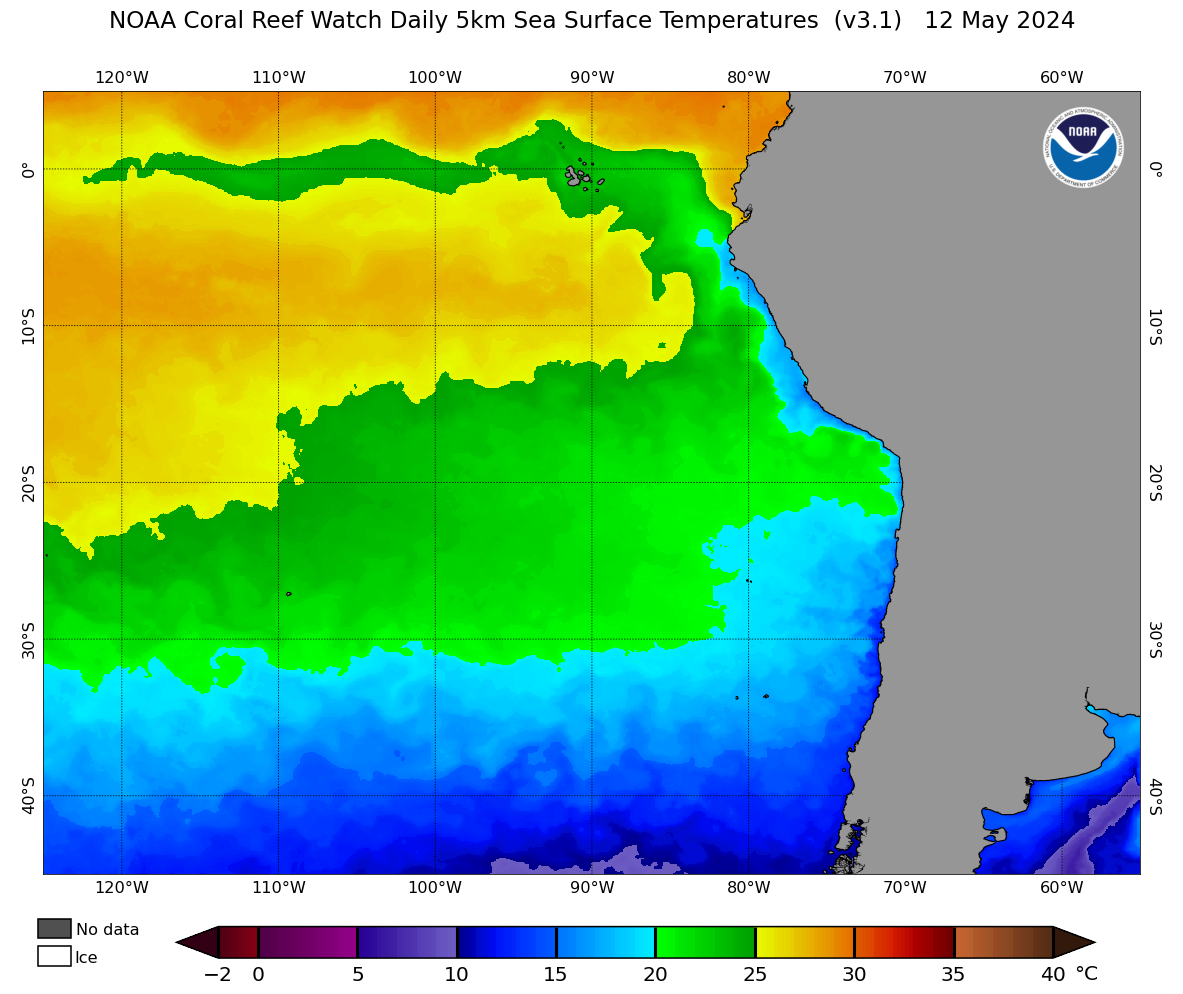
https://news.berkeley.edu/2022/11/09/earth-sun-distance-dramatically-alters-seasons-in-equatorial-pacific-in-a-22000-year-cycle
Research led by the University of California, Berkeley, demonstrates that the slight yearly change in our distance from the sun can have a large effect on the annual cycle of the cold tongue. This is distinct from the effect of Earth’s axial tilt on the seasons, which is currently understood to cause the annual cycle of the cold tongue.
Because the period of the annual cycle arising from the tilt and distance effects are slightly different, their combined effects vary over time, said lead researcher John Chiang , UC Berkeley professor of geography.
“The curious thing is that the annual cycle from the distance effect is slightly longer than that for tilt — around 25 minutes, currently — so over a span of about 11,000 years, the two annual cycles go from being in phase to out of phase, and the net seasonality undergoes a remarkable change, as a result,” Chiang said.
https://news.berkeley.edu/2022/11/09/earth-sun-distance-dramatically-alters-seasons-in-equatorial-pacific-in-a-22000-year-cycle
Today, Chiang said, the distance effect on the cold tongue is about one-third the strength of the tilt effect, and they enhance one another, leading to a strong annual cycle of the cold tongue. About 6,000 years ago, they canceled one another, yielding a muted annual cycle of the cold tongue. In the past, when Earth’s orbit was more elliptical, the distance effect on the cold tongue would have been larger and could have led to a more complete cancellation when out of phase.
Correct me if I’m wrong, but this says that global politicians must get Climate Change plans together before the cooling kicks in, else they won’t get any credit.
In the northern hemisphere, warmer oceans will increase snowfall.