Gavin D. Madakumbura, University of California, Los Angeles; Alex Hall, University of California, Los Angeles; Chad Thackeray, University of California, Los Angeles, and Jesse Norris, University of California, Los Angeles
The Research Brief is a short take about interesting academic work.
The big idea
Human activities, such as burning fossil fuels for transportation and electricity, have worsened the intensity of extreme rainfall and snowfall over land in recent decades, not just in a few areas but on a global scale, new research shows.
Past studies were able to attribute individual extreme events and long-term changes in some regions to climate change, but global assessments have been more difficult. We used a new technique to analyze precipitation records from around the world and found conclusive evidence of human influence on extreme precipitation in every one.
Scientists have been warning that rising global temperatures will lead to more extreme precipitation in the future, mainly because warm air “holds” more water vapor in the atmosphere, fueling storms.
With Earth already about 1 degree Celsius (1.8 F) warmer since the start of the industrial era, we wanted to find out if that change had already started.
Past attempts to detect the human influence in historical precipitation records typically required long time series with many consecutive years of data. But precipitation is difficult to monitor over long periods from land or space, so those records are rare. We found another way.
We used artificial neural networks, a type of machine learning, to find patterns of extreme precipitation in weather records. Once those neural networks understood what to look for, we could analyze shorter and more disparate observational records.
The result is multiple lines of evidence that human activity has intensified extreme precipitation during recent decades. Even when the data sets were widely different, we were able to see the human influence.
The findings were published July 6, 2021, in the journal Nature Communications.
Why it matters
Understanding how humans influence extreme precipitation is important for interpreting climate events today and for preparing cities and protective infrastructure for the changing world ahead.
In recent years, devastating flooding has made headlines after extraordinary rainfall that historically would have been extremely rare. The 2017 hurricane season in Texas, Florida and Puerto Rico and the extreme monsoon rains over India and Bangladesh in 2017 are two examples. Our results indicate that, as a general rule, precipitation has become more extreme around the world in recent decades.
Perhaps more importantly, our results indicate that further warming of the planet through the 21st century is likely to continue to intensify the most extreme precipitation events. Climate models project such an intensification will happen this century, and they suggest that a similar but less-rapid intensification occurred in the 20th Century, based on how much the planet has already warmed. Our results validate that finding.
With greenhouse gas levels in the atmosphere still increasing, the planet is projected to continue warming through the 21st century. How much it warms will depend on choices made today about fossil fuel use and other major contributors to climate change. That 1 degree of warming could be 4 degrees by the end of the century if emissions continue at a high rate.
What’s next
While we clearly identified the influence of humans on extreme precipitation in the past, we haven’t yet isolated how much each type of human activity has contributed. Greenhouse gas emissions, aerosols and changes in land use can all have an influence. We plan to modify our machine learning method in the future to home in on those sources.
The machine learning method we used is also currently learning from data alone. We can take this up a notch by bringing climate physics into the algorithm. By doing that, the machine would learn the physical processes that lead to intensifying extreme precipitation. Other climate variables could be included, such as winds, clouds and radiation, helping to answer not just whether extreme precipitation is intensifying, but why.
Gavin D. Madakumbura, Ph.D. candidate in Atmospheric and Oceanic Sciences, University of California, Los Angeles; Alex Hall, Professor and Director, UCLA Center for Climate Science, University of California, Los Angeles; Chad Thackeray, Assistant Researcher, UCLA Center for Climate Science, University of California, Los Angeles, and Jesse Norris, Project Scientist, Atmospheric and Oceanic Sciences, University of California, Los Angeles
This article is republished from The Conversation under a Creative Commons license. Read the original article.
So warm air “holds” more water vapor. Yeah, that’s only been known forever.
So how do the warmunistas get off saying that global warming is causing more droughts?
In any event more water vapor in the air has zero impact on the likelihood of extreme precipitation events – no mechanism for causality can be shown. What causes extreme precipitation events to occur involves multiple factors mostly having to do with the location, timing, severity, and movements in upper atmospheric pressure systems, both lows (as in tropical cyclones) and highs (that tend to steer or even halt the movement of tropical cyclones) and also affect prevailing winds as in the recent extreme temperatures in the Pacific Northwest.
Relative humidity is what determines moisture content, so the fact that absolute water content determines the potential total volume of precipitation, it is the temperature adjusted relative humidity that prompts that precipitation event in the first place.
And these doofuses call themselves scientists, while totally lacking in understanding of physics and meteorology!
Surely in a warming climate one would expect more rain due to greater evaporation. The problem is to identify the cause of the warming, not the cause of the rain. One shouldn’t confuse the two issues.
Theoretically, a warmer atmosphere will be able to hold more WV, though there doesn’t appear to be much evidence for that being the case. Even if true, does that mean more rainfall? Not necessarily, nor again, is there much evidence for that. However, if cooling occurs, the capacity for that cooler air to hold moisture declines, so yes, one would expect more rainfall to occur in that case.
So does this mean that if the world would have warmed naturally that there would not be any extreme precipitation events?
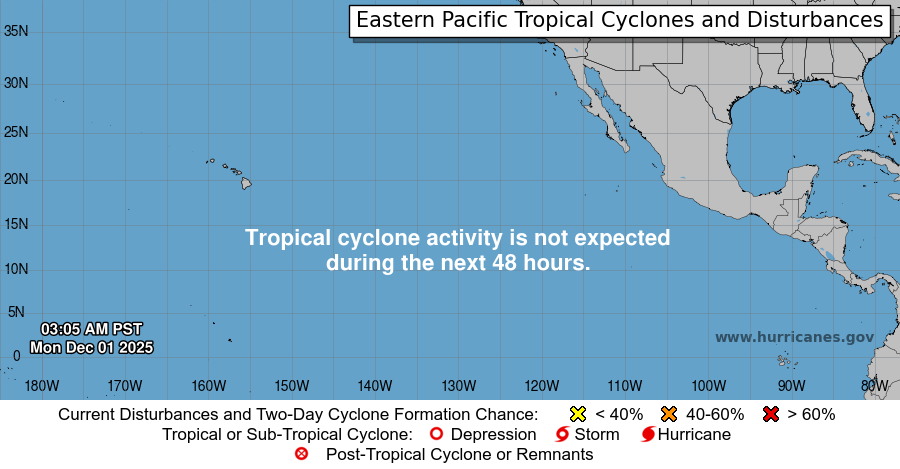
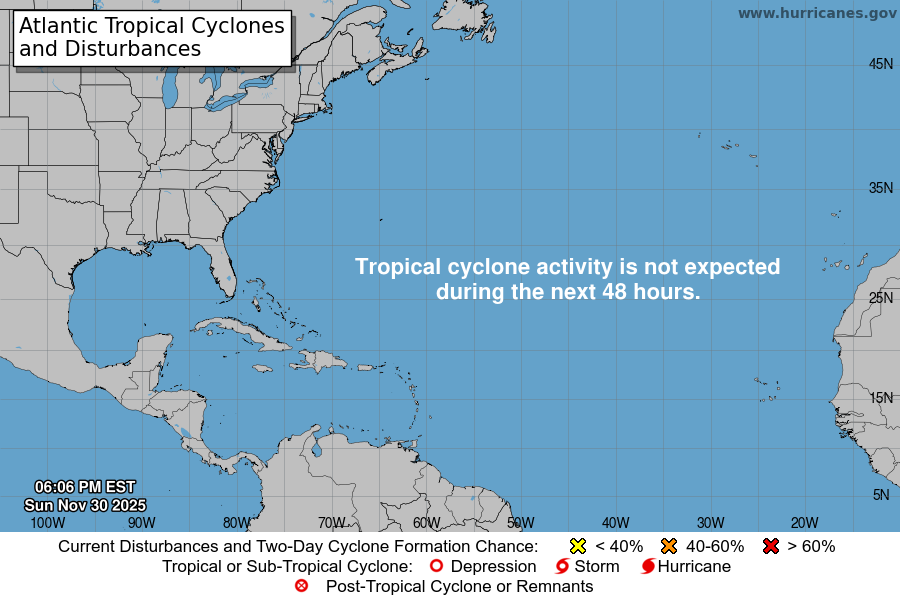
In other shocking climate news, NOAA reports this morning that humans have managed to shut down all tropical disturbances and cyclones in its area of attention. We’re doomed! And it’s worse than we thought!! /sarc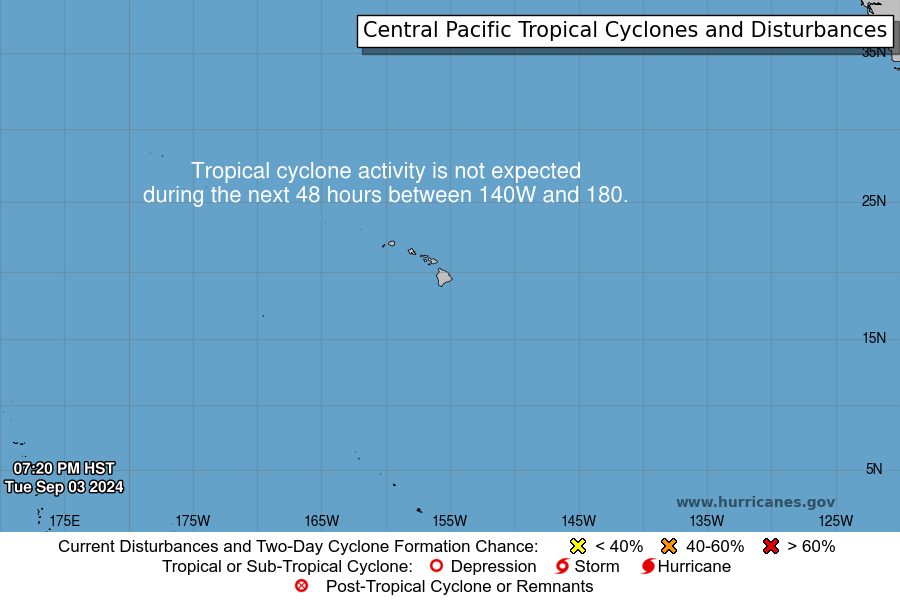 ?111155
 ?111139
 ?111141
I see those links are not to static images as I had thought. Now I see there is one disturbance in the Eastern Pacific. So going forward, if someone wants to know why I posted this comment, it is that all three areas had no disturbances or any storms developing at all.
So their conclusion is there was no weather before humans existed. Got it.
More groundless AGW assertions easily refuted. Their work will leave everyone ill-prepared, the opposite of their claim. Precipitation extremes result from the duration of solar extremes and have nothing whatsoever to do with CO2.
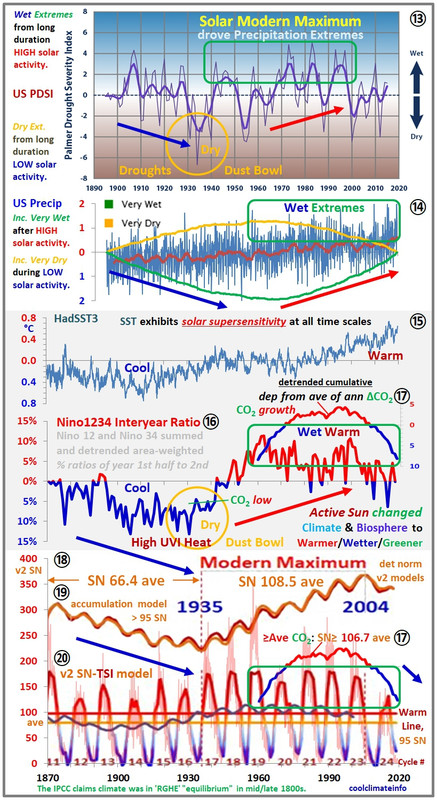
The specific case of 2017 flooding resulted from high sunspot activity in late August, the highest since the solar maximum in 2014, that added more energy to the ocean warmth already deposited by the SC24 solar maximum in 2014, driving the heavy precipitation.
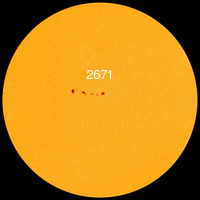
These people are completely clueless about the solar supersensitivity of the ocean..
Models can show whatever you want the to show. That is why they are constantly being adjusted.
It’s a pitch for green energy AKA poverty for most all else for the wealthy.
“We used a new technique to analyze precipitation records from around the world and found conclusive evidence of human influence on extreme precipitation in every one.”
Translation: we took the very same data that show no significant trends in precipitation or drought and fiddled with computer models continuously till they spewed out results, consistent with our preconceived ideas and that are alarming and publishable. Then we applied for more research funding lest the gravy train dry up.
“Machine learning-based methods for the detection of anthropogenic influence (DAI) have been shown to overcome the reliance on trends33,34 and are even capable of detecting the human influence from weather data on a single day …”
It’s … like … magic ! Give us the money !
😉
Nice of them to use the fake, adjusted temperature graph, divorced from reality
Translation: “We trained the network to give the answers we wanted and once that was done, surprise! surprise! It gave the answers we wanted.”
Around the year 850, a group of travellers were crossing a Himalayan mountain range when they were caught in a hailstorm. They were at the shore of the glacial lake Roopkund. The hailstones were the size between golf balls and tennis balls. Hundreds died – probably the whole group, with tell-tale circular holes in their crania. They lie there to this day. No hailstorm as severe as this has occurred during the last two centuries of so-called unprecedented severe weather.
https://en.m.wikipedia.org/wiki/Roopkund
Deadly hailstorms are precedented. By this. Nothing new under the sun.
But… there were no golf balls or tennis balls back then. *scratches head*
He’s got you there, Hatter. 😜
What I see from below is that Griff never learns.
Griff, if you want me to believe you can clearly spot the human signal in any minor variation to the temperature or precipitation record, you need to explain the past.
Why did we descend into the LIA from the MWP?
Why did we warm out of the LIA?
Why did we warm quickly in the early 20th century then cool?
All of these things occurred before human co2 could possible cause issue.
I need you to explain these events, their causation, before I would believe you have anything but correlation to go on in the last 40 years
When validating superstitious beliefs one ignores anything that doesn’t support the beliefs.
“Global temperatures are rising”
WHAT global temperatures are rising? Minimums? Maximums?
How does rising minimum nighttime temps cause more rain? Thunderstorms with lots of rain depend on input from the sun, i.e. high daytime temps, during he day to generate significant rain events. Cooler nighttime temps (cooler than the daytime temps anyway) don’t generally fire off large rain events. It may rain at night but it is the daytime sun input that is the trigger.
This is the big problem with climate models that use “mid-range” temps to generate local, regional, and global “averages”. You are actually left knowing almost nothing about what is actually causing what – in other words you are left with correlation but no causation.
They don’t
High temps are insufficient without a humid enough atmosphere.
No, rain events require evaporation form the oceans (the ultimate source of H2O on Earth).
That is a function of SSTs …..
https://marine.copernicus.eu/access-data/ocean-monitoring-indicators/global-ocean-anomaly-time-series-sea-surface-temperature
To the thousandths of a degree!
Horrors!
Science Officer Spock did the calculations.
Since we are halfway through 2021, why truncate the graph at 2019? Super El Nino? Data show significant SST cooling through June.
Just what does that mean? Did the AI program find a correlation between increasing population and temperature or precipitation? If so, that is not new. The important thing is to establish cause and effect, and be able to identify spurious correlations.
See Fig. 4 at:
https://wattsupwiththat.com/2016/02/26/analysis-of-the-relationship-between-land-air-temperatures-and-atmospheric-carbon-dioxide-concentrations/
[It may be necessary to point and click if a blank spot shows where Fig. 4 should be.]
In other words, they can’t identify cause and effect, or identify spurious correlations. They are painting with a very broad brush.
However, this article is from The Conversation! We really shouldn’t have high expectations from a source that openly admits they are biased and will delete comments that challenge their position.
What a load of crap!
All empirical evidence show there are no long-term increasing trends of intensity nor frequency of: cyclones, hurricanes, typhoons, thunderstorms, tornadoes, floods, drought, or hail for the past 100 years.
There may be some short-term cyclical rainfall trends related to ENSO and PDO/AMO 30-year warm/cool cycles, but this has nothing to do with CO2 forcing.
Sure, “scientists” can torture AI programs to get them to confess to anything, but this is just Artificial Input producing Artificial Output, which isn’t evidence, it’s just expensive propaganda masquerading as evidence..
CAGW is dead.
What does “machine learning” have to do with new ways of counting how much rain has fallen?
Fake.
Do the people producing/publishing this stuff honestly believe they’re doing good work?
Do they think what they’re doing is harmless?
Do they sleep well at night? It’s often claimed they’re doing it because it’s the way to ensure future funding, and scientists need to eat too. Is science really that broken?
Yes, it surely is that broken. But that’s been true for a very long time. At one point, the science was “settled” (sic) that the Sun revolved around the Earth. Everyone agreed, as they didn’t want to risk being burned at the stake. Galileo barely escaped that fate due to some very powerful friends.
Nearly anyone in Axis controlled territory opposed the Nazi regime because doing so meant all 3 generations of your family were sent to the death camps.
The risk now merely runs the gamut from not getting your future projects funded, to being fired from your job, to full cancel culture where no one will hire you and your former friends pretend to never having even known you. And Steve Scalise might even debate that….
Copernicus first posited that the Earth revolves around the sun and he died before Galileo was born. His theory was generally accepted before Galileo because it explained planetary movement.
Galileo’s persecution was due to his abrasive personality which resulted in confusion about whether he was stating scientific principles or defying authority. He was never in danger of being “burned at the stake”.
There is a lot of anti-religious and anti-Catholic propaganda swirling around Galileo’s life.
A combination of the myth that global warming increases the frequency and intensity of extreme weather events, ignorance of how short term changes in the solar wind drive extreme events via forcing of NAO/AO anomalies, and ignorance of how indirect solar forcing variability drives the ocean phases responsible for regional variability of rainfall.
That’s why they get nearly everything backwards with their so called evidence. Wetter hurricanes and south Asia floods is about low solar driving a warm AMO, rising CO2 forcing doesn’t drive a warm AMO.
Cracks me up that last weeks media discussion was about how AGW is causing the extreme SW droughts, which has turned on a dime to how AGW causes extreme rainfall.
“We have always been at war with Eastasia”…
Pretty sure Huxley didn’t mean for Brave New World to be a textbook for the alarmists.
Extreme rains cause extreme droughts because all of the water falls in one spot. Don’t ask me how exactly that works. Just take it on faith.
Mountains and prevailing winds do cause rain to fall in some spots and not others. Exactly how extreme rains cause extreme droughts is beyond my understanding as well but I think it has smething to do with the mistaken belief that deserts are caused by warm weather. The opposite is true: the lack of moisture causes the warmth.
One could posit that rising CO2 forcing should increase positive NAO/AO conditions which are associated with La Nina, which increases the southwest drought. 2013-2014 had very weak La Nina conditions, though I think the greater factor keeping the rains away though 2013-2015 was the northeast Pacific warm blob, which returned 2019-2020, probably driven by negative NAO/AO.
> “We used artificial neural networks, a type of machine learning, to find patterns of…”
Pareidolia multipled by the power of computing. Aka GIGO.
“We used artificial neural networks…” and later “Other climate variables could be included, such as winds, clouds and radiation…”
A life-long research project. But even with the very limited amount of work already done they can state with conviction:
Human activities … have worsened the intensity of extreme rainfall and snowfall over land in recent decades …”
An attention grabbing ‘we need more money’ release.
Lies, Damned Lies, Statistics, Neural Networks.
Okay; okay; okay okay okay
(With apologies to Joe Pesci)
Computer climate models predicted more frequent extreme precipitation events due to AGW,
The records are hard for people to sift through and mostly too incomplete to really detect anything,
HOWEVER!!!!!!!!!
This study used AI to look for more frequent extreme precipitation events.
Once the programmers taught it what to “look for” then amazingly, they discovered more frequent extreme precipitation events.
I’M ABSOLUTELY SHOCKED and of course convinced.