
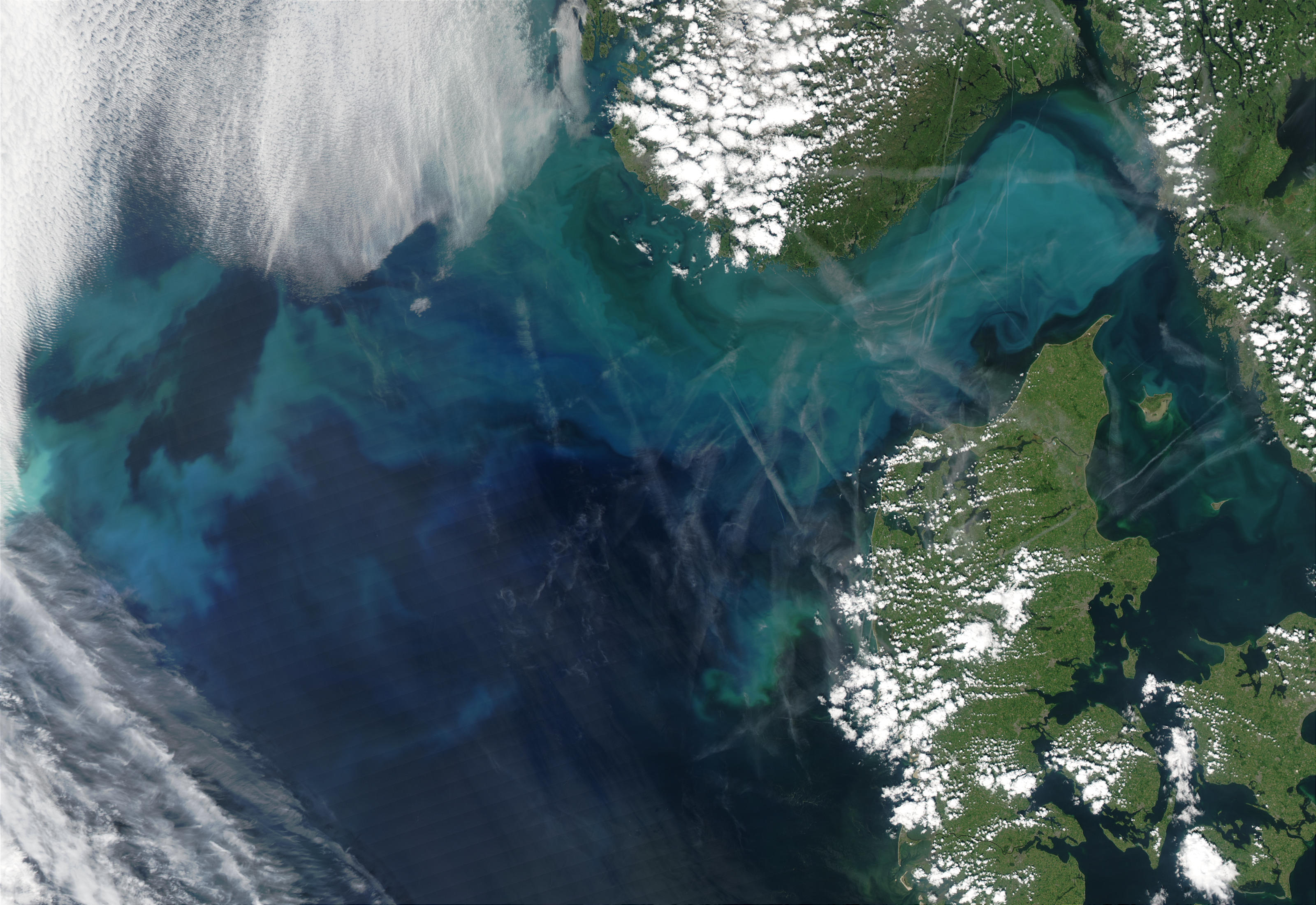
Ken Buesseler, Woods Hole Oceanographic Institution
The Research Brief is a short take about interesting academic work.
The big idea
The ocean plays a major role in the global carbon cycle. The driving force comes from tiny plankton that produce organic carbon through photosynthesis, like plants on land.
When plankton die or are consumed, a set of processes known as the biological carbon pump carries sinking particles of carbon from the surface to the deep ocean in a process known as marine snowfall. Naturalist and writer Rachel Carson called it the “most stupendous snowfall on Earth.”
Some of this carbon is consumed by sea life, and a portion is chemically broken down. Much of it is carried to deep waters, where it can remain for hundreds to thousands of years. If the deep oceans didn’t store so much carbon, the Earth would be even warmer than it is today.
In a recent study, I worked with colleagues from the U.S., Australia and Canada to understand how efficiently the biological pump captures carbon as part of this marine snowfall. Past efforts to answer this question often measured marine snowfall at a set reference depth, such as 450 feet (150 meters). In contrast, we paid closer attention to the depth of something called the euphotic zone. This is the ocean layer close to the surface, where enough light penetrates for photosynthesis to happen.
We accounted more accurately for how deep the euphotic zone extends by using chlorophyll sensors, which indicate the presence of plankton. This approach revealed that the sunlit zone extends farther down in some regions of the ocean than in others. Taking this new information into account, we estimate that the biological pump carries twice as much heat-trapping carbon down from the surface ocean than previously thought.
Why it matters
The biological pump phenomenon takes place over the entire ocean. That means that even small changes in its efficiency could significantly change atmospheric carbon dioxide levels and, as a result, global climate.
Moreover, light penetration varies regionally and seasonally throughout the oceans. It’s key to understand those differences so that ocean scientists can incorporate biological processes into better global climate models.
We also considered another ocean phenomenon that involves the largest animal migration on Earth. It’s called diel vertical migration, and happens around the globe. Every 24 hours, a massive wave of plankton and fish ascend from the twilight zone to feed at night at the surface, then descend back to darker waters in daytime.
Scientists think this process moves a lot of carbon from the surface to deeper waters. Our study suggests that the amount of carbon carried by these daily migrations must also be measured at the same boundary where light disappears, so that scientists can directly compare the marine snowfall to the active migration.

How we did it
For this study, we reviewed previous research on the biological pump. To compare results, we first determined how deep the sunlit region extended. We found this boundary at the depth where it became too dark to see any more chlorophyll pigments, which mark the presence of marine phytoplankton layers. Across the studies, that depth varied between 100 and 550 feet (30 to 170 meters).
Next, we estimated how much organic carbon sank into deeper waters in these studies, and measured how much remained in particles that sank another 330 feet (100 meters) deeper into the twilight zone. Many creatures live and feed in these deep waters, including fish, squid, worms and jellyfish. Some of them consume sinking carbon particles, reducing the amount of marine snowfall.
Comparing these two numbers gave us an estimate of how efficiently the biological pump was moving carbon into deep waters. The studies that we reviewed produced a wide range of values. Overall, we calculated that the biological pump was capturing twice as much carbon as previous studies that did not take into account the wide range of light penetration depths. Regional patterns also changed: Areas with shallow light penetration accounted for a higher percentage of carbon removal than areas with deeper light penetration.
What still isn’t known
Our study reveals that scientists need to use using a more systematic approach to defining the ocean’s vertical boundaries for organic carbon production and loss. This finding is timely, because the international oceanographic community is calling for more and better studies of the biological carbon pump and the ocean twilight zone.
The twilight zone could be profoundly affected if nations seek to develop new midwater fisheries, mine the seafloor for minerals or use it as a dumping ground for waste. Scientists are forming a collaborative effort called the Joint Exploration of the Twilight Zone Ocean Network, or JETZON, to set research priorities, promote new technologies and better coordinate twilight zone studies.
To compare these studies, researchers need a common set of metrics. For the biological carbon pump, we need to better understand how big this flow of carbon is, and how efficiently it is transported into deeper water for long-term storage. These processes will affect how Earth responds to rising greenhouse gas emissions and the warming they cause.
[You’re smart and curious about the world. So are The Conversation’s authors and editors. You can get our highlights each weekend.]
Ken Buesseler, Senior Scientist, Woods Hole Oceanographic Institution
This article is republished from The Conversation under a Creative Commons license. Read the original article.
Discover more from Watts Up With That?
Subscribe to get the latest posts sent to your email.
Where is a direct observation that there is a massive CO2 sink into the deep ocean and a link to a review summary that notes …
“The alleged long lifetime of 500 years for carbon diffusing to the deep ocean is of no relevance to the debate on the fate of anthropogenic CO and the “Greenhouse Effect”, because particular carbon can sink to the bottom of the ocean in less than a year (Toggweiler, 1990).”
https://www.livescience.com/65466-bomb-carbon-deepest-ocean-trenches.html
Bomb C14 Found in Ocean Deepest Trenches
‘Bomb Carbon’ from Cold War Nuclear Tests Found in the Ocean’s Deepest Trenches
Bottom feeders
Organic matter in the amphipods’ guts held carbon-14, but the carbon-14 levels in the amphipods’ bodies were much higher. Over time, a diet rich in carbon-14 likely flooded the amphipods’ tissues with bomb carbon, the scientists concluded.
Ocean circulation alone would take centuries to carry bomb carbon to the deep sea. But thanks to the ocean food chain, bomb carbon arrived at the seafloor far sooner than expected, lead study author Ning Wang, a geochemist at the Chinese Academy of Sciences in Guangzhou, said in a statement.
The Bern equation (Bern equation is named after the city of Bern and is an IPCC created ‘equation’ about CO2 sources and sinks) assumes zero biological material is being sequestered in the ocean.
This is a good summary of the physical impossibility assumptions/mechanics of the Bern equation.
Carbon cycle modelling and the residence time of natural and anthropogenic atmospheric CO2: on the construction of the “Greenhouse Effect Global Warming” dogma.
https://www.co2web.info/ESEF3VO2.pdf
Money quote:
“At this point one should note that the ocean is composed of more than its 75 m thick top layer and its deep, and that it indeed contains organics. The residence time of suspended POC (particular organic carbon; carbon pool of about 1000 giga-tonnes; some 130% of the atmospheric carbon pool) in the deep sea is only 5-10 years.
This alone would consume all possible man-made CO from the total fossil fuel reservoir (some 7200 giga-tonnes) if burned during the next 300 years, because this covers 6 to 15 turnovers of the upper-ocean pool of POC, based on radiocarbon (carbon-14) studies (Toggweiler, 1990; Druffel & Williams, 1990; see also Jaworowski et al., 1992 a).
The alleged long lifetime of 500 years for carbon diffusing to the deep ocean is of no relevance to the debate on the fate of anthropogenic CO and the “Greenhouse Effect”, because POC can sink to the bottom of the ocean in less than a year (Toggweiler, 1990).”
This is another example of “Rediscovering the Already Discovered”. Over 50 years ago the first paragraph of Chapter 3 “Producers: Capture of Light Energy” from the second edition of the California State Series “A Sourcebook for the Biological Sciences” reads…
“It is estimated that 90 percent of all photosynthesis is carried on by marine and fresh-water algae and the remaining 10 percent by cultivated and wild land plants. Put another way, some 200 billion tons of carbon are fixed annually by photosynthesizing plants if the oceans and fresh water and by land plants.” (page 155)
A few years ago I tried verifying that 90 percent by internet searches and kept coming up with estimates from various sources of around 50 percent. And I never could find any reference to the Biological Sourcebook. 90 percent is probably still accurate but I’d guess the 200 billion tons of carbon fixed is greater.
Lo and behold! That book is still around, available online here: https://openlibrary.org/books/OL5984070M/A_sourcebook_for_the_biological_sciences as well as Amazon. Once upon a time this was the instructors’ go-to book for lab exercises at the high school and college level.
Once again the Science is not as settled as they thought. This time it is by a factor of 2:1. ‘ Settled Science’ has lost its meaning and will have to go the way of Global Warming.
There is the obligatory crap about (unmeasured, unestimated) dangers from mining the sea floor. Reminds me of jokes about excited male mosquitos tackling indifferent female elephants. Geoff S
p.s. It remains possible that I was the first scientist banned forever from commenting on The Conversation. So, I follow their progress from a distance. It is interesting that the standard of science it permits gets poorer by the year. The % of silly assertions dressed up as science is distressing and increasing.
Geoff
I doubt that the editor of The Conversation understands science well enough to define it. I’ve never been officially banned; however, I’ve had a number of comments removed because I disagreed with the author and made them look bad. Its been over a year (about the time they instituted their censorship editorial policy) since I’ve bothered to comment.
What a disgrace, presumably they had to say that the carbon would otherwise have caused more global warming so that they would get their funding. Are these people completely lacking in integrity or are they incapable of analysing climate data?
And the science was thought to be over….
This is pure propaganda to take our eyes off the ball, making us think that climate change isn’t the imminent existential threat we already know it to be, that’s going to kill us all in our sleep in 5 years. AOC and Gore already told us this and we know it’s true because they said it. And I believe all women.
Folk who only think they know it all, say that ocean acdification is certain as we let more CO2 below the CCD as part of natural cycles. I don’t know it all, but I do know that all seafloors recycle over each c. 200million yrs. So, after deep heating and re-gassing tectonically, all forms of carbon and calcites continue to be made re-available as has happened some ten or twenty times so far.
Brett Keane, NZ
Summary – we zipped out in a mate’s boat and flopped some gear out into the sea. Then we took a few readings. The result of this jolly outing was to find that a parameter of the ocean biosphere – export production of carbon descent to the ocean floor, of critical importance to climate models upon which trillions of dollars of policy decisions have been based – is wrong by a factor of 100%.
Wonder what we’ll find tomorrow?
Just Read “https://www.sciencedaily.com/releases/2019/06/190605100335.htm ”
How deep-ocean vents fuel massive phytoplankton blooms: Study showshow hydrothermal vents fuel massive phytoplankton blooms — and possiblehotspots for carbon storage — ScienceDaily.
Imediatly thought of this article and how these Deep Ocean Vents would have a significant effect on the massive phytoplankton blooms discussed therein. These blooms need serious, in-depth, research and analysis.