Reposted from Polar Bear Science
Posted on January 12, 2020 |
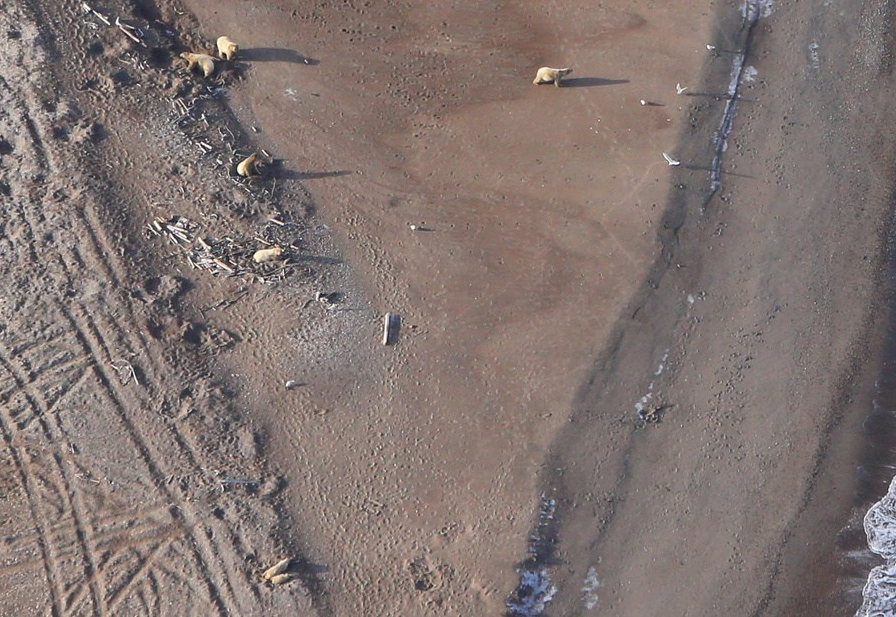
This aerial shot of six fat polar bears lolling around on a sand beach on the coast of the Southern Beaufort Sea, Alaska, was taken by NOAA employees in July 2019. It exemplifies the reality that bears in this subpopulation are currently abundant and healthy, negating the suggestion that numbers have continued to drop since 2006 because bears are starving.

The above picture of polar bear health is not an exception but the rule for all 31 bears recorded onshore last July, as the photos below from other locations testify. Those who would blame this abundance of bears on lack of sea ice in 2019 should note that ice retreated as early and as extensively in 2017 yet only 3 bears were spotted onshore. Results of a recent (2017-2018) population survey, which have not yet been made public, will of course not reflect conditions seen in 2019.

Alaska’s polar bear range: Southern Beaufort Sea (which ends at Barrow) to the Canadian border, overlaps with bears from the Chukchi Sea in the west, showing location of Prudhoe Bay. From Cronin et al. 2006.
According to an official NOAA blog report by Vicki Beaver, independent aerial marine mammal observer to NOAA’s ASAMM team [my bold] – see pdf here:
“July 2019 tallied more polar bear sightings than any previous July since ASAMM Beaufort Sea summer surveys began back in 2012. Previously, seven bears was ASAMM’s record for the most bears seen in July on sea ice or land or in open water, for the western Beaufort and eastern Chukchi seas combined.
This July we had 38 polar bears! Thirty. Eight.
While it may seem like a good thing to see so many bears, we cannot assume that increased sightings equals an increasing population. In fact, it may be quite the contrary.
Historically, polar bears in the Beaufort Sea spent their entire year on sea ice, except for females that spent winter in dens on the coastal plain. Recently, an increasing number of polar bears are coming ashore in the western Beaufort Sea and they are arriving earlier, leaving later, and staying for longer periods overall.
From 2012 to 2018 during the month of July, ASAMM recorded only three polar bears on shore. Those three bears were seen in 2017, a year when sea ice retreated earlier in the season than most other years. In July 2019, 31 of the 38 bears recorded were seen on shore.
This is happening because of sea ice decline. Arctic sea ice in 2019 tied with 2007 and 2016 for the second lowest sea ice extent since modern recordkeeping began in the late 1970s. A marked decline in sea ice coverage and an increased period of ice absence in the southern Beaufort Sea in September has been documented over the last 15 years.”
Well, yes – she would say that seeing more bears doesn’t mean there are more bears: that’s the official line to explain any and all increases in recent onshore sightings or problems with bears (even though in the 1980s, seeing more bears did mean more bears).
By her own admission, 2017 had an early retreat of sea ice in the Southern Beaufort, yet only three bears were seen onshore during the July portion of the summer survey, so she explains away this contradiction by talking about trends. However, citing 30 year trends in sea ice decline to explain events one specific time is a PR stunt: it’s a way of spinning information to suit the narrative but scientifically, it makes absolutely no sense.
A look at the ice record for those two years (2017 and 2019) shows very little difference in the Southern Beaufort: there was some ice remaining in the western portion both years by the beginning of July but the rest was virtually ice-free.

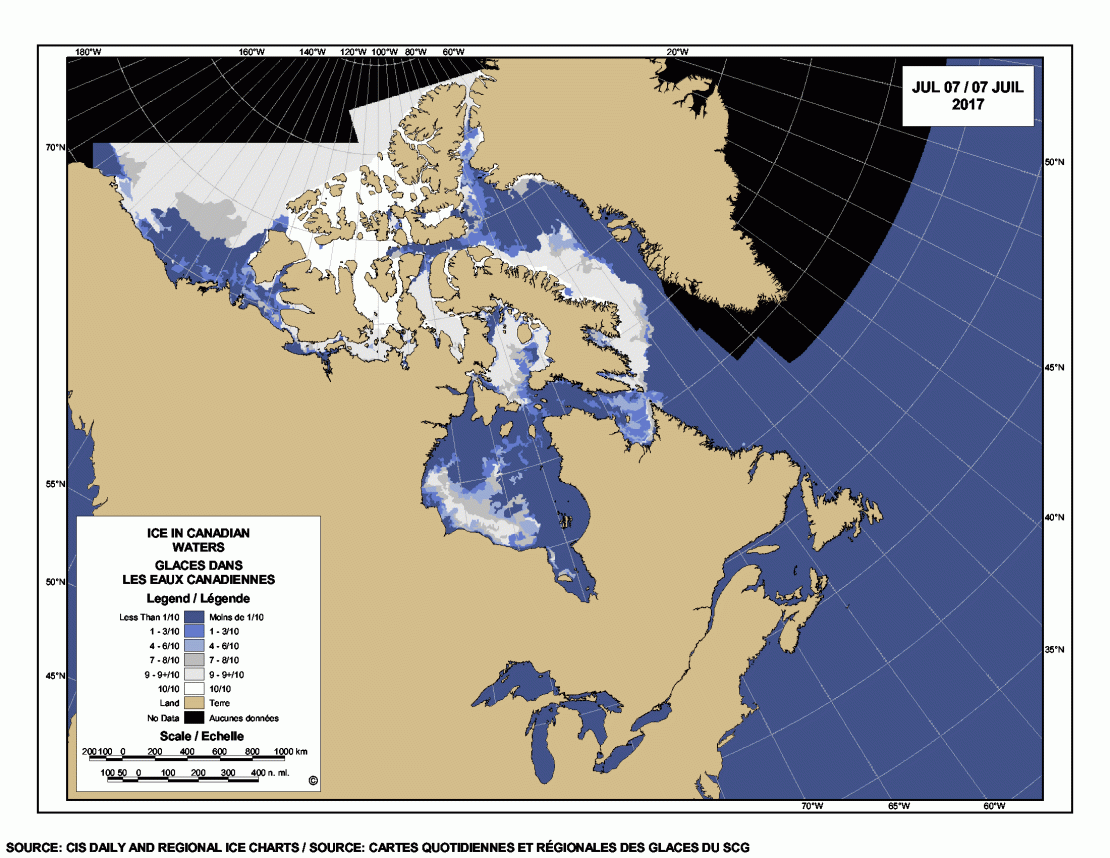
By mid-July, there was actually more ice off the Alaska coast in 2019 than there was in 2017 (both images below) and yet there were only three bears spotted onshore during July in 2017 but 31 in 2019:
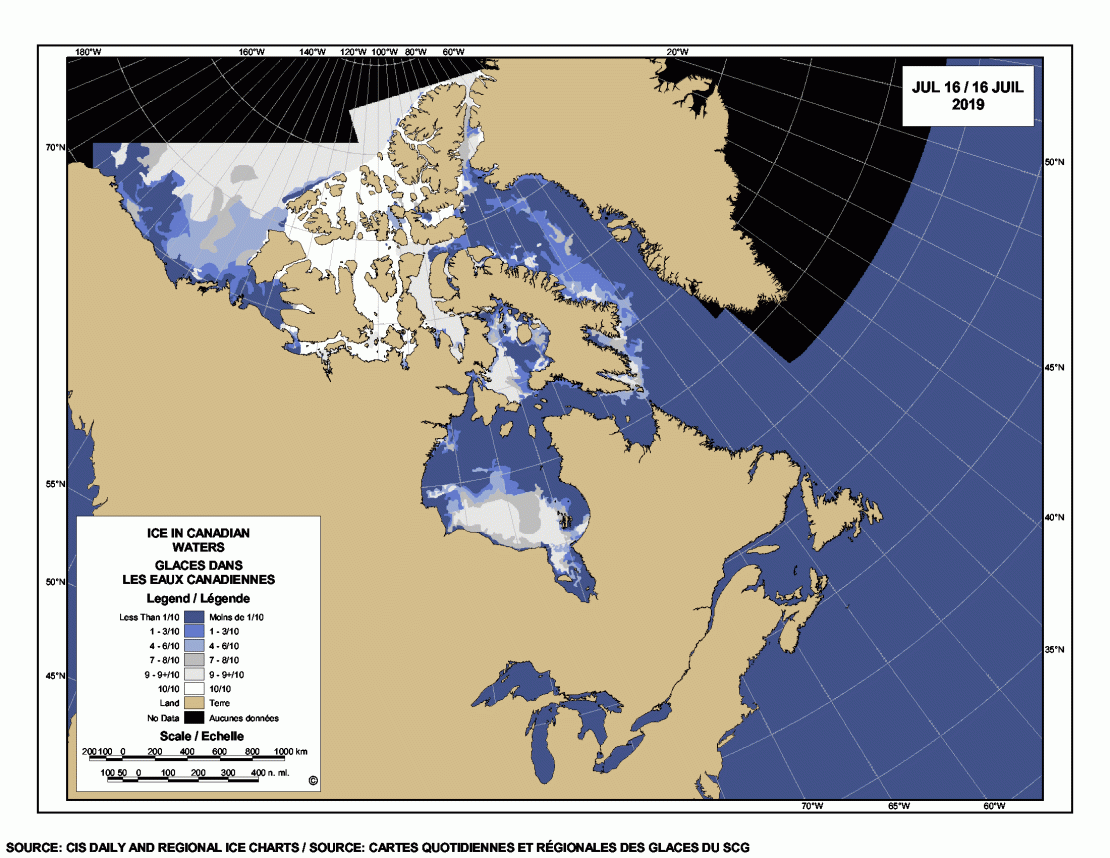
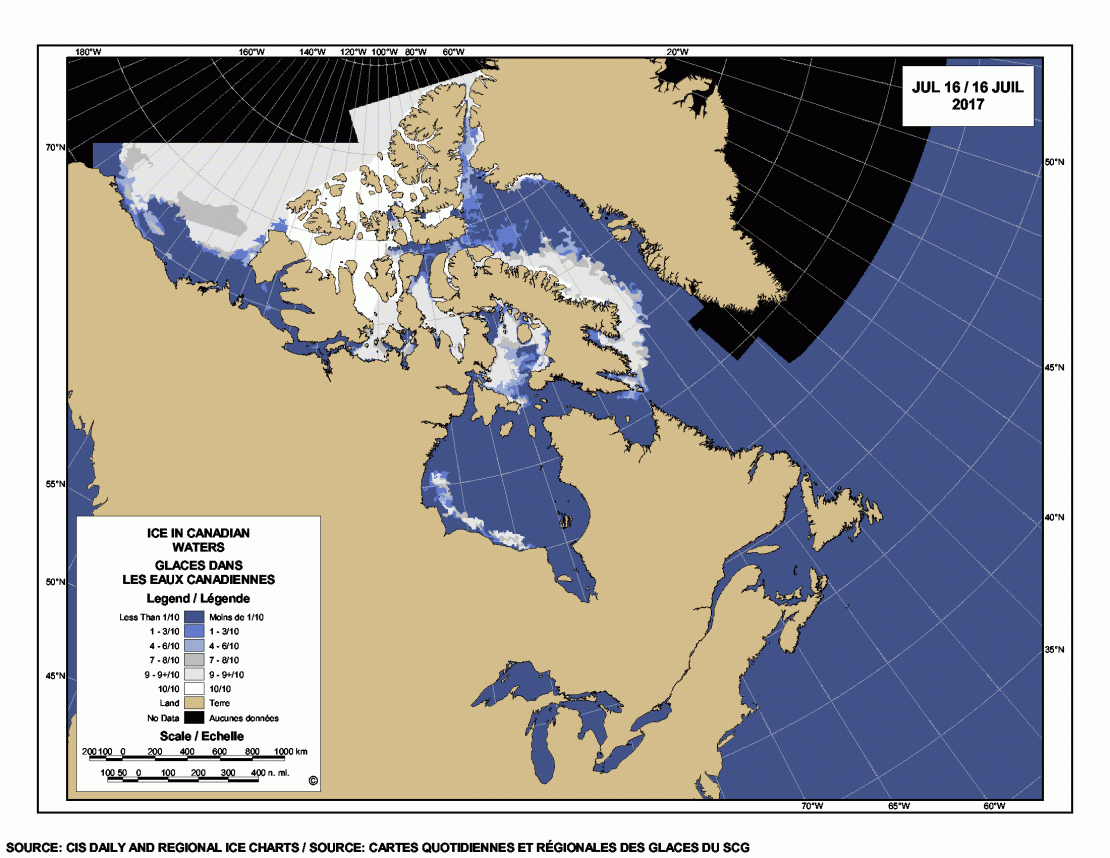
There is going to have to be a better story than ‘not enough ice’ to explain the abundance of fat, healthy polar bears seen in July 2019 on the Beaufort coast. I will also point out that since these bears were right off the ice in July, they did not get fat from feeding on last year’s whale carcasses, as shown below: they got fat from their spring feeding.
Nine fat bears, including mothers with cubs, were found attracted to 2018’s picked-over whale carcasses near Prudhoe Bay at Cross Island in late July 2019 (below): the first bowhead of the season in 2019 was not taken until 29 August.

Also from the report, regarding bears at whale carcasses [my bold]:
“Prior to 2019, the earliest ASAMM has recorded large aggregations of polar bears was August 15, in 2016 (13 bears). In 2019, ASAMM documented 20 polar bears on Cross Island by late July.
Throughout the remainder of the 2019 field season, ASAMM continued to see high numbers of polar bears along the western Beaufort Sea coast on several occasions. On October 23, ASAMM documented 32 polar bears – mostly mothers with cubs – on Cross Island.“
These bears were fat enough in July to easily survive a 4-5 month fast like the bears do in Western Hudson Bay, who typically fast from early July to November. Ice had returned to the eastern portion of the Southern Beaufort by late October (below) and had extended east and west by the 14th of November:

Here are more pictures from the report, all showing fat, healthy bears.
A fat mother with two-year old cubs rest on a beach:

Several fat bears, including a mother and cub, rest on a beach:
In western Alaska, four fat bears feed on a bowhead whale carcass that does not appear to be the remains of subsistence hunting (i.e. a natural death):
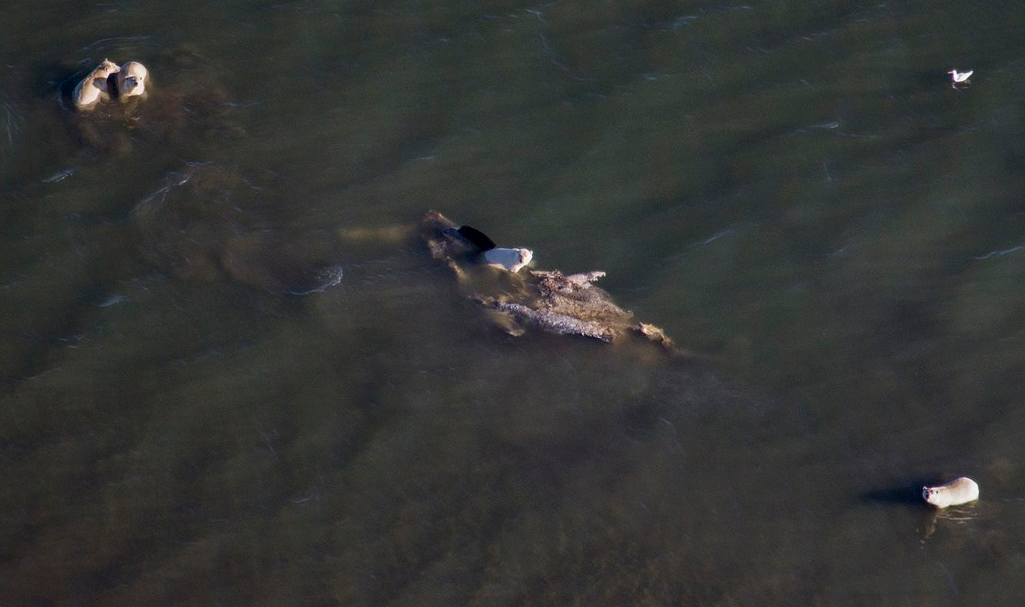
And lastly, here are two family groups identified by the observers: a mother with three cubs (a triplet litter rarely seen outside Western Hudson Bay) and another with two cubs, that look just as fat and healthy as the others:

From the 2018 survey, is an extremely fat bear in August relaxing near Barrow (now Utqiagvik) after feeding on a walrus carcass nearby (hence the bloody face):

Wait! I thought Polar Bears couldn’t survive without ice. How are these cute and cuddlies so fat without ice to keep them from drowning whilst hunting dinner? Somebodies been pulling my leg!
The typical convoluted logic of global-warming scaremongers: more polar bears on shore means less total polar bears.
Polar bears are probably smarter than those who write articles saying that seeing more bears means less bears. They come to the shore in early spring to feed on walruses and seals when they come ashore to breed. After that, they might float out on an ice floe to catch a few fish swimming near the ice, but if the ice is over a hundred miles offshore in summer, why would a polar bear sit out on a cold, lifeless ice floe waiting for an occasional fish (when most of them are probably in shallow, warmer water near the shore), when it could swim to shore and feed on whale carcasses (when available) or freshwater fish in streams, or small mammals on land?
In an ideal world for the global-warming scaremonger crowd, the entire Arctic Ocean would remain ice-bound all year round. In such a case, where would the seals and walruses come ashore, since they need open water to be able to breathe on their way to breed? They would be forced to breed farther south, and the polar bears would probably follow them, but the polar bears may have to share their prey with other predators, and have a smaller hunting ground. What effect would that have on the polar bear population?
“Polar bears are probably smarter than those who write articles saying that seeing more bears means less bears.”
Lol ! That’s funny! 🙂
Oh, those poor polar bears. Rolling around in the dirt because all the ice has melted. Or that’s what Greta and Al Gore would see.
They look overweight, decadent and Bohemian. That’s Climate Change for you.
Maybe capitalist, plutocrat bears?
Now that would make the progressives favor their extinction…
Fat shaming the bears- the greenies will have to sue on their behalf. Will the geenies claim that the whale died from “climate change?” Will the greenies claim that being fat will be most unhealthy for the bears in terms of heart disease as well as the psychological effects of the fat shaming.
“ Well, yes – she would say that seeing more bears doesn’t mean there are more bears:” that’s interesting logic. So we can say that just because we see more degrees in the temperature doesn’t mean there are more degrees than before. Or just because we are seeing more carbon dioxide in the atmosphere doesn’t mean there’s more – maybe it was hanging out with the missing polar bears and now their party is over so they are all showing up on the measurements…..
I hearing rumors that in Canada it is so bad the Inuit are going to petition for “Endangered Species” status for themselves in order to qualify for government protection from hungry polar bears raiding their villages for food …
“dozens of fat healthy bears” – really!! Some of these bears look so exhausted they can’t even stand up! They are obviously suffering from the unprecedented lack of ice and snow. And if the Guardian use this text, I want a name check
Vibe (1967) noted that the number of polar bears caught in south west Greenland followed the sunspot cycle, lagging by approximately 2 years, postulating that the solar cycle exerts a significant influence on the behaviour of North Atlantic sea ice.
Vibe C. (1967), “Arctic animals in relation to climatic fluctuations”. København, C.A. Reitzel
More polar bears = fewer polar bears! Because climate science!
A clear case of adaptation. Obviously Polar bears are adapting easily to their new role of garbage disposal/recycling of the waste stream from the rapidly growing Eskimo populations.
Here in SW Florida their distant cousins the racoons have long since abandoned the hunter – gatherer role in favour of dumpster-diving behind our best restaurants.
Cheers
Mike