
NASA image/ screen grab

Jason Hopkins Immigration and politics reporter
October 22, 2019 12:18 PM ET
The hole in the ozone layer shrank to its smallest size since scientists began recording it, NASA and the National Oceanic and Atmospheric Administration said Monday.
The ozone layer hole, which roughly sits above Antarctica, experienced massive retraction in September and October due to “abnormal” weather patters in the upper atmosphere, resulting in its smallest size since scientists began observing it in 1982, NASA and NOAA scientists announced.
NASA and NOAA satellite measurements observed the ozone hole reached a peak size of 6.3 million square miles on Sept. 8, but then dwindled to less than 3.9 million square miles for the rest of September and October. However, scientists tracking the ozone hole cautioned the changes are mostly a reflection of atypical weather patterns and not because of a dramatic recovery.
“It’s great news for ozone in the Southern Hemisphere,” Paul Newman, chief scientist for Earth Sciences at the Goddard Space Flight Center in Greenbelt, Maryland, said in a statement Monday. “But it’s important to recognize that what we’re seeing this year is due to warmer stratospheric temperatures. It’s not a sign that atmospheric ozone is suddenly on a fast track to recovery.”

The hole in the ozone layer above Antarctica is seen in a series of satellite images over a 21-year time span. (Photo: Reuters)
Like a sunscreen for Earth, the ozone layer makes up a section of the planet’s atmosphere and absorbs nearly all of the sun’s ultraviolet radiation, leaving just enough for life to thrive. The ozone layer itself is a thin section of the stratosphere, where the ratio of ozone gas molecules to molecules of air is about 3 to 10 million, according to National Geographic. Nonetheless, this thin layer protects humans from skin cancer, cataracts and other illnesses.
The hole in the ozone layer fluctuates throughout the year. The hole usually expands to a maximum size of around 8 million square miles by late September to early October. More specifically, the hole forms when sun rays interact with the ozone molecules and man-made compounds during the late winter in the Southern Hemisphere. (RELATED: LIEBERMAN: Trump May Adopt An Obama-Era Climate Policy)
However, such patterns can be mitigated under usually high temperatures.
“In warmer temperatures fewer polar stratospheric clouds form and they don’t persist as long, limiting the ozone-depletion process,” a joint NASA-NOAA post said.
“It’s a rare event that we’re still trying to understand,” Susan Strahan, an atmospheric scientist with Universities Space Research Association, said in a Monday statement. “If the warming hadn’t happened, we’d likely be looking at a much more typical ozone hole.” Strahan noted that such usual weather patters have produced small ozone layers in the past, as it did in 1988 and 2002.
The record-small ozone hole was a result of warm weather; however, NASA scientists noted the hole is, in fact, slowly shrinking in size — a result of the 1987 Montreal Protocol, which phased out chlorofluorocarbons across the world.
Discover more from Watts Up With That?
Subscribe to get the latest posts sent to your email.
The influx of ozone to the southern polar circle was from the south magnetic pole.


The image may disappear after some time. You can copy.
@Loydo and interested people:
Our data show a peak in H2O2 in the equatorial
stratosphere and large values in the Antarctic ozone hole
region
This is from the conclusion of this report:
http://eodg.atm.ox.ac.uk/eodg/papers/2005Papendrea1.pdf
IOW
If there are OH radikals present, peroxide will form preferentially.
Peroxide does the same as ozone. The absorption spectra are almost identical.
The shrinking of the ozonehole means there is increase in ozone, peroxide and N-O production.
Due to the low solar polar magnetic field strengths, more of the most energetic particles are able to escape. Our atmosphere and magnetosphere is protecting us by forming O3, HxOx and NxOx.
But this will affect the weather, as eventually less UV will go into the oceans.
Serious climate change is coming to the 40-50 latitudes. Click on my name to read my latest (revised) report about this.
You say above: “There never was an ozone hole.”
As WXcycles says in response: “It’s an area of weak Ozone depletion”. Are you even refuting this?
Nowhere in your link is there a suggestion that ozone is not being depleted.
“Our data show a peak in H2O2 in the equatorial
stratosphere and large values in the Antarctic ozone hole
region”.
Thats the onle mention “ozone hole” gets.
My understanding is the consensus hypothesis is that low stratosphere temperature, sunlight and man made CFC destroy the Ozone.
Since 1987 we have added very little man made CFC, but the hole kept appearing when the Hypothesis said it would reduce and eventually disappear. The date for the hole disappearing keeps getting put back and now is 2060/70. Slight trend in reduction in depletion has been noted over recent years.
The Sun has been getting gradually less active over the last 15 years. Perhaps this may be the cause of the slightly reducing trend in Ozone depletion.
However the Sun has no affect on our atmosphere. Research into this is not allowed.
CFCs such as CFC-11 and CFC-12 are very long lived compounds, without any production and release the concentration will decrease slowly so it was always expected to take a long time for the hole to disappear. The recent discovery that some are still being produced is the cause of the extension.
http://www.theozonehole.com/images/cfc.ht42.jpg
Hi Phil
Thanks, but I knew that and so did the atmospheric modellers.
“long lived”
“Photochemical decomposition of trichlorofluoromethane irradiated with ***UV light*** (>300 nm) from a high pressure mercury lamp resulted in mineralization products CO2, CO and HCl(8).”
https://toxnet.nlm.nih.gov/cgi-bin/sis/search2/r?dbs+hsdb:@term+@rn+@rel+75-69-4
Stop peddling your website.
From the author you are referring to :
https://www.sciencedirect.com/science/article/pii/0004698182903341
Atmospheric lifetime beyond 70 years
That has to be a typo in the report, should be “UV light (<300 nm)”
http://joannenova.com.au/2015/01/is-the-sun-driving-ozone-and-changing-the-climate/
I anticipated this in my above article and described the relevant mechanism.
Your ozone jetstream effect thesis is making a lot of sense.
When I was an undergraduate I got to know a professor of chemistry. He was a charming fellow who had been a youth in WW2 and had survived the burning of Dresden but his sister and mother did not. He had also been involved in some way in the discovery and eventual widespread use of CFCs. He told us how proud he was of this invention, how wonderful the gas was, inert, safe, yet incredibly valuable for bringing refrigeration to the poorest people and saving countless lives from those who would have died of food poisoning or starvation. Now the invention he had played a small part in was destroying the planet. He got so sad he almost broke down and cried during the lecture. He committed suicide the following year.
Midgley developed CFCs for use as refrigerants in the late 1920s and they were first produced commercially by Dupont in the 1930s so I’m not sure what his contribution was?
True story?
On record.
All the way back to 1982.
What did the hole do the bazillion years before that?
How many penguins can he realistically expected to die from skin cancer?
We gave up R12 for this?
It’s stupid.
Ozone production in the upper stratosphere decreases during periods of minimal solar activity. The proof is the temperature drop in the upper stratosphere in the tropics.
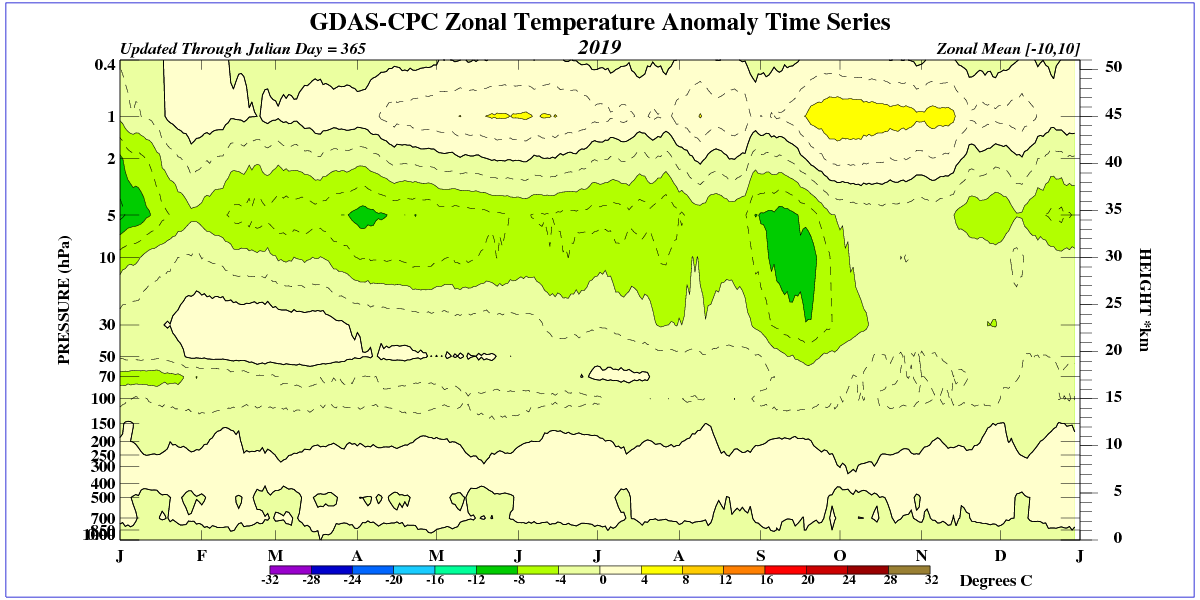
Yet observations have found that ozone increased above 45km when the sun was quiet.
So far I have never seen an explanation on how heavy gases like CFCs (e.g Freon 113 has a Mw ~ 188) can reach the stratosphere in significant amounts, by simple air circulation.
This, while the Erebus is erupting continuously since 1972, thus projecting in the sky huge amounts of hot gases, including chlorinated ones.
I mean, that CFCs CAN destroy ozone is a fact, but are we 100% sure they ACTUALLY did it?
Not only that, CFC’s emitted in the northern hemisphere magically massed over the south pole.
Just check the in situ measu of CFCs in the stratosphere.
Time for another round of laws because the Ozone hole is closing. There are tons of elements, some yet to be discovered, to blame for the hole not being static. I will worry maybe tomorrow.
I’ve pointed out a hundred times a feature of the ozone “hole”, easily seen by inspection of the images that cries out for recognition that the ozone is NOT depleted. Rather it is redistributed. Note, around the hole, the orange and yellow “collar” of ozone thickening.
A perfect analogy is the hole dug for a grave. The earth didnt disappear. It is merely piled around the perephery of the hole. I suspect that some one with skill in analyzing the data, could calculate what volume is missing from the “hole” and what has been added to the turtle neck collar around it.
Finally, I can see no chemical explanation for this. If the two volumes (hole and collar) are roughly equal, then the chemical explanation is simply wrong QED!
In 10 years no one has had their interest pricked by this argument, so I won’t hold my breath.
Gary
I’ve been following it for more than twenty years. I haven’t done the area calculations. However the Mark I eyeball estimator suggests that the central loss is about equal to the ozone migration stacking up outside the circumpolar vortex. That is further supported by the rapid ‘healing’ of the depleted zone when the vortex breaks up in the Spring.
That’s a bad analogy, a better one is erecting a fence around a field and watching a snow drift build outside it. The Antarctic vortex forms a seasonal barrier to stratospheric ozone being carried south from the tropics and therefore the ozone accumulates there. Meanwhile inside the vortex the ozone is depleted by halogen compounds being created inside the vortex due to the return of UV (not blocked by the vortex).
Phil
Your analogy doesn’t explain why the ozone levels outside the vortex are so much higher than after the vortex dissipates, and why the ozone levels in the formerly depleted area rise so quickly.
Of course it does, remove the fence and what happens to the snowdrift and field.
Phil
So, you are supporting my explanation?
No.
ozone way up high forms when the UV light from the sun warms oxygen and unstable molecules start to form, during winter over the poles the sunlight is very weak and at a bad angle so LESS ozone forms = 100% natural process……….sadly it takes a lay person like me to grasp this reality and counter the people of letter LYING to the public.
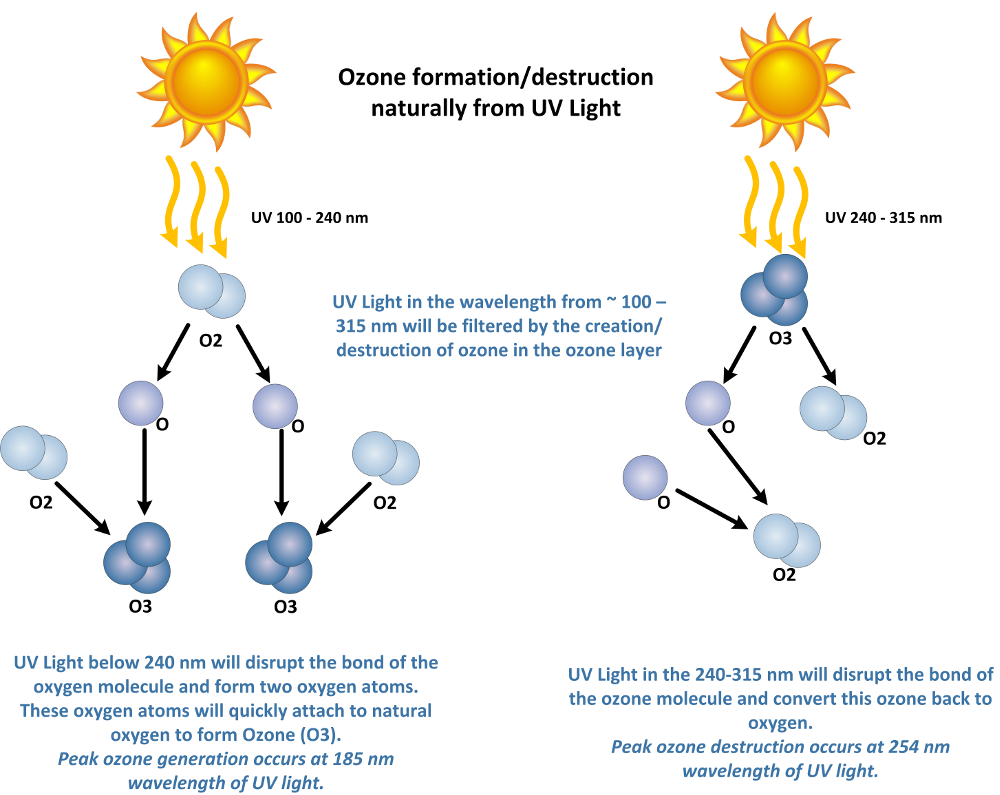
Unfortunately Bill you only know part of the story, ozone is also destroyed by light of different wavelengths. Consequently in the absence of sunlight stays at a constant value until sunlight returns.
Some of us “people of letter” know the full story.
Phil,
You said, “… ozone is also destroyed by light of different wavelengths.” Yes, ozone is metastable and starts to decline slowly in the absence of new ozone being created or able to drift into the area. The destruction is then accelerated by photocatalysis when sunlight first returns in the Spring. The net loss stops after the vortex breaks up, and the abundant ozone outside the vortex is able to move in and mix with the depleted air.
Very slowly! In air at -50ºC it has a half life of 3 months, in the conditions of the stratosphere (lower temperature and pressure) it is even longer. As the data I have shown before shows O3 in the S polar stratosphere is approximately constant from March to the end of July.
Phil
As I have pointed out, the asymmetry of the so-called ozone hole suggests that some ozone is able to migrate across the turbulent polar vortex boundary and replenish some of the decayed ozone. One might speculate that the rate of replenishment is controlled by the difference in the concentration outside the vortex (500 -250 DU) and that within the vortex (250 -100 DU), creating a feedback loop to replenish the concentration.
Also, ozone holes over the south polar region do not serve as evidence of ozone depletion. Pls see
https://tambonthongchai.com/2019/03/12/ozone1966-2015/
chaamjamal
You put a lot of work into your ozone article. It is very professional. I’m surprised that Phil and MFKBoulder haven’t taken you to task for your heresy.
Chaamjamal delivers many references, and has quiet some papers published under hes real name Jamal Munshi on ozone depletion according google scholar.
The funny thing: all citations of these papers are from: Jamal Munshi.
Since he refuted the Rowland Molina (et al and subsequent) chemical theories on Ozone depletion by CFCs and was not cited by relevant publications, I do not see the need to discuss his convolute of ozone papers, when he just refutes reaction rates without any quote.
MFKBoulder
I thought that if I gave recognition to Jamal’s link I would draw you out.
REN says
The proof is the temperature drop in the upper stratosphere in the tropics.
Henry says/
I don’t think you understand exactly what an increase in O3, HxOx and NxOx TOA does.
It has absorption in the UV region, meaning that more of the UV A and UV B is deflected off from earth. Hence the drop in temperature TOA. But there is also a drop of UV reaching the oceans, making less clouds.
Not so?
When there are no spots on the sun, UV radiation with the shortest wave decreases the fastest. This radiation produces ozone. Ozone absorbs longer wavelength UV radiation. When there is less ozone in the stratosphere, more UV radiation with a longer wave reaches the surface.
The emission core of the Mg II doublet (280 nm) exhibits the largest natural solar irradiance variability above 240 nm. It is frequently used as a proxy for spectral solar irradiance variability from the UV to EUV associated with the 11-yr solar cycle (22-yr magnetic cycle) and solar rotation (27d).
The Mg II data are derived from GOME (1995-2011), SCIAMACHY (2002-2012), GOME-2A (2007-present), and GOME-2B (2012-present). All three data sets as well as the Bremen Mg II composite data are available (see links below). In late years the GOME solar irradiance has degraded to about 20% of its value near 280 nm in 1995, so that the GOME data have become noisier.
http://www.iup.uni-bremen.de/gome/solar/mgii_composite_2.png
http://www.iup.uni-bremen.de/gome/gomemgii.html
I’d like someone to explain how CFCs released in China and in other places around the globe causes an ozone hole or thinning over Antarctica. It always sounded suspicious to me that CFCs released does not cause the hole or thinning above where it’s released, but only over the most remote part of the earth. Do the CFCs make a point to travel to the south pole and only there do they decide to destroy ozone? Please help me make sense of this.
In addition, the first ozone hole was noticed over Australia, and Aussies were afraid of getting skin cancer or cataracts from the UV. But it has since moved to Antarctica? Why? They claimed that eliminating CFCs would solve the problem, but the elimination was supposed to let the ozone layer repair itself, but it didn’t. Instead the “hole” just moved over the South Pole with very little “repair” having taken place. Just shows ta go ya how little the scientific community knows about this issue, considering their ignorance of the subject is based on a mere 61 years of monitoring, a drop in the bucket of time. So all the hysterics and scares that I witnessed in the 1970s about how CFCs would eliminate the ozone layer all over the world and we’d all contract skin cancer because of the intense UV was just another hoax.
Dale
And just like today, everyone was jumping on the bandwagon, trying to be the first to correlate something in their field of expertise with the speculated increase in surface UV. One of the more egregious ones that I remember was someone claiming that the documented decline in amphibians was the result of UV, notwithstanding the fact that water is a strong absorber of UV. The study involved frogs that lived in forest streams that were heavily shaded by trees. They concluded that since ozone was thought to be decreasing world wide, and surface UV was predicted to increase, it was a slam dunk that the two speculations were proof that amphibians were the victims of CFCs. That was before a fungus was found to be responsible for amphibian decline.
Air ionization by UV and galactic radiation occurs mainly in the stratosphere. It is closely related to solar activity. During a large number of explosions in the sun, the importance of UV in the mesosphere and upper stratosphere increases. When solar activity decreases, ionization by GCR in the lower stratosphere increases. Ozone is directed to the polar circle by currents in the stratosphere from the equator.
When the winter polar vortex is strong, ozone is retained outside. Inside the polar vortex, the amount of ozone automatically drops.
http://apollo.lsc.vsc.edu/classes/met130/notes/chapter1/graphics/vert_temp_mes.free.gif
Dale Baranowski October 23, 2019 at 11:18 am
I’d like someone to explain how CFCs released in China and in other places around the globe causes an ozone hole or thinning over Antarctica. It always sounded suspicious to me that CFCs released does not cause the hole or thinning above where it’s released, but only over the most remote part of the earth. Do the CFCs make a point to travel to the south pole and only there do they decide to destroy ozone? Please help me make sense of this.
CFCs released in China (or anywhere) are mixed in the atmosphere by turbulent mixing and eddy diffusion, if I recall correctly it takes about 5 years to mix. The strongest effect that CFCs have on depleting ozone occurs where it is cold enough to form Polar Stratospheric Clouds (PSC) which is predominantly over the Antarctic in winter.
ren says
When there are no spots on the sun, UV radiation with the shortest wave decreases the fastest.
henry says
No. Think of why we do not, as far as yet, have energy from nuclear fusion? It is because we cannot make and maintain a magnetic field strong enough to contain the heat from the process.
If the solar polar magnetic field strengths decrease, there are more of the most energetic particles that can escape. Or if you like, there is a shift in wavelength of the chi-square distribution more to the left. The surface below, i.e. the integral i.e TSI remains more or less the same but the effect on earth is not the same. There is a window. I call it God’s window… click on my name to read my prediction on climate change.
Sudden stratospheric warming in Spring over the south pole has caused this.
“It’s a rare event that we’re still trying to understand,” Susan Strahan, an atmospheric scientist said.
I feel the Atmospheric Scientists who study ozone should have a bit more idea than that, there are 10’s of thousands of them spread throughout the world, no limit on their resources, but they say they really don’t know?
However I am sure, if they really try, they will produce academic papers by the score, blaming it on AGW.
Something to be noted is that the ‘Hole’ is not generally located symmetrically over the South Pole. It is offset away from the anomalously high ozone concentrations, suggesting that there is some diffusion across the polar vortex. When the vortex breaks up, than all of the ozone-rich air can replenish the depleted ‘Hole.’
Clyde, an interesting effect I have speculated on is is that O2 is comparatively paramagnetic while ozone is diamagnetic – pushed away from a strong magnetic field. Along with the ozone ‘hole’ I think there is also a ‘noble gases hole’ the full range of gases should be measured to see if our simple UV cause is a satisfactory theory.
Gary,
I think a problem with your speculation is that the geomagnetic pole doesn’t correspond to the Earth’s axis of rotation. The centroid of the ‘Hole’ varies around the position of the axis of rotation.
The polar vortex in the north is also asymmetrical with respect to the geographical pole. This may mean a weakening of the magnetic field in the Western Hemisphere.
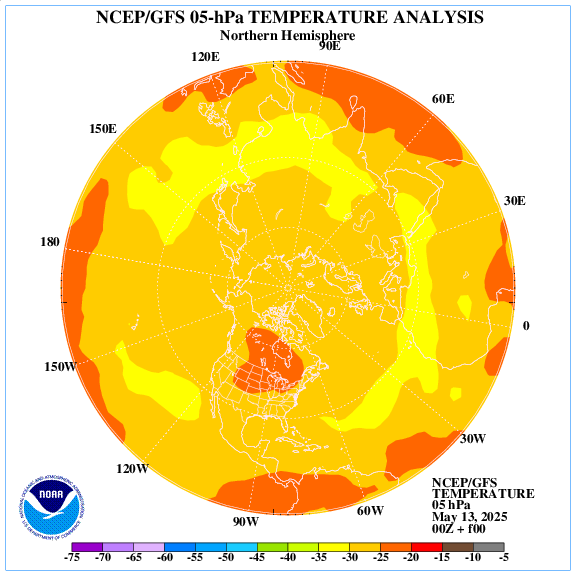
Gary Pearse
The observed magnetic field is highly asymmetrical.
Lines of inclination are highly elliptical, with the North Magnetic Pole situated near one end of the ellipse.
The strength of the magnetic field is no longer a maximum at the North Magnetic Pole. In fact, there are now two maxima, one over central Canada, the other over Siberia.
Magnetic meridians do not converge radially on the North Magnetic Pole.
https://www.geomag.nrcan.gc.ca/mag_fld/arctics-en.php
The role of the geomagnetic field increases when the magnetic field of the solar wind weakens. Best regards. These are facts, not speculations.
Clyde Spencer
The ozone distribution is asymmetrical with respect to geographical poles precisely because of the shift of magnetic poles with respect to geographical poles.
I do not understand this.
When I look at a animation of the ozone depletion (AKA Ozone Hole) this is “wobbeling” araound over the years. the gemagnetic Pole is drifting slowly.
Isn’t it that polar weather has a much greater importance for the shape and size than the magnetic pole-drift?
MFKBoulder
I agree with you that weather, and proximity of the anomalously high ozone, are of greater importance than any diamagnetic repulsion. The magnetic effects, if present, should be in the direction of the converging lines of force, not at right angles. That is, the ozone should be pushed to higher altitudes, not parallel to the Earth’s surface. Besides that, the diamagnetic force is very much weaker than what we are accustomed to with ferromagnetic effects.
Ozone is pushed to lower heights towards the pole.
http://ds.data.jma.go.jp/tcc/tcc/products/clisys/STRAT/gif/zt_nh.gif
Ozone is pushed to lower heights towards the pole.
http://ds.data.jma.go.jp/tcc/tcc/products/clisys/STRAT/gif/zu_nh.gif
Currently, the amount of ozone is falling above the 60th parallel.
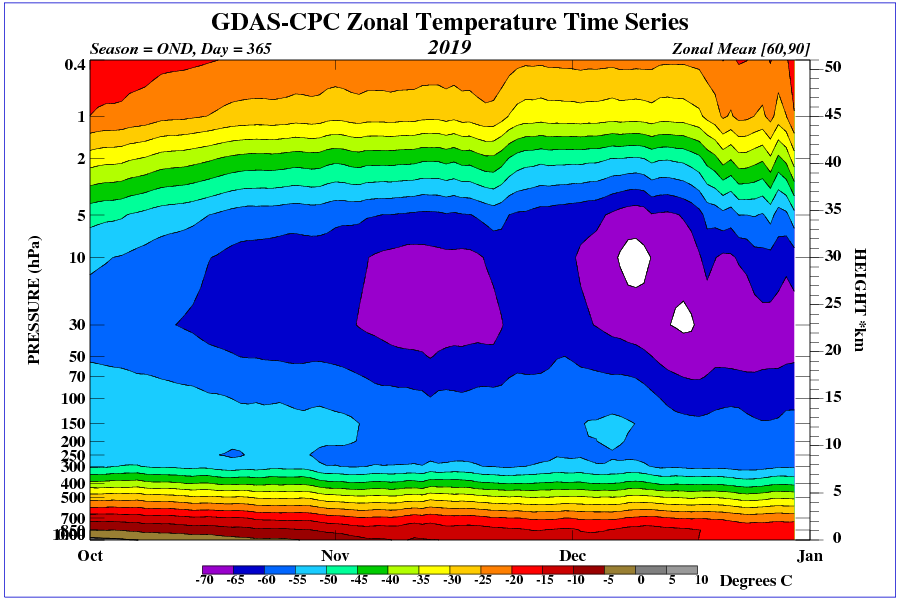
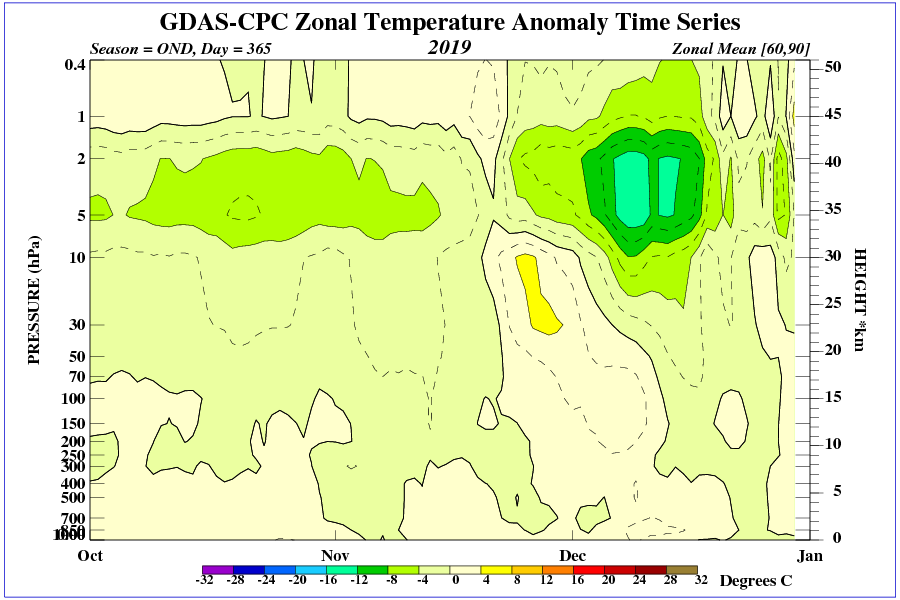
Will there be strong SSW over the northern polar circle in January 2020? I say yes because of the very low solar activity.
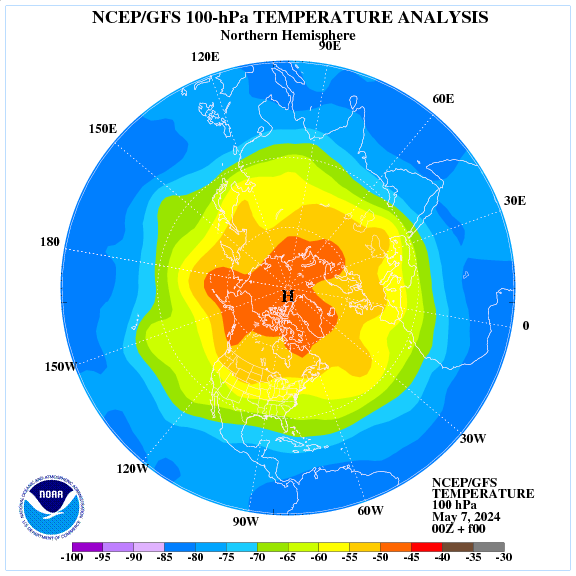
It is worth noting where ozone accumulates in the north and how it affects the temperature in North America.
Does ozone react to magnetic fields? Ozone as a diamagnetic is repelled by a strong magnetic field.
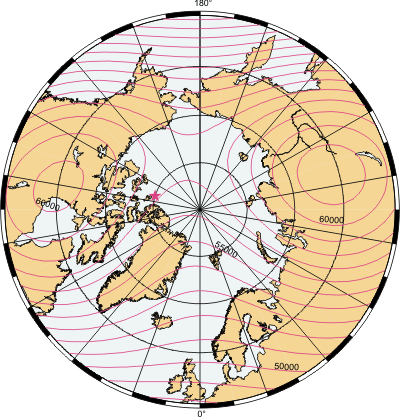
“Ozone is diamagnetic, which means that its electrons are all paired. … Ozone is a polar molecule with a dipole moment of 0.53D Ozone is a diamagnetic which means that its electrons are all paired in contrast O2 is paramagnetic containing two unpaired electrons.”
“The record-small ozone hole was a result of warm weather; however, NASA scientists noted the hole is, in fact, slowly shrinking in size — a result of the 1987 Montreal Protocol, which phased out chlorofluorocarbons across the world.”
Not so fast. The ozone hole is shrinking but it looks like some countries are not complying with the ban. Now what? How does NASA explain this?
Scientists discover China has been secretly emitting banned ozone-depleting gas
http://nationalpost.com/wcm/d09d5e0d-3b73-48ec-b4cc-b230b37d5720 via @nationalpost. May 22, 2019
http://bit.ly/2mtubEO
Scientists found that between 40 and 60 per cent of the total global CFC-11 emissions originated from eastern China…
No one mentioned that the atmosphere is half as thick over the poles as it is over the equator. Add to that the fact that the average height above sea level on Antarctica is about 3600m. The thickness of the ice, only, averages 2011m. There is very little air above the ice to begin with. Plus a lot of it is in shadow to a low sun because it is behind the unbelievably high dome.
Full ozone is said to be 500 parts per TRILLION and a “hole” if it is less than 150 parts per trillion. They only ever show the view from Antarctica, leaving out that most of the rest of the world is light blue signifying about 300 ppt, especially the Atlantic.
CFCs were found to react with ozone under unspecified laboratory conditions and that was what started the question. Then the hole was said to appear spontaneously when the first rays of sun struck supercooled air above the South Pole after the long dark winter. That’s why the North doesn’t get a hole because it never gets cold enough.
If you look at the Antarctic sea ice extent, as a scale of how cold it is down there every year, you’ll see it increased every year since the satellite readings started, up until the last few years, 2016 being the least ice extent. The size of the hole basically follows the sea ice extent. But it also depends on the conditions on the day the first sun hits it.
CFCs need not even come into it. It is just something that happens because of the light hitting the super cold air, and it has extremely likely been happening since time immemorial.
Does anybody know what the laboratory experiment with CFCs and ozone involved, and can those conditions occur naturally?
Full ozone is said to be 500 parts per TRILLION and a “hole” if it is less than 150 parts per trillion.
Where did you get this from, concentration in the antarctic stratosphere peaks around 1ppm.
The ozone distribution shows circulation in the lower stratosphere and an attack of frosty air in the south of the US.

The geomagnetic field is strong over Europe, weakening over North and South America.
https://www.esa.int/ESA_Multimedia/Images/2014/06/Magnetic_field_changes
These are the temperature anomalies in North America.

What would orbital mechanics do to polar ozone? Since ozone is transported via circulation to the poles from equatorial areas, solar incidence via orbital mechanics along with cloud production could cause long term swings in the amount of ozone produced, thus the degree of the hole.