
Guest essay by Eric Worrall
h/t Grant Griffiths – Sweden was a zero carbon nuclear energy leader, but nowadays reliable zero carbon nuclear is the wrong kind of zero carbon electricity.
Sweden’s Lack of Electricity Capacity Is Threatening Growth
A shift toward renewables is overwhelming the nation’s grid, leaving a potential Olympic Games in 2026 relying on reserve generators.
By Jesper Starn
3 May 2019, 14:00 GMT+10Global trade wars and weakening export markets are not the only potential dampers on Sweden’s growth. There’s also a homegrown problem: a lack of power capacity.
The dire situation stems from the closing of the nation’s oldest reactors and a shift to wind at a time when the grid is already struggling to keep up with demand in major cities. The shortage, which impacts the nation’s main urban areas, is threatening everything from the rollout of a 5G network in the capital to investments in giant data halls and new subway lines. It could even derail Stockholm’s bid for the 2026 Winter Olympics.
It’s a stark change from the decades of cheap, surplus electricity that propelled the Nordic region’s biggest economy into one of the richest and most industrialized nations in the world. Now, electricity supplies in urban areas can’t keep up and that could exacerbate a slowdown already impacted by global uncertainty and Brexit.“Citizens and companies are worried, irritated and even angry,” said Jonas Kamleh, a strategist for the City of Malmo, the nation’s third biggest. “How could this situation arise in the engineering nation of Sweden?”
The answer is a very ambitious green agenda. Sweden is halfway through a plan to replace the output from four reactors in the industrial south with thousands of wind turbines in the north. But grid connections, some dating back to the 1950s, aren’t up to scratch so the power isn’t shipped to where it’s really needed. And to make matters worse, city demand is surging at a faster-than-expected pace because of the electrification of everything from transport to heating.
…
What a surprise – trying to electrify transport adds an intolerable surge of demand to a grid which is already struggling because of the idiotic attempt to switch from zero carbon nuclear power to green energy, by building turbines in the far North of an Arctic nation which experiences brutal snow storms.
This is the UN’s agenda for the world. Kill all economies for their elite friends who believe we 9 to 5 ers are the maggots of the earth. Population control by killing the world economies is the goal.
And now, something (not) completely different…
Big Wind’s Dirty Little Secret: Toxic Lakes and Radioactive Waste
https://www.instituteforenergyresearch.org/renewable/wind/big-winds-dirty-little-secret-rare-earth-minerals/
+10
Must be read by those who want to replace nuc by wind farms.
That article is from 2013, so one may assume is is even worse today 6 years later.
there are many WECs that do not use rare earth magnets.
For example:
ENERCON WECs produce clean energy without neodymium 29.04. 2011
ENERCON wind energy converters (WECs) generate electricity in an environmentally friendly way without the use of the controversial element, neodymium. The gearless WEC design on which all WEC types – from the E-33/330 kW to the E-126/7.5 MW – are based includes a separately excited annular generator. The magnetic fields required by the generator to produce electricity are created electrically. By design, and unlike the majority of competing products, ENERCON WECs do without permanent magnets whose production requires neodymium.
So they have to use some of the electricity they generate to power the magnets. Sounds wonderful. NOT.
This is correct. But of course this is also true of thermal generators!
However also remember that when a WEC is recycled the magnets will still be ther ready for remanufacture
Electromagnets increase the auxiliary load on the generator, thereby decreasing net output. They also add considerable weight to the unit. Neodymium is much lighter than copper windings or natural magnets. Electromagnets are prone to corrosion shorting the windings, where neodymium lasts indefinitely (not that it much matters in a wind generator). At least the output stays steady until the lube system eventually takes it out.
pop paisa
weight is reduced because no gears are used between blades and generator
As a rock & roll bassist in my 60’s, I crave neodymium speakers, They are featherweight in comparison to conventional magnets, and not being a star, I have to carry my own equipment.
I wonder though, how many green savvy musicians actually know that radioactive waste was produced for us to save our backs?
My three irrigation water storage tanks are from the local airport and originally contained de-icer for commercial airplanes. I had to go out to see what is used for deicing – propylene Glycol. Wikipedia gives the manufacturing process and the source material is a byproduct of oil and natural gas production. So, I have to ask how green is that?
Take care it doesn’t end up in the wine.
Propylene glycol is non-toxic. It has even been used as a food additive. Ethylene glycol is (moderately) toxic.
I happen to know since I was involved in shifting aircraft de-icing fluids from ethylene to propylene glycol back in the seventies, though this was more due to environmental concerns than direct toxicity.
Thanks for the article Eric Worrall.
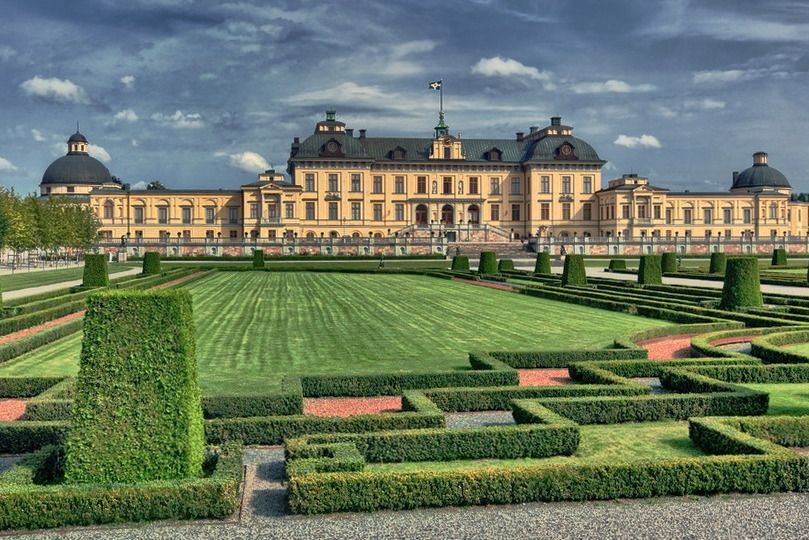
Swedish CO₂ ambition feel-good went royal around 2017.
At the Royal Palace in Stockholm, the king was given 600 solar panels to be install on his Majesty’s ~600 room palace. The 600 panels are expected to supply 10% of palace’s consumption.
Yes, great. So if the palace should have been 100% supplied by PV, then they should have had ~6000 PVs or maybe treble that combined with lots of battery storage Ni-Fe, Li-Ion, liquid metal or whatever useless.
His Majesty King Carl XVI Gustaf is very pro the thought of Sweden becoming 100% renewable by 2040, and he is hereby doing his best to help achieve this goal.
I am baffled by this. Sweden get less than 1% of it’s electricity from solar. Hey, we are not too far from the North Pole, the Sun is not really so supportive up here, in Canada, or Siberia.
Sweden used to be the perfect country with respect to not providing plant food (CO₂) from electricity production. It used to be very cheap too, consisting of solely hydro and nuclear. One would have thought this would be to the Greta and her fellow CAGW bed wetters 100% satisfaction.
Glad I have my 8kW diesel generator, just need to find something different from diesel to fill in the tank, something they have not put 200% tax on.
In the north of Sweden they will be very happy when the winter day comes and the car-heating plugged in every car is out of function because of power shortage 😀
Actually no. Most hydro power is up north. It is southern Sweden, including Stockholm that is in trouble. Nuclear power is in the south and the high-tension network was built based on this.
As the nukes go out of service and an increasing proportion of the power comes from wind power, the loads on the main lines from the North has increased and at the same times become more and more unpredictable since it is not known in advance where wind power is being produced.
This was foreseen, but building new transmission lines has been held up by NIMBYism and lawfare. Problems are exacerbated by uncontained moslem immigration to the major cities.
It may be of interest to tell what has suddenly made this problem acute. Almost all Swedish cities use area heating. This heating is produced by plants which produce both hot water and electricity, which gives a very high efficiency (up to 90%). This power production is tightly coupled to hot-water production, but this is no real problem as this is also closely tied to the consumption of electricity (both essentially depend on temperature).
Most such plants now burn biomass or garbage (much of it imported), but a few still burn coal, particularly one large plant in Stockholm (Värtaverket). In April the red-green government announced drastic tax raises for electricity from such plants starting August 1.
To avoid drastic rate raises for heating Stockholm Energy has decided to stop producing electrical power from Värtaverket and partially close it down, which will mean a shortfall of 0.5 GWh next winter in the Stockholm area. This will turn the transmission capacity problem from tight to critical.
https://nyheteridag.se/elbrist-och-50-000-ton-extra-koldioxid-resultatet-av-rodgrona-regeringens-skattehojningar/
An other way heating at least small areas is to use the cooling engines liquefier or condenser to heat the parking areas instead to put them as usual on the roof.
At least, the parkings stay snow and icefree
Any country straddling only one time zone will have massive peaks and troughs as industry is replaced by domestic use nationwide. In the UK this is of the order of 10GW peak to trough (on a maximum use of 40GW).
The power generators and grid has to be capable of dealing with this on a daily basis.
[ Nuclear will not be capable using current technology. See the French grid were nuclear is king. The nuclear output will track seasonal but not hourly changes, Some of the peak load is made up from Germany. ]
The wind can be predicted at least a few hours in advance and shortfalls relatively simply made up as is done in the daily cycle.
In the UK the peak wind is about 12GW and minimum about a few hundred MW.
“The wind can be predicted at least a few hours in advance and shortfalls relatively simply made up as is done in the daily cycle”
Yes, provided you have plenty of gas turbines or hydro power, preferably hydro. And unless there is a sudden problem, like in South Australia, when the lack of inertia in wind power won’t give you time to start peakers. Also you better have a lot of fuel for the gas turbines / well filled reservoirs for when there is a stationary high pressure in winter and wind goes offline for a prolonged period.
The Nordic grid data is available in several places, here for example.
https://driftsdata.statnett.no/Web/Map/?language=en
There are 4 Nordic plus 3 Baltic nations conected, plus connections to the EU. Amongst the nafions connect are Denmark with lots of wind turbines and Norway with lots of hydro
There are real engineering limits to how much CO2 emissions wind and sun can achieve.
Germany has reached that point. Where installing more wind and sun gathering stuff does not reduce total German CO2 emissions.
http://www.cfact.org/2014/12/16/germanys-energy-transformation-unsustainable-subsidies-and-an-unstable-system/
Quoting myself again (so you don’t have to!) One of my man rants.
The Olympic games are just big fossil-fuel use extravaganzas. Hypocrisy galore.
It might be wise to build a gas turbine plant of sufficient size to power the entire Olympic venue and use it afterwards to supply additional power as (will very likely be) needed.
Sweden. The country that committed suicide.
“How could this situation arise in the engineering nation of Sweden?”
Because many Engineers, like many Scientists, like many people, so and do whatever they need to do to keep pay cheques coming in. They know renewables are bullshit in the bigger picture but will work diligently to ensure their particular project is delivered on tim and on budget , so salaries and performance bonuses are collected. Does it all make sense?? someone elses problem.
Hey businesses in Sweden! Come to Texas! We have lots of energy here. We LIKE jobs, and factories, and making things. We have lots of room here. We welcome capitalism.
Sweden has problems. Norway has drilling fields in the Nordsjø [ North Sea ] :
https://www.google.com/search?q=norway+water+tunnel+shipsenterfjord&oq=norway+water+tunnel+shipsenterfjord&aqs=chrome.
building turbines in the far North of an Arctic nation which experiences brutal snow storms. –> Swedish heavy rescue :