
Guest essay by Eric Worrall
Guardian author Nicola Davis is alarmed that adding CO2 to rice reduces the vitamins, minerals and protein – in some varieties of rice.
Climate change ‘will make rice less nutritious’
Nicola Davis
Thu 24 May 2018 04.00 AEST
When scientists exposed the crop to higher levels of carbon dioxide vitamin levels fell significantly
Rice will become less nutritious as carbon dioxide levels in the atmosphere rise, potentially jeopardising the health of the billions of people who rely on the crop as their main source of food, new research suggests.
Scientists have found that exposing rice to the levels of carbon dioxide that are expected in the atmosphere before the end of the century results in the grain containing lower levels of protein, iron and zinc, as well as reduced levels of a number of B vitamins.
“About two billion people rely on rice as a primary food source and among those that are the poorest, often the consumption of rice in terms of their daily calories is over 50%,” said Dr Lewis Ziska, a co-author of the research from the United States department of agriculture. “Anything that impacts rice in terms of its nutritional quality is going to have an impact.”
…
But with some of the varieties of rice apparently showing little change in levels of certain nutrients, the researchers say it might be possible to find or develop types of rice that will remain nutritious as the climate changes.
A drop in the nutritiousness of rice as a result of climate change could have profound health effects, particularly for those who rely most heavily on the crop, with the authors warning that it could affect early childhood development and worsen the impact of diseases including malaria.
…
Read more: https://www.theguardian.com/environment/2018/may/23/climate-change-will-make-rice-less-nutritious
The abstract of the study;
Carbon dioxide (CO2) levels this century will alter the protein, micronutrients, and vitamin content of rice grains with potential health consequences for the poorest rice-dependent countries
Chunwu Zhu, Kazuhiko Kobayashi, Irakli Loladze, Jianguo Zhu, Qian Jiang, Xi Xu, Gang Liu, Saman Seneweera, Kristie L. Ebi, Adam Drewnowski, Naomi K. Fukagawa and Lewis H. Ziska
Declines of protein and minerals essential for humans, including iron and zinc, have been reported for crops in response to rising atmospheric carbon dioxide concentration, [CO2]. For the current century, estimates of the potential human health impact of these declines range from 138 million to 1.4 billion, depending on the nutrient. However, changes in plant-based vitamin content in response to [CO2] have not been elucidated. Inclusion of vitamin information would substantially improve estimates of health risks. Among crop species, rice is the primary food source for more than 2 billion people. We used multiyear, multilocation in situ FACE (free-air CO2 enrichment) experiments for 18 genetically diverse rice lines, including Japonica, Indica, and hybrids currently grown throughout Asia. We report for the first time the integrated nutritional impact of those changes (protein, micronutrients, and vitamins) for the 10 countries that consume the most rice as part of their daily caloric supply. Whereas our results confirm the declines in protein, iron, and zinc, we also find consistent declines in vitamins B1, B2, B5, and B9 and, conversely, an increase in vitamin E. A strong correlation between the impacts of elevated [CO2] on vitamin content based on the molecular fraction of nitrogen within the vitamin was observed. Finally, potential health risks associated with anticipated CO2-induced deficits of protein, minerals, and vitamins in rice were correlated to the lowest overall gross domestic product per capita for the highest rice-consuming countries, suggesting potential consequences for a global population of approximately 600 million.
Read more: http://advances.sciencemag.org/content/4/5/eaaq1012
The “CO2 makes food less nutritious” narrative is my favourite climate absurdity.
To be fair to the researchers they appear to have conducted their research outdoors, keeping other factors as natural as possible.
But the fact some rice varieties don’t experience significantly reduced nutrient levels, even without selective breeding or genetic manipulation, completely undermines assertions that this issue presents any risk to human health. Delving into the research paper, some varieties even exhibited increased levels of key nutrients.
As the GM golden rice effort demonstrates, rice can and has been manipulated to enhance nutrient levels – in the case of golden rice, the rice was genetically modified to enhance vitamin beta-carotene / vitamin A levels. Shortage of vitamin A is a major cause of blindness in poor countries.
We have an entire century of genetic superscience to solve any issues with nutrient content. The creation of Golden Rice demonstrates we already have the technology to enhance individual nutrients. In 100 years we’ll probably have the technology to produce varieties of rice which sing sweet lullabies in the evening. Even if this slight reduction in nutrient content is an issue, it is an issue which will be well and truly solved long before it has any opportunity to cause harm to human health.
“estimates of the potential human health impact of these declines range from 138 million to 1.4 billion, ”
and then goes on to say that no one has actually looked, it was just hysterical screaming
“However, changes in plant-based vitamin content in response to [CO2] have not been elucidated”
rice is a bred cultivated plant anyway……like Eric says, just grow a different one
The flawed assumption in this article is that it pre-supposes that the activists care one scintilla about science. They don’t . It’s an economic issue and no amount of science will change their minds. The point is to push the climate change agenda and facts don’t matter.
Same as the NDP in British Columbia. Their goal isn’t to save the environment or stop pollution, it’s to scare investors into backing away from any and all energy projects. But at the same time they have the unmitigated gall to want Alberta to keep shipping them gasoline.
Logic and science are irrelevant, so there is no need to discuss them.
…Logic and science are irrelevant, so there is no need to discuss them…
Correct because most of them don’t know any science, and think of logic as a cruel hoax invented to screw up their narratives.
Fortunately for ALL concerned, the afore mentioned B Vitamin group (B1, B2, B5, & B9) most affected are available in a wonderful supplement called B Complex so Any Future Loss in rice can already be compensated for today.
B Vitamin group
==========
firstly, the experiment was fundamentally flawed, because the increase in CO2 was instantaneous, while the true increase is gradual over a period of decades. This flaw discounts the effects of evolution and hybridization.
secondly, the experiment ignores the ingenuity of humans, which routinely takes adversity and turns it into a benefit. Oriental culture, the concept of yin and yang, as well as buddhist teaching tells us there is no such thing as good without bad, or bad without good. Christianity as well recognizes that there cannot be light without darkness.
thirdly, adding CO2 increases yields, making more rice available. So total vitamin content can increase even if percentage/weight is reduced. Worrying about vitamins per grain of rice isn’t really a problem if there isn’t enough rice to go around.
lastly, if you want vitamin B, ferment the rice and produce sake. The yeast left in the vat it high in vitamin B, and the sake will help with the anxiety over vitamins.
So if we decrease the CO2 the rice will be more nutricious?
Yes, but ultimately disappear with enough decrease….
I get a kick out of it. Expose an already picked crop to CO2 and say that natural occurrences will reduce the nutrition in the rice. That will not happen if the crop is indeed growing naturally.
It’s all relative. If the yield of carbohydrates increases, then per unit weight the other constituents decrease. In absolute terms the production of protein and or vitamins per plant may have remained the same, and I bet it did. Just an elaborate way to present us with a ficticious ‘problem’.
“It’s all relative. If the yield of carbohydrates increases, then per unit weight the other constituents decrease. In absolute terms the production of protein and or vitamins per plant may have remained the same, and I bet it did. Just an elaborate way to present us with a fictitious ‘problem’.”
I always try to read through the comments before making my own. You said close to what I was going to say. Thank you.
It’s potentially worse than that if say the weight doubled but the vitamins only increased by say 1.8X. In reality for that case the vitamins went up too but just not quite as much. Alarmists can then claim a reduction of “vitamins per servings” while ignoring that there are double the number of servings.
The ultimate reply to them though is – who are you to say what the “correct” balance is supposed to be in the first place? They do exactly the same thing with temperature basically declaring that the current one is the “best” one.
they also failed to mention exactly WHAT level co2 they gassed em with
expected levels was all they mentioned
lotta leeway for fluffing figures in that.
The fact is that almost all the nutrients are thrown away when it is turned into white rice. The same with wheat too. So it is utterly irrelevant how much the ratio of carb to protein increases.
Shosin,
It seems to me that you make a pretty big assumption in your statement that, “The flawed assumption in this article is that it pre-supposes that the activists care one scintilla about science. They don’t . It’s an economic issue and no amount of science will change their minds. The point is to push the climate change agenda and facts don’t matter.”
There is nothing I can see in this article about any activists – so where is the assumption? I suppose you could be referring to Eric’s comments – in which case you might be right.
The Guardian.
Comic…….as ever.
Are these the same people who support the EU’s and Greenpiece’s opposition to golden rice. Ah but consistency was never the object.
Malcolm
They’re consistent in one thing, their greed for money and a comfortable life for themselves, at the expense of developing countries.
They don’t care that between 120,000,000 (WHO estimate) and 200,000,000 (GWPF estimate) people in developing countries will die prematurely by 2050 (only 32 years away now) from conditions contracted by inhaling smoke from burning wood and dung for cooking and heating.
So much for the greens humanitarian claims.
HotScot:
“They’re consistent in one thing, their greed for money and a comfortable life for themselves, at the expense of developing countries.”
I imagine many “warmists” would say the same thing about “skeptics.”
“They don’t care that between 120,000,000 (WHO estimate) and 200,000,000 (GWPF estimate) people in developing countries will die prematurely by 2050 ”
Warmists might respond, “Skeptics want to trade indoor air pollution for the increased ambient air pollution that is likely to result from a push toward fossil fuels as the only energy source worth considering. Through their fight against any mechanism of decreasing CO2 emissions, they are showing their disregard for the health and well-being of those who can least afford actions to respond to climate change…and do so because they refuse to make any sacrifice whatever of their own.” Interesting that both “sides” think the other is selfish and greedy.
I’ve come to see things differently, and would not now say the above, being aware of the roots and rationale of skepticism, and of skeptics’ understanding of the role of fossil fuel-based development in bringing better lives to the developing world.
I think there is value to this idea. Nevertheless, I think it has challenges of its own. For example, development takes resources (esp. capital and expertise) – who will provide them? When and how will it happen, how long will it take, and who decides its nature? Are economic and political instability taken into account? Is it any more ethical to push the typical Western fossil fuel-based developmental paradigm on a sovereign nation than to push for “sustainable development”? Are skeptics assuming an affordable grid-capacity energy storage system is not viable, or won’t be commercially available within the next several years, or does this simply not matter? Are they taking into account that some countries will always have to import FF, and that prices and availability in the future are unknown? What about those villages who have benefited from solar or wind long before they are likely to be connected to the grid – are they taking the wrong path? Do skeptics take into account the health impacts of ambient air pollution that often accompany high fossil fuel use in urban areas?
What kind of message do you think is sent by America’s refusal to participate in the Paris agreement? Is it one of caring about the welfare of other less fortunate nations?
Saying anyone simply “doesn’t care” about the lives of others is a pretty bold accusation. You may believe that there won’t be net negative long-term impacts of climate change for people in developing countries, but that doesn’t mean others don’t care just because they don’t agree.
Do you suppose it is only conservative/skeptic philanthropists who fund research into more efficient, low-emission stoves, or pay for their production and distribution?
It’s far easier to think poorly of others than to understand them – something I know from experience! I want to take a harder path, even though I stumble along the way.
(General note to all: before you start insulting me, consider that I have not clarified my position toward development, and that I’m not always speaking for myself here. I hope to be able to converse civilly.)
That is the culprit right here. High caliber researchers are capable of break-through discoveries or inventions, like golden rice. The lesser ones are complaining about climate change.
Digging down a little deeper than panic mode, it makes complete sense that, with more CO2, plants can make more material from CO2 and water, using less nutrients and even less water. You end up with more calories relative to nutrients, so just eat more rice. Duh.
How about giving the people more rice, makes sense to me because, with increased CO2, the yields will go up, and thus, giving people the appropriate nutrition means giving them more rice. Wow, that was hard to solve, not!
higley7
Absolutely my thoughts when reading the article.
higley7
If only life were as simple as you make it!
“…just eat more rice. Duh.” It’s this a little like saying, White flour has few nutrients, so people should eat more of it? Your idea might work if people had as much rice as they wanted, and if eating more rice were a good nutritional alternative overall, and if it weren’t for the fact that other research has shown “Increases in rice yield at elevated [CO2] were constrained by limited N supply. The detrimental effect of rising temperature on spikelet fertility and harvest index were not be fully counteracted by elevated [CO2] effects. Together, the results of this meta-analysis suggest that rising [CO2] and warming accompanied by low N supply are unlikely to stimulate rice production, especially with the current trajectory of emissions scenarios.” (https://link.springer.com/article/10.1007/s10584-015-1374-6)
Turns out that N is a common limitation to CO2 response in many plant taxa, and changes in N content is seen in many taxa in response to increased CO2 (N is necessary for protein synthesis; changes could have far-reaching ecosystem effects). Some farmers can just buy fertilizer. Others can’t.
1. I wonder if there is a correlation between people who worry about the decline in nutritional quality of rice and those who would object to consuming genetically-modified varieties that can more-than-compensate for nutritional deficiencies (e.g., golden rice) .
2. One of the farmer’s job is to improve traits of their crops. I figure they have 50-100 years to fix this problem.
It seems that with Grants seeking a specific outcome, any study can find fault or negative with just about anything.
I would really like to know actual percentage reduction of each nutrient.
Most of the nutrition (including fiber, vitamins, and minerals) is absent from white rice by removing the husk, bran, and germ of brown rice
It is very cheap to fortify white rice and is often done.
White rice is really just treated as a source of energy to which other high nutrient foods are added for a healthy diet.
…like adding black beans and Tabasco
Yes, I don’t think anyone eats a white rice only meal..
I do almost…I add condensed Tomato Soup
Sometimes just a little butter.
This “study” is hogwash. It is weeping and wailing and gnashing of teeth over nothing.
Red beans and brown rice make a complete protein, however crude it may be. Use red beans canned in chili sauce (tomatoes!) and add some chorizo sausage for flavor, plus smoked sausage for texture and beef broth for the liquid required to cook the rice.
I don’t think I’ve read anything that is as bluntly void of nutritional information as that so-called study, WRT what I did read of it. It is hogwash and another hand-out-fill-my-purse money grab.
One problem with your otherwise very sensible solution is in your additional nutrients. Beef broth is not acceptable to Hindus and Sikhs while sausage, because it is made from pork, is not acceptable to Moslems. That is 2/3rds of the peoples affected by chronic malnutrition. Much of these peoples dietry needs are forbidden to them.
Jeff, Many people in the Philippines are lucky to get one bowl of rice per day. The rate of childhood blindness is high. Adults develop other problems form lack of vitamin A. Most people in the US have no idea what poverty is. Greenpeace has been doing its best to keep golden rice out of the country.
Richard of NZ – that’s my recipe for red beans and rice. It’s a filling, very nutritious dish that needs only cut veggies on the side as a complement.
While I did not mean to slight the Hindu or Sikhs, the same dish can be made without any meat at all, by using vegetable broth in place of beef broth, and no sausage is required at all. My bad that I did not mention this. The chili sauce is strictly canned tomatoes with chili seasonings, no meat involved. Muslims can use beef or chicken sausage.
The sausage I use is made of beef, because pork does not agree with me. There is always a solution.
The real issue is that the study is baloney, written up by people on a money-grab, not much else.
Without a single shred of quantitative data, on what % change of these nutrients were measured, given in the abstract, it’s a safe bet that this is merely activist pseudoscience.
Previous studies on the same subject have indicated a loss of about six to seven percent.
RWTurner,
Abstracts often don’t go into numbers. That doesn’t make it pseudoscience. If you want to know numbers, read the article. It’s open-access.
Jeff,
“I would really like to know actual percentage reduction of each nutrient.”
You could always read the article.
Here’s a start:
“When grown under field conditions at these anticipated [CO2] a significant reduction (an average of −10.3%) in protein relative to current [CO2] was observed for all rice cultivars “
Kristi,
There is no loss of protein. The percentage goes down because the CO2-richer atmosphere permits so much more sugar to be produced, with less water loss.
I do wonder what the yield improvement was for the high CO2 fields, and if it was a matter of lack of soil nutrients causing the decline in quality of the rice.
I wonder whether the change in nutrient was measured relative to dry mass of the rice or if the rices had different moisture content or variable fibre content. Good healthy rice may have more fibre or moisture and appear to have less nutrition per gram. It is better to determine nutrient ratio to dietary caloric content.
And if they really wanted to conduct a scientific study, they would determine the bioavailability of these nutrients from CO2 enriched rice vs rice grown in today’s atmosphere.
Exactly, could it be anything else? Doubtful. Bigger plants would require more water, fertilizer and soil nutrients.
Scientists exposed the crop to CO2, and the yield grew a lot. How do you spin it?
“When scientists exposed the crop to higher levels of carbon dioxide vitamin levels fell significantly.”
No further questions, Your Honor!
In methods, they tell they assessed the yield. in results, they don’t report it. I wonder why.
Another thing is they reported the fertilized to “maximize yield”. How did they know they actually used the optimum, given tubes had different CO2?
I’d say the report looks very suspicious.
*they* fertilized
I’m curious what the effect of CO2 enrichment on rice yield was. Paper seems to mostly concentrate on nutrient content. Would expect an increase in yield with increasing CO2.
Or what Tom said…
That goes along with my line of thought. Just how MUCH are the nutrient values decreased (if statistically significant at all) and are other varieties normally available which contain MORE of the ‘lost nutrients’ and thus make up the difference?
I’m starting to get an idea of what all these dumb claims are for…if the climate begins or continues to cool they can STILL demonize CO2, not for warming but for all the bad other things they claim it can do. Where is the study that shows that adding CO2 increases crop yields, and that in greenhouses, they pump CO2 up to around 1000 ppm to increase yields, quickly. Oh, yes, not alarming…
“But increases in the CO2 concentration up to 700 ppm led to the average yield increases of about 30.73%
by ORYZA1 and 56.37% by INFOCROP rice”
https://s3.amazonaws.com/academia.edu.documents/38387551/2007_P_Krishnan_AEE.pdf?AWSAccessKeyId=AKIAIWOWYYGZ2Y53UL3A&Expires=1527123982&Signature=%2FitwLNCI1FzoInPT0NvkRlwewV8%3D&response-content-disposition=inline%3B%20filename%3DImpact_of_elevated_CO2_and_temperature_o.pdf
Latitude,
I don’t have access. How did they estimate the amount of change in yield with rising CO2?
This is a computer model based on climate in a variety of areas in eastern India.
Just as one would expect, increased plant food in the air increases yield of rice, a C3 plant:
Growth and yield responses of rice to carbon dioxide concentration
https://www.cambridge.org/core/journals/journal-of-agricultural-science/article/growth-and-yield-responses-of-rice-to-carbon-dioxide-concentration/4B4E18C5E11B266FAA9DDBA3C386551F
Rice plants (Oryza saliva L., cv. IR30) were grown in paddy culture in outdoor, naturally sunlit, controlled-environment, plant growth chambers at Gainesville, Florida, USA, in 1987. The rice plants were exposed throughout the season to subambient (160 and 250), ambient (330) or superambient (500, 660, 900 μmol CO2/mol air) CO2 concentrations. Total shoot biomass, root biomass, tillering, and final grain yield increased with increasing CO2 concentration, thegreatest increase occurring between the 160 and 500 μmol CO2/mol air treatments. Early in the growing season, root:shoot biomass ratio increased with increasing CO2 concentration; although the ratio decreased during the growing season, net assimilation rate increased with increasingCO2 concentration and decreased during the growing season. Differences in biomass and lamina area among CO2 treatments were largely due to corresponding differences in tillering response. The number of panicles/plant was almost entirely responsible for differences in final grain yield among CO2 treatments. Doubling the CO2 concentration from 330 to 660 μmol CO2/mol air resulted in a 32 % increase in grain yield. These results suggest that important changes in the growth and yield of rice may be expected in the future as the CO2 concentration of the earth’s atmosphere continues to rise.
A study from last year:
https://principia-scientific.org/higher-co2-levels-boosting-yields-for-both-rice-and-maize/
John, greenhouses pump 1000pm in the air and soil in greenouses is not depleted. Open farms are very different. This was answered on quora: https://www.quora.com/Is-Irakli-Loladze-right-that-rising-CO2-levels-are-affecting-the-nutritional-value-of-plants
This Guardian story seems to follow up on a fascinating story in Politico, the Great Nutrient Collapse, that showed how challenging it was to do research:
https://www.politico.com/agenda/story/2017/09/13/food-nutrients-carbon-dioxide-000511
I found a list of problems global warming is supposedly going to/is causing. Don’t think this one is on it but it only has 100 on the list. There must be many more to worry about.
https://www.dailysignal.com/2009/11/17/global-warming-ate-my-homework-100-things-blamed-on-global-warming/
Here it is.
This author has given up on counting.
http://www.numberwatch.co.uk/warmlist.htm
We can safely say “Climate Change” causes any and all calamities available, may be excluding Solar eruptions.
What alarmists seem incapable of grasping is that, since rice is a C3 plant, more CO2 in the air improves its yield dramatically and reduces its water need.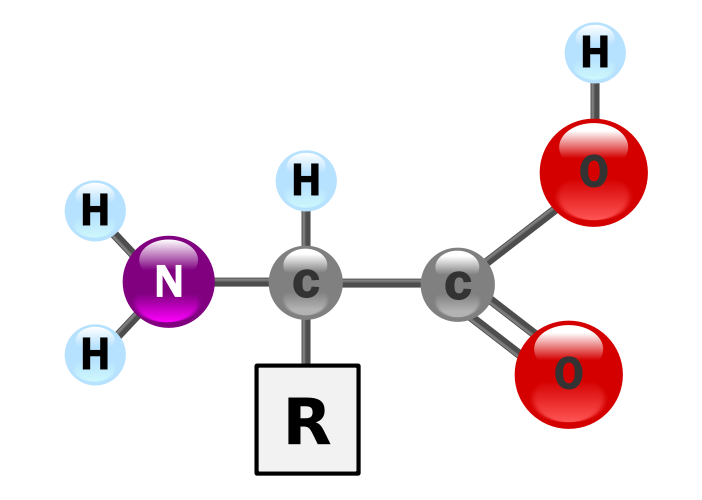
The “less protein” canard arises because more CO2 means that plants can make more carbohydrate, ie sugars. If more nitrogen isn’t provided, then the percentage of protein will fall, not because there is less protein, but because there is more carbohydrate. If more N become available, then higher CO2 allows more protein to be formed as well.
Proteins are made out of amino acids, which, as their name indicates, are organic compounds containing amine (-NH2) and carboxyl (-COOH) functional groups, plus a side chain (R group) specific to each:
Same goes with the B vitamins, which also contain nitrogen. Rice doesn’t make fewer vitamins under increased CO2. It makes the same amount, but produces more carbohydrates, hence the share of vitamins declines relative to the increased total nutritional value of the crop. Vitamins E and K should be helped by having access to more carbon.
That’s just what I suspected. The non-carbohydrate nutrients decrease by volume if growing time is decreased or volume is increased for same amount of time. Maybe feeding the plant more of those materials would help.
Supplemental B Complex negates the issue
100%…thanks Felix
Felix,
Thanks for that clear explanation. I was surmising that some other nutrient(s) must be limiting the protein and vitamin production. You ‘filled in the blank’ for me!
Thanks felix for that clear explanation. Other previous studies did the same thing: plants grew larger but with lower vitamin concentrations as a % of mass.
https://rclutz.wordpress.com/2017/08/05/co2-destroys-food-nutrition-not/
Felix Thanks from me too.
So….farmers will supplement the increased CO2 with nitrates aka fertilizer, just as they have done….for centuries?
Felix,
“What alarmists seem incapable of grasping is that, since rice is a C3 plant, more CO2 in the air improves its yield dramatically and reduces its water need.”
Who do you mean by alarmists? It seems like most people who think about this at all know that CO2 fertilization exists. (However, I’d point out that even with increased water use efficiency, water availability can put constraints on yield.)
“The ‘less protein’ canard arises because more CO2 means that plants can make more carbohydrate, ie sugars. If more nitrogen isn’t provided, then the percentage of protein will fall, not because there is less protein, but because there is more carbohydrate. If more N become available, then higher CO2 allows more protein to be formed as well.”
How is this a “canard”? The physiology behind it doesn’t matter if a given quantity of rice will have lower protein when grown at higher CO2 levels. The researchers fertilized to “maximize yield;” presumably they took into account that CO2 enrichment enhances growth and didn’t want N to be a limiting factor.
In other experiments, “Increases in rice yield at elevated [CO2] were constrained by limited N supply.” (https://link.springer.com/article/10.1007/s10584-015-1374-6)
So is there a point at which low soil N shows up in rice nutritional value without decreasing yields? This seems to be your argument.
But the real reason your argument doesn’t show this a “canard” is that many people can’t afford to buy a bunch of fertilizer to offset nutrient loss even if they knew about it, and given the dependence of some people on rice as a staple of their diet it could have health impacts.
Am I misunderstanding you? Or is my reasoning faulty?
Kristi,
You are misunderstanding me and elementary science.
There is no loss of protein. It stays the same, as long as N remains the same. What is gained is more carbohydrate. The fact that more CO2 in the air means more sugar in the rice is a good thing. Only the percentage of protein falls, without more N added.
Why is this hard to understand?
There is no downside to more plant food in the air. If you add more N, you also get more protein, ie amino acids.
It’s a canard because there is not less protein. Only the percentage goes down, thanks to higher yield of carbohydrate.
Felix,
Judging by your remarks, I understand you fine. Higher photosynthesis leads to higher carbs for the same amount of N (protein). I’m talking about the nutritional value of the rice: nutrients per unit carbohydrate, if you like. It’s not the answer to eat more rice to get the amount of nutrients one used to get in a normal serving. Some people get 70% of their carbs from rice because they can’t afford food with higher nutritional value, and (so goes the argument) the loss of nutritional value per unit of rice is not a good thing…especially if the same applies to other plant-based foods. One can have a full belly every day and still be malnourished.
Just adding more soil N is not always an option – and whether that would change nutritional value anyway has not been demonstrated. With greater water use efficiency there is less water uptake per unit biomass – but that also means it’s possible proportionally less N (and other nutrients) is being absorbed. That is, “If you add more N, you also get more protein, ie amino acids” isn’t necessarily true. There is no reason to believe N was limited in this experiment.
“As evidenced by over a hundred individual studies and several meta-analyses, projected increases in atmospheric [CO2] can result in an ionomic imbalance for most plant species whereby carbon increases disproportionally to soil-based nutrients (9–11). This imbalance, in turn, may have significant consequences for human nutrition (12, 13) including protein and micronutrients. ”
(Of course, looking at this from the perspective of whether this will be important 50 or 100 years from now is a whole nuther ball game, but that is not my point.)
You’re all very welcome. I’m glad my explanation was helpful to you.
I’m a fifth generation PNW wheat rancher, with relatives who are 7th generation. Not counting fellow soft white wheat farmer relatives from Oz, with thunder from down under. Not to mention chunder from too much barley mash.
I’ve noticed most of the ammunition that skeptics have used tend to be diminished or dismissed later on by ‘science’ studies.
Case in point was the melting ice cap on Mars. A ‘science’ study was later commissioned that ‘found’ out that the change in surface albedo was the reason.
It is amazing what the elites are going thru in order to push us into mega-cities and live a meager ‘sustainable’ life. I’m seeing the same thing kind of push happening with the unprecedented attacks on Trump (who I did not vote for) to get rid of him.
kramer,
It’s not so much the elites, but ideologues who use emotional arguments to sway others when the facts are not on their side. They can’t accept a truth that goes against what they want to believe, and this is the result. Often, this is concurrent with conflating two unrelated things for the purpose of transferring the emotional trigger.
For example, in the immigration debate, where the rights and privileges of legal immigrants are conflated with those of people who illegally circumvented the immigration process. Another is the gun control debate where the rights and privileges of legal gun owners are conflated with the criminally insane who may use them in the commission of a deadly crime. In both cases, the emotional arguments should be obvious.
Look at just about any polarizing issue and the side on the wrong end of the facts will use emotion, transference and psychological projection to sway public opinion. The way to tell which side is wrong is by noticing which side is using these kinds of tactics. Unfortunately, the public is easily swayed by fake news and fake facts, especially when the fakeness is supported by strong emotional arguments that presume the fakeness in the first place.
I think the WEF is an elitist group:
“From the pace of climate action to saving our oceans, world leaders had plenty to say about the environment during the World Economic Forum’s Annual Meeting 2018 in Davos.
Here’s a quick recap of some (but by no means all) of the key moments from this week’s sessions.
The greatest threat to civilization
As leader of the fastest growing major economy in the world – as well as the world’s largest democracy – Indian Prime Minister Narendra Modi started the week by telling the Davos audience that climate change is the greatest threat to civilization.”
https://www.weforum.org/agenda/2018/01/5-things-we-learned-about-the-environment-in-davos-2018/
My questions are:
Is this supposed reduction in nutrients caused by an increased amount of CO2 or by a limiting supply of other nutrients in the environment where the crop is grown?
If the yield can increase, then are enough other nutrients in the ground available to give the plant a chance to produce a proportionately greater quantity of nutrition, along with that yield, or does the size of the yield “dilute” the supply of growth nutrients that would support the greater amount of nutrients forming in the plant?
Is it just a matter of adding more nutrients to the soil?
https://wattsupwiththat.com/2018/05/23/guardian-co2-makes-rice-less-nutritious/#comment-2824816
Trials at Horsham’s Australian Grains Free Air CO2 Enrichment (AGFACE) program has in the past found with the wheat trials, increased yields can be accompanied by lower protein levels.
However, and not much attention is paid to this by the detractors, the lower protein when combined with the higher yields means that the amount of protein produced per planted area is actually greater.
This is nothing new, wheat protein levels can be higher in drier years when yields are lower, and lower in wet years when yields can be higher.
So is it better to eat less nutritious rice than none at all?
No, it is better to eat more of the rice (of which there is more available) and to get the same total amount of protein, vitamins and minerals with some extra carbs.
There is more protein and B vitamins in 1 egg (50 g) than in 3 times the same mass of rice.
CO2 will produce more rice, so if it’s less nutritious the simple answer is to eat the extra that was grown.
Or use the excess to grow Saccharomyces. Yeast is a very rich source of B group vitamins and a good source of protein. Any saki coincidentally produced is a bonus.
If you increase any one beneficial nutrient, then the others must necessarily decrease, relatively speaking.
If the pig I eat has more protein, then The Guardian would say that the fat content has gone down.
Total dishonesty or stupidity. Or, more likely, both.
The Guardian despises numbers, since maths and arithmetic are only used by evil White Males.
And remember, the incredible shrinking Guardian has recently gone full tabloid.
http://advances.sciencemag.org/content/advances/4/5/eaaq1012/F5.large.jpg?width=800&height=600&carousel=1
The more nitrogen in the nutrient the greater deficit they found.
They also grew the plants in a field with identical environments (except for CO2)
I think it is reasonable to guess that the fast growing, higher yielding CO2 plants would need extra nitrogen based fertiliser to achieve equal nutrient content.
http://i1309.photobucket.com/albums/s630/GeorgeGibson1813/F5large.jpg
They don’t give actual numbers. From other studies that I have seen the decrease in nutrients is less than the increase in mass.
I also don’t see numbers for CO2 – they claim it is measured but don’t give data about what levels produce the effects they claim. Given the priests of AGW penchant for fiddling data they might be showing us effects not achieved at less than (say) 800ppm.
(80 years x 3ppm per year = 240 +410 = 650ppm – allowing for their confidence that rates will keep rising to doom us all, it’s reasonable to wonder if they took things to 800ppm.)
No co2 numbers- like the co2 in the the test tube experiment that was probably 500,000-1,000,000ppm compared to around 350ppm. Talk about gaming the system – they never give the figure.
What I didn’t see in the paper is any testing of the circles themselves. At 90m in size it is feasible the differences could as easily be due to different soil mixing with the water. I think they should have done it 3 times, varying each circle each growing season to exclude location differences.
There was a big double page article on this study in China Daily, 2 years back. All the figures use the system of lying by using the truth. They give ONLY the PERCENTAGE of less protein and nutrients and NEVER mention the increase in yield. The grains, no doubt, have the same or more nutrients but contain a lot more starch. Bigger grains. Bigger yields. Cheaper. People eat as much as they can afford, so not an Earth shattering problem.
An analyst of the study added that, even if CO2 is not warming the planet, here is a reason to combat it.
When these shysters start talking percentages on climate and sustainables, dig in and ask, ” Percentage of what?”
Yes I was looking for increase in yield figure, and could find nothing.
Surely that is highly relevant and easily determined.
You’ll find a global supply and utilization table in pdf format at this USDA site:
https://www.ers.usda.gov/data-products/rice-yearbook/
Yes. And this also applies to anomalies. Anomalies of what?
Jeff,
The study is about the effect of increased CO2 on nutritional value in rice. Why is yield highly relevant? How would it change the results? For the connection to be made, the researchers would have to go into economic analyses or eating habits, both of which are beyond the scope of the research.
Kristi, it is mostly that rice is not anywhere near a complete diet, but more a source of calories. Neither is maize, thus the Mexican farming trinity of corn, beans, and squash.
Further, the objections assume desperately poor people, basing their diet on one staple. Anyone with a bit of economic space would grow additional crops, or feed some of the grain to chickens or pigs, so the dietary outcomes are a mostly imaginary worst case.
I tried to post yield increase data, but WordPress censored me. Again.
The yield increase from more CO2 is huge. Rice is a C3 plant, so gains significantly from more vital plant food in the air.
Joe, couldn’t have been the same article, as this was just published.
So in their controlled experiments, with its controlled amount of soil and nutrients…. They forgot that the increased plant growth would tax the limited nutrients in the soil and exhaust them before the plant matured….The plants lacked enough Nitrogen to produce Protein, so the plants replaced the deficit with increased starch… That’s my take on what happened. It’s more to do with poor soil, not excess CO2.
But whatever… It’s all about the government Funding anyway.
J.H. The plants were fertilized for maximum yields. Your take on what happened is assumption, as is your statement about government funding. But hey, you’re free to think what you want.
It makes no difference.
The majority of people who eat rice,and for whom rice forms a major part of their diet, eat white rice…that is brown rice with the husk and germ removed.
And the husk and germ is where the majority of the vitamins and micronutrients are.
Brown rice takes much longer to cook than white rice and is not suitable for sweet dishes and many cooking styles. Locally available green vegetables, such as sweet potato leaves, provide many of the required vitamins.
And protein ? No one relies on rice for protein.
People get that from additions to rice … chicken, fish, even insects.
So the fact that higher CO2 levels may lead to a drop in micronutrient and protein levels in some rice varieties is inconsequential. People don’t eat the bits of rice that contain the micronutrients and they get their protein from other sources.
An academic beatup
Some Vietnamese I know told me that it was also a cultural thing. Only poor people ate colored rice. The rich and middle class all eat white rice so that is what the poor want to emulate. Brown or yellow just won’t cut it with that level of cultural conditioning.
White rice also keeps much longer than brown because the oil in the bran layer can go rancid.
Also some say that anti-nutrients found in brown rice like phytates, bind to nutrients preventing them from being absorbed.
GregK,
I think you mean bran rather than husk, which is inedible and removed on brown rice, too.