Because we recently ran a story that was highly critical of electric cars, here’s a positive story for balance. – Anthony
Guest essay by Jan Kjetil Andersen, Jkandersen.no Csens.org
I want to share some thoughts and experiences about using electric vehicles (EV) and how they compare to traditional internal combustion engines (ICE).
My personal experience is based on being a user of Nissan Leaf in my daily commute for the last four years. We do also have two ordinary cars in the family, but what we see is that the EV is the car everyone chooses first. The reason is obvious; it is simply a much better car to drive. The noiseless engine let you hear the wind blowing and the birds singing, or you can turn on music and hear it without any disturbing engine in the background. The gearless drivetrain gives a unique smoothness, and the acceleration is just superb.
My experience so far have made me to be an enthusiastic EV supporter, not because I think I save the planet, but because I find the EV much more enjoyable to drive.
With that as a prologue, let us take a look on the more theoretical and technical constraints of electric versus fossil fueled cars.
Efficiency of combustion engines – theoretical limits
Efficiency is the relationship between the total energy contained in the fuel, and the amount of energy used to perform useful work.
Let us first analyze the theoretical limits given by the physical laws for an “ideal” frictionless engine.
The most fundamental limit of efficiency for a combustion engine is given by Carnot’s Theorem which states that:
The Maximum Efficiency = (T2-T1)/T2
Where
T2 = The maximum temperature in the process in Kelvin
T1 = The minimum temperature in the process in Kelvin
If for instance the minimum temperature is 300K (27 Celsius), and the maximum is 1200 K (927 C), the maximum theoretical efficiency is (1200 – 300)/1200 = 900/1200 = 75%
The main point to take from this is that the maximum theoretical efficiency is substantially below 100%, even if the machine is without any friction.
But even though all gasoline and diesel engines are covered by the general Carnot process, they are far from a Carnot processes. We come one step closer to reality by looking at the theoretical upper limit for Otto cycles and diesel cycles for gasoline and diesel engines respectively. The theoretical efficiencies of an Otto cycle, diesel cycle or any other thermal cycle can never beat the Carnot cycle, but they set an upper limit for those engines.
The maximum efficiency of an Otto engine is given by the compression ratio, the higher compression the higher efficiency. However, the compression ratio of Otto cycle engines is limited by the need to prevent the uncontrolled combustion known as knocking. Modern engines have compression ratios in the range 8 to 11, resulting in theoretical ideal cycle efficiencies of 56% to 61%.
The Diesel cycle is less efficient than the Otto cycle when using the same compression ratio, but this is more than compensated by the higher compression ratio. Diesel engines therefore have slightly higher efficiency than gasoline engines.
Efficiency of combustion engines – in practice
Real engines are obviously not ideal. The actual cycle of a four-stroke gasoline engine is very different from the idealized Otto cycle. In addition, there are of course frictions in all moving parts which results in truly existing engine efficiency in the range of 25% – 30% in ordinary gasoline automobiles.
In addition to that, there are losses in the drivetrain between engine and wheels, resulting in actual power to the wheels efficiency of only 18% – 25%.
So how does this compare to the efficiency in an EV?
Well first of all, there is no theoretical upper limit for efficiency like the Carnot theorem for EV. A frictionless electric engine has a theoretical efficiency of 100%.
In practice we see that there are losses in charging batteries, using batteries and friction in the electric drivetrain, but the actual power to the wheels is here about 82 percent, i.e. several times better than an ICE.

The figure above show development in the efficiency for steam, gasoline and electric engines. James Watt revolutionized the steam engine by improving the efficiency from Newcomen’s puny 0.5% to 3%. Later triple expansion engines reached about 10% efficiency. Nicolas Otto’s petroleum motor had 12% efficiency, and the Spague electric motor had about 70% efficiency.
The superior efficiency of electric motors is also illustrated by the fact that it makes sense for diesel electric railway locomotives to use an electric generator combined with an electric motor as a replacement for a mechanical transmission.
The Battery vs the gasoline tank
The electric automobile engine is in my opinion superior to the combustion engine. In low and moderate speeds, you get the noiselessness and smoothness of a luxury car, the acceleration of a sports car and the energy use of a moped. That combination is unbeatable by any single fossil fueled car.
However, when the features of energy storage in a battery is compared to a gasoline tank there is no doubt that the battery is far inferior.
The battery in my Nissan Leaf has a capacity of 24 KWh, which is equivalent to 2.6 liters (0.7 US Gallons) of gasoline.
Imaging having a car with 0.7 gallons gasoline tank, which it takes 8 hours to fill at home, or 25 minutes on a supercharger, would you, buy it?
Well I have, and I must say that in spite of the low range, I am overall very satisfied with it.
Due to the good energy economy, it has a driving range from 140 km with modest speed in the summer to about 80 km in the coldest winter months. Those ranges may seem puny, but in my experience, it covers the vast majority of most people’s driving needs.
Battery development
The prices of Li-ion batteries have dropped considerably recent years and the drop is projected to continue. How fast the prices drop can be debated, but approximately 14% annually, as is described in this article, is a conservative bet.
Fourteen percent drop each year translates to halving the prices in five years. This development can be seen on the new generation EV now brought to the market. The prices have not halved, but the battery size and range have approximately doubled compared to the ones we saw five years ago.
Tesla is leading the range contest with 500 km (310 mile) range and a supercharging rate of 270 km (170 miles) in 30 minutes. With those figures, the range and filling time properties starts to close in on fossil fueled cars.
In practice no more time on filling station than for a gasoline car.
Personally, I do not use more time on supercharger stations than I used to use on gasoline stations. The reason is that I charge at home, and do not use supercharges station more than approximately 10 times per year. I may stay there 20 minutes each time, which amounts to 200 minutes annually. A petrol car with the same driving distance would have to be filled about 50 times per year, which would have taken about the same time in total when the stop, opening tank, payment et cetera is included.
Toque and rotational speed
Torque is a measure of the turning force on an object such as a bolt or a crankshaft. It is important to understand this unit to get a grip of a fundamental benefit of the EV, so let us examine it a bit.
Torque is measured internationally in Newton*meter. As an example to illustrate the amplitude of the unit; you should use about 100 Nm on each bolt if you want to fasten your wheels on your car.
The conversion factor between torque and power delivered is that power in watt equals torque multiplied by rotations per second multiplied by two Pi:
P = T * R*2*Pi
The reason it has to be like this, is that Watt is just Nm per second and the perimeter of the circle with on meter radius is 2 Pi as seen on the figure below.

If the crankshaft for example has a rotation speed of 10 rotations per second and 100Nm torque is applied, the power delivered is 6.26 Kilowatt (KW). The same torque applied at 100 rotations per second thus gives 62.8 KWFigure: If you push a handle of 1 meter one rotation in one second you deliver a power in Watt of 2 Pi times the torque.
The rotation speed given by tachometers in automobiles usually show rotations per minute (RPM), not per second, so I will continue with the most common form here.

Figure, the tachometer in an ordinary petrol vehicle. Here showing 2000 RPM on a scale going to 7000RPM.
The reason we are interested in torque is that it gives valuable information about the engine behavior with different rotational speeds. A typical plot for petrol and electric automobile engines is shown in the figure below.

Figure. Typical torque/RPM diagrams for traditional gasoline engine, modern electronically regulated gasoline engine and electric vehicles.
Gasoline engines have a useful rotation range approximately between and 1500 to 6000 RPM. However, in ordinary smooth driving you want to stay between 2000 and 3000 RPM.
The electronics in modern cars modern cars usually cap the torque to an upper fixed value, which is seen as a flat torque curve. There are two advantages with this. The first is that the drive chain must be scaled to handle the maximum toque, and it is uneconomical to have those dimensions just for a narrow peak range.
The second is that a flat toque curve feels smoother because, as long as the air resistance is negligible, constant toque gives constant acceleration. The G-force you feel against the seat is therefore constant, and that feels better than a varying acceleration.
The torque delivered by an EV is high and even from zero to about 4000 RPM, and thereafter slowly decreases. An EV operate over a very broad rotation spectrum. This eliminates the need for a gearbox.
You can do without shifting gears on a gasoline car too, just put it in second gear, start with some careful clutching and you may accelerate up to motorway velocity and stay there without using any other gears. The tachometer will then show around 6000 RPM. It is of course not recommendable to drive like that since it may damage the engine. You will also use extra petrol and it gives a lot of vibrations and noise.
Nevertheless, this demonstrates one aspect of the difference between ICE and EV; an EV has no engine noise even at 12 000 RPM.
The torque curve and wide rotational spectrum show that an EV has some features that is just better than what you find on a similar ICE.
Comparison
The table below gives a side by side overview of EV vs ICE features
| Combustion vehicles | Electrical Vehicles | Plus / minus for EV | |
| Engine Noise | Varying | None | + |
| Acceleration | Varying | Excellent | + |
| Gearing | Varying | No gearing | + |
| Energy economy | 7 – 8 L/100 km
(35-40 Mpg) |
Approximately: 2 KWh /100 Km = 2,0 L /100 km
( 120 mpg) |
++ |
| Engine Oil | Change every 10 000 km | No oil | + |
| Transmission oil | Change very 100 000 km | No transmission oil | + |
| Brakes | Tear out after approximately 100 000 km | Almost never tear out because of regenerative braking is used instead of brakes | + |
| Driveline complexity (increase cost) | Complex, hundreds of moving parts | Small, few parts, very few moving parts | + |
| Engine durability | Good | Good | equal |
| Energy storage | Gasoline tank | Li-ion battery with 5 – 8 years warranty
Replacing battery may cost 10 000 – 20 000 USD |
—
(but battery prices are falling) |
| Range | Approximately 700 km | Up to 500 km | – |
| Fill up time station | 2 minutes | 30 – 60 minutes | — |
| Availability of gas/supercharging stations | Good | Sparse, but improving | – |
| Option to fill up at home | In practice: no. | Yes, but slow | ++ |
| Total economy | Depends on oil prices | Improving as battery prices continue to drop | In transition from minus to plus? |
There is a large uncertainty concerning the total economy because of the yet unknown lifetime of the battery.
The warranty for most EVs batteries today is that there shall be at least 70% capacity left after 8 years or 160 000 km (100 000 miles). This guarantee may not seem very assuring since a modern car of good quality should at least last twice as long as that. That means that the owner run a substantial risk of having to replace the battery at least one time in the car’s lifetime.
The battery pack is the most expensive item in an electric vehicle. The current cost is approximately 300 USD/KWh which gives a price of USD 22 500 for a car with 75 KWh battery. If the prices continue to drop by 14 % annually, the price will be USD 6732 eight years from now, still a considerate amount, but at least it is more acceptable than the current price.
My experience there is that after four years and 91 000 km, I see no performance drop at all. I use my daily commute as a benchmark, and on days with mild temperatures, I have always used exactly 20% battery capacity on 29 km.
Conclusion
The EV driving experience is superb, but the range and recharging time is still inferior compared to traditional cars.
However, the technology is now evolving quicker for EV than for traditional cars and the battery prices are cut in half every fifth year.
Many different sources all forecast that the market share of EV will grow from the current 0.2 percent. BP forecast a slow growth up to six percent market share in 2035, while Bloomberg new energy forecast that EV will outsell ICE in 2038.
Personally, I think the evolution will go even quicker. The much better energy efficiency and torque curves are revolutionary improvements which are impossible to match for any ICE. The EV will soon have both better total economy and better driving performance than any ICE, and most people will then buy the best and most economical vehicle. My bet is that EV will outsell ICE before the year 2030.
I do recommend them now in 2018, may be not yet for the economy, but definitely for the driving experience.
References:
1. Fuel economy: https://www.fueleconomy.gov/feg/atv.shtml
2. Nature: http://www.nature.com/nclimate/journal/v5/n4/full/nclimate2564.html?foxtrotcallback=true
3. Bloomberg: https://www.bloomberg.com/news/articles/2017-07-06/the-electric-car-revolution-is-accelerating
Discover more from Watts Up With That?
Subscribe to get the latest posts sent to your email.
Pity the author does not indicate if his electric car is powered by coal diesel, gas, wind or nuclear.
Norway. Try hydro.
“My bet is that EV will outsell ICE before the year 2030.”
I heard that before. It’s a historical footnote. In 1900 more electric cars sold than gasoline cars in US
Edison’s electric car
http://evobsession.com/wp-content/uploads/2016/03/image-21-e1458678252333.jpg
And its range was virtual the same as most EV’s now , think on that .
though it’s stop speed was only 25 mph, so there have been *some* improvement since then 😉
Hi, firstly a small “misprint” in the text. It is a convention in metric system to express units named after influential scientists in capital letters. So for instance volt as “V”, ampere as “A” and so on. Since “kilo” is a multiplier, hence not named after anybody, it is always written in lower case as “k”. Therefore, kilowatt will be “kW” and kilowatthour “kWh”. Secondly, I have never heard anyone mention heating, when talking about electric vehicles. It is, as many will no doubt agree, quite unpleasant experience to drive a car in cold weather without heating. If the Earth is going to cool down, as many scientists are predicting, (whether it will just cool down, or enter full blown Mini Ice Age) we will need some form of heating in cars, so what are we going to do? Cars will have to be most probably fitted with petrol or LPG burners, which means burning fossil fuels (oh no!!). So much for saving the planet…
Hi Ladislav, thank you for the correct observation of the misprint.
Concerning the heating, an electric heat pump is used to minimize the power use. You get about 3 times as much heat as electric power from a heat pump.
Heat pumps only operate efficiently down to about 40 to 50F.
Plus more weight and complexity.
“The Diesel cycle is less efficient than the Otto cycle when using the same compression ratio, but this is more than compensated by the higher compression ratio. Diesel engines therefore have slightly higher efficiency than gasoline engines.”
I note a few problems with the analysis. I’ll start with one piece of important information that must be added.
In addition to favorable higher compression ratio, the diesel cycle becomes more efficient than the otto cycle at part load, where most engines operate in every day driving, because throttling is not necessary with the diesel engine at any load. Otto cycle losses increase as load decreases (think slower speed driving) because of increased throttling requirement.
Than you Vince for your positive comment that add interesting information to the topic
/Jan
There are three reasons why Diesel cycle engines are more efficient than spark ignition engines. First, as you point out, there is no throttle plate therefore no pumping losses across the throttle plate. (For you nerds out there, Power (W) equals Vdot (m^3/sec) delta P (pascals)). Second, the compression ratio is higher and the efficiency goes with the 3/2 power of the compression ratio. The third reason is an artifact of the density of the fuel. It weighs more than gasoline per gallon, which more than offsets its lower heat of combustion.
I don’t know. People talk a lot as if they knew, and they know even fewer than I do.
Just tax EV the very same as ICE, and let the better system win. Could be EV. Or ICE. Or something else (steam, compressed air, external combustion engine, cable car, gyroscopic storage, or whatever…). Or some “hybrid”.
I think I don’t need to worry at all. My next car… well, I won’t have a next car, I guess. Autonomous long range “taxi” will be cheaper than a car (or a bus or train ride) before my current car has to be dumped. We shall see anyway.
Just a quick point when people speak about battery life and compare it with gasoline cars. I would like to point out that a cars engine is not damaged that much when it is not being used stored up in a garage. A battery will decay over time as well. So A 17 year old car with about 150K miles can run fine, but I doubt a 17 year old Tesla with 150K miles would have a good battery left. Most electric cars have not reached that point of age yet, but that will be a thing talked about in the near future.
I watch car restoration shows on TV. I’m always amazed when they pull a 1930 xyz out of some farmers barn where it has sat unused for the past 40 years. Clean up the ignition. Fuel, oil and water and 9 times out of 10 the car starts and runs. The 1 time it doesn’t the engine was likely the reason it ended up in the barn to start with
I watch car restoration shows on TV. I’m always amazed when they pull a 1930 xyz out of some farmers barn where it has sat unused for the past 40 years. Clean up the ignition. Fuel, oil and water and 9 times out of 10 the car starts and runs. The 1 time it doesn’t the engine was likely the reason it ended up in the barn to start with
We have a gasoline smart car we tow behind the RV. Very handy. Weighs 1800 pounds with a 300 mile range. Price was $ 12000 US. Tows flat.
Compare this with the electric smart that replaces it. $ 25000 purchase. Might get $ 7500 in rebates. Weight 2500 pounds. 50% more.1 not good for towing.
But the real problem is range. 60 miles. That is 30 out, 30 back with a full battery. This is completely impractical as a dinghy for the RV as it forces you to park the RV within 30 miles of anywhere you want to visit.
Nissan Leaf top speed 93 mph WTF car of the future?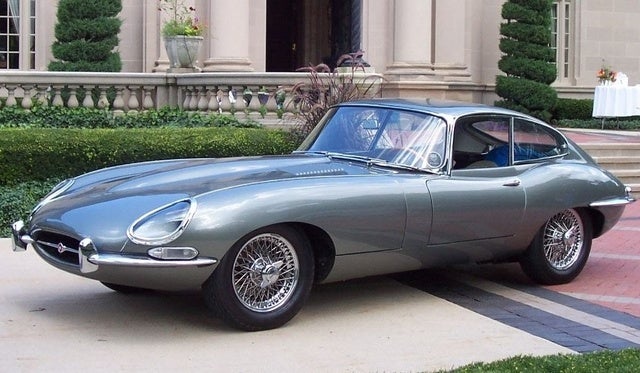
1961 Jaguar E-type top speed 150 mph
+10. Fine piece of engineering there….
Better than fine. The most beautiful car ever.
Walter, I’d agree & one other close one is the ’63 Corvette.
Now available as an EV at a price. Wrong, very wrong!
http://driving.ca/jaguar/auto-news/news/you-can-have-your-own-e-type-electric-car-for-a-price
Jaguar E-type EV (state-of-the-art electric)
0-62 mph = 5.5 sec.
top speed = 155 mph
1966 Jaguar XJ13 (50-yr old gas engine)
0-62 mph = 3.4 sec.
top speed = 175 mph
http://www.supercars.net/blog/wp-content/uploads/2016/02/955331.jpg
IMHO if someone wants an electric vehicle, go for it. Doesn’t make any difference to me….
And the $10,000 in tax gimmies that they get? I pay lots of taxes so they can be smug.
Not to mention operating subsidies such as not paying fuel taxes to pay for road maintenance, and not having to pay tolls, etc.
Just about every fallacy and useless exaggeration that can be mustered to justify BEVs is in this article, and I have to go run errands so I will only mention one.
The efficiency comparison between BEVs and ICEVs simply ignores the fact that the electricity comes from somewhere. Most of comes from heat engines far away. A true efficiency analysis must begin with the electric generator. I do not have the time to produce detailed calculations, but if we start there, and include all losses in transmission and distribution, the efficiency advantage for BEVs melts.
Just under 30% of UK housing stock is Terraced housing. Exactly where are you going to put the charge point? Outside, so the kids have a new game of “Un-plug as many EVs in minute as you can”? Overhead, so every house has a “gallows” over the front door, with fine copper cabling for our Romany friends? Maybe we dig up 30% of our housing streets and put induction coils under them? If ICE are to be phased out, what are 30% of the properties to do? My house with Teens in it has 4 cars, 6 if we have visitors, more if we have a party. I suspect we would all like to drive EVs, but they are simply impractical and too expensive, let alone upgrading our power generation/distribution infrastructure,
RS
It’s a religion.
This heavily biased article ignores all EV downsides while stressing combustion vehicle negatives.
Nice opinion, zero facts, and quite a few fact avoidance sophistry statements.
Note the insistence that EV’s are silent, absolutely silent.
A claim that ranks up there with “new car smell” claims.
A) The author uses EV’s separation from the physical electricity generation forces to imply EVs are absolutely silent. Allegedly because he can hear birds sing, winds blowing and his radio.
Birds singing? While driving down the road in an EV? Or is that parked, with the windows open?
Winds blowing? Wind noise, just like every vehicle produces as it speeds down a road? Phhfft!
Radio? How odd! Most reasonably modern vehicles, even the cheapest, are sufficiently quiet to easily hear and enjoy any radio. Plus, they have been for over thirty years.
This is a classic strawman diversion.
Author focuses on critiquing and demonizing combustion engine efficiency, but fails to apply similar standards to his preferred vehicles.
N.B. Jan’s EV on a pedestal advocacy; where EV efficiency is based on narrow EV strengths against overall internal combustion application.
EV motor efficiency is shown as isolated standalone motors, while internal combustion engines are rated by gross efficiency; i.e. the engine moving several tons of machine and humans.
e.g. My table saw uses a 1 horsepower electric motor to power the saw. That rating is the motor running alone, unconnected.
Installed into the saw, that 1hp is most efficient when the motor is running at 1750RPM. Only, while sawing hardwoods, the motor dogs and may trip the breaker when the motor tries to pull more amperage than my circuit carries or is designed to carry.
That table saw electric motor is not running at stated efficiency levels. Nor can it. Which is why wood workers look to upgrade their motors to maximize smooth running and smooth cuts.
By the same token, Jan calculate’s his EV’s efficiency at theoretical levels; not of an engine’s actual use. Especially where hills, stop lights, stalled traffic, weather conditions, etc diminish efficiency.
Also note Jan’s portrayal of internal combustion efficiency by using late 1800 and early 1900 stats to drag his graphic balloons down the efficiency scale.
It is also interesting that steam power efficiency uses the steam engines of 1900 era.
Again a compartmentalized fantasy.
Jan avoids the entire battery question, with minor concessions towards charging and life cycle. Ignoring safety concerns and impact to vehicle weight.
Jan also treats the battery as fully self contained. All losses incurred by the electrical generating facilities, where it is very noisy, through the entire electrical grid.
Also note Jan’s sleight of hand comparing “charging times” and his claim, “In practice no more time on filling station than for a gasoline car.”
Yet, just above Jan states, “which it takes 8 hours to fill at home, or 25 minutes on a supercharger”.
Personally, I find that 8 hours charge time questionable. Ordinary 4.5 volt rechargeable batteries take over four hours to recharge. When someone claims that a massive battery charges in eight hours, I have strong reservations; especially how that charge time changes over time and cycles.
Throughout Jan’s article, he constantly reinforces EV statements with praise, joy, delight, thrill, whatever; just as Jan introduces his biased efficiency praise here.
Note Jan’s careful avoidance of detail; e.g. “modest speed”.
140km (86 miles), 80km (49 miles); after which, Jan ends his EV delight statement with “it covers the vast majority of most people’s driving needs”. A typical urbanite’s dismissal of anyone needing or desiring greater range.
For the latter part of my career, my daily commute was 72 miles (116km) each way. That commute occurred whether or not my power was on, roads were open, weather, whatever. Our frequent local power outages seriously damage EV utility.
Jan’s “vast majority” and “driving needs” claims are specious sophistry.
Note Jan’s pure battery charge = miles per gallon calculation.
Another of Jan’s strawmen. Note Jan’s discussion regarding torque, rotational speed, efficiency all avoid how electric motors achieve that torque and speed; i.e. amperage required to increase speed.
Instead, Jan focuses on sophistry and wordplay about torque delivered over rotational speeds.
N.B. Jan does not supply actual decibel measurements, just an impossible opinion.
The Jan supplies his version of a fake chart; e.g.:
No oil whatsoever? All mechanical components run in unlubricated conditions?
Again, more opinion masquerading as simple statements.
There is no possible way for an EV with it’s computers, regenerative brakes, multiple motors, supporting complex circuitry controller boards and gearing is as simple as Jan claims.
Jan sneaks his claim through by defining “moving parts”, but even there, there are substantial questions as EV proponents claim one motor is one moving part.
Jan supports this claim through waffle words.
“may cost”, “battery prices are falling”, “5-8 years warranty”
That “battery prices are falling” claim has been bandied for decades. Not that the retail costs of Li-ion batteries have actually declined. Nor is it comforting when car manufacturers subsidize battery replacements to avoid frightening potential customers.
About that “warranty”; just what does that warranty cover?
A common warranty limitation is “age” and “usage”, where prorating batteries through age and usage calculations counts as a warranty, but fail to replace a dead/dying battery. i.e. unless one is replacing the entire battery within months of purchase.
A car battery of mine that died after a couple of years, less than half of it’s warrantied lifetime; after “age and usage” calculation got me $10 off a new battery. An identical battery with the exact same warranty. I declined and bought a replacement battery elsewhere
Then, Jan’s “total economy”
Note, Jan’s evasive “depends upon oil prices” for internal combustion machines. A statement that ignores European taxes that are the primary driver for fuel prices in Europe.
Again, he repeats a battery prices drop sophistry.
Then, Jan finally admits in a very specious manner that EV economy is negative; where Jan claims that the EV is transitioning from minus to plus.
Hybrid vehicles are somewhat popular in this area of Virginia.
• While efficiency is on the list of positives, it is near the bottom.
• The largest driver for EVs and hybrids are their subsidized prices.
• Closely followed by High Occupancy Vehicle (HOV) benefits. i.e. EVs and hybrid vehicles get preferences for using HOV lanes, without the minimum vehicle passengers required for regular vehicles.
• Then there are the premium parking allowances. In most government parking lots/buildings, EVs and hybrids get both a parking space and preferred location. Other vehicles require high executive position or membership in an organized commuting group.
The commuting groups, I participated in, required a minimum 3 employees to qualify for the waiting list. More employees signed into a group increased chances for obtaining a commuter parking spot.
• EVs and hybrids for daily errands are visible, but not common.
In my case, the nearest grocery store is 8 miles by road, 2 miles by air (a lot of back yards). Sixteen miles for one grocery trip.
Add in a doctor appointment and that trip becomes thirty miles.
Kids at school, pick ups, drop offs, soccer, track, Scouts, Religious meetings or education, etc quickly use up an EVs total ability, every day; without fulfilling one’s needs.
Then there is my inability to justify owning multiple vehicles where one vehicle suffices.
Retired, I no longer benefit from government enforced EV or hybrid benefits.
Living rurally, raising animals, gardening, etc. means that my 18 year old truck is still my goto transportation and work horse. Nor do I plan to retire that truck anytime soon. Hundreds of thousands of miles has increased my trust in that vehicle, not reduced it.
Urbanite condescension utterly fails to prove EV superiority, especially since Jan does not address the very real EV weaknesses.
It’s a religion.
You hit a good number of my thoughts very well. I was caught by the quiet driving, birds singing bit. My experience, like yours, has been I’ve been driving quiet cars (ICE’s) for over 30 years. Noise is wind noise and noisier when the windows are down. I do have a noisy ICE. It’s a Mazda MX-5 convertible. It is noisy top up or down and the noise is NOT from the ICE. My last drive in that car was about twice the range of the Leaf and there were no charging stations on the back roads north of Richmond.
One of my neighbors has a Tesla. He loves it. But, like my Mazda, it seems more of an expensive toy.
– And his comparative-efficiencies graph is outdated at best. Steam powerplants increase in efficiency ~their size, to +50%. His gasoline-engine max mileage is 30 mpg; lots of compacts double that. He doesn’t look at diesels at all, though I know people with Jettas getting 70 mpg.
I’d accuse him of cherry-picking, but he seems a nice guy; and there are areas (like my daily commute) where an EV would do me very well. Mind you, I worked-out (at 33 kWh/gal) my fuel costs (currently $1.25/litre) vs an EV (no subsidies here!) at our electricity rate (one of the highest in North America), and it’s ~the same. So I guess there’s no Chevy Volt in my immediate future; so sad…
Yes EVs are a good choice if you only use them to commute short distances every day, or if you live in the suburbs and need only to run short errands every day. But you have to also own an ICE car for real travel, and you also risk being unable to respond to unexpected situations or needs.
If you are out in a EV running errands, and you get a call from your mother to come over to her house quick to help her with something important, you say, “Too bad Mom, that’s 20 miles away and I don’t have range to get there. I’ll come over tomorrow after I charge this thing up tonight.”
There goes your inheritance!
Yep, you need a back up ICE car. Just like windmills need a backup thermal power station. Everything in this great big scam needs a backup, and a subsidy.
In your article you give the range of your EV: “Due to the good energy economy, it has a driving range from 140 km with modest speed in the summer to about 80 km in the coldest winter months.”
But then in your chart you give the range of “Up to 500 km” – Which is it?
Also you said that your family has 2 regular cars, I assume to drive further distances with larger loads, and in the cold winter months.
One has to be relatively “rich” to be able to afford an EV these days I would suggest, based on your story. One needs a regular car in addition to the EV.
I would love to have an EV to run around town with, but when I want to pick up someone at the airport which is a 3 hour drive each way (through mountains of the southern Baja), I need to use my Dodge Caravan, a 7 passenger. I just couldn’t afford an EV now, especially on my limited social security income.
I would love to know what a “modest speed” is.
One of the most frustrating thing about this article is whenever he talks about the joys of the EV, actual numbers disappear.
modest speed?
i will say up to 50 mph (80 km/h)
/Jan
Hi J Philip
The 80km in winter and 140 in summer is for my four year old leaf. I thought the range were a little disappointing when I bought it because it was lesser than the European standard showed, but it has at least not dropped with time so far.
The 500 km is for Tesla.
The gasoline prices are so high here in Europe that I calculated that I have saved similar to 10 000 USD by using electricity compared to gasoline. That is about one third of the cost of a new car.
And we have full taxes on the electricity to the car.
/Jan
Please explain this comment.
“And we have full taxes on the electricity to the car.”
Do you mean that you pay 3 to 4 times the price for your Electricity than normal electricity users?
ie comparable to Fossil Fuel taxes.
@ur momisugly Jan Kjetil Andersen
Thanks for clarifying. I would love even to have even a “golf cart” type vehicle to get around town with which to do local grocery shopping and bill paying…I have to pay the electric, telephone/internet, water co., Dish TV, tax bills the old fashioned way of going to their offices rather than online down here, – but it is getting better…
Most are within 3 to 10 blocks from where I live here in La Paz, BCS, Mexico.
I’m sure accentuating EV’s technical details will win over the masses, who so want to be free of bondage to convenience and economy.
ICE engines run hotter than they did in the 50’s, thanks to pressurized cooling systems.
With different coolants, their internal temperatures can be increased even more.
“The noiseless engine let you hear the wind blowing and the birds singing”
And also means that pedestrians won’t hear you coming. It’s only a matter of time before a serious (or fatal) accident leads to a high profile court case, and the requirement that all BEV’s (and PHEV’s) have a simulated engine noise system fitted…
I am normally a person who would list all the negatives, positives and true effects on society. Energy would top the list as many posters here have pointed out.
With that I have to admit that I built an electric mid drive bicycle for my disabled wife and I could not leave it alone so I went out and built an electric titanium mid drive fat bike for myself. The number of miles and exercise that I get more than tripled. It only puts a smile on my face and I don’t give the north end of a southbound rat what others have to say about it. I have now built ten bikes in total for other riders. I have not tried an electric car but suspect the same would be true.
A couple more points which have not been raised (or I missed them, skimming through the thread!):
a) EVs cannot be left disconnected for long periods. I don’t have any figures but they use a small amount of battery power to keep it conditioned and, in winter, heated. Maybe someone has some info on how long an EV can be left before the battery dies completely? It’s a potential issue for long-term parking, for example.
b) Depreciation: from comments on a recent consumer show feature on EVs, their value drops like the proverbial lead balloon. Depreciation is usually the largest single cost of car ownership. So EVs cost more to buy but are worth less after a few years. Ouch.
– And a lithium battery that dies completely, will not recharge and must be replaced. This is engineered into them – they’re very tender at that point, and if not charged “PRECISELY” right, they’ll catch fire or explode. Every time. So their charging circuitry won’t let them be charged anymore if their internal voltage falls below a certain point. It’s not a bug, it’s a feature!
I didn’t see it in the article, but I think one important factor in EV use in Norway is that they do not have to pay tolls (of which there are many) and can use bus lanes. This policy is being changed and it will be interesting to see how popular these cars will be once they are competing directly with ICE and Hybrids.
If you have the resorces to have 2 or even 3 cars, I can understand having an EV.
A lot of people cannot afford that, and many will have to settle for ONE old car.
The following is a comparison between the Nissan NV200 and the Nissan e-NV200 as
they are sold in Norway. Right part of table in US Dollar.
NV200 NOK e-NV200 NOK | NV200 US$ e-NV200 US$
———————————————————————————————————-
Price w/o Tax 159358 293590 | $20300 $37400
Car Tax 110950 0 | $14133 $0
Sales tax (VAT) 39837 0 | $5075 $0
Sales Price 310145 293590 | $39509 $37400
Total Tax 150787 0 | $19209 $0
Annual Road Tax 3400 0 | $433 $0
In addition, the EV pays nothing on toll roads, parking is free, they can use bus-lanes,
half price on ferrys. Many can also charge them for free.
I do not drive that much, so my toll road bill is about NOK7000/year or about $900
Gas prices in Norway is NOK 15.50/litre or $7.47/US gal. Most of it tax.
The CO2 from all cars in Norway is less than 10% of the total.
Norway export large parts of its clean hydropower to EU for “Green Cards”.
We get Coal Power back so we heat our houses and charge our EV with Coal Power.
The enviromental gain of EV is miniscule to negative if you also consider
the emissions from battery production. (and resycling).
I think the least you can do is to put the following Bumper-Sticker on your EV:
“Thank you for paying my tax!”
Sorry the table did not display corectly 🙁
Kai,
We get Coal Power back so we heat our houses and charge our EV with Coal Power.
Seems not correct to me: most of what you receive is wind and (to a far lesser amount) solar power from Denmark and Germany (via Denamrk and Sweden), when they have too much of it and can’t use it. At that moment you can reduce the output of the water turbines, and keep the water behind the dams until needed by yourself or your neighbours.
For calculations they use the “average CO2 intensity” of the total production of a country for the power export, but that is not fair as the real surplus they can’t use is only from wind/solar…
So you mean that this Power we get back from the EU should be surplus power that of course should have a very low price. I can tell you that the price of Electric Energy in Norway is rising. That will immediately kill your theory. If we could import surplus energy at surplus price and export higly needed energy to a high price, the prices in Norway should go down. This is simple market economy. This is not happening.
Kai,
Power prices in Denmark and Germany are the highest in Europe, doubled in less than 10 years. Here in Belgium +50% in only 5 years, thanks to wind and solar, while we still have 50% nuclear (but not for long: should stop in 2023, thanks to crazy politicians)…
Electricity import/export is not easy to follow in Europe. Here a map of current production and movements:
https://www.electricitymap.org/
At this moment Germany is exporting some 1200 MW to Denmark. Denmark exports near 1000 MW to Norway. Norway only uses 2/3 of its hydro capacity, thus the price of the German/Denmark power must be below that of the hydropower in Norway to accept it.
Power production sources in Germany can be followed at:
https://www.energy-charts.de/power_de.htm
On 23 April around 14:00 h, they had a peak production and not enough demand. Then they dumped their surplus at all their neighbours. You can see that by pushing the “Import, Export” button at the same page.
Nothing good is based on the inhuman child labor breaking rocks to extract the cobalt for these battery-powered vehicles.
https://www.cbsnews.com/news/children-cobalt-mining-congo-cbsnews-investigation-ziki-swaze/
http://www.dailymail.co.uk/news/article-4764208/Child-miners-aged-four-living-hell-Earth.html
https://www.amnesty.org/en/latest/campaigns/2016/06/drc-cobalt-child-labour/
https://www.unicef.org/childsurvival/drcongo_62627.html
I wonder if a fuel cell that’s more practical for transport than a battery will be developed soon. We’ve already seen the methane powered Bloom Box become a commercial success in the USA. Ideally a transport fuel cell would use a liquid fuel, perhaps an alcohol.Or propane, which stores under moderate pressure as liquid, whereas methane or hydrogen require crazy pressures to get any significant amount into a tank.
The fuel cell coupled with electric drive (and perhaps a small traction battery to allow immediate driving whilst the fuel cell is warming up) would be a near-ideal setup. Low noise, high efficiency and smooth performance, but refillable in minutes.
If the CO2 aspect is still a worry, then these fuels could be synthesized given plentiful cheap electricity from LFTR or similar reactors.
Personally I’m inclined to wait and see on this one,. Buying too soon could be a case of backing the wrong horse.
Discussion of relative efficiency is at best misleading. Eliminate the subsidies, add appropriate road tax and electricity sur-charge for necessary increased central electricity generation and distribution capacity, i.e. make them pay their way, and see what happens to EV sales.
A side consideration, wind turbines and solar voltaic consume more energy in manufacture, installation, maintenance and administration than they produce in there service life. Their failure as an energy source is masked at present because essentially all of this energy is now provided by fossil fuels.
A few points to shout out to here from the technical department that I can’t let go, even though this is a positive article overall.
1 – “Transmission oil Change very 100 000 km No transmission oil +”
Incorrect, the Chevrolet Bolt uses 3.1 qts of transmission fluid.
2 – “Brakes Tear out after approximately 100 000 km Almost never tear out because of regenerative braking is used instead of brakes”
Incorrect, living in the New England salt belt, I have serviced several Chevrolet Volt brake systems due to not using the brakes enough causing heavy rust build up on brake rotors and damaging brake pads. Chevrolet Volt uses a regenerative braking system similar to the Bolt.
3 – “Engine durability Good Good equal”
Can this be compared on a time scale with proper maintenance (even outside of the salt belt) My “toy” car is a 1989 Chevrolet Caprice, I am curious of the life span of these Li-Ion batteries, I am sure that it is not 30 years though.
4 – “Driveline complexity (increase cost) Complex, hundreds of moving parts Small, few parts, very few moving parts”
If you have been inside of a Chevrolet Bolt transmission, then I might believe that. In downtown Detroit’s Renaissance Center is GM training headquarters. I don’t know if you would be allowed in, but there are more than a “small, few parts, very few moving parts” within that transmission.
As a Master Tech I just could not let those points go untouched. However usually by now the comments are so buried that this will probably be overlooked. But good job on the article, it was a positive read overall.
Thank you for your insightful comments Nate
Your comments bring new knowledge to the debate. I have herd the argument about rust om the brakes before, but I have not experienced it, yet. Perhaps it depends on the car model, my do not use much regeneration when the battery is more than 90% full and that may contribute to hold them rust free.
/Jan