Guest post by David Middleton
From Inverse via Real Clear Energy:
The Answer to What’s Actually Killing Coal is Hopeful and Depressing
The real cause of the decline of coal is the free market.
By Dyani Sabin on June 20, 2017
Filed Under Answers, Donald Trump, Jobs, R&B & Solar Energy
As has been reported a lot recently, the coal industry is dying: jobs are in decline as alternative energy sources are more easily available to the masses, and everything from windows to roofs has become more energy efficient. So while technology is killing the coal industry, so are competitors of coal, which still accounts for an astounding 40 percent of electricity worldwide.
Enter a study paid for by two environmental groups — the American Wind Energy Association and Advanced Energy Economy — and conducted by Analysis Group, a consulting firm, timed to come out ahead of a competing Department of Energy study, and the stage is set to answer the question: What is killing coal? The answers will either be depressing (business-killing policies!) or hopeful (better tech and market competition), or perhaps both.
First up, the private study results released Tuesday found that the decline of coal and nuclear plants in the United States has two main causes: the relatively low cost for natural gas, and the fact that electricity demands have not increased.
[…]
The answer is: Both. So their conclusion that “better tech and market competition” and not “business-killing policies” are killing coal, is “not even wrong.”
The levelized capital costs for conventional coal-fired power plants ranged from $2,800 to $3,200 per kW in 2010. By 2014, the EIA estimated that the levelized capital costs of coal-fired power plants entering service in 2019 would be $6,000 per kW. In the EIA’s most recent LCOE (levelized cost of electricity) analysis, they don’t even include coal-fired power plants without CCS (carbon capture and storage). The levelized capital costs of coal-fired power plants with CCS entering service in 2022 will be $7,800 to $9,500 per kW. Almost all of the increase from $3,000 to $9,500 per kW is due to “business-killing policies”… Or planet-saving policies to warmunists.
Setting aside the fact that “business-killing policies” have definitively driven the cost of coal-fired power plants up to noncompetitive levels, they are correct that “the relatively low cost for natural gas” really hurt the coal industry. The brief plunge in gas prices below $2.00/mcf in 2016 was the “straw that broke the camel’s back” for the largest US coal company, Peabody Energy.
One of the more telling moments during Tuesday’s interview came toward the beginning, when Kellow was summarizing the events around Peabody’s descent into chapter 11. He noted that, around the same time, U.S. natural gas prices hit a low of $1.67 per million BTUs. He was off by a few a cents — as he acknowledged he might be — at least according to Bloomberg data. Whatever; the point is that the CEO of a coal-mining company who quotes historical natural-gas prices down to the cent clearly knows the enemy.
As I’ve written here and here, the shale boom fracked the ground from underneath the U.S. coal sector. The industry simultaneously self-administered a coup de grâce in the form of ill-timed acquisitions, loading up with debt just as the market went south. President Barack Obama’s tightening of the regulatory screws on coal-fired power essentially closed the door on any revival.

Apparently the geniuses at the “two environmental groups” haven’t been “keeping up with current events.”
Natural gas prices are currently in the neighborhood of $3.00/mcf, well above the “killing coal” line (more on this later).
Back to the Inverse article:
It’s not that renewables have become so cheap that they’re killing coal, it’s that our technology has improved so natural gas is having an economic renaissance. It was the financial pressure from natural gas costs, which dropped and stayed low starting in the early 2000s, that delivered coal’s death blow.
Wow! They managed to be “not even wrong” twice in one article!
“It was the financial pressure from natural gas costs, which dropped and stayed low starting in the early 2000s, that delivered coal’s death blow.”
Natural gas “costs” skyrocketed from 2000-2009…

The “death blow” to coal occurred in 2009, when natural gas prices collapsed:

In the Energy Information Administration’s reference case, natural gas prices are forecast to rise to about $4.50/mcf by 2020 and climb above $5.00/mcf by 2030. Coal is extremely competitive with natural gas in EIA’s reference case. It’s even competitive in the “high oil and gas resource technology” scenario.

Unless “death blows” have a recovery rate comparable to extinct Central American toads, Inverse’s “answer to what’s actually killing coal” isn’t even wrong. The same market forces that caused the coal industry to decline over the past decade are already leading to its recovery (The Resurgence of the American Coal Industry, The Resurgence of the American Coal Industry, Part Deux: An Unexpected Ally)
To paraphrase Samuel Clemens: “The reports of coal’s death are greatly exaggerated.”
Chapter 4. Coal
Overview
In the IEO2016 Reference case, coal remains the second-largest energy source worldwide—behind petroleum and other liquids—until 2030. From 2030 through 2040, it is the third-largest energy source, behind both liquid fuels and natural gas. World coal consumption increases from 2012 to 2040 at an average rate of 0.6%/year, from 153 quadrillion Btu in 2012 to 169 quadrillion Btu in 2020 and to 180 quadrillion Btu in 2040.
[…]

Costs for new coal plants doubling from 2010 to 2014 makes the combination of politics and junk science scares the predominant market factor in our energy market through federal, state and municipal interference. And yet they purport to protect the consumer. No. They project their power.
coach: it’s now cheaper to
generate power with natural
gas.
so why would any utility
build another
coal plant?
The fact that natural gas is cheaper today doesn’t mean that it will maintain this advantage indefinitely into the future. The current oversupply of cheap gas invites inventions to take advantage of the cheap gas; cng long distance trucks, exporting of gas from the U.S. to other nations using new LNG facilities, etc. At some point the price of natural gas may increase due to market forces, which will then make coal more attractive than it is today. Also, the new Panama Canal expansion makes it easier to export American coal to Asia.
Because natural gas won’t be this cheap much longer.
richard wright – so you want utility people to make decisions
based not on what’s most affordable
now — or, since they clearly do a detailed
market analysis — what’s cheapest over
the next many years, but on what mighta maybe
could possibly come true.
do you own shares in a coal company,
richard?
seriously.
https://friendsofsciencecalgary.wordpress.com/2016/08/29/the-levelized-cost-of-electricity-from-existing-generation-sources/
Existing combined cycle natural gas power plants are only slightly less expensive (~$34/MWh) with natural gas selling for ~$3.00/mcf. Natural gas can’t stay this cheap much longer… Coal can stay this cheap for hundreds of years.
I don’t have any financial interest in the coal industry, beyond being an electricity consumer. I make my living finding oil and natural gas.
Actually, David, investing in coal right now is a good idea.
It may very-well be a good idea.
Some days I can see why emails on unlimited free energy could be very lucrative. Electricity is invisible and “magic”. Between tax support, regulations, and politics, there is no reality in the costs of energy nor the effectiveness. It’s link-for-link matched by contradictory information. If we were to determine what is really the most effective, least costly energy form, I foresee centuries of trying to wade through all the contradictory data. It’s just more of the “there is no reality” world we are now living in.
sheri: people who are aware
and care
know the price of electricity
and the price of what
generates it
including the external price
that we all pay
The “external price” is $0.00 or less.
https://wattsupwiththat.com/2017/03/15/discounting-away-the-social-cost-of-carbon-the-fast-lane-to-undoing-obamas-climate-regulations/

It’s not the price of NG alone, but the popular and mature combined cycle designs.
A NG fired CCPP operates at an efficiency of about 60% as opposed to the 35% of straight Rankine coal power.
In a CCPP about 10% goes up the stack, about 30% is CT electrical power, about 30% is ST electrical power, about 30% is rejected heat from the Rankine side of the cycle.
NG fired CCPP’s are much simpler to design, approve, site and build. A CCPP produces about a third as much CO2/MWh as coal.
About 15% or so of coal fired capacity will be retired because of age, high heat rates, AQCS costs, but the newer plants and supercritical designs will press on.
I’d prefer to see the actual capital costs of the new HELE coal fired plants being built in Asia and elsewhere rather than the US EIA figures ( especially when they are figures produced during the Obama administration time).
coal pollutes.
it’s dirty and filthy and nasty.
its an 19th century fuel,
full of soot and toxins
and should be eliminated
even without any considerations
of its terrible impact
on the climate.
http://aemstatic-ww1.azureedge.net/content/dam/pe/print-articles/2014/07/pg28-fig1.jpg
http://instituteforenergyresearch.org/wp-content/uploads/2009/06/emisscoal.png
Middleton, as usual in your posts, you completely miss the point. This one is a howler.
Coal-fired power plants in the US are closing in record numbers because the US EPA finally closed the loopholes that allowed existing plants to operate without expensive pollution control devices. Coal power plant owners refuse to install the equipment and elect to close down the plants.
By the late 1960s, the US environment became an issue and the Clean Air Act was passed in 1970. However, coal-fired power plants were exempted from most of the provisions of the CAA by various means. In practice, while other industries such as smelters, chemical plants, and refineries were required to install air pollution abatement systems, the coal-fired power plants did not. This, as it turned out, was a mistake.
Coal-fired power plants, and nuclear power plants enjoyed substantial profits while their chief rival, natural gas, was at a high price during the decades after passage of the CAA. That was the time to spend some of the profits to install pollution reduction systems. Now, when natural gas prices are low, coal-fired plants cannot afford the pollution reduction systems. Also, the US EPA has finally closed the loopholes on coal-fired power plants and required them to reduce their air pollution. see link to “The Tragic Flaw of the Clean Air Act.” http://www.regblog.org/2016/05/17/revesz-lienke-tragic-flaw-clean-air-act/
The response, predictably, is for the owners of the coal-fired power plants to close the plants. (Note the rapid decline in coal percentage in the graph above, from 2005-2015; from 50 percent to 38 percent) see link to SLB article “Coal Power Plant Shutdowns Ahead of Pace in 2015: Gas and Renewables Replace the Coal Power.” http://sowellslawblog.blogspot.com/2016/04/coal-power-plant-shutdowns-ahead-of.html
Rog,
This was one of the two points of my post:
I think you’re the first anti-coalers to get this bit right.
🖒🖒
The exact same thing happened in the UK – UK coal plant owners were unwilling to pay for additional anti pollution (non-CO2 related) measures under the LCPD directive and the plants therefore had to close. Not only that, but most closed earlier than required after being run at max permitted hours for short term profit.
Hence the phrase: “business-killing policies”.
My favorite part of this meme is how EPA and the various state epa clones have responded to coal plant operators who have designed and built emissions control systems which met the standards EPA and its clones had set. They collectively refused to accept the remediation implemented by these plants, even though it met the standards THEY had set. This is a typical leftist tactic, moving the goal posts, or as it is known, the “Lucy Effect”. Leftists never accept anything that does not advance their anti-technology, anti-science and anti-American agenda.
Yep,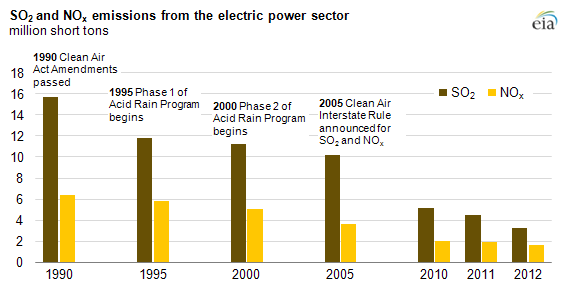
Power plant operators spent billions to comply with steadily tightening air pollution rules…
Only to have the rug pulled out from under them with CCS requirements. The collapse in natural gas prices was just icing on the cake. Without the dynamic regulatory goal posts, utilities could have survived a decade of low natural gas prices.