 This recently published Max Planck Institute paper claims that seasonal temperature variability across the world has been affected by “climate change” what they DON’T do as far as I can tell, is determine whether this is simply natural variation, or driven by some other forcing, such as CO2 or solar forcings. The headline on Eurekalert reads:
Climate change alters the ecological impacts of seasons
‘We describe, for the first time, changes in temperature variability across the globe. We’ve had a long discussion about changes in the mean temperature. It has been ongoing for over 30 years,’ says George Wang.
But then, in the press release, they add this totally unnecessary B-movie poster line “The findings show that no place is safe from climate change. “ This scare tactic amounts to nothing more than an exercise in Tabloid Climatology™.
Here is the PR:
Climate change alters the ecological impacts of seasons
If more of the world’s climate becomes like that in tropical zones, it could potentially affect crops, insects, malaria transmission, and even confuse migration patterns of birds and mammals worldwide. George Wang, a postdoctoral fellow at the Max Planck Institute for Developmental Biology in Tübingen, Germany, is part of a research tandem that has found that the daily and nightly differences in temperatures worldwide are fast approaching yearly differences between summer and winter temperatures.
Only recently, the UN Climate Summit came together in New York to further address the necessary measures to protect the Earth from a dramatic climate change. It has long been recognised that an increase of the average temperature will cause rising oceans and thus flooded landscapes. Particularly, regions close to the coasts are endangered. While it is well known that climate change has increased average temperatures, it is less clear how temperature variability has altered with climate change.
Postdoctoral fellow George Wang, from Detlef Weigel’s Department for Molecular Biology at the Max Planck Institute for Developmental Biology, has now examined this issue in more depth.
He realized that existing climate measures did not provide enough information to predict the life history responses, such as hatching, hibernation, or flowering of organisms. Together with his partner Michael Dillon, an Assistant Professor in the Department of Zoology and Physiology, University of Wyoming, USA, he started to analyse climate conditions since records began to be kept.
“We describe, for the first time, changes in temperature variability across the globe. We’ve had a long discussion about changes in the mean temperature. It has been ongoing for over 30 years,” says George Wang. “It’s very clear mean temperatures have shifted across the globe. It’s less clear if the variation in temperature has changed.”
For example, the variability in temperature could potentially mean bugs survive for a longer period in non-tropical regions. The result could be increased crop damage from pest insects or spread of diseases, such as malaria transmitted by mosquitoes.
In addition, plants in temperate regions are adapted to use temperature to tell the season. This is how they know when to produce flowers and fruits. As daily temperature cycles become more extreme, it becomes harder for plants to behave appropriately to the season. Therefore, plants might produce flowers too early or too late, and so there might be some years where certain fruits never appear.
Wang is first author of a paper, titled “Recent Geographic Convergence in Diurnal and Annual Temperature Cycling Flattens Global Thermal Profiles,” that was published last Sunday (Sept. 28) in the online edition of Nature Climate Change. Dillon is the paper’s co-writer. The monthly journal is dedicated to publishing the most significant and cutting-edge research on the science of climate change, its impacts and wider implications for the economy, society and policy.
Wang and Dillon first estimated global spacial variation in the mean temperature and in temperature cycling by analysing more than 1 billion temperature measurements from 7,906 weather stations that sampled from the period of Jan. 1, 1926, through Dec. 31, 2009. Analysis of monthly and yearly averages of daily temperature extremes reveals that daily and annual minimum and maximum temperatures have increased across the world since 1950. The scientists then estimated global changes in the magnitudes of diurnal and annual temperature cycles from 1975-2013.
The research was “very computationally intensive”, as Michael Dillon points out. The researchers had to use computer clusters on two continents, with the majority of the work performed on the cluster at the MPI for Developmental Biology. They also used a new mathematical technique to describe how temperature changes from day to night, and winter to summer, thus characterizing the variability of temperature over the globe.
According to this, the changes have been most dramatic for places closest to the poles and far from oceans. “In these places, warmer winters — decreasing the difference between summer and winter — and hotter days — increasing the difference between day and night — mean that the range of temperatures, which organisms experience over a few days, is closer to the range of temperatures they experience over an entire year. These patterns are strongest in Canada and Russia, but occur even in Germany,” explains Wang. “For example, in Wiesbaden, in 1992, the average difference between day and night was 1.2 degrees, while the average difference between summer and winter was 24.8 degrees. In 2012, the day/night cycle was 5.2 degrees, while the summer/winter cycle was 18.9, so the daily temperature variability is now much more similar to the yearly variability. Compare this to Las Palmas in the Canary Islands, where the day/night difference is about 4.3 degrees and the summer/winter difference is about 6.7 — it has not changed very much.”
The range of diurnal temperature cycling (DTC), meaning the change in temperature from the daytime high to nighttime low, was lowest at the poles, intermediate at the tropics and was relatively small close to large bodies of water and at lower elevations, according to the study. The range of annual temperature cycling (ATC), meaning temperatures for any given location will go through a regular cycle on an annual basis, was lowest at the tropics and increased toward the poles.
“For these temperature zones that we historically think of as having lower daily variations relative to the annual variations in temperatures, what we found in these zones is that the ATC has not changed much in the last 30 to 40 years,” Michael Dillon explains. “But, the DTC has gone up considerably. If the annual is constant and daily temperatures increase, areas outside the tropics will become more tropical. This idea of convergence could be a really important thing.”
The findings show that no place is safe from climate change. “Most people are rightly concerned about sea level rise, but feel that this will not affect them if they don’t live next to the ocean. We find that places far from the oceans will have be biggest changes in daily and seasonal temperature variability, because they are far away from the buffering effects of oceans”, says Wang. Therefore, there would be no places immune from effects of climate change, and this would have consequences on crops, parasites, and disease.
Contact: Dr. George Wang
=========================================
The paper:
Recent geographic convergence in diurnal and annual temperature cycling flattens global thermal profiles
Warming mean temperatures over the past century1 have probably shifted distributions2, altered phenologies3, increased extinction risks4, 5, and impacted agriculture6 and human health7. However, knowledge of mean temperatures alone does not provide a complete understanding either of changes in the climate itself or of how changing climate will affect organisms8, 9, 10, 11. Temporal temperature variation, primarily driven by daily and annual temperature cycles, has profound effects on organism physiology8, 9 and ecology12, yet changes in temperature cycling over the past 40 years are still poorly understood1, 13. Here we estimate global changes in the magnitudes of diurnal and annual temperature cycles from 1975 to 2013 from an analysis of over 1.4 billion hourly temperature measurements from 7,906 weather stations. Increases in daily temperature variation since 1975 in polar (1.4 °C), temperate (1.0 °C) and tropical (0.3 °C) regions parallel increases in mean temperature. Concurrently, magnitudes of annual temperature cycles decreased by 0.6 °C in polar regions, increased by 0.4 °C in temperate regions, and remained largely unchanged in tropical regions. Stronger increases in daily temperature cycling relative to changes in annual temperature cycling in temperate and polar regions mean that, with respect to diurnal and annual cycling, the world is flattening as temperate and polar regions converge on tropical temperature cycling profiles.
As I read this, I pictured myself standing in front of a judge who is pointing an accusatory finger at me, telling me I’ve been accused of being a De-nigh-er, and asking me how I plead. My response naturally has to be “I used to know right and wrong but with the change in climate I no longer can be sure.” ……….Case Dismissed!
The abstract contains the key: “…the world is flattening…”
OK
Let look at MALARIA.
Let’s look at more MALARIA
Let’s look at “migration patterns of birds…”
Abstracts from the peer review: [my wording]
Bird migrations longer
Bird migrations shorter
Bird migrations out of fashion
Excellent post. Good research.
Spot on, Jimbo.
Oliver Cromwell likely died of malaria. So we now know not to invade Ireland during a Little Ice Age.
Planckers.
“We describe, for the first time, changes in temperature variability across the globe.”
Aw, c’mon. At this stage in the ever long lasting CAGW game there is absolutely no conceivable way imaginable that any researcher anywhere could possibly describe any climate change thingies “for the first time.” Everything, everywhere, concerning CAGW has been “described.” The human imagination has been utterly emptied. And, quite some time ago.
No place to run, no place to hide. The bogey man will get us!
This on top of realizing that the Max Planck Institute is spewing alarmist slogans.
The coming El Niño warming will be amplified by humans (press-release writers that is).
For the first time we describe how to make a perfectly standard, paper, coffee cup – of which one trillion have been made.
For the first time we describe what a bee sting feels like – even though there’s probably a million that occur a day.
For the first time we describe the difference in appearance between a man with hair and a man who’s bald.
For the first time we describe the difference between long pants and short pants.
For the first time we describe the difference in sensation between hot water and cold water.
For the first time …
I would climb any mountain
Sail across a stormy sea
If that’s what it takes me baby
To show how bad C O 2 can be
And I guess it’s just the O 2 in you
That brings out the C in me
I know we can’t help ourselves
We’ll heat all the land and the sea
It feels like the first time
Feels like the very first time
It feels like the first time
It feels like the very first time
(Apologies to Foreigner, misused without permission)
In temperate regions plants and animals receive their season-change cues as much from the changing periods of daylight as from temperaure changes – don’t they?
They’re throwing everything they’ve got at it.
‘Report’ after ‘report’, ‘study’ after ‘study’, ‘new research’ after ‘new research’, always ticking off item after item on their ‘to do’ list to keep the alarm maxed up. And naturally it’s always ‘worse than previously thought’.
Meanwhile, almost nothing in the real world is outside the normal range of previous observations.
This study is idiotic.
I should have stopped reading here: “We’ve had a long discussion about changes in the mean temperature. It has been ongoing for over 30 years,’ says George Wang.”
No, it’s been going on far, far longer than that.
” in Wiesbaden, in 1992, the average difference between day and night was 1.2 degrees, while the average difference between summer and winter was 24.8 degrees. In 2012, the day/night cycle was 5.2 degrees, while the summer/winter cycle was 18.9″
And which is “normal and correct”?
Utter nonsense.
Wang means, the discussion went on for 30 years.
After over 30 years of catastrophic, unprecedented warming and the hottest decade / year / month evaaaaaah, some results are in.
You cannot hide from the missing heat that is hiding somewhere, as soon as you turn your back the missing heat will jump out from its as yet unknown secret hiding place and there will be nowhere to hide from its wrath.
You just couldnt make it up.
But they did.
“Nobody expects the Missing Heat!” Dun Dun Dunnnnnn…..
There is space in there for a natural cycle.
The world is changing. OMG
“Most people are rightly concerned about sea level rise”
not really , more concerned about land sinking.
Take this San Francisco report in 1892-
http://www.sfgenealogy.com/sf/history/hgoe26.htm
” Two inches may, therefore, be taken as the basis of calculating. In a hundred years the waters of the bay would be ebbing through the first stories of buildings, and the second floors would be what seamen call awash. Large vessels would find sufficient water in those streets to sail up to Sixth and Folsom streets and Market and California streets”
If the sea level rises I won’t have to drive 250km to fish. It’s better than I thought.
Wang: “For example, in Wiesbaden, in 1992, the average difference between day and night was 1.2 degrees, while the average difference between summer and winter was 24.8 degrees. In 2012, the day/night cycle was 5.2 degrees, while the summer/winter cycle was 18.9, so the daily temperature variability is now much more similar to the yearly variability. Compare this to Las Palmas in the Canary Islands, where the day/night difference is about 4.3 degrees and the summer/winter difference is about 6.7 — it has not changed very much.”
As a taxpayer Wang’s above statement triggers a frustration with the institution of science itself. His statement claim indicates that he views the “pause” as a complete fabrication.
The words that Wang has NOT written tell us that he believes the pause as a complete fairy tale not worth mentioning — an issue that does not even exist. Only if Wang believes that the pause is a silly fiction does his statement make sense to Wang himself. Am I missing something?
Well obviously if it is not in the models it must not exist. It’s like the movie The Matrix, climate scientists stuck in their models, like humans in their battery cocoons, believe the Matrix/model is real, and have lost awareness of reality.
Wang is a genius. Wiesbaden is near Frankfurt, a 500 km or so from the sea. Las Palmas has a port.
1992 was Techno heydays in Germany and the fashion was, how do you call it, skimpy. Bare bellies were all the rage (and looked good for a while until the Techno girls got older).
Today? Trenchcoats, trenchcoats, it’s as if womankind prepares for the battle of the Somme.
Anything to do with the weather maybe?
“The findings show that no place is safe from climate change.”
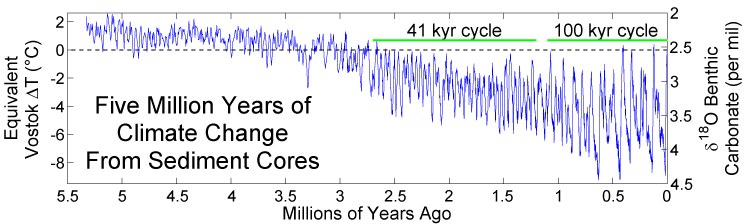
Well indeed, Climate change may affect the whole Earth. The Earth has seen this before humans:
or with early humans:
and with humans:
http://www.climate4you.com/ClimateAndHistory%201400-1499.htm#1404:%20First%20St.%20Elizabeth%20flood%20in%20northwest%20Europe
http://www.climate4you.com/ClimateAndHistory%201300-1399.htm#1362:%20Grote%20Mandrenke%20and%20the%20opening%20of%20the%20Zuiderzee%20in%20the%20Netherlands
so yes, very true, no place is safe from climate change 🙂
They certainly have some folks trained to associate the term “climate change” with human causation.
Without that assumed association, articles about the danger of climate change are really comical.
Any time I discuss climate change with an alarmist, I make it a point to illustrate the comedy of this misuse of the term climate change. If you are going to discuss science, you had better be prepared to use precise terminology, or risk acting the fool.
Apparently the fools are in charge, since acting like a fool, in terms of climate, is not a risk but an asset.
They’re not acting.
And yeah, the whole point about this blatant fear mongering is the implied meaning. At some level, I feel sorry for the people who lap this stuff up. It must be difficult to sleep at night when you’re worrying about how your actions are destroying the planet.
“It has been ongoing for over 30 years.” Correction: it’s been going on for billions of years. Climate change. It’s what the earth does. Just like women coloring their hair, like men changing their beard. Change is normal and natural and it is most certainly inevitable. But I do wish we could continue with the talk of adaptation, as this blog has repeatedly pointed out. It would be foolish to just sit around and wait for the next massive change in earth’s climate, whether by meteor or super volcano or the sun or the poles or whatever. Gradual change is something mankind can deal with, but vast, sweeping and swift change – not so much. It’s beyond foolish to sit and wring hands over man’s CO2, though I certainly think it should be part of the discussion. But to focus solely on one minor element and forgo the rest… I thought we were making progress as a scientific people? It doesn’t seem like it to me. It seems to me that we, as a human race, are still running around scared to death and unable to make rational debate. Will we ever be free from superstition?
let me ask a serious question. If the region where I live routinely gets down to -5C in the winter as a low, does that mean that with a 1 degree rise in global temps, that the low temp will be -4C instead? Would I even notice a difference in winter low temps? or summer highs that are routinely 30 Degrees, become routinely 31 Degrees C average? Big deal
Even with a 3 C difference, it really would not matter much, but the alarmists claim that 3 C warming would be catastrophic. I would love for my climate where I live in Canada to warm on average by 3 C.
Jim S,
Correctomundo. As Lars shows, we are at the cold end of the geologic range. Three degrees of warming would be very beneficial:
Imagine a 2C rise and the world flourished. We have already gone through almost 1C and no one has noticed. We hit 400ppm and……………………………..no signs of weather getting more extreme. These people are living in cloud cookoo land.
Remember, the Vostok ice core paleo record tells us that co2 rise follows temperature rise.
More cherry picking nonsense, date ranges are used randomly in order to support a narrow position. It has the scientific integrity of a sci-fi made for TV movie, like “War of the giant spiders and grasshoppers”.
even with a 3 C increase in temps. I would still have to fire up my furnace in the winter, and wrap my palm trees, to prevent both of us from freezing solid.
MAN-BEAR-PIG WILL FIND YOU THERE’S NO PLACE TO HIDE!!!!
Unless you agree to further taxation, higher energy cost, and live like it’s 1799, then you shall have salvation and you will be safe forever and ever.
I think the solution is very simple: Outlaw thermometers.
Now, some will say that if we do that then only outlaws will have thermometers, but that apparently true already.
I’d prefer outlawing climate models, but that would raise all of kinds of free speech issues. So maybe we can have a law similar to laws about vitamins and supplements, where each model has a disclaimer:
‘To be used for political purposes only.’
We’ve had a long discussion about changes in the mean temperature. It has been ongoing for over 30 years,’ says George Wang.
Thirty years is indeed a long ‘discussion’. But that is precisely what happens when you have unsettled science.
When the data does not support your hypothesis,….. and all kinds of ‘adjustments’ to the data still fail to overcome a climate that serendipitously refuses to ‘warm up’ as the unvalidated climate models insist it must, you are destined for extended controversy without resolution. The controversy ends when the null hypothesis is accepted and climate studies are refocused on relevant climate variables, rather than the myopic focus on miniscule additions of the trace gas CO2 to the planetary atmosphere.
Apparently not ducks. just got this from Nevada DOW:
“An annual survey by the U.S. Fish and Wildlife Service (USFWS) reported that continental duck populations have increased over last year to record levels. The preliminary estimate for the total duck population is 49.2 million birds, an 8 percent increase over last year’s estimate and 43 percent above the long-term average. This is the highest population recorded during the annual surveys since the USFWS started the survey in 1955.”
=========================================================================
Sooo…since there’s no place for them to go can we scratch “climate refugees” off the list of adverse effects of Hockeysticlimatology?
Wait… Wang himself says Las Palmas looks pretty stable… Maybe he’s just not very good in logic, consistency, or reviewing his own press releases?
“The findings show that no place is safe from climate change.”
Damn I was gonna hide under my bed but will have to rethink that strategy