Allan MacRae says: Thanks to Alberta Jacobs
Ulric says
http://wattsupwiththat.com/2014/08/11/a-gleissberg-solar-minimum/#comment-1708152
Henry says
My point exactly. That is why I said: better to ignore wise guys here who know it all. What are they doing here anyway?
What is your date for the sun reaching its minimum solar field strengths, I would be interested to know. You don’t have to give me the planetary configurations, I figured that out myself. I just want to check if we have the same date for the switch to higher field strengths.
kadaka (KD Knoebel) says:
“Ah, so in your system it is planetary configurations that cause solar minimums, namely special ones where the gravitational effect of Jupiter is minimized.”
I have already told you that the nature of the configurations precludes gravitational mechanisms. I will address the proposed mechanisms after I have exhibited the various configurations.
Edison’s light bulb filament
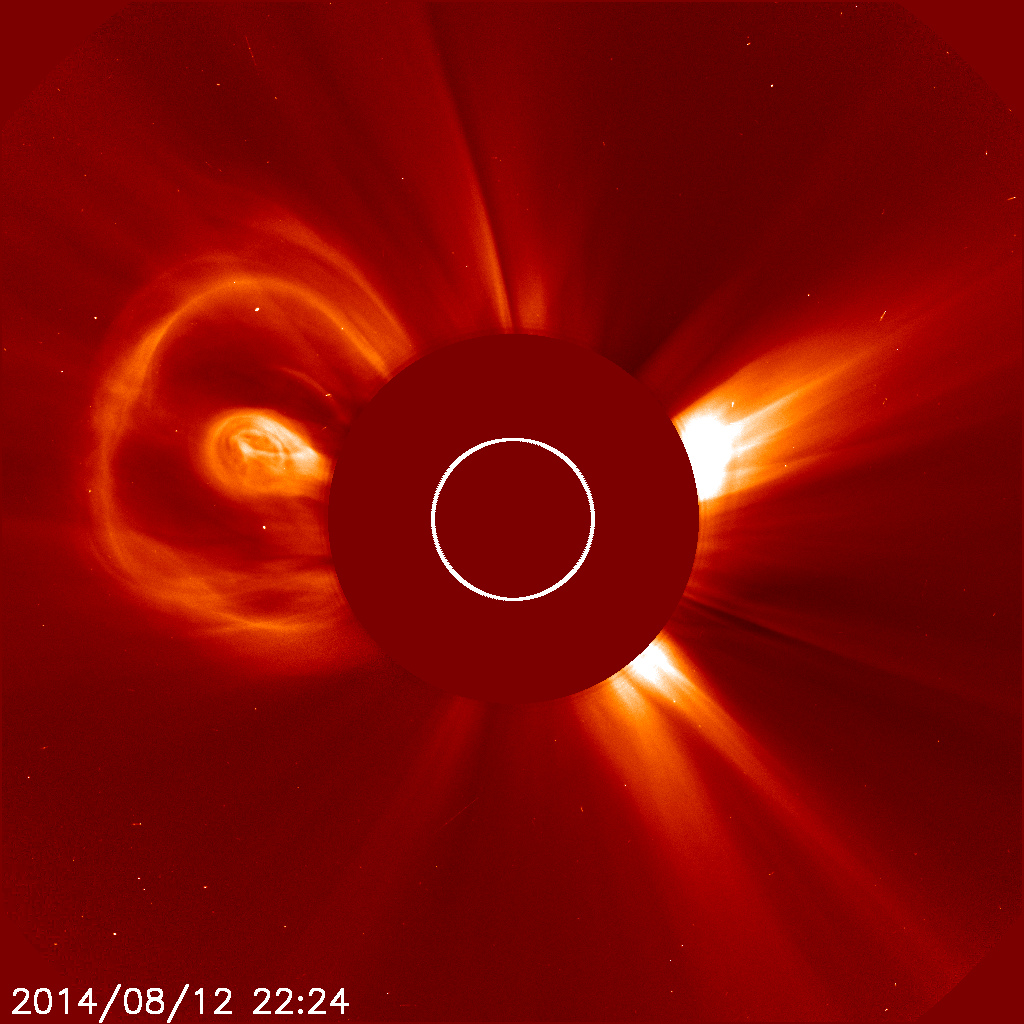
http://sohowww.nascom.nasa.gov//data/REPROCESSING/Completed/2014/c2/20140812/20140812_2224_c2_1024.jpg
Milo, how long have you been reading this blog????
The step wise increase rate as been seen before. Same rate of increase (though at different starting points in term of SST). The mechanism is easily identified. A series of El Nino’s with few strong La Ninas inbetween the step rises. That was a very easy question. I didn’t, as you say, dodge it because the mechanism is so obvious I figured you would understand the El Nino process from my first response, and recall the several excellent posts on how the SST data set has demonstrated this before.
You will love this site. It’s from the EPA. Note the rate of increase in previous decades and then a partial cooling down. It just happens that the increase started again. That is not uncommon given that El Nino increases and La Nina decreases in sea surface temperatures are not opposites of each other. It is a herky jerky battle that sways one way and then another but over long periods of time kinda evens out. Humans do well when oceans are evaporating stored heat.
http://www.epa.gov/climatechange/science/indicators/oceans/sea-surface-temp.html
vukcevic says:
August 13, 2014 at 5:28 am
Greg Goodman says: August 13, 2014 at 5:15 am
I’m trying to take what you present seriously but…
…………..
I don’t, no reason why you should either, … I did say Well, that is as clear as mud, so it is by far wiser to ignore it all…
===========
Well I agree about that in relation to your rather vague explanations of feedbacks, delays etc. I was inclined to ignore that but the graph looked interesting. A very strong 9.1y peak in some magnetic data would certainly be worth investigation.
So are you also saying that, having linked to this graph on at least half a dozen threads, you are now too embarrassed to provide a usable account of what it was you were plotting as “geo-solar cycle” and we should better forget you ever mentioned it?
I get the impression there’s a rather big “oops” behind all this, that you’re trying to avoid admitting.
Greg
HenryP: “You don’t have to give me the planetary configurations, I figured that out myself”
Oh cool. Then perhaps you could explain what this planetary configurations thing is, Ulric does not yet seem to have this in a form that can be communicated. There have been several attempts but no one seem quite there yet.
Since you’ve already figured it all out, perhaps you can explain it.
vukcevic says:
August 13, 2014 at 12:03 am
Your theoretical treatise from 1977, may have been at the time, the corner stone of understanding, then at the end of 2008 NASA’s Themis project comes with the series of observational data that contradict conclusions of your work.
Wrong on two points:
1) my 1977 paper was a observational paper. Modern data fully support the earlier findings: http://www.leif.org/research/Coupling-Function-AMS93.pdf
2) no contradictions were found. If you think so, produce links to papers contradicting me
Greg Goodman says:
“Ulric does not yet seem to have this in a form that can be communicated.”
Err, yes I do…
http://wattsupwiththat.com/2014/08/11/a-gleissberg-solar-minimum/#comment-1707627
John: “The CET is currently showing that, to date, 2014 is the warmest year on record”
Well it’s mid August, most of the cold part of the year is still missing , quite what they are showing as 2014 seems undocumented. Also it is pretty obvious they are using this spurious incomplete year to pad out the data to run filter up to the end of data. Also undocumented and fundamentally unsound practice, especially since they even use the same line colour for the fictional padded part of the filter.
The Met Office web site no longer seems to show the SST record as a time series !!!
I wonder why that is .
Ulric: Err, yes I do…
http://wattsupwiththat.com/2014/08/11/a-gleissberg-solar-minimum/#comment-1707627
So we all have to come round for a cup of tea and sit on your lap while you run through it one astronomic software you have.
Let us know when you have it in a more conventional form of scientific communication. But hurry up because it’s looks like HenryP is about to get the jump on you. He’s got it all figured out 😉
I wonder why some people insist on not evaluating the data properly. As is obvious by looking at the data the sun had a Grand Maximum last century. Post 2005 the sun is likely in a Grand Minimum so to extrapolate future solar activity based on the Grand Maximum of last century is absurd.
If one post data showing sunspot cycles 19-23 versus solar cycle 24 post 2005 one will see that the sun has under gone a significant change in activity.
The severe solar lull of 2008-2010 was not seen by anyone and is a great example of how absurd it is to try to imply what will happen to solar activity going forward based on solar variations last century. The lull of 2008-2010 did not come close to happening during the recent solar maximum of the last century and because it did not happen then it was assumed nothing of the sort would happen post 2005.
The problem is the denial that solar variability is indeed greater then thought and that a dramatic change in solar activity (variability ) took place post 2005 in comparison to the last century.
Based on what has happened expect solar activity to be much weaker then is forecasted which is based on a bogus premise of forecasting future solar activity based on a period of time when the sun was in an extremely active mode of activity.
Again very foolish and absurd.
To carry this further expect the climate to also respond since the sun has gone from an extremely active mode of operation last century to an extremely quiet mode of operation post 2005.
The trend in global temperatures was up when the sun displayed very high activity last century conversely the trend in global temperatures will be down this century as the sun now is once again in a very inactive mode of operation.
The data will bear this out and already is indicating this to be so since the global temperature trend rise has now ended and the atmospheric circulation has now become much more meridional.
Two predictions I made several years ago.
Greg Goodman says:
“Well it’s mid August, most of the cold part of the year is still missing ,”
Most of the “cold part” of the year is in Jan & Feb, and the deviations from the average can be greater in the winter, which is why CET is running so warm this year.
http://climexp.knmi.nl/data/tcet.dat
“anyone who wishes to inspect the findings in detail would need their own astronomy program anyway.”
Well I don’t know what you are seeing that you think explains solar activity. I would not be at all surprised to find there is a link to planets in some way. Everyone has astronomy software available in the form of the openly accessible JPL ephemeris. You just need to explain what you are doing and it should be reproducible.
“The sunspot number is the lowest in a hundred years and the global temperature is at all-time highs.” – Leif Svalgaard
,
The reality is sunspot activity and solar magnetic activity was at an all time high through out last century and global temperatures responded to that high solar/magnetic activity as expected.
Further lag times are involved due to the accumulation of ocean heat content which was due to the high prolonged solar activity of the last century. This has now come to end and global temperatures going forward will no longer rise but fall. They will no longer be near all time highs while the sun exhibits prolonged minimal activity.
More bad assumptions and a lack of understanding of the climatic system and how it responds.
Greg Goodman says:
Your comment is awaiting moderation.
August 13, 2014 at 6:56 am
reposting this one, stuck in moderation for using the name of he shall not be mentioned….
vuk says:
August 13, 2014 at 5:28 am
Greg Goodman says: August 13, 2014 at 5:15 am
I’m trying to take what you present seriously but…
…………..
I don’t, no reason why you should either, … I did say Well, that is as clear as mud, so it is by far wiser to ignore it all…
===========
Well I agree about that in relation to your rather vague explanations of feedbacks, delays etc. I was inclined to ignore that but the graph looked interesting. A very strong 9.1y peak in some magnetic data would certainly be worth investigation.
So are you also saying that, having linked to this graph on at least half a dozen threads, you are now too embarrassed to provide a usable account of what it was you were plotting as “geo-solar cycle” and we should better forget you ever mentioned it?
I get the impression there’s a rather big “oops” behind all this, that you’re trying to avoid admitting.
Greg
More of the same and solar is not any where near my criteria for cooling effect, although overall solar activity has been quite low post 2005 despite this recent maximum of solar cycle 24 which is now in the process of ending. Once it ends solar conditions should approach my criteria over a long duration of time which should start global temperatures on the decline.
What has taken place in year 2005 is a complete change from active to inactive solar activity.
This change in my opinion will be more then enough to have another climatic impact just as is the case when one reviews historical climatic data.
My challenge remains- Which is to show me the data which shows a prolonged solar minimum period being associated with a rising temperature trend or a prolonged maximum solar period being associated with a falling temperature trend.
I find no such data and the same result is going to happen as this decade proceeds.
Already solar activity is falling off and we are no where near the bottom of the solar cycle 24-solar cycle 25 minimum.
I think the data (especially post 2005/prior to 2005 ) supports the view that the sun can be quite variable and this variability can happen over a short period of time as is the case in the first decade of this current century.
Expect climate implications if this prolonged solar minimum keeps advancing going forward.
The problem with so many postings is there is a lack of understanding of noise in the climate system, thresholds in the climate system ,lag times in the climate system and that the climate system is non linear and never in the same state.
Therefore my point (which I have made many time previously) is DO NOT EXPECT an x change in the climate from given x changes in items that control the climate. This I have preached but with little fanfare.
Why- look read below.
The initial state of the global climate.
a. how close or far away is the global climate to glacial conditions if in inter- glacial, or how close is the earth to inter- glacial conditions if in a glacial condition.
b. climate was closer to the threshold level between glacial and inter- glacial 20,000 -10,000 years ago. This is why the climate was more unstable then. Example solar variability and all items would be able to pull the climate EASIER from one regime to another when the state of the climate was closer to the inter glacial/glacial dividing line, or threshold.
The upshot being GIVEN solar variability IS NOT going to have the same given climatic impact.
Solar variability and the associated primary and secondary effects. Lag times, degree of magnitude change and duration of those changes must be taken into account.
Upshot being a given grand solar minimum period is not always going to have the same climatic impact.
This is why solar/climate correlations are hard to come by UNLESS the state of solar activity goes from a very active state to a very prolonged quiet state which is what has happened during year 2005.
So the nonsense that post Dalton no definitive solar /climate correlations exist just supports my notions of what I just expressed.
Meanwhile, a quiet sun is correlated with a stronger more meridional jet stream pattern which should cause a greater persistence in Wx. patterns which I think is evident post 2005 for the most part.
vuk says:
August 13, 2014 at 12:03 am
Your theoretical treatise from 1977, may have been at the time, the corner stone of understanding, then at the end of 2008 NASA’s Themis project comes with the series of observational data that contradict conclusions of your work.
Wrong on two points:
1) my 1977 paper was a observational paper. Modern data fully support the earlier findings: http://www.leif.org/research/Coupling-Function-AMS93.pdf
2) no contradictions were found. If you think so, produce links to papers form the Themis project contradicting me
http://www.actuaries.org/HongKong2012/Papers/WBR9_Walker.pdf
Great info. on solar/climate connections which I subscribe to .
Ah look, you’re on the tweety!
(1 in 100 might know that line.)
https://twitter.com/Ulric_Lyons
Originator of Planetary Ordered Solar Theory. The only deterministic long range weather and climate forecasts.
Somerset, England
Joined April 2010
You tweeted a reply back on Jan 2, and before that you retweeted, and retweeted, and retweeted…
Why did the little yellow Tweety bird lose a Twitter war with Sylvester the cat? Too many retweets.
Ah, here’s one, October 23, 2013:
https://twitter.com/Ulric_Lyons/status/392955820368883712
“Arctic sea ice loss is due to negative NAO, the opposite of a warming signal.”
http://www.cpc.ncep.noaa.gov/products/precip/CWlink/pna/month_nao_index.shtml
So from the heights of 1979 at the start of the satellite record, there was a positive NAO regime during the ongoing extent losses to about 1995… Wait, that can’t be right, you said it was negative NAO.
But then it switched over to a negative regime for the ongoing extent loss from which the ice is only now perhaps starting to recover. Likewise it can be seen it was primarily a negative regime from 1950 to 1979… Preceding the 1979 Arctic sea ice highs.
I think that tweet needs some expanding as to what type of negative NAO signal and when it will bring about the sea ice loss. It’s going negative right now. Will this be another terrible year for the ice?

In a recent paper “The Centennial Gleissberg Cycle and its Association with Extended Minima”, to be soon published in JGR/Space, Feynman and Ruzmaikin discuss how the recent extended minimum of solar and geomagnetic variability (XSM) mirrors the XSMs in the 19th and 20th centuries: 1810–1830 and 1900–1910.
Edited abstract:
Such extended minima also were evident in aurorae reported from 450 AD to 1450 AD. The paper argues that these minima are consistent with minima of the Centennial Gleissberg Cycles (CGC), a 90–100 year variation observed on the Sun, in the solar wind, at the Earth and throughout the Heliosphere. The occurrence of the recent XSM is consistent with the existence of the CGC as a quasi-periodic variation of the solar dynamo. Evidence of CGC’s is provided by the multi-century sunspot record, by the almost 150-year record of indexes of geomagnetic activity (1868-present), by 1,000 years of observations of aurorae (from 450 to 1450 AD) and millennial records of radionuclides in ice cores.
The “aa” index of geomagnetic activity carries information about the two components of the solar magnetic field (toroidal and poloidal), one driven by flares and CMEs (related to the toroidal field), the other driven by co-rotating interaction regions in the solar wind (related to the poloidal field). These two components systematically vary in their intensity and relative phase giving us information about centennial changes of the sources of solar dynamo during the recent CGC over the last century. The dipole and quadrupole modes of the solar magnetic field changed in relative amplitude and phase; the quadrupole mode became more important as the XSM was approached. Some implications for the solar dynamo theory are discussed.
* Says The Hockey Schtick: If it is true that the current lull in solar activity is “consistent with minima of the Centennial Gleissberg Cycles,” and the Gleissberg Cycle is a real solar cycle, the current Gleissberg minimum could last a few decades before solar activity begins to rise again.
* Solar physicist Habibullo Abdussamatov predicts the current lull in solar activity will continue until about the middle of the 21st century and lead to a new Little Ice Age within the next 30 years.