Guest Post by Willis Eschenbach
I got to thinking about the way that California prices its electricity, which is never a good thing for a man’s blood pressure.
When I was a kid, the goal of the Public Utilities Commission and Pacific Gas and Electric was to provide cheap electricity. The Bonneville Dam and the Shasta Dam were lauded for bringing cheap, renewable electric power to the farms, just like the renewable electricity the Tennessee Valley Authority had supplied earlier. This cheap electricity was seen as liberating housewives from domestic slavery, and supporting business and manufacturing. It was hailed as the wave of the future and the path to success, and rightly so—cheap energy is the reason the developed world was able to lift itself out of poverty. And since we generated our own electric power when I was a kid, and had to live with the results when it went out, I know all about the ability of electricity to lessen even a kid’s load around a cattle ranch.
So … when did expensive energy become the new goal? When did raising the price of energy become a good thing? That’s topsy-turvy thinking.
I started this train of thought when I had occasion to revisit Anthony Watts’ outrageous electricity bill, which he discusses here.
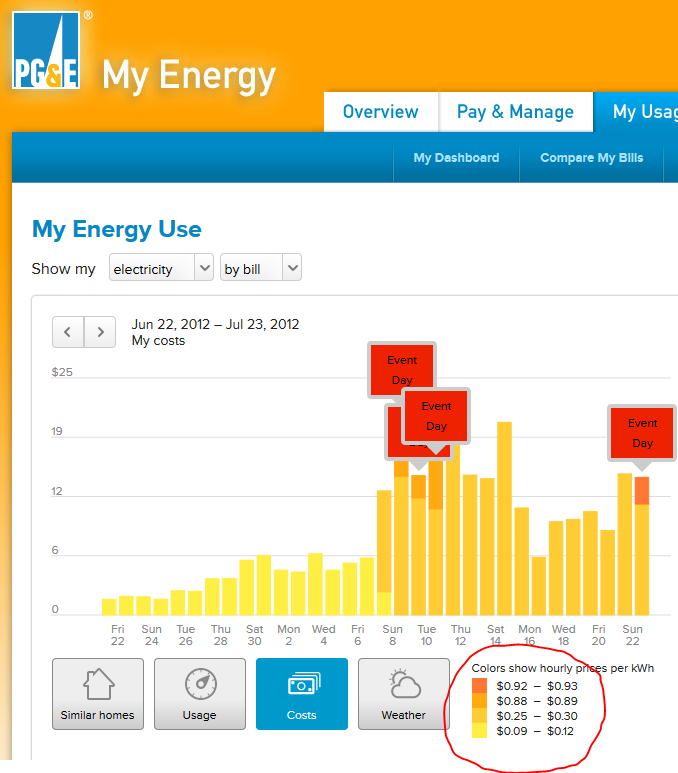
Figure 1. Why California is circling the drain …
Ninety-two cents a freakin’ kilowatt-hour? The utility companies have a monopoly, and they are allowed to charge ninety-two cents a kilowatt-hour? How can that be? Isn’t the California Public Utilities Commission supposed to stop that kind of thing?
The most aggravating part of all of this to me is that so many people see this kind of pricing as being a good thing. Not the ninety-two cents part, most folks find that outrageous.
But lots of folks apparently approve of the part where the higher the demand for the electricity, the more the utilities charge for it. This is called “Time Of Use” pricing, and a lot of well-meaning people think it’s a good idea … not me. I figure that’s because they just never thought it through all the way, they never saw what’s at the other end of the spoon.
Now, the utilities claim that Time Of Use pricing is a good thing because it spreads the load more evenly over the 24 hours … but why should I care? That’s their business, to provide enough power for all conditions when and as needed … but I digress. Hang on, I can likely find an example of their justification style … OK, they say the reason for Time Of Use Pricing is:
“To ensure greater power reliability and a better energy future”.
Impressive, who wouldn’t want a better future. Can I translate that for you?
“Greater power reliability” means so they won’t run out of power. If they were honest they’d say that they have Time Of Use Pricing “to avoid brownouts because we don’t have adequate generation capacity”. And ensuring a “better energy future” means “we hope we can provide future power but only if we raise prices on you today.” I’ll return to this issue in a moment.
But in any case, what kind of heartless bastards charge you more for something when you really need it? Because with “Time Of Use” pricing, when Anthony’s wife and kids are suffering in the scorching heat in Chico and really need the aircon, Pacific Gas And Electric (PG&E) and the California Public Utilities Commission say “Fine, you folks can turn on your air conditioners … but it will cost you almost a dollar a kilowatt to cool down.”
I never in my life thought I’d see electricity pricing used as a weapon against the poor and the old folks like that. That is criminal. What a plan. The seniors can afford to air condition their apartments or their rooms whenever they don’t need to … but when it’s hot, when they really need to air condition them, they can’t afford to. Catch-22, thy name is legion.
Now, don’t get me wrong here. I’m sure the Public Utilities Commission didn’t intend that outcome. I’m not accusing them of deliberately trying to cook Grandma. To do that you’d need some smarts, and anyone implementing a plan like that clearly has no smarts to spare on Grandma. Sadly, it’s just another case of Noble Cause Corruption, where the noble cause of saving the world from Thermageddon™ has overwhelmed native common sense and compassion.
Seriously, folks, this kind of pricing is madness, it’s unacceptable. If we had a water utility, and they charged 5¢ a glass when you weren’t thirsty, and $5.00 a glass when you came in dying of thirst, everyone would scream bloody murder that as a public utility you can’t screw the customers like that. Pick a dang price for a glass of water and stick with it, you can’t be jacking the price through the roof on someone just because they’re thirsty, that’s not on.
But that’s exactly what’s happening with electricity. Air conditioning in Chico is becoming the province of the wealthy, due to the “Time Of Use” pricing policies of the PUC.
However, the PUC are not the villains here. They are caught in the middle because of the stupidity of the voters and of Governor Brown. The voters put in a very destructive “20% by 2020” plan requiring 20% of the electricity supply to come from renewables by 2020 … then Governor Moonbeam had a Brilliant Idea™, so he unilaterally raised it to 33% by 2020. I don’t know how he jacked it by himself, but his daddy was the Governor and he grew up in the state house, so he knows which side of the bread the bodies are buttered on … these things are mysteries to the uninitiated like you and I.
And of course, it’s nearly impossible to build a fossil-fired plant of any kind anywhere in California anyhow. I hear these days when you apply for a license in California to generate electricity from fossil fuels, the State Government just issues you a couple of lawsuits along with the permits, in order to save time …
So you can’t build fossil plants, and renewable plants are few and far between … and as a result the system operators, a company called CAISO, are always balancing on the edge of a “brownout”, when the power doesn’t go out, but you only get 90% of the voltage, or on the verge of rolling blackouts, the next step after brownouts … and we’ve seen both.
And to put the icing on the cake, somewhere along the line, some congenital idiot ruled that hydroelectric power doesn’t count as a renewable energy source. I hope that person roasts in the place of eternal barbecue and HE doesn’t have the money to run the air conditioner. Truly don’t think I’ve heard a more expensive and destructive ruling than that one, especially after the TVA and Bonneville Dam and Shasta Dam have shown that yes, idiots, hydropower is indeed renewable. Yeah, dams have problems and there’s lots of issues, but last I looked the rain is still working both reliably and renewably …
So by 2020 we’re suppose to get a third of our power from solar, and rainbows, and wind, and hydrogen, and biomass, and methane from the digestive apparati of unicorns, and fuel cells, anything expensive and out of reach will do. The suppliers of these nostrums have the state over a barrel, of course, and demand outrageous prices.
And as you would predict, this unbelievable idiocy has left the state woefully short of power. And as a result, the whole program has gone into reverse.
So now, rather than increasing the amount of cheap electric power available to the consumer like a utility should, we’re going the other way. The PUC and PGE aren’t encouraging people to utilize cheap power in order to better their lives. They aren’t doing their job of ensuring an adequate supply of inexpensive power. Far from it.
Instead, they’re doing whatever they can to push people back into the dark ages, because they are UNABLE TO GENERATE ENOUGH LIGHT OUT OF UNICORN ERUCTATIONS TO FILL THE DEMAND …
So that’s why, when they say the pricing is to “assure greater power reliability”, that’s a lie. They are using that pricing to discourage demand. Have you ever heard a dumber thing than a business working to discourage demand? Who anywhere tells their customers to buy less? Why jack your prices to force them to buy less?
Well, because they don’t have the power generating capacity. And this in turn is because for every two fossil-fueled or hydroelectric power plants you build, you need one unicorn-fueled plant, and those damn unicorns are proving much harder to catch than Governor Moonbeam figured …
But even given that that is the case, and given that the PUC is caught in the middle, there has to be a better plan than cooking Grandma to deal with that problem.
The people pushing these rattle-trap schemes, like “Death Train” Jim Hansen, always talk about the grandchildren … meanwhile, every one of their damn plans, of carbon taxes, and cap-and-trade, and subsidies, and requirements for “renewables”, and regulations, and all the rest, every one of them does nothing but screw Grandma and the rest of the poor.
Those plans do nothing but raise the cost of energy with almost no benefit to the environment.
They don’t reduce CO2. They don’t save the planet. They don’t help the environment. At best, with a following wind they might make a difference of a couple hundredths of a degree in a century. And indeed, because they further impoverish Grandma and the poor, they are actively harming the environment.
And meanwhile in the present, far from the ivory towers where they entertain their century-long fantasies, on the other side of the tracks, out of sight from the houses of the wealthy, the reality of these destructive, ugly policies hit Grandma and the poor of California the hardest. The head of the PUC doesn’t have to worry whether he can afford to air condition his sick child’s room … the CEO of PG&E isn’t losing sleep over his electric bill.
I fear I have no magic bullet to solve this. It will be a slow slog back to sanity. All I can do is to highlight the issues, and trust that at some point people will come to their senses.
So all of you folks that think that fighting CO2 will make a difference decades from now, remember the difference that this pseudo-green insanity is making today. Your actions are cooking Grandma, impoverishing the poor, and harming the environment today, and history will not find your part in inflicting pain and deprivation on society’s weakest members to be funny in the slightest. I truly don’t care if you think the poor in 2050 desperately need help from some imagined tragedy. You are screwing the poor today.
My best Independence Day wishes to you all, and remember, the beauty of America is that you’re all free to air condition your houses … but only when it’s not hot.
w.
BBorders says:
July 5, 2013 at 6:36 am
Naw, I just stick them in there for the irony. Brown’s brilliant ideas are a running joke in California. I thought up “Thermageddon™” myself, but in my mind the trademark and all associated profits on that one belong entirely to the alarmists …
w.
Tom Stacy says:
July 5, 2013 at 6:51 am
Drinking water is stored in a tank at the water utility, and taken out and sold in cups as needed.
Energy is stored in a tank at the power utility, and taken out and sold as electricity as needed.
So I’m sorry, but your objection fails.
w.
David L. Hagen says:
July 5, 2013 at 7:15 am
That sounds like a really good idea, except about my participation. But I’d love to see it happen, and I encourage you and Roger to work on that one.
Rog and I, we’re not the best fit. Here’s his explanation of what’s wrong with me:
Roger Sowell says:
August 8, 2011 at 9:47 pm
Well, there’s my problem, I knew it had to be something like that. Clearly my brain was permanently scrambled in my youth. That explains everything …
I mean seriously, David, the guy comes into this thread and in his first post says:
“Normally censors”? That’s a joke. I rarely even snip anything, and I don’t censor anything, normally or abnormally.
And when pressed, all he can offer is once I snipped, not even one of his own words, but an overlong swath of legalese he’d posted? And you want me to team up with him?
Still, I think the idea of a petition or other legal way to get all hydro into the mix is a great plan, and I strongly hope Roger would be receptive to the idea … but only if I’m not the one presenting it.
Because for him, I fear it’d be just another warped product of my irretrievably LSD-deranged mind …
w.
@ur momisugly Eschenbach, now we can see that you are a liar.
You wrote
“And to put the icing on the cake, somewhere along the line, some congenital idiot ruled that hydroelectric power doesn’t count as a renewable energy source.”
“Now you are back and accusing me once again, after I’ve stated that I knew ab:ut it, of not knowing about small-scale hydro.”
Here, Eschenbach, you are caught in one of the finer arts of lying. Your first statement, from your guest post, states that “hydroelectric power doesn’t count as a renewable energy source.” Then, you admit in a comment as quoted just above, that you did know that small-scale hydro counts as renewable energy. One form of a lie is making a broad statement that one knows is not literally true. That form of lying is used frequently by used car salesmen, who tell the buyer that the car to be purchased is in excellent shape when they know it has several problems.
Then, later you go off on a long-winded but fruitless explanation that can be summarized as “I, Willis Eschenbach, did not think that was an important point.” The fact is, you lied. You deliberately chose to make an affirmative statement that you knew was not entirely true. If this sounds a bit like a lawyer, well that’s exactly right. This is one way that attorneys discredit a lying witness on the stand. Attorneys sometimes win cases in that manner. We AGW skeptics have nothing to hide, and no reason for obfuscation and never for lying. People already distrust the warmists-alarmists for their deceptions and constant data adjustments. The skeptic camp needs men and women of good character, clear eyes, and who are brave enough to tell the truth.
So, now you are proven to be a censor, by “snipping” my comment, and now you are a liar.
Roger Sowell says:
July 5, 2013 at 2:32 pm
Dang, Roger, if you didn’t exist, I’d have to invent you for entertainment value alone. In any case, here’s what I said that you claim is so derogatory:
First, note that I didn’t snip one word of your deathless prose, just the over-long legal document.
Next, the posting of such long tracts is discouraged on every serious blog. Regardless of their content, they interrupt the flow. Instead, you should post a link and your interpretation of what it says and why it is important.
The latter part is critical, because if you don’t do that, then readers may not be able to discern what your point is … as happened to me.
Next, I did not object to the content of your posted text, or to your ideas. I said don’t post “tons of text”.
Next, I asked nicely, I said “please”.
Next, I called it “legalese” because what you posted was a legal document, written the peculiar legal style which is transparent to lawyers but often murky and opaque to the polloi like myself.
And I closed by stating the truth, which is that I didn’t understand what your point was. Perhaps someone else can read that document if it’s still at the link and explain it, but I got lost, I couldn’t see why you posted it.
The part you don’t get is, I can read and understand legalese as well as any layman, I was CFO of a multimillion dollar company and read every legal document we were involved with and discussed them with the company lawyer.
What I couldn’t do was understand what your point was in all of the legalese.
So … I’m heartily sorry if you took that as a personal insult. It was nothing of the sort.
Finally, my dear fellow, you do recall saying that I “normally censor” your comments?
Certainly you are not claiming that this example, where I’ve snipped part of a legal document and left in the link so that anyone on the planet can read it, is censorship, are you?
Because if so, you’ll have to explain how a document anyone on the planet can read is defined as “censored” in the town of Lawyerville* …
w.
*Disclaimer: “Lawyerville” is a metaphorical rather than real town, and as such is void where prohibited or taxed. It is based on fictitious characters and bears no resemblance to any real town, living or dead.
Willis Eschenbach says: @ur momisugly July 5, 2013 at 11:57 am
…So we’re committing economic suicide for noting. No gain. No benefit. Nothing.
How is this a good plan under any stretch of the imagination?
>>>>>>>>>>>>>>>>
It is a great plan if you do not give a hoot about other people and you want to snap up all that lovely land for a song and make a killing on boondoggles.
Again you can piece together various news stories.
Someone suggested living ‘Off the grid” This is what happened to a bunch of desert rats near LA:
This is a pre-packed deal from ICLEI. “Smart Growth” even put out A Citizen’s Guide to LEED for Neighborhood Development: How to Tell if Development is Smart and Green I found it at this planing board site: http://www.co.berks.pa.us/planning (Note: Smart Growth Alliance banner) Someone commented Berk county within city limits, now requires you reapply for the zoning of your property after you buy it.
They even come right out and say it!
And Bloomberg is putting it into effect in New York. He really must have LOVED Sandy since it means they can insist on Smart Growth housing as replacement.
http://www.capitalnewyork.com/article/politics/2012/07/6173436/micro-unit-mini-apartment-building-coming-new-york-city
http://inhabitat.com/nyc/5-super-efficient-tiny-new-york-apartments/unfolding-apartment-13-2/
That is pretty straight forward. They want to move the entire labor force into city apartments where off the grid is not an option and complete control is. Can you say “Company Town’?
Seems no one remembers Sixteen Tons any more.
Note in the first story they mention the Antelope Valley? Seems that is now the site of the
Antelope Valley Solar Projects. In January 2013, Warren Buffett bought the Antelope Valley Solar Projects the largest solar installation in the world.
Willis Eschenbach: Quoting me: Even in California, most people include hydro-electric power among the renewable sources. It’s only the most active environmentalists who do not.
Willis wrote
Absolutely untrue, it’s a government regulation, not just a bad idea of the “most active environmentalists”.
Nowadays I try to clearly state “large scale hydro” and “small scale hydro” when appropriate. I think that even in California only the extremists consider large scale hydro not to be a proper renewable resource. Most people are surprised, I think, to learn about the state law deeming large scale hydro to be non-renewable.
Willis Eschenbach: And to put the icing on the cake, somewhere along the line, some congenital idiot ruled that hydroelectric power doesn’t count as a renewable energy source. I hope that person roasts in the place of eternal barbecue and HE doesn’t have the money to run the air conditioner. Truly don’t think I’ve heard a more expensive and destructive ruling than that one, especially after the TVA and Bonneville Dam and Shasta Dam have shown that yes, idiots, hydropower is indeed renewable. Yeah, dams have problems and there’s lots of issues, but last I looked the rain is still working both reliably and renewably …
I’m sorry to say this, but you shot yourself in the foot there. You probably/possibly meant to write “large scale hydroelectric power”. What you wrote prompted a question and then the interchange between you and Mr Sowell. Now, he did say that you got several things wrong, but you were mostly correct. It is a irony that your statement could have been “some congenital idiot ruled that almost all extant hydroelectric power doesn’t count as a renewable energy source.” That would have outlined the problem more clearly — the most abundant renewable source of electricity, of which Californians buy a great deal, is not counted toward the renewable portfolio standard by law. It’s crazy.
Brad says:
July 5, 2013 at 3:42 am
This is I think the key issue of this post. I know how dangerous it is to try to break up a fight, but I’d like to make peace between Willis Eschenbach and Roger Sowell and your question is an excellent place to start.
Electricity in this country is a regulated monopoly, which means rates are set by tariffs and every customer that qualifies under a given tariff gets the same rate and the utility must provide service. In the old days of wired phone service if you moved in to a new house or apartment and called the phone company, they had to provide you a phone line at the standard rate, regardless of their actual cost to provide it. So you lived in a sparsely settled area where the technician had to drive 20 miles to run your line from the poll, you still got the same rate as someone in a dense neighborhood close to the central office. And if you were ordering the 1,801st line served by an 1,800-pair cable, you didn’t pay any of the cost of running the additional trunk cable down your street from the central office so you could have a phone line. Of course the phone carriers have been charging different rates based on time of day for years — more on that later.
Similar rules apply for power.
I am not opposed to variable pricing provided:
1) The end-user rates reasonably reflect the suppliers actual variable costs.
2) The commodity is such that end-users are able to shift usage to avoid higher rates in most cases.
3) The pricing system is understandable to the typical end-user.
Principle #1 means the end user shares in the low prices when the provider can get them and likewise the higher prices when the provider has no other options.
Principle #2 means the end user has some control over their costs. Otherwise instead of an incentive to change behavior, the higher prices just become an insult.
Principle #3 means the average rate payer can actually understand how actions under their control will affect what they pay.
Now for a personal aside. I used to have long distance service through AT&T and at some point they jacked up their rates to well above the competition so I shopped around. I looked at so many plans it made my head spin. I even developed a spreadsheet that evaluated all the possibilities. After doing hours of research by plugging in details from the previous year of phone bills I had enough. I went with a very simple plan: no monthly fee, same rate per minute any time of day. Maybe not optimal but extremely simple to understand: don’t call long distance: don’t pay anything. Talk a little: pay a little. Talk a lot: pay more, but exactly the same rate: $0.045 per minute rounded to the nearest 0.10 minute as I recall (it’s been a few years since I compared rates).
So when it comes to variable rates, just how granular do you want to be? I decided for myself that simplicity and uniformity in costs was preferable to the lowest total cost some of the time. That freed up all the time I would otherwise spend obsessing over the phone bill for other activities. I suspect (someone here at WUWT will correct me if I’m wrong), that any large power grid operator juggles suppliers at a dozen different rates at any given time and probably double that over the course of a 24 hour period. Do you really want to follow all that detail? I don’t; I want something simple to understand that still gives me some ability to control my costs.
Georgia Power has three rates and two seasons (details here ):
Monthly Rate Schedule
WINTER – October through May SUMMER – June through September
First 650 kWh: 5.3312¢ per kWh First 650 kWh: 5.3312¢ per kWh
650-1000 kWh: 4.5743¢ per kWh 650-1000 kWh: 8.8620¢ per kWh
Over 1000 kWh: 4.4904¢ per kWh Over 1000 kWh: 9.1582¢ per kWh
So the maximum spread for residential customers is less than a factor of 2, and only in summer. This seems to fit my requirement #1 above: when Georgia Power has already tapped all the cheap providers there is no choice but to add power from more expensive sources. And comparing the Winter vs. Summer rates it is clear that in the Winter they can supply 100% of the demand from cheap providers. Compare this with the rate spread for Anthony Watts: over a factor of 10 ($0.09 vs $0.93 per KwH). I don’t think this meets my requirement #1 (once again someone will correct me if I’m wrong).
So why is the maximum rate I pay in the summer only slightly less than the minimum rate Anthony pays? And more important: is that a good thing and if so why?
Unlike both WIllis and Roger I’ve never been poor. But I recognize that any price change on an essential commodity affects people at the margins the most. I think we all recognize that reliable electricity is an enormous public good. It necessarily follows that the cheaper electricity can be provided, it is the poor that benefit first and most. And the other side of course is that when it is more expensive it is likewise the poor that suffer first and most. I’m going to agree with Roger Sowell that WIllis’ “Cooking Grandma” is rhetorical hyperbole — many posts here at WUWT have made the point that cold kills many more than heat. And most older people are chilled rather than overheated — they typically want to turn the thermostat up rather than down.
However I agree with WIllis that the current California renewable mandate makes no sense. I personally assign zero value to reducing C02 emissions, but I recognize that opinions on this topic differ. But even if you believe CO2 emissions need to be reduced, why wouldn’t you count large hydro facilities towards the renewable mandate? Particularly if they’ve already been built???? (no new CO2 from massive additional concrete pours). The best natural hydro sites have already been built; any new ones will be less efficient. But the key point is: the CO2 costs of building the large existing hydro dams has already been incurred — all that CO2 got released into the atmosphere a long time ago and nothing you do is going to un-release it (accounts call this “sunk cost”). So why release a bunch more CO2 building new hydro dams when you could just use the ones you already have? (understand I’m asking for a rational reason here, not the obvious one that important interests got appeased).
I also do not buy the argument that higher rates are not a problem because there is assistance for people who cannot pay. All this does is charge an even higher rate for some people so you can hand out that subsidy to some others. Why isn’t the primary goal to reduce rates for everyone?
Roger you say the reason you oppose nuclear power is it raises rates. In my mind this is like saying we should oppose the death penalty because it is too expensive when the same people making this argument are doing everything they can through the courts to make executions take longer and cost more. So as an attorney please address this question: how much of the cost of building nuclear power stations is the regulatory and court burdens created by anti-nuclear groups opposed to nuclear power on any terms? Why not control irrational people instead of abandoning rational projects?
So to conclude:
I believe it is an enormous public good to provide abundant, reliable and rationally priced energy to everyone. People at the margins benefit the most.
I believe it is irrational to pursue policies either calculated or logically likely to make energy scarcer, less reliable or more expensive, unless there is an absolutely compelling reason to do so.
I do not believe based on our current understanding there is any compelling reason to reduce CO2 emissions, or to ration consumption of fossil fuels.
If people do not like burning fossil fuels, then with the present state of technology there is no choice except to pursue nuclear power. Wind and solar simply won’t do it without rationing power, drastically raising the cost, or both.
Based on all the foregoing, I believe “renewable” mandates are irrational, and the California ones in particular are especially so.
So to use some legal language, the California renewable mandates are either malice aforethought or accessory after the fact to making electrical power more expensive, less available and less reliable, and thereby damaging the general population.
Roger: on behalf of the state of California, how do you plead?
Matthew R Marler says:
July 5, 2013 at 11:49 am
Then there is that ridiculous law that a California utility can not buy from a coal-fired source, even out of state.
============
Why stop with power? Why not guarantee jobs by requiring all citizens of California to buy only products made in California from stores with prices regulated by the California Stores Commission?
In effect that is what the Power Commission is doing. It is forcing Californian’s to buy their power from Local Store, and the prices charged by Local Store are set by the Power Commission. A sure recipe for corruption and inefficiency.
Again, California should be able to regulate how power is generated. What it should not be able to do is to force people to buy from a monopoly. AT&T operated this way for years and there was a great wailing and gnashing of teeth at the time when AT&T’s monopoly was broken. Yet the world did not end. Instead we got competition and low cost long distance.
Electricity has two components. The generation facility and the transmission facility. They should be decoupled as was done with AT&T. The same company that owns the generation facility should not be allowed to own the transmission facility.
look – face it, – if the hurdles I had to met are any indication – there is little to no “small Hydro” generation coming on-line in CA so please remove this from the mix
RE Gail @ur momisugly 1619
moving all into high density apartments along rail lines are just the interim step
– after all, you know, having all those separate plumbing & kitchen units is wasteful
– after all, how often do you need to use the facilities? and you should have your own? how wasteful of space and precious resources for only one person to command an entire kitchen and ‘loo for just themselves – communal kitchens and group facilities are so much more efficient
is the /sarc tag really required?
for now?
Doug Huffman says:
July 5, 2013 at 12:15 pm
This is pedantry. It’s like saying that crude oil is not a fuel because we don’t burn it directly. Instead in the refinery it “is transmuted into the burnable material called gasoline which is the fuel” …
The whole thorium fuel cycle produces energy. Yes, thorium is not directly burned, it’s indirectly burned … is wood not a fuel when it is burned as charcoal, but charcoal is a fuel?
w.
Great article Willis. Very eye catching title too, might I add. 🙂 Thanks.
Is it just me who wishes that Willis and Roger grab a couple of bottles of booze, a deck of cards and a private table to sort out their talking at cross purposes?
It’s not only the Internet that creates an environment where there is so much argument about so little.
@martha durham: My guess is it’s because the green movement has now decided that dams are evil (both because they harm some fish, or at least make spawning harder, and because they enable more development). So no new dams are being built, and there are movements to tear out the ones we’ve already got.
I hope the public will eventually notice that the real aim of the environmental movement is not to save animal life, but to prevent development because it’s “evil” for humans to be rich — especially if that development would put to good use some piece of unbuilt land that the eco-warrior himself is now using as scenery without paying for it.
As I mentioned in another discussion here about small hydro, it is indisputable that hydro can have deleterious effects on the environment, e.g. the Snowy scheme in Australia turned a major river in a dry region into a pathetic trickle. That is not to say that hydro is always bad, but it may well be that a bunch of mini-hydros potentially do even more damage (by disrupting stream flows and movement of aquatic creatures in multiple locations) than one big one.
I think that as real environmentalists, we should always be prepared to evaluate these things honestly.
It still seems to me that modern coal, gas or nuclear generation and a well-run grid is much more environmentally friendly than any of the ‘renewable’ technologies on offer, not least because of the amount of reliable power delivered vs the environmental impact of the facilities.
I’m with Alan Watts. California is pretending to run an electricity market while strangling supply and dis-empowering both consumers and providers in different ways. High prices should be a signal to encourage competitive supply and alternative or more efficient consumption. In as far as they signal a major problem they are a good thing. However, when the Government blocks solutions to that problem they become a disaster.
Thank you for your thoughtful analysis.
I have often fretted over the fact that this (Peak pricing programs) is a stealth attack against the retired, elderly, disabled and otherwise house-bound. It’s as if some ‘higher power’ has decided that certain ‘undeserving’ folks shouldn’t be permitted to live in their own homes. Or live at all?
Yeah-that’s the new Democratic/Environmental meme: Kill the elderly and disabled.
Reminds one of what the plains Indians used to do in the olden-times: They took the elderly and disabled out into the elements and allowed them to die of exposure…seems this is a tradition that’s to be brought back into common usage.
“Is it just me … ?” [Bernd F.]
No.
“Roger: on behalf of the state of California, how do you plead?” [Alan Watt L-7]
Sigh. I know what he will do. He will file a Motion for a Continuance so he can KEEP ON TALKING.
And, of course, opposing counsel will have to show up to argue… .
As for me? I’m getting up, putting on my coat, walking down the hall, out the courthouse door, and going home.
Bernd Felsche says:
July 5, 2013 at 7:54 pm
Bernd, perhaps you do nothing when a man falsely accuses you of a serious ethical lapse, that of “normally censoring” his posts. And perhaps your honor is in such tatters that someone falsely accusing you of such things can be described as “argument about so little”.
I’m not built like that. I don’t put up with those kind of sleazy untrue attacks.
Now, if you don’t want to read me defending my honesty, you should avert your eyes. But claiming that I should take it lying down, or not do this in public, to avoid affronting your sensibilities?
Not gonna happen. I’m not going to get accused in public and settle it in private, that’s a non-starter.
w.
I have a few comments on Thorium. It is historically and currently producing commercial power. Here’s the opening statement from the relevant section of the referenced paper: “There are seven types of reactor into which thorium can be introduced as a nuclear fuel. The first five of these have all entered into operational service at some point. The last two are still conceptual:
http://www.world-nuclear.org/info/Current-and-Future-Generation/Thorium/#.UdefaW0ZGhQ
Note the molten salt reactor most often cited by thorium proponents is only one of these. But all this is moot if uranium based fuels are good for another 1000 years. Who needs “renewables” if low cost, safe, reliable fuels are good for another 1000 years? You want renewables? Why not reactors operating in breeder mode? The USA may be lagging behind on this, but other countries are pulling ahead.
@ur momisugly Eschenbach, I have zero for which to apologize. You are guilty as charged, you censored my comment, called me a slimy lawyer, then impugned my character as being uncaring toward the plight of the poor. And, you are a liar, as described above.
You just hold your breath, while waiting for me to apologize.
Roger Sowell says: July 5, 2013 at 11:14 pm
“…You just hold your breath, while waiting for me to apologize…”
Gee, Roger… you came in here to make two points:
1. That Willis neglected to include (impractical and never gunna happen and ain’t gunna change anything anyway) small scale hydro in the debate, and
2. That he always deletes your posts (once partially cropped a post?) of yours (and explained it was for length and included a link to the complete article).
That’s it? And on and on it goes. Talk about much ado about nothing.
And forgive me for pointing out at this stage you are appearing a little more childish (heh, gotta love the above) … you will later perhaps regret all this when you have calmed down a little.