Guest Post by Willis Eschenbach
Trading food for fuel, in a world where high food prices already affect the poor, has always seemed like a bad idea to me. If I have a choice between growing corn to fuel SUVs versus growing corn to make tortillas, to me that’s a no-brainer. I’ve known too many people for whom expensive tortillas are unobtainable tortillas to vote any other way.
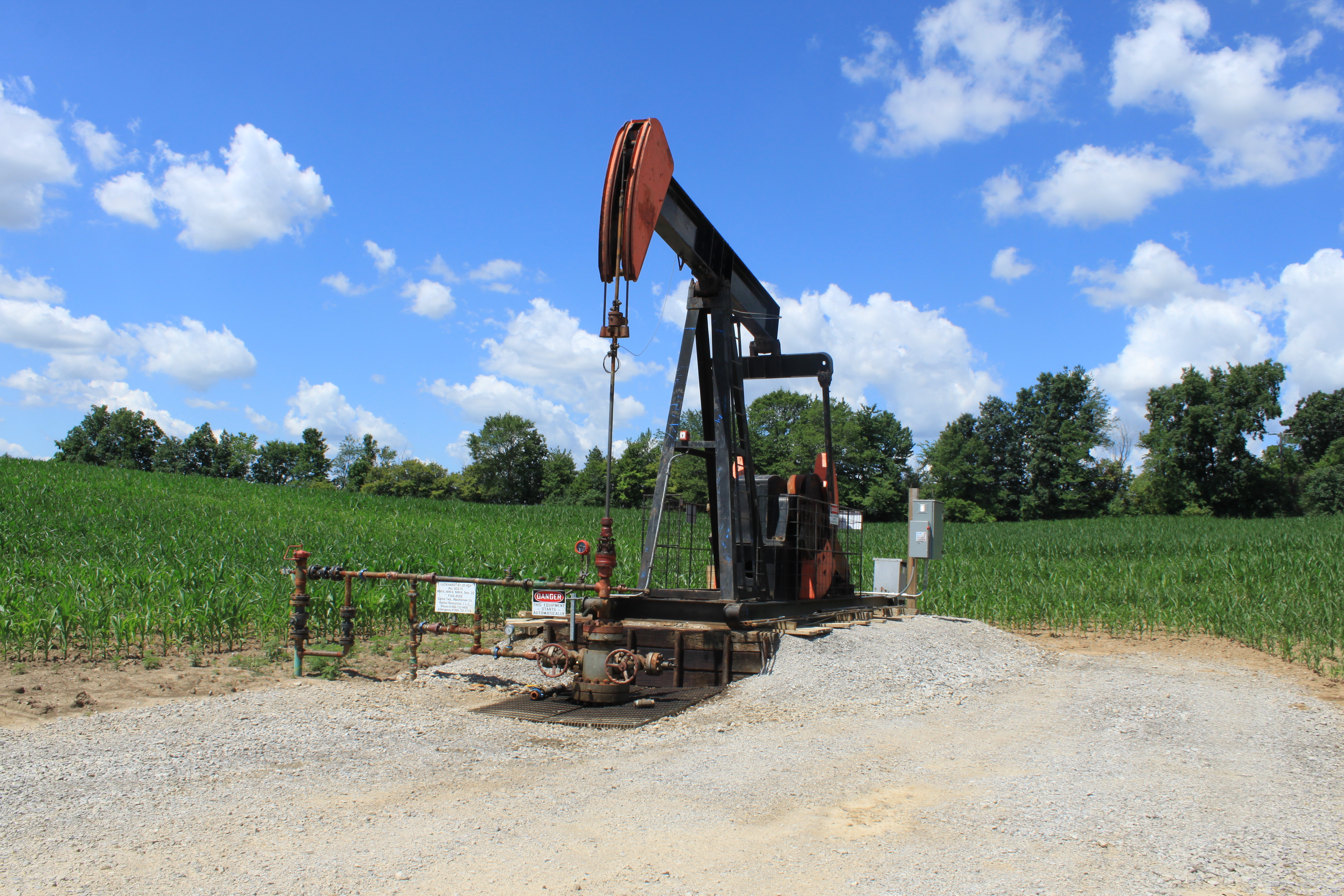
 Figure 1. The preferable kind of corn-field-based fuel, brought to you by a corn field in Michigan. SOURCE
As a result, I’m a long-time opponent of turning corn into fuel. I think it is a crime against the poor, made the worse by the unthinking nature of the ethanol proponents as they advocate taking food out of poor kids’ mouths.
But that’s not the only way that our monomaniacal insistence on renewable energy is taking food from the plates of the poor. For example, tropical forest has been cleared for oil-palm plantations for fuel. But even that is not what this post is about. This post is about trading food for energy in California, the breadbasket for the nation. Here’s the headline:
Fresno County judge rules in favor of I-5 solar project
Jan 03 – The Fresno Bee, Calif.
A Fresno County judge has ruled that a solar energy project along Interstate 5 can move forward despite arguments from the state farm bureau that it will eat up valuable California farmland.
The decision, which comes as good news to the state’s burgeoning solar industry, is the first handed down in the ongoing land war between solar developers seeking real estate for renewable energy and Central Valley farmers trying to protect their tillage.
While the ruling pertains only to the Fresno County project, the decision sends a message across the Valley that agriculture doesn’t necessarily reign supreme.
“I do think it gives a boost to the solar development community,” said Kristen Castanos, a partner at the law firm Stoel Rives in Sacramento who has represented energy ventures and tracked solar efforts on farmland. “This gives counties and developers a little more confidence in moving forward.” SOURCE
This is unbelievably short-sighted. The only good news is that compared to say buildings, it’s much easier to remove a solar installation and return the land to actually producing food. Not easy in either case, but easier for solar. But the good news stops there.
The bad news is, the power thus produced will be much more expensive than power from either fossil fuels or hydropower. But both fossil fuels and hydro are verboten under Governor Jerry “Moonbeam” Brown’s plan to get 30% of all electricity from renewable sources, with “renewable” meaning “renewables other than hydro”. Thirty percent! This madness has already given us some of the highest electrical rates in the country, and we’re not even near to 30% renewable yet.
The worse news is what the dispute was about. California has a strong farmland act, called the Williamson Act. If you put your farmland under the Williamson Act, you can’t develop it, it has to stay farmland. In exchange you get various tax advantages. The important thing to note is that it is a legal contract between the State of California and the owners of the land. This is to prevent the landowner from taking the benefits and then developing the land.
In this case, the article cited above goes on to say (emphasis mine):
Superior Court Judge Donald Black found last month that Fresno County officials acted appropriately two years ago when they canceled a farm-conservation contract that allowed a solar development to proceed on ag land near Coalinga.
The California Farm Bureau Federation sued the county, alleging that the Board of Supervisors did not have the right to cancel the contract put in place under the state’s farm-friendly Williamson Act.
Black said county supervisors met Williamson Act requirements for canceling the contract.
“All parties concede the development of renewable energy is an important public interest both in the state of California and in Fresno County,” Black wrote.
I’m sorry, but there is no public interest in wildly expensive solar power. Nor should County officials be able to break a legal contract at their whim, based on some fanciful claim of a public benefit. The only people being benefitted here, above the table at least, are the owners of the project. The owners will be paid a highly inflated price for their power, which I and other ratepayers will be forced to subsidize. Expensive subsidized energy is not in the public interest in any sense.
In any case, breaking a Williamson Act contract to put in a solar installation definitely reveals the profound hypocrisy of the people behind the project and the useful idiots that support it. They’re approving massive, hideous development on prime farmland in order, they claim, to save the environment. Yeah, pave it to save it, that’s the ticket …
It also sets an extremely bad judicial precedent for future breaking of Williamson Act contracts. Since Kelo vs. New London the expansion of the “taking” powers of governments under the infinitely flexible rubric of “public interest” has ballooned unbelievably. Now we are to the point where they can even take away Williamson Act protections.
The Williamson Act is there to protect the totally irreplaceable, amazingly productive farmlands of California. The Fresno County officials are breaking the intent and spirit of the Williamson Act so that private developers can make a fortune picking the ratepayers’ pockets … and that’s supposed to be in the public interest? Spare me. For me, a kid who grew up on the good rich California earth, that’s a very sad day.
So yes. The idea that you shouldn’t allow the development of solar installations on some of the world’s finest farmland, not just any farmland but farmland legally protected under the Williamson Act, appears to be history in Californica. Infinitely stupid.
Y’know, I love the land here—the fold and break of the coastal hills dropping into the ocean; the wide valleys full of farms; the Sierra Nevada Mountains, where I grew up, towering over the Central Valley; the crazy, blazing deserts; the forests and groves full of deer and fox and mountain lion; and my own little corner where I live in the middle of a redwood forest, with a tiny triangle of the sea visible through the coastal hills. What’s not to like?
But I am roundly fed up with the government, and with the ‘lets power the world on moonbeams, we can all ride high-speed unicorns for transportation and just eat veggie-burgers’ crowd of folks that thinks losing irreplaceable farmland is a good thing in a hungry world, and thinks that hydropower is not renewable energy …
Regards to all,
w.
I was chatting to a local corn farmer some years ago. He said ” it will surprise you but there are about three hundred different products made from corn” . But not if you make fuel out of it. Never mind tortillas.
mpainter says:
January 6, 2013 at 4:16 am
Goodness gracious me, I left out something-
Willis: “crowd of folks that thinks losing irreplaceable farmland is a good thing in a hungry world”
Now this is the best yet. Willis, on his posting of Jan.2, “The Cost of Energy”, argued vehemently on that thread that food was not a problem in today’s world, and never would be because of modern agricultural capacities. Yet, here on this posting Willis paints a picture of a “hungry world” that can’t afford tortillas: “I’ve known too many people for whom expensive tortillas are unobtainable”.
Well, Willis, I suppose that you will let us know when you finally make up your mind about things.
>>>>>>>>>>>>>>>>>>>>>>>>>>>>>>>
Two different things.
1. Do we have enough farmland to support the population all other problems ignored? That answer is yes.
An example of the type of problem I mean. As crops rot, millions go hungry in India: …a woeful lack of storage facilities and an inefficient, corruption-plagued public distribution system that fails millions of impoverished people.
The second problem is food may be plentiful but too costly to buy because of the wage/price ratio.
Is there a con game being played? Yes.
Strategic Reserves in the USA and else where have been killed. Laws have been passed to intentionally wipe out family farmers. Biofuel and “Green Energy” is being hyped so Big Money can move in to reap the benefits.
To put it bluntly FOOD is the next big MONEY BUBBLE! And just as big money did not give a rats rear whether families ended in the street or the economy was wreck with the mortgage bubble, they could care less if people starve. This clip makes that very clear.
Profits from Food Bubble
July 22, 2008 letter to President Bush: No Grain Reserve request from Gain Traders
link
link
link
link
link
Bill Clinton: “We Blew It” On Global Food – WTO
2008 food crisis
Bill Clinton and The American Rice Scandal
FARM LAND GRAB results of WTO & NAFTA
link
link
link
link
link
link
The results are we are seeing hunger in the EU and America NOW!
16 million kids in America aren’t getting the food they need.
Hunger a growing problem in America, USDA reports
America: Hunger & Poverty Statistics
US Food Inflation Spiraling Out of Control: …NIA believes that a major breakout in food inflation could be imminent…
We are Hungry!”: A Summary Report of Food Riots, Government Responses, and States of Democracy in 2008
Don K says:
January 6, 2013 at 3:22 am
Sure. Check out the link I gave a few posts above this one, The Dark Future of Solar. In fact, solar is inherently expensive … and that’s according to the US Energy Information Agencies’ Levelized Cost of New Generation Resources
I also have the advantage of having a brother who currently sells and installs solar systems around here, so I can quote you chapter and verse on both wholesale and retail costs. Actual, verifiable, installed prices, not some solar promoter’s wet dream like someone quoted above.
It’s not a pretty picture unless (like here in CA) you have subsidies or tax rebates or high energy buyback costs. We have all of them. All of those mean that a solar system only makes money because your neighbors (including me) are paying for it.
So all you guys jumping around upstream and bragging about your solar systems? By and large, unless you are off the grid, you are just parasites who are forcing other people to pay for the cost of your green onanism.
Sure, here in California, home of 25-cent-per-kilowatt electricity, solar makes economic sense. But then, of course, the reason solar makes sense is that PGE has had to wildly increase their selling costs for power.
Why have PGE had to increase their selling costs?
Because they’ve been forced to buy lots of your darling, crappy, intermittent, ridiculously expensive solar and wind power, Don K.
If you truly think solar is not “inherently expensive”, then what is your explanation for why it’s not being used all over the planet right now?
…
…
Time’s up. The answer is, solar is not used much around the planet because despite thirty years and more of development,
It. Costs. A. Lot.
… far too much for most applications. It’s the same reason that I am currently paying for my neighbors’ meaningless solar installations. Because solar power costs a lot.
w.
PS—You judge my work, describing my position by saying “I don’t find that very credible”, before you even look at my sources, or even read what I’ve said???
Damn, this post-modern science does cut to the chase, doesn’t it? …
I don’t find that credible in the slightest. Do your damn homework. First, read what I actually wrote, and only then make your lofty pronuncamientos about what you think is credible. All you’ve done so far with your method is damage your own credibility.
mpainter says:
January 6, 2013 at 3:58 am
Of course, you’d be the one person stupid enough to think I was talking about California … but I digress.
News flash, mpainter. When you live on a dollar a day, ALL tortillas are expensive.
Second news flash. Somewhere around a fifth of the people on the planet lives on that kind of money. To read your nonsense, you’d think the world was full of wealthy folks like you … you really should get out more, mpainter, and by “out” I mean out to where the poor folks live.
I’d exercise some caution, though, because if you haven’t noticed that there are people on our lovely planet for whom tortillas are an expensive luxury item, you’re likely to go snowblind when you pull your head out of the dark place where you inserted it …
w.
Zeke sez: January 6, 2013 at 9:31 am
Mpainter cannot claim to have in any way to have rebutted the fact that Malthus was wrong in his primary axiom – and in some of his speculations. Mpainter resorted to ad homs of Willis E when he lost the argument.
<<<<<<<<<<<<<<<<<<<<<<<<<>>>>>>>>>>>>>>>>>>>>>
I doubt if you understood the argument- how’s that for an ad hom?
Willis Eschenbach says:January 6, 2013 at 12:09 pm
mpainter says:
January 6, 2013 at 3:58 am (Edit)
willis: “I’ve known too many people for whom expensive tortillas are unobtainable”
===================================================
“Expensive tortillas”? Come, come willis, you make me chuckle- how much do tortillas cost in California?
<<<<<<<<<<<<<<<<<<<<<<<<<<<<>>>>>>>>>>>>>>>>>>>>>>>
Of course, you’d be the one person stupid enough to think I was talking about California …
w.
<<<<<<<<<<<<<<<<<<<<<<<<<<<<<<>>>>>>>>>>>>>>>>>>>>>>>>>>>
How about that Willis, Zeke! Behold your boy at work.
Okay Willis, I’m game, where is this place where people can’t afford tortillas? Educate me, please and thank you.
“Take for instance the China Lake Navel Weapon’s Center.”
Sorry, had to chuckle at that.
Matt Skaggs says:
January 6, 2013 at 7:43 am
Not sure what your point is here, other than to insult people. The farmer was trying to weasel out of the contract so that he could get the big bucks from the developers. He either convinced or paid off the County to rule in his favor. What does that have to do with mouth-breathing?
What does that have to do with this case? We have no evidence that they are looking for a “solar easement”. The article clearly stated that they were breaking the Williamson contract, not approving an easement.
Now, you are just making things up. We have absolutely no evidence that the farmer was not making any money off the land. We have absolutely no evidence that an easement was involved. We have absolutely no evidence that this was “marginally productive or physically impaired” land. You are spinning a story out of whole cloth.
Matt, you get your own interpretation, but not your own facts. You’ve made up a story about how this particular case involved marginal “exhausted” land. Come back when you have a scrap of actual evidence to back up the things that you have invented out of the whole cloth, and you might have something.
Sure, your claim might be right … but we haven’t any evidence it is right. So until then, your whole post is just made up stories for the kids around the campfire.
w.
mpainter says:
January 6, 2013 at 12:19 pm
OK, I admit it, you caught me. The real truth is that every single person on this planet can afford tortillas, they can buy all the tortillas that they want. Nobody is short of money in the mpainter paradise, nobody lacks for anything, least of all tortillas. And when tortillas get expensive that doesn’t bother the poor at all, because they all can buy tortillas in this, the best of all possible worlds …
Are you really that dumb, mpainter, or are you just really good at appearing clueless?
Here’s a story from Mexico that might assist your mental processes. I’d gone down there with my friend David. One afternoon, David and I found ourselves sitting in the welcome shade of some trees in a railroad yard in Guadalajara, waiting to hop a freight train. We were going to ride south, although most of the riders were going north. In Mexico, train riders aren’t called hobos. They’re called “moscas”, flies. They were going north to try their luck crossing the border.
Two young boys came by, brothers the older one said, perhaps four and seven years old. Built on the usual blueprint of the poor, they were undersized and skinny. I struck up a conversation in Spanish with the seven year old. The younger boy never said a word. He just trailed a few feet behind his older brother, and watched everything with black shiny eyes.
The older boy had a slingshot made of a tree branch “Y” fork, with a dozen or more ordinary rubber bands of all sizes and colors attached to each fork of the “Y” and to the leather pouch.
I asked what they were doing. The boy said they came to the railroad lines because there were perfectly round stones for his slingshot in the railroad bed. He showed me how hard it was to pull his slingshot. Oh, I suppose you are the grán cazador, the mighty hunter, I joked.
Si, Señor, yo soy, he explained very soberly in Spanish, yes, Sir, I am.
My skepticism must have shown in my eyes. Mira, he said, watch.
He searched around, picked up and discarded a few stones, finally settling on exactly the right one. He put it in the pouch of the slingshot, and started walking around and gazing intently up into the tree branches above us. He stopped, pulled back and let fly.
There was a “poof” sound up in the tree, and a bird the size of a small robin or a chickadee, that I didn’t even know was in the tree, tumbled down at my feet. He and his tiny brother both jumped on it, and he twisted its neck in an economical, practiced fashion.
With my mouth hanging open, I hastened to assure him that I was wrong to doubt his word. I said he was indeed a skilled hunter. I asked what he would do with the bird. Oh, para comer, señor, it’s for food, sir, he said. I said are you going to take it home to your mamá to cook it? Oh, no, Señor, somos siete, he said … oh no, Sir … there’s seven of us kids … I nodded my understanding. I remembered that when I was a kid, my big dream was to be a grownup so I could buy a bag of M&Ms (small candies) and eat them all myself, and not have to split them seven ways with my brothers and cousins. I reflected that while I dreamed of not having to divide a dessert seven ways, he dreamed of not having to divide a chickadee seven ways …
He and his short confederate scurried off. They returned with some grass and twigs. He pulled out a tattered matchbook and lit a fire. In no time he had plucked that bird, gutted it, skewered it, and had it cooking over the fire. I watched in astonishment.
I walked to the corner where an old lady was frying tacos on a dished-top tin can stove. I bought a few potato tacos the size of silver dollars. She didn’t sell meat tacos, poor people don’t buy meat tacos. She made tacos with potatoes and tacos with beans. I brought them back, and gave most of them to the midget hunter and his mini-amigo. And God damn it, he wanted me to take half the bird. But I could see their eyes caressing it.
So I told them I could only eat a small bite on account of my liver. The liver being the common explanation in Northern Mexico for any physical infirmity, the older boy nodded sagely. He agreed that a man has to take care of his liver, you can’t be too careful. He said his liver was fine, thanks, and they happily polished off that bird. I bought another round of potato tacos to celebrate, which had similarly short lifetimes. The four of us set around the fire, not saying much, and watching the warm tropical night come on.
=========================
So that’s the story, mpainter, And now you can take your asinine, heartless claim that nowhere in the world are tortillas expensive for anyone, and lovingly insert it up your fundamental orifice. Even if you haven’t extracted your digit, some of us have gone out into the world and actually looked around and learned from what we saw there …
w.
@intrepid_wanders, January 6, 2013 at 1:03 am and Bill Marsh, January 6, 2013 at 1:46 am
Your analyses of China Lake energy demand and generating capacity assume that these projects are primarily intended to supply China Lake Naval Air Weapon Station (NAWS) demand and are driven by economics. IMO, neither assumption is correct. The geothermal plants were built starting in the late 1980’s to sell power to the utility grid. The plants were built and are operated by a private company (I am sure construction costs were heavily subsidized by Department of Energy but don’t have details) and are not sized to just supply China Lake. The Navy basically just provided the real estate and gets a royalty on the power sold. Bureau of Land Management has similar projects in other locations. A somewhat dated description of the arrangement is available at:
http://www.gao.gov/assets/250/242616.pdf
The China Lake solar project is intended to provide power to the NAWS but the primary driver is clearly to support development of cost effective solar power, not to save the Navy money per se. I am not necessarily endorsing this particular project, but if the government is going to subsidize renewable energy development (and it clearly is) I think the approach of supporting projects to provide power to military / government is preferable to many alternative approaches (e.g., the Solyndra rip-off). The Navy has taken the lead in a number of these projects, in part due to their close relationship with DOE for naval nuclear propulsion.
Although the military’s interest in alternative energy sources is largely politically motivated, there is also real interest in developing alternative sources for very sound operational and logistic reasons. Peacetime energy costs are not the primarily driver. Improving resilience and reducing the need to transport fuel and water to forward bases (e.g., by developing off-grid power sources) is worthwhile.
BTW, the statement that “NWC is government owned and is not subject to civil law (otherwise, no impact studies)” is flat wrong. The government, including the military, is subject to US law and regulations unless specifically exempted. In many instances government activities, particularly functions performed by contractors (e.g., the type of government hosted/owned, contractor operated projected we are talking about) may also be subject to state laws and regulations. The government gets sued routinely and navigating environmental regs and processes is probably at least as burdensome as it is for industry.
Willis Eschenbach says: January 6, 2013 at 12:09 pm
News flash, mpainter. When you live on a dollar a day, ALL tortillas are expensive.
<<<<<<<<<<<<<<<<<<<<>>>>>>>>>>>>>>>>>>>>>>>>
I can believe the flash part, Willis, now how about answering the question that I put to you at 12:19 pm, thanking you ever so kindly:
Okay Willis, I’m game, where is this place where people can’t afford tortillas? Educate me, please and thank you.
“When you live on a dollar a day, ALL tortillas are expensive.”[W. E., 2013]
I agree, also, with your compliment for E. M. Smith’s contribution regarding corn.
Willis Eschenbach says: January 6, 2013 at 12:44 pm
<<<<<<<<<<<<<<<<<<<<<<<<<<<<>>>>>>>>>>>>>>>>>>>>>>
You need to be careful Willis, telling tales like that- somebody, like maybe some of your pals around here, will think that you have gone mathusian- then where will you be?
<<<<<<<<<<<<<<<<<<<<<>>>>>>>>>>>>>>>>>>
Some more of Willis:
So that’s the story, mpainter, And now you can take your asinine, heartless claim that nowhere in the world are tortillas expensive for anyone, and lovingly insert it up your fundamental orifice. Even if you haven’t extracted your digit, some of us have gone out into the world and actually looked around and learned from what we saw there …
<<<<<<<<<<<<<<<<<<<<<<<<<<<<<>>>>>>>>>>>>>>>>>>>>>>>
Try some visine
regards, mpainter
E.M.Smith
Thanks to Fracking about a trillion barrels equivalent just came on line in the USA alone. More in the rest of the world. We’ve got hundreds of years “more” now. (Not just gas, but oil too).
Watch for a frantic attack on fracking as it is going to turn the USA into a net oil exporting country if it isn’t stopped.
Did I mention that’s Trillions, with a T?
==============================
Yes, we have stumbled into a lot a natural gas. It’s NOT hundreds of years worth and, it’s not a trillion barrels equivalent.
1 barrel = about 6000 cubic feet. Proven natural gas reserves are very roughly 300,000,000 billion cu ft = 50 billion barrels equivalent — which sounds like (and is) a huge amount until you realize that the US goes through a billion barrels of oil in about two months. (and we burn another half billion barrels equivalent of natural gas in that two months). 300,000,000cu ft is certainly too low a number for the amount of gas that will eventually be recovered, but even the optimists think eventual recovery will be less than 10 times that. i.e. There’s probably something less than a hundred years worth at current consumption rates. See http://www.slate.com/articles/health_and_science/future_tense/2011/12/is_there_really_100_years_worth_of_natural_gas_beneath_the_united_states_.html
But since gas is cheaper to produce per btu and distribute than petroleum, some petroleum use will surely switch to natural gas (e.g. home heating oil users switching to NG when their furnaces die). Moreover, It’s a good bet that some US natural gas will be liquified and shipped to places like Japan (not many hydrocarbons in thoe mostly volcanic rocks). Our great grandkids might not be happy we did that, but that’s their problem, right?
And no — barring finding a bunch more oil someplace, it’s not very likely that the US will become a net oil exporter. People who think that are treating natural gas liquids as crude oil. NGLs aren’t oil. Mostly, they are substances like Butane and Propane that are substantially less energy dense than crude oil. One barrel of NGL = about 0.7 barrel of crude . Moreover, current drilling practices are reportedly high-grading the shale gas resource — producing the most NGL-rich gas preferentially because the price of NGLs although lower than crude is higher than gas.
Yes, we’ve lucked out and dodged a potential bullet. That doesn’t make us bullet proof.
This may be a bit off topic but, from running into extreme enviros under the guise of “animal rights” over a decade go ( some of them would want your commute to to work to be interupted by a herd of 20 million buffalo crossing the interstate ), it occured to me that alot of the thrust of the enviro-backed UN-CAGW stuff is to transfer funds from industrialized nations to less industrialized nation. My question is, why are the enviros backing an effort that might, say, put wind mills on Kilimanjaro or bulldoze the savanna to install a solar plant? Might not the wildebeast object?
Just something to ponder.
@SAMURAI:
Did you notice the part where I said I agree with you on Th reactors?
There’s just an “add on” that we don’t need to wait to build new tech plants to use Th. So another way to say that is that there is a major advantage to LWR and BWR et. al.: We already have them so can fuel with Th starting “now”. That does not in any way argue against building newer liquid metal or molten salt or ‘whatever’ designs “going forward”.
Another way to say it is that we can, should we choose, run our existing stock of reactors on any of U, Th, Pu / MOX (so fuel is functionally unlimited for them too) while taking the 20 years it will take to get design approval, site approval, build, approval, and operational status on new designs.
@The Buckwheat:
Um, carbon chemistry makes all forms of carbon “fungible”. Only the costs change. In point of fact, we DO “eat coal” and we can “burn navel oranges in jet plains”. (RTK Rentech has run a bio-jet fuel made from garbage – no doubt including some orange peels – in military jets.) As just about everything depends on nitrogen fertilizers made from either / any of natural gas, petroleum, or from coal; most of the food we eat is in fact indirectly fossil fueled… Look up “synthesis gas” and then look up “synthetic fertilizer”…
I do agree that in general it is cheaper to use coal to make synthetic fuels. OTOH, garbage is pretty cheap… http://www.rentechinc.com/pdfs/QA%20with%20Hunt.pdf
They also have a fertilizer plant… so both food-fertilizer and fuel from the same company and same technologies.
@Mpainter:
Methanol is not (and was not) an additive of any size (i.e. other than ‘fuel dryer’) in the USA. It is hostile to the metals and plastics / rubbers in our fleet. I’m assuming your assertion that it was used was the MTBE fiasco (also made from methane). That is not methanol (though methanol can be an intermediary reactant). Using a highly stable ether was just dumb. It, too, had ‘materials problems’ (mostly with the tankage) but worse, does not ‘go away’ once spilled / leaked into the water supply.
Oddly, tert-butanol is a mid-point in the manufacture. Butanol is a drop in replacement for gasoline and does not attack fuel system metals and plastics. It is also very biodegradable. Why they didn’t just stop there is beyond me. (NOT a hypothetical, btw, at one time there was a guy running his old Buick? on the stuff for years…)
It’s fairly trivial to make methanol THEN turn it into something more ‘fleet friendly’ and almost as easy to change the cars to be “methanol fuelers”, so I’m not attacking the idea of methanol fueled cars. But you can’t just dump it into the existing fleet at 10% to 15% and expect things to not break.
BTW, after the “Arab Oil Embargo” VW in Germany looked into making methanol VWs. And the fuel. Using a HTGC reactor for process heat lets you put about 40% “nuke” in your tank and makes methanol from low grade coal at about (then) 50 cents / gallon of gas equivalent (GGE). In present terms that’s about $2.50 / GGE. (or less…)
We can have a hundred years or more of that kind of fuel if we wanted. Oh, and the same tech can turn garbage into fuel too. Or even the 25 dry tons / acre of fast growth trees.
@Reality Check:
You are welcome for the “review”. Dad was from Davenport. Hog and corn farm with a smithy in the barn where “Grandpa” made things / fixed things for the other farmers.
Oh, there’s actually a 5th kind of corn, but it’s pretty rare and not really commercial.
I have a small packet of gourdseed corn from a random ‘indian corn’ decorative ear sold at a local store…. so it’s still out there in some pockets of heirloom growers…
@Gail:
Love that Madison quote… some things never change…
@Tom in Indy:
Don’t forget the positive externality that “CO2 fertilization” is estimated to have increased global plant growth by amounts ranging up to 20% per year…
@G.Karst:
See the above about carbon being ‘fungible’. We already turn ANY power source into food. Fertilizer can be made from anything that makes heat. We just choose to use the cheapest sources as that’s the smarter way to do it.
https://en.wikipedia.org/wiki/Haber_process
“It is estimated that half of the protein within human beings is made of nitrogen that was originally fixed by this process”
“The major source is methane from natural gas. The conversion, steam reforming, is conducted with air, which is deoxygenated by the combusting natural gas. Originally Bosch obtained hydrogen by the electrolysis of water.”
One can just as easily use petroleum, coal, dead trees, old phone books…
http://seekingalpha.com/article/304962-rentech-nitrogen-partners-a-new-fertilizer-mlp
has an interesting history on one such plant as they were running on nat gas, then were going to run on coal, then… This is the same company that uses their process to make jet fuel from garbage. Standard F-T stuff mostly.
@Willis:
You are most welcome. Dad was an Iowa corn farmer who moved to California and sold farms for a living. I grew up in a farm town. Dad thought I needed to know corn. We grew it in the back yard (1/4 acre) most years. I know more about corn genetics than any computer programmer ought to know 😉
And BTW there are poor folks in California too. Most farm towns have very cyclical economies with the seasons. In my home town the ‘good’ jobs were driving farm equipment or working in the cannery (peaches and pumpkins). Other than that, you either owned land or a business.
Generally speaking, to get the ‘good job’ involved waiting for someone who had one to die. Even then, it meant you got a paycheck for 1/2 the year and nothing the rest.
Last time I looked they had added a small subdivision of “Section 8” housing and working the welfare system was becoming the new “good job”. The cannery has left town / closed down.
So the choice is:
A) Let markets work to keep costs of food and energy down.
or
B) Welfare state.
BTW, being told “go get food stamps” is fine… unless the nearest office is at the county seat and you don’t have transportation nor money for gas, and it doesn’t start for “a while”, and the kids need to eat tonight, and it doesn’t pay the overdue rent, and….
But this was 20 years back, so maybe by now the Welfare City-State economy works better than it did then. Then this poor guy and his wife were actually embarrassed to be on the dole. (He wasn’t dumb, just an ‘ordinary guy’ who had a seasonal job so was unemployed 1/2 the year. Hoping to get hired driving a forklift somewhere more steady…)
Somehow touting the virtues of the Welfare State as the “fix” to broken market manipulation by the State just seems nutty to me…
mpainter blazes, retorts: “I doubt if you understood the argument- how’s that for an ad hom?”
Was that an ad hom? It looked more like you dabble in omniscience and omnipresence as a side hobby. Look, try picking up the end that isn’t sharp next time. Then you will be able to do real ad hom attacks in defense of the failed and unscientific work of Malthus.
E.M.Smith says: January 6, 2013 at 1:39 pm
Methanol is not (and was not) an additive of any size (i.e. other than ‘fuel dryer’) in the USA. It is hostile to the metals and plastics / rubbers in our fleet. I’m assuming your assertion that it was used was the MTBE fiasco (also made from methane).
<<<<<<<<<<<<<<<<<<<>>>>>>>>>>>>>>>>>
You need to check your sources and see if you did not imbibe some form of propaganda, because you could not be more wrong. Methanol was first in this country. Ethanol replaced methanol by act of Congress ten-fifteen years ago. See methanol/gasoline
Hmm… A farmer has to make a living. He needs to get a certain price for his products in order to survive himself.
That there are a million starving customers in India eager to buy his products at low-low prices I imagine would fail to encourage him to put much effort into his work.
Meanwhile, the amount of food thrown away in the US alone suggests that there is absolutely no lack of food production in your country.
I think the dirty little secret here is that our planet is overpopulated. We have a reserve of people that our current economic system has few if any provisions to cope with. If we give away stuff out of the goodness of our hearts, then the farmers in those regions “helped” will be left unable to compete with our “goodness”. There are examples of countries that, as a result of foreign “aid” ends up with less food production of their own.
I would love to see some ideas on how to solve this. Telling farmers to not grow biofuel only encourages less farming I’m afraid.
The entire economy changed, not just the food supply. The most important development in increasing the food supply for people in the 30’s and 40’s was the tractor. Previously a 100 acre farm used 60 acres for hay to feed the horses necessary for plowing, harvesting, etc. Once the tractor appeared, the entire 100 acres could be used to grow crops. Rust of every kind was effectively wiped out by the tireless and visionary work of Stakman and Borlaug through genetic research and development of pesticides. And we hardly know everything there is to know about plants and biologic systems though now people are just as arrogant and quick to claim that we do as Malthus was in his day.
So once again, since Malthus was claiming to forsee the future and be able to “predict” population growth using food production as a measure, he was wrong. And better than that, the production of food alone did not allow the population to increase – the entire economy that provided those tractors, mass production, roads, phone lines, rail lines, refrigeration, and electricity allowed the population to expand. Malthus was an augur. A common speculator, a gypsy with a crystal ball. And he did not see the entire western economies coming, but claimed science could reveal future events in human history based on known formulas. New verse same as the first. The moral of the story is that predictions in science are now being stretched to mean prophecies about the future.
Gail Combs: My research on “hunger in America” indicate that many of these surveys are based on subjective data: “Are you afraid of running out of food?” “Are there times you wish you had more to eat?” “Do you worry money will run out before you get food?” We all know how wording can change to outcome of a survey. Plus, people will often say they cannot afford food because they know they will gain sympathy, rather than saying if they cut off cable TV and stopped smoking, they could buy food. (I am NOT saying everyone does this but I have know people who think that way. People feel sorry is you can’t buy food but they won’t buy cigarettes for you.)
EM Smith: When I was a social worker 30 years ago I drove to people’s houses to get them to sign up for services. The system does seem less personalized now, but so far as I know, there are numbers you can call and someone will help get you on the program. There are also food banks everywhere. Some people avoid the programs out of fear or pride, but I don’t see that as any different than a person who won’t take a job because it does pay enough, won’t buy second hand clothing, etc.
I read about India’s problems with food storage–again, there is plenty of food out there. The problems are in the supply chains and government policies.
The comment about the oil/gas not being as long-lasting as we may have thought and the fear of running out of food are both often ways of trying to pressure people into doing things they would not normally agree to–like putting up million dollar wind turbines that make the grid unstable and raise costs on electricity, solar panels over farm land, etc. If it turns out we “only” have 100 years of oil, consider how the world has changed since 1912. No one could have imagined nuclear power then. Even if we have 300 years of oil/gas, or 500 years, people are going to try to find better, cheaper ways to make electricity and run cars now, not waiting 100 years and then jump on the problem. If the government stays out of it, there’s a good chance this will happen.
@DonK:
I see you missed the statement about OIL via fracking.
https://en.wikipedia.org/wiki/Oil_shale
(Being the wiki you can be sure they are being as pessimistic as possible about oil)
Fracking, it’s not just for natural gas…
Do note, that is the “recoverable” portion. There’s even more than that for some other newer future technology to recover.
Oh, and as about 1/2 the total oil in any ‘depleted’ oil field is still in the ground due to it being too slow to move through the rock; fracking old fields (and other tertiary recovery techniques) can get at that oil too. APA Apache Energy company has made a great business out of buying ‘depleted’ fields and re-working them.
“Running out” is just not in the picture for hundreds of years.
As this one is also “green” you can be sure they are Malthist Paranoid Depressives on oil ‘running out’ too:
http://www.greenprophet.com/2012/11/america-saudi-arabia-oil/
Notice the word “oil” and the lack of the word “gas”? While the natural gas boom is great (and there is just sooo much of it…) and while we’ve got a few hundred years of coal (with ‘coal seam gas’ too) and that’s great; it is what fracking is doing in oil fields that is the real killer story.
So your bit on ‘gas’ was interesting, but misses the target…. Note that I’ve had “oil” in my statement from the beginning (along with gas).
And yes, that’s Trillion, with a T.
But just on natural gas:
http://energytomorrow.org/blog/a-paucity-of-scarcity/
It is absolutely critical to realize how “reserves” is a useless term for anything but accounting purposes and that for long term ‘running out’ issues you must look at ‘ultimately recoverable resource’.
So get back to me about 2104 A.D. on the natural gas (and somewhat later, maybe a 1/2 century more) on the oil running out and we can talk it over then. Oh, and mark your calendar for 2250 A.D. or so for coal. Yeah, it ought to last longer than that, but it would be good to ‘check in’ ahead of 2350 A.D. …
@The corn topic:
Just FWIW, since the issue of corn and seeds and all is floating about. I run a minor “seed saving” operation in my ‘back yard’. It is something easy to do and anyone can be part of it. (It doesn’t require land. Even a couple of pots on a window sill can save some varieties from extinction). I have a few hundred varieties stored in a ‘mini-freezer’ about the size of a dishwasher on the back patio. Seeds in a regular freezer can last decades (maybe longer).
My method is simple: Put dry seeds in jars and freeze them.
You can even do this with commercial seed packages ( most of mine are that way as I can only grow a small number of the varieties I’d like to save). Heck, if you garden, just putting any leftover seeds from one season into a jar in the freezer keeps them good for the next year or three (and cuts costs…)
https://chiefio.wordpress.com/2011/04/20/seed-saving/
It can be as simple as an old ‘mayonnaise jar’ in the home freezer. (Though they go through defrost cycles and it is better to use a non-self-defrosting type for decade scale freezing).
Yes, thanks to Dad I can’t be happy without a ‘toy farm’ in the backyard 😉 and saving old kinds of seeds like they grew on Grandma’s Amish farm… Also some selected Indian seeds. The Hopi, especially, have some amazing varieties they have selected. The Cherokee types are surprisingly good too. “Trail Of Tears” beans have a beautiful flower. Hopi Red Amaranth is busy naturalizing in my yard and is a brilliant red foliage. Edible leaves and grain.
So I have over 3 dozen kinds of corn, from all types (including ‘mini-popcorn’ in 4 or 5 colors) in the archive. In just a few jars… I try to grow out a block of one type every year or so, but if I don’t, they keep…
http://www.seedsavers.org/
Save a seed, save the planet, save the heritage…
Willis – stop being an outright “A” yourself – something you frequently do when challenged.
First, I said I AGREED with your premise on solar replacing good farmland. I also offered some ideas for discussion on that topic.
Second – you arrogantly and rudely attack me over supporting my “random facts”:
… yet you offered zero support for your “random facts” about ethanol in your post.
Third – I, and a few others, as I NOTED, have commented here extensively on these specific “random claims”, with detailed information fully supported by data – and links. Before being such an “A” yourself – you could have done a simple search on ethanol here at WUWT. You would find a large number of posts from me (and others) that support the claims I made.
You might also note my acknowledgement of your considerable skills in research and statistics, and the sincere request that you put them to use regarding ethanol.
Your reply was juvenile and crude Willis – and grossly unwarranted. Not just to me – but to others who disagreed with you as well. Childish name calling and insults are beneath you. All you had to do was ask for support for the claims and I assure you, it would have been provided. I do not make “random” statements.
People who disagree with you are not an enemy. Nor are people who disagree with you being disrespectful.
I’ll accept a small measure of responsibility – in re-reading – I would have worded one sentence slightly differently:
“For all of your smarts – your research, and statistical knowledge – its appears you’ve not applied them to a straightforward look at ethanol.”
The original – referencing you not making an “honest, straightforward” look at ethanol could have conveyed an impression you have made a dishonest review. That was not the intention.
E.M. Smith says….. “Fracking, it’s not just for natural gas…”
I am reading a X Mas present currently- “Keeping Faith- Memories of a President” by Jimmy Carter. I noticed that in his “The Moral Equivalent of War” section that one of the first things he did in 1977 was to deal with the natural gas crisis that was effecting supplies of gas at that time- via the Emergency Natural Gas Act. I was wondering if the R&D into drilling that has lead to the increased supplies of natural gas and oil, via the Fracking phenomena we are now experiencing, have anything to do with either 1) the opening up the previously rather controlled natural gas market, 2) the focus at the new DOE on energy supply or 3) if the developments in drilling came later. Are you aware of any of the times lines?
Thanks for any input your may have.
@Mpainter:
I’ve been “up to my eyeballs” in alternative energy / gasoline history since about 1970 when I converted my old Ford to run on an alcohol blend (easy as it was manual carb adjustments) and later ran all sorts of ‘odd stuff’ through my VW. (change of jets needed).
An interesting book is “Methanol and other ways around the gas pump” from back then. It’s on my shelf.
California was one of the first states to “push” methanol (though historically it had been tried many times before- and generally ‘had issues’). So in the ’80s, being “hot” for a non-gasoline car I shopped “auto row” here hoping to choose between the VW, Dodge, and IIRC Ford who all had three fuel ‘flex fuel’ cars. (Methanol, ethanol, gasoline). I looked into the technology extensively (as I was aware of prior “problems”…) They all had special materials requirements and special oil requirements to deal with the corrosive properties of methanol and byproduct gases.
These can be solved, btw. It’s about as ‘corrosive’ as water (which is pretty rough on iron…). In fact, I put ‘chunks of carburetor’ and aluminum into test tubes on my desk with methanol mixes to measure just how much of an ‘issue’ it would be.
For short duration emergency use, not too bad. Took a few months for corrosion to show up, and then mostly at stress / flex points. However, the quantity of moisture in the mix and exposure to air are very important. Selected corrosion inhibitors can reduce this problem, but not completely eliminate it. For the “flex fuel” vehicles sold in California, the ‘usual solution’ was stainless steel.. Added about $200 to the price of the fuel handling system
Worse, though, was the effect on rubbers. They absorb alcohols and ‘swell’ and soften. (This is used to effect in sealing gunk tossed in your oil to make leaking seals swell and stop oil leaks. The softened rubber then wears faster though). In cars made in the last couple of decades, the older rubbers are replaced with things that are safe with ethanol, but during the early runs of methanol and ethanol blends, some older natural rubber seals and hoses suffered damage and leaking. ( I know, I’ve replaced them…) Easily fixed if you go through your fuel system and put in viton and nitril and such instead of natural rubbers and related. Then again, taking your fuel system apart and putting it back together is not my idea of fun. Nor something “granny” ought to be forced to do…
What works for ethanol doesn’t always work with methanol blends, though, so your present fleet of cars may, or may not, have fuel system rot from methanol above M5 or so.
FWIW I lived through this on the “low sulphur Diesel” side too. Sulphur in Diesel acts similarly to oxygen in alcohols. So when we went to low sulphur Diesel, a lot of old diesels had their seals shrink (opposite direction as the stuff was being removed). The “fix” was to add a tiny bit of alcohol to the fuel. (A friend and his VW Diesel thanked me for that. He ran a few years that way instead of getting his injector pump rebuilt…) The long term fix is a $thousands rebuild of the fuel system to replace seals and such with viton et. al…
BTW, I lived through the ’70s when folks were ‘playing with this’ and all sorts of M5 to M10 to whatever and E10 to E15 to whatever were being sold in various places. California was pushing for Methanol, and in Denver they did extensive tests. In cold weather the higher heat required to vaporise methanol caused significant cold start problems. Even in low concentration mixes like M15. At M85 it takes a custom built vehicle engine but can still have cold issues as you need a fair amount of fuel heating. In California, due to not actually doing cold in the State Capital, they went for M85 (and I’ve been to the gas stations that sold it).
The State, in their infinite stupidity, wanted to ‘control things’, so you could only buy M85 with a special ‘credit card’ so they could track usage. I decided not to buy the 3-way flex fuel VW for two reasons. 1) Most importantly, I didn’t care to have the State track me. 2) The idea of needing a special very expensive oil didn’t appeal to me.
Last I looked, the M85 program died a natural death in California as folks stayed away in droves and the last time I saw the pump at the local station was about 8? years ago. I’d still not mind buying a ‘3 way’ vehicle and you can find them on the used markets sometimes.
In the rest of the country, where they “do” cold, E85 worked better. IIRC Denver did find some cold start sooting was higher with E85 or MTBE, but the methanol fuelers sometimes just didn’t start at all.
Back at lower mixes in the existing fleet:
http://www.cqconcepts.com/chem_methanol.php
covers methanol chemistry pretty well. Some selected quotes cherry picked to make my point:
“The use of methanol as a motor fuel received attention during the oil crises of the 1970s due to its availability and low cost. Problems occurred early in the development of gasoline-methanol blends. As a result of its low price some gasoline marketers over blended. Others used improper blending and handling techniques. This led to consumer and media problems and the last time out of methanol blends”
The “over blending” was anything approaching a significant percentage. The ‘problems’ include the hard cold starting, rubber / plastic softening and dissolving, and the light metals corrosion. Basically, what I was saying about you just can’t dump M15 into any old car and have it work well, or for long.
I did find this interesting:
“However, there is still a great deal of interest in using methanol as a neat (unblended) fuel. The flexible-fuel vehicles currently being manufactured by General Motors, Ford and Chrysler can run on any combination of ethanol, methanol and/or gasoline. Neat alcohol fuels will become more widespread as more flexible-fuel automobiles are manufactured.”
Last I looked, admittedly a decade+ back, the domestics were only placarded for ethanol / gasoline not a ‘3 way’. If true, it’s a great idea to have the ‘3 way’ come back. Now that synthetic oil is common, the prices are lower on the special oils too.
“One of the drawbacks of methanol as a fuel is its corrosivity to some metals, including aluminum. Methanol, although a weak acid, attacks the oxide coating that normally protects the aluminum from corrosion:”
And that presents a problem with all the old cars with aluminum alloy carburettors such as my old Mercdes Benz “Banana Boat” wagon with a side draft carb. (MIGHT be OK in my old mechanical fuel injected one, though, depending on what rubbers are used in the seals… then again, a $2000 fuel system replacement is not worth the risk if I’m wrong…)
“Also in early 1970’s Methanol to gasoline process was developed by Mobil, which produces gasoline ready for use in vehicles, one industrial facility was built in New Zealand in the 1980s.”
Which is the easy way to get methanol into old non-flex cars.
“In the 1990s, large amounts of methanol were used in the United States to produce the gasoline additive methyl tert-butyl ether (MTBE). The 1990 Clean Air Act required certain major cities to use MTBE in their gasoline to reduce photochemical smog. However, by the late 1990s, it was found that MTBE had leaked out of gasoline storage tanks and into the groundwater in sufficient amounts to affect the taste of municipal drinking water in many areas. Moreover, MTBE was found to be a carcinogen in animal studies. In the resulting backlash, several states banned the use of MTBE, and its future production remains uncertain.”
Which was the wrong way and the one mandated by the government… and now abandoned…
“Other chemical derivatives of methanol include dimethyl ether, which has replaced chlorofluorocarbons as an aerosol spray propellant, and acetic acid.”
Which DME also makes a nice motor fuel (special injectors for Diesels needed).
“One concern with the addition of methanol to automotive fuels is highlighted by recent groundwater impacts from the fuel additive methyl tert-butyl ether (MTBE). Leaking underground gasoline storage tanks created MTBE plumes in groundwater that eventually adulterated well water. Methanol’s high solubility in water raises concerns that similar well water contamination could arise from the widespread use of methanol as an automotive fuel.”
Did I mention that methanol is a neurotoxin that makes you go blind and deaf before it kills you?
Just make it into gasoline or butanol or DME and move on…
So, in summary, no I don’t need to “check my sources” as in some cases I am my own source. (Had a lawn mower running on methanol for a few years to just test what happened. It worked OK, but didn’t want to start in the cold. Lucky for me, I didn’t either 😉 Corrosion issues existed, but were less than expected. Then again, those old lawn mower motors were not exactly high tech and didn’t have a lot of rubber in the fuel system, and I was using fairly dry methanol ‘neat’. And my lab tests. BTW, bought a collection of replacement seals for my cars and soaked them in various alcohols too. Some worked, some fell apart. ) I’ve also been ‘plugged into’ this whole thing from before the Arab Oil Embargo. ( The history of ‘funny fuels’ in both W.W.I and W.W.II interested me early on. Various alcohol and ether blends were sold, all abandoned once real gasoline was available again. Also the first Fords had a duel fuel carb. Ethanol / Gasoline with ethanol being the preferred fuel.)
I have nothing against Methanol as motor fuel (and have advocated for the VW nuclear process heat production method as ‘best’ for alternative to gasolines). BUT “a man has got to know” its “limitations”. And you just can’t dump M15 into any old vehicle and expect it to work well, or last long. As that was the experience of the country, too, when it was tried, I think that’s pretty well established.
Now, going forward:
I would be 100% happy with a requirement for new “gasoline” cars to be compatible with any blend of Methanol, Ethanol, and gasoline. It would make sure the right rubbers and plastics were used and corrosion resistant metals in the fuel system Added cost likely lower now than in the ’80s and on the order of a couple of hundred bucks.
But do make sure the methanol doesn’t leak out of the underground fuel tanks and that there are not corrosion or seals problems with them prior to mandating it…
(At least it is better than MTBE as ‘bugs eat it’ and don’t eat MTBE).