Guest Post by Willis Eschenbach
Trading food for fuel, in a world where high food prices already affect the poor, has always seemed like a bad idea to me. If I have a choice between growing corn to fuel SUVs versus growing corn to make tortillas, to me that’s a no-brainer. I’ve known too many people for whom expensive tortillas are unobtainable tortillas to vote any other way.
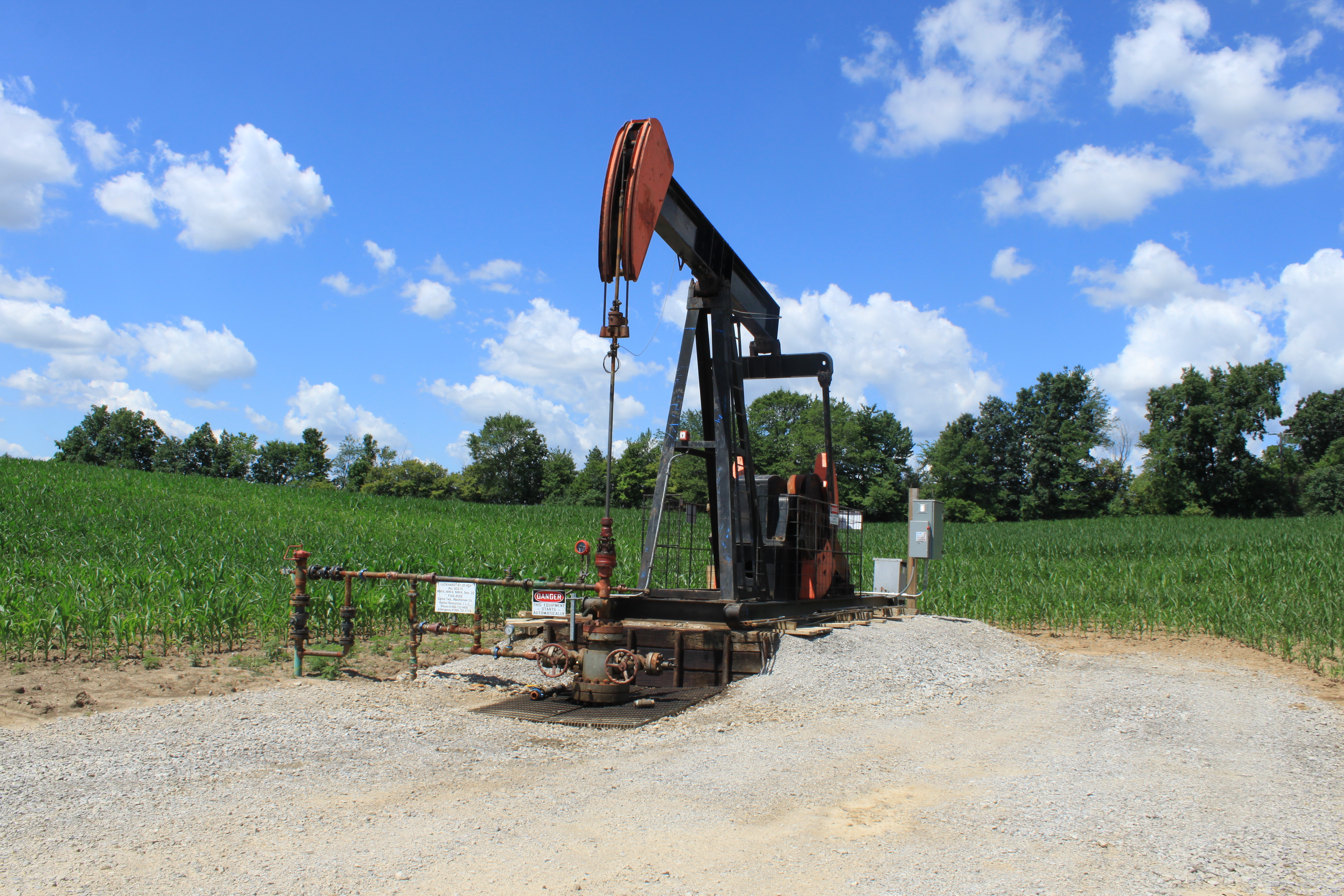
 Figure 1. The preferable kind of corn-field-based fuel, brought to you by a corn field in Michigan. SOURCE
As a result, I’m a long-time opponent of turning corn into fuel. I think it is a crime against the poor, made the worse by the unthinking nature of the ethanol proponents as they advocate taking food out of poor kids’ mouths.
But that’s not the only way that our monomaniacal insistence on renewable energy is taking food from the plates of the poor. For example, tropical forest has been cleared for oil-palm plantations for fuel. But even that is not what this post is about. This post is about trading food for energy in California, the breadbasket for the nation. Here’s the headline:
Fresno County judge rules in favor of I-5 solar project
Jan 03 – The Fresno Bee, Calif.
A Fresno County judge has ruled that a solar energy project along Interstate 5 can move forward despite arguments from the state farm bureau that it will eat up valuable California farmland.
The decision, which comes as good news to the state’s burgeoning solar industry, is the first handed down in the ongoing land war between solar developers seeking real estate for renewable energy and Central Valley farmers trying to protect their tillage.
While the ruling pertains only to the Fresno County project, the decision sends a message across the Valley that agriculture doesn’t necessarily reign supreme.
“I do think it gives a boost to the solar development community,” said Kristen Castanos, a partner at the law firm Stoel Rives in Sacramento who has represented energy ventures and tracked solar efforts on farmland. “This gives counties and developers a little more confidence in moving forward.” SOURCE
This is unbelievably short-sighted. The only good news is that compared to say buildings, it’s much easier to remove a solar installation and return the land to actually producing food. Not easy in either case, but easier for solar. But the good news stops there.
The bad news is, the power thus produced will be much more expensive than power from either fossil fuels or hydropower. But both fossil fuels and hydro are verboten under Governor Jerry “Moonbeam” Brown’s plan to get 30% of all electricity from renewable sources, with “renewable” meaning “renewables other than hydro”. Thirty percent! This madness has already given us some of the highest electrical rates in the country, and we’re not even near to 30% renewable yet.
The worse news is what the dispute was about. California has a strong farmland act, called the Williamson Act. If you put your farmland under the Williamson Act, you can’t develop it, it has to stay farmland. In exchange you get various tax advantages. The important thing to note is that it is a legal contract between the State of California and the owners of the land. This is to prevent the landowner from taking the benefits and then developing the land.
In this case, the article cited above goes on to say (emphasis mine):
Superior Court Judge Donald Black found last month that Fresno County officials acted appropriately two years ago when they canceled a farm-conservation contract that allowed a solar development to proceed on ag land near Coalinga.
The California Farm Bureau Federation sued the county, alleging that the Board of Supervisors did not have the right to cancel the contract put in place under the state’s farm-friendly Williamson Act.
Black said county supervisors met Williamson Act requirements for canceling the contract.
“All parties concede the development of renewable energy is an important public interest both in the state of California and in Fresno County,” Black wrote.
I’m sorry, but there is no public interest in wildly expensive solar power. Nor should County officials be able to break a legal contract at their whim, based on some fanciful claim of a public benefit. The only people being benefitted here, above the table at least, are the owners of the project. The owners will be paid a highly inflated price for their power, which I and other ratepayers will be forced to subsidize. Expensive subsidized energy is not in the public interest in any sense.
In any case, breaking a Williamson Act contract to put in a solar installation definitely reveals the profound hypocrisy of the people behind the project and the useful idiots that support it. They’re approving massive, hideous development on prime farmland in order, they claim, to save the environment. Yeah, pave it to save it, that’s the ticket …
It also sets an extremely bad judicial precedent for future breaking of Williamson Act contracts. Since Kelo vs. New London the expansion of the “taking” powers of governments under the infinitely flexible rubric of “public interest” has ballooned unbelievably. Now we are to the point where they can even take away Williamson Act protections.
The Williamson Act is there to protect the totally irreplaceable, amazingly productive farmlands of California. The Fresno County officials are breaking the intent and spirit of the Williamson Act so that private developers can make a fortune picking the ratepayers’ pockets … and that’s supposed to be in the public interest? Spare me. For me, a kid who grew up on the good rich California earth, that’s a very sad day.
So yes. The idea that you shouldn’t allow the development of solar installations on some of the world’s finest farmland, not just any farmland but farmland legally protected under the Williamson Act, appears to be history in Californica. Infinitely stupid.
Y’know, I love the land here—the fold and break of the coastal hills dropping into the ocean; the wide valleys full of farms; the Sierra Nevada Mountains, where I grew up, towering over the Central Valley; the crazy, blazing deserts; the forests and groves full of deer and fox and mountain lion; and my own little corner where I live in the middle of a redwood forest, with a tiny triangle of the sea visible through the coastal hills. What’s not to like?
But I am roundly fed up with the government, and with the ‘lets power the world on moonbeams, we can all ride high-speed unicorns for transportation and just eat veggie-burgers’ crowd of folks that thinks losing irreplaceable farmland is a good thing in a hungry world, and thinks that hydropower is not renewable energy …
Regards to all,
w.
SAMURAI says: “2) LFTRS don’t require water, so large cooling towers aren’t required. ”
The cooling tower is to cool the steam used to generate power. The reactor is just a heat source, boiling water that is used to run a turbine. The water must be cooled before being returned to the heat source and turned into steam in the closed system. In essence, the loop works in the temperature difference between the heat source (reactor) and the heat sink (cooling tower). It is like when a water wheel is used to capture the energy when water runs downhill from a high elevation to a low one. The greater the distance (often called the “head”), the greater amount of energy to be tapped.
One developer of LENR, Rossi has hinted he has been working on a way to generate electricity from the reaction without having to heat a working fluid and running it in a closed cycle to convert it into rotating mechanical energy. But at the very least any source of heat can be used to boil water in a closed loop and turn a generator. That loop always requires some way to cool it, something for the heat energy to “push against”, and thus to have a temperature difference from which energy can be extracted.
thebuckwheat says: January 6, 2013 at 5:42 am
This is a clear example of the horrible effects of ideology trumping economics.
=============================================
Actually, it is your standard US political power play by the agriculture lobby. The real motivation was to jack up the price of grains and put more money into the pockets of farmers. It worked beautifully. Grain prices have skyrocketed since this program was foisted on the public.
Of course, it gets touted as “green and clean” but that is the usual BS to make it palatable for the gullible, and hold the fools still while the farmers reach into their pockets.
The substitute for ethanol is methanol, much cheaper, and in fact gasoline was formulated from methanol before the agricultural lobby pulled this off. This ethanol scam was pulled years before, but the federal courts ruled against it. But now it is the law of the land, thanks to the agricultural lobby.
If Congress were to pass an act making methane a legal option in gasoline formulation, ethanol from corn would disappear and gasoline would be much cheaper.
mpainter
mpainter:
“Yet, here on this posting Willis paints a picture of a “hungry world” that can’t afford tortillas: “I’ve known too many people for whom expensive tortillas are unobtainable”.
Well, Willis, I suppose that you will let us know when you finally make up your mind about things.
================
I would suggest that if legislation is suddenly introduced that takes land out of food production for some reason, food prices will temporarily rise. Given that there are poor people in the world who spend most of their income on food, this will – imho – make these people hungry, where before they got by. I can see nothing that in any way contradicts the view that human have the capacity to match food production to population needs. There have always been short term dislocations along the way, whether by pestillence, drought, war or other reasons, such as Government interference in free markets.
Seriously painter, your eagerness to knock Willis for his anti-Malthus views damages the quality of your posts and appears childish.
I see some property rights mouthbreathers showed up. Folks need to realize that the farmer was the one to initiate this action, not the county. The cited article implies that county officials went after the land, but they were only following the property owner’s wish.
Looking at the rules for terminating Williamson Act contracts, we see that solar easements can only be applied to farm lands that are deemed “marginally productive or physically impaired land.” Put in market terms, that means the farmer was not making any money from this land. There is plenty of underproductive farmland in the Central Vallley these days, and more each year as the former farmlands become too salty to farm (although that mostly applies to the San Joaquin Valley). Putting solar in Fresno county avoids long transmission lines and is a great way to exploit exhausted farm land.
@theBuckWheat–
Water is an absolutely terrible medium to work with as it has a very narrow liquid range of just 1Cto 99C. To get higher temperatures, the water must be kept at extremely high pressures of up to 150 atmospheres, which is just asking for trouble and I personally and luckily lived through the Fukushima Daiichi disaster.
Liquid Fluoride Thorium Reactors (LFTRs) use liquid salts that have a very wide temperature range in liquid form AT SINGLE ATMOSPHERIC Pressure from 300C to 1600C, which is perfect to generate heat energy. Try getting water to 1600C….. You can’t do that unless it’s under insanely high pressure.
LFTRs are accordingly much safer than uranium solid fuel reactors. There are just too many things that can go wrong with them as I’ve witnessed personally…
I love LFTR technology but it’s insane to continue to use unsafe and inefficient solid fuel reactors.
There are absolutely no good reason to continue using solid fuel reactors other than producing bomb-grade fissile material, but in this day in age, we have too much of it already.
LFTRs seem to be by far the best option available, but I’m always open to new ideas.
Vince Causey says: January 6, 2013 at 7:20 am
I would suggest that if legislation is suddenly introduced that takes land out of food production for some reason, food prices will temporarily rise. Given that there are poor people in the world who spend most of their income on food, this will – imho – make these people hungry, where before they got by. I can see nothing that in any way contradicts the view that human have the capacity to match food production to population needs. There have always been short term dislocations along the way, whether by pestillence, drought, war or other reasons, such as Government interference in free markets.
=================================
You don’t seem to realize that you have paraphased Malthus here.
<<<<<<<<<<<<<<<<<<<<<<<<<<<<>>>>>>>>>>>>>>>>>>>
Thank you very much Willis, another excellent article!
I think we are looking at a rise of fascism in the world, now covered-up in environmental green clothes.
The fascists despise free humanity, they would put us in ‘reservations’ with no political representation.
This chameleon looks like a sick sheep but is in reality a saber-tooth tiger come from the past (it never really left).
Good science must be preserved and left alone to develop a better future, I think.
Vince Causey says: January 6, 2013 at 7:20 am
Seriously painter, your eagerness to knock Willis for his anti-Malthus views damages the quality of your posts and appears childish.
<<<<<<<<<<<<<<<<<<<<<<<<<<<<>>>>>>>>>>>>>>>>>>>
I see that you have visited that thread. You no doubt saw that I went to a great deal of trouble to aid Willis in his understanding of that topic, and even provided him beneficial aid to help him in refuting the catastrophists like Erhlich. I am sure that Willis was duly grateful for that help.
Above, I try to help Willis out of his error of seeming to first speak out of one side of his mouth and then the other, for the sake of expediency in argument. Such inconsistentcy can be avoided, if one tries. I do not see how that is “childish”.
Chuck Nolan says at: January 6, 2013 at 3:02 am
kakatoa says:
January 5, 2013 at 8:44 pm……………
Governor Brown has stated in the past that he is in favor of requiring 40% of our electrical energy coming from RE sources (vs the 33%RES that is the current mandate).
“That’s fine. Live any way you want. Just don’t make the rest of us pay for it.”
Chuck,
I am trying to live the way I want, but it is getting a bit harder to do as my costs for essential goods and services are going up at a faster rate then my income. I don’t classify myself as a free rider (“having the rest of us pay for it”) as I pay on the margin Tier 3 Non Care prices for my electrical energy even with my little PV system. My baseline level has been decreased in order to meet my service providers income requirements while at the same time not having any additional social discord (i.e. voter revolts) over the rather high marginal prices that Tier 3, and 4 electrical energy users pay for a kwh of energy. The difficulty the CPUC, the electrical service providers and legislature have is that the costs to provide RE is more then the alternative. In order to meet our legislatures mandated RE standard, that I voted NO on when given a chance by the way, in the time frame prescribed large scale RE projects were needed.
The CPUC who end up approving the contracts between the electrical energy service providers (PG&E, SCE, etc) and the investors who put their capital up to install and operate the new RE electrical generation facilities (i.e. the PV farm noted above) are a bit concerned about what it costs to meet the RES. The CPUC is also the public body that end up approving who actually has to pay (via the rate schedules) for the increased costs of providing the energy.
We do have some data on what its costs to put RE in place (Governor Brown’s 33 or 40%RES goal):
http://www.cpuc.ca.gov/NR/rdonlyres/3B3FE98B-D833-428A-B606-47C9B64B7A89/0/Q4RPSReporttotheLegislatureFINAL3.pdf
“Figure 6 below shows the weighted average TOD-adjusted cost of contracts approved by the CPUC in that year. From 2003 to 2011, contract costs have increased from 5.4 cents to 13.3 cents per kWh. One important reason for this this increase is that the IOUs contracted with existing renewable facilities at the beginning of the RPS program and with mostly new facilities in later years. In order to meet the ambitious 20% and 33% RPS targets, the IOUs have to contract with new facilities, which require higher contract costs to recover the capital needed to develop a new facility.”
footnote 8 “Actual renewable energy payments are adjusted by each IOU’s individual TOD factors and the time that a project generates electricity. For example, since solar PV generates electricity on peak, its electricity is more valuable and the solar PV generator receives a higher payment based on the TOD adjustment.”
So we know that it costs more per kwh to provide the electrical energy to meet the RE standard- PLEASE note that the 13.3 cents noted above ON AVERAGE is for the generation part of getting the energy to where it is going to be used. So the rest of the cost allocations are not included in what it costs to get that kwh to a location that it can be used (these costs: transmission, distribution, public purpose programs, DWR bonds, etc., have to be accounted/allocated to someone). So to your concern- who pays for it. That question was discussed a bit at a CEC meeting last year:
Agenda- Retail Rate and Cost Issues with Renewable Development, May 22, 2012
http://www.energy.ca.gov/2012_energypolicy/documents/2012-05-22_workshop/2012-05-22_agenda.pdf
Our legislature, governor and the CPUC have a concern for the poor’s costs for essential services so they have shielded them for the costs of meeting the RES for the most part via the rate schedules (see the CARE rates which are noted here for PG&E- http://www.pge.com/tariffs/electric.shtml#RESELEC ). As you point out someone still has to pay for the higher costs of providing the energy – hence the legislature and CPUC are now going to let Non CARE Tier 1 and Tier 2 residential prices increase every year. As we, as in the state via our energy policies, still want folks to conserve energy via efficiency improvements (which unfortunately take capital…..) or by going without that marginal kwh we (as in the CPUC) have decided that Tier 3 and above electrical energy usage for folks in the CARE program should pay a bit more for their energy usage. Unfortunately, a lot of the poor still have to accomplish the task of cleaning their laundry. If they happen to have the equipment to accomplish this rather mundane, but essential service, at home they will still be shielded a bit from the costs, but if they have to accomplish this task at a Laundromat they will get to experience the full increased costs for energy as our commercial energy costs are going up comparable to the AVERAGE retail prices in the residential market.
As you can tell it’s getting a bit harder for the CPUC, governor, and legislature to shield the poor from the higher costs of providing electrical energy. It appears that they may be able to accomplish this goal by how they allocate the rebates from the AB 32 carbon market sales. This approach isn’t going to help out the almost poor by the time the overhead costs to implement AB 32 are taken into account, but it will give the almost poor an incentive to conserve.
So back to your original comment- don’t ask me to pay…….. I think you need to ask that question of the folks that determine how (and why) the electrical (and gas for that matter) rates are set not me. I can confirm for you that if your happen to fall in the poor income category it is better to live in an area that is regulated by CPUC. They are doing their best to ensure that your essential needs for energy are keep to a minimum cost wise. As there is no such thing as a free lunch they are finding it more difficult to meet this challenge.
mpainter,
“You don’t seem to realize that you have paraphased Malthus here.”
<<<<<<<<<<<<<<<<<<<<<<<<<<<>>>>>>>>>>>>>>>>>>
Does that make me a profound thinker, then?
mpainter,
“Above, I try to help Willis out of his error of seeming to first speak out of one side of his mouth and then the other, for the sake of expediency in argument. Such inconsistentcy can be avoided, if one tries. I do not see how that is “childish”.
Fine. Willis is a big boy and can certainly take care of himself without my help (if, indeed he would consider it to be helping) :).
Lew Skannen says:
January 5, 2013 at 5:56 pm
Has anyone worked out how much diesel alone goes into each litre of ethanol produced. I suspect that it is getting close to a litre…
>>>>>>>>>>>>>>>>>>>>>>>>>>>>
Yes
http://www.news.cornell.edu/stories/july05/ethanol.toocostly.ssl.html
http://oilprice.com/Alternative-Energy/Biofuels/Ethanol-The-Latest-Incarnation-Of-Snake-Oil.html
Mpainter cannot claim to have in any way to have rebutted the fact that Malthus was wrong in his primary axiom – and in some of his speculations. Mpainter resorted to ad homs of Willis E when he lost the argument.
Scientists have a stake in Malthus because he used science to make sweeping prophecies about the future, about future events, and it went under the radar as if he was just making a scientific prediction. Scientists who are practicing prophetic roles about the future are soothsayers and are not scientists. Science cannot tell the future. Scientists who claim they can tell the future are abusing science and are also involved in the immoral activity of convincing people that this is a role that science can play.
Instead, anyone who is practicing science will understand its limitations. We do not understand all of the systems of the earth or the state of future scientific discoveries.
S. Meyer says:
January 5, 2013 at 6:49 pm
Hi Willis,
As always, a thought-stimulating post. Now, I have noted that many people posting here are very much opposed to government regulation, incentives, taxes etc to influence the way we produce energy. My question then is this: Imagine there was no government involvement at all, no energy-related taxes, no requirement to put ethanol in gas, no subsides for biofuel.. If that were the case, and some entrepreneur would find it profitable to build solar panels next to I5 – would you still be opposed?
>>>>>>>>>>>>>>>>>>>>>>>>>>>
A contract was made and that contract should be honored. If you want a good example of contracts not being honored look at zero reserve banking and home owners, another horrible scam the government endorses by not enforcing contracts. link
S Meyer: I should comment that I can see both a Coal plant and a Nuclear plant when I look out my window while typing. I have zero problem with that but I DO have a problem with Wind and also with solar because they are complete and utter SCAMS!
Willis,
James Madison wrote in, Federalist Number 44
Kum Dollison says:
January 5, 2013 at 9:44 pm
You guys are about to convince me that the “warmers” are right.
If you people are this willfully wrong about about all renewables,….
>>>>>>>>>>>>>>>>>>>>>>>>>>>>>>>>.
And you just proved that you have drunk the kool-aid instead of actually looking at the engineering.
I WANT to get the heck off the grid. I have 100 acres and am on top of a hill. My husband (a physicist) and I and a very brilliant friend looked into all the various options. The ONLY real ‘renewable’ outside of Thorium is Geothermal and that is because I have ten acres of pasture to bury the pipes in. Wind/solar using two ponds at different heights above sea level as the battery comes in a distant second.
Vince Causey says: January 6, 2013 at 9:26 am
Fine. Willis is a big boy and can certainly take care of himself without my help (if, indeed he would consider it to be helping) :).
<<<<<<<<<<<<<<<<<<<<<<<<<<<>>>>>>>>>>>>>>>>>>>>>>>
Could be that we are fixing to find out some things there. Stand by.
Vince Causey says: January 6, 2013 at 9:23 am
mpainter,
“You don’t seem to realize that you have paraphased Malthus here.”
<<<<<<<<<<<<<<<<<<<<<<<<<<>>>>>>>>>>>>>>>>>
Does that make me a profound thinker, then?
============================
<<<<<<<<<<<<<<<<<<>>>>>>>>>>>>>>>>
Chuckle, chuckle. I will say that you are one of those nasty malthusians.
Climate Ace says:
January 5, 2013 at 11:00 pm
There are various ways of looking at this, but I think the most reasonable way is to say that we are internalising the true costs of a fossil fuel economy which has indiscriminately picked all our environmental pockets for centuries.
Those costs are sunk. You are arguing that today’s consumer’s pay the cost of today’s fossil based energy + the costs of the negative externalities of the past, while ignoring any positive externalities. If you want us to pay for the ‘sins’ of the past , then you need to net out the positive externalities before giving us the bill.
What are the externalities today? When BP spilled oil in the Gulf, they paid fines, they created clean-up jobs, they spent billions of dollars in costs, so how much do we still owe you for that negative ‘externality’?
What about the positive externalities associated with fossil fuel production? You and your kind like to ignore those. The fact is that the development of fossil fuel with cheap and abundant electricity has lifted billions of humans from subsistence to a comfortable standard of living. What dollar value do you place on the increase in well-being for a person that shared a dank dwelling with pigs and goats until cheap and abundant electricity created a job that provided enough income to improve his/her standard of living? I am guessing that person, and his/her children would say you are full of it.
Go ahead and delude yourself by ignoring the positive externalities of fossil fuels and just as importantly, ignoring the negative externalities of ‘green’ alternatives like solar and biofuels. I am all for research and development, but I detest those like you, who choose to force an increase in the price of electricity on the billions of people around the world trying to pull themselves out of poverty. Let me guess, your solution to expensive electricity involves a tax on fossil fuel that will make electricity more expensive.
Duster and S. Meyer: Reread my post. IF wind and solar were viable and all other factors indicated that an area was appropriate, then I would be okay with the plant. IF wind and solar were viable, one could call it a power plant. (I do not see this happening, but if it did…..). As for using farmland for energy, again, all factors need to be considered. There is indeed farmland that is worn out. Using it for a PRODUCTIVE form of energy (which would not include solar) makes sense. Or using surplus corn for ethanol might make sense. MIGHT. As for starving people, humans tend to be the cause of starvation–dictators who won’t let food in, wars, etc. We can grow plenty of food. In the US, food stamps are everywhere and the guidelines just keep going up and up. No one should be hungry in the US.
EM Smith: I am originally from Iowa and was fairly sure it was field corn that was most often grown. I did know corn is basically all edible. Thanks for the review! I had forgotten about popcorn.
Renewable does NOT mean unlimited, even though most people seem to think that is the case. Renewable just means that with the right conditions, the resource can be replaced with a new “batch”. All of this is limited by sun, wind, available land, etc. Plus, there are processing plants, wind and solar traps, transportation. Renewable does not equal unlimited.
Growing crops in the road ditches is interesting. When I moved to Wyoming, hay was harvested from the roadsides. I had not seen that in Iowa–too many regulations. It seems a good idea if we can avoid large lawsuits from people claiming they were startled/frightened by the tractor in the ditch (why do these people have licenses?).
A. Scott says:
January 6, 2013 at 2:19 am
I have written at length about renewable energy. While some unidentified “others” may have provided “extensive data” that shows I’m wrong, a hand-waving statement like that is just an admission you’re either too dumb or too lazy to link to or otherwise cite what your are airily claiming to be “facts”. Maybe they are … but I’m damn sure not taking your word on it.
Moving away from the mysterious “others, if you have a beef with what I wrote,”A.”, you need to come up with:
a) A direct quote of what I wrote, and
b) Some facts that show I’m wrong.
Until then, your stupidly insulting comments just ensure that your post doesn’t get a scientific answer from me.
It seems clear that you think that coming in here and insulting me is the way to get your voice heard. You are living up to the “A.” in your name. I can only assure you, all it does is make you look like a jerkwagon.
For those who would like to read what I actually said about renewable energy instead of getting your information from some random “A.”, see e.g.:
The Dark Future of Solar Energy
Firing Up The Economy
Finally, “A.”, random “facts” are meaningless. You make some wacky claim about the energy it takes to make ethanol … but you neglect to specify just whose “A.” you pulled the information out of.
Look, you seem like a smart guy. Smart guys look around, read a bit, and learn the rules before they open their mouths and seem like a dumb guy ..
w.
How about converting electricity or fuel to food? When that becomes possible, perhaps we can then, morally, begin converting food to fuel. GK
E.M. Smith, thanks so much for the short course in corn (sweet, flint, dent). I love this site. Any idiot can come here and make crazy claims, but there’s always someone out there like E.M. who actually, really, irrefutably does know what he’s talking about to straighten the poor fellow out. It is the world’s best college.
w.
Earlier this month, county supervisors voted to cancel a Williamson Act farmland-conservation contract on 90 acres of prime Class I soil, to allow the parcel to be developed for a large solar power plant. Farm Bureau said the Williamson Act requires that a proposed contract cancellation meet rigorous findings. For example, to find that a cancellation is in the public interest, the benefits of the proposed project must substantially outweigh the objectives of the farmland-protection program, and there cannot be other, unprotected land available for the same use.