Guest Post by Willis Eschenbach
Trading food for fuel, in a world where high food prices already affect the poor, has always seemed like a bad idea to me. If I have a choice between growing corn to fuel SUVs versus growing corn to make tortillas, to me that’s a no-brainer. I’ve known too many people for whom expensive tortillas are unobtainable tortillas to vote any other way.
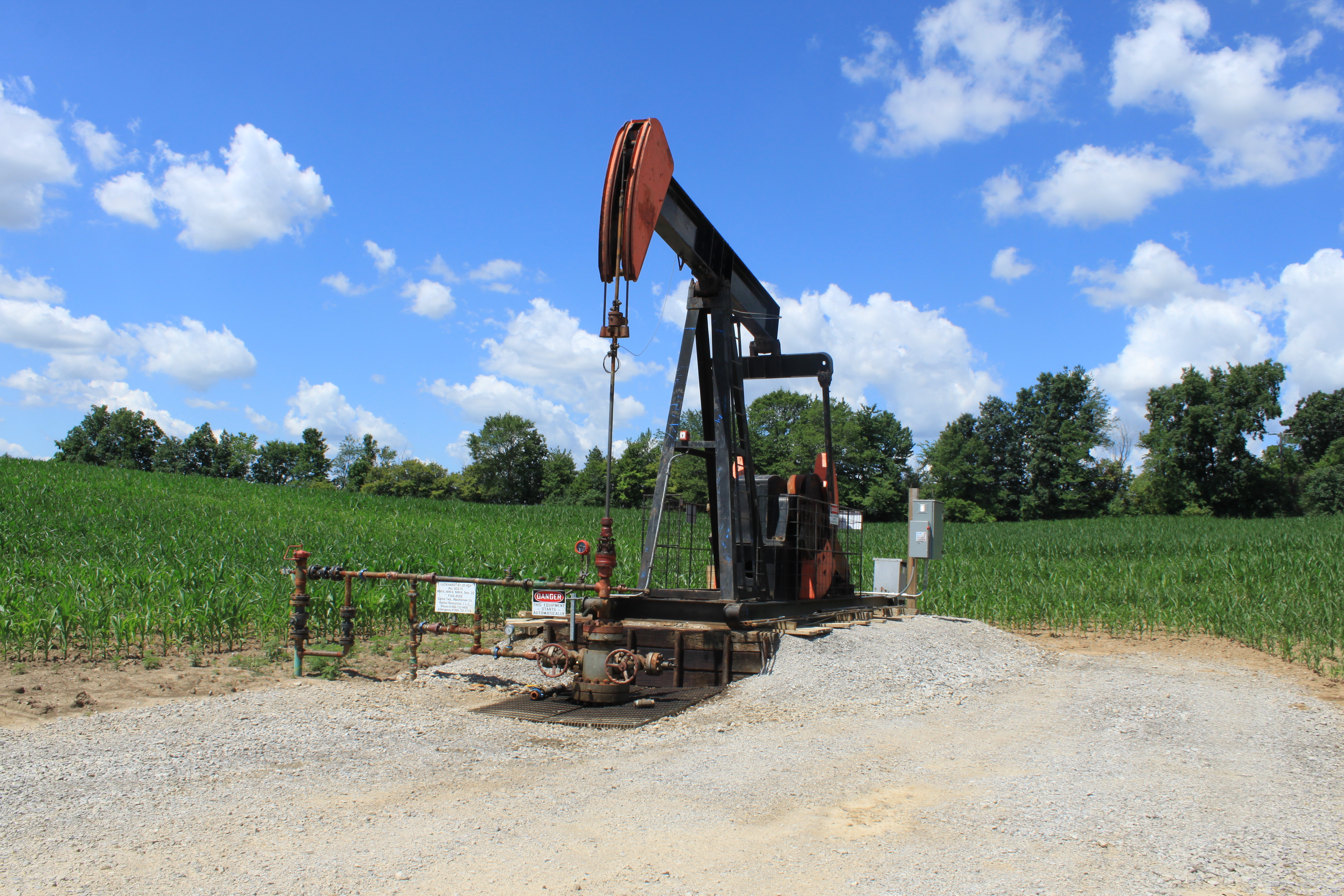
 Figure 1. The preferable kind of corn-field-based fuel, brought to you by a corn field in Michigan. SOURCE
As a result, I’m a long-time opponent of turning corn into fuel. I think it is a crime against the poor, made the worse by the unthinking nature of the ethanol proponents as they advocate taking food out of poor kids’ mouths.
But that’s not the only way that our monomaniacal insistence on renewable energy is taking food from the plates of the poor. For example, tropical forest has been cleared for oil-palm plantations for fuel. But even that is not what this post is about. This post is about trading food for energy in California, the breadbasket for the nation. Here’s the headline:
Fresno County judge rules in favor of I-5 solar project
Jan 03 – The Fresno Bee, Calif.
A Fresno County judge has ruled that a solar energy project along Interstate 5 can move forward despite arguments from the state farm bureau that it will eat up valuable California farmland.
The decision, which comes as good news to the state’s burgeoning solar industry, is the first handed down in the ongoing land war between solar developers seeking real estate for renewable energy and Central Valley farmers trying to protect their tillage.
While the ruling pertains only to the Fresno County project, the decision sends a message across the Valley that agriculture doesn’t necessarily reign supreme.
“I do think it gives a boost to the solar development community,” said Kristen Castanos, a partner at the law firm Stoel Rives in Sacramento who has represented energy ventures and tracked solar efforts on farmland. “This gives counties and developers a little more confidence in moving forward.” SOURCE
This is unbelievably short-sighted. The only good news is that compared to say buildings, it’s much easier to remove a solar installation and return the land to actually producing food. Not easy in either case, but easier for solar. But the good news stops there.
The bad news is, the power thus produced will be much more expensive than power from either fossil fuels or hydropower. But both fossil fuels and hydro are verboten under Governor Jerry “Moonbeam” Brown’s plan to get 30% of all electricity from renewable sources, with “renewable” meaning “renewables other than hydro”. Thirty percent! This madness has already given us some of the highest electrical rates in the country, and we’re not even near to 30% renewable yet.
The worse news is what the dispute was about. California has a strong farmland act, called the Williamson Act. If you put your farmland under the Williamson Act, you can’t develop it, it has to stay farmland. In exchange you get various tax advantages. The important thing to note is that it is a legal contract between the State of California and the owners of the land. This is to prevent the landowner from taking the benefits and then developing the land.
In this case, the article cited above goes on to say (emphasis mine):
Superior Court Judge Donald Black found last month that Fresno County officials acted appropriately two years ago when they canceled a farm-conservation contract that allowed a solar development to proceed on ag land near Coalinga.
The California Farm Bureau Federation sued the county, alleging that the Board of Supervisors did not have the right to cancel the contract put in place under the state’s farm-friendly Williamson Act.
Black said county supervisors met Williamson Act requirements for canceling the contract.
“All parties concede the development of renewable energy is an important public interest both in the state of California and in Fresno County,” Black wrote.
I’m sorry, but there is no public interest in wildly expensive solar power. Nor should County officials be able to break a legal contract at their whim, based on some fanciful claim of a public benefit. The only people being benefitted here, above the table at least, are the owners of the project. The owners will be paid a highly inflated price for their power, which I and other ratepayers will be forced to subsidize. Expensive subsidized energy is not in the public interest in any sense.
In any case, breaking a Williamson Act contract to put in a solar installation definitely reveals the profound hypocrisy of the people behind the project and the useful idiots that support it. They’re approving massive, hideous development on prime farmland in order, they claim, to save the environment. Yeah, pave it to save it, that’s the ticket …
It also sets an extremely bad judicial precedent for future breaking of Williamson Act contracts. Since Kelo vs. New London the expansion of the “taking” powers of governments under the infinitely flexible rubric of “public interest” has ballooned unbelievably. Now we are to the point where they can even take away Williamson Act protections.
The Williamson Act is there to protect the totally irreplaceable, amazingly productive farmlands of California. The Fresno County officials are breaking the intent and spirit of the Williamson Act so that private developers can make a fortune picking the ratepayers’ pockets … and that’s supposed to be in the public interest? Spare me. For me, a kid who grew up on the good rich California earth, that’s a very sad day.
So yes. The idea that you shouldn’t allow the development of solar installations on some of the world’s finest farmland, not just any farmland but farmland legally protected under the Williamson Act, appears to be history in Californica. Infinitely stupid.
Y’know, I love the land here—the fold and break of the coastal hills dropping into the ocean; the wide valleys full of farms; the Sierra Nevada Mountains, where I grew up, towering over the Central Valley; the crazy, blazing deserts; the forests and groves full of deer and fox and mountain lion; and my own little corner where I live in the middle of a redwood forest, with a tiny triangle of the sea visible through the coastal hills. What’s not to like?
But I am roundly fed up with the government, and with the ‘lets power the world on moonbeams, we can all ride high-speed unicorns for transportation and just eat veggie-burgers’ crowd of folks that thinks losing irreplaceable farmland is a good thing in a hungry world, and thinks that hydropower is not renewable energy …
Regards to all,
w.
johanna said @ur momisugly January 6, 2013 at 5:48 pm
and nemo said @ur momisugly January 7, 2013 at 2:53 pm
Wow! Déja vu… all over again 🙂
OOPs I forgot to add the last Link is excerpts from the book by Clinton’s favorite professor who he honored during his Inaugural Address, Professor Carroll Quigley.
TPG, there is a difference between projections and predictions. It is reasonable to project, based on past experience and known science, that the sun will rise in the East tomorrow. It is quite wrong to predict it, because something could change (we could be hit by a massive asteriod, or whatever) that makes the prediction inaccurate.
Malthus’ error was to assume that the relationship between food supply and population was constant, a sort of law of nature, so he strayed from reasonable projection to inaccurate prediction. In doing so he created in his mind and the minds of his followers the false notion of an immutable law.
Stay safe – trust the fires will be brought under control soon.
johanna says: January 7, 2013 at 3:26 pm
mpainter says: See what you think, johanna
January 7, 2013 at 6:38 am
The Pompous Git says: January 6, 2013 at 10:08 am
Vince Causey said @ur momisugly January 6, 2013 at 6:59 am
For centuries, population sizes remained fairly static – they occasionally crashed such as during plagues, but grew back to achieve a new status quo.
===========================
Except populations didn’t remain static for centuries. For example, Medieval Britain suffered 95 famines, and France at least 75. The famine of 1315–6 is estimated to have killed at least 10% of England’s population (500,000). This was a period of relative food abundance (think Medieval Warm period). The Little Ice Age saw a great increase in the <<<<<<<<<<<<<<<<>>>>>>>>>>>>>>>>>>>>>>>>
Yes, Git, it is true such disasters overtook populations from time to time. Vince’s point was that the decrease was temporary and that population was restored within a generation or less, which is not so long when viewing the big picture.
This was the school of Malthus, who saw from history that disasters such as crop failure scythed down the population from time to time, yet such disasters were exceptional. He observed that the potential fecundity of populations meant power of unlimited increase, yet the limited food resources of his day seldom led to famine because such increase was held in abeyance. He then asked the important question: why was this so?- that is, why were these incidents of famine exceptional in a world predicated on unlimited population increase?
His answer to that question was the foundation of such studies as population dynamics and demographics: the behavior of populations. Malthus saw that populations acted in such a fashion to “govern” increase through various types of behavior, and he enumerated the different aspects of this “governance” in detail. This is the contribution of Malthus. It is true that his prospect included a vision of famine, pestilence, war, etc., but these were the realities of his day, as well as the teaching of history.
The catastrophists, such as Erhlich, ignore the teachings of Malthus in great part. They focus on the prospects of overpopulation, famine, war, civil strife, etc. and ignore the postulates that Malthus formulated as restraints against population increase. And so it is that Malthus has been presented as a catastrophist in our day, because disasters sell books, newspapers, movies, etc., and nobody is interested when someone says “not to worry”.
This brings us to the CAGW crowd, who are essentially catastrophists, but also boobs, half-wits, frauds, etc. They use the same sort of tactics as Erhlich & Co. And this is why people like Willis see red when someone suggests that Malthus was right in the main.
But now Willis perhaps sees that the “real” Malthus can be used to pooh-pooh the catastrophists and refute them by the writings of the same Malthus that they claim as authority for their panic mongering.
Now, I have simplified Malthus somewhat. His writings covered many more aspects than I have given. He addressed economics, formulated theories on wages, rent, surpluses, and more. But these were all within the purview of his study of the behavior of population.
He also recognized that population increase led to increase in food production by adding to more intensive cultivation of the land. Yet he saw that the power of population increase, which he termed as “geometrical”, surpassed the power of food increase, which he termed as “arithmetic”. This terminology, however, was not meant to characterize his demography as a matter of bald mathematical constraints.
Malthus failed to foresee the developments in agronomy which led to our present food surplus. No matter, the principles of this profound thinker of demography, population dynamics and economics are still respected in those disciplines. Yet he was controversial in his day, and he remains controversial. But I have to believe that much of that stems from ignoring the real contributions of Malthus and concentrating on the prospects of disaster that were addressed in his postulations.
One more thing. Perhaps some have seen my comments wherein I confront the CAGW idiots with the prospects of famine in the future. I do this to piss them off. They wail about doomsday warming, I wail louder about doomsday cooling. Nothing pisses them off more or shuts them up faster. They retreat, muttering dark prophesies against my grandchildren. This is the way I amuse myself, and it does not necessarily mean that I subscribe to catastrophism. But I do know as a solid, incontrovertible fact, that life flourishes in a warmer world, and that cooling is the scythe.
@Gail Cobs wrote:
“This is why I keep shouting about FOOD being the next BIG FINANCIAL BUBBLE! It is the most dangerous financial bubble yet and these d&*&^m A$$… are playing with sparking revolutions as the “Arab Spring” has shown.”
=======================================================================
Historically, corn and wheat futures have worked to stabilize market prices, not increase them. This can easily be seen by looking at food items, like onions for example, that don’t have future trading; onion prices fluctuate wildly from month to month and year to year.
There will always be the occasional bubble, and free markets eventually clear these out with big winners or big losers depending upon whether a trader is short or long on a trade.
What’s happening now is that government intervention in free market systems is causing these bubbles to grow larger and larger and government intervention is allowing these bubbles to clear. Even if they do pop, governments immediately try to reinflate or to intervene before the market has a chance to clear out the malinvestments, in an effort to create the impression of economic growth.
The biggest problem are central banks keeping interest rates too low. They are doing this for two reasons. First, and most importantly, they are keeping them low to enable governments to run up astronomical debt. Historically, interest rates have been around 6%. If, for example, the US were paying 6% on its $16.7 trillion debt, that would be $1 TRILLION/yr in interest payments, or about 50% of total tax revenues, which would be unsustainable. Second, if interest rates are kept low, investors aren’t able to receive adequate returns on savings, so they are forced to assume more risk-on investments in stocks, real estate and commodity markets, which leads to bigger and more frequent bubbles.
Again, Governments love to create bubbles, as they creat the ILLUSION of economic growth, when it’s actually artificial demand created by insane government monetary and fiscal policies, which are unsustainable.
This insanity cannot last much longer. The US Federal Reserve is currently purchasing around 90% of new US Bond auctions WITH PRINTED MONEY, which is destroying the dollar and causing all commodity prices to rise.
Eventually, just the exchange rate risk alone will force foreign central banks to dump their US bonds for whatever price they can get, which will force bond prices to drop, interest rates to soar and eventually a US default of their national debt.
So, yes, some of the rise in food commodity prices can be attributed to increased speculation, but even this is being caused by unsustainable government fiscal and monetary policies.
johanna said @ur momisugly January 7, 2013 at 3:26 pm
This projection/prediction dichotomy is not something that arises in either the philosophy of logic, or the philosophy of science. Indeed, the term projection (as in a forecast based on current trends) appears to have entered the language in 1952:
Predicting the rising of the sun does not appear to be related to trend analysis. Nor does Malthus’ empirical observation that throughout all of the history of which he was aware, that population appeared to be limited by the availability of food. He was aware that given the technology of the day humans were unable to do any more than convert a fixed amount energy from the sun. He was unaware that fossilised energy of the sun from ages past was about to be exploited and thus alter the pattern of agriculture and the distribution of food from where it was in excess (glut as he termed it) to where it was needed. But there were no figures to conduct a trend analysis from until after the first census in 1801 and the four that occurred in his lifetime were little more than headcounts. His false assumption was simply that what had occurred in the past, would continue to occur in the future.
This is the problem of induction: when it works, it works well, except when it doesn’t. And we can never justify it. It’s a strange yet fascinating world.
We are well away from the bushfires at this time. I am truly glad to be retired from fighting them.
Willis
As a reply to you I went back and redid some of the past research I’ve posted about here. Below are a few of those data points.
Sourced from:
http://www.ers.usda.gov/data-products/feed-grains-database/feed-grains-yearbook-tables.aspx#26766
I’m going to focus a bit on Mexico – one, since you gave it as an example, and two, since they are the 2nd biggest corn importer (behind Japan), and are highly reliant on the US for their corn.
For many years the United States has been the worlds majority provider of the worlds corn needs.over roughly the last 2 decades – 1990 to 2011 – the US has provided an average of nearly 63% of the total world corn exports. And from the 2003 acceleration in use of corn for ethanol thru 2011 the US has provided an average of 57.3% of the worlds export corn.
When it comes to Mexico the numbers are even more impressive. From 1990 to 2011 – the US exports to Mexico supplied from 81% to 132% of Mexico’s total corn imports – with an average of over 96%.
And from the 2003 acceleration in use of corn for ethanol thru 2011 the US exports to Mexico supplied from 91% to 111% of Mexico’s total corn imports – with an average of over 97%.
In 14 of the last 22 years the US has supplied all, or more than all, of Mexico’s total corn imports. What that means is in many years we provide enough export to Mexico that they are exporting some of the corn we provide them.
And that trend is increasing. From 1990 thru 2011 Mexico averaged 4.7 million bushels of corn export. In 2005 and 2006 they exported over 8 million bushels, in 2009 they exported 25.3 million and in 2011 they exported 11.8 million bushels. The US has provided so much corn to Mexico in recent years that they have exported 77 million bushels since 2000.
Since 2000 alone worldwide corn exports are up 36.8%. Since 1990 worldwide corn exports are up over 75%, Since 1990 US corn production is up 56% and since 2000 US corn production is up 24.6%. Since 1990 US corn exports are up 18.5% – since 2000 US corn exports are up 17%.
The US met all of the domestic food, feed, and ethanol demand, and all of the export demand in 2011 and still had 1 billion bushels of corn in our reserves.
The US has had several mediocre years (2010 and 2011) where production remained flat, and will have a somewhat worse year for 2012 with lower yields from drought, That said we have still provided 91% of ALL of Mexico’s corn imports. And in those last 2 years Mexico has still had enough corn to export 15.2 million bushels
Although US production has been flat the last several years total production remained in record 12 to 13 billion bushel territory (12.65 billion bushel average 2007-2011). 2012 will see a drop to appx 11 billion bushels production but the majority of that decrease was made up through a reduction in ethanol use.
Total US exports have dropped slightly since 2000 – by a 389 million bushels, however the other main corn exporting countries – Argentina, Ukraine, Brazil, India and the EU27 have increased their exports by 1.4 billion bushels during the same time.
It is well past time that other countries step up and do their share. And it is good to see at least a nominal effort beginning.
America has shouldered the responsibility long enough, at many times providing over 80% of the total worldwide corn exports. Since 2000 alone we’ve averaged 58% pf the worldwide corn exports.
When it comes to Mexico we have provided essentially all their corn imports for many years. Our corn exports to Mexico have continued to increase – nearly doubling from 2000 to present. Despite a terrible year ourselves we increased exports to Mexico this year by over 35% from last year, of which Mexico had enough to export some 11.9 million bushels. .
Sorry Willis – I have zero doubt about the authenticity of your story about the Mexican kids. But the responsibility does not lie with America, nor with the corn we use for ethanol.
We supply a vast majority of the worlds corn – 57% avg since 2000, compared to a combined 30% of the next FIVE nations combined. We meet all of the domestic, food and feed requirements, all of the ethanol requirements, all of the export requirements and still had a billion bushels in reserve at the end of 2011.
And even if it did – there are many other solutions. Such as putting a stop to the incredible waste of food here … see:
http://wattsupwiththat.com/2010/10/03/wasted-food-a-huge-energy-gobbler/
A. Scott says: January 7, 2013 at 7:35 pm
When it comes to Mexico the numbers are even more impressive. From 1990 to 2011 – the US exports to Mexico supplied from 81% to 132% of Mexico’s total corn imports – with an average of over 96%.
==============================
How can the US supply over 100% of Mexico’s total corn import’s? Absurd figures like this demolish your whole argument, for who will believe any of the other figures?
again: “91% to 111% of Mexico’s total corn imports “
mpainter, don’t waste your breath or pixels. I have done 15+ rounds with Scott before, complete with statistics up the wazoo, and he just keeps coming back like one of those annoying, yappy little dogs. He’s a Believer, and if it wasn’t so hackneyed, I’d post the YouTube link to the Monkees’ “I’m a Believer.”
It’s not a bad exercise if you want to refresh yourself on the latest statistics. But in terms of debate – forget it. He Believes. It’s a faith-based thing with him.
mpainter ..
The source is right there. Table 22 and 27 if I remember.
I checked a number of different ways and those were the numbers reported by USDA. Different sections might have very slightly different reporting criteria for different data, and in a lot of the work I did I had to be converting back and forth from “million bushels” to “1000 Metric Tonnes” units of measure … but not that particular data. I certainly could have made an error, even more easily so with being under the weather, but I’m reasonably certain the numbers I reported are accurate. I build cross checks into most of my work – especially where there are conversions involved.
Other documentation bears out the reliance of Mexico on the US for corn – such as:
http://www.reuters.com/article/2012/10/09/mexico-corn-idUSL1E8L9GS120121009
BTW – LexMundi has most of the USDA data in easier to find formats – her is US Corn:
http://www.indexmundi.com/agriculture/?country=us&commodity=corn&graph=area-harvested
I’ll re-check later when I get time … I think though the numbers are correct – the total import over last 10 years by Mexico is slightly higher than total export from US to mexico – I imagine there are some reporting delays that may be involved but the overall data is correct…
I had some the data in an online file … there is a slight reporting difference between Table 22 and 27 – one is Sep-Aug “year” the other “Oct-Sep” … as you can see by the 2 “Total US Exports” the difference is vey minor.
Computing the “US export as % total Mexico Imports ” does use data from both Table 22 and 27, and while “Total US Exports” is not part of the calculation there may be some small differene between teh two tables.
That said any difference is minor, other sources confirm Mexico gets pretty much all their corn imports from the US. and US exports to them have been largely unaffected by the introduction of ethanol.
http://tinyurl.com/US-Mex-Corn
A. Scott says:January 7, 2013 at 11:08 pm
==================================
you poor fellow
I agree, mostly. The Kelo decision, and similar decisions, are a disaster for freedom, decency, and common sense.
I disagree with your description of California farmland as irreplaceable and uniquely productive. California is sunny, but that is its only virtue for farming. Its soil is not particularly rich, and there is not enough water from rain or local sources to farm; only chemical enrichment of the soil, and irrigation of the soil with imported water makes farming possible. Irrigating soil in a semi-arid environment, with imported water, has a SEVERE long-term cost; the water evaporates rapidly, leaving trace amounts of minerals and metals behind. Over a long period, the soil becomes too alkaline, salty, or metallic to support life. And I’m not even addressing the implications of chemical enrichment of the soil, or what diversion of water from the mountains does to that environment…
ja says:
January 8, 2013 at 8:32 am
OK. So if all the California farmland were to slide into the ocean … what do you plan to replace it with? You making new farmland somewhere?
Where I live in California, in some places the topsoil is twenty feet deep. The soil is very rich, and there is plenty of water from rain and local sources to farm with. That’s why Luther Burbank chose the area where I live for his gardening and horticultural experiments. You don’t know what you’re talking about. Some parts of California look like what you discuss, most parts don’t.
Oh, my god, not CHEMICALS. Everyone knows that CHEMICALS are dangerous things, I sure hope you are doing everything you can to keep CHEMICALS out of your body …
Yes. Irrigation makes farming possible. We agree on that.
Let’s see … we’ve been feeding people out of the California valleys for 150 years. From the start, much of that has been by irrigation.
So what would your plan be, ja? Stop using that land to feed people? Mine would be, use the irrigated land to feed millions of people over a century, and deal with the problems as they come up. Which is what we’re doing.
Would we have been better off, instead of feeding the millions, to have left the “semi-arid environment” untouched? Rather than feeding millions, it would have been left as a scrubland, semi-desert. Would that have been better? Not in my world.
They’re back!! The CHEMICALS are back! Everyone run!
Not a whole lot, actually. Have you every been to Hetch Hetchy or Shasta Dam?
ja, you sound like a man who is quite concerned about the environment. That’s a good thing. But a good heart isn’t enough. You need to think things through. Yes, some farmlands are getting salinated from irrigation. Some are even abandoned, to revert back to semi-arid scrubland.
But what is your preferable alternative? Would you prefer for it always to have been semi-arid scrubland, and never fed anyone?
All the best,
w.
mpainter says:
January 7, 2013 at 4:41 pm
That’s what I keep waiting for, mpainter. I have identified the two areas that the Malthusians depend on.
One is the pseudo-mathematical underpinnings of Malthus’s work, where Malthus claims that population growth will always and inevitably outstrip food supply, allegedly because one is geometric (increasing as 1,2,4,8,16 …) and the other is arithmetic (1,2,3,4,5 …)
The other is the idea that population always and invariably rises to meet any food surplus. Both of those ideas, as time has clearly shown, were incorrect.
Now, if you have it somewhere in writing that the “real” Malthus said “oops, I was wrong about those two things, my bad”, then trot it out right now, there’s still time to save your argument.
And if you can’t come up with Malthus saying something like that … well, how then can I use the “real” Malthus to pooh-pooh the current Malthusian claims of mathematical inexorability?
I await your quotations from Malthus. Please note that I am not particularly interested in quotations by mpainter or anyone other than Malthus …
w.
mpainter … we know johanna has no useful comment, How about you? You challenged and I provided again a direct source to the data and a compilation of that data since it appeared it was too much effort for you to look for yourself.
If the data is wrong then show us how.
A lot of interesting stuff has come up in this discussion. I wish I’d jumped in a little earlier.
TimTheToolMan, TRM, Juan Slayton, and others posted about distributed solar power, with its advantage of eliminating transmission losses. In effect, the cost per kW slashed by as much as a half by using all the power instead of paying to heat the transmission cables. California’s new building code requires that for new construction, the roofs of houses have to be built so that solar arrays can be readily installed. This makes sense for most of the state, at least, (the parts that are mostly sunny) and since it doesn’t seem to add much to the cost of a new home, it will probably end up being cost-effective. (I found out about this when a friend, a contractor in the midwest, was grousing about government regulations, and used the new code as an example–turned out that the pamphlet he referred to had some garbled figures on it, but the solar-ready requirement looked like a good idea to me.)
Putting solar generation near where the power is used is not just for rooftops. Airports have to be surrounded by a certain amount of open space, and they’re using it:
http://www.airportimprovement.com/content/story.php?article=00054
and
http://www.dailytech.com/FresnoYosemite+International+Leads+Green+Airport+Movement/article12417.htm
The latter has some interesting discussion on the role of subsidies in making this one work.
In hot areas, covering parking spaces makes a big difference–when it’s 100F out, a car in the shade will be 100F; one in the sun will be much hotter. This is extremely unpleasant when first entering the car, and isn’t good for the car’s interior either. Many public areas have open parking lots (and people tint their car windows, and put shades over the windshields). But even the most run-down flea-bag apartment complexes will have a set of carports for their residents. So, parking in the shade is a good thing. Not always cost-effective for every parking lot, but more so when the carport is plugged in to the grid. Various schools in the California State University system have set up solar arrays, including some on top of structures that provide shade for parking lots:
http://blogs.calstate.edu/cpdc_sustainability/?cat=12&paged=2
with a little more detail about one of them:
http://www.chevronenergy.com/case_studies/fresno_state.asp
(In the first link, the first pic is mislabeled; that’s Fresno State, not CSU Bakersfield).
The third-party financing of some of these installations is similar to one option available for homeowners, in that there are companies that will come in and put up a solar array on your roof at no cost to you, then sell you the power from it at a rate below what the utilities would charge.
All of these are, one way or another, heavily subsidized. Some people are opposed to that in principle, and bring up good points regarding the financing, and the seemingly immortal nature of subsidy programs (see: ethanol). Some thoughts on subsides: solar isn’t the answer to everything, it doesn’t work at night, not good when it’s cloudy, etc. All true, that’s the landscape within which it works. But where it does work, the advantages really are huge: no fuel costs, no atmospheric emissions of any kind for power generation. Both the LA basin and the Central Valley are geographic bowls that trap whatever gets into the atmosphere; the air can get really nasty in the summertime, and for such places, anything that contributes at all to reducing emissions is well worth considering.
Fossil fuels have costs beyond those at the pump or on the electric meter. Despite vast improvements, they still pollute the air, and their production has environmental costs. The world oil market has put a great deal of power and money into the hands of people who don’t seem to have our best interests in mind, and are not making the world a better place. Solar power won’t cure these ills at a stroke, but it can play its part, sooner or later. (And yes, solar has its own environmental cost to tally up, in manufacture, in changing the landscape, etc.) But fossil fuel’s environmental and geopolitical costs won’t be solved by the free market, because they’re externalized, dumped into the commons of the atmosphere and of the world stage. The price of coal doesn’t rise just because more people have asthma, so the market won’t shift things based on that cost, nor is military spending, required for national security, reflected in the price of oil.
Solar is happening. It would happen without subisidies. But with subsidies, it will happen faster, obviating the need for some new fossil-fuel plants that would otherwise run for decades. The price of solar generation is expected to drop with more improvements, driven by innovation, which is driven by demand. These future lower-cost systems will enter a market that has developed further due to the subsidies, in which things run more smoothly and predictably (whether this is load balancing for intermittent clouds, or niche business models for generating and selling the power).
This is not to say that California’s policies are good, mostly good, or bad; I’d need a vast amount more information to form a firm, specific opinion on that. But this is why I don’t reject subsidies out of hand, and what I want to consider in that discussion. It’s what I bring in along with the legitimate points already raised, that we pay for the subsidies and that, being artificial, give us artificial results, not always the ones we’re after.
Speaking of prices, I haven’t seen anyone post any particulars. For price per watt, installed capacity, solar is very expensive, but it starts saving money as soon as it starts not burning fuel. Here’s an article that looks at some specific power plants, and goes through their costs from construction through decomissioning:
http://www.forbes.com/sites/jamesconca/2012/07/08/the-direct-costs-of-energy-hydronuclear-best-solar-still-lagging/
At the end, we get the following figures for the energy actually generated, including buiding and decomissioning the plants:
3.3¢/kWhr for hydro
3.5 ¢/kWhr for nuclear
3.7 ¢/kWhr for natural gas@ur momisugly $2.60/mcf
4.1 ¢/kWhr for coal
4.3 ¢/kWhr for wind
5.1 ¢/kWhr for natural gas @ur momisugly 4/mcf
7.7 ¢/kWhr for solar
There are two figures for natural gas, for different prices; you could do alternate fuel price scenarios for coal and nuclear as well. Prices will go up sometime as fossil fuels become depleted, although that might not be soon. Solar is the most expensive of the bunch, but you can drop it down to the cheap end by putting the generation close to the consumption, and not pay to heat the power lines. And, as the article notes, there are several ways that the price for solar is expected to come down, e.g., solar thermal (although that’s not probably not appropriate for home use).
Now, these figures are only for particular power plants in each category, not industry-wide averages. But it’s figures of this type that must be used together with the (very nebulous) externalized costs of pollution and geopolitics, and then analyzed along with subsidies that are, or should be, intended to hasten the day when the renewables become economically competitive on their own.
So: current costs, future costs, pollution, climate effects (whatever those might be), geopolitics, and the effects that solar subsidies might have on all of these: once I’ve got these all figured out, with very credible forecasts for different subsidy scenarios, I’ll tell you what I think of subsidies. Don’t hold your breath. But I’m not automatically against them.
As for the farm area in question, near Coalinga: this is hard up against the west side of the valley, right by the coast range. In the Central Valley, there’s not always enough water to go around. The water comes mostly from snowmelt from the Sierra Nevada, and goes to farms, cities, and some even makes it to the ocean. During a drought, the farms towards the west tend to get hit hardest, based on senority of water rights. Also, the soil is not equally good throughout the valley; in many places it’s excellent, but in others, it’s rather poor. I don’t know whether the farmland in question is all that good or not, or how often they get enough water to grow crops. The effects of solar subsidies on farmland, and whether or not really good soil is taken out of production, will be affected by water policy as well as by energy policy.
Regarding Willis’s comment, from the post:
This could actually be a lot easier than one might think, at least within limits. If the panels could be swiveled, so that the edge faced the arc of the sun across the sky, it would cast a thin shadow, and allow the land to be farmed. The farmer could decide whether to harvest lettuce or kWh for a given season, based on projected crop prices, energy prices, and water delivieries. Maximum efficiency would require adjustments as the sun’s path changed, and the spacing of mounting poles would have to match th width of farm equipment. Not something to jump into without planning. But if a workable system could be developed, it would allow some farms to generate profits from energy at times when they would otherwise be unable to do anything, due to lack of water.
I once spoke to a scientist who had done some climate projections for the Fresno County government; he said that that rainfall might be reduced for the southern part of the valley a few decades hence. (He also said that the precipitation was the hardest part to model; he was much more confident about increased temperatures in the valley, mosly at night.) Be that as it may, it’s easy to project that California’s population will continue to grow, and with it, demands on the water supply. Increased efficiency of water use can help, but still, it could become increasingly useful for some farms to be able to convert at will between crops and power generation.
and johanna – stop putting words in my mouth. As I have repeatedly shown, my position on ethanol is based on research, data and first hand experience.
I don’t recall you providing anything of the sort, however feel free to do so here again.
If you have something that supports your position then stop the juvenile name-calling and post it – so we can have an intelligent adult conversation.
E.M.Smith says:
January 6, 2013 at 11:06 pm
And this goes to the heart of what many see as the real biofuels opportunity. A lot of the biofuels enthusiasts never considered ethanol or soy-based biodiesel to be more than a stopgap at best. As for the whole competition between corn for ethanol vs. corn for eating, soybeans for diesel vs. soybeans for tofu, food crop vs. fuel crop land use tradeoff, the best way I’ve seen it expressed is: “you’re burning food. Burning food is a bad idea, because then, nobody can eat it. Because you burned it.” Even if you’re more worried about Brazilian farmers cutting down the rainforest to plant soybeans to export to the US to replace the soybeans that were dispaced by corn grown to produce ethanol, “You’re burning food” still sums it up well enough.
Blue-green algae, and cyanobacteria, are very simple organisms. They are very resiliant, and grow really fast. I’ve seen figures thrown around of 60-100x the fuel per acre per year for algae vs. soybeans or corn. That alone makes it worth thinking about, but for an algae farm (that is, a pond) you don’t need to use good farmland, so it need not compete with food at all. You do need to use water, so you need to work where it rains a lot, or divert water from other uses, perhaps conserve water with a (very expensive) greenhouse structure, or even use seawater–marine varieties of algae have been studied for biofuels.
Some varieties of algae contain over 40% lipids by weight, i.e., fats and oils. For these, you could almost literally scrape the scum off of a pond, dry it in the sun (collecting and condensing the water if it’s worth it to you), then squeeze oils out of the dried mass, and shove them into an existing oil refinery to be made into gasoline, diesel, etc. (Actually, I don’t know whether drying, then squeezing is more efficient, or squeezing, then separating water form oil.) The remaining proteins and carbohydrates would be shoveled off elsewhere to become fertilizer or animal feed. That’s 40% before you even start with genetic engineering on the algae to improve the process.
Despite the stupendous advantages of algae over corn or soybeans, actually perfecting a process that produces more energy than it requires is still tricky. But, it’s very do-able, and it’s not hopelessly expensive either. For those worried about carbon emissions, this is quite attractive in that the carbon to be burned is absorbed from the air in the first place, and the fuel can be used in existing vehicles. There’s no need to develop anything new vehicle or engine technology at all. It’s carbon-neutral, except to the extent that it will require energy to produce the fuel, and that energy could come from fossil fuels. One common claim (I haven’t tried to verify it) is that an area of land equivalent to that of Maryland would be sufficient to grow algae that would account for all of the transportation need so of the US. In the context of this discussion, that’s also equivalent to Fresno and Kern counties, although you’d never want to use that land for growing fuel; it’s much too good for growing food. But it’s plausible that you could cultivate enough algae or cyanobacteria to account for a significant portion of transportation fuel needs.
All of this has gotten the attention of some surprising entities, like Boeing (whose products will sell better when fuel prices are more stable) and the Defense Department (who are interested in a less vulnerable source for the vast amounts of fuel they might use during a war).
A more far-out application that has been prototyped is the use of algae to sequester carbon out of the exhaust steam of a coal or natural gas power plant. (I apologize, but I’m too lazy to search for a really good link…If you want, google “algae smokestack” and you’ll find a zillion of them.) Takes the CO2 out of the exhaust stream, and the algae could then be used to make biofuels. You could burn coal, then make gasoline, and essentially burn the same carbon twice. Well, maybe 1.5 times, allowing for inefficiencies. You could sequester the carbon and make fuel oil, then burn that in the plant, in a sort-of closed loop, though adding fuel to cover the inefficiencies, making the entire operation into a weird sort of oil-burning solar plant.
The first article I ever saw on this said that the problem with this technology was that the scrubber unit, filled with these wet sheets covered with algae, would require a building the size of a Wal-Mart. “Alas!” thought I, “If only we knew how to build a building the size of a Wal-Mart!” OK, so it’s the price. I wouldn’t have thougth that a problem, but maybe it is. Is there a way to save on it? Perhaps get a building second-hand? We could use an existing Wal-Mart perhaps, although, as a courtesy, we should warn the customers before actually hooking up the smokestack. Just as they were wondering why the only product on display seemed to be these wet, green, algae-covered sheets…
Jazzy T said:
Solar is happening. It would happen without subisidies. But with subsidies, it will happen faster, obviating the need for some new fossil-fuel plants that would otherwise run for decades. The price of solar generation is expected to drop with more improvements, driven by innovation, which is driven by demand. These future lower-cost systems will enter a market that has developed further due to the subsidies, in which things run more smoothly and predictably (whether this is load balancing for intermittent clouds, or niche business models for generating and selling the power).
————————————————-
Solar does not “obviate the need for some new fossil fuel plants”, unless you regard intermittent power supply as acceptable. Just like windmills, it needs 100% backup from conventional (I like the way you inserted “fossil fuel” in there) sources like coal, gas, hydro and nuclear.
Markets don’t “develop” because of subsidies, they are artificially created by them. Subsidies are a direct transfer of wealth from consumers to producers. And, if I was forced at gunpoint to give a subsidy to an energy producer, I would vote for one that provides cheap, reliable power 24/7/365, not one that wears a halo because it’s approved by current fashionistas irrespective of performance and cost metrics.
Making markets “smooth and predictable” is every rent-seeker’s dream, but it is the antithesis of dynamic capitalism. No society ever got wealthier by protecting producers from the market tests of real costs and competition.
Under the thin veneer of concern and care, you are simply espousing rent-seeking and the expropriation of people’s money to favoured producers.
Jazzy T
Thanks for the Forbes link! I am not to sure how James Conca came up with the 7 cents per kwh for solar. It seems low by a factor of 2 to 3 x from what I have seen reported here in sunny CA. see my comment above- http://wattsupwiththat.com/2013/01/05/we-had-to-pave-the-environment-in-order-to-save-it/#comment-1191322 . for the data I have for the utility scale RE generation efforts we have put in place in CA.
I put a comment over at tips and notes earlier today that you may find of interest:
“SCE ratepayers. It looks like some of your RE, to meet the 33%RES, will be coming from facilities that Warren Buffet’s firm just purchased.
http://www.renewableenergyworld.com/rea/news/article/2013/01/mega-solar-matchmaking-in-california?cmpid=SolarNL-Tuesday-January8-2013
“Flexing its billion-dollar muscles once again in the renewable energy space, MidAmerican Energy Holdings Company (famously backed by Warren Buffett’s Berkshire Hathaway Inc.) is buying two co-located solar projects in California from SunPower, billed as the world’s largest permitted solar PV power development. The deal for Antelope Valley Solar Projects (AVSP), totaling approximately 579 megawatts (AC) combined generation capacity, is for an unspecified amount between $2-$2.5 billion.” …………
…….”The bottom line for MidAmerican is identifying places where rates are high at peak and that are squeezed on the generation side, Caudill says. “Those drive the market. It’s hard to say where we end up next — but I feel strongly that there are opportunities out there.””
It looks like Caudill likes the Time of Delivery (TOD) factors that SCE is offering for RE projects- See CPUC Resolution E-4442 dated December 1, 2011. Mid America will be getting a pretty penny from you for many years to come as their cash flow will be rather nice during the summer at super peak times. Your costs for generation (actually it’s SCE costs, but you end up paying for it) will be give or take $0.2903 per kwh at super peak times in the summer months.”
My little PV system generated 22 kwh today. Thank goodness it’s been a bit warmer and sunnier this month in the Sierra foothills, as I don’t want to have another $280.00 electric bill from PG&E again. I am looking into adding a 2 to 3 Kw system to our existing 6.12 Kw system before May of this year. I expect to pay, before tax credits and rebates, between $3.00 and $4.00 a Kw. With a 3 Kw system at my location I should generate 4600 to 4700 kwh during a calendar year.
I agree – ethanol from corn is not and will not be anything but a bridge solution. As it stands it is providing apprx 10% of the US transportation fuels needs. It is renewable, replaces that share of fossil fuel use, reduces slightly reliance on foreign energy sources, and is cleaner for the environment.
Even IF the claims that it increases food costs are true – which has been significantly questioned – using corn for ethanol adds 6 – 10 cents to a box of corn flakes. It adds appx .30 cents to the cost of the best steaks.
As I’ve shown – with USDA data – the use of ethanol for fuel has not caused a shortage of corn avail for food. The US has met all domestic needs, including ethanol, and at the same time has remained, by a huge margin, the worlds primary provider of corn.
Since the 1960’s the US has provided over 60% (and as high as 80+%) of the worlds corn export. In the last 10 years the US has provided nearly twice as much corn for export as the next 5 largest exporters combined. In that same ten years, as the ethanol growth began in earnest and has continued to grow, the US STILL provides just under 60% of the worlds corn exports.
And this share only dropped becasue our production plateaued the last couple years, while other corn producing areas have increased production.
Not only has the US provided ALL of our domestic food, feed, ethanol and other needs, but we have remained the worlds corn provider – proving nearly 60% of the worlds corn export – meeting all export demand, and still we have nearly a billion bushels of reserve at the end of the year.
Contrary to claims corn used for ethanol deprived poor folk around the world of food, US corn exports increased significantly from the 2002 ramp up of ethanol use – from 40 million metric tonnes in 2002 to over 60 million in 2007.
At present ethanol is the best renewable fuel we have. IT is cost effective, renewable, portable, always available and does not need backup sources. It provides a small but significant share of the US transportation fuel needs. It is not the final solution but it is a good interim help.
The data shows the US still supplies the majority of the worlds corn exports – by a 2 to 1 margin over the next 5 suppliers combined. The US and those 5 provide over 85% of the worlds corn exports. Even as the US experienced a few stagnant years (and a comparatively poor year for 2012), world corn exports have risen to new highs as the group of 5 brings significant new availability on line, more than making up the slack for several lackluster US years.
Its a shame people run away when confronted with data. Or attack, divert, make excuses etc. If as they infer the data is wrong or meaningless then they should stand up and prove it.
Last, I’ve invariably found a true mark of those unable to intelligently discuss a topic – are those who use dismissive attacks with terms like “rent seekers” as the response to detailed data. It is clear here, as in past interactions, those types have little ability to support their own positions, beyond such juvenile attacks.
A. Scott says:
January 8, 2013 at 6:02 pm
If only it were actually a “bridge solution”. Unfortunately, it’s not a solution at all.
Only if you choose a very generous set of assumptions can you show even a marginal gain from ethanol. Basically, you burn about a litre of oil, by the time all of the dogs are hung, to make a litre of ethanol. Anyone who thinks that is a good deal desperately needs remedial mathematics. I find it hilarious that you would say further down that:
The ethanol crowd does nothing but run from data. For example, a study funded by the National Science Foundation, the Center for Global Change at Duke University and by the Agencia Nacional de Promoción Científica y Tecnologíca of Argentina found that:
Or consider this one, from the Scientific American;
Given that, and I can find you many more, for you to be so blase and certain that you are saving the world tells me that you have run when confronted with that data. Your solution doesn’t work. As with so many green “solutions”, the solution doesn’t solve anything. It doesn’t reduce greenhouse gases. It doesn’t reduce fossil fuel use, you still have to use the fossil fuel to grow the corn.
Ethanol makes sense in Brazil. Why? Because it’s hot, and they are growing sugar cane without much machinery. Not a lot of inputs, and they use human and animal labor rather than fossil fuel burning tractors and trucks. Also, they burn the cane stalks to power the refinery. If you do all those things and have hot weather, you come out ahead.
In the US, by the time you add up all the fossil energy used at every stage of the process, you find it hard to break even. We use fossil fuels to prepare the ground for planting. We use fossil fuels to store, transport, fumigate, and plant the corn seeds. We use fossil fuels to make the very fertilizer that becomes part of the corn, and then further fossil fuel to transport the fertilizer to the farm, and then further fuel to spread it on the land.. We use fossil fuels to weed the corn. We use fossil fuels to spray it, and to harvest it. We use fossil fuels to shell it and to transport it to the ethanol refinery. There, we use fossil fuels to convert the corn to ethanol.
That’s why the Duke/NSF study found that it was not a “bridge solution” in the slightest. Instead they described it as “inefficient and expensive”. You talk about dodging data? How about you stop dodging that.
Regards,
w.
This is the renewable fuels association response to the NYT Guatemala “story” (as in storytelling):
http://www.ethanolrfa.org/exchange/entry/dont-believe-everything-you-read.-fact-check-on-nyts-guatemala-corn-ethanol/
Willis, and others, let me tell you as a seasoned scientist working in the area of renewables, that most of this thread is an argument that maybe would have been topical three years ago. It’s just tired old “data” to use the term loosely. The field has moved on from this.
I would strongly urge everyone with an interest in this to keep up by subscribing to two daily (free) journals that highlight where this field is going. For example:
https://www.smartbrief.com/rfa/index.jsp
http://www.biofuelsdigest.com/bdigest/2013/01/01/12-bellwether-biofuels-projects-for-2013/
No, it’s not climate science “how can we torture the data to make that “curve” look worse than we thought?” without ever even thinking about doing experiments. It’s real scientists doing real experiments and tossing crap results and using positive data to design the next experiment. Serious companies are continuing with cellulosic development and are building huge plants.
By the way, the other notion that this is taking food away from, e.g. cattle is laughable. The dry distiller’s grain with solids (DDGS), which is a by-product of the industry is the reason why the ethanol industry can be profitable. Taking out the sugar is preferable for the animal and its GI system.
I wish I had time to contribute further, and no, I’m not in the bioethanol industry. In fact, they’re the competition.
Best of luck with the yappy little dog, Willis. From my experience, he will bombard you with links while refusing to engage in the substance of the argument. Watch out for your ankles.