
Image Credit: National Snow and Ice Data Center IUP Bremen
From Live Science:
Months before Hurricane Sandy hurled the Atlantic Ocean into houses and cities along the East Coast, another record-breaking cyclone battered North America, helping push this year’s Arctic sea ice to a record low, a new study finds.
Arctic sea ice has been declining for decades, reaching a record low in September 2007 and hitting that record again in 2012.
“The Great Arctic Cyclone of August 2012” arose in Siberia on Aug. 2 and crossed the Arctic Ocean to Canada, lasting an unusually long 13 days. The cyclone hit a pressure minimum of 966 millibars on Aug. 6, the lowest ever recorded for an Arctic storm, professors Ian Simmonds and Irina Rudeva of the University of Melbourne in Australia report in the Dec. 15 issue of the journal Geophysical Research Letters. The pressure reading is only 26 mb higher than Hurricane Sandy’s record low of 940 mb. (A typical low-pressure system usually hits around 1,000 mb.)
“This pressure minimum and cyclone longevity are very atypical of Arctic storms, particularly in August,” the authors write in the study. “We conclude that [the storm] was the most extreme August Arctic cyclone.”
In terms of key properties, including pressure and radius, the Arctic cyclone ranks 13 out of all 19,625 Arctic storms on record since 1979, Simmonds and Rudeva report. “This storm truly deserves the title of ‘The Great Arctic Cyclone of August 2012’,” they said.
Impact on sea ice
Simmonds and Rudeva report that the storm greatly affected the record low sea ice in the Arctic this September.
“[A]nalyses we have conducted indicate [the storm] caused the dispersion and separation of a significant amount of ice, while its removal left the main pack more exposed to wind and waves associated with [the storm], facilitating the further decay of the main pack,” they write in their report. Read More
Here’s the paper, the abstract follows:
Key Points
– Analysis and diagnosis is performed on the dramatic Arctic storm of August 2012
– Storm’s evolution and longevity tied to baroclinicity and a tropopause vortex
– Storm is the most intense Arctic August system in the record (since 1979)
On 2 August 2012 a dramatic storm formed over Siberia, moved into the Arctic, and died in the Canadian Arctic Archipelago on 14 August. During its lifetime its central pressure dropped to 966 hPa, leading it to be dubbed ‘The Great Arctic Cyclone of August 2012’. This cyclone occurred during a period when the sea ice extent was on the way to reaching a new satellite-era low, and its intense behavior was related to baroclinicity and a tropopause polar vortex. The pressure of the storm was the lowest of all Arctic August storms over our record starting in 1979, and the system was also the most extreme when a combination of key cyclone properties was considered. Even though, climatologically, summer is a ‘quiet’ time in the Arctic, when compared with all Arctic storms across the period it came in as the 13th most extreme storm, warranting the attribution of ‘Great’.
Peak Warming Man says: December 29, 2012 at 12:01 am
Mate, it’s melting, you can look for all the obtuse reasons you want but it doesen’t matter how you cut it the truth is it’s melting, get used to it.
============================
What do think of your fellow warmist Parncutts? Do you agree with the statement that Australian warmists are the most rabid of the species?
justthefactswuwt says: December 29, 2012 at 1:20 am
Yep, it’s likely a natural fluctuation in an incredibly complex system, with a minor anthropogenic element. As you say, we should just get used to it. The climate will continue fluctuating, regardless of what we do.
==================================
Ice accumulation and ablation in the Arctic is entirely natural and this process responds to trends of warmth and cooling, as recorded in past arctic surveys. This fluctuation is due mainly to SST, more specifically the influx of warmth via the Gulf Stream, this varying decadally. Presently this influx is at a high stage, but should subside with cooling of SST worldwide. No evidential support can be given to the notion that the increased melt is due to AGW, hence no attribution should be referred to this dubious theory.
@ur momisugly justthefactswuwt December 28, 2012 at 10:52 pm ( and others)
thanks for all the material, a lot to study!
regards and best wishes for the new year;
Joel Shore says:
December 27, 2012 at 8:05 am
***Where are you getting the data to support this from? The data presented here http://tamino.wordpress.com/2012/08/29/arctic-sea-ice-death-spiral/ certainly doesn’t show that.***
What Joel and Grant Foster fail to indicate is that the graph that he shows above is a PATCHED estimate of the years prior to 1979 satellite data. The authors indicated that the graph should be used with caution while Joel accepts it as law. Sort of reminds us of the Mann patching temperatures to proxies
***As for the general gist of this post: Of course, in a record low sea ice year, there is likely to be a proximate cause as to why this particular year the sea ice got particularly low. That doesn’t negate the fact that the sea ice decline caused by AGW is also to blame any more than an all-time record high temperature in July in Rochester would negate the importance of the seasonal cycle’s contribution even though one would surely be able to identify a weather pattern that contributed to making that particular day particularly hot.***
Joel has yet to prove that AGW is a significant contributor to ice melt. As well the Tamino article fails to deal with the fact that the total world ice is not declining.
Gerald Machnee says: December 29, 2012 at 9:17 am
“The authors indicated that the graph should be used with caution while Joel accepts it as law. Sort of reminds us of the Mann patching temperatures to proxies”
“Joel has yet to prove that AGW is a significant contributor to ice melt. As well the Tamino article fails to deal with the fact that the total world ice is not declining.”
======================================
It is what we have come to expect from “climate scientists”.
Joel cannot prove AGW because the theory cannot be proven. It is a house of cards that collapses at a poke.
mpainter says: December 29, 2012 at 6:44 am
Ice accumulation and ablation in the Arctic is entirely natural and this process responds to trends of warmth and cooling, as recorded in past arctic surveys. This fluctuation is due mainly to SST, more specifically the influx of warmth via the Gulf Stream, this varying decadally. Presently this influx is at a high stage, but should subside with cooling of SST worldwide.
That’s a pretty absolute statement, in regards to a subject that we have a rudimentary understanding of and our measurement record is laughably brief.
No evidential support can be given to the notion that the increased melt is due to AGW, hence no attribution should be referred to this dubious theory.
Note that I did not refer to AGW, aka Anthropogenic CO2 warming, rather I refer to minor anthropogenic elements, which might also include:
Arctic Marine Shipping Assessment 2009 Report;
http://www.pame.is/images/stories/PDF_Files/AMSA_2009_Report_2nd_print.pdf
Page 4;
Arctic Marine Shipping Assessment 2009 Report Pages 141 – 142;
Arctic Marine Shipping Assessment 2009 Report on Page 79;
Arctic Marine Shipping Assessment 2009 Report Page 137;
Arctic Marine Shipping Assessment 2009 Report Page 84;
Arctic Marine Shipping Assessment 2009 Report Page 84;
and Arctic Marine Shipping Assessment 2009 Report Page 160;
Also, the Ajurak Icebreaker trials in the Fram Strait in 2009 could have helped facilitate transport a bit, i.e.:
As such, it seems that Ship Traffic including Supply/Bulk Shipping, Fishing, Passenger/Cruise Ships and Icebreakers may also have some impact on Arctic sea ice.
Additionally, Particulates;
http://en.wikipedia.org/wiki/Particulates
especially Soot/Black Carbon;
http://en.wikipedia.org/wiki/Soot
http://en.wikipedia.org/wiki/Black_carbon
appear to contribute to Sea Ice loss, e.g.:
Shindell, D., and G. Faluvegi, 2009: Climate response to regional radiative forcing during the twentieth century. Nature Geosci.
Arctic shipping emissions inventories and future scenarios, Corbett et al.;
Per the Arctic Marine Shipping Assessment 2009 Report; http://www.pame.is/images/stories/PDF_Files/AMSA_2009_Report_2nd_print.pdf
Page 5
Page 142
And China has definitely increased their Coal Usage and Black Carbon emissions:
As such, it seems likely that Soot/Black Carbon, including increasing emissions for China’s coal fired power plants, have some impact on Arctic sea ice.
Taken in total, I think that combination of the, still debated, warming influence on global temperatures associated with anthropogenic CO2, along with the influences of Ship Traffic and Soot/Black Carbon, provide “evidential support” for a “minor anthropogenic element” to changes in Arctic sea ice.
justthefactswuwt says:
December 29, 2012 at 11:17 am
mpainter says: December 29, 2012 at 6:44 am
Ice accumulation and ablation in the Arctic is entirely natural and this process responds to trends of warmth and cooling, as recorded in past arctic surveys. This fluctuation is due mainly to SST, more specifically the influx of warmth via the Gulf Stream, this varying decadally. Presently this influx is at a high stage, but should subside with cooling of SST worldwide.
“That’s a pretty absolute statement, in regards to a subject that we have a rudimentary understanding of and our measurement record is laughably brief.”
mpainter:
No evidential support can be given to the notion that the increased melt is due to AGW, hence no attribution should be referred to this dubious theory.
“Note that I did not refer to AGW, aka Anthropogenic CO2 warming, rather I refer to minor anthropogenic elements, which might also include:”
======================================
Glad to have your response.
It should not be a puzzler that natural processes determine oceanic climate. Previous periods of warming brought Arctic ice ablation and this is well and reliably reported, and Gulf Stream warmth is the obvious source. When the warming trends altered to cooling, ice accumulation proceeded, very well explained by reduced influx of Gulf Stream warmth. We have higher SST than thirty years ago and altered Arctic circulation, ergo ice ablation replaces ice accumulation, as before. This will reverse when SST cools, as before, anthropogenic factors notwithstanding. Lack of metrics should not be a stumbling block for understanding natural processes. No need to complicate things, see Ockham.
It seems that we agree on AGW. mpainter
justthefactswuwt says:
December 29, 2012 at 12:35 am
Yes, this is fine. Now that I think about it, the first version of this article would probably be better as a crowdsourcing exercise e.g.;
http://wattsupwiththat.com/2012/11/23/crowdsourcing-the-wuwt-extreme-weather-reference-page/
such that we can post it for review, comment and challenge, in order to refine and polish it. Will you be available to respond to comments on Sunday Jan 6th if I can post it then?
Yes, I will be available, but from 2:00 P.M. To 10:00 PM Alberta, Canada time.
Can you just build out a summary for one data source, then I will add the images and some explanatory text, and we can see what it looks like in an article?
Immediately following this post, I will post two more things.
The first is where I have used my present format but with more explanation as requested.
The second is with an introduction and then just RSS for now. If you like the second format better, I can finish it off this way for the other data sets.
My source for this information is http://www.skepticalscience.com/trend.php
That worries me, I do not consider sks to be a credible information source. Can you use WFT or another source to validate sks’ data?
WFT only has the 95% information for BEST. I do not know of any other source. I understand your concern, but the numbers seem fine to me. For example, even by their numbers, RSS has 23 years of no significant warming. And from 1997, their numbers give -0.003 +/-…, whereas WFT gives -0.00041125 per year or -0.004/decade. That is the only thing I can check, namely the trend and not the 95% level. However we can leave this part out if you wish.
Yep, I’ll include it at the bottom, though I might flip it into the third person if you are ok with it, e.g.
No problem!
2012 in Perspective so far on Six Data Sets
This post has three parts for a number of data sets:
1. Here I give the ranking of various data sets assuming the present ranking stays that way for the rest of the year.
2. Here I give the longest time the slope is flat for a number of data sets.
3. Here I give the longest time for which the warming is NOT significant at the 95% level.
1. Below, I am giving the latest monthly anomalies in order from January on. The bolded one is the highest for the year so far. I am treating all months equally and adding all anomalies and then dividing by the total number of months. This should not make a difference to the relative ranking at the end of the year unless there is a virtual tie between two years. After I give the average anomaly so far, I say where the year would rank if the anomaly were to stay that way for the rest of the year. I also show the warmest year on each data set along with the warmest month ever recorded on each data set. Then I show the previous year’s anomaly and rank.
The 2011 rankings for GISS, Hadcrut3, Hadsst2, and Hadcrut4 can either be found at Lubos Motl’s site. Either go to http://motls.blogspot.ca/#uds-search-results
Alternatively, they can be deduced at the following respectively:
http://data.giss.nasa.gov/gistemp/tabledata_v3/GLB.Ts+dSST.txt
http://www.cru.uea.ac.uk/cru/data/temperature/hadcrut3gl.txt
http://www.cru.uea.ac.uk/cru/data/temperature/hadsst2gl.txt
http://www.metoffice.gov.uk/hadobs/hadcrut4/data/current/time_series/HadCRUT.4.1.1.0.annual_ns_avg.txt
The present rankings for UAH were calculated from the revised data due to the new version 5.5. This data can be found at the WFT site.
The rankings for RSS to the end of 2011 can be found at http://motls.blogspot.ca/2012/01/rss-amsu-2011-was-12th-warmest-year-out.html
With the UAH anomaly for November at 0.281, the average for the first eleven months of the year is (-0.134 -0.135 + 0.051 + 0.232 + 0.179 + 0.235 + 0.130 + 0.208 + 0.339 + 0.333 + 0.281)/11 = 0.156. This would rank 9th if it stayed this way. 1998 was the warmest at 0.42. The highest ever monthly anomaly was in April of 1998 when it reached 0.66. The anomaly in 2011 was 0.132 and it will come in 10th assuming 2012 comes in 9th.
With the GISS anomaly for November at 0.68, the average for the first eleven months of the year is (0.32 + 0.37 + 0.45 + 0.54 + 0.67 + 0.56 + 0.46 + 0.58 + 0.62 + 0.68 + 0.68)/11 = 0.54. This would rank 9th if it stayed this way. 2010 was the warmest at 0.63. The highest ever monthly anomalies were in March of 2002 and January of 2007 when it reached 0.89. The anomaly in 2011 was 0.514 and it will come in 10th assuming 2012 comes in 9th or warmer.
With the Hadcrut3 anomaly for November at 0.480, the average for the first eleven months of the year is (0.217 + 0.194 + 0.305 + 0.481 + 0.473 + 0.477 + 0.445 + 0.512+ 0.514 + 0.491 + 0.480)/11 = 0.417. This would rank 9th if it stayed this way. 1998 was the warmest at 0.548. The highest ever monthly anomaly was in February of 1998 when it reached 0.756. One has to back to the 1940s to find the previous time that a Hadcrut3 record was not beaten in 10 years or less. The anomaly in 2011 was 0.340 and it will come in 13th.
With the Hadsst2 anomaly for October at 0.428, the average for the first ten months of the year is (0.203 + 0.230 + 0.241 + 0.292 + 0.339 + 0.351 + 0.385 + 0.440 + 0.449 + 0.428)/10 = 0.336. This would rank 9th if it stayed this way. 1998 was the warmest at 0.451. The highest ever monthly anomaly was in August of 1998 when it reached 0.555. The anomaly in 2011 was 0.273 and it will come in 13th.
With the RSS anomaly for November at 0.195, the average for the first eleven months of the year is (-0.060 -0.123 + 0.071 + 0.330 + 0.231 + 0.337 + 0.290 + 0.255 + 0.383 + 0.294 + 0.195)/11 = 0.200. This would rank 11th if it stayed this way. 1998 was the warmest at 0.55. The highest ever monthly anomaly was in April of 1998 when it reached 0.857. The anomaly in 2011 was 0.147 and it will come in 13th.
With the Hadcrut4 anomaly for November at 0.512, the average for the first eleven months of the year is (0.288 + 0.208 + 0.339 + 0.525 + 0.531 + 0.506 + 0.470 + 0.532 + 0.515 + 0.524 + 0.512)/11 = 0.45. This would rank 9th if it stayed this way. 2010 was the warmest at 0.54. The highest ever monthly anomaly was in January of 2007 when it reached 0.818. The anomaly in 2011 was 0.399 and it will come in 13th.
If you would like to see the above month to month changes illustrated graphically, see:
http://www.woodfortrees.org/plot/wti/from:2012/plot/gistemp/from:2012/plot/uah/from:2012/plot/rss/from:2012/plot/hadsst2gl/from:2012/plot/hadcrut4gl/from:2012/plot/hadcrut3gl/from:2012
2. For the part below, I went from the latest date that data is available on WFT to the furthest date in the past where the slope is a least slightly negative. So if the slope from September is 4 x 10^-4 but it is – 4 x 10^-4 from October, I give the time from October so no one can accuse me of being less than honest if I say the slope is flat from a certain month.
On all data sets, the different times for a slope that is at least very slightly negative ranges from 8 years and 2 months to 15 years and 11 months.
1. UAH: since October 2004 or 8 years, 2 months (goes to November)
2. GISS: since May 2001 or 11 years, 7 months (goes to November)
3. Combination of 4 global temperatures: since December 2000 or 11 years, 9 months (goes to August)
4. HadCrut3: since May 1997 or 15 years, 7 months (goes to November)
5. Sea surface temperatures: since March 1997 or 15 years, 8 months (goes to October)
6. RSS: since January 1997 or 15 years, 11 months (goes to November)
RSS is 191/204 or 94% of the way to Santer’s 17 years.
7. Hadcrut4: since December 2000 or an even 12 years (goes to November.)
See the graph below to show it all.
http://www.woodfortrees.org/plot/hadcrut3gl/from:1997.33/trend/plot/gistemp/from:2001.33/trend/plot/rss/from:1997.0/trend/plot/wti/from:2000.9/trend/plot/hadsst2gl/from:1997.1/trend/plot/hadcrut4gl/from:2000.9/trend/plot/uah/from:2004.75/trend
3. For the part below, I went to the following site and determined the longest time that the slope is less than the 95% uncertainty range for various data sets. This indicates for how long the warming is not significant at the 95% level. http://www.skepticalscience.com/trend.php
For RSS the warming is NOT significant for 23 years.
For RSS: +0.130 +/-0.136 C/decade at the two sigma level from 1990
For UAH, the warming is NOT significant for 19 years.
For UAH: 0.143 +/- 0.173 C/decade at the two sigma level from 1994
For Hacrut3, the warming is NOT significant for 19 years.
For Hadcrut3: 0.098 +/- 0.113 C/decade at the two sigma level from 1994
For Hacrut4, the warming is NOT significant for 18 years.
For Hadcrut4: 0.098 +/- 0.111 C/decade at the two sigma level from 1995
For GISS, the warming is NOT significant for 17 years.
For GISS: 0.113 +/- 0.122 C/decade at the two sigma level from 1996
OOPS! Sorry about all the bold above!
Alternate set up
This post has three parts for a number of data sets:
1. Below, I am giving the latest monthly anomalies in order from January on. The bolded one is the highest for the year so far. I am treating all months equally and adding all anomalies and then dividing by the total number of months. This should not make a difference to the relative ranking at the end of the year unless there is a virtual tie between two years. After I give the average anomaly so far, I say where the year would rank if the anomaly were to stay that way for the rest of the year. I also show the warmest year on each data set along with the warmest month ever recorded on each data set. Then I show the previous year’s anomaly and rank.
2. For the part below, I went from the latest date that data is available on WFT to the furthest date in the past where the slope is a least slightly negative. So if the slope from September is 4 x 10^-4 but it is – 4 x 10^-4 from October, I give the time from October so no one can accuse me of being less than honest if I say the slope is flat from a certain month.
3. For the part below, I went to the following site and determined the longest time that the slope is less than the 95% uncertainty range for various data sets. This indicates for how long the warming is not significant at the 95% level. http://www.skepticalscience.com/trend.php
RSS
1. With the RSS anomaly for November at 0.195, the average for the first eleven months of the year is (-0.060 -0.123 + 0.071 + 0.330 + 0.231 + 0.337 + 0.290 + 0.255 + 0.383 + 0.294 + 0.195)/11 = 0.200. This would rank 11th if it stayed this way. 1998 was the warmest at 0.55. The highest ever monthly anomaly was in April of 1998 when it reached 0.857. The anomaly in 2011 was 0.147 and it will come in 13th.
The rankings for RSS to the end of 2011 can be found at http://motls.blogspot.ca/2012/01/rss-amsu-2011-was-12th-warmest-year-out.html
2. RSS has a flat slope since January 1997 or 15 years, 11 months (goes to November). See:
http://www.woodfortrees.org/plot/rss/from:1997/plot/rss/from:1997/trend
3. For RSS the warming is NOT significant for 23 years.
For RSS: +0.130 +/-0.136 C/decade at the two sigma level from 1990
See: http://www.skepticalscience.com/trend.php
Put in 1990 for the start date; put in 2013 for the end date; click the RSS button; then calculate.
UAH
1.
@ur momisugly justthefactswuwt
as I said, I was missing the temperature aspect in the story this thread did begin with;
I assumed that everybody agrees on the fact that since the end of the little ice age the avarage temperature rose maybe about 1 degree Celcius, about half of it in the last part of the 20th century;
I also assumed that everybody here agrees on the fact that the rise of the average temperature has halted since 1998, and that most of the top ten warmest years since the little ice age were in the first decennium of the 21 st century;
if you can follow me so far I think it is improper language to state – as Monckton and some others did and do – that warming has stopped;
proper would be to say that the increase of warming has stopped (for the time being);
warming as such hasn’t stopped, the whole first decennium of this century has been about a half degree warmer than the average temperature in the fifties and sixties of the former century and even a full degree warmer since the little ice age;
taken that in account, higher sea surface temperatures, must play a role in the melting of sea ice,
thanks for all your kind and interesting remarks;
a most enlightened 2013, indeed!
Martin van Etten says:
“I also assumed that everybody here agrees on the fact that the rise of the average temperature has halted since 1998, and that most of the top ten warmest years since the little ice age were in the first decennium of the 21st century… the increase of warming has stopped… [but] warming as such hasn’t stopped”
A distinction without a difference. For the time being at least, global warming has stalled. Warming may resume. Or not. But the fact is that despite the steady rise in [harmless, beneficial] CO2, the upward trend in global warming has stopped.
The cessation of the long term global warming trend is causing no end of consternation among the alarmist crowd. It is amusing to observe their desperate attempts to explain it away.
Martin van Etten says:
December 29, 2012 at 4:59 pm
I also assumed that everybody here agrees on the fact that the rise of the average temperature has halted since 1998, and that most of the top ten warmest years since the little ice age were in the first decennium of the 21 st century;
if you can follow me so far I think it is improper language to state – as Monckton and some others did and do – that warming has stopped;
proper would be to say that the increase of warming has stopped (for the time being);
warming as such hasn’t stopped, the whole first decennium of this century has been about a half degree warmer than the average temperature in the fifties and sixties of the former century and even a full degree warmer since the little ice age;
>>>>>>>>>>>>>>>>>>>>>
I am not sure about that.
Three pieces of additional data.
1. We know the temperature data sets have been ‘adjusted’ Example
2. An alternate piece of climate information does not show very much warming (zoom on bottom graph)
graph explanation of graph link
3. length of the Arctic melt season is getting shorter graph and the Northern Hemisphere snow season is starting earlier link
This winter is already seeing record cold and record snow See link (My old home town just got plastered with record snow)
@ur momisugly boehm @ur momisugly Gail Combs
halted, stopped, stalled…, whats in a name…,
at least, I guess, increase has stalled temporarily;
compared to fifties and sixties there is now continuous warming of 0,5 degree celcius average according to all kind of temp series, incl hadcrut;
according to simple physics, there must be influence on the melting of ice;
so far I have noticed that Lord Moncton uses the same Hadcrut 3&4 to make his points: http://wattsupwiththat.com/2012/12/01/18-annual-climate-gabfests-16-years-without-warming/
adjusted?, ask Lord Monckton and Werner Brozek;
As S.W. sez, storm intensity correlates with cooling climate. And heat distributed into the high latitudes departs the planet at accelerated speed. So such Arctic storms have an unfortunate capacity to serve as a form of positive feedback. Be afraid. Be very afraid.
One hears from very many very influential people that 2012 was warmest year ever, and the chilling Halloween Frankenstorm Sandy was due to “weirding” (their now all inclusive W in AGW), thus making it even more urgent they see that CO2 gets stopped at any cost (to whoever can pay for it) and it has to be made better; so this won’t happen again.
The problem this presents to me, is that to them, we are the ones who can pay for it, and we are also the ones who need to fix and improve it; and there doesn’t appear to be anything weird about global weather, anyway.
I sense there is not only a lack of understanding of the difference between temperature and heat, and the rolls played in heat transfer by mass transport and changes of state; but also a lack of understanding of expected behavior of the masses to actions of the State.
mpainter says:
You are right that AGW can’t be proven, but wrong on the reason: Nothing in science can be proven, since science is inductive. In mathematics, based on deductive reasoning from given premises, things can be proven. Hence, someone asking for proof of AGW is asking the impossible, just like someone asking for proof of evolution. Hence the desire of anti-science forces everywhere to ask for proof.
Martin van Etten says:
“halted, stopped, stalled…, whats in a name…,”
Answer: The truth.
And:
“…at least, I guess, increase has stalled temporarily…”
You don’t know that. Do you?
Care to predict when global warming will resume? Sixteen years of no global warming, and counting…
Joel Shore say: December 30, 2012 at 4:11 pm
mpainter says:
“Joel cannot prove AGW because the theory cannot be proven. It is a house of cards that collapses at a poke.”
**********************************************
You are right that AGW can’t be proven, but wrong on the reason: Nothing in science can be proven, since science is inductive. In mathematics, based on deductive reasoning from given premises, things can be proven. Hence, someone asking for proof of AGW is asking the impossible, just like someone asking for proof of evolution. Hence the desire of anti-science forces everywhere to ask for proof.
======================================================
“anti-science forces everywhere” that “ask for proof” —— thus Joel Shore.
I would settle for a plausible AGW theory.
Martin van Etten says: December 29, 2012 at 4:59 pm
I assumed that everybody agrees on the fact that since the end of the little ice age the avarage temperature rose maybe about 1 degree Celcius, about half of it in the last part of the 20th century;
While there appears to be broad agreement that Earth has been warming since the Little Ice Age, the amount of warming and when it occurred are still a matter of debate, i.e.:
According to Peck et. al;
http://www.ncdc.noaa.gov/paleo/globalwarming/images/arcticbg.gif
However, after Overpeck in 1997, Briffa, Jones, Mann and Pollack went to work;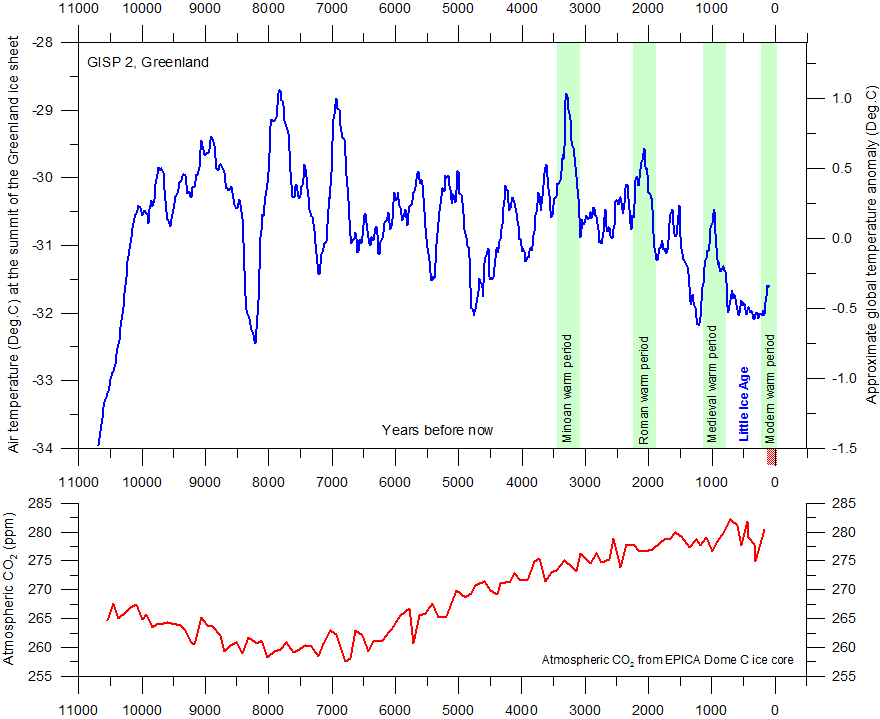 Click the pic to view at source[/caption]
 Click the pic to view at source[/caption]
 University of Michigan’s – Global Change Program – Click the pic to view at source[/caption]
 Click the pic to view at source[/caption]
 Click the pic to view at source[/caption]
 climate4you.com – Ole Humlum – Professor, University of Oslo Department of Geosciences – Click the pic to view at source[/caption]
 Click the pic to view at source[/caption]
 NOAA – National Climate Data Center – Click the pic to view at source[/caption]
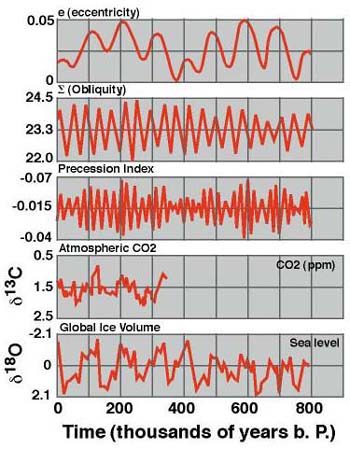 University of Michigan’s – Global Change Program – Click the pic to view at source[/caption]
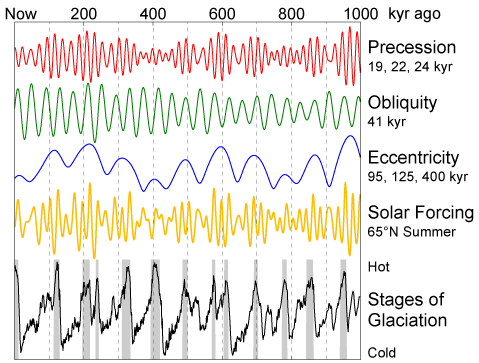 Click the pic to view at source[/caption]
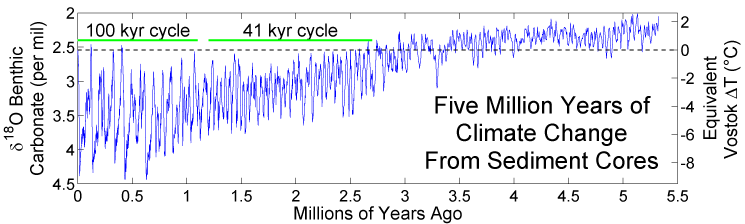 Click the pic to view at source[/caption]
 Click the pic to view at source[/caption]
 Click the pic to view at source[/caption]
Briffa et al., 1998: http://www.ncdc.noaa.gov/paleo/globalwarming/briffa.html
Jones et al., 1998: http://www.ncdc.noaa.gov/paleo/globalwarming/jones.html
Mann et al., 1998: http://www.ncdc.noaa.gov/paleo/globalwarming/mann.html
Pollack et al., 1998: http://www.ncdc.noaa.gov/paleo/globalwarming/pollack.html
Jones et al., 1998: ftp://ftp.ncdc.noaa.gov/pub/data/paleo/contributions_by_author/jones1998
Mann et al., 1999: ftp://ftp.ncdc.noaa.gov/pub/data/paleo/contributions_by_author/mann1999/
Mann et al., 2000: http://www.ncdc.noaa.gov/paleo/globalwarming/animation/mannanimate.html
Briffa et al., 2001: http://www.ncdc.noaa.gov/paleo/pubs/briffa2001/briffa2001.html
Esper et al., 2002: ftp://ftp.ncdc.noaa.gov/pub/data/paleo/treering/reconstructions/n_hem_temp/esper2002_nhem_temp.txt
Jones and Mann 2004: http://www.ncdc.noaa.gov/paleo/globalwarming/jones-mann.html
D’Arrigo et al. 2006: http://www.ncdc.noaa.gov/paleo/pubs/darrigo2006/darrigo2006.html
and climate science hasn’t been right since. Then the IPCC muddied the waters even more in 2007 with their contribution;
http://www.ipcc.ch/publications_and_data/ar4/wg1/en/fig/figure-6-10.jpeg
found in AR4 section 6.6.1.1;
http://www.ipcc.ch/publications_and_data/ar4/wg1/en/ch6s6-6.html
An interesting aside is that the NOAA NCDC site;
http://www.ncdc.noaa.gov/paleo/globalwarming/paleolast.html
doesn’t show any reconstructions after 2006, while there has been a lot of valuable research conducted since then, e.g.
Ljungqvist, F. C., Krusic, P. J., Brattström, G., and Sundqvist, H. S (2012).: Northern Hemisphere temperature patterns in the last 12 centuries, Clim. Past, 8, 227-249, doi:10.5194/cp-8-227-2012, 2012.
http://jonova.s3.amazonaws.com/graphs/mwp-lia/ljungqvist-2012-fig-4.gif
http://www.co2science.org//articles/V15/N28/ljungqvistetal2012b.gif
Abstract: http://www.clim-past.net/8/227/2012/cp-8-227-2012.html
Christiansen, B. and Ljungqvist F. C. (2012). The extra-tropical Northern Hemisphere temperature in the last two millennia: reconstructions of low-frequency variability. Climate of the Past,
http://jonova.s3.amazonaws.com/source/lia-mwp/christiansen-2000-year-temp-reconstruction-cf-fig-5.gif
http://jonova.s3.amazonaws.com/source/lia-mwp/christiansen-2000-year-temp-reconstruction-cf-others.gif
Abstract: http://www.clim-past.net/8/765/2012/cp-8-765-2012.html
JoNova has a good article on these more recent reconstructions:
http://joannenova.com.au/2012/07/medieval-warm-period-found-in-120-proxies-roman-era-similar-to-early-20th-century/
Also, in addition to reconstructions, we have temperature measurements from the Met Office and NOAA;
http://www.metoffice.gov.uk/hadobs/crutem3/diagnostics/global/nh+sh/annual_bar.png
http://www.metoffice.gov.uk/hadobs/crutem4/data/web_figures/global_n+s_monthly.png
http://www.ncdc.noaa.gov/sotc/service/global/global-land-ocean-mntp-anom/201001-201012.gif
but these surface temperature records are burdened with issues of questionable sighting, changes in sighting, changes in equipment, changes in the number of measurement locations, modeling to fill in gaps in measurement locations, corrections to account for missing, erroneous or biased measurements, and the urban heat island effect.
Based on the information above it appears that average temperature increased by between .8 – 1.6 degrees Celsius since the end of the Little Ice Age. It isn’t exactly clear how much of this warming occurred before or after the “last part of the 20th century”, but “about half” seems to be a reasonable approximation.
I also assumed that everybody here agrees on the fact that the rise of the average temperature has halted since 1998, and that most of the top ten warmest years since the little ice age were in the first decennium of the 21 st century;
Sure, the nature of being at a local maximum, having warmed from a Little Ice Age, is that recent years will be in top years, since the LIA. However, if you increase the climatic record to include the Medieval Warming period, then this would not be the case. Furthermore, inclusion of the Minoan Warming and Roman Warming periods, makes it apparent that Earth’s temperature is currently well within the bounds of natural variability, i.e.:
http://jonova.s3.amazonaws.com/graphs/lappi/gisp-last-10000-new.png
if you can follow me so far I think it is improper language to state – as Monckton and some others did and do – that warming has stopped;
proper would be to say that the increase of warming has stopped (for the time being);
warming as such hasn’t stopped, the whole first decennium of this century has been about a half degree warmer than the average temperature in the fifties and sixties of the former century and even a full degree warmer since the little ice age;
On what basis do you assume that warming will continue?
taken that in account, higher sea surface temperatures, must play a role in the melting of sea ice,
We still have the cart horse issue, i.e. “did increased sea temperature cause a decrease in sea ice, did a decrease in sea ice cause an increase in sea temperature, or both?” and then there are the attribution questions of how much of the increase in sea temperature was associated with increases in anthropogenic CO2 emissions, and what role this portion of the increase in sea temperature has on sea ice. However, I cannot refute the possibility that it plays minor role in the melting of Arctic sea ice.
thanks for all your kind and interesting remarks;
a most enlightened 2013, indeed!
I am glad I can help, and I appreciate that you’ve helped spur me to build out more of the WUWT Global Paleoclimate Reference Page, which should be live in the coming weeks. Here’s a sneak peek:
11,000 years GISP2 Temperature Since 10700 BP with CO2 from EPICA DomeC
[caption id="" align="alignnone" width="578"]
110,000 Years GISP 2 Greenland Temperature and EPICA Dome Ice Core Atmospheric CO
[caption id="" align="alignnone" width="578"]
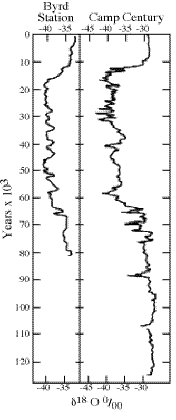
120,000 Years
[caption id="" align="alignnone" width="350"]
140,000 Years Antarctic/Vostok
[caption id="" align="alignnone" width="578"]
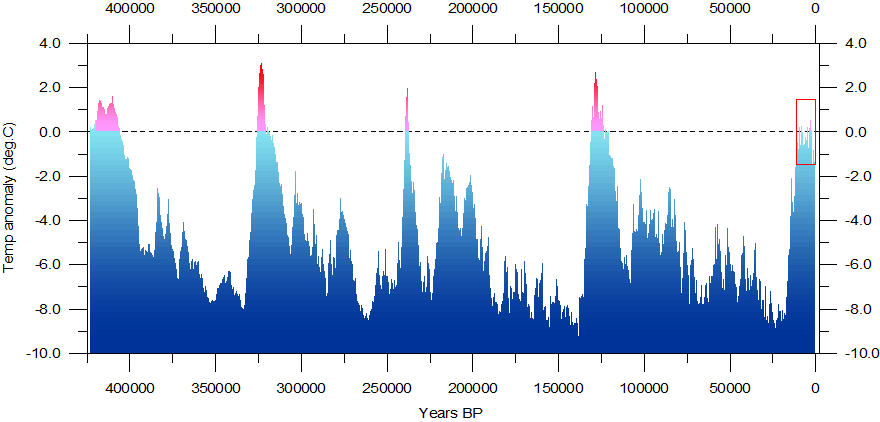
400,000 Years Antarctica/Vostok
[caption id="" align="alignnone" width="578"]
450,000 Years Temperature Anomaly
[caption id="" align="alignnone" width="578"]
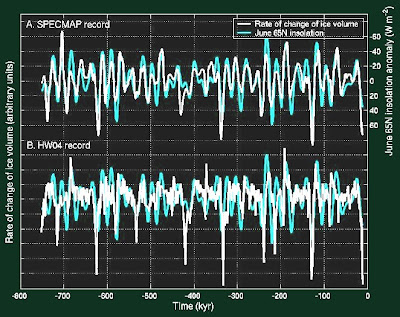
750,000 Years Rate of Change of Ice Volume and June 65N Insolation
[caption id="" align="alignnone" width="578"]
800,000 Years Orbital and Millennial Antarctic Climate Variability
[caption id="" align="alignnone" width="632"]
800,000 Years Orbital and Millennial Antarctic Climate Variability
[caption id="" align="alignnone" width="632"]
1,000,000 Years
[caption id="" align="alignnone" width="578"]
5,000,000 Years Antarctica/Vostok Temperature
[caption id="" align="alignnone" width="578"]
5,500,000 Million Years
[caption id="" align="alignnone" width="578"]
65,000,000 Years
[caption id="" align="alignnone" width="578"]
justthefactswuwt says: December 30, 2012 at 9:09 pm
We still have the cart horse issue, i.e. “did increased sea temperature cause a decrease in sea ice, did a decrease in sea ice cause an increase in sea temperature, or both?” and then there are the attribution questions of how much of the increase in sea temperature was associated with increases in anthropogenic CO2 emissions, and what role this portion of the increase in sea temperature has on sea ice. However, I cannot refute the possibility that it plays minor role in the melting of Arctic sea ice.
=============================================
“did increased sea temperature cause a decrease in sea ice” : Horse in front of the cart
“did a decrease in sea ice cause an increase in sea temperature”: Horse behind the cart
Of course, as ice recedes, insolation plays a role, adding to SST. But warm water influx into the polar sea is the primary factor in season’s end ice extent.
GHE makes no contribution to SST because water is opaque to IR. See absorbency spectrum of water. This is the earth-size hole in AGW. Water covers 71% of the earth and SST is primary factor in determining climate and SST is independent of the GHE.
Werner Brozek says: December 29, 2012 at 2:00, 2:01 and 2:02 pm
Yes, I will be available, but from 2:00 P.M. To 10:00 PM Alberta, Canada time.
I schedule it to post at 2:00 P.M. Alberta/Mountain time
Immediately following this post, I will post two more things.
Incredible stuff, I can definitely synthesis that into a compelling an article. I draft something and post a link to a private sample article later on Tuesday. We can then hone it and an incorporate whatever updated data becomes available, through Sunday to prep it for publishing.
The first is where I have used my present format but with more explanation as requested.
I think I like the first variant better, the only thing I would change is the order of the three elements. Years without warming is getting a lot of attention, so I would lead with that, i.e). 2, 3, 1.
I also plan to incorporate sections 2 and 3 into the next Big Picture “Earth’s Temperature” update e.g.;
http://wattsupwiththat.com/2012/06/10/a-big-picture-look-at-earths-temperature-peter-gleick-edition/
and will credit you accordingly.
The second is with an introduction and then just RSS for now. If you like the second format
I am thinking of including the RSS overview at the bottom of the crowdsourcing article and using it as a vehicle to see if people prefer that format and to ask if there are any additional data points or analyses that people think make be interesting or worthwhile.
better, I can finish it off this way for the other data sets.
I’d hold off until we crowdsource it, to see if readers find it valuable.
My source for this information is http://www.skepticalscience.com/trend.php
That worries me, I do not consider sks to be a credible information source. Can you use WFT or another source to validate sks’ data?
WFT only has the 95% information for BEST. I do not know of any other source. I understand your concern, but the numbers seem fine to me. For example, even by their numbers, RSS has 23 years of no significant warming. And from 1997, their numbers give -0.003 +/-…, whereas WFT gives -0.00041125 per year or -0.004/decade. That is the only thing I can check, namely the trend and not the 95% level. However we can leave this part out if you wish.
I am inclined to include it in the crowdsourcing exercise, but also to call extra attention to it. Maybe somebody knows of another more reliable source, or we can spur someone to create one.
The good guys are winning at last… on three pages of comments on this article I saw not a single reference to global warming or even “climate change.” The media onslaught isn’t working anymore.
http://news.yahoo.com/ice-seals-endangered-species-protection-002102778.html
D Boehm says:
No…It is 16 years of warming for which the warming is not statistically-significant at the 95% level. However, the warming is also not different from the long-term (since mid 1970s) warming trend of ~0.17 C per decade at the 95% level either. [And, of course, that is with cherry-picking a start date that puts 1998 right near the beginning of the record. That matters because 1998 was the super El Nino that resulted in temperatures that not only broke all previous yearly records in the instrumental record but utterly smashed them by some 0.15 C. This is why a graph of the linear trend from 1975 to mid-1997 and one from 1975 to now looks like this: http://www.woodfortrees.org/plot/hadcrut4gl/from:1975/to:1997.5/plot/hadcrut4gl/from:1975/to:1997.5/trend/plot/hadcrut4gl/from:1997.5/plot/hadcrut4gl/from:1975/trend , showing that the post-1997 data continues to lay on about the same trendline as the data from 1975 to 1997 lay on.]